Displaying items by tag: Benedict Cumberbatch
Roses, The
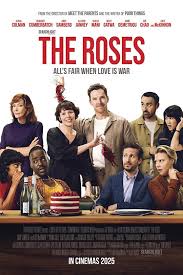
THE ROSES
UK/US, 2025, 105 minutes, Colour.
Olivia Colman, Benedict Cumberbatch, Kate MacKinnon, Andy Samberg, Ncuti Gatwa, Sunita Mani, Zoe Chao, Jamie Demetriou, Halla Finley, Wells Rappaport, Will Smith, Alison Janney.
Directed by Jay Roach.
Once upon a time, well 1989 anyway, the popular stars of such adventures as Romancing the Stone, Jewel of the Nile, Michael Douglas and Kathleen Turner, surprised everyone in the adaptation of Warren Adler is somewhat caustic novel, The War of the Roses. Not the 16th century between York and Lancaster, but a 20th century couple moving from love to enmity. Black comedy with some stinging challenge about marriage and relationships.
And now, 30 something years later, a new version, scripted by Australian Tony McNamara (who began in Australian television but has written screenplays including The Favourite, Poor Things and the series The Great). And it has an American director who has a very interesting career in both comedy and historical drama, ranging from the Austin Powers comedies and the Meeet the Parents comedies to the 2000 US election controversy in Florida, The Recount, and Sarah Palin and the 2008 election, Game Change, biography of black listed screenwriter Trumbo and Fox News scandals, Bombshell.
Added to this, the talent and versatility of stars Olivia Coleman and Benedict Cumberbatch, one-time Doctor Who, Ncuti Gatwa, and popular American comedians ateacKinnon and Andy Samberg.
In fact, while the opening of the film has the meeting between Theo and Ivy in London, he an idealistic architect, she a talent for cooking and a career as a chef, they soon move to California where the rest of the story takes place. In fact, the film was made completely in England, studios and the southern.
10 years pass, happy marriage, twin children, comfortable life – what could go wrong? Answer, practically everything!
Which means that most of the film is black comedy, a great deal of farce, lots and lots of bickering, insults, sometimes no holds barred, even at dinners with guests. A lot will depend on audience sympathies. Theo experiences an absolute architectural disaster which banishes him from his hopeful career, and makes him an at-home father. Ivy experiences great success, critics applause, an expanding empire of restaurants. Which means that underlying all this many themes of male and female roles at home, at work, rivalries, resentments, the effect on children…
And, while the dialogue is often black, bleak, highly ironic, often offensive, our laughter will depend on our sensitivities about these issues and where our sympathies lie.
While there are American comedians in supporting roles, they are something of a distraction, generally unnecessary and not so convincing in their interactions with Theo and Ivy.
But, brilliantly acted, Benedict Cumberbatch always interesting, Olivia Colman indicating that she can take on any role, The Roses is a mixture of amusing, offending, confronting…
- The title and expectations? A reinterpretation of the 1989 The War of the Roses?
- Comedy, satire, farcical situations, sharp dialogue, parody?
- Setting the scene, London, Theo and his architectural ambitions, Ivy and her cooking ambitions, their meeting, marriage?
- 10 years later, in the United States, Theo and his career as an architect, Ivy subduing her cooking talent, the twin children, Ivy at home, spoiling the children? Theo strict?
- The disaster, the storm, the destruction of Theo’s building? The contrast with Ivy’s success, the customers taking refuge, progress, the personalities of her staff, the food critic and his response? The consequences, Theo and his failures, unable to practice? Ivy, progress, increasing number of restaurants?
- The clash between the two, Theo depressed, jealousy of Ivy, Ivy and her success, enjoying it, dominant? The situation with Theo as the stay-at-home parent, his style and strictness with the children? Ivy feeling shut out? And the children, their scholarships, to Miami? Husband and wife at home, clashes? Attempt reconciliation, the visit to New York?
- The friends, Barry and Amy, Barry the lawyer, Amy and her flirtatious manner? The friends, the meals and discussions?
- The marriage counselling and the sardonic response? Ivy, her decision, the finance for the dream home?
- The years, the lavish detail of the home, the success of the home? Entertaining, Barry and Amy, the situation becoming more brittle, the dialogue at the meal table, scoring off each other? The prospects for divorce, Ivy and her sharp divorce lawyer versus Barry?
- The divorce conditions, Theo wanting only the house, Ivy refusing to give it to him? Her restaurants closed for health reasons? The tactics, the spite, the barbs, the farcical interactions? The signing of the papers, the full signature…?
- The exasperation, and finally each admitting that they do love each other, after the fight around the house, the destruction of the Julia Child stove?
- The ending, the reconciliation, the danger, explosive – and the screen turning to white?
- The use of farce and parody for satiric reasons? The film opting for farce and explicit insult and tactics rather than subtlety?
Thing with Feathers, The
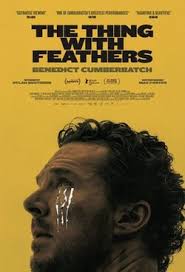
THE THING WITH FEATHERS
UK, 2025, 98 minutes, Colour.
Benedict Cumberbatch, Henry Boxall, Richard Boxall, Sam Spruell, David Thewliss, Eric Lampaert, Leo Bill.
Directed by Dylan Southern.
American Emily Dickinson wrote a poem, Hope is the Thing with Feathers. In 2014, novelist, Max Porter, published Grief is the Thing with Feathers – a story which embodies a great deal of grief and despair, not a focus on hope.
This film is a strange experience, some audiences caught up and feeling overwhelmed, other audiences watching, surprised, detached, puzzled.
On the one hand, the film has its realistic aspects. It is a story of a father, referred to here only as Dad, and his two sons, referred to here only as Boys, the sudden death of wife and mother, funeral, the subsequent grief. The family does have some support with Dad’s brother, well wishers.
But this film is very much on the other hand and darkly, stark black and white like the sketches in the graphic novel that Dad is writing and drawing, surrealistic. We are taken into Dad’s imagination, with the grief embodied in the physical and psychological presence of a giant Crow, sinister, cackling-croaking voice that taunts and criticises, sinister and destructive aspects of grief within the father grieving with harsh and alienating consequences for the children.
Over the decades, Benedict Cumberbatch has proven himself a superb actor. Here he draws on all his resources to create the madly grieving dad, some clear and quiet moments, but soon overwhelmed by manic outbursts, extraordinary intensity.
The film has four chapters, initially focusing on Dad and his life, work, relationship with his boys, trying to have things normal, but increasingly overwhelmed by the presence of the Crow. Then there is a chapter from the Boys’ perspective, puzzling over what is happening with their Dad while they try to live their ordinary lives at school, playing at home, coping with Dad’s moods, going away for a time. Then there is a section for the Crow, black and bleak, harshly croaking voice, taunts and criticisms. But, the final section is the Demon, the sinister and potentially deadly presence in this scenario of grief, touches of madness and despair.
This film is quite an unexpected experience, darkly intriguing, perhaps too alarming at times, certainly puzzling, and we have to admire the overwhelming intensity of Benedict Cumberbatch’s performance.
- The title, Emily Dickinson’s poem focusing on hope, Max Porter’s novella focusing on grief as the thing with feathers?
- The realism of the story, the family, The mother’s collapse and death, the funeral, overwhelming grief? Trying to carry on as normal, the household, the boys, breakfast…? Ready for school, picking them up? Moments of sadness, play in the house, outings?
- The surrealism of the story, the focus on Dad (no personal names)? His memories of his wife, their recurring throughout the film, the moments of blood and memories? His work, graphic novels? The focus on the Crow in his drawings? Stark black and white?
- Dad’s experience, growing desperation, moments of madness and anger, with the boys, with his brother, friends, editor? The film going into his inner psyche?
- Benedict Cumberbatch’s performance, the intensity, the credibility, the original ordinariness, family and children, overpowering grief, disrupting moods, erratic, violent, self-indulgent? The continued building up of the intensity?
- The aspect of the real world, the meeting with his brother, conversations, offers of help? Friends, acquaintances, offerings of sympathy? The editor, the workplace? Medical help, psychological help, doctors?
- The structure of the film, the focus on Dad, the boys, Crow – and finally the unleashing of the Demon?
- The Crow, Dad’s creative imagination with the graphic novel, the personification of the Crow, size, voice, accent? The Crow the embodiment of grief and its erratic manifestations? The Crow and Dad’s imagination? The destructive aspects, the taunts, the ridicule, the criticisms of the children? Dire presence of the Crow, overtaking, overwhelming? The Crow’s own section of the narrative? The power of the Crow to be ultimately destructive?
- The final section, the reality of the Demon, and Dad, with the boys, sending them away, potentially destructive, Dad and the friends and supporters? The continued work on the graphic novel, the sketches, blacker and bleaker?
- The crisis breaking, the presence of the Crow, disappearance, the demonic?
- Time passing, the completion of the graphic novel, the effect on Dad, reunited with the boys?
- The film as an immersion in the blackness and destructiveness of grief?
Book of Clarence, The
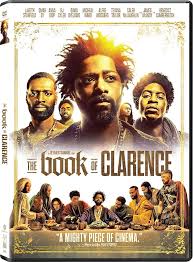
THE BOOK OF CLARENCE
US/Italy, 2023, 129 minutes, Colour.
LaKeith Stanfield, Omar Sy, R.J.Cyler, Anna Diop, David Oyelowo, Alfre Woodard, Teyana Taylor, Micheal Ward, Caleb MacLachlan, Marianne Jean-Baptiste, Eric Kofi Abrefa, James McAvoy, Benedict Cumberbatch, Chase Dillon, Nicholas Pinnock.
Directed by Jeymes Samuel.
The Book of Clarence can be recommended for all kinds of reasons, first of all, that it is nothing like what we might expect! It has been written and directed and musical score, by British musician, Jeymes Samuel, stage name The Bullits. His previous film was The Harder They Fall, a strong Western, a focus on black Americans in the 19th century, victims, dominating, urging the audience to look again at their familiar image of the American West.
The Book of Clarence is billed as a comedy biblical adventure! And it is. And, even though the focus is on Clarence, this can be seen also as a very strong Jesus film, though in plot terms, he is a supporting character.
Once again, the cast is either African-American or of West Indian descent. A glance at the cast indicates popular names like Omar see, David or no, Alfre Woodard, Marianne Jean Baptiste. The exception being Benedict Cumberbatch, playing Benjamin the beggar in the early part of the film and then being transformed, actually by Jesus himself, and making points about false Messiahs at the end of the film. James McAvoy leads the white cast of obnoxiously Roman soldiers.
But, back to Clarence, played engagingly by the very talented LaKeith Stanfield. In fact, the film opens with a kind of Ben Hur chariot race variation, introducing Clarence, avery 21st-century, in fact, in the Jerusalem neighbourhood, the Jerusalem “hood”. He is something of a con man, is in debt to a local loan shark, though in love with his sister, into drugs, but also more often into bad luck.
But, impressed by Jesus and his followers, especially since it turns out that Clarence is, in fact, the apostle Thomas’s twin brother (who is mentioned but not named in the Gospels). Clarence actually applies to the apostles to be the 13th but is turned down, Thomas himself very disdainful of his brother, and Judas urging Clarence to prove his worth by going to a gladiator school and freeing the gladiators – which means that we have besides Ben Hur, homage to Spartacus and gladiator.
But, what makes the Jesus connection even more interesting, and Jesus does appear very sympathetically at various times throughout the film, Clarence is impressed by acclaim for Messiahs and so sets himself up with his friends, refused baptism by John the Baptist, but nevertheless going around preaching, organising fake miracles, profiting highly.
But, can it last? There has been a spoiler right at the beginning of the film with Clarence being crucified. And in suffering, he parallels Jesus, and antagonistic young fellow actually help him carry the cross to Calvary. Clarence does have a conversion experience, compassion, charity beyond himself, some redemption.
It is then that Benjamin emerges, Jesus having giving him money, and a gift for multiplying money which Benjamin spreads around, Benedict Cumberbatch looking like a traditional image of Jesus, but self-seeking and a false Messiah.
The film ends very respectfully of Jesus, a visit to Clarences tomb, and hope of resurrection.
Not what we might have been expecting, but always interesting, entertaining, and, certainly, thought-challenging.
- Title, striking, biblical overtones? The work of the director, writing, directing, music, race issues?
- The locations for Jerusalem, the Italian town of Metairie and its presence in other biblical films? The vistas, buildings, the roads, the sea?
- The first century A.D. variation on Boys in the Hood, the Jerusalem Hood, drugs, gangsters, gambling, debts? Vengeance?
- The musical score, the range of songs, the final credits?
- The three chapters for the Book of Clarence? The introduction, Clarence and his mission, the crucifixion? The beginnings of the parallels with the Gospel story of Jesus?
- The acknowledgement of Roman Empire films, Ben Hur, gladiator…? The influence of biblical films, Jesus films? In the central character and Brian in the Life of Brian?
- The opening race, introducing Clarence, Mary Magdalene and her defiance, Elijah as Clarence’s friend? The chariot race in Ben Hur, the excitement, the Gypsy area, the intervention of Cabbage and his domination, the crashes, taking Clarence’s coat? The bond between a lighter and Clarence, as brothers, his reaction to the loss? The visit to Jedediah, the confrontation, Clarence and his attraction to Marigny, Jedediah’s sister? Her reticence, shyness? The banter between Clarence and Jedediah? The time limit?
- Thomas the apostle, called Didymus, the twin, in the Gospels? The imaginative interpretation of Thomas and his twin? Thomas, leaving their mother, following Jesus, stern, loyal to Jesus, 10 minutes older, but deriding his brother, a nobody, doomed to failure? Their various encounters? Clarence and his challenge, Thomas’s reaction to Clarence’s behaviour? Clarence and his visit to the apostles? His suffering and Thomas coming to apologise, reconciliation? Clarence and the scenes with his mother, his debts, after the race, her encouragement, smelly? Her reflections on his life, on Thomas? Encouragement on the way of the cross, at the crucifixion?
- Clarence and his fascination with Jesus, the significance of the visit to Mary and Joseph, Mary and her explanations, Clarence and the mistaking of the Immaculate Conception for the virgin birth, Mary and her convictions about God’s presence? Joseph, his presence, supporting Mary, calling Clarence a dumb ass?
- Clarence and his need to raise money, his observing of Jesus, the failed Jesus walking through the on guard, the claim of Messiah? Clarence, not believing in God, defying belief? His theory that knowledge was more important? But his idea of impersonating a Messiah, with the help of Elijah? His paralleling of Jesus miracles, raising the dead, curing the sick…, Elijah performing? The taking up of the collection from the crowd gathering? Believing him as a Messiah? His preaching, the effect on him, those collection of money?
- His visit to the apostles, the encounter with Judas, Judas and his taunts, urging him to go to the gladiator slaves, confront the torturer, get the release of the prisoners? Clarence going, the reaction of the torturer, singling out Barabbas, the challenge to the fight, Clarence and his moves, Barabbas and his reactions, the torturer allowing Barabbas to go? Barabbas joining the troop of the wood-be Messiah?
- The encounters with the Romans, white, their arrogance, the reaction to Barabbas, the officer and his javelin is, throwing them out Barabbas, Barabbas and his defiance, escaping, and his nickname of Immortal?
- Clarence, the effect on his charade, the slaves, getting a conscience, taking the money and buying back the slaves, freeing them? Judas and his response?
- The encounter with Jesus, Mary Magdalene, the adultery, the parallel of John chapter 8, Jesus and the stones, is suspending them in the air, their falling, defying the authorities, letting Mary go free, the friendship with her?
- Jedediah, the party, with Varinia, declarations to her, the upset, his feeling betrayed by her?
- The presentation of the Last Supper, acknowledgement of da Vinci’s painting? The two issue with Judas, betrayal, the scenes with the Jewish authority in the 30 pieces of silver, Judas and the promise of betrayal, at the supper, the issue of Mary’s gravy, the taste, his going out?
- Jesus, knowing he was betrayed, waiting for the moment, accompanied by Mary?
- His arrest, the Romans, the encounter with Pontius Pilate, Pontius Pilate and his manner, racial superiority, arrogance, interrogation, the sympathy with Clarence, Clarence and his commitment, defiance, the parallels with Jesus before Pontius Pilate? Condemned to be crucified?
- The visuals of the way of the cross, the Jesus parallel, the defiant crowds, his mother in the crowd, encouraging him, Elijah and the encouragement? On Calvary, the vivid nailing to the Cross, raised, Henning, hanging, the presence of Benjamin, the past encounters with Benjamin and his spurning him, not recognising him, Benjamin and his worldly defiance? The Romans, the decision to pierce Clarence’s side? Again the Jesus parallel?
- Benjamin, the begger, spurned by Clarence, the later scenes of his banking, the encounter with Jesus, the money, his clean himself up, becoming like the traditional portrait of Jesus, his gift of being able to multiply the money? His arrest, a false Messiah accusation, being crucified?
- Clarence, the burial, the stone, the breaking up of the stone, Jesus entering, tender with Clarence, raising him to new life? Immortality?
- The overall effect of the film, the serious, the comic touches, the criticisms of blasphemy, the Christian defences against accusations of blasphemy? The enjoyment of a biblical epic? Jesus figure treated seriously and with respect? And Clarence paralleling Jesus and becoming a Christ figure?
Phoenician Scheme, The
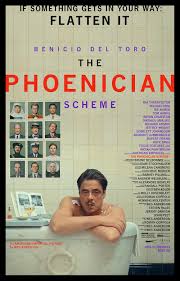
THE PHOENICIAN SCHEME
US, 2025, 101 minutes, Colour.
Benicio del Toro, Mia Threapleton, Michael Cera, Riz Ahmed, Tom Hanks, Bryan Cranston, Mathieu Amalric, Richard Ayoade, Jeffrey Wright, Scarlett Johansson, Benedict Cumberbatch, Rupert Friend, Hope Davis, Bill Murray, Charlotte Gainsbourg, Willem Dafoe, F. Murray Abraham, Stephen Park, Alex Jennings, Donald Sumpter, Scott Shepherd.
Directed by Wes Anderson.
A significant part of the review for The Phoenician Scheme is to look at the huge credits list, many of the cast having appeared in a number of Wes Anderson films. And, of course, expectations from writer-director, Wes Anderson. Anderson has been writing and directing films, including two animation films, for more than a quarter of a century. His tyle and his exploration of themes is, to say the least, highly distinctive.
And, The Phoenician Scheme, is quite idiosyncratically distinctive. It is very stylised in the visuals, the traditional box screen frame, the framing of action, the references to paintings and the staging looking like 20th century paintings. Then there are the performances, also stylised, often life theatre performances, eccentric and clipped delivery of lines, postures and posing. And, for those audiences ready to surrender to Anderson, there are many who do, these visuals and the performances are readily engaging.
There is a plot. The setting is 1950, an entrepreneurial businessman from Hungary, Korda, played perfectly, both seriously and ironically, by Benicio del Toro. He has survived several plane crashes, assassins out to get him and sabotage his plan for development, rails and tunnels in Phoenicia. We are presented with a chart indicating his plans as well as the contacts he must make to improve a shortfall in income project. They serve as chapters for the film.
Korda has many children, his own and adopted, hoping for an Einstein for the future. But his only daughter, Liesl, a novice nun, played by Mia Threapleton, is seconded, initially unwillingly and firmly committed to her vocation, to be his heir. (Mia Threapleton is following in the footsteps of her mother, Kate Winslet, a very interesting role.) And, there is Kord’a new assistant, expert on insects, played with accent by Michael Cera.
Interspersed throughout it is round table conference of elders who are monitoring Korda’s behaviour judging him and his morality accordingly.
The encounters with the various characters for financial help are highly entertaining, eccentric and satirically humorous in their way, incorporating the various stars listed above until a culmination in the fearsome presence of Benedict Cumberbatch Korda’s brother.
Then there are Korda’s memories and dreams, flashbacks in black-and-white, some of his near death, or momentary post-death, experiences, some ecclesiastical in an Orthodox style, others with biblical overtones, again with a number of stars – and a cameo by Bill Murray, who has been working with Anderson for a long time, culminating in his presence as God.
Anderson has a wry and offbeat sense of humour, so often the unexpected, some realism and then some surrealism, farcical moments, deadly serious moments, tantalising the audience, a treat for those who are willing to be tantalised.
- A Wes Anderson film, style, visual, verbal, humorous, satirical, ironic? Underlying serious themes? The strengths of his casts, many actors reappearing in his films?
- The visual style of the film, but colour like 20th century contemporary paintings? Sets and decor? Photography, the black and white flashbacks? Staging of the action, like stage performance, all postures and posings? The stylised action sequences? The performances, stylised and realism? The language of the screenplay, the particular style of delivery? The overall effect and response?
- The setting in 1950, memories of World War II, business enterprises after the war, international entrepreneurs, international projects and finance?, Double dealing?
- The explanation of Korda, his business acumen, the 5%? The background of his marriages? Children and adopted children, hoping for an Einstein? His relationship with his daughter, novice nun, seconding her, naming her as his heir? His staff, his planes, the plans to kill him, his surviving the various crashes?
- The plane ride, his assistant cut in half and swept away, the crash, surviving? Meeting his daughter, her personality, severe, dedicated to the convent, contact with the mother superior, wanting to make her vows? Her not knowing her father, his reputation with her? Her unwillingness to be part of his empire? The plan, her observing his behaviour, learning more about him, her beads, images, sign of the cross, holy water?
- Bjorn, Scandinavian background, accent, present on the plane, his role as assistant, his expertise on insects, his attraction to Liesl, declarations? The comic style of his character, interactions?
- The Phoenician scheme itself, tunnels and railway, the finance, the image on the screen with the various contacts for making up the gap in finance? The structure of the film, the various contacts?
- The background of the assembly, the business discussions, the following of Korda, the decisions about his business and morality?
- The Americans, in the tunnel, on the train, the discussions, suspicions, the meeting with the Prince of Phoenicia, the attack by the camel riders, the Prince saving Korda? The financial discussions, the proposal of the basketball competition, the Prince and his ignorance of the game, Korda hopeless, the skill of the two Americans, yet the Prince succeeding? Getting a grant?
- Going to Marseille Bob, the manager of the club, past relationship with Korda, Liesel and Bjorn observing, the raid on the club, the freedom fighters, the personality of Sergio, Bob upset about the roof, and Korda taking the bullet for Bob? Getting the grant?
- Marty, fast talking American, suspicious of Korda, Korda shot, Marty providing the blood transfusion, making an agreement?
- Going to see Hilda, the distant cousin, her financial knowledge, the prospect of the marriage, her place in the family, with Liese?
- The flight, going to see Nubar, the crash, the jungle, Bjorn and his being unmasked as an agent, his siding with Korda, Korda in the quicksand, Bjorn rescuing him, the arrival of Sergio and his revolutionaries, taking the group to safety?
- The encounter with Nubar, looking sinister, the relationship, the mastermind behind the assassination attempts, discussing the family, the finance, the satirical physical fight between Nubar and Korda?
- Korda, death experiences, near death, his life before him, black-and-white photography, the bearded Orthodox-like sequences, the characters, judgements? The biblical sequences, the personalities, the pageantry, Bill Murray as God?
- Liesl, the contact with the mother superior, her being present for the business deals, the money for the community? Liesl opting to leave the convent?
- The finale, Korda and his being honest, losing everything, restaurant, the working in the kitchen, father and daughter, reconciled, and a happy life?
- The Phoenician Scheme movie
- Wes Anderson
- Peter Malone's Movie Reviews
- Benicio del Toro
- Mia Threappleton
- Michael Cera
- Riz Ahmed
- Tom Hanks
- Brian Cranston
- Jeffrey Wright
- Richard Ayeode
- Benedict Cumberbatch
- Scarlet Johansson
- Charlotte Gainsbourg
- F Murray Abraham
- Willem Dafoe
- Rupert Friend
- Donald Sumpter
- Mathieu Amalric
- Bill Murray
- Hope Davis
- Alex Jennings
Wes Anderson's short films from Roald Dahl: Wonderful World of Henry Sugar; The Swan; Poison; The Rat Catcher
WES ANDERSON’S SHORT FILMS FROM ROALD DAHL STORIES.
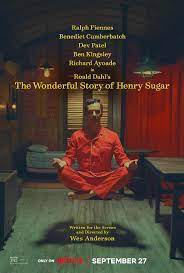
THE WONDERFUL WORLD OF HENRY SUGAR
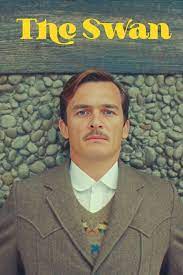
THE SWAN

POISON
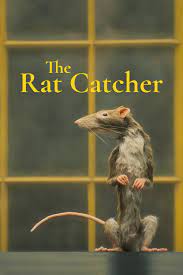
THE RAT CATCHER.
THE SHORT FILMS
Roald Dahl novels and short stories have been very popular on screen since the 1960s, Willy Wonka (and several versions since), stories like The Witches, Matilda, James and the Giant Peach. Here is a selection from his short stories.
Wes Anderson had already made a film of a Roald Dahl story, the animated feature, The Fantastic Mr Fox (with voices of George Clooney, Meryl Streep).
This time he has made what might be called live-action animation, actors performing but with very stylised backgrounds and sets, and action within the scenes of sets being moved, of stagehands coming in with props and removing them, and equivalent of stage performance. Anderson had used this kind of live-action animation in his feature, Asteroid City.
As with all his films, he assembles a distinguished cast – each of them appearing in several of these stories, Ralph Fiennes as Roald Dahl himself, the narrator, but also the rat catcher; Ben Kingsley as the man who can see without eyes, as a doctor; Dev Patel as a doctor and a friend of a patient; Richard Ayeode as a doctor, as a service station assistant, as a guru; Rupert Friend at the service station and narrating the story of The Swan.
The screenplay for each story retains the text written by Dahl – all expertly recited, often very rapidly, and the films could serve as audiobooks. The dialogue includes even the interjections, “he said”, spoken by the actors, turning to camera, then turning back to the action. In fact, there is a lot of direct speaking by the actors to the camera, breaking the fourth wall, talking to the audience.
This has quite a dramatic effect, the audience observing, invited to be involved, making judgements on the characters and their behaviour, opinions on the issues.
And there are issues:
Henry Sugar as a character who is not likeable, arrogant, self-centred, listening to a story about an Indian guru, capitalising on the techniques that the Indian used to be able to see things without his eyes (and the story of the Indian himself and his training and success), Henry Sugar then exploiting the technique, winning and winning vast amounts of money at the casinos, facing the fact that he does not need the money, deciding to give it away, throw it from his balcony, but a policeman coming to tell him that he is disobeying the law. So there is redemption for Henry Sugar.
A theme of The Swan is bullying, the focus on a young boy and his grown-up self narrating the story of the bullies at school, the effect on him, persecution, ridicule, and his developing wings to fly away from the bullying.
There is racial prejudice in Poison, the story of an officer in India, lying in bed, stating that a snake has attacked him and asking his close friend and ally to get a doctor to administer remedies. In his desperation, the officer is condemnatory of the doctor and his Indian background.
There is something sinister about The Rat Catcher, again Roald Dahl telling the story but then Ralph Fiennes hired as a Rat Catcher by a journalist and the owner of a service station, discussions about animals and rats, menace, the methods of dealing with rats, the rat catcher meanwhile becoming all the more rodent -like.
Netflix is showing all these stories – as a continuous program or as separate short films.
