Displaying items by tag: David Oyelowo
Book of Clarence, The
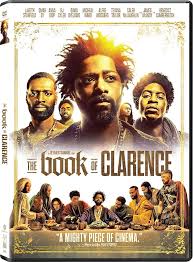
THE BOOK OF CLARENCE
US/Italy, 2023, 129 minutes, Colour.
LaKeith Stanfield, Omar Sy, R.J.Cyler, Anna Diop, David Oyelowo, Alfre Woodard, Teyana Taylor, Micheal Ward, Caleb MacLachlan, Marianne Jean-Baptiste, Eric Kofi Abrefa, James McAvoy, Benedict Cumberbatch, Chase Dillon, Nicholas Pinnock.
Directed by Jeymes Samuel.
The Book of Clarence can be recommended for all kinds of reasons, first of all, that it is nothing like what we might expect! It has been written and directed and musical score, by British musician, Jeymes Samuel, stage name The Bullits. His previous film was The Harder They Fall, a strong Western, a focus on black Americans in the 19th century, victims, dominating, urging the audience to look again at their familiar image of the American West.
The Book of Clarence is billed as a comedy biblical adventure! And it is. And, even though the focus is on Clarence, this can be seen also as a very strong Jesus film, though in plot terms, he is a supporting character.
Once again, the cast is either African-American or of West Indian descent. A glance at the cast indicates popular names like Omar see, David or no, Alfre Woodard, Marianne Jean Baptiste. The exception being Benedict Cumberbatch, playing Benjamin the beggar in the early part of the film and then being transformed, actually by Jesus himself, and making points about false Messiahs at the end of the film. James McAvoy leads the white cast of obnoxiously Roman soldiers.
But, back to Clarence, played engagingly by the very talented LaKeith Stanfield. In fact, the film opens with a kind of Ben Hur chariot race variation, introducing Clarence, avery 21st-century, in fact, in the Jerusalem neighbourhood, the Jerusalem “hood”. He is something of a con man, is in debt to a local loan shark, though in love with his sister, into drugs, but also more often into bad luck.
But, impressed by Jesus and his followers, especially since it turns out that Clarence is, in fact, the apostle Thomas’s twin brother (who is mentioned but not named in the Gospels). Clarence actually applies to the apostles to be the 13th but is turned down, Thomas himself very disdainful of his brother, and Judas urging Clarence to prove his worth by going to a gladiator school and freeing the gladiators – which means that we have besides Ben Hur, homage to Spartacus and gladiator.
But, what makes the Jesus connection even more interesting, and Jesus does appear very sympathetically at various times throughout the film, Clarence is impressed by acclaim for Messiahs and so sets himself up with his friends, refused baptism by John the Baptist, but nevertheless going around preaching, organising fake miracles, profiting highly.
But, can it last? There has been a spoiler right at the beginning of the film with Clarence being crucified. And in suffering, he parallels Jesus, and antagonistic young fellow actually help him carry the cross to Calvary. Clarence does have a conversion experience, compassion, charity beyond himself, some redemption.
It is then that Benjamin emerges, Jesus having giving him money, and a gift for multiplying money which Benjamin spreads around, Benedict Cumberbatch looking like a traditional image of Jesus, but self-seeking and a false Messiah.
The film ends very respectfully of Jesus, a visit to Clarences tomb, and hope of resurrection.
Not what we might have been expecting, but always interesting, entertaining, and, certainly, thought-challenging.
- Title, striking, biblical overtones? The work of the director, writing, directing, music, race issues?
- The locations for Jerusalem, the Italian town of Metairie and its presence in other biblical films? The vistas, buildings, the roads, the sea?
- The first century A.D. variation on Boys in the Hood, the Jerusalem Hood, drugs, gangsters, gambling, debts? Vengeance?
- The musical score, the range of songs, the final credits?
- The three chapters for the Book of Clarence? The introduction, Clarence and his mission, the crucifixion? The beginnings of the parallels with the Gospel story of Jesus?
- The acknowledgement of Roman Empire films, Ben Hur, gladiator…? The influence of biblical films, Jesus films? In the central character and Brian in the Life of Brian?
- The opening race, introducing Clarence, Mary Magdalene and her defiance, Elijah as Clarence’s friend? The chariot race in Ben Hur, the excitement, the Gypsy area, the intervention of Cabbage and his domination, the crashes, taking Clarence’s coat? The bond between a lighter and Clarence, as brothers, his reaction to the loss? The visit to Jedediah, the confrontation, Clarence and his attraction to Marigny, Jedediah’s sister? Her reticence, shyness? The banter between Clarence and Jedediah? The time limit?
- Thomas the apostle, called Didymus, the twin, in the Gospels? The imaginative interpretation of Thomas and his twin? Thomas, leaving their mother, following Jesus, stern, loyal to Jesus, 10 minutes older, but deriding his brother, a nobody, doomed to failure? Their various encounters? Clarence and his challenge, Thomas’s reaction to Clarence’s behaviour? Clarence and his visit to the apostles? His suffering and Thomas coming to apologise, reconciliation? Clarence and the scenes with his mother, his debts, after the race, her encouragement, smelly? Her reflections on his life, on Thomas? Encouragement on the way of the cross, at the crucifixion?
- Clarence and his fascination with Jesus, the significance of the visit to Mary and Joseph, Mary and her explanations, Clarence and the mistaking of the Immaculate Conception for the virgin birth, Mary and her convictions about God’s presence? Joseph, his presence, supporting Mary, calling Clarence a dumb ass?
- Clarence and his need to raise money, his observing of Jesus, the failed Jesus walking through the on guard, the claim of Messiah? Clarence, not believing in God, defying belief? His theory that knowledge was more important? But his idea of impersonating a Messiah, with the help of Elijah? His paralleling of Jesus miracles, raising the dead, curing the sick…, Elijah performing? The taking up of the collection from the crowd gathering? Believing him as a Messiah? His preaching, the effect on him, those collection of money?
- His visit to the apostles, the encounter with Judas, Judas and his taunts, urging him to go to the gladiator slaves, confront the torturer, get the release of the prisoners? Clarence going, the reaction of the torturer, singling out Barabbas, the challenge to the fight, Clarence and his moves, Barabbas and his reactions, the torturer allowing Barabbas to go? Barabbas joining the troop of the wood-be Messiah?
- The encounters with the Romans, white, their arrogance, the reaction to Barabbas, the officer and his javelin is, throwing them out Barabbas, Barabbas and his defiance, escaping, and his nickname of Immortal?
- Clarence, the effect on his charade, the slaves, getting a conscience, taking the money and buying back the slaves, freeing them? Judas and his response?
- The encounter with Jesus, Mary Magdalene, the adultery, the parallel of John chapter 8, Jesus and the stones, is suspending them in the air, their falling, defying the authorities, letting Mary go free, the friendship with her?
- Jedediah, the party, with Varinia, declarations to her, the upset, his feeling betrayed by her?
- The presentation of the Last Supper, acknowledgement of da Vinci’s painting? The two issue with Judas, betrayal, the scenes with the Jewish authority in the 30 pieces of silver, Judas and the promise of betrayal, at the supper, the issue of Mary’s gravy, the taste, his going out?
- Jesus, knowing he was betrayed, waiting for the moment, accompanied by Mary?
- His arrest, the Romans, the encounter with Pontius Pilate, Pontius Pilate and his manner, racial superiority, arrogance, interrogation, the sympathy with Clarence, Clarence and his commitment, defiance, the parallels with Jesus before Pontius Pilate? Condemned to be crucified?
- The visuals of the way of the cross, the Jesus parallel, the defiant crowds, his mother in the crowd, encouraging him, Elijah and the encouragement? On Calvary, the vivid nailing to the Cross, raised, Henning, hanging, the presence of Benjamin, the past encounters with Benjamin and his spurning him, not recognising him, Benjamin and his worldly defiance? The Romans, the decision to pierce Clarence’s side? Again the Jesus parallel?
- Benjamin, the begger, spurned by Clarence, the later scenes of his banking, the encounter with Jesus, the money, his clean himself up, becoming like the traditional portrait of Jesus, his gift of being able to multiply the money? His arrest, a false Messiah accusation, being crucified?
- Clarence, the burial, the stone, the breaking up of the stone, Jesus entering, tender with Clarence, raising him to new life? Immortality?
- The overall effect of the film, the serious, the comic touches, the criticisms of blasphemy, the Christian defences against accusations of blasphemy? The enjoyment of a biblical epic? Jesus figure treated seriously and with respect? And Clarence paralleling Jesus and becoming a Christ figure?
Middle of Nowhere
MIDDLE OF NOWHERE
US, 2012, 101 minutes, Colour.
Emayatzy Corinealdi, Omari Hardwick, David Oyelowo, Lorraine Toussaint, Edwina Findlay, Sharon Lawrence.
Directed by Ava DuVernay.
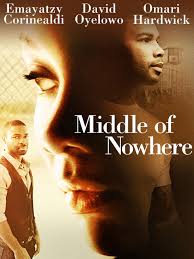 Middle of Nowhere is the second feature film by Ava DuVernay who did not make feature films until her late 30s. Two years after this film she made the portrait of Martin Luther King, Selma, and, in 2023, the exploration of investigation of racial themes in the US, Origins.
The title refers to the psychological situations of most of the central characters. But, with the screenplay and the direction, this is very much a female observation of female characters and situations, and very much geared towards African-American women who can identify with the characters and situations. While there are some sympathetic portraits of African-American men, the focus is very much on the women.
This is a story of a nurse, Ruby, played by Emayatzy Coninealdi, whose husband is sentenced to 5 years in prison, Derek, played by actor, writer, poet, Omari Hardwick. Ruby is strong-minded, devoted to her husband, demanding that he serve five years and be released on good behaviour. Four years pass.
While the audience sees Ruby at work, at home, there is a very tense relationship with her mother, played by Lorraine Toussaint, strong-minded interfering, resented by her two daughters. Ruby visits her husband in the prison and is hoping that he will soon be paroled, finding money, even borrowing from her mother, to pay for a top lawyer.
At the parole hearing, there is something of a shock for Ruby and she reacts impulsively and quietly the vindictively, a relationship with a bus driver whom she has had a passing friendship with, Brian, played by David Oyelowo, sympathetic character.
Which means that Ruby’s life and plans receive quite a blow. There is some final revelation of what was the crime and the cause of her husband’s imprisonment, her finally going to see him, explaining how both of them are in the middle of nowhere in their lives and the choices will have to be made.
- The symbolism of the title? Would Derek in prison? For Ruby waiting for him? For her mother wanting the bond with her children? For her sister and her child? And for all the characters at the end of the film? Choices?
- The work of the director, her interest in African-American themes? This film targeting black American female audiences? Identification with the characters and themes? Universal themes? The male characters, male audiences observing?
- The American city, homes, neighbourhoods, hospitals and reception, prisons, visiting rooms? The streets, the bus routes, the bus rides? Atmosphere? The musical score, its tone and style, the lyrics as background?
- Ruby’s story, her relationship with Derek, going to see him in prison, the five year sentence, her intensity, travelling to see him, making demands on his intentions, five years with good behaviour, four years passing? Her relationship with her mother, tense, her demanding mother, bringing up the girls by herself, her interfering in her children’s lives, Rosie’s resentment, preventing her babysitting her son? The meal together and its tensions? Ruby’s relationship with her sister, conversations? Her work at the hospital, nursing, competence, not going to study further?
- Audience interest in Derek, the mystery of his background and crimes, his partner and visits with the money? Intense, the pressure from Ruby, five years in good behaviour, four years passing and his good record? His presence in the flashbacks, love for Ruby, at home, the cooking, companionship? Yet the revelation of the story, absence from home for days with his friend, the guns, towards the end the visualising of the raid, the arrest, handcuffing Ruby?
- Ruby’s ordinary life, her style, manner, work, competence, the bus rides and the encounter with Brian? With Rosie, seeing Brian, the conversation, the invitation to the club?
- Ruby, finance, the parole board, her registration, finding the money to pay the counsellor, the demand for upfront payment, her creating a scene in the office, standing her ground, the compromise, the money from her mother, going to the hearing, Derek’s presence, the good report, the skills of the lawyer, and the revelation of the relationship with the guard? Ruby and her shock? The lawyer handling the situation? Derek leaving?
- The effect on Ruby, upset, wandering, the decision to go to the club, the meeting with Brian, the dancing, driving her home, going to his place, the encounter, her motivation, anger, retaliation? The phone call from Derek, her ignoring it? Explaining to Brian?
- Her going to see Derek, the discussion in the prison, her love, yet her demands, his apologies?
- The future, a reconciliation with her mother, relationship with her sister and nephew, the attack by Derek’s partner? The possibilities for Derek and four years? Her saying she would not wait in the same way? Memories of Brian? The possibilities?
