Displaying items by tag: Scarlet Johansson
My Mother's Wedding
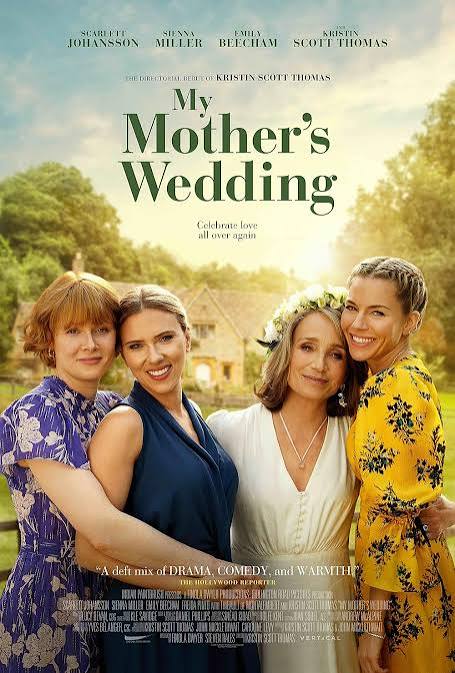
MY MOTHER’S MARRIAGE
UK, 2023, 95 minutes, Colour.
Scarlet Johansson, Sienna Miller, Emily Beacham, Kristin Scott Thomas, James Fleet, Freida Pinto, Fflynn Edwards, Samson Kayo.
Directed by Kristin Scott Thomas
It is a surprise to find that Kristin Scott Thomas not only co-wrote and starred in the film but also directed it. While there is a final caution that it does not refer to actual characters, there is a tribute at the end of the film to Kristin Scott Thomas’s two fathers.
The film starts on rather bright and breezy tone, not exactly the world of Kristin Scott Thomas’s films. Three adult daughters are introduced, the prospect of their mother’s unexpected remarriage (the two fathers of the daughters died very young on active service and have been idealised by the daughters).
Scarlet Johansson plays a naval officer being promoted to captain of a battleship. Sienna Miller is a glamorous star in Hollywood being interviewed on television. Emily Beacham is rather low-key, married, two daughters. Kristin Scott Thomas plays their mother, marrying a longtime friend, played by James Fleet.
The daughters have varied reactions to their mother’s wedding, but arrive, meet the rest of the family and guests and the wedding proceeds.
Then the film takes a much more serious tone, more in keeping with the expectations of Kristin Scott Thomas. The three daughters have a long session on the night of the wedding, raising so many memories of the past, some mutual recriminations, challenges. The next morning, their mother commands that they visit the gravesites of their fathers. There follows a very serious scene, the challenge of their mother, explaining that their fathers were two young men, with their limitations, but admirable in their service and early deaths. And the issue of taking the names of the successive fathers, revealing some complexity in the childhood attitudes of their father’s surname. The mother speaks a lot of sense to the three women.
The film ends with the naval captain welcomed on board, the family watching. (There is a problem that the captain has been in a relationship with Jack, Frieda Pinto, for 10 years, their having a son but Jack now pregnant trough surrogacy) The actress has to come to terms with her life and relationships. The wife learns of the betrayals by her husband and evicts him.
Which means that the film ends up being much more thoughtful than might have an have been anticipated with the wedding sequences.
- Kristin Scott Thomas, cowriting the screenplay, directing, performance, her personal memories, the final credits and the acknowledgement of her two fathers?
- The title, the focus on the wedding, introducing the characters, the ceremony, the aftermath? The move to the more serious interactions with the daughters? Facing up to family crises?
- The animation throughout the film, sketch style, from Katherine’s it perspective, her relationship with her father, the stepfather, her mother, nostalgia – and having to let go?
- Introduction of the three daughters, Katherine, Navy, age and experience, promotion, memories of her father, stepfather, their both dying young in action, the issue taking their names or not, 10 years relationship with Jack, Marcus and her relationship with her son?
- Victoria, the film star, glamour, the television interview, personal touches, her sisters watching, their reactions?
- Georgina, the youngest, stepsister, quiet, her husband and the revelations about his infidelities, her children?
- Diana, getting married, her love for Geoff, his being quiet, personality, supportive? Her two husbands, their early deaths? Her relationship with her daughters? Grandchildren, other members of the family?
- The marriage itself, the gathering, getting ready, the ceremony? The reception, celebration, everybody participating?
- The evening, the film turning serious, the discussions amongst the three sisters, the relationship, love, irritations, memories of their respective fathers, their idealising them? Katherine and Jack telling her of the surrogacy and her being upset? Victoria and her relationships? Georgina and the infidelity of her husband? The reactions, the consequences?
- The episode of the boy in the tree, the calling of the fire brigade, Geoff and his help, the variety of reactions?
- The next morning, the aftermath of the daughters talking? Katherine and her son, his gift of the ring, her having to go back to the ship?
- The episode at the grave, Diana and her stern talking to her daughters, sense of realism, admiration of the two husbands, but acknowledging their limitations, dying young, heroism, the daughters idealising them, the issue of the names, the role of Katherine and keeping her father’s name, Victoria and her reaction, the truth about Diana relying on Katherine? Georgina and her ousting her husband? Victoria, relationships, future?
- Going to the ship, the ceremonial entry of the Captain, the parade, the crew, Katherine in charge, the family watching, the reconciliation with Jack and the kiss, Marcus and proud response to his mother, Diane and her response – and the elderly man at the reception and Katherine watching him leaving the car, letting go of the past, facing the present and future?
Eleanor the Great
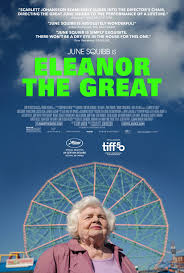
ELEANOR THE GREAT
US, 2025, 98 minutes, Colour.
June Squibb, Erin Kellyman, Chiwitel Ejiofor, Jessica Hecht, Rita Zohar, Will Price, Stephen Singer.
Directed by Scarlett Johansson.
The title of the film does not appear until the end – after we have come to know Eleonor very well. Had the title been at the beginning of the film it might have read: Eleonor the Abrasive. She is a bit of a tough case!
This is a star vehicle for veteran actress, June Squibb, turning 96 when the film was released – though her character is only 94! Recently, June Squibb was seen in an action comedy, Thelma. She is certainly a good advertisement for life in the 90s!
Eleonor is a widow, a convert to Judaism, now sharing an apartment in Florida with her longtime friend, Bessie, also a widow with family (a very moving performance from Rita Zohar). But Bessie is from Poland, lost her family during World War II, Auschwitz, moving to the United States. There are many very moving scenes where, just sitting at the table with Eleonor, Bessie recounts the sad experiences.
When Bessie dies, Elinore has to move back to New York, rather hard on her daughter, more cheery to her grandson. But, in Florida, we have seen some examples of how Eleonor can be more than forthright, sarcastic, rude. We know that she will be changed by the end of the film (or we hope so) but we are wondering how this will be achieved.
Her daughter arranges for Eleonor to go to the local Jewish centre and join a group, in fact a Holocaust survivor group, and, we dread it as she begins, but she tells Bessie’s story as if it is her own. And there are many consequences with Eleonor trapped in this new identity.
And, at the first meeting, there is Nina (a very pleasant Erin Kelleman), wanting to observe, write an article for her journalists’ course. And she is very moved because she has just lost her mother, an artist, in an accident, and her television personality father, Roger (Chiwitel Ejiofor) has become closed in on himself.
One of the directions the film goes in is that Eleonor, a convert, goes to synagogue every Saturday, observing young girls with the bar mitzvah, regretting that she never had one, going to the sympathetic rabbi – and his text for her is the story of Esau and Jacob, Jacob’s deceiving his father, Isaac.
Nina and Eleonor bond, Eleonor beginning to mellow, sharing emotional stories, Eleanor a good listener, shopping with Nina, buying a bright red suit for her bar mitzvah ceremony.
And, then it happens, but you will have to see the drama in the synagogue and how everything will be resolved.
Bessie’s conversations in storytelling with Eleonor are inserted throughout the film and, especially at the end, moved by her sincere sadness, we listen, tearfully, to Bessie’s memories and her grief.
A pleasing film, delight with June Squibb’s portrayal of Eleonor, the tangle of her telling Bessie’s story as her own, friendship with Nina and the reconciliation, Nina and her father, a mixture of laughter and tears.
This is a first feature film directed by well-known actress, Scarlet Johansson.
- An American story, the Jewish story, Holocaust story – in the 21st-century US?
- Florida, apartments, the beach, shops? New York, the Bronx, the apartments, the streets, Jewish centre, the synagogue, the University, television station? Atmosphere? The musical score and atmosphere, the popular songs, and I’m Still Here, Blue Skies?
- The title not appearing until the end, Illinois initially abrasive, the audience anticipating the change – and the joy and sadness of the change?
- Eleanor, midwest background, marrying Harry, family, relationship with her daughter, grandson? That it husband? The friendship with Bessie, Bessie’s background, Poland, the Holocaust, her telling her story, the sadness? The bond between the two, the room, getting up, breakfast, shopping, wanting the Kosher objects, and abrasive with Charlie the attendant? Abrasive with the friend at the checkout counter? Bessie, sad, in hospital, pretending that she was related to the founder of the Stern Hospital, Bessie dying, Eleanor sitting alone at the beach?
- Eleanor and the phone calls with her daughter, the flight, meeting them at the airport, grandson, the bond, clashes with her daughter? Going home, her comments, criticisms? Her daughter, divorced, working, the difficulties with her mother, no affirmation? The prospects for Eleanor, into care?
- In New York, going to the Jewish centre, the initial encounter, the music and singing group and her reaction, going to the Holocaust group, the introduction, Nina and her presence, observing? The question to her, her taking on Bessie’s identity, telling the story, the pathos, the response? Nina and wanting to write her essay, wanting to interview Eleamor? The emails, phone calls, arriving at the apartment?
- Roger Davis, his program, in denial, The Fabric of New York? The audience appreciating Nina as his daughter, the death of her mother, her father’s distance, not mentioning her mother, not really listening, absorbed in his work? Her feeling neglected? Her personality, alone, gay identity, talking with Eleanor, Eleanor understanding, the bond between them, Eleanor continuing her story? Nina writing the story, giving it to her father, her father’s affirmation of the story? Wanting to take it further, Nina and the students and the professor, Eleanor’s wariness, Roger and his wanting a television program? The setup and the synagogue?
- Eleanor, converted to Judaism for her husband, attentive, explaining synagogue to Nina, Nina not practising but being Jewish? Eleanor regretting not having a bar mitzvah, the young girls, the celebration after the ceremony, chattering, Eleanor wanting a bar mitzvah, talking to the rabbi?
- The preparation for the bar mitzvah, the story of Esau and Jacob, deceit for a good purpose and its relationship to Eleanor’s telling the story? The going together shopping to get the red outfits for the ceremony?
- Eleanor, telling the lies, her motivation, sharing Bessie’s story, the response, continuing? Going to the synagogue with her grandson, the roadblock, getting the taxi, her mother and grandson following, and the denunciationat the Synagogue, the members of the group disillusioned, Nina shocked? Eleanor trying to explain, the results?
- Nina and the conversation with her father, his expressing sympathy, on the television program, his telling the truth about Eleanor, her watching it in the aged care home, her daughter and grandson watching it, the members of the group? Roger and his explanations of Eleanor’s background, her long friendship with Bessie, wanting to tell her story and identifying with it? Nina at the studio?
- Nina, visiting Eleanor, the reconciliation, her mother and grandson coming?
- The flashbacks throughout the film, the character of Bessie, the pathos of her story, tearful, the device of having the flashbacks and the audience hearing Bessie’s version of the story, and the final, the two of them together, and coming to terms with the loss of Bessie, and more affable taunts people?
Jurassic World: Rebirth
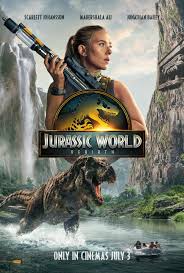
JURASSIC WORLD: REBIRTH
US, 2025, 134 minutes, Colour.
Scarlet Johansson, Jonathan Bailey, Rupert Friend, Mayerasha Ali, Ed Skrein, Manuel Garcia-Rulfo, Luna Blaose, David Iacono.
Directed by Gareth Edwards.
It is 32 years since Steven Spielberg skilfully drew us into the world of Jurassic Park, bringing to life the story and characters written by Michael Crichton. Spielberg himself made a sequel in 1997. But, over the years, quite a number of ventures into and adventures in the Jurassic World. And another one…?
Best to say immediately that this reviewer quite enjoyed this Rebirth. Certainly, many of the reviewers will say that it is formulaic, that the characters and the action are what we might expect, that we know what the dinosaurs are like, what they are capable of, what they will do in terms of menacing those who venture/intrude into this Jurassic World. And it is true that this film is formulaic (even written by regular Spielberg collaborator, David Koepp).
But the point to be made is that in a way, the formula doesn’t matter. It is what happens within the formula that is important. And, inside the formula here are a whole lot of episodes designed to keep the audience anxious, on the edge of their seats, feeling the sense of menace, and enjoying it all at the same time. It works.
The opening shows the island where experiments taking place in the 2000s. Apparently everybody had got used to dinosaurs, going to zoos and other exhibitions to watch them, but now finding other things to amuse. The museums are closing down in the cities but on the island, there are experiments to make bigger and more menacing dinosaurs. Then, an initial moment which seems to undermine the credibility of the film, one of the experts opens what looks like a Mars Bar and carelessly drops the wrapper. Needless to say, it is swept into the machines and causes havoc – and the careless wrapper is devoured by a dinosaur! All that within the first few minutes. The experimental station is closed down. And the dinosaurs, some even more gigantic, are on the loose.
Then, to the present. A group of entrepreneurs, mercenaries, scientists, Rupert Friend, Scarlett Johansson, Jonathan Bailey, taking on these roles, set out on a mission to the equator, where numerous dinosaurs are still swimming, to get blood samples which, it is hoped, would contribute to the preparation of pharmaceuticals to alleviate heart disease.
In case this was all too is expert-oriented, there is a Hispanic family on a boat, father, two daughters and a lazy boyfriend, who are attacked by a dinosaur, boat overturned, rescued and sharing the action of the scientific expedition.
The impact of the film is the enormous range of action adventures, dangers, menace, a Jurassic World on the ocean. But, then a crash landing of the boat, survivors onshore, and the trek through the jungle, mountains and rivers, to a helicopter rescue intended near the old buildings.
Scarlet Johansson in charge, we are in good hands, backed up by a genial Mahershala Ali. Motivations are mixed, especially greed and the fatigue of the millionaire pharmaceutical entrepreneur. But, the best of intentions will prevail.
Yes, the Jurassic formula, but plenty of exciting confrontations with the dinosaurs.
- More than 30 years of Jurassic Park/Jurassic World? The tradition? Dinosaurs, experimentation, consequences?
- The prologue, 17 years earlier, the island, the Centre for experimentation, the careless scientist and the wrapper, the breakdown, the disaster, his being destroyed? The island abandoned? Memories of the earlier films?
- The present, the different situation, people used to dinosaurs, in zoos, exhibits, lesser interest? The scientists, studies? The closing of the zoos, the closing of the museums?
- Martin Krebs, his character, pharmaceuticals, big business? His background? His approaching Zora Bennett, her background, character, mercenary? Motivations, money? The discussions, her agreement, the proposal, the particular dinosaurs, to get samples of their blood, to be used for heart condition experimentation and medications? The approach to Henry Loomis, his work at the Museum, knowledge, quiet life, his decision to go on the expedition?
- The surviving dinosaurs, around the equator, people forbidden to go to the area? Martin Krebs, Zora and the link with Kinkcaid, his boat, the bargaining, the two members of his crew? Setting out on the expedition?
- The Jurassic world of the Ocean, the surviving dinosaurs, their size (and the special effects)?
- The family, on the boat, a family reunion, the genial father, the teenage daughter about to study in New York City, the saviour, her lazy boyfriend, Isabella and her age? The discussions, the situation, the approach of the dinosaur, overturning the boat, the fact that they were seen, the flare, the rescue?
- The approach to the dinosaur, the size, the activity, the threats? Zora, attempting to shoot the dart, eventually succeeding? The dangers, Henry collaborating, the family on the boat, Martin Krebs and his urging them on? Kincaid and his observing?
- The continued dangers, the threats of the dinosaurs, the decision to crash land the boat, the family falling out, the daughter and Krebs not rescuing her, stopping her calling the Mayday signal? Her resentment? The contrast with Xavier, showing some heroism, leaving of the boat to save his girlfriend?
- The members of the crew, packing up, leaping from the boat, the landing, the crewmember and her pushing the load, taken by the dinosaur?
- The action of the family, making their way to the village, the dangers, the dinosaurs, taking cover, the little dinosaur and the daughter, the licorice? The sentiment with the pet? The father and his leg injury? Audience participation in the dangers, in the night, Xavier peeing and the fight behind him? The pipeline, finding the pier, the raft, inflating it, the attack of the dinosaur, overturning it, the hiding, the little girl under the raft, turning it over, the continued ride, their arriving at the ruined base?
- The team, the journey through the valleys, the mountains, the dinosaurs, the huge dinosaurs with the long tails, able to get the sample? On the cliff, the sheer cliff face, going down, the member of the crew taken by the dinosaur? Zora and Henry, into the cave, the eggs, the attack of the mother, repelling her, with the egg, Krebs and Kincaid and the ropes, the final rescue? Making their way to the base?
- The base, abandoned, the cafeteria, hearing Stand by Me? Everybody reunited? The daughter and her resentment towards Krebs? The strategies, the attack of the dinosaurs, winding the underground tunnels? The various adventures in the tunnels, Krebs and his taking the vehicle, with the samples? The drive, out-of-control, confrontation with the dinosaurs, his crash and death?
- Kincaid, wanting to help, the helicopter, the surveillance, turning back, Henry lighting the flare? The helicopter crash? The interactions, Kincaid with the flare, tracking the dinosaur towards him, the others escaping, getting to the shore, the dangers, the little girl with her pet, the boat, everybody on board, sailing away, the flare and the rescue of Kincaid?
- The generally formulaic plot – but audiences not minding the formula because of the vitality, interest and tensions of all the episodes?
Phoenician Scheme, The
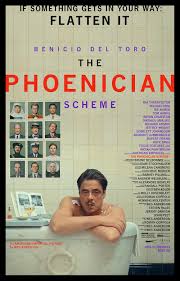
THE PHOENICIAN SCHEME
US, 2025, 101 minutes, Colour.
Benicio del Toro, Mia Threapleton, Michael Cera, Riz Ahmed, Tom Hanks, Bryan Cranston, Mathieu Amalric, Richard Ayoade, Jeffrey Wright, Scarlett Johansson, Benedict Cumberbatch, Rupert Friend, Hope Davis, Bill Murray, Charlotte Gainsbourg, Willem Dafoe, F. Murray Abraham, Stephen Park, Alex Jennings, Donald Sumpter, Scott Shepherd.
Directed by Wes Anderson.
A significant part of the review for The Phoenician Scheme is to look at the huge credits list, many of the cast having appeared in a number of Wes Anderson films. And, of course, expectations from writer-director, Wes Anderson. Anderson has been writing and directing films, including two animation films, for more than a quarter of a century. His tyle and his exploration of themes is, to say the least, highly distinctive.
And, The Phoenician Scheme, is quite idiosyncratically distinctive. It is very stylised in the visuals, the traditional box screen frame, the framing of action, the references to paintings and the staging looking like 20th century paintings. Then there are the performances, also stylised, often life theatre performances, eccentric and clipped delivery of lines, postures and posing. And, for those audiences ready to surrender to Anderson, there are many who do, these visuals and the performances are readily engaging.
There is a plot. The setting is 1950, an entrepreneurial businessman from Hungary, Korda, played perfectly, both seriously and ironically, by Benicio del Toro. He has survived several plane crashes, assassins out to get him and sabotage his plan for development, rails and tunnels in Phoenicia. We are presented with a chart indicating his plans as well as the contacts he must make to improve a shortfall in income project. They serve as chapters for the film.
Korda has many children, his own and adopted, hoping for an Einstein for the future. But his only daughter, Liesl, a novice nun, played by Mia Threapleton, is seconded, initially unwillingly and firmly committed to her vocation, to be his heir. (Mia Threapleton is following in the footsteps of her mother, Kate Winslet, a very interesting role.) And, there is Kord’a new assistant, expert on insects, played with accent by Michael Cera.
Interspersed throughout it is round table conference of elders who are monitoring Korda’s behaviour judging him and his morality accordingly.
The encounters with the various characters for financial help are highly entertaining, eccentric and satirically humorous in their way, incorporating the various stars listed above until a culmination in the fearsome presence of Benedict Cumberbatch Korda’s brother.
Then there are Korda’s memories and dreams, flashbacks in black-and-white, some of his near death, or momentary post-death, experiences, some ecclesiastical in an Orthodox style, others with biblical overtones, again with a number of stars – and a cameo by Bill Murray, who has been working with Anderson for a long time, culminating in his presence as God.
Anderson has a wry and offbeat sense of humour, so often the unexpected, some realism and then some surrealism, farcical moments, deadly serious moments, tantalising the audience, a treat for those who are willing to be tantalised.
- A Wes Anderson film, style, visual, verbal, humorous, satirical, ironic? Underlying serious themes? The strengths of his casts, many actors reappearing in his films?
- The visual style of the film, but colour like 20th century contemporary paintings? Sets and decor? Photography, the black and white flashbacks? Staging of the action, like stage performance, all postures and posings? The stylised action sequences? The performances, stylised and realism? The language of the screenplay, the particular style of delivery? The overall effect and response?
- The setting in 1950, memories of World War II, business enterprises after the war, international entrepreneurs, international projects and finance?, Double dealing?
- The explanation of Korda, his business acumen, the 5%? The background of his marriages? Children and adopted children, hoping for an Einstein? His relationship with his daughter, novice nun, seconding her, naming her as his heir? His staff, his planes, the plans to kill him, his surviving the various crashes?
- The plane ride, his assistant cut in half and swept away, the crash, surviving? Meeting his daughter, her personality, severe, dedicated to the convent, contact with the mother superior, wanting to make her vows? Her not knowing her father, his reputation with her? Her unwillingness to be part of his empire? The plan, her observing his behaviour, learning more about him, her beads, images, sign of the cross, holy water?
- Bjorn, Scandinavian background, accent, present on the plane, his role as assistant, his expertise on insects, his attraction to Liesl, declarations? The comic style of his character, interactions?
- The Phoenician scheme itself, tunnels and railway, the finance, the image on the screen with the various contacts for making up the gap in finance? The structure of the film, the various contacts?
- The background of the assembly, the business discussions, the following of Korda, the decisions about his business and morality?
- The Americans, in the tunnel, on the train, the discussions, suspicions, the meeting with the Prince of Phoenicia, the attack by the camel riders, the Prince saving Korda? The financial discussions, the proposal of the basketball competition, the Prince and his ignorance of the game, Korda hopeless, the skill of the two Americans, yet the Prince succeeding? Getting a grant?
- Going to Marseille Bob, the manager of the club, past relationship with Korda, Liesel and Bjorn observing, the raid on the club, the freedom fighters, the personality of Sergio, Bob upset about the roof, and Korda taking the bullet for Bob? Getting the grant?
- Marty, fast talking American, suspicious of Korda, Korda shot, Marty providing the blood transfusion, making an agreement?
- Going to see Hilda, the distant cousin, her financial knowledge, the prospect of the marriage, her place in the family, with Liese?
- The flight, going to see Nubar, the crash, the jungle, Bjorn and his being unmasked as an agent, his siding with Korda, Korda in the quicksand, Bjorn rescuing him, the arrival of Sergio and his revolutionaries, taking the group to safety?
- The encounter with Nubar, looking sinister, the relationship, the mastermind behind the assassination attempts, discussing the family, the finance, the satirical physical fight between Nubar and Korda?
- Korda, death experiences, near death, his life before him, black-and-white photography, the bearded Orthodox-like sequences, the characters, judgements? The biblical sequences, the personalities, the pageantry, Bill Murray as God?
- Liesl, the contact with the mother superior, her being present for the business deals, the money for the community? Liesl opting to leave the convent?
- The finale, Korda and his being honest, losing everything, restaurant, the working in the kitchen, father and daughter, reconciled, and a happy life?
- The Phoenician Scheme movie
- Wes Anderson
- Peter Malone's Movie Reviews
- Benicio del Toro
- Mia Threappleton
- Michael Cera
- Riz Ahmed
- Tom Hanks
- Brian Cranston
- Jeffrey Wright
- Richard Ayeode
- Benedict Cumberbatch
- Scarlet Johansson
- Charlotte Gainsbourg
- F Murray Abraham
- Willem Dafoe
- Rupert Friend
- Donald Sumpter
- Mathieu Amalric
- Bill Murray
- Hope Davis
- Alex Jennings
Fly Me to the Moon
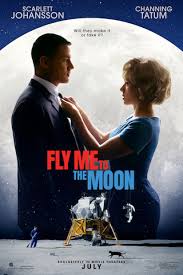
FLY ME TO THE MOON
US, 2024, 132 minutes, Colour.
Scarlett Johansson, Channing Tatum, Woody Harrelson, Ray Romano, Jim Rash, Anna Garcia, Victor Garber, Donald Elise Watkins, Noah Robbins..
Directed by Greg Berlanti.
On the one hand, this is an old-style romantic comedy, memories of the 1930s and what was called screwball comedy. On the other hand, the setting is 1969, NASA, preparations for the moon landing, its achievement. And they come together entertainingly here.
For those of those who remember 1969, it is a welcome reminder of the atmosphere of the time, the heightened excitement as July neared, the actual landing, “one small step…”, The sense of achievement, something of a balance to the turmoil of the Vietnam war. Audiences for whom this is something of remote history, it is an opportunity to learn something of the atmosphere of the times.
In the 21st-century, we live in an age of conspiracy theories, many of them outlandish. However, even back then , there were conspiracy theories that the moon landing did not happen, that everything was manufactured on the studio lot – and the film later re-creating this speculation, Capricorn One.
The screenplay here amusingly incorporates the conspiracy theory of the fabrication of the moon landing along with the real thing.
Scarlet Johansson is definitely the star of this romantic comedy, Kelly Jones, one of her most forceful performances, something of a con artist, skilful in promotion and advertising (which we see in the opening sequences and are somewhat taken aback), then recruited by a mysterious secret agent who claims he has a line directly to President Nixon, and played with smilingly smug complacency by Woody Harrelson. Her mission is to make the moon landing and its preparations much better known to the American public.
What follows is an extraordinary look at American brashness, self-confidence, promotion of any product by any means possible – and here, on radio, television, imprint, rallies, breakfast cereals, omega watches, soft drinks are all incorporated into the promotion as well as, more seriously, some extraordinary lobbying of senators who are inclined to cut off funds for NASA.
Kelly is able to rise to every occasion, walking over most opposition, changing her accent at a moments notice, flirtatious one minute and religiously devout the next!
The other part of the romance is Channing Tatum, rather more serious, a touch sombre, a former Korean pilot, the launcher chief for the Moon project, very conscientious about his work – though the screenplay is a bit satirical about him and his style. When, by chance, at a diner, he sees Kelly, he is infatuated – but soon disillusioned when he discovers her mission, how she operates, the manipulation of truth and lies. But, he does get caught up in the melodrama, often unwillingly.
While the film is very strong in its presentation of the NASA work, the visuals of the plant, the control room…, It entertains the audience with the whole setting up of the fake landing, the studio, moon rocks and dust, space vehicles and gear, all rehearsals about space walking… And extraordinarily prissy director.
A wandering NASA black cat is key to the events – especially for the fake landing.
So, on the one hand, romance and comedy. On the other, memories of when America was greater than it is now…
- The title, the song? Romantic comedy? Screwball comedy? Preparations, achievement of the moon landing, 1969?
- A piece of Americana, the advertising and promotion world, science and technology work and space, politics, agents, cover?
- Cape Canaveral, 1969, the reconstruction, the tallest single story building, interiors, the plant, the layout, the control room at the desks, the comparison with the ordinary, motels, diners, the wharf, and the set for the reconstruction for the moon landing?
- The musical score, echoes of the 1960s, the range of popular songs of the period?
- The introduction to Kelly, the pitch about the cars, pregnant, challenging the executives, naming their cars, revealed not to be pregnant, to research the information? Their reaction on discovering the truth? Ruby as her assistant?
- The buildup of Kelly’s character, her revelations about her past with her mother, then the mother and the shooting, telling her daughter to run, change of names, experience with scams, moving into various industries, finding a home in advertising? Her personality, forcefulness? Her being recruited by Moe, his hold over her, explanations?
- The introduction to Cole Davis, the Korean War background, his work with NASA, launch control, his responsibilities in the failed attempt on the deaths of the astronauts, preying on him, the garden at the monument? Best pilot, heart condition, rejected for space? Project with Henry Smalls, working with him? The introduction, the escaped gas, using the broom, everyone observing, the explosion? His deadpan style? He is visit to the diner, looking at Kelly, her pages on fire and dousing them, his declaration about her?
- Kelly and the job, promotion of the Moon journey, for American consciousness? The world of advertising and promotion, American push and know how? Her charts, the drinks, the watches, cereals…? The television contacts, her barging through the plant, taking Walter’s entry card, the challenge by Cole?
- Moe, his ambitions, secret agent, ear of the president, persuading Cole to do the television interview? His hold over Kelly? The plan for the alternate moon landing? Kelly and the previous contact with Lance, his cruising manner, tantrums, perfectionism, ambitions, job, secrecy, expectations?
- The months of 1969, the work in preparation for the liftoff, Cole and his responsibilities, relationships with people, decisions? Henry Smalls, personality, collaboration, smoking, talking with Kelly, the need for verisimilitude for the fake moon landing, the tactics, getting Henry to show everything, promising the four work to the book?
- The relationship between Cole and Kelly, his wariness, her brashness, sharing experiences? Ruby and the young technician, his awkwardness? The dances? The two young men and their enthusiasm, the staff in the 20s, the order in their 30s?
- Solving problems, the Congress votes, the senators, the techniques that Kelly used to persuade them, the vain senator and photo opportunities, visit to Louisiana and the religious people, quoting the Scriptures? Kelly and her ability to adapt, lies and impersonations?
- Kelly apprehensive about flying, the flight, the success of the mission, the relationship?
- Kelly persuading Cole to do the television interview, his being unwilling, her preparing the questions, the interview, the intrusion by the interviewer, his angry reaction?
- Moe the issue of the cameras, disabling the shuttle, getting the sound feed, but showing the fake landing? The preparations, the set, the camera, sand desert rocks? The actors and their impersonations?: His reaction to the actors? The rehearsals, the comic touches and failures?
- Kelly, disillusioned, the confrontation with Moe, her decision to leave, the airport, his talking with her, her change of heart, the return, the explanation to Cole, the issue of fixing the camera on the shuttle, the two young men, her driving, smashing the window, the television set, the police escort, the last-minute change? Tensions?
- Walter Cronkite, the millions watching on television, the crowds at Cape Canaveral? The liftoff, the flight?
- The landing, the real, the fake performance, the sound, the “one small step…”? Checking what was real, the blurry nature, Moe wondering whether this was fake? The ultimate success? Moe and his change of heart, pride?
- The success of the mission? Kelly and the revelation of the truth about herself? Ruby and the young technician? The future?
