Displaying items by tag: Omar Sy
Book of Clarence, The
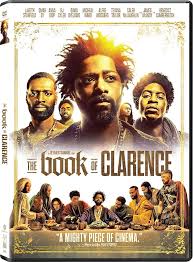
THE BOOK OF CLARENCE
US/Italy, 2023, 129 minutes, Colour.
LaKeith Stanfield, Omar Sy, R.J.Cyler, Anna Diop, David Oyelowo, Alfre Woodard, Teyana Taylor, Micheal Ward, Caleb MacLachlan, Marianne Jean-Baptiste, Eric Kofi Abrefa, James McAvoy, Benedict Cumberbatch, Chase Dillon, Nicholas Pinnock.
Directed by Jeymes Samuel.
The Book of Clarence can be recommended for all kinds of reasons, first of all, that it is nothing like what we might expect! It has been written and directed and musical score, by British musician, Jeymes Samuel, stage name The Bullits. His previous film was The Harder They Fall, a strong Western, a focus on black Americans in the 19th century, victims, dominating, urging the audience to look again at their familiar image of the American West.
The Book of Clarence is billed as a comedy biblical adventure! And it is. And, even though the focus is on Clarence, this can be seen also as a very strong Jesus film, though in plot terms, he is a supporting character.
Once again, the cast is either African-American or of West Indian descent. A glance at the cast indicates popular names like Omar see, David or no, Alfre Woodard, Marianne Jean Baptiste. The exception being Benedict Cumberbatch, playing Benjamin the beggar in the early part of the film and then being transformed, actually by Jesus himself, and making points about false Messiahs at the end of the film. James McAvoy leads the white cast of obnoxiously Roman soldiers.
But, back to Clarence, played engagingly by the very talented LaKeith Stanfield. In fact, the film opens with a kind of Ben Hur chariot race variation, introducing Clarence, avery 21st-century, in fact, in the Jerusalem neighbourhood, the Jerusalem “hood”. He is something of a con man, is in debt to a local loan shark, though in love with his sister, into drugs, but also more often into bad luck.
But, impressed by Jesus and his followers, especially since it turns out that Clarence is, in fact, the apostle Thomas’s twin brother (who is mentioned but not named in the Gospels). Clarence actually applies to the apostles to be the 13th but is turned down, Thomas himself very disdainful of his brother, and Judas urging Clarence to prove his worth by going to a gladiator school and freeing the gladiators – which means that we have besides Ben Hur, homage to Spartacus and gladiator.
But, what makes the Jesus connection even more interesting, and Jesus does appear very sympathetically at various times throughout the film, Clarence is impressed by acclaim for Messiahs and so sets himself up with his friends, refused baptism by John the Baptist, but nevertheless going around preaching, organising fake miracles, profiting highly.
But, can it last? There has been a spoiler right at the beginning of the film with Clarence being crucified. And in suffering, he parallels Jesus, and antagonistic young fellow actually help him carry the cross to Calvary. Clarence does have a conversion experience, compassion, charity beyond himself, some redemption.
It is then that Benjamin emerges, Jesus having giving him money, and a gift for multiplying money which Benjamin spreads around, Benedict Cumberbatch looking like a traditional image of Jesus, but self-seeking and a false Messiah.
The film ends very respectfully of Jesus, a visit to Clarences tomb, and hope of resurrection.
Not what we might have been expecting, but always interesting, entertaining, and, certainly, thought-challenging.
- Title, striking, biblical overtones? The work of the director, writing, directing, music, race issues?
- The locations for Jerusalem, the Italian town of Metairie and its presence in other biblical films? The vistas, buildings, the roads, the sea?
- The first century A.D. variation on Boys in the Hood, the Jerusalem Hood, drugs, gangsters, gambling, debts? Vengeance?
- The musical score, the range of songs, the final credits?
- The three chapters for the Book of Clarence? The introduction, Clarence and his mission, the crucifixion? The beginnings of the parallels with the Gospel story of Jesus?
- The acknowledgement of Roman Empire films, Ben Hur, gladiator…? The influence of biblical films, Jesus films? In the central character and Brian in the Life of Brian?
- The opening race, introducing Clarence, Mary Magdalene and her defiance, Elijah as Clarence’s friend? The chariot race in Ben Hur, the excitement, the Gypsy area, the intervention of Cabbage and his domination, the crashes, taking Clarence’s coat? The bond between a lighter and Clarence, as brothers, his reaction to the loss? The visit to Jedediah, the confrontation, Clarence and his attraction to Marigny, Jedediah’s sister? Her reticence, shyness? The banter between Clarence and Jedediah? The time limit?
- Thomas the apostle, called Didymus, the twin, in the Gospels? The imaginative interpretation of Thomas and his twin? Thomas, leaving their mother, following Jesus, stern, loyal to Jesus, 10 minutes older, but deriding his brother, a nobody, doomed to failure? Their various encounters? Clarence and his challenge, Thomas’s reaction to Clarence’s behaviour? Clarence and his visit to the apostles? His suffering and Thomas coming to apologise, reconciliation? Clarence and the scenes with his mother, his debts, after the race, her encouragement, smelly? Her reflections on his life, on Thomas? Encouragement on the way of the cross, at the crucifixion?
- Clarence and his fascination with Jesus, the significance of the visit to Mary and Joseph, Mary and her explanations, Clarence and the mistaking of the Immaculate Conception for the virgin birth, Mary and her convictions about God’s presence? Joseph, his presence, supporting Mary, calling Clarence a dumb ass?
- Clarence and his need to raise money, his observing of Jesus, the failed Jesus walking through the on guard, the claim of Messiah? Clarence, not believing in God, defying belief? His theory that knowledge was more important? But his idea of impersonating a Messiah, with the help of Elijah? His paralleling of Jesus miracles, raising the dead, curing the sick…, Elijah performing? The taking up of the collection from the crowd gathering? Believing him as a Messiah? His preaching, the effect on him, those collection of money?
- His visit to the apostles, the encounter with Judas, Judas and his taunts, urging him to go to the gladiator slaves, confront the torturer, get the release of the prisoners? Clarence going, the reaction of the torturer, singling out Barabbas, the challenge to the fight, Clarence and his moves, Barabbas and his reactions, the torturer allowing Barabbas to go? Barabbas joining the troop of the wood-be Messiah?
- The encounters with the Romans, white, their arrogance, the reaction to Barabbas, the officer and his javelin is, throwing them out Barabbas, Barabbas and his defiance, escaping, and his nickname of Immortal?
- Clarence, the effect on his charade, the slaves, getting a conscience, taking the money and buying back the slaves, freeing them? Judas and his response?
- The encounter with Jesus, Mary Magdalene, the adultery, the parallel of John chapter 8, Jesus and the stones, is suspending them in the air, their falling, defying the authorities, letting Mary go free, the friendship with her?
- Jedediah, the party, with Varinia, declarations to her, the upset, his feeling betrayed by her?
- The presentation of the Last Supper, acknowledgement of da Vinci’s painting? The two issue with Judas, betrayal, the scenes with the Jewish authority in the 30 pieces of silver, Judas and the promise of betrayal, at the supper, the issue of Mary’s gravy, the taste, his going out?
- Jesus, knowing he was betrayed, waiting for the moment, accompanied by Mary?
- His arrest, the Romans, the encounter with Pontius Pilate, Pontius Pilate and his manner, racial superiority, arrogance, interrogation, the sympathy with Clarence, Clarence and his commitment, defiance, the parallels with Jesus before Pontius Pilate? Condemned to be crucified?
- The visuals of the way of the cross, the Jesus parallel, the defiant crowds, his mother in the crowd, encouraging him, Elijah and the encouragement? On Calvary, the vivid nailing to the Cross, raised, Henning, hanging, the presence of Benjamin, the past encounters with Benjamin and his spurning him, not recognising him, Benjamin and his worldly defiance? The Romans, the decision to pierce Clarence’s side? Again the Jesus parallel?
- Benjamin, the begger, spurned by Clarence, the later scenes of his banking, the encounter with Jesus, the money, his clean himself up, becoming like the traditional portrait of Jesus, his gift of being able to multiply the money? His arrest, a false Messiah accusation, being crucified?
- Clarence, the burial, the stone, the breaking up of the stone, Jesus entering, tender with Clarence, raising him to new life? Immortality?
- The overall effect of the film, the serious, the comic touches, the criticisms of blasphemy, the Christian defences against accusations of blasphemy? The enjoyment of a biblical epic? Jesus figure treated seriously and with respect? And Clarence paralleling Jesus and becoming a Christ figure?
Killer, The/ 2024
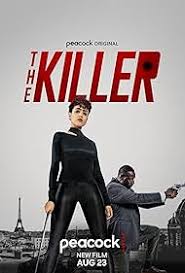
THE KILLER
France, 2024, 126 minutes, colour.
Nathalie Emmanuel, Omar Sy, Sam Worthington, Diana Silvers, Said tTaghmaoui, Eric Cantona, Tcheky Karyo.
Directed by John Woo.
In the 1970s and 1980s, John Woo was one of the key directors of action filmmaking in Hong Kong, with a distinctive style, arresting moments, framing and editing, elaborate action sequences.
The Killer was one of his most acclaimed films, a star vehicle for Chow Yun-Fat. Woo then moved to filmmaking in the United States, most strikingly in Face/Off with John Travolta and Nicolas Cage. While he continued to make some films in the United States, he also went back to China, a number of striking historical films.
In his mid-70s, he made this film, a remake of his 1989 film, this time focusing on action in Paris, and the killer being a young woman, Zee with a very troubled background, skilled in assassinations and escapes, disguises, under the control of a Rogue Irishman played by Sam Worthington who works for a crime boss Eric can turn. He is played by British actress, Nathalie Emmanuel, noted for being one of the stars of Francis Ford Coppola’s.Megalopolisa
There are very exciting set pieces in the John Woo manner. There are car chases, confrontations with criminals, quite an episode in a nightclub where a young American singer is wounded, hospitalised, but ordered for elimination. Zee takes compassion on her, pretends to be an American official just as the police come to interrogate. And the policeman is played by Omar Sy with his customary charm. He plays an officer with a chequered career record.
Quite some further complications, orders for assassinations, threats to Zee herself, money deals, a suspicious Arab prince, Zee wanting to protect the singer, threats to her own safety, ultimate confrontations.
While a world of hired assassins is amoral/immoral, the screenplay weaves human themes and conscience issues throughout.
21st-century audiences will enjoy the film, characters, drama, action – but many old-timers and critics, probably expectedly, wrote it off as not to be compared with the original.
- The films of John Woo, in Hong Kong, in the US, in the 20th century, later films, this remake, 2024?
- The Paris settings, the views of the city, landmarks, the streets, buildings, car chases, bikes, stunt work and special effects? The musical score?
- The title, the focus on Zee, her story, family, exploited, criminal, the revenge on her pimp shooting him, her skills, becoming a hired killer, Finn as her controller, her lonely life, her friendship with the tailor, his making the suit for her, her commission to go to the club, the disguise, suit and hat, searched, Jen singing and her fascination, the confrontation with the criminals, her weapons concealed, the violence of the deaths? Jen hitting her head, going blind? Her escape?
- The de-consecrated church, the candles and her lighting them for her victims, the images of the crucifix, the way it was filmed, commenting on the action, the Christian symbolism? The empty church, the birds, her going to pray and reflect, the meetings with Finn?
- The criminal background in Paris, the boss, dealings, ruthless, international connections, his control, known to the police, his moods? His working with Finn? The Prince? The plane, the robbery of the drugs, Finn concealing them?
- The police, the drug situation, the criminal world, their knowledge, political pressures? The role of the Prince and their shielding him?
- Sey, his integrity as a police officer, his career, memories of being shot and the revelation that it was Zee who shot him? His partner, the shootouts and chases, his partner wounded, his wife pregnant? The bond between them? The disillusionment of his final betrayal, setting up Sey, snipers, his standing on the spot as target, Zee saving him, shooting the assassin?
- Sey and his investigations, his relationship with the authorities, his skill with the gun, pursuit, in the car, crashing into the drug dealer, the confrontation, shooting, pursuing him, the confrontation at the water’s edge, his being shot? The further revelations of his drug deals, the stealing of the drugs, the friendship with Jen, listening to her song, her having the information?
- Sey, the orders to kill Jen, her compassion because of the blindness, the story, pretending to be the American Embassy official, changing her mind about the lethal injection, present at the interview with Sey? His realisation of who she was, her disappearing? Finn and his continued demands that she kill Jen? The hospital, the return, the assassins, corrupt police, on the bike, edging them off, rescuing Jen, the shootout in the hospital? Taking her to a safe place? The discussions about her background, the information, in the church?
- Finn, with the boss, the boss challenging him, his death? Finn, the other assassins, the women assassins?
- The buildup to the confrontation with Zee, the abduction of Jen, the bargaining, the information about the drugs? The pursuit, the confrontations, the exploding of the drugs?
- The fights, choreography, in the church, the female assassin, overcoming her, the rescue of Jen?
- The finale, the setup, to shoot Sey, the revelation of his friend’s treachery, Zee and her shooting the assassin?
- Sey and the authorities, his taking a stand, refusing the award, wanting integrity? The meeting with Zee, the possibility of her change and a respectable future?
- The issue of crime, hired killers, ethics and morality, the lack of morality, but the possibility for human compassion?
