Displaying items by tag: Ralph Fiennes
28 Years Later - the Bone Temple
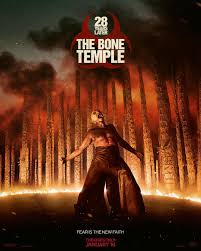
28 YEARS LATER – THE BONE TEMPLE
UK, 2026, 109 minutes, Colour.
Ralph Fiennes, Jack O'Connell, Chi Lewis-Parry, Alfie Williams, Erin Kellyman, Louis Ashbourne Serkis.
Directed by Nia Da Costa.
This chapter in the 28 series begins immediately after the conclusion of 28 Years Later. To appreciate what happens in this chapter audiences need to be quite up-to-date with the situations, the range of characters and their previous interactions and crises.
This is a film of frequently changing moods or, as one commentator put it more elegantly, “tonal shifts”. It opens with a scene of the infected pursuing a hunter, ripping his head off, eating his brains – a jolting sequence and images to begin with. And there are some jolting sequences to follow.
This is particularly true when the narrative takes up the story of the young boy, Jimmy, in the first film, in the church, saved by his father, given a cross, then surviving as an adult in 28 Years Later, finding his place in society, but gathering round him a number of young adults, all now with the variations on Jimmy in their names, his becoming a kind of satanic cult leader, especially with his new friend who was an important focus in the earlier film, Spike, Alfie Williams. He is played Jack O’Connell who has had a strange cinema year with the 228 Years Later films and his of the diabolical role in Sinners. Sir Jimmy now defies Spike to fight and to kill and to merit the name Jimmy. Sir Jimmy is now a megalomaniac leader who hears the voices of the devil, calling him Old Nick, and considers himself the Devil’s son.
Complete tonal shift: a return to the world Dr Kelson, Ralph Fiennes, who has survived for 28 years, continuing his pursuit of medicine, living in the vicinity of the extraordinary Bone Temple, skulls and bones of survivors. He encounters one of the infected, the giant Samson (and the actor Chi Lewis-Parry is noted as 6’9”). Menacing threats, but Dr Kelson nevertheless experiments with him, various medications, trying to humanise him.
Which restricts most of the action of this chapter in the series to the buildup to the confrontation between Sir Jimmy and the doctor. There are some flashbacks to the happy years, people living humanely, but then the infection and the dire takeover, violence and slaughter.
The audience knows the film is building up to a confrontation between Sir Jimmy and Dr Kelson, especially with Dr Kelson looking like a blood red warrior, the result of his taking iodine to repel infection and affecting his skin. But, he agrees to impersonate Satan for Sir Jimmy, some wild dancing gyrations on Ralph Fiennes’ part, until he recognises Spike, Samson returning more humane, remembering, speaking, and the strange vision of Sir Jimmy, reminded how God asked self-sacrifice from Jesus, now crucified on an upturned cross, asking his father forgive them for they know not what they do…
So, this is a doomed post-apocalyptic future. But, aficionados of the series will enjoy the brief epilogue, a moment with Ciaran Murphy and his daughter, taking us back 20 or more years to beginnings in 28 Days Later.
Writer, Alex Garland, seems preoccupied in recent years with current wars and future disasters with these films and Civil War and Warfare.
A strange cinema experience of changing moods and tonal shifts, from horror to humanity.
- The popularity of the series? This film made back-to-back with this criticism? Plot continuity, sets, issues, characters?
- The future, the effect of the plague, the infections, the visuals of the countryside, seemingly normal, the villages, the interiors, the Bone Temple and its vastness, the residence for Dr Kelson, the memories of the past, ordinary life, the train, the overwhelming infection? The musical score and songs?
- The opening with the hunter, the infected, Samson, ripping the head, devouring the brains? Horror atmosphere?
- The transition to Jimmy Crystal, memories of his past as a boy, and the church, the infection, his survival? His age, in the previous film, his personality, his gathering the young people around him, a type of cult leader, seeing himself as the son of the devil, Old Nick, hearing the voices, making the decisions? Violence, command, everybody’s name with a variation on Jimmy? Their appearances, the white wigs, their behaviour?
- The confrontation with Spike, with Jimmy and the previous film, Jimmy Crystal taunting Spike, the fight, and his reluctance, eventual action, his opponent in defeat, his being given the name Jimmy? The various personalities of the group? Young girl and her friendship with, her name, Kelly?
- The transition to Dr Kelson, the change of mood, tonal shift, his background, the 28 years survival, work as a doctor, in the previous film with the community, his going to the Temple, his laboratory, chemicals, books, his appearance, yellow, iodine stain, Jimmy mistaking him for Old Nick?
- Samson, infected, his size, his community, the encounter with Dr Kelson, his hopes for healing him, the chemicals, for memory, for sound, speech? Samson and his leaving, the community, the gradual coming back of memories, the train, as a boy, so the last, the book, the moon? Saying the word, moon? His eventual return to Dr Kelson?
- The savage sequence of the cult, the young people hunting, the pregnant girl, the old people in the house? The group arriving, brutality, mocking them, tying them up, peeling their skin, entrails, verbal brutality? Wanting them to fight? The young man, cutting down, the attacks and fights? The youngsters watching, Spike watching? The fire and destruction?
- Spike, the challenge, with the young man, with the pregnant woman watching, trying to escape, her fear of him and running away? The young girl? Combining with Spike, their hopes to escape?
- Jimmy Crystal, madness, arrogance, the binoculars, seeing Dr Kelson, equating him with Old Nick? His visit, Dr Kelson’s decision, playing along with the situation? The conversation, issues of faith, belief, the devil?
- The gathering, Dr Kelson and his performance, the dance and writhing? Jimmy Crystal content? Controlling the group? Dr Kelson recognising Spike, the change of attitude?
- The violence, Dr Kelson and his shrewdness, quoting the Gospels, Christ giving his life in the world, therefore Jimmy Crystal to give his life, the crucifix, upside down, his screams, father forgive them?
- A return to some kind of normality, Samson coming back, with the group, his memory, beginning to speak? Spike, the young girl – and a future?
- The pessimistic aspects of the film? Some survival? What hopes for the future of humans and the world?
Choral, The
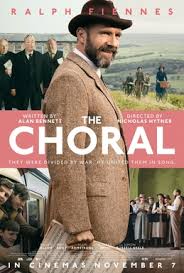
THE CHORAL
UK, 2025, 114 minutes, Colour.
Ralph Fiennes, Roger Allam, Mark Addy, Alun Armstrong, Ron Cook, Simon Russell Beale, Jacob Gudman, Emily Fairn, Taylor Uttley,
Directed by Nicholas Hytner.
There have been many perspectives on World War I and inspect on Britain, on young men and conscription. This is definitely to the fore in this film. But, the focus is on music, the choral.
This is the fictional town of Ramsden, like many Yorkshire towns, recreated in quite some detail, the vast mills which dominate everyone, the streets, the lanes, the houses, the pubs, the Grand Hotel, the railway station and the surrounding hilly countryside. The film immerses us in Ramsden.
And there is a wide range of characters, so many that, at times, the audience might lose touch with who’s who, suggestions of character but leaving it to the audience to fill in. There is the postman with a sad letters knocking on doors and the grieving mothers and wives, and his cheeky young offsider who sees grief as an opportunity for making come kind of sexual advance. There is Mary, the young Salvation Army singer, member of a black family. There is Bella, her boyfriend at war, missing, her taking up with someone else. There are the rather haughty ladies, the contraltos of the choir, snobbish. There is Mrs Bishop whose ordinary home serves as a brothel.
But, the focus is on the choral, the committee led by the mill owner, aided by the photographers and the vicar – characteristically good performances from veterans Roger Allam, Alun Armstrong, Mark Addy, Ron Cook. The choir master in lists.
The proposal for the new choirmaster is Mr Guthrie, talented conductor, living a lot of time in Germany, under suspicion for this, and the quiet indication that he might be homosexual. He is played by Ralph Fiennes, another excellent performance.
So a great deal of the film focuses on the motley choir, the recruiting of any of the young men around the town willing to sing, the auditions, serious and comic, music from popular songs to Gilbert and Sullivan, arias. The intention is Bach’s St Matthew’s Passion but the suggestion by Mr Guthrie of Edward Elgar’s oratorio, The Dream of Gerontius, from the poem by Cardinal Newman (and some anti-Catholic bigotry expressed).
A lot of rehearsal sequences, the return of Bella’s boyfriend, Clyde, Jacob Dudman, despite an arm lost, disappointment with Bella, Mr Guthrie persuading him that his sadness can be the basis for developing his gift and his being offered the role of Gerontius. Some fine scenes where Mr Guthrie talks intensely with Clyde about his fate, and a speech by Clyde indicating that purgatory exists, and that it was there in the no man’s land between the trenches.
An episode with Elgar himself, a jaunty Simon Russell Beale, agreeable, then taken aback by the plans for the interpretation of his oratorio.
Perhaps it’s the old story of putting on a show, but, ultimately, it is a moving success. But, then more reality, conscription, young men reaching that age, and the farewell at Ramsden Station.
It would be hoped that the film would encourage those who like to sing to join a choir – but, there is something strange about seeing the jaunty young men of that period singing serious music, not dreaming that rock and roll and heavy metal were to come and take over. The screenplay was written by celebrated playwright, Alan Bennett, in his late 80s.
- Expectations, music, the Yorkshire town, World War I, conscription, battle and deaths?
- The Yorkshire setting, the town of Ramsden, the detail of the town, streets, lanes, homes, shops, pub, the hotel, the Hall, the surrounding countryside, the Hills?
- The importance of music, the wide range, the Dream of capturing tears, Bach and St Matthew’s Passion, popular songs of the period, Gilbert and Sullivan, late 19th century and early 20th century music?
- The background of the war, 1916, the young men called up, the postman delivering the letters, the grieving wives and mothers? The issue of conscription, the young men reaching the age to go to war, the diminishing number of young men?
- The factories and mills, the dependence on the mills, Duxbury and his owning the mills, his position with the choral, his associates, the photographer and the photos of the young men, his associate, the vicar, the committee for the Choral, the range of auditions, good and bad, the boys urged to go including the postman and his friend, the women, the contraltos and their snobbery, the pianist and his going to war, motives, photo? The need for the choirmaster?
- Suggestion of Mr Guthrie, reactions, living in Germany, success in Germany, indications quietly of his homosexuality? His return because of the war, the music of the Grand Hotel, the approach, the discussions, his quoting Goethe, their wanting him to be quiet about Germany? Bach as German, the other composers, his having met Brahms? His agreement?
- Meeting the choir, the new auditions, his reactions, Duxbury and his love of singing? The other men? Mary, black, Salvation Army, earnest, her voice? Bella, the popular songs, but part of the choir? The need for men, going around the town, the pub, eyeing of the girls, the man from the pastry shop?
- The practice, the discussions, the characters of the various members of the choir, the boys, age, no school because of lack of teachers, issues of sex, girlfriends, sex talk, insensitive? The range of the girls, Bella and the boys, her reticent friend, Mary? The older women, snobbish? Mrs Bishop, her house being a brothel? Duxbury’s visit?
- The discussions about Bach, the suggestion of Elgar, the story of The Dream of Gerontius, Cardinal Newman and anti-Catholic prejudice? Guthrie and his letter to Elgar? The return acceptance? Elgar and his doctorate at Manchester, Mary and the invitation?
- War spirit, the choir and the news of the victory, singing God save the King, Guthrie quiet, the death of German friends?
- Robert, accompanist, devotion to Guthrie, hit critique of him? Piano, support? The call up, his decision to be conscientious objector, Guthrie’s arguments, for the sake of the choir, the hearing, the jingoistic woman, the presumptuous canon knowing God’s mind about war, stiff military man and his contempt of Robert’s motivations?, Duxbury and his trying to mediate? Guthrie present, his argument, the extension because of the concert?
- Bella, Ellis and the flirtation, her memories of Clyde, his return, loss of his arm, going to meet her, his disappointment? Leaving her free? Sitting on Hill, his sexual request, her acquiescence motivation? His grief? Love of singing, the audition, Guthrie’s response, Duxbury as Gerontius, buildup to it, Clyde stepping in, Mary as the Angel? The limitations of the choir, no orchestra that the three-piece group, the change of perspective, younger Gerontius, the war situation?
- Conscription, the young men going to be examined, the man from the bakery and epilepsy? The others preparing to go? Feeling that they had not lived? Sexual experience? The young man attracted to Mary, encouraged by her enthusiastic mother, the time alone, the proposal, Mary’s reaction, his stripping, her turning away, her loneliness? The postman going to Mrs Bishop, the sexual encounter, the formalities, no payment?
- The arrival of Elgar, the academic down, his initial enthusiasm, Mary singing, discovery that Clyde was Gerontius, looking at the score, his upset, the tantrum, offering Mary a tutor? Leaving in a huff? The discussions, the suggestion of no payment so it would be an amateur performance, no fees for Elgar?
- Letting everyone know, the audience gathering, the strength of the performance, the World War I setting, Gerontius wounded and dying, Clyde and his explanation about purgatory against the Vicar’s Anglicanism, the powerful explanation that than no man’s land was a purgatory for survival? And the background of Guthrie’s talk with Clyde agreeing that he was at his lowest, but that it was the time to sing, to make the most of it?
- The success of the performance, everybody happy? The applause? Duxbury and his reclusive wife? Her response and reconciliation?
- The young men going off on the train, the farewell at the station, Robert being taken in by the military as conscientious objector? Guthrie and his achievement?
- A perspective on Britain and World War I, the small Yorkshire town, the young men, the war across the channel, wounds and deaths, return?
28 Years Later
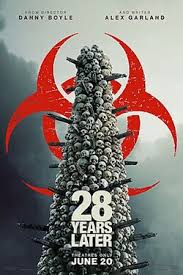
28 YEARS LATER
UK, 2025, 117 minutes, Colour.
Alfie Williams, Ralph Fiennes, Jodie Comer, Aaron Taylor-Johnson.
Directed by Danny Boyle.
In 2002, 28 Days Later, the blend of drama and horror, made quite an impression. The screenplay was by Alex Garland who had collaborated with director, Danny Boyle, with The Beach. Boyle was to go on to win an Academy award for slum dog millionaire. Alex Garland continued writing that made a number of thoughtful and significant dramas including Civil War and its vision of America as well as the stark and challenging, Warfare.
They produced but were not so involved in a sequel, 22 Weeks Later, continuing the story, written in the grip of a plague, a virus of rage released, transforming humans into zombielike creatures, the threats to civilisation, the violent rampages…
Now, while this film does open in 2002, highlighting a young boy along with other children, protected from the rage, but then being attacked, his finding refuge with his clerical father praying in the church, a gift of a cross, but then the infected coming through the stained-glass windows in attack.
This film is the first of a trilogy set in the 2020s. The transition is to an island, protected from the mainland, survivors managing by the way of life cut off from the modern world (Europe not infected).
The central character here is a young boy, Spike (Alfie Williams in a persuasive performance), relying on his hunter father, Aaron Taylor Johnson, his mother, Jodi coma, mysteriously ill.
The first part of the action is the boys initiation, at age 14, venturing across the causeway with his father, running the risk of infection, with bows and arrows to shoot the infected. It is a demanding experience for Spike, not as confident a warrior as he might have thought, hearing news of a Dr surviving on the mainland. Concerned about his mother, and alienated from his father, he decides to return to the mainland, carrying his ill mother in order to find the Doctor.
While the central drama is enough to keep audience attention, there is always the stalking by the infected creatures, dangers, escapes, confrontations. A moment’s pause with the young Swede stranded and talking of modern Europe to the uncomprehending boy. They do find the doctor, played by Ralph Fiennes, and some personal drama with the mother and her illness, and the finding of a baby born from an infected mother.
To be continued, 28 Years Later, Temple of Bones (the temple and the bones we have already seen).
- The impact in the 2000s of 28 Days Later, 28 Weeks Later? England, infection, the zombie transformations? The threats, the characters, the struggles?
- This sequel almost 2 decades later? The beginning of the trilogy? The impact of zombie films over the decades and this British production taking its place with so many serious zombie films as well is the exploitation films?
- The focus on 2002, the threats of the infected, the horror sequences, the threats to the community, Jim, the family, urging his escape, going to the church, his father, giving him the cross, his father’s apocalyptic martyr mentality, the infected coming through the stained glass, destroying him?
- The transition to the present, the community on the island, the visuals of the village in the past, the rows of houses, the decay of the houses over the decades? The small community and survival, separated from the mainland, preserving their health? The various members of the community, their functions, lookouts, keeping the gate, the meetings and organisation?
- The focus on Jamie, Spike, Isla? At home, Spike and his age, relationship with his father, his mother ill and her moods? The breakfast, Spike giving her the bacon?
- The coming of age, going to the mainland, bows and arrows for defence and attack, the proud father, the village people seeing them off? Going to the mainland, the tides and the time? The dangers? The quest to kill the infected? The responsibility for return, no search parties for any who disappeared?
- The experience on the mainland, the tension, the appearance of the various infected, Spike and his arrows, sometimes hitting, sometimes missing? His father protective? Seeing the vast land, Spike and his curiosity, to go inland, the mystery of the fire and smoke? The dangers, the pursuit, the visualisation of the infected, naked, running, zombielike, the taking refuge in the house, going to the upper storey, the deaths? The return, the achievement, the final pursuit, the infected so close, getting the gates?
- The celebratory party for Spike, the crowd, the joy, the drinking, his father’s speech? His father going out with the girl, Spike observing them, his disillusionment with his father? Going home?
- The news of the doctor, Spike and his decision to take his mother, his father’s reaction? Going on the causeway, on the mainland, searching for the doctor and the smoke? The various dangers and pursuit? Hiding? As mother going into the train carriage, the pregnant woman, infected, giving birth? Taking the baby, the encounter with Eric, his saving them? Carrying the mother, saving the baby?
- The confrontation on the train, fleeing, Eric and the discussions, Europe not infected, Spike and his ignorance of the modern world? Eric and his phone, battery going, throwing it away, the photo of his girlfriend and Spike’s diagnosis of her illness? The attack, Eric and his death?
- The doctor, finding mother and son, the baby, the iodine as a prophylactic, taking them to his house, the monument of bones and skulls? Spike, anxious, the doctor and his personality and story, surviving, his diagnosis of cancer, the mother understanding, handing over the baby, the doctor taking her away, her death, the processes of cleaning skulls, Eric’s skull, the mother’s skull, and Spike placing them on the monument, his mother on top?
- The baby, Spike taking it back, leaving at the gate, to be named after his mother, and Spike going back out again – and the preparation for the sequel? And the flashing images of the story throughout the final credits?
Return, The/ 2024
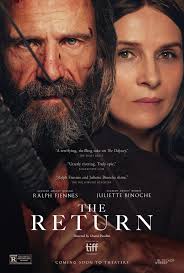
THE RETURN
Ralph Fiennes, Juliette Binoche, Charlie Plummer, Marwan Kenzari, Claudio Santamaria, Angela Molina.
Directed by Uberto Pasolini.
One of the most significant returns in classical literature is that of Odysseus and his long journey back after the end of the Trojan War to his native Ithaca, a voyage of 10 years, many delays, many adventures, many challenges, an Odyssey.
In the past, there have been a number of films about the adventures of Odysseus/Ulysses in the 1950s with Kirk Douglas, in the 1997 television adaptation with Armand Assante and Greta Scacchi. Christopher Nolan is in production for a vast treatment of the Odyssey.
This version focuses on the last part of Homer’s epic. Which means that there are none of the adventurous and mythological episodes. It opens with a naked Odysseus stranded on the beach of Ithaca. He is found by a sympathetic slave, cared for, revives, keeps his identity secret, keeps up the appearance of a beggar.
Which means that this is a rather gripping personal drama, especially with Ralph Fiennes as Odysseus, bringing his powerful presence to the screen, the audience able to appreciate what is happening to him not only through what he says but with the intensity that Fiennes is able to communicate with his body language, manifesting, without words, much of the torment of his inner feelings.
And, there is Juliette Binoche as Penelope, the wife that he left behind, waiting for him, believing that he will return, sitting at her loom, declaring she will name a suitor after she finishes the garment, pulling it apart at night, starting again the next day. And she has been waiting 20 years, the 10 years of the war, the 10 years of her husband’s Odyssey. There is also their son, Telemachus, played by Charlie Plummer, disturbed by his father’s absence, disturbed by his mother’s behaviour, and the collapsed state of Ithaca in Odysseus’s absence.
Also of note for the film is the terrain of the island, fields, beaches, waves crashing on cliffs, waterfalls, steep mountains (filmed in Corfu), and the huge stone palace on the mountain top, fierce and foreboding, and its dimly lit interiors.
Ithaca is in chaos. There is a mounting number of suitors for her hand, lounging around, violent, demanding of Penelope. And she continues to resist, supported by her devoted nurse (Angela Molina).
And, so the questions. Will Odysseus make himself known? Will Penelope recognise him after this time? How will he encountere his son and Telemachus’s reaction? And what of the suitors and their idleness, exploiting the inhabitants of Ithaca?
The climax builds. Penelope has named the day to nominate the suitors she would choose. They gather. Odysseus in disguise is present. Telemachus is also present. And, as in the epic, Penelope demands that the suitors emulate Odysseus with his bow and arrow to be the successful suitor.
Suddenly, violence is let loose, Odysseus manifesting himself, a vicious eruption, combat, slaughter, and the drama of the aftermath for Odysseus and Penelope, in view of what they we have seen. Will they be able to come together after the 20 years of physical and emotional distance.
With its serious dialogue, with its pauses, the intense drama, often interior, The Return plays something like an Opera scenario without the singing and music. Others have suggested that it is performed rather in the manner of a Shakespearean play. This is important to note for audiences who might have different expectations about this version of Homer, this time not the Odyssey as such, but, as the title highlights, the intensity of The Return.
(It is a surprise to find that the film has been cowritten and directed by Italian born, British director, Uberto Pasolini, a long-time producer, directing only four films including two beautifully quiet and recommended British films, Still Life and Nowhere Special.)
- The status of Homer and his epics? Audience knowledge of the Iliad and the Odyssey? Of Odysseus, Penelope, Odysseus and his wanderings home?
- The focus on the final chapters of The Odyssey, the title and simply, the Return? None of the popular stories of the epic? Memories of Troy, the battles, the wooden horse, the destruction? No mention of the gods, especially Athena and her role in Odysseus’ return?
- The Greek locations, Corfu standing in for Ithaca, the cliffs, plains, waterfall, mountains? The scenes of the village, poverty and homes, the commanding palace on the mountain, the interiors, the lighting? The atmospheric musical score?
- The screenplay, the dialogue, the interiority of the characters, interchanges? Operatic without the stylised singing? Like a Shakespearean performance?
- The cliffs, Odysseus on the shore, naked, found by Eumaes his family, cared for, revived? Seen as a bigger, questions about the Trojan War, Odysseus and his memories, his account, regrets? The eager listening? His hearing about Penelope, the suitors, about Telemachus? Biding his time?
- Penelope, the happy marriage, her husband going to the, the birth of Telemachus, his growing up, 20 years of the war and the Odyssey? Her waiting for her husband, devoted, her spending her time at the loom, the range of suitors, her putting them off, the loom for her father-in-law’s death? A relationship with Telemachus, his impatience, denouncing his father? The devotion of the nurse?
- The range of suitors, their motivations, personalities, exploitation of the people, exploitation of the land, Ithaca and its collapse? The idling around the palace, the rivalries, hunting? Their being put off? A new suitor arriving and his being wounded, being thrown back into the water?
- Antinous, his presence, devotion to Penelope, attitude towards Telemachus, the scene with his night with the slave girl? His conversations with Penelope, urging his cause?
- Odysseus, his recovery, his going out into the countryside, his dismay? Hearing the story of the suitors? His desire to go to the palace, the episode with the dog which recognised him, the reaction of the suitors, ridicule, hostility, his asking for food? The confrontation and his ability to kill the opponents? The withdrawal of the suitors?
- Telemachus, his criticisms, his sailing off, the dangers and his return? The suitors and their hostility? The desire to hunt him down?
- Odysseus, food, his being washed, the nurse recognising his will and in scar, his urging her to silence?
- The meeting with Telemachus, the revelation that he was his father, Telemachus and his hostile reaction? The hunt, the suitors, Odysseus knocking his son, Eumaes and the helpers, the pursuit, climbing the cliff, safe? Telemachus and his interactions with his father? Accusations, criticisms?
- The pressure on Penelope, her undoing the weaving, continuing the next day, her upset and tearing it apart? Antinous and his pressurising Penelope? Her decision to name one of the suitors?
- The gathering, Odysseus present? Telemachus? Penelope and her setting the test of the bow and the arrows? The attempts of the various suitors and their failure? Penelope telling Telemachus to give the bow to his father? Odysseus, warming the bow, twisting it between his legs, setting it up, firing the arrow?
- The suitors and their upset, Odysseus and his firing all the arrows, killing the suitors? The closing of the doors? Telemachus, the confrontation with Antinous, his mother telling him not to kill the suitor, his killing him?
- The consequences, blood, the deaths? Telemachus and his decision to sail away?
- The encounters between Odysseus and Penelope, the conversations, his leaving, her devotion, the past, the war, his return, the violence, the deaths of the suitors? His turning over the loom, opening the door, ascending to the bedroom? Their talk, to understand each other, to overcome the violence in the past, sharing these memories, some forgiveness, acceptance, and hope for the future?
Curse of the Were Rabbit
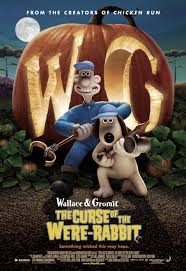
WALLACE AND GROMIT IN THE CURSE OF THE WERE-RABBIT
UK, 2005, 85 minutes, Colour.
Voices of Peter Sallis, Ralph Fiennes. Helena Bonham Carter, Liz Smith, Geraldine McEwan, Mark Gatiss.
Directed by Nick Park, Steve Box.
Wallace and Gromit have become British icons – and one of Britain’s best exports. Their creator, animator, Nick Park, brought them to the screen in 1989 in the Oscar-nominated A Grand Day Out. They won their Academy Award in 1993 with The Wrong Trousers and again in 1995 for A Close Shave. Wallace and Gromit were popular the world over.
Now they appear in their first feature-length film. And they have another success on their hands, topping the US Box Office on its opening weekend at the beginning of October. But the makers received bad news as well when the production studios in Bristol, the Aardman company, burnt to the ground the same weekend. While they lost decades of film history, many of the clay models were out on exhibition and were not destroyed.
The films themselves are indestructible. They have great appeal for both children’s audiences and for adults.
As the title indicates, the film is something of a spoof of horror movies. And that is a smart move. After all, so many horror stories have become classics of literature and cinema. Older audiences will have quite a lot of fun noticing the parallels with horror movies and the amusing send-ups. Of course, it starts with the play on werewolf. This time the monster is a gigantic rabbit who has an enormous appetite for vegetables. This is especially disastrous for the village because all the inhabitants are desperately tending extraordinarily sized pumpkins and gardens full of veg to win the competitions at the forthcoming fair. Gromit himself is growing a giant marrow. Wallace, of course, does not like vegetables at all. He loves cheese.
Wallace is an inventor (and we see quite a few of the inventions from the previous films as well as a machine for collecting rabbits out of lawns – a kind of giant vacuum cleaner – without injuring them). Not only does he now create a rabbit Frankenstein creature, trying to brainwash the rabbits to hate vegetables, he also becomes Dr Jekyll and creates his alter ego Mr Hyde.
When the going gets touch, the people turn on the rabbit just as they do in Son of Frankenstein – and there is the potential for a bride of the Were-Rabbit. But, when the rabbit is pursued, he seizes the lady of the manor and climbs a tower as did King Kong of old. Just when you thought, the writers might have run out of ideas, they set up Gromit like a British Snoopy and create an air battle modelled on World War I and the attack of the Red Baron. You see how inventive they have been.
The script is also funny and witty. In the middle of the chase, Gromit turns on the car radio and it is playing Bright Eyes, the theme from Watership Down! Some of the jokes have mild and amusing innuendo that will be lost on the smaller audiences.
Nick Park has done wonders with the clay characters, patiently working with stop-motion photography for years. It is extraordinary the expressions he can create – especially with Gromit who does not speak but whose facial gestures are worth a thousand words.
The voices are wonderful as well. Peter Sallis has been supplying the voice of Wallace for years and it would be hard to imagine Wallace without him. The villain of the piece, Victor Quartermain, a bounder who wants to marry Lady Tottington for her manor and money and hunt down rabbits with his rifle, is played by Ralph Fiennes sounding far more vigorous than in his films, a real moustachio-twirling performance. Lady Tottington is Helena Bonham Carter, more lively and funny than she has ever been as well.
Fans of Wallace and Gromit will also welcome the musical score with the familiar anthem from the previous films. The Curse will keep you smiling.
Conclave
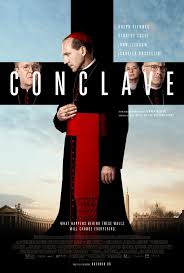
CONCLAVE
UK, 2024, 120 minutes, Colour.
Ralph Fiennes, Stanley Tucci, John Lithgow, Lucian Msamati, Jacek Koman, Brian F.O'Byrne, Isabella Rossellini, Valerio Silva.
Directed by Edward Berger.
Many audiences will be eager to see Conclave because they have read Robert Harris’ exciting novel, the story of the death of the Pope, the gathering the Cardinals, the details required by Vatican regulations, the need for security, the holding of the conclave and the election of a new Pope.
The Catholic audience, especially those with a familiarity with the workings of the Vatican, the nature of the hierarchy, the different perspectives, even of popes during the last half century, a lot to interest, to enjoy, and a provocation especially about stances for going back to consolidate past traditions or an openness to contemporary issues in the wider world and their repercussions for the church.
For non-Catholic audiences, they will enjoy the delineation of characters and their variety, the elaboration of issues, machinations, religious motivations, personal and ecclesiastical challenges. But, it would be by way of observation, the same way non-British audiences may be intrigued by a drama about the intricacies and politics, say, of Britain’s Brexit campaign.
For audiences critical/sceptical about the church, it may seem rather esoteric or politically and ecclesiastically pompous.
But, back to the Catholic perspective. The central character is Cardinal Thomas Lawrence, played in a wonderful performance by Ralph Fiennes, always intense, but, even when not speaking, the audience very conscious of what concerns him, what he is thinking, what is making demands on him. He has wanted to resign as Dean of the Cardinals but the late Pope has refused. Which means that he has to organise the conclave.
So, there we are in the Sistine Chapel, workers in to protect security, the organisation of desks for the Cardinals, the sisters brought in to cook and cater for the conclave, the arrival of the Cardinals, from many different cultures around the world, some pomp and circumstance, some religious earnestness.
To dramatise the different points of view, there is the open-minded Cardinal Bellini, Stanley Tucci, the hoped-for candidate from the “progressive/liberal” attendees. On the other hand, there is the almost crusading, very Italianate Cardinal Tedesco, Pietro Castillitto, with an Italy-first mentality, opposed to contemporary changes, and militantly hostile to refugees making their way to Europe. And there are some complications with an African Cardinal from Nigeria, raising issues of sexuality in the church today, and some realities of sexual abuse. And, on the worldly side, the money-political perspective, there is an American Cardinal played by John Lithgow.
There is an unexpectedly Mexican-born missionary in Congo and in Kabul, who arrives, claiming as having been made a cardinal “in pectore”. Isabella Rossellini plays a very forthright nun who has no hesitation in speaking directly to the Cardinals.
Robert Harris’ novels read very well, compelling, covering a wide range of issues from ancient Rome to 20th century fascist and communist states, to contemporary issues. Which means that he has an interesting story to tell, the filmmakers generally checking to give some kind of authenticity to the storytelling, and an ending which will raise many eyebrows and leave many audiences suddenly shocked and, perhaps, struggling to work out what they think, and some questions for the future church.
- The popularity of Robert Harris’s novel? A papacy story, 21st-century?
- The title, the death of the Pope, the rituals, the gathering the Cardinals, the conclave, the voting, behind-the-scenes? Audience knowledge of conclaves?
- The Catholic atmosphere, Vatican, the Curia, the Cardinals, International, political stances, religious stances, the enclosure, the discussions, the voting, the black smoke, the white smoke?
- The situation of the church, the dead pope, criticisms of his being progressive, his keeping tabs on the Cardinals, his hidden report, keeping Cardinal Lawrence as Dean, his dismissal of Cardinal Tremblay? Lawrence going in to break the seal, finding the document? The ceiling of the room, the removal of the body, the smashing of the ring?
- Fiennes as Cardinal Lawrence, the complete focus of the film on him? The performance, the intensity, communicating the interior questions and doubts? His background, wanting to resign, go to a monastery? His having to organise the conclave? His reliance on O’Malley, Logistics, searching information, interviewing personnel? Mexican priest from Afghanistan? Tremblay and his background? The importance of confidentiality?
- The background of this logistics, the Sistine Chapel, preparation, security, the accommodation, travel by bus, the rooms, the meals together, the sisters in the kitchen? Audiences appreciating such detail?
- The key Cardinals? The Nellie, friendship with Lawrence, progressive, his ideas, his declarations, ambitions or not? To disco, irritating, bombastic, conservative, scheming, his following, his outburst after the bomb blasts, his intolerance, racist perspectives on the African Cardinal? Tremblay, American, the Curia, his manoeuvres, financial benefits for followers, arranging the nun from Africa to discredit the African Cardinal? The Cardinal from Milan, the discussions, his concerns? The range of other Cardinals, International, friendships, groups, smoking…?
- The arrival of the man from Afghanistan, Mexican, his previous mission experience, created a Cardinal, “in pectore”, his arrival, dishevelled, the interview was Lawrence, the discussions about the authenticity, suspicions, acceptance, his background? Presence of the conclave? Lawrence leading the applause from the Cardinals?
- The assemblies, the voting, the rituals, the county the numbers, the variety over the days, the African Cardinal, the incident with the nun in the dining room, his walking out, Lawrence and the discussions with Sister Agnes, with the nun, confession, learning the truth, the confrontation with a Cardinal, his confession, 30 years earlier, a lapse, his hopes to be Pope, the votes for him, his having to withdraw, sitting alone?
- The confrontations with Tremblay, the information from the Monsignor who served the Pope, his drinking, last-minute talking to Laurence? Lawrence conferring with the Nellie? Confronting Tremblay, his immediate 40 reaction? Lawrence going into the patron, finding the document, the public exposure, the humiliation of Tremblay?
- Sister Agnes, her presence, the nuns, forthright, stern, protecting the nun from Africa, standing up to Laurence, sensing the person in the Pope’s room? Her speech, a woman’s voice, the women observing, the strong stand?
- The changes in fortune, the discussions, the Nellie and his challenge to Laurence, their friendship, his later asking for forgiveness?
- The Cardinal from Afghanistan, his visit to Laurence, continually voting for him? Lawrence then voting for himself?
- The tensions in the room, to disco and his behaviour and look? The African Cardinal? Tremblay humiliated?
- The bomb blast, terrorists, Tedesco’s outburst, the speech by the Mexican, his appeal for unity?
- The final vote, the election of the Mexican, his acceptance, the name of Innocent? O’Malley, the information about Switzerland, the Institute? Lawrence talking to the Mexican, the surprise of his situation, the transgender issue? His decision?
- The ending, the future of the church, Pope Innocent, and the revelation? Lawrence looking at the window, the nuns coming out of the building, the end of the film and audiences left to ponder?
Macbeth/ 2024
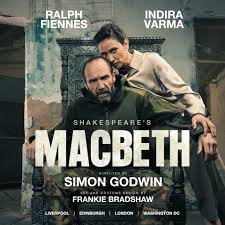
MACBETH
UK, 2024, 150 minutes (including 15 minutes intermission), Colour.
Ralph Fiennes, Indira Varma, Ben Allen, Ewan Black, Jonathan Case, Stefan Rhodri, Ben Turner.
Directed by Simon Godwin.
Macbeth is one of Shakespeare’s most popular plays. And, there have been many film versions, from Orson Welles, from Polanski, and, more recently, from Justin Kurzel with Michael Fassbender and Marion Cotillard, and from Joel Coen with Denzel Washington and Frances McDormand. All striking in their own way.
This production is a stage version, captured for film, a way of immersing the audience in the action, stylised as it is, but the camera able to bring us closer, even through extreme close-ups, of the characters, a focus and view of them sometimes more intimate than for the theatre audience.
The setting is contemporary, Macbeth and soldiers in more familiar military uniform, the weird sisters (rather than witches) looking bizarre but less sinister, and Lady Macbeth usually in simple white dress. The impact for the audience means that they are not looking at a cinematic spectacle, with a play opened out in realistic fashion. Rather, the emphasis is on the characters and the language.
In many ways, this version is worth seeing because Ralph Fiennes’ interpretation of Macbeth is often very different from what we have seen in the past. At first sight, weary from battle, Macbeth seems very ordinary despite his rank. He is stirred by the words of the weird sisters, moved by ambition, yet firm companion with Banquo, and returning home to his wife.
But, this version of the play could also be called Lady Macbeth. As played by Indira Varma, she is a steely personality, sometimes softer in appearance, but soon moving into grim determination, masterminding the plot, the action moving quickly, the murder of Duncan and its consequences, her trying to hold things together with Macbeth’s bizarre behaviour at the banquet, and her final mad decline.
One of the great advantages of this performance is that the cast speak their lines, making the iambic pentameter seem like conversation – although, there are always the moments of declamation, contrasting with the quiet meditative delivery of so many of the famous lines – tomorrow, and tomorrow, and tomorrow… All the actors speak their lines with commendable clarity.
Malcolm is a more memorable character here. Banquo is strong. Seton is more significant. So are the murderers sent by Macbeth to destroy Macduff’s family. And, of course, the final confrontation with Macduff.
Response will depend on audience familiarity with the play, the scenes that they value, their expectations on how they will be presented, any dramatic and unexpected twists.
And back again to Ralph Fiennes’ presentation of Macbeth, seemingly already maddened by the intrigue against the King, mental morality challenged, sanity beginning to go awry. And Fiennes presents Macbeth with all kinds of unexpected erratic behaviour, actually moving through most of the play stooped, bent from the waist, sometimes walking, sometimes running, even sometimes jigging. And his face goes through all kinds of expressions, giggles, mad laughs, even poking out his tongue and pulling faces. Not quite the solemn Macbeth we are used to.
Which then builds up to the climax, an ingenious presentation of troops holding branches so that Burnham Wood can advance on Dunsinane.
So, an unusual vision of Macbeth himself – and, a performance by Indira Varma of Lady Macbeth that will stay in the memory.
Wes Anderson's short films from Roald Dahl: Wonderful World of Henry Sugar; The Swan; Poison; The Rat Catcher
WES ANDERSON’S SHORT FILMS FROM ROALD DAHL STORIES.
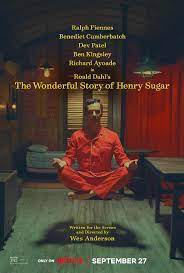
THE WONDERFUL WORLD OF HENRY SUGAR
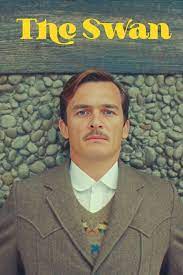
THE SWAN

POISON
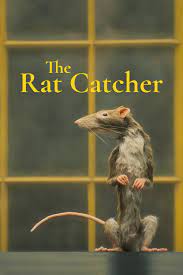
THE RAT CATCHER.
THE SHORT FILMS
Roald Dahl novels and short stories have been very popular on screen since the 1960s, Willy Wonka (and several versions since), stories like The Witches, Matilda, James and the Giant Peach. Here is a selection from his short stories.
Wes Anderson had already made a film of a Roald Dahl story, the animated feature, The Fantastic Mr Fox (with voices of George Clooney, Meryl Streep).
This time he has made what might be called live-action animation, actors performing but with very stylised backgrounds and sets, and action within the scenes of sets being moved, of stagehands coming in with props and removing them, and equivalent of stage performance. Anderson had used this kind of live-action animation in his feature, Asteroid City.
As with all his films, he assembles a distinguished cast – each of them appearing in several of these stories, Ralph Fiennes as Roald Dahl himself, the narrator, but also the rat catcher; Ben Kingsley as the man who can see without eyes, as a doctor; Dev Patel as a doctor and a friend of a patient; Richard Ayeode as a doctor, as a service station assistant, as a guru; Rupert Friend at the service station and narrating the story of The Swan.
The screenplay for each story retains the text written by Dahl – all expertly recited, often very rapidly, and the films could serve as audiobooks. The dialogue includes even the interjections, “he said”, spoken by the actors, turning to camera, then turning back to the action. In fact, there is a lot of direct speaking by the actors to the camera, breaking the fourth wall, talking to the audience.
This has quite a dramatic effect, the audience observing, invited to be involved, making judgements on the characters and their behaviour, opinions on the issues.
And there are issues:
Henry Sugar as a character who is not likeable, arrogant, self-centred, listening to a story about an Indian guru, capitalising on the techniques that the Indian used to be able to see things without his eyes (and the story of the Indian himself and his training and success), Henry Sugar then exploiting the technique, winning and winning vast amounts of money at the casinos, facing the fact that he does not need the money, deciding to give it away, throw it from his balcony, but a policeman coming to tell him that he is disobeying the law. So there is redemption for Henry Sugar.
A theme of The Swan is bullying, the focus on a young boy and his grown-up self narrating the story of the bullies at school, the effect on him, persecution, ridicule, and his developing wings to fly away from the bullying.
There is racial prejudice in Poison, the story of an officer in India, lying in bed, stating that a snake has attacked him and asking his close friend and ally to get a doctor to administer remedies. In his desperation, the officer is condemnatory of the doctor and his Indian background.
There is something sinister about The Rat Catcher, again Roald Dahl telling the story but then Ralph Fiennes hired as a Rat Catcher by a journalist and the owner of a service station, discussions about animals and rats, menace, the methods of dealing with rats, the rat catcher meanwhile becoming all the more rodent -like.
Netflix is showing all these stories – as a continuous program or as separate short films.
