Displaying items by tag: Rupert Friend
Jurassic World: Rebirth
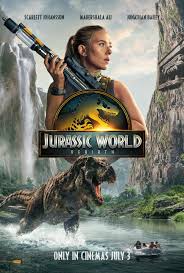
JURASSIC WORLD: REBIRTH
US, 2025, 134 minutes, Colour.
Scarlet Johansson, Jonathan Bailey, Rupert Friend, Mayerasha Ali, Ed Skrein, Manuel Garcia-Rulfo, Luna Blaose, David Iacono.
Directed by Gareth Edwards.
It is 32 years since Steven Spielberg skilfully drew us into the world of Jurassic Park, bringing to life the story and characters written by Michael Crichton. Spielberg himself made a sequel in 1997. But, over the years, quite a number of ventures into and adventures in the Jurassic World. And another one…?
Best to say immediately that this reviewer quite enjoyed this Rebirth. Certainly, many of the reviewers will say that it is formulaic, that the characters and the action are what we might expect, that we know what the dinosaurs are like, what they are capable of, what they will do in terms of menacing those who venture/intrude into this Jurassic World. And it is true that this film is formulaic (even written by regular Spielberg collaborator, David Koepp).
But the point to be made is that in a way, the formula doesn’t matter. It is what happens within the formula that is important. And, inside the formula here are a whole lot of episodes designed to keep the audience anxious, on the edge of their seats, feeling the sense of menace, and enjoying it all at the same time. It works.
The opening shows the island where experiments taking place in the 2000s. Apparently everybody had got used to dinosaurs, going to zoos and other exhibitions to watch them, but now finding other things to amuse. The museums are closing down in the cities but on the island, there are experiments to make bigger and more menacing dinosaurs. Then, an initial moment which seems to undermine the credibility of the film, one of the experts opens what looks like a Mars Bar and carelessly drops the wrapper. Needless to say, it is swept into the machines and causes havoc – and the careless wrapper is devoured by a dinosaur! All that within the first few minutes. The experimental station is closed down. And the dinosaurs, some even more gigantic, are on the loose.
Then, to the present. A group of entrepreneurs, mercenaries, scientists, Rupert Friend, Scarlett Johansson, Jonathan Bailey, taking on these roles, set out on a mission to the equator, where numerous dinosaurs are still swimming, to get blood samples which, it is hoped, would contribute to the preparation of pharmaceuticals to alleviate heart disease.
In case this was all too is expert-oriented, there is a Hispanic family on a boat, father, two daughters and a lazy boyfriend, who are attacked by a dinosaur, boat overturned, rescued and sharing the action of the scientific expedition.
The impact of the film is the enormous range of action adventures, dangers, menace, a Jurassic World on the ocean. But, then a crash landing of the boat, survivors onshore, and the trek through the jungle, mountains and rivers, to a helicopter rescue intended near the old buildings.
Scarlet Johansson in charge, we are in good hands, backed up by a genial Mahershala Ali. Motivations are mixed, especially greed and the fatigue of the millionaire pharmaceutical entrepreneur. But, the best of intentions will prevail.
Yes, the Jurassic formula, but plenty of exciting confrontations with the dinosaurs.
- More than 30 years of Jurassic Park/Jurassic World? The tradition? Dinosaurs, experimentation, consequences?
- The prologue, 17 years earlier, the island, the Centre for experimentation, the careless scientist and the wrapper, the breakdown, the disaster, his being destroyed? The island abandoned? Memories of the earlier films?
- The present, the different situation, people used to dinosaurs, in zoos, exhibits, lesser interest? The scientists, studies? The closing of the zoos, the closing of the museums?
- Martin Krebs, his character, pharmaceuticals, big business? His background? His approaching Zora Bennett, her background, character, mercenary? Motivations, money? The discussions, her agreement, the proposal, the particular dinosaurs, to get samples of their blood, to be used for heart condition experimentation and medications? The approach to Henry Loomis, his work at the Museum, knowledge, quiet life, his decision to go on the expedition?
- The surviving dinosaurs, around the equator, people forbidden to go to the area? Martin Krebs, Zora and the link with Kinkcaid, his boat, the bargaining, the two members of his crew? Setting out on the expedition?
- The Jurassic world of the Ocean, the surviving dinosaurs, their size (and the special effects)?
- The family, on the boat, a family reunion, the genial father, the teenage daughter about to study in New York City, the saviour, her lazy boyfriend, Isabella and her age? The discussions, the situation, the approach of the dinosaur, overturning the boat, the fact that they were seen, the flare, the rescue?
- The approach to the dinosaur, the size, the activity, the threats? Zora, attempting to shoot the dart, eventually succeeding? The dangers, Henry collaborating, the family on the boat, Martin Krebs and his urging them on? Kincaid and his observing?
- The continued dangers, the threats of the dinosaurs, the decision to crash land the boat, the family falling out, the daughter and Krebs not rescuing her, stopping her calling the Mayday signal? Her resentment? The contrast with Xavier, showing some heroism, leaving of the boat to save his girlfriend?
- The members of the crew, packing up, leaping from the boat, the landing, the crewmember and her pushing the load, taken by the dinosaur?
- The action of the family, making their way to the village, the dangers, the dinosaurs, taking cover, the little dinosaur and the daughter, the licorice? The sentiment with the pet? The father and his leg injury? Audience participation in the dangers, in the night, Xavier peeing and the fight behind him? The pipeline, finding the pier, the raft, inflating it, the attack of the dinosaur, overturning it, the hiding, the little girl under the raft, turning it over, the continued ride, their arriving at the ruined base?
- The team, the journey through the valleys, the mountains, the dinosaurs, the huge dinosaurs with the long tails, able to get the sample? On the cliff, the sheer cliff face, going down, the member of the crew taken by the dinosaur? Zora and Henry, into the cave, the eggs, the attack of the mother, repelling her, with the egg, Krebs and Kincaid and the ropes, the final rescue? Making their way to the base?
- The base, abandoned, the cafeteria, hearing Stand by Me? Everybody reunited? The daughter and her resentment towards Krebs? The strategies, the attack of the dinosaurs, winding the underground tunnels? The various adventures in the tunnels, Krebs and his taking the vehicle, with the samples? The drive, out-of-control, confrontation with the dinosaurs, his crash and death?
- Kincaid, wanting to help, the helicopter, the surveillance, turning back, Henry lighting the flare? The helicopter crash? The interactions, Kincaid with the flare, tracking the dinosaur towards him, the others escaping, getting to the shore, the dangers, the little girl with her pet, the boat, everybody on board, sailing away, the flare and the rescue of Kincaid?
- The generally formulaic plot – but audiences not minding the formula because of the vitality, interest and tensions of all the episodes?
Phoenician Scheme, The
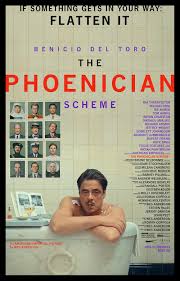
THE PHOENICIAN SCHEME
US, 2025, 101 minutes, Colour.
Benicio del Toro, Mia Threapleton, Michael Cera, Riz Ahmed, Tom Hanks, Bryan Cranston, Mathieu Amalric, Richard Ayoade, Jeffrey Wright, Scarlett Johansson, Benedict Cumberbatch, Rupert Friend, Hope Davis, Bill Murray, Charlotte Gainsbourg, Willem Dafoe, F. Murray Abraham, Stephen Park, Alex Jennings, Donald Sumpter, Scott Shepherd.
Directed by Wes Anderson.
A significant part of the review for The Phoenician Scheme is to look at the huge credits list, many of the cast having appeared in a number of Wes Anderson films. And, of course, expectations from writer-director, Wes Anderson. Anderson has been writing and directing films, including two animation films, for more than a quarter of a century. His tyle and his exploration of themes is, to say the least, highly distinctive.
And, The Phoenician Scheme, is quite idiosyncratically distinctive. It is very stylised in the visuals, the traditional box screen frame, the framing of action, the references to paintings and the staging looking like 20th century paintings. Then there are the performances, also stylised, often life theatre performances, eccentric and clipped delivery of lines, postures and posing. And, for those audiences ready to surrender to Anderson, there are many who do, these visuals and the performances are readily engaging.
There is a plot. The setting is 1950, an entrepreneurial businessman from Hungary, Korda, played perfectly, both seriously and ironically, by Benicio del Toro. He has survived several plane crashes, assassins out to get him and sabotage his plan for development, rails and tunnels in Phoenicia. We are presented with a chart indicating his plans as well as the contacts he must make to improve a shortfall in income project. They serve as chapters for the film.
Korda has many children, his own and adopted, hoping for an Einstein for the future. But his only daughter, Liesl, a novice nun, played by Mia Threapleton, is seconded, initially unwillingly and firmly committed to her vocation, to be his heir. (Mia Threapleton is following in the footsteps of her mother, Kate Winslet, a very interesting role.) And, there is Kord’a new assistant, expert on insects, played with accent by Michael Cera.
Interspersed throughout it is round table conference of elders who are monitoring Korda’s behaviour judging him and his morality accordingly.
The encounters with the various characters for financial help are highly entertaining, eccentric and satirically humorous in their way, incorporating the various stars listed above until a culmination in the fearsome presence of Benedict Cumberbatch Korda’s brother.
Then there are Korda’s memories and dreams, flashbacks in black-and-white, some of his near death, or momentary post-death, experiences, some ecclesiastical in an Orthodox style, others with biblical overtones, again with a number of stars – and a cameo by Bill Murray, who has been working with Anderson for a long time, culminating in his presence as God.
Anderson has a wry and offbeat sense of humour, so often the unexpected, some realism and then some surrealism, farcical moments, deadly serious moments, tantalising the audience, a treat for those who are willing to be tantalised.
- A Wes Anderson film, style, visual, verbal, humorous, satirical, ironic? Underlying serious themes? The strengths of his casts, many actors reappearing in his films?
- The visual style of the film, but colour like 20th century contemporary paintings? Sets and decor? Photography, the black and white flashbacks? Staging of the action, like stage performance, all postures and posings? The stylised action sequences? The performances, stylised and realism? The language of the screenplay, the particular style of delivery? The overall effect and response?
- The setting in 1950, memories of World War II, business enterprises after the war, international entrepreneurs, international projects and finance?, Double dealing?
- The explanation of Korda, his business acumen, the 5%? The background of his marriages? Children and adopted children, hoping for an Einstein? His relationship with his daughter, novice nun, seconding her, naming her as his heir? His staff, his planes, the plans to kill him, his surviving the various crashes?
- The plane ride, his assistant cut in half and swept away, the crash, surviving? Meeting his daughter, her personality, severe, dedicated to the convent, contact with the mother superior, wanting to make her vows? Her not knowing her father, his reputation with her? Her unwillingness to be part of his empire? The plan, her observing his behaviour, learning more about him, her beads, images, sign of the cross, holy water?
- Bjorn, Scandinavian background, accent, present on the plane, his role as assistant, his expertise on insects, his attraction to Liesl, declarations? The comic style of his character, interactions?
- The Phoenician scheme itself, tunnels and railway, the finance, the image on the screen with the various contacts for making up the gap in finance? The structure of the film, the various contacts?
- The background of the assembly, the business discussions, the following of Korda, the decisions about his business and morality?
- The Americans, in the tunnel, on the train, the discussions, suspicions, the meeting with the Prince of Phoenicia, the attack by the camel riders, the Prince saving Korda? The financial discussions, the proposal of the basketball competition, the Prince and his ignorance of the game, Korda hopeless, the skill of the two Americans, yet the Prince succeeding? Getting a grant?
- Going to Marseille Bob, the manager of the club, past relationship with Korda, Liesel and Bjorn observing, the raid on the club, the freedom fighters, the personality of Sergio, Bob upset about the roof, and Korda taking the bullet for Bob? Getting the grant?
- Marty, fast talking American, suspicious of Korda, Korda shot, Marty providing the blood transfusion, making an agreement?
- Going to see Hilda, the distant cousin, her financial knowledge, the prospect of the marriage, her place in the family, with Liese?
- The flight, going to see Nubar, the crash, the jungle, Bjorn and his being unmasked as an agent, his siding with Korda, Korda in the quicksand, Bjorn rescuing him, the arrival of Sergio and his revolutionaries, taking the group to safety?
- The encounter with Nubar, looking sinister, the relationship, the mastermind behind the assassination attempts, discussing the family, the finance, the satirical physical fight between Nubar and Korda?
- Korda, death experiences, near death, his life before him, black-and-white photography, the bearded Orthodox-like sequences, the characters, judgements? The biblical sequences, the personalities, the pageantry, Bill Murray as God?
- Liesl, the contact with the mother superior, her being present for the business deals, the money for the community? Liesl opting to leave the convent?
- The finale, Korda and his being honest, losing everything, restaurant, the working in the kitchen, father and daughter, reconciled, and a happy life?
- The Phoenician Scheme movie
- Wes Anderson
- Peter Malone's Movie Reviews
- Benicio del Toro
- Mia Threappleton
- Michael Cera
- Riz Ahmed
- Tom Hanks
- Brian Cranston
- Jeffrey Wright
- Richard Ayeode
- Benedict Cumberbatch
- Scarlet Johansson
- Charlotte Gainsbourg
- F Murray Abraham
- Willem Dafoe
- Rupert Friend
- Donald Sumpter
- Mathieu Amalric
- Bill Murray
- Hope Davis
- Alex Jennings
Companion
COMPANION
US, 2025, 97 minutes, Colour.
Sophie Thatcher, Jack Quaid, Lucas Gage, Megan Suri, Harvey Guillen, Rupert Friend, Mark Mancaka.
Directed by Drew Hancock.
At the end of watching Companion, this reviewer was very happy to have had no knowledge at all of what the film was about or what it was like. And, checking on the number of reviews as well as strong opinions from bloggers, most were pleased that they went in to see Companion cold and found it an engrossing and unexpected experience.
Which, possibly, is where a review of Companion should end. But, it is probably fair to say that in the first few minutes, we are introduced to a very interesting character, Iris, played by Sophie Thatcher (Heretic, Yellowjacket) in a supermarket romantic comic episode involving the collapsing of the oranges shelf, then a startling remark by Iris, the introduction of the tall handsome, Josh, Jack Quaid. Then, off we go…
Sophie Thatcher is very effective in keeping pace with the various facets of her character.
One all the best aspects of Companion is that we do not know where the film is leading. And, there are quite a number of surprises in the screenplay, some misleading, some turns, some twists as the plot unrolls, unravels. And, we are not really sure until the final credits.
There are some good roles from the supporting cast, especially Lucas Gage and Harvey Guillen, sometimes comic, sometimes serious, and nasty Russian businessmen played by Rupert Friend in heavy moustachioed disguise.
In fact, there is quite a lot to think about as we watch Companion.
And, compliments to writer-director, Drew Hancock, who keeps control of his screenplay as well as of the responses of the audience.
- The title, the focus on Iris, her relationship with Josh, the revelation that she was a robot, her construction, the instructions for her behaviour, companion, sexual partner? The ironies of the complications and the confrontations?
- The American setting, the opening in the supermarket, the apartment, out in the open road, the scenery, the forests? The holiday house and the interiors? The chases through the forest? The musical score?
- The romantic comedy tone of the opening, Iris, shopping, doll -like, Josh, the encounter with the fallen oranges, iris voice-over, the attraction, and the intimation that she would kill Josh?
- The situation, driving to the house, Sergey and his Russian background, the owner, luxury? The presence of Kat and her surly attitudes? Patrick and Eli and the relationship? Sociable, the pool, her assent, her clothes, the drinking, the dancing? The morning after? Josh urging Iris to go out to the pool, meeting Sergey? His approach, her warning him off, her having the knife, killing him? And the audience gradually realising that this was the setup?
- The revelation of the project, Josh and Kat, the company, the robots, the specifications, the plan to rob Sergey, the murder, using Eli? And the revelation that Patrick was also a robot?
- Audience response to Iris, her personality, her robot personality, her love for Josh, unable to lie, the background of the company, the interviews, Sid and Teddy and the later interventions?
- Josh, the revelation, his personality, greed, his inferiority, motivations, Kat and her personality and motivations? The emotional complications, Eli and Patrick and their contribution?
- Iris, the situation, her being able to be turned on and off, yet the innate shrewdness of the programming, the confrontations, the drama in the house, her escape, the pursuit through the forests, the hiding, eluding the pursuers?
- The pursuit, Josh in the forest, and Patrick, being able to turn Patrick on and off, Josh and the reprogramming of Patrick? Patrick as a vengeful robot, Eli and his being shot, the final relationship with Patrick?
- The complications and the pursuit, iris using her wits, the return to the house, the contact with the company, bringing the replacement, Teddy and the pursuit?
- The transition from science-fiction to the slasher mode, the role of Patrick, his different personality, manipulated, vengeful? And the final confrontation with Josh and his defeat?
- Audiences enjoying the thriller, slasher aspects? The interest in the science fiction themes, robotics, programming, and the focus on self-indulgent men, their inadequacies, needing programmed robots for their satisfaction and gratification? And the defeat by female ingenuity, and by the programming?
Wes Anderson's short films from Roald Dahl: Wonderful World of Henry Sugar; The Swan; Poison; The Rat Catcher
WES ANDERSON’S SHORT FILMS FROM ROALD DAHL STORIES.
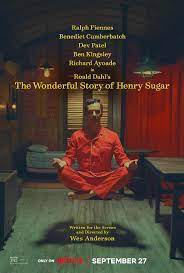
THE WONDERFUL WORLD OF HENRY SUGAR
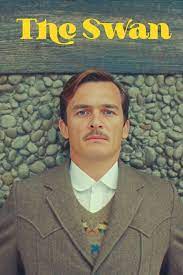
THE SWAN

POISON
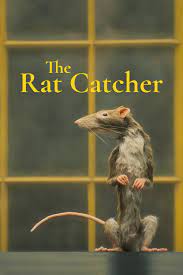
THE RAT CATCHER.
THE SHORT FILMS
Roald Dahl novels and short stories have been very popular on screen since the 1960s, Willy Wonka (and several versions since), stories like The Witches, Matilda, James and the Giant Peach. Here is a selection from his short stories.
Wes Anderson had already made a film of a Roald Dahl story, the animated feature, The Fantastic Mr Fox (with voices of George Clooney, Meryl Streep).
This time he has made what might be called live-action animation, actors performing but with very stylised backgrounds and sets, and action within the scenes of sets being moved, of stagehands coming in with props and removing them, and equivalent of stage performance. Anderson had used this kind of live-action animation in his feature, Asteroid City.
As with all his films, he assembles a distinguished cast – each of them appearing in several of these stories, Ralph Fiennes as Roald Dahl himself, the narrator, but also the rat catcher; Ben Kingsley as the man who can see without eyes, as a doctor; Dev Patel as a doctor and a friend of a patient; Richard Ayeode as a doctor, as a service station assistant, as a guru; Rupert Friend at the service station and narrating the story of The Swan.
The screenplay for each story retains the text written by Dahl – all expertly recited, often very rapidly, and the films could serve as audiobooks. The dialogue includes even the interjections, “he said”, spoken by the actors, turning to camera, then turning back to the action. In fact, there is a lot of direct speaking by the actors to the camera, breaking the fourth wall, talking to the audience.
This has quite a dramatic effect, the audience observing, invited to be involved, making judgements on the characters and their behaviour, opinions on the issues.
And there are issues:
Henry Sugar as a character who is not likeable, arrogant, self-centred, listening to a story about an Indian guru, capitalising on the techniques that the Indian used to be able to see things without his eyes (and the story of the Indian himself and his training and success), Henry Sugar then exploiting the technique, winning and winning vast amounts of money at the casinos, facing the fact that he does not need the money, deciding to give it away, throw it from his balcony, but a policeman coming to tell him that he is disobeying the law. So there is redemption for Henry Sugar.
A theme of The Swan is bullying, the focus on a young boy and his grown-up self narrating the story of the bullies at school, the effect on him, persecution, ridicule, and his developing wings to fly away from the bullying.
There is racial prejudice in Poison, the story of an officer in India, lying in bed, stating that a snake has attacked him and asking his close friend and ally to get a doctor to administer remedies. In his desperation, the officer is condemnatory of the doctor and his Indian background.
There is something sinister about The Rat Catcher, again Roald Dahl telling the story but then Ralph Fiennes hired as a Rat Catcher by a journalist and the owner of a service station, discussions about animals and rats, menace, the methods of dealing with rats, the rat catcher meanwhile becoming all the more rodent -like.
Netflix is showing all these stories – as a continuous program or as separate short films.
