Displaying items by tag: James McEvoy
Book of Clarence, The
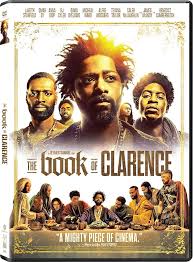
THE BOOK OF CLARENCE
US/Italy, 2023, 129 minutes, Colour.
LaKeith Stanfield, Omar Sy, R.J.Cyler, Anna Diop, David Oyelowo, Alfre Woodard, Teyana Taylor, Micheal Ward, Caleb MacLachlan, Marianne Jean-Baptiste, Eric Kofi Abrefa, James McAvoy, Benedict Cumberbatch, Chase Dillon, Nicholas Pinnock.
Directed by Jeymes Samuel.
The Book of Clarence can be recommended for all kinds of reasons, first of all, that it is nothing like what we might expect! It has been written and directed and musical score, by British musician, Jeymes Samuel, stage name The Bullits. His previous film was The Harder They Fall, a strong Western, a focus on black Americans in the 19th century, victims, dominating, urging the audience to look again at their familiar image of the American West.
The Book of Clarence is billed as a comedy biblical adventure! And it is. And, even though the focus is on Clarence, this can be seen also as a very strong Jesus film, though in plot terms, he is a supporting character.
Once again, the cast is either African-American or of West Indian descent. A glance at the cast indicates popular names like Omar see, David or no, Alfre Woodard, Marianne Jean Baptiste. The exception being Benedict Cumberbatch, playing Benjamin the beggar in the early part of the film and then being transformed, actually by Jesus himself, and making points about false Messiahs at the end of the film. James McAvoy leads the white cast of obnoxiously Roman soldiers.
But, back to Clarence, played engagingly by the very talented LaKeith Stanfield. In fact, the film opens with a kind of Ben Hur chariot race variation, introducing Clarence, avery 21st-century, in fact, in the Jerusalem neighbourhood, the Jerusalem “hood”. He is something of a con man, is in debt to a local loan shark, though in love with his sister, into drugs, but also more often into bad luck.
But, impressed by Jesus and his followers, especially since it turns out that Clarence is, in fact, the apostle Thomas’s twin brother (who is mentioned but not named in the Gospels). Clarence actually applies to the apostles to be the 13th but is turned down, Thomas himself very disdainful of his brother, and Judas urging Clarence to prove his worth by going to a gladiator school and freeing the gladiators – which means that we have besides Ben Hur, homage to Spartacus and gladiator.
But, what makes the Jesus connection even more interesting, and Jesus does appear very sympathetically at various times throughout the film, Clarence is impressed by acclaim for Messiahs and so sets himself up with his friends, refused baptism by John the Baptist, but nevertheless going around preaching, organising fake miracles, profiting highly.
But, can it last? There has been a spoiler right at the beginning of the film with Clarence being crucified. And in suffering, he parallels Jesus, and antagonistic young fellow actually help him carry the cross to Calvary. Clarence does have a conversion experience, compassion, charity beyond himself, some redemption.
It is then that Benjamin emerges, Jesus having giving him money, and a gift for multiplying money which Benjamin spreads around, Benedict Cumberbatch looking like a traditional image of Jesus, but self-seeking and a false Messiah.
The film ends very respectfully of Jesus, a visit to Clarences tomb, and hope of resurrection.
Not what we might have been expecting, but always interesting, entertaining, and, certainly, thought-challenging.
- Title, striking, biblical overtones? The work of the director, writing, directing, music, race issues?
- The locations for Jerusalem, the Italian town of Metairie and its presence in other biblical films? The vistas, buildings, the roads, the sea?
- The first century A.D. variation on Boys in the Hood, the Jerusalem Hood, drugs, gangsters, gambling, debts? Vengeance?
- The musical score, the range of songs, the final credits?
- The three chapters for the Book of Clarence? The introduction, Clarence and his mission, the crucifixion? The beginnings of the parallels with the Gospel story of Jesus?
- The acknowledgement of Roman Empire films, Ben Hur, gladiator…? The influence of biblical films, Jesus films? In the central character and Brian in the Life of Brian?
- The opening race, introducing Clarence, Mary Magdalene and her defiance, Elijah as Clarence’s friend? The chariot race in Ben Hur, the excitement, the Gypsy area, the intervention of Cabbage and his domination, the crashes, taking Clarence’s coat? The bond between a lighter and Clarence, as brothers, his reaction to the loss? The visit to Jedediah, the confrontation, Clarence and his attraction to Marigny, Jedediah’s sister? Her reticence, shyness? The banter between Clarence and Jedediah? The time limit?
- Thomas the apostle, called Didymus, the twin, in the Gospels? The imaginative interpretation of Thomas and his twin? Thomas, leaving their mother, following Jesus, stern, loyal to Jesus, 10 minutes older, but deriding his brother, a nobody, doomed to failure? Their various encounters? Clarence and his challenge, Thomas’s reaction to Clarence’s behaviour? Clarence and his visit to the apostles? His suffering and Thomas coming to apologise, reconciliation? Clarence and the scenes with his mother, his debts, after the race, her encouragement, smelly? Her reflections on his life, on Thomas? Encouragement on the way of the cross, at the crucifixion?
- Clarence and his fascination with Jesus, the significance of the visit to Mary and Joseph, Mary and her explanations, Clarence and the mistaking of the Immaculate Conception for the virgin birth, Mary and her convictions about God’s presence? Joseph, his presence, supporting Mary, calling Clarence a dumb ass?
- Clarence and his need to raise money, his observing of Jesus, the failed Jesus walking through the on guard, the claim of Messiah? Clarence, not believing in God, defying belief? His theory that knowledge was more important? But his idea of impersonating a Messiah, with the help of Elijah? His paralleling of Jesus miracles, raising the dead, curing the sick…, Elijah performing? The taking up of the collection from the crowd gathering? Believing him as a Messiah? His preaching, the effect on him, those collection of money?
- His visit to the apostles, the encounter with Judas, Judas and his taunts, urging him to go to the gladiator slaves, confront the torturer, get the release of the prisoners? Clarence going, the reaction of the torturer, singling out Barabbas, the challenge to the fight, Clarence and his moves, Barabbas and his reactions, the torturer allowing Barabbas to go? Barabbas joining the troop of the wood-be Messiah?
- The encounters with the Romans, white, their arrogance, the reaction to Barabbas, the officer and his javelin is, throwing them out Barabbas, Barabbas and his defiance, escaping, and his nickname of Immortal?
- Clarence, the effect on his charade, the slaves, getting a conscience, taking the money and buying back the slaves, freeing them? Judas and his response?
- The encounter with Jesus, Mary Magdalene, the adultery, the parallel of John chapter 8, Jesus and the stones, is suspending them in the air, their falling, defying the authorities, letting Mary go free, the friendship with her?
- Jedediah, the party, with Varinia, declarations to her, the upset, his feeling betrayed by her?
- The presentation of the Last Supper, acknowledgement of da Vinci’s painting? The two issue with Judas, betrayal, the scenes with the Jewish authority in the 30 pieces of silver, Judas and the promise of betrayal, at the supper, the issue of Mary’s gravy, the taste, his going out?
- Jesus, knowing he was betrayed, waiting for the moment, accompanied by Mary?
- His arrest, the Romans, the encounter with Pontius Pilate, Pontius Pilate and his manner, racial superiority, arrogance, interrogation, the sympathy with Clarence, Clarence and his commitment, defiance, the parallels with Jesus before Pontius Pilate? Condemned to be crucified?
- The visuals of the way of the cross, the Jesus parallel, the defiant crowds, his mother in the crowd, encouraging him, Elijah and the encouragement? On Calvary, the vivid nailing to the Cross, raised, Henning, hanging, the presence of Benjamin, the past encounters with Benjamin and his spurning him, not recognising him, Benjamin and his worldly defiance? The Romans, the decision to pierce Clarence’s side? Again the Jesus parallel?
- Benjamin, the begger, spurned by Clarence, the later scenes of his banking, the encounter with Jesus, the money, his clean himself up, becoming like the traditional portrait of Jesus, his gift of being able to multiply the money? His arrest, a false Messiah accusation, being crucified?
- Clarence, the burial, the stone, the breaking up of the stone, Jesus entering, tender with Clarence, raising him to new life? Immortality?
- The overall effect of the film, the serious, the comic touches, the criticisms of blasphemy, the Christian defences against accusations of blasphemy? The enjoyment of a biblical epic? Jesus figure treated seriously and with respect? And Clarence paralleling Jesus and becoming a Christ figure?
Speak no Evil
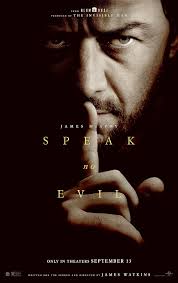
SPEAK NO EVIL
US, 2024, 110 minutes, Colour.
James McAvoy, Mackenzie Davis, Scoot McNairy, Aisling Franciosi, Alix West Leffler, Dan Hough.
Directed by James Watkins.
The title sets up expectations, unspoken evil. And expectations are fulfilled until the last minutes of the film when evil is definitely spoken. Audiences may have seen a Danish film of 2022 with same title, a Danish family visiting a Dutch family with bizarre consequences. This time it is an American family, about to settle in London, encountering a very friendly couple on a European holiday, invited to their home in England’s West Country.
The holiday is very cheerful, a getaway for the American couple, new jobs, new locations, a strong character in the wife, Louise (Mackenzie Davis), a more hesitant character in the husband, Ben (Scoot McNairy), and the young daughter, Agnes (Alix West Leffler), who does show signs of being troubled. The audience identifies with them. The British couple, Paddy (James McAvoy), Ciara (Aisling Franciosa) are exuberantly cheerful, funny for every occasion. However, their little boy, Ant (Dan Hough) cannot communicate by speech, deformity with his tongue.
Everybody gets on so well with each other that there is the inevitable invitation of the American family to come visit…
Most audiences who choose to see Speak no Evil, know that there is some horror in the offing. However, the filmmakers decided that it was more effective to evoke, over an extended period, a sense of menace. This can be very powerful. And, this is what happens, small incidents, odd comments, bizarre behaviour, increasing tension between Louise and Ben, their hosts forever cheerful.
However, the drama is heightened in surfacing the reasons for the stress between Louise and Ben, a past failing, loss of jobs, decisions to move, making the story not just simply a family under threat but tension-racked family under threat.
As the film moves to its dramatic climax, confrontations, violence, the audience has come to know all the protagonists very well, including the two children. In fact, much of the final focus is on the young son, Ant, revelations about his situation and, a final focus on his face, after an extremely disturbing sequence which involves him, a jolt for audience sensibilities, reminder that though he could not speak, he was a boy with deep emotions desperate for an outlet.
Which means that this is not just your average horror story, but a dramatic story of families and relationships, manipulation and aggression.
- The tone of the title? Ant and his inability to speak, good or evil? Paddy and his evil words, supported by Ciara? And the hostile words between Louise and Ben?
- The European holiday, the countryside and landscapes, the buildings, the streets, the meals, outdoor discussions? The musical score?
- Getting to know Louise and Ben, their marriage, their history, Louise and infidelity, Ben and forgiveness, her giving up her work and life, moving to England, the uncertainty of his work? The relationship with Agnes? Her age, dependence on her toy? The response to Paddy and his bravado, the invitation to visit when in England? Their being charmed and pressurised?
- Paddy, his manner, bravado, jokiness, the Danes and their seriousness about cooking, avoiding the meal with them, the crassness of his talk about toilet paper and the reaction? Ingratiating himself with Louise and Ben? The support from Ciara? The presence of Ant, his age, his tongue and inability to speak?
- Louise and Ben, in England, settling in, the invitation, Louise and her reluctance, Ben wanting to go, compromise? Agnes and the issue of her toy? The drive, doubts, the dark, finding the house? Lavish, the welcome?
- The details of the holiday, the rooms, Agnes sharing with Ant, the couple’s room, the dirty sheet? Louise, unease? Ben and accommodating? The discussions, the welcome, the outings, the meal specially prepared, Michael and his connection, their leaving Ben to pay?
- The children, together, playing, bonding, the issue of the dance, Paddy and his criticisms, making Ant continue to dance? The violence? Ant later revealing the bruises on his body? The football, throwing it too far, taking Agnes into the building, into the basement, the photos, the revelation about himself, Agnes photographing the photos and evidence?
- Louise, more and more uncomfortable, the argument with Ben, the revelation about their life and relationship? Wanting to leave, by night, Agnes of the toy, having to return, Paddy and his reaction? There are explanations?
- The further decision to leave, the toy on the roof, the ladder, precarious, Paddy holding it? The growing sense of menace, Paddy discovering the children had been in the basement? Phoning Mike, his arrival, the revelation about their dealings, the couples, the children, the money?
- The climax, the dangers, people using their wits, weapons, Mike and his gun, his attempt to kill Ben, Louise and the hammer? Ciara and the gun, menace, her death? Hiding in the various rooms in cupboards, using the inflammatories, the fire, the car exploding? Refuge on the roof? Paddy and his pursuit? The accelerant on him and the fire? The wounds? Ben falling to the ground, getting the ladder, the escape?
- Paddy, the final confrontation, his death – and the disturbing sequence of Ant continually bashing Paddy’s head?
- The drive away, the focus on each, Agnes giving the toy to Ant? The close-up of and space summarising what had happened?
