Displaying items by tag: The Thing with Feathers movie
Thing with Feathers, The
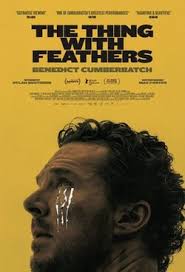
THE THING WITH FEATHERS
UK, 2025, 98 minutes, Colour.
Benedict Cumberbatch, Henry Boxall, Richard Boxall, Sam Spruell, David Thewliss, Eric Lampaert, Leo Bill.
Directed by Dylan Southern.
American Emily Dickinson wrote a poem, Hope is the Thing with Feathers. In 2014, novelist, Max Porter, published Grief is the Thing with Feathers – a story which embodies a great deal of grief and despair, not a focus on hope.
This film is a strange experience, some audiences caught up and feeling overwhelmed, other audiences watching, surprised, detached, puzzled.
On the one hand, the film has its realistic aspects. It is a story of a father, referred to here only as Dad, and his two sons, referred to here only as Boys, the sudden death of wife and mother, funeral, the subsequent grief. The family does have some support with Dad’s brother, well wishers.
But this film is very much on the other hand and darkly, stark black and white like the sketches in the graphic novel that Dad is writing and drawing, surrealistic. We are taken into Dad’s imagination, with the grief embodied in the physical and psychological presence of a giant Crow, sinister, cackling-croaking voice that taunts and criticises, sinister and destructive aspects of grief within the father grieving with harsh and alienating consequences for the children.
Over the decades, Benedict Cumberbatch has proven himself a superb actor. Here he draws on all his resources to create the madly grieving dad, some clear and quiet moments, but soon overwhelmed by manic outbursts, extraordinary intensity.
The film has four chapters, initially focusing on Dad and his life, work, relationship with his boys, trying to have things normal, but increasingly overwhelmed by the presence of the Crow. Then there is a chapter from the Boys’ perspective, puzzling over what is happening with their Dad while they try to live their ordinary lives at school, playing at home, coping with Dad’s moods, going away for a time. Then there is a section for the Crow, black and bleak, harshly croaking voice, taunts and criticisms. But, the final section is the Demon, the sinister and potentially deadly presence in this scenario of grief, touches of madness and despair.
This film is quite an unexpected experience, darkly intriguing, perhaps too alarming at times, certainly puzzling, and we have to admire the overwhelming intensity of Benedict Cumberbatch’s performance.
- The title, Emily Dickinson’s poem focusing on hope, Max Porter’s novella focusing on grief as the thing with feathers?
- The realism of the story, the family, The mother’s collapse and death, the funeral, overwhelming grief? Trying to carry on as normal, the household, the boys, breakfast…? Ready for school, picking them up? Moments of sadness, play in the house, outings?
- The surrealism of the story, the focus on Dad (no personal names)? His memories of his wife, their recurring throughout the film, the moments of blood and memories? His work, graphic novels? The focus on the Crow in his drawings? Stark black and white?
- Dad’s experience, growing desperation, moments of madness and anger, with the boys, with his brother, friends, editor? The film going into his inner psyche?
- Benedict Cumberbatch’s performance, the intensity, the credibility, the original ordinariness, family and children, overpowering grief, disrupting moods, erratic, violent, self-indulgent? The continued building up of the intensity?
- The aspect of the real world, the meeting with his brother, conversations, offers of help? Friends, acquaintances, offerings of sympathy? The editor, the workplace? Medical help, psychological help, doctors?
- The structure of the film, the focus on Dad, the boys, Crow – and finally the unleashing of the Demon?
- The Crow, Dad’s creative imagination with the graphic novel, the personification of the Crow, size, voice, accent? The Crow the embodiment of grief and its erratic manifestations? The Crow and Dad’s imagination? The destructive aspects, the taunts, the ridicule, the criticisms of the children? Dire presence of the Crow, overtaking, overwhelming? The Crow’s own section of the narrative? The power of the Crow to be ultimately destructive?
- The final section, the reality of the Demon, and Dad, with the boys, sending them away, potentially destructive, Dad and the friends and supporters? The continued work on the graphic novel, the sketches, blacker and bleaker?
- The crisis breaking, the presence of the Crow, disappearance, the demonic?
- Time passing, the completion of the graphic novel, the effect on Dad, reunited with the boys?
- The film as an immersion in the blackness and destructiveness of grief?
