Displaying items by tag: David Thewliss
Avatar: Fire and Ash
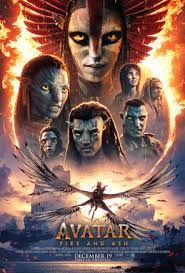
AVATAR: FIRE AND ASH
US, 2025, 197 minutes, Colour.
Sam Worthington, Zoe Saldana, Sigourney Weaver, Stephen Lang, Oona Chaplin, Kate Winslet, Cliff Curtis, Joel David Moore, CCH Pounder, Edie Falco, Brendan Cowell, Jemaine Clement, Giovanni Ribisi, David Thewless, Britain Dalton, Jack Champion.
Directed by James Cameron.
The third Avatar fantasy and science-fiction adventure from James Cameron. It is, in fact, 16 years since the first Avatar film was released with great success. Then a 13 year wait for Avatar: The Way of Water. Only three years wait this time. And, Cameron has noted that although sequels are in preparation, his making them will depend on how this film is received. There is no doubt of its popularity and success at the box office – but, along with critical comment and popular reactions, will this be enough?
In the meantime, here we are again in Pandora, out in the galaxies, beautiful floating islands, homes in the forests, mountains, cliffs, crags and oceans, huge creatures swooping in the air, exhilarating transport for humans, marvellous giant beasts of the sea with consciousness, communication – and the background of a creation mythology. Audiences who relished all this in the first films will appreciate it once again, especially since this is how this film begins, the fantasy, rather than focus on the Sky People, the humans who had journeyed here with their vast laboratories, scientific equipment, boats and weapons.
Many of the responses to Fire and Ash have stated that, in many ways, most ways?, is a replay of the previous films, the establishing of the families and tribes, the dangers from the humans, the relentless human expansion, clashes between the tribes, the buildup to the final battles. And, this is quite true. But, there are many audiences who are willing to surrender themselves to this kind of repeat experience.
Once again Sam Worthington and Zoe Saldana play the parents, the leaders of the Navi tribe, their children, especially Loach, still suffering the loss of his brother and feeling responsible for his death, his bonding with his brothers and sisters, and with the children from the local tribes. But there is a change in the family, the presence of the human, Spyder, teenager, needing a mask to breethe, but welcomed into the family except for the severity of the virulent hostility from the mother, loathing humans. In fact, Spyder is the son of the former soldier, Quaritch, who, like Jake, has been transformed.
The presence of Spyder, his welcome in the family, his father searching and wanting him back, provides much of the drama at the centre of this film, leading to the issue of whether Spyder be sacrificed for the safety of the tribes (echoes of the biblical story of Abraham and the sacrifice of Isaac).
But, this time there is another warrior tribe, led by one of the most savage female leaders, absolutely relentless. And she teaming up with Quaritch to wreak vengeance.
And the expected battles: the confrontation between Jake Sully and Quaritch. And, of course, at great length, intensity and spectacle, the Navi’s long and spectacular battle with the humans.
There is one complaint, true of the other films. Much of the dialogue is quite commonplace, often trite, and, with Spyder, the kind of quick American slang that would appear in the bubble a cartoon panel.
So, for the fans, more of the same but with some variations as a new characters like Spyder and barre. It runs for 3 ¼ hours but, with continuous action, it keeps up its pace. And the question raised: can there be still more created stories out there in Pandora?
- The third in the series? The popularity of the films? Box office records? The work of imagination and James Cameron?
- Recreation of the world of Pandora, the visuals of space, the beauty of the floating islands, the colonies for the various tribes, homes, cliffs and rocks, the sea, rivers? The contrast with the scientific base, the scientific equipment, elaborate, the controls? The space vehicles? The ships? The creatures, flying, the giant creatures in the sea? The range of special effects, especially for the confrontations, the battles, the rescues, the attacks, the deaths? In the background of the musical score?
- Presuppositions from the earlier films, the range of characters, Jake Sully, his human background, becoming part of the tribe, the romance, his wife, the children in the family life? His being hero, his wife and her prejudice against the humans? Quaritch, human, transformed, his son, his warrior behaviour, his death, revived? The general and her command, the Captain Scoresby on his boat, the scientists and their demands, the warriors, the humans and their scientific advances, the havoc on Earth, potential havoc for space? The development of these themes again?
- The previous emphasis on the science and the expedition from Earth? This film taking it for granted, opening with Pandora, its beauty, peace, the islands in space, the homes, the family? The audience invited to enter the world of fantasy rather than science and science fiction?
- The repeat of the situations, humans as Sky People and their attack on the Navi? The life of the Navi, the relationship with the other tribes? The buildup to the confrontation between the tribes, and the clash with the humans?
- Jake Sully, established character, his leadership? The death of his son, the blaming of the younger son? The younger son and his friends from the other tribes? Spyder and his being the son of Quaritch, received by the Navi, wearing a mask, the hostility of the mother?
- The revelation of the warlike tribe, the leader, visualised, fierce, merciless? Teaming with Quaritch? His associate?” Marriage and his love for his son, wanting with him? Spyder’s response? Spyder and the experience without the mask, the daughter, her special powers, her representing the God, his revival?
- The focus on the family relationships, the dangers, the threats, the role of the young son, relationship with his father, clashes, reconciliation, his role in the final battles?
- The mythical aspects, Kiri and origins, the visual manifestations, the flying creatures, the creatures and the sea, communicating with them, their communications, life? These beasts the target of the humans?
- The range of battles, their being visualised, in the air? The humans and their weapons and vehicles? The herding of the sea beasts?
- Focus on the humans, the general and her attitude, commands? The captain of the ship, his mission? Dr Garvan, sympathetic, his helping Jake Sully? The contrast with Selfridge and his wanting to get Spyder and study him?
- The buildup to the confrontations, Varang and her fierceness, her role in the battles, the final defeat?
- The issue with Spyder, Jake and his decisions, his wife, agreeing, changing her mind, seeing Spyder saving Jake’s life, Jake taking him out, echoes of the Abraham story and the sacrifice of Isaac, his inability to kill? Leading to the confrontation with Quaritch and his falling into the abyss?
- Peace among the tribes, Jake as leader, the defeat of the humans – abandon ship? The future, peace in Pandora? The role of the humans?
- And the success of sequels depending on the commercial success of this third in the franchise?
Thing with Feathers, The
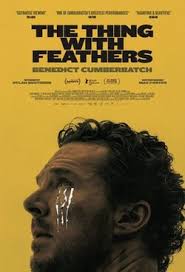
THE THING WITH FEATHERS
UK, 2025, 98 minutes, Colour.
Benedict Cumberbatch, Henry Boxall, Richard Boxall, Sam Spruell, David Thewliss, Eric Lampaert, Leo Bill.
Directed by Dylan Southern.
American Emily Dickinson wrote a poem, Hope is the Thing with Feathers. In 2014, novelist, Max Porter, published Grief is the Thing with Feathers – a story which embodies a great deal of grief and despair, not a focus on hope.
This film is a strange experience, some audiences caught up and feeling overwhelmed, other audiences watching, surprised, detached, puzzled.
On the one hand, the film has its realistic aspects. It is a story of a father, referred to here only as Dad, and his two sons, referred to here only as Boys, the sudden death of wife and mother, funeral, the subsequent grief. The family does have some support with Dad’s brother, well wishers.
But this film is very much on the other hand and darkly, stark black and white like the sketches in the graphic novel that Dad is writing and drawing, surrealistic. We are taken into Dad’s imagination, with the grief embodied in the physical and psychological presence of a giant Crow, sinister, cackling-croaking voice that taunts and criticises, sinister and destructive aspects of grief within the father grieving with harsh and alienating consequences for the children.
Over the decades, Benedict Cumberbatch has proven himself a superb actor. Here he draws on all his resources to create the madly grieving dad, some clear and quiet moments, but soon overwhelmed by manic outbursts, extraordinary intensity.
The film has four chapters, initially focusing on Dad and his life, work, relationship with his boys, trying to have things normal, but increasingly overwhelmed by the presence of the Crow. Then there is a chapter from the Boys’ perspective, puzzling over what is happening with their Dad while they try to live their ordinary lives at school, playing at home, coping with Dad’s moods, going away for a time. Then there is a section for the Crow, black and bleak, harshly croaking voice, taunts and criticisms. But, the final section is the Demon, the sinister and potentially deadly presence in this scenario of grief, touches of madness and despair.
This film is quite an unexpected experience, darkly intriguing, perhaps too alarming at times, certainly puzzling, and we have to admire the overwhelming intensity of Benedict Cumberbatch’s performance.
- The title, Emily Dickinson’s poem focusing on hope, Max Porter’s novella focusing on grief as the thing with feathers?
- The realism of the story, the family, The mother’s collapse and death, the funeral, overwhelming grief? Trying to carry on as normal, the household, the boys, breakfast…? Ready for school, picking them up? Moments of sadness, play in the house, outings?
- The surrealism of the story, the focus on Dad (no personal names)? His memories of his wife, their recurring throughout the film, the moments of blood and memories? His work, graphic novels? The focus on the Crow in his drawings? Stark black and white?
- Dad’s experience, growing desperation, moments of madness and anger, with the boys, with his brother, friends, editor? The film going into his inner psyche?
- Benedict Cumberbatch’s performance, the intensity, the credibility, the original ordinariness, family and children, overpowering grief, disrupting moods, erratic, violent, self-indulgent? The continued building up of the intensity?
- The aspect of the real world, the meeting with his brother, conversations, offers of help? Friends, acquaintances, offerings of sympathy? The editor, the workplace? Medical help, psychological help, doctors?
- The structure of the film, the focus on Dad, the boys, Crow – and finally the unleashing of the Demon?
- The Crow, Dad’s creative imagination with the graphic novel, the personification of the Crow, size, voice, accent? The Crow the embodiment of grief and its erratic manifestations? The Crow and Dad’s imagination? The destructive aspects, the taunts, the ridicule, the criticisms of the children? Dire presence of the Crow, overtaking, overwhelming? The Crow’s own section of the narrative? The power of the Crow to be ultimately destructive?
- The final section, the reality of the Demon, and Dad, with the boys, sending them away, potentially destructive, Dad and the friends and supporters? The continued work on the graphic novel, the sketches, blacker and bleaker?
- The crisis breaking, the presence of the Crow, disappearance, the demonic?
- Time passing, the completion of the graphic novel, the effect on Dad, reunited with the boys?
- The film as an immersion in the blackness and destructiveness of grief?
