Displaying items by tag: Sam Spruell
H is for Hawk
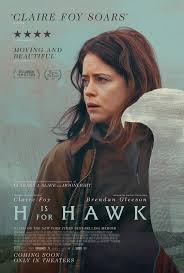
H IS FOR HAWKE
UK, 2026, 109 minutes, Colour.
Clare Foy, Brendan Gleeson, Lindsay Duncan, Denise Gough, Josh Dylan, Sam Spruell.
Directed by Philippa Lowthorpe.
This film is a biography, based on a memoir by scientist and academic, Helen McDonald. The main action takes place in 2007.
While H is for Hawke, it also is for Helen and it is also a letter for Hunter. In the beginning of the film, Helen is on her way to Cambridge University and contacts her photojournalist father to say that she had seen two hawks in-flight. This will become important for her because, as she goes to lunch with a friend, she receives a phone call to say that her father has died. Her father is played by Brendan Gleeson and he will appear in many of the flashbacks in Helen’s memories.
Helen is played by Clare Foy, well-known for her appearance in the series, The Queen. Helen is a very serious young woman, interest in science, interested in her students, walking them to a pub and explaining the history of the area. But, we realise that she is emotionally devastated by the death of her father, becoming more and more depressed. She has been offered a prestigious position in Berlin, she delays, taking refuge in purchasing a goshawk, a hunting hawk, living quietly at home with it, spending hours patiently training it, eventually achieving some success but finding a powerfully strong bond with her hawk, Mabel.
For audiences who enjoy nature, many scenes of the countryside, many scenes with the birds, the hawk, flying, predatory, hunting – which draws some criticism when she leads a seminar, the audience testing her about life and death cycles, animal cruelty, nature red in tooth and claw…
What brings greater humanity to audience appreciation of Helen are the many scenes of flashbacks with her father, genial, usually with coat and tie no matter what commission, photographing bridges over the Thames, sharing an exhilaration with his daughter. Her mother, Lindsay Duncan, is sympathetic and there is her brother, the organising of the father’s funeral and, ultimately, her eulogy.
Given the events shown here in 2007, Helen being very much depressed, very much the recluse, it is surprising to find that she did have the energy and peace of mind to actually write a memoir and to serve, some decades later, as a producer of this film.
- The title, H also for Hunter, and H for Helen? A memoir?
- 2007, Cambridge, the university colleges, chapels, the academic world, the accommodation? The musical score?
- The portrait of Helen McDonald, 2007, science, academic achievement, fellowship, prospects to go to Berlin, the group and taking them to the pub, the historical lecture on the way? Phone call to her father, her looking at the Hawks and describing them to him? Her friendship with Christina, going out for the meal, the phone call, her father’s death?
- The personality of Helen, introverted, love signs, love of nature, devotion to her father? Love for her mother? Relationship with her brother and her niece – especially to the visit to see Mabel?
- The impact of her father’s death, sadness, a strong bond with her father, the memories, the flashbacks, as a little girl, later looking through the photo archive with him, the expeditions with him, the origin of the Thames? The effect of the memories on her, British, stiff upper lip, internalising the grief, not manifesting it to others?
- The personality of her father, large, boisterous, wearing the tire, the camera, jumping out of the car as an accident scene, taking risks, laughing, encouraging his daughter, in his wife visiting Cambridge, looking at the books and smelling them, a larger-than-life character?
- The personality of her mother, loving, devoted, concerned? Her brother, his family?
- The later diagnosis of depression, Helen and dealing with depression, seclusion, clothes, leaving the house untidy, forgetting appointments, interaction with the faculty, her prospects in Berlin?
- Her friend with the Hawks, visiting him, arranging the buying of the Hawke, the argument with the man, her choice? The sequences of training the Hawke, naming her Mabel, in the house, on Helen’s wrist, food, calling her, Christina’s visit, the destruction, Mabel and her flight, success? How her taking to her friend, the various stages of her flying, hunting, killing the rabbit, returning? The sense of achievement, and companionship for Helen?
- Going to the functions, with Mabel, the polite conversations? Christina reminding her of the seminar, her speech, formal, the interjection, the criticism of hunting, persistence and criticism, Helen’s reaction, replies, nature, hunting, survival, death for everyone?
- The preparation for the funeral, the meeting with the undertakers, laughing and the themed coffins? Her agreement to do the eulogy?
- Steve, a good friend, the house, finding Helen on the floor with Mabel, reviving her, cleaning up, encouraging her?
- Helen, getting help, talking, understanding her situation?
- The eulogy, the slides, her affirmation of her father, tears, the response of the family and congregation?
- The aftermath, admitted depression, living with her grief, the experience with Mabel? Letting her go for six months, Helen’s future – and the fact that she wrote a memoir and was a producer on the film?
Thing with Feathers, The
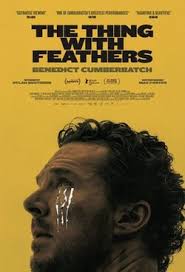
THE THING WITH FEATHERS
UK, 2025, 98 minutes, Colour.
Benedict Cumberbatch, Henry Boxall, Richard Boxall, Sam Spruell, David Thewliss, Eric Lampaert, Leo Bill.
Directed by Dylan Southern.
American Emily Dickinson wrote a poem, Hope is the Thing with Feathers. In 2014, novelist, Max Porter, published Grief is the Thing with Feathers – a story which embodies a great deal of grief and despair, not a focus on hope.
This film is a strange experience, some audiences caught up and feeling overwhelmed, other audiences watching, surprised, detached, puzzled.
On the one hand, the film has its realistic aspects. It is a story of a father, referred to here only as Dad, and his two sons, referred to here only as Boys, the sudden death of wife and mother, funeral, the subsequent grief. The family does have some support with Dad’s brother, well wishers.
But this film is very much on the other hand and darkly, stark black and white like the sketches in the graphic novel that Dad is writing and drawing, surrealistic. We are taken into Dad’s imagination, with the grief embodied in the physical and psychological presence of a giant Crow, sinister, cackling-croaking voice that taunts and criticises, sinister and destructive aspects of grief within the father grieving with harsh and alienating consequences for the children.
Over the decades, Benedict Cumberbatch has proven himself a superb actor. Here he draws on all his resources to create the madly grieving dad, some clear and quiet moments, but soon overwhelmed by manic outbursts, extraordinary intensity.
The film has four chapters, initially focusing on Dad and his life, work, relationship with his boys, trying to have things normal, but increasingly overwhelmed by the presence of the Crow. Then there is a chapter from the Boys’ perspective, puzzling over what is happening with their Dad while they try to live their ordinary lives at school, playing at home, coping with Dad’s moods, going away for a time. Then there is a section for the Crow, black and bleak, harshly croaking voice, taunts and criticisms. But, the final section is the Demon, the sinister and potentially deadly presence in this scenario of grief, touches of madness and despair.
This film is quite an unexpected experience, darkly intriguing, perhaps too alarming at times, certainly puzzling, and we have to admire the overwhelming intensity of Benedict Cumberbatch’s performance.
- The title, Emily Dickinson’s poem focusing on hope, Max Porter’s novella focusing on grief as the thing with feathers?
- The realism of the story, the family, The mother’s collapse and death, the funeral, overwhelming grief? Trying to carry on as normal, the household, the boys, breakfast…? Ready for school, picking them up? Moments of sadness, play in the house, outings?
- The surrealism of the story, the focus on Dad (no personal names)? His memories of his wife, their recurring throughout the film, the moments of blood and memories? His work, graphic novels? The focus on the Crow in his drawings? Stark black and white?
- Dad’s experience, growing desperation, moments of madness and anger, with the boys, with his brother, friends, editor? The film going into his inner psyche?
- Benedict Cumberbatch’s performance, the intensity, the credibility, the original ordinariness, family and children, overpowering grief, disrupting moods, erratic, violent, self-indulgent? The continued building up of the intensity?
- The aspect of the real world, the meeting with his brother, conversations, offers of help? Friends, acquaintances, offerings of sympathy? The editor, the workplace? Medical help, psychological help, doctors?
- The structure of the film, the focus on Dad, the boys, Crow – and finally the unleashing of the Demon?
- The Crow, Dad’s creative imagination with the graphic novel, the personification of the Crow, size, voice, accent? The Crow the embodiment of grief and its erratic manifestations? The Crow and Dad’s imagination? The destructive aspects, the taunts, the ridicule, the criticisms of the children? Dire presence of the Crow, overtaking, overwhelming? The Crow’s own section of the narrative? The power of the Crow to be ultimately destructive?
- The final section, the reality of the Demon, and Dad, with the boys, sending them away, potentially destructive, Dad and the friends and supporters? The continued work on the graphic novel, the sketches, blacker and bleaker?
- The crisis breaking, the presence of the Crow, disappearance, the demonic?
- Time passing, the completion of the graphic novel, the effect on Dad, reunited with the boys?
- The film as an immersion in the blackness and destructiveness of grief?
