Displaying items by tag: Brian Cranston
Super Mario Galaxy Movie, The
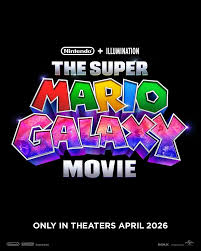
THE SUPER MARIO GALAXY MOVIE
US/France/Japan, 2026, 98 minutes, Colour.
Voices of: Chris Pratt, Charlie Day, Donald Glover, Brie Larson, Benny Safdie, Kevin Michael Richardson, Keegan-Michael Key, AnyaTaylor-Joy, Jack Black, Luis Guzman, Issa Rae, Glen Powell.
Directed by Aaron Horvath, Michael Jelenic, Pierre Leduc.
For 40 years the Super Mario Bros and entertained generations all around the world. They are identified with Nintendo and computer and video games. There was a live-action feature in the 1990s, not well received or reviewed, starring Bob Hoskins and John Leguizamo.
However, the games and the programs developed, with special appeal to younger players and audiences, and, as the years pass, happy memories of now adults and parents. 2023 saw the first feature length animated version of Super Mario action.
The present film serves as something of a movie icon worldwide with its immediate success on release, breaking records, audiences flocking to see it, millions of dollars.
One might say that the production is hyper-spectacular, the range of animation figures, humans, creatures, spacecraft, castles and builders, action in space.
While the two brothers, plumbers in their overalls, are ordinary characters, Mario forceful, Luigi of less effective, they are presented as ordinary heroes in extraordinary galaxy adventures and rescues. But, there is a strong female presence, especially in Princess Peach, definitely coming to the rescue. The three are voiced by Chris Pratt, Charlie Day and Anya Taylor-Joy. And, for so many of the multi-varied characters, a wonderful array of voices which adult audiences will be enjoying, Glenn Powell, Jack Black, Brie Larson…
And, while there are heroics, there is also the money, and ambitions for not only world power but Galaxy power. Ambitious Bowser at one stage says to his son, in Jack Black’s voice, “I want to stand on the ashes of the world…” (And, at the time of its release in early 2026, Donald Trump was offering similar sentiments about Iran.)
So, excitement for the younger audiences, experiencing it in the cinema, experiencing the big wide screen and heightened sound, an invitation to come to the cinema more often. Extraordinary the way that animation films have developed over recent decades.
But, adults accompanying the children might find that this one is more than enough for them, Super Mario comedy and drama all over the galaxies.
All My Sons. National Theatre Live
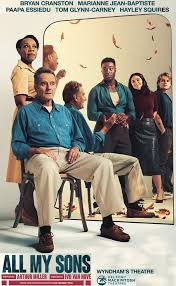
ALL MY SONS: NATIONAL THEATRE LIVE
A, 2026, 146 minutes, Colour.
Brian Cranston, Marianne Jean-Baptiste, Hayley Squires, Paapa Essiedu, Tom Glynn-Carney, Aliyah Odoffin, Cath Whitefield, Richard Hansell, Zach Wyatt, Charles Dark.
Directed by Ivo van Hove
This is the second National theatre live production of Arthur Miller’s 1947 play, All My Sons. The previous version, 2019, featured Sally field and Bill Pullman.
This time Brian Cranston, who established his reputation with television, Breaking Bad, and many film roles, plays Joe Keller, the ordinary American, manager of a plant during World War II, experiencing a cover up any inadequate product leading to the death of 21 pilots and his spending time in jail, his partner still in jail. This 2026 version features interracial marriage with Marianne Jean-Baptiste powerfully playing his wife, mourning the death of her son believing he will return, with a hold over her husband.
The other central character is the surviving son, Chris, played by Paapa Essidu (including a ring in his ear). This is a man of integrity, love and his father, believing the best, urging all those he knows to be at their best. Hayley Squires is the girlfriend of the deceased brother, but in love with Chris, waiting for his call, now visiting, separated from her father, Joe Keller’s partner, who is in jail. There is also her brother who resents the father, Tom Glynn-Carney, who visits his father and learns his version of what happened.
Other characters include the neighbours, an idealistic doctor who served in war, his money-preoccupied wife, the neighbours on the other side, the wife and daughters, the husband preoccupied with horoscopes, trying to prove that the alleged day of death of the older son was in fact a lucky day and he could not have died.
The set is very simple, rather dark, outside the entry to the house, at the opening, a tree falling to the ground during a storm, it remaining there as a large log, which means that the actors have to be walking around the log or walking over it, more than a touch distracting at times. There is also a huge circle above the door, like the sun or full moon, a light, and some of the characters passing by and the climactic event happening there.
The film shows Joe Keller, amiable, with the neighbours, supporting his surviving son who works in the company, strong relationship with his wife. The tension is with Ann, the older brother’s girlfriend arriving, the mother not wanting to hear of the death of her son, and in love with Chris and vice versa.
There are no intervals, only brief music (with music by Johnny Cash and Leonard Coen). There is a highly emotional scenes, especially with the mother, finally building up to the revelation of the letter by the older son written on the day that he died, knowing the truth about what his father had done. The mother is overwhelmed, so is Chris, his ideals shattered, questioning the possibility for his future – and the challenge of his judgement on his father.
His father’s final argument is family is more important, love for his sons, living with failure, but money and security being most important. When this is shattered, Joe weeping, beginning to face the truth, he makes his fatal decision.
All My Sons is to be seen in the context of Miller's following play, The Death of a Salesman, and the issues of race in A View from the Bridge. Miller is writing about ordinary Americans and families, the aftermath of World War II, the generation of fathers, their characters, work, family relationships, especially to their sons.
Phoenician Scheme, The
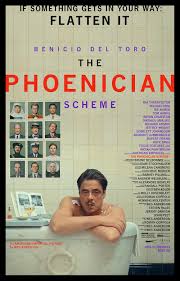
THE PHOENICIAN SCHEME
US, 2025, 101 minutes, Colour.
Benicio del Toro, Mia Threapleton, Michael Cera, Riz Ahmed, Tom Hanks, Bryan Cranston, Mathieu Amalric, Richard Ayoade, Jeffrey Wright, Scarlett Johansson, Benedict Cumberbatch, Rupert Friend, Hope Davis, Bill Murray, Charlotte Gainsbourg, Willem Dafoe, F. Murray Abraham, Stephen Park, Alex Jennings, Donald Sumpter, Scott Shepherd.
Directed by Wes Anderson.
A significant part of the review for The Phoenician Scheme is to look at the huge credits list, many of the cast having appeared in a number of Wes Anderson films. And, of course, expectations from writer-director, Wes Anderson. Anderson has been writing and directing films, including two animation films, for more than a quarter of a century. His tyle and his exploration of themes is, to say the least, highly distinctive.
And, The Phoenician Scheme, is quite idiosyncratically distinctive. It is very stylised in the visuals, the traditional box screen frame, the framing of action, the references to paintings and the staging looking like 20th century paintings. Then there are the performances, also stylised, often life theatre performances, eccentric and clipped delivery of lines, postures and posing. And, for those audiences ready to surrender to Anderson, there are many who do, these visuals and the performances are readily engaging.
There is a plot. The setting is 1950, an entrepreneurial businessman from Hungary, Korda, played perfectly, both seriously and ironically, by Benicio del Toro. He has survived several plane crashes, assassins out to get him and sabotage his plan for development, rails and tunnels in Phoenicia. We are presented with a chart indicating his plans as well as the contacts he must make to improve a shortfall in income project. They serve as chapters for the film.
Korda has many children, his own and adopted, hoping for an Einstein for the future. But his only daughter, Liesl, a novice nun, played by Mia Threapleton, is seconded, initially unwillingly and firmly committed to her vocation, to be his heir. (Mia Threapleton is following in the footsteps of her mother, Kate Winslet, a very interesting role.) And, there is Kord’a new assistant, expert on insects, played with accent by Michael Cera.
Interspersed throughout it is round table conference of elders who are monitoring Korda’s behaviour judging him and his morality accordingly.
The encounters with the various characters for financial help are highly entertaining, eccentric and satirically humorous in their way, incorporating the various stars listed above until a culmination in the fearsome presence of Benedict Cumberbatch Korda’s brother.
Then there are Korda’s memories and dreams, flashbacks in black-and-white, some of his near death, or momentary post-death, experiences, some ecclesiastical in an Orthodox style, others with biblical overtones, again with a number of stars – and a cameo by Bill Murray, who has been working with Anderson for a long time, culminating in his presence as God.
Anderson has a wry and offbeat sense of humour, so often the unexpected, some realism and then some surrealism, farcical moments, deadly serious moments, tantalising the audience, a treat for those who are willing to be tantalised.
- A Wes Anderson film, style, visual, verbal, humorous, satirical, ironic? Underlying serious themes? The strengths of his casts, many actors reappearing in his films?
- The visual style of the film, but colour like 20th century contemporary paintings? Sets and decor? Photography, the black and white flashbacks? Staging of the action, like stage performance, all postures and posings? The stylised action sequences? The performances, stylised and realism? The language of the screenplay, the particular style of delivery? The overall effect and response?
- The setting in 1950, memories of World War II, business enterprises after the war, international entrepreneurs, international projects and finance?, Double dealing?
- The explanation of Korda, his business acumen, the 5%? The background of his marriages? Children and adopted children, hoping for an Einstein? His relationship with his daughter, novice nun, seconding her, naming her as his heir? His staff, his planes, the plans to kill him, his surviving the various crashes?
- The plane ride, his assistant cut in half and swept away, the crash, surviving? Meeting his daughter, her personality, severe, dedicated to the convent, contact with the mother superior, wanting to make her vows? Her not knowing her father, his reputation with her? Her unwillingness to be part of his empire? The plan, her observing his behaviour, learning more about him, her beads, images, sign of the cross, holy water?
- Bjorn, Scandinavian background, accent, present on the plane, his role as assistant, his expertise on insects, his attraction to Liesl, declarations? The comic style of his character, interactions?
- The Phoenician scheme itself, tunnels and railway, the finance, the image on the screen with the various contacts for making up the gap in finance? The structure of the film, the various contacts?
- The background of the assembly, the business discussions, the following of Korda, the decisions about his business and morality?
- The Americans, in the tunnel, on the train, the discussions, suspicions, the meeting with the Prince of Phoenicia, the attack by the camel riders, the Prince saving Korda? The financial discussions, the proposal of the basketball competition, the Prince and his ignorance of the game, Korda hopeless, the skill of the two Americans, yet the Prince succeeding? Getting a grant?
- Going to Marseille Bob, the manager of the club, past relationship with Korda, Liesel and Bjorn observing, the raid on the club, the freedom fighters, the personality of Sergio, Bob upset about the roof, and Korda taking the bullet for Bob? Getting the grant?
- Marty, fast talking American, suspicious of Korda, Korda shot, Marty providing the blood transfusion, making an agreement?
- Going to see Hilda, the distant cousin, her financial knowledge, the prospect of the marriage, her place in the family, with Liese?
- The flight, going to see Nubar, the crash, the jungle, Bjorn and his being unmasked as an agent, his siding with Korda, Korda in the quicksand, Bjorn rescuing him, the arrival of Sergio and his revolutionaries, taking the group to safety?
- The encounter with Nubar, looking sinister, the relationship, the mastermind behind the assassination attempts, discussing the family, the finance, the satirical physical fight between Nubar and Korda?
- Korda, death experiences, near death, his life before him, black-and-white photography, the bearded Orthodox-like sequences, the characters, judgements? The biblical sequences, the personalities, the pageantry, Bill Murray as God?
- Liesl, the contact with the mother superior, her being present for the business deals, the money for the community? Liesl opting to leave the convent?
- The finale, Korda and his being honest, losing everything, restaurant, the working in the kitchen, father and daughter, reconciled, and a happy life?
- The Phoenician Scheme movie
- Wes Anderson
- Peter Malone's Movie Reviews
- Benicio del Toro
- Mia Threappleton
- Michael Cera
- Riz Ahmed
- Tom Hanks
- Brian Cranston
- Jeffrey Wright
- Richard Ayeode
- Benedict Cumberbatch
- Scarlet Johansson
- Charlotte Gainsbourg
- F Murray Abraham
- Willem Dafoe
- Rupert Friend
- Donald Sumpter
- Mathieu Amalric
- Bill Murray
- Hope Davis
- Alex Jennings
