Displaying items by tag: Peter Malone's Movie Reviews
Man Upstairs, The
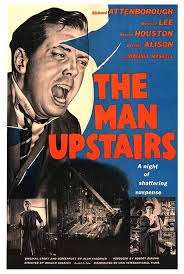
THE MAN UPSTAIRS
UK, 1958, 88 minutes, Black-and-white.
Richard Attenborough, Bernard Lee, Donald Houston, Dorothy Allison, Virginia Maskell, Kenneth Griffith, Patricia Jessel, Alfred Burke, Charles Houston, Maureen Connell, Walter Hudd.
Directed by Don Chaffey.
British 1950s psychological drama. There is an ensemble British cast led by Richard Attenborough, persuasive as a man who has been involved in an accident causing death which has taken its toll on him.
The action takes place over several hours in the early hours of the morning, the man upstairs waking, nightmares, upset, interacting with various members who live in the block of flats in London, attacking one, barricading himself in his room, the police arriving with strong, unsympathetic tactics (led by Bernard Lee), contrasting with the sympathetic wife and mother downstairs, Dorothy Alison, and different reactions from members of the household, especially the righteous Kenneth Griffith. Donald Huston plays a local counsellor who does get an opportunity to talk with the man upstairs but with little effect.
The action takes place within the block of flats, sometimes going outside to see the crowds, the police holding them back, the fire brigade arriving.
Some commentators have noted that this film came out just after the American 12 Angry Men, a drama in a room where members of the jury argue the different aspects of the case. Some bloggers have noted that they found the film tedious. Others, more sympathetic, will be interested in the character and experience of the man upstairs as well as the variety of responses to him.
- The title, the anonymity, the false name, the real name? Upstairs, the block of flats, the upstairs room, the stairs, the window, looking out to the street? Black and white photography?
- The British ensemble cast and its effectiveness?
- The situation, John Wilson/Peter Watson, waking, upset, in his room, there for three weeks, his bewildered reactions, the early hours of the morning? The encounter with the artist and his not helping? The encounter with Mr Pollen, hitting him and the reaction? The friendship with Mrs Barnes, helping her son with his homework? The continued trauma and bewilderment?
- The arrival of Helen, Mrs Barnes calling her, the story of the past, the accident, her brother’s death, the court case, the man’s outburst, his having a record?
- The gathering of those in the block, the harsh landlady, Dolly herself up, with Mr Pollen, the drinking, her harsh attitudes, cynical touches? The contrast with the elderly lady, frightened in her bed, brought downstairs? The artist, his work, his girlfriend present, trying to conceal her presence? Mr Pollen, fussy, civil defence, calling the police, backing the police? Mr Barnes arriving home after work? The range of people, the drama of their points of view, conflicts, final reactions, Mrs Barnes urging them all to go upstairs, Mr Pollen holding out, the going up the stairs?
- The arrival of the police, police attitudes, Thompson, his straightforward attitudes, harsh, unsympathetic to mental illness, doing his job? Intervening, the police going upstairs, the man pushing the policeman and his falling over the railing, to hospital? Thompson aggravated? The role of the other police, standing guard, guns, the arrival of the superintendent, the range of discussions, his decisions, Thompson disagreeing?
- Sanderson, his role in the borough, wanting to talk, Thompson’s lack of sympathy, the superintendent allowing him up, his attempts to talk, knocking, going in, the man’s reactions? Support with Mrs Barnes? The discussions with the superintendent?
- The fire brigade, the police, the teargas issue and its use?
- The light, into the room, the man upset, the suitcase on the window ledge, his pushing it over? The gun and the threats? With Sanderson and overcoming him?
- Mrs Barnes, urging, agreements and disagreements, the decision to go upstairs, her leadership, the meeting with the police? Her being allowed to go up, knocking, talking, the three minutes time limit, the man eventually coming out?
- The man, let downstairs, led away?
- The film of the 1950s, the role of the police, the role of mental illness, treatment, sympathy, harsh attitudes?
Clockwatchers
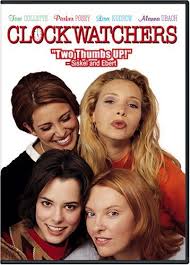
CLOCKWATCHERS
US, 1997, 96 minutes, Colour.
Toni Collette, Parker Posey, Lisa Kudrow, Alanna Ubach, Bob Balaban, Paul Dooley.
Directed by Jill Sprecher.
There is quite a bit of clockwatching during this film, the focus on for women who act as temporary secretaries in a credit company. They have their tasks, typing letters, making copies, getting cups of coffee for the male executives. But they have a lot of time, especially at the end of the day, watching the clock so that they can leave.
The central focus is on Toni Collette, having achieved a considerable reputation in Australia with films like Muriel’s Wedding and Lilian’s Story. This is her second American film – and she had made an with Gwyneth Paltrow. This began her American and International career, quite considerable for almost 30 years.
Parker Posey is the brash member of the group, domineering, cheeky, stealing things. Lisa could grow, starring in Friends at the time, has an image of herself that she could be greater. Alain Urbach has a boyfriend. Toni Collette is drawn into their company, following them, going to a fortuneteller who tells her that she took toes throughout life.
There are various scenes of the girls out on the town, meals together, gossip, shopping. Then there is the cookie temp who was given a full-time job, rather mousy – but revealed as stealing objects in the office, confronted by Toni Collette.
The male members of the company are busy about their work, not really noticing the temps, but grateful for any help. The film was written by director, Jill Sprecher and her sister Karen. They then went on to 13 Conversations about Love.
- The title, the reference to the four women, their temp work, secretaries, their desks, jobs, typing, making copies, getting coffee… For the men? The end of the day and then looking at the clocks in order to go. And then life after work?
- The American city, companies and offices, the streets, shops, diners? Home life and apartments? City transport? The musical score, the range of popular songs in the background?
- Iris and her story, her age, experience, at home with her father, his encouragement, a possible better job, his praise of her? The fortuneteller, her tiptoeing through life? Quiet, her desk, the work, sitting waiting for two hours, gradually settling in? The toilet, Margaret seeing her, talking with her, encouraging her, and Jane, her taking along, enjoying the company, imitating them, the fortuneteller, the meals together, gradually admiring them, enjoying their company, the influence on her own life?
- Margaret, brash, outgoing, stealing things, confronting the men, leaving the women, changing the tag on the dress…? Her lack of confidence? Stealing things, the pencils…? The final reaction, accusations, her interactions with the other members in the group? Her being fired?
- Paul, wanting to be glamorous, eyeing the men, meeting them in the bar, the machinery and her clocking it to be with the man mending it…? Confidential conversations with Iris? Let go?
- Jane, relationships, timid, at work, with the other women, with Iris?
- The new girl, timid, mousy, waiting, getting a full-time job, at a desk, looking at the others? Having taken Iris’s notebook, the confrontation? The apology, the wave, her hopes?
- The men, the bosses, the men looking for his mug, the man wanting the letter typed, ignoring Iris in the street, it’s signing the recommendation, affirming her?
- The meeting, the staff, the woman checking on the temps, the rules, no phone calls have personal nature…? The accusation about the stealing?
- Iris, at the end, changing, with her father, with the other women, the influence, the future?
Ballad of a Simple Player

BALLAD OF A SMALL PLAYER
Germany/UK, 2025, 101 minutes, Colour.
Colin Farrell, Tilda Swinton, Fala Chen, Alex Jennings, Tony Lau.
Directed by Edward Berger.
The small player here is a gambler, an addict, a fraudster, conman, posing at times as an English Lord, upper British accent, affluent clothing style and yellow gloves, but, really, an ordinary Irishman. Whether this drama fits the description of the ballad is a significant question. There have been ballads about rogues in the past, about highwaymen, for instance, so here is a realistic/stylised telling the story of this life of the Lord who is just Riley.
The film has been written and directed by German Edward Berger. After a significant career in Germany, he achieved international success with his German Oscar-winning version of All Quiet on the Western Front. His next film was in Britain, his version of Robert Harris’s popular novel of the papacy, Conclave, also an award winner.
In comparison, this ballad is something of a small film.
The setting is Macau, described as the gambling capital of the world, with night light overview scenes that make it resemble an Oriental Las Vegas. While there are many scenes in the narrow streets with touches of poverty, some harsh apartments, and a visit to an island off Hong Kong with wooden houses on the water and wharfs, the overall emphasis is on the lavish, sometimes more than lavish, hotels and casinos, spaciously-appointed rooms, restaurants with expensive a la carte banquet meals, and the vast expanses of the gambling halls themselves. By the end of the film, the audience will feel that they have been immersed in this rather enclosed life of Macau.
And the Simple Player? He is played by Colin Farrell with a blend of quiet, intensity, guile, some moments of conscience, but…
We do hear his back story eventually, no integrity there, robbing a wealthy old woman and absconding to the gambling capitals and settling in Macau. He passes himself off as Lord Doyle, popular with the staffs until he is unable to pay his debts. We see him particularly unlucky at the baccarat table, trying to outdo a wealthy old lady. He doesn’t. Then an investigator arrives in the unexpectedly strange character, calling herself Betty, really Cynthia, another extraordinary variation in looks, hairstyle, manner of speaking, manner of walking, by Tilda Swinton. (And here a suggestion to wait until some sequences between them during the final credits.)
There is usually some sadness in the ballad. The sadness here focuses on a woman assisting at the tables, giving Riley credit, his following her and her helping him, inviting him to the island where she lives – and, perhaps ballad -like again, falling victim to his cunning and addiction.
Then back to the tables. Back to luxury, symbolised by some surprisingly gluttonous sequences by Riley, continually overreaching, an encounter with another British conman, Adrian (Alex Jennings), building up to 2 climaxes. The first is a $1 million bet at the baccarat table. The second is Riley wandering through the streets during a Chinese celebration and having to face up to reality, the reality which the Gospels long ago asked: what does it profit anyone to gain the world and lose their soul?
- The director, acclaim? The smaller scale film? International flavour?
- The Macau settings, the gambling capital, night sequences, day sequences, the overview of the city – Las Vegas -like? The hotels and interiors, the casinos and interiors, the streets? The ferries, to Hong Kong, the island and the sea, the houses on the water? The musical score, at times heavily orchestral, at times quiet?
- The title, the storytelling, the focus on the character, activities, fate, crises, decisions, a ballad? The inflated title of Lord Doyle? The reality of an Irishman called Riley?
- Issues of gambling, audience interest, sympathies, Macau, so much gambling, the vast casinos, the clientele, Asia, International? The baccarat tables? The gambling, the amounts of money, winnings, losing, debts, debts accumulating? Sympathy towards gambling and gamblers, addiction – or not?
- Colin Farrell, presence and performance, as Lord Doyle, British accent, manner, clothes, gloves, hotel, at the baccarat table, the old lady, the challenge, his losing? At the desk, the demand for payment, his excuses? The encouragement of the man at the door? The suggestion for the rainbow casino?
- The reality of Riley, the posing of Lord Doyle, the revelation of the stealing of the money from the old lady, her wealth, yet the vast amount, travelling, to Macau, his addiction, his behaviour in his room, extravagance, meals and drinking?
- The encounter with Cynthia Blythe, her name of Betty, her presence, Tilda Swinton’s presence and performance, hairdo, dress, shoes, idiosyncratic? Watching him, the selfir in the elevator? His pursuing her, the confrontation, the camera, the truth about her, her investigation, the company, her threats? His taking the camera, evading her? The deal, the money, the promise of the dance? His disappearance?
- The presence of Dao Ming? Charming, encouraging him, the money? His going to see her, following her, her apartment, the conversations, the later card about the island, his escaping to the island, her support of him, encouraging him to jump into the water, his waking on the wharf? Going to the house, the locked door, opening it, finding the money, putting it away, then stealing it all, returning to Macau? Carrying the bag’s?
- The sequences of Riley eating, gourmet, extravagant, likeness, being sick?
- The encounter with Adrian, the debt? Adrian and his personality, calm, the meal, the conversation, leaving Riley to pay?
- At the baccarat table, the old lady challenging him, his winning 7 nines in a row, everybody watching, his reputation? Paying off the debt at the hotel?
- The decision about the one-off game, risking all his money, Adrian and his disguise as a Prince, the tensions of the game, not winning immediately, Riley eventually winning?
- His talking with the old lady, wanting to find Dao Ming, the revelation of her suicide, lack of money, the background of her family in China? The impact on Riley, responsible for her death?
- In the celebration, the processions, Riley and his money, his decision to burn the money? Credible for his character? Credible for the theme of the film? And his future…?
Father's Doing Fine
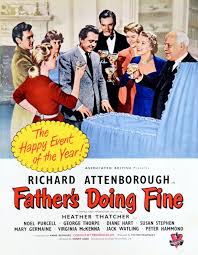
FATHER’S DOING FINE
UK, 1952, 83 minutes, Colour.
Heather Thatcher, Diane Hart, Virginia McKenna, Mary Germaine, Susan Stephen, Richard Attenborough, Peter Hammond, Jack Watling, Brian Worth, George Thorpe, Noel Purcell, Ambrosine Philtlpot's, Sidney James.
Directed by Henry Cass.
Very light entertainment, rather dated, interesting only as an example of the type of popular film from the UK in the early 1950s, a farce on screen, and performances by Heather Thatcher and Richard Attenborough.
The film is based on a play, Little Lambs Eat Ivy, by Noel Langley. It is a story of an upper-class British family woman on hard times, the busy mother led by Heather Thatcher in a sprightly, and often exasperated with her daughters, performance, the range of four daughters, the irritatingly adolescent and presumptuous would-be actress, Susan Stephen, the rather quiet Virginia McKenna before her more successful career, the very sensible Mary Germaine, and Diane Hart as the pregnant woman seen only in bed (and not looking particularly pregnant, especially when she gives birth to twins in one of the most rapid and quiet birth sequences).
The anxiety is in the character played by Richard Attenborough, her husband, not really doing fine at all, continually upset, finally finding a pal, drinking, and overwhelmed by the birth and the discovery of twins.
A range of British character actors play the various husbands and partners, George Thorpe is a sympathetic doctor, Noel Purcell is a roguish servant, Ambrosine Phillpotts as a harsh nurse and a cameo by Sid James as a taxi driver.
Observers comment that farce works much better on stage, audiences present to all the bumbling and falling, pratfalls and mistaken identities, embodied in the live performances. Unless particularly well crafted, farces look rather silly on screen.
Story of Gilbert and Sullivan, The
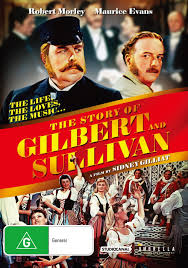
THE STORY OF GILBERT AND SULLIVAN
UK, 1953, 109 minutes, Colour.
Robert Morley, Maurice Evans, Eileen Herlieh, Peter Finch, Martyn Green, Dina Sheridan, Isabel Dean, Wilfred Hyde-White, Muriel Aked, Michael Ripper.
Directed by Sidney Gilliat.
From a 21st-century perspective, it is surprising to discover that this film was not successful at the box office on its release in the early 1950s. Yet, the operettas of Gilbert and Sullivan continued to be very, very popular.
This is quite a lavish production, sets and costumes, theatrical design, English society in the latter part of the 19th century.
For audiences interested in Gilbert and Sullivan, Robert Morley gives a variation on his enjoyably pompous performances as the self-confident Gilbert, master of words and witty lines, yet dreading opening nights, avoiding them, returning to hear applause and go happily on stage. Maurice Evans is Sullivan, classical composer of oratorios, eventually an Opera, teaming up with Gilbert, challenged by friends and a potential fiancee played by Dinah Sheridan, to honour his talent for high art. However, he is carried away and has composed many wonderful melodies, songs to accompany Gilbert’s words, but the music having a stand alone and entertainment value.
The screenplay follows the various productions, reproducing scenes from some of the most famous and well known. The film starts with an extensive excerpt from Trial By Jury, then moves into such favourites as HMS Pinafore, the Pirates of Penzance, The Mikado, The Gondoliers and Yeomen of the Guard, Iolanthe. And references to other creations like The Sorcerer.
Peter Finch appears as D’Oyley Carte, the manager of the company, the builder of the Savoy Theatre, involved in the building of the Opera house. There are quite a number of British character actors in support, Eileen Herlie as Helen D’Oyley Carte, a successful business partner with her husband, Isabel Dean as Gilbert’s wife and an entertaining cameo from Wilfred Hyde-who is to who enjoys the performances unlike his snobbish daughter.
There is some pathos at the end after Gilbert and Sullivan’s falling out, not speaking for some years, a possible reconciliation, the turn-of-the-century performance of the Yeomen of the Guard and the news of Sullivan’s death. Gilbert continued and was knighted by Queen Victoria, the culmination of the film.
In 1999, writer-director, Mike Leigh, did more than justice to Gilbert and Sullivan and their creations in his lavish and engaging film, Topsy Turvey.
West of Zanzibar

WEST OF ZANZIBAR
UK, 1954, 84 minutes, Colour.
Anthony Steel, Sheila Sim, William Simons, Orlando Martins, Edric Connor, Martin Benson, Howard Marion-Crawford.
Directed by Harry Watt.
The sequel to the very popular film, Where No Vultures Fly (1952) filmed in East Africa, the focus on the British colonies, the presence of the British, the state of the local tribes, dependence and independence – and the prospects of the struggles for independence in the coming years. West of Zanzibar is a sequel, also filmed in Africa, a great deal of local colour, the focus on background scenery as well is insertion of episodes with a range of distinctive animals, especially elephants.
Anthony Steel starred in the original film with Dinah Sheridan as his wife. He is here again but this time his wife is played by Sheila Sim.
The film was released in 1954. The next year the British film, Simba, with Dirk Bogarde, was released, a drama about the Mau Mau conflicts in the area and the move towards independence.
The basic plot is that of the British officer, scene with his wife and son, his dealings with the local authorities, his dealings with the tribe suffering from drought and is advised to move to the mountains west of Zanzibar their wanting to go to settle near Mombasa. One of the consequences is their becoming involved in the illegal ivory trade. The main drama is the pursuit of those participating, pursuits on land, pursuits in the sea, many spectacular pictures of the Dhow vessels on the water.
In looking at the film from the 21st century vantage point, there can be judgements about the role of the British, their presence, authority, presumptions, treatment of the tribes. But, throughout the film, there are more sympathetic statements about the tribes, possibilities of independence, working side-by-side.
Anthony Steel is the upright Englishman, Sheila Sim having to be sympathetic as well as going into action. There is a sinister lawyer, Sorbonne educated but leading the smuggling of the ivory. There are various villains but there is very sympathetic presentation of the chief of the tribe, his struggles with his sons, with the corruption of money and the illegal trade, as well as another tribe leader, ultimately self-sacrificing.
The film is directed by Harry Watt, documentary maker, known in Australia for having directed The Overlanders and Eureka Stockade.
- The British film of the early 1950s, the British colonies in Africa, the British presence, rule, the role of the tribes, issues of independence? In the light of subsequent history, the Mau Mau uprising?
- The location photography, the beauties of Africa, the insertion of many nature sequences, the range of animals?
- The basic plot, the issue of elephants and ivory hunters, illegal, cruelty to the animals, the smuggling of the ivory, the use of the tribes, the bosses, the range of Dhow vessels, along the East African coast, up to the Arabian Peninsula?
- Bob, his character, from the earlier film, his role, conscientious, love for his wife, her presence, his son? His relationship with the chief, the issue of the tribes, to the mountains, to Mombasa? His role with the law, confronting the smugglers? The trial, the lawyer, interactions, the revelation that he was in charge of the operations? The captain of the boat and the members of the crew?
- The action sequences, into the forests, tracking the smugglers, discovering the deaths, pursuing the vessels, the shipwreck, waiting, eventually capturing the boat?
- The presentation of the tribes, the chief, his sons, the hero member of the tribe, the issue of moving to the coast, money, the trade, the law?
- Personality of the chief, collaboration with Bob, leadership, changing situations? The confrontation with the smugglers, the boat, confronting the vessel, enabling them to be captured?
- A film of the colonial period, the presumptions of colonialism, yet the many aspects of dialogue discussing collaboration, living together, moves to independence?
Kangaroo/ 2025

KANGAROO
Australia, 2025, 107 minutes, Colour
Ryan Corr, Lily Whiteley, Deborah Mailman, Wayne Blair, Ernie Dingo, Trish Morton-Thomas, Brooke Satchell, Rachel House, Roy Billing, Clarence Ryan, Rick Donald, Rob Carlton, Genevieve Lemon, Shaun Martindale.
Directed by Kate Woods.
A film that definitely lives up to its title, not just a kangaroo, many kangaroos and a lot of little joeys. This is an enjoyable film aimed at all the generations, a family entertainment.
We soon realise that the story is familiar enough, that we know what is going to happen but the enjoyment is seeing how it happens. The film opens in the red centre of Australia, near Alice Springs, a young girl running with the kangaroos. She is Charlie, Lily Whiteley, sad at the death of her father, living with her mother (the always welcome Deborah Mailman), some tantrums, missing school, looking after joeys. She bonds with her grandparents, Wayne Blair and Trish Morton-Thomas.
But then the film cuts to Sydney, Bondi Beach, a rather vainly self-important TV weather forecaster, Chris Masterson, played by Ryan Corr. Always after self-promotion, he rushes rashly to save a dolphin – but with dire consequences for the dolphin and for his TV career. In hopes for a new start in Broome, he drives his luxury car cross-continent. (In fact, there is an ugly backlash against Chris Masterson, extreme trolling on social media, insults, online bullying, placards and demonstrations, played for laughs but this experience in reality is vengeful and cruel not so very funny.)
People in the ouitback do not take kindly to city slickers like Chris Masterson. And, when he comes to Silver Creek, they all know who is and mock him.
Then, the dramatic impact. He hits a kangaroo on the road, discovers that there is a joey in the pouch, rescues it – and begins his serious path to caring for kangaroos and for some kind of self-redemption. The opening notes that the film is inspired by a true story and, as often at the end, there are photos of the real Chris – and, in the credits, he is there as wrangling the kangaroos for the film.
As expected, he meets Charlie, there is a bonding with the kangaroos, he is delayed in Silver Creek for the car to be repaired (by Charlie’s uncle played chucklingly by Ernie Dingo). The townspeople are initially mocking or sarcastic, especially Jessie, Rachel House, who runs the local, and Murray, Roy Billing, who sits sipping but is a learned old codgers and tutors the local children.
But, the invitation is to see kangaroos especially Roger, the battling kangaroo, and experience the beauty of the Australian outback, kangaroos in motion, protecting the joeys, Charlie facing her crises, Chris in a lot of farcical situations but eventually coming through, townspeople coming onside, the enjoyment of the local dry river boat race, and, social media having the opportunity to redeem itself, lots of postings and videos of Chris with the kangaroos and his becoming something of a national hero.
Happy ending that continues to the present – and this film will do no harm to tourist possibilities for central Australia.
- The title and so many kangaroos and joeys? Kangaroos and their place in Australia? As perceived from overseas?
- The Northern Territory settings? Mountains, the deserts, the towns, Alice Springs? The musical score?
- The introduction to Charlie, alone, running with the kangaroos? Her situation, mourning the death of her father, the photos, the kangaroo totem, his links? Charlie, resentment towards her mother, her behaviour towards her mother? Her grandparents and the bonds? Aloof from the other kids at school? Looking after the kangaroos, in her room, her mother disapproving? Her not going to school?
- The transition to Chris Masterson, Bondi beach, the weather, Liz as his producer, the stunts? The criticism of his style and personality? The situation with the dolphin, his going in, trying to save the dolphin, promoting himself, the aftermath, the death of the dolphin, the reason for its taking refuge?
- The social media response, hostility, bullying, the ugly side of social media and condemnation? The television authorities, his being sacked? People demonstrating, placards, shouting, abuse?
- The possibility of a new job, the discussions with Joel, the promises, Broome, his decision to go by car, out in the countryside, arriving at Silver Creek, the flash car, the kids, his reaction, the city slicker, presumption, the bad impression with Jessie, her mockery, Murray at the bar, his education, teaching the kids? Chris leaving, the drive, preoccupied, passing Charlie, hitting the kangaroo, its death, retrieving the joey? Caring for it, taking it into the town, Jessie’s harsh reaction, the butcher and his meat, the authorities?
- Charlie and her uncle, driving, joking, the mechanic, to fix the car? Charlie, meeting her grandparents, going to the shed, the joke about the toilet, the comedy of Chris in the uncomfortable surroundings, with Liz, the joey? The increasing number of joeys to look after, meeting Rosie, the discussions with her, going to Alice Springs, the vet, advising that Liz be put down? His reaction?
- The gradual transformation of Chris, not so much focusing on himself, putting up with the hardships? Charlie, the bond, finding more joeys, finding Roger, big, pugnacious, the increasing number of kangaroos, the extension of the compound, the fighting confrontation with Roger and Chris losing? The townspeople becoming more interested?
- The focus on the children in the town, the races, together, school, sports, the attitude towards Charlie? The change, the kangaroos, the helping Charlie to abduct the kangaroos?
- The adults in the town, the indigenous presence, characters, aboriginal law, Charlie’s father and his art, Rosie curating the exhibition, Charlie and Chris looking at her father’s painting of the kangaroos? Jesse as tough, her restaurant? Murray, drinking, cheerful, with the kids, range of subjects and learning? The butcher, coming at night with his friends, the Wake in Fright scenario, Jessie warning them off? The women of the town? The flirty woman of the shop? The officer at the police station? And the tourists, and Chris driving the bus?
- The celebrations, the boat race, like the race in the Todd River at Alice Springs, the variety of boats, dressing up, the race itself, Charlie and the kangaroos, the elderly women coming through and winning? The happy atmosphere?
- Chris, the bad reputation, everybody in Silver Creek knowing about him, the mockery? His work with the kangaroos, social media and the reverse of abuse, fame, the followers, the celebration, his becoming a celebrity? The phone calls to Joel and the fiasco of his career? Charlie and her removing the gasket and his car delayed? Liz, her arrival, the proposal for the show, his dilemma?
- The townspeople, not wanting him to stay? Charlie, upset, taking the joeys, the bus, driving into the desert?
- Chris, his dilemma, his ambitions, his being accepted and welcomed, in the car, driving to find Charlie, his collapse in the desert, not staying in his car, the phone calls to advise him, Charlie finding him, Roger finding him, the rescue?
- Chris, the decision to stay, his being welcomed, friendship and acceptance? In the care for the kangaroos? His finding his place, Charlie and his challenge about her aloneness after her explanations about her father, her being welcomed by the kids are school, playing football, her kick?
- Inspired by a true story, and the photos at the end? The sanctuary for the kangaroos? And the real Chris actually ranking the kangaroos for the filming?
World Will Tremble, The
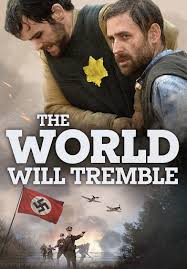
THE WORLD WILL TREMBLE
UK/US, 2025, 109 minutes, Colour.
Oliver Jackson-Cohen, Jeremy Neumark Jones, Charlie MacGechan, Michael Epp, David Kross, Michael Fox, Anton Lesser.
Directed by Lior Geller.
This film is set in 1942, Poland, the Nazi invasion, the camps and the beginnings of the mass executions, especially in the camp at Chemno. At that stage, not so much was known around the world about the concentration camps but, when the deaths were revealed, the world did tremble with horror, and a mixture of disgust and grief.
Here is a story that may have been forgotten amongst all the tellings of Holocaust stories. Able-bodied Jewish prisoners at Chemno are brutalised by the guards, and some are chosen for a new task, meeting the convoys of arrested Jews, unaware of the fate that awaits them, hoping to be working in a factory, communicating with family. But, welcomed by a fake spiel by the crassly authoritarian young camp Commandant, they are stripped, surrendering all their possessions, and then herded into trucks where they are gassed. The Jewish prisoners have to sort the clothes and possessions, carry the bodies, bury them.
A horror scenario.
But, this is also a story of heroism, two of the prisoners planning and achieving an escape, helped and shielded by fellow prisoners – dramatised in a long, measured sequence, filmed almost like a painting, tableau of the prisoners in a large hall-cell, discussing, planning, hoping.
With the escape, the film goes into vigorous action, no tableau here, rather long tracking shots, the men running through the forests, a motorbike along the highways, some providential experiences where there they are helped by a local woman with railway workers clothes to cover their prison garb, having to stop to help a German convoy, even the doctor tending the wound of one of the escapees. And then their quest to find a Jewish community, contact the rabbi, give a message to the Polish resistance to get to London and the BBC.
Which is what happened, and the first announcements of this kind of mass execution in the camps actually broadcast from London in 1942.
The Holocaust stories continue – and must also continue as we look back from the 21st century and a horror at the cruel ambitions of the Third Reich so much of which they ruthlessly achieved.
Lest we forget.
- Audience response to films about World War II, the Nazis, the Jews, concentration camps?
- The title, the story of the revelation about concentration camp deaths, Poland 1942, the prisoners, the escape, their story, the rabbi, the Underground, to the BBC, to broadcast in 1942?
- The situation in Poland, Jews in the ghettos, being rounded up? The camp at Chelmo, prisoners, digging the graves, Solomon and the beating, a broken shovel, the arrival of the convoys, the prisoners standing by, no contact, the Jews in the truck, the Commandant, his lying speech, the promise, their identifying the goods, writing letters, leaving their possessions, going into the house, the old man identifying Solomon and trying to talk, the men and their silence?
- The truck, the gas, the Jews inside, their deaths, the shootings? The keeping of the girl for the nights?
- The picture of the men, saved from death because they were strong, doing the work? The digging, attending the new arrivals, the baggage, the clothes, classification of the shoes? The aftermath, the girl, the violinist, the Commandant’s jokes, the dancing, the shooting, the bottles and glasses on their heads, the death of the prisoner shot in the neck? Their going to the hut?
- The plan for the escape, the knives, implements, pockets, the knife falling out of the pocket, the execution? Michael and his seeing his dead wife and his grief? Their doing their work? The death of the Jews, the taking of the bodies, lifting the bodies, putting them in the graves? The emotional effect on the men? The long sequence in the hut, painterly, and the shades, the tableau, the discussions, decisions, the escape?
- In the truck, the prisoners asking for cigarettes, shielding the cutting of the canvas, the two men escaping, the long tracking shots through the forest, the close-ups, pursued, shot at, Michael and his leg wound, Solomon tending it, going to the river, downstream? The house, into the shed, the woman coming, her giving them the railway workers clothes, their taking the bike? Stopping at the German breakdown, helping with the pushing of the truck, the doctor attending, their getting away?
- The village, the buildings, getting through the fence, seeming abandoned, the soldiers, going to the house, the information about the rabbi, hiding, finding his house, the rabbi in disbelief, the people in the house, listening, Solomon, the intensity of his story, the knock at the door, getting rid of the men, Solomon writing down the story?
- The information about getting the information out, the BBC, the visuals of the rabbi and the town and their execution? Solomon and his death? Michael, his survival, his story, in the interview from 1979?
- The overall impact of the drama, the delineation of the characters, the graphic presentation of their work, the arrival of the Jews, their treatment, the executions, the aftermath, the burial of the bodies? The presentation of the Nazis, the Commandant and his laughter, the death of the girl and his rebuke, the way of life and the attitudes of the Nazi guards?
- And the revelations at the end of the war, the concentration camps, the deaths, the Holocaust?
Inter Alia: National Theatre Live

INTER ALIA: NATIONAL THEATRE LIVE
UK, 2025, 120 minutes, Colour.
Rosamund Pike, Jamie Glover, Jasper Talbot.
Directed by Justin Martin.
The filmed version of the stage production by the National Theatre. It is an experience that can be highly recommended – staging, performance, legal and moral issues.
The play was written by Susie Miller, Australian writer and dramatist, whose previous play, PrimaFacie, was successfully produced by the National Theatre and filmed live and seen worldwide, also winner of the number of awards including blessed as to play.
Audiences will be impressed by the theatre craft, the staging, the suggestion of a variety of locations from law courts to home and to a karaoke bar, the use of lighting, rapid movement, change of scenes, change of clothes, and all the while the action moving with speed and continuity.
Audiences who have watched the career of British actress, Rosamund Pike, from early days in Pride and Prejudice, to her featured role in the thriller, Gone Girl, many film performances as well as television series, may not have anticipated her acting range as manifested here. While she performs the role of the judge in court, Jess, presiding over a case of sexual assault, her thinking aloud, many scenes where we see her at home, performing the role of wife and mother, cooking and serving, relationship with her lawyer husband who had not been promoted to a judicial position, raising issues of equality and opportunities for women. And there is her relationship with her son, teenager, noncommunicative, the gradual revelation of his behaviour at a party. And, she performs also in flashbacks with her son as a little boy. It is certainly a high peak performance, a theatre career-best performance.
There are two other members of the cast, Martin Glover as Jess’s husband, successful lawyer, the pair happily married, yet the underlying upset that he was not promoted as judge before his wife or at the same time as his wife. He creates an interesting character, professional male of the 21st-century, dealing well with his work and competency but some tensions in his life at home, and taking for granted that his wife will cook and look after the domestic issues. Then there is the issue of dealing with their son. Jasper Talbot plays the teenage son, typical teenager in many ways, sometimes sullen at home, ups and downs in his relationship with his parents, the issue of parties and freedom, drinking and drugs, relationship with girls. And, it strongly emerges that his parents had taken him for granted, trusted him, not had the important discussions with him at crucial periods of his growing up, especially as regards sexuality, identity, respect for women.
And the issues of this play are very strong:
- the significance of a judge, the role of the judge in British jurisprudence as well as court action, the observations of the judge during the trial, internal comments about the behaviour of members of the court, the accused, witnesses, the need for impartial attitudes and behaviour. And, with a female judge, the contrast with her duties at home, her behaviour, her outings with friends in the karaoke, dealing with her son, especially as the crucial situation of rape accusation emerges.
- The issue of cases, sexual assault, rape, situations and choice, issues of consent and withdrawal of consent, the behaviour of the female, the male, party situations, drinking and drugs, men taking advantage of women, responsibility and irresponsibility, acknowledging the truth or not, the impact on them. Traditional views, legal arguments, presumption of innocence, proof of guilt, the role of witnesses, procedures.
- The role of the law, issues of morality, and not guilty verdict not indicating innocence but that guilt was not proven.
- The importance of the mother with high legal and moral standards, discovering the truth about her son, not wanting to believe, protective mother rather than judicial judgement, the increasing emotionality, challenges to integrity and authenticity, to excuse, to defend…
- The role of the father, role model, discussions with his son, absence of discussions, taking his son for granted, lack of responsibility, consequences.
- The teenager himself, age, experience, growing up in the legal household, the relationship with each parent, troubles with puberty, some happy memories of childhood and these being visualised, behaviour at school, with friends, parties, lying to his parents, covering, the reality of the party situation, his long friendship with the girl, growing up together, the party, drinking, her behaviour, his behaviour, the friends and the peer pressure, the sexual activity, her consent, lack of consent, conscious awareness, the consequences, his covering up, interactions with his parents, their trying to support him, the truth, admitting the truth or not?
- The buildup to the climax, the stances of the father and his relationship with his wife in the situation, the mother as judge, the precedents of mother and protection of a son, the moral dilemmas, the legal dilemmas?
- The impact for the audience, impressed by the theatrical experience, the intensity and strength of the dialogue and interactions, support of Jess, critique of her husband, attitudes towards the son, initially, hearing the case, hearing the truth. And the final impact of the theatrical experience, the screen experience, and the audience sympathies and the final moral judgement by the audience.
(2025 also saw the streaming of the British television series, Adolescence, also raising issues of parents, children, their moral development, gaps in their development, criminal behaviour, family support, the law, the psychology of an adolescent and treatment and support.)
Avenue of the Giants
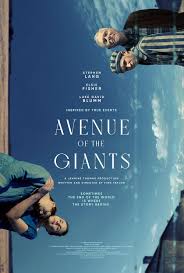
AVENUE OF THE GIANTS
US, 2023, 102 minutes, Colour.
Stephen Lang, Elsie Fisher, Luke David Blumm, Robin Weigert, Slavko Sobin, Stella Stocker, Oskae Hes.
Directed by Finn Taylor.
At the end of this very moving film, the camera moves along a path in the woods, flanked by giant trees. A fine image for what we have experienced.
This is an American story. But it is also a story of Czechoslovakia in the 1920s and 1930s. And it is a Holocaust story.
We are introduced to Herbert Heller, a genial elderly American gentleman, creator of a store that caters for children. He is unwell, the doctor not holding out great hopes for him. And Herbert Heller is played by veteran actor, Stephen Lang, a familiar face on screen even if people do not know his name. This is one of his best performances.
Herbert goes to a Recovery Centre, receiving advice from a counsellor, Ruth, played by Robin Weigert. All interviews, with permission, are either recorded or filmed. Ruth has an assistant but she also has a late teenager, Abby (Elsie Fisher), who is in recovery but also invited to conduct the interviews with Herbert, with the hope that each will reveal their story to the other. And, step-by-step, sometimes tentatively, sometimes apprehensively on the part of Abby, each tells their story.
The key story, of course, is that of Herbert, and the film goes into flashbacks to Herbert’s family, in Prague, the 1930s, ominous presence of the Germans, the father supremely optimistic, what we might call these days, denial. His patient wife is continually apprehensive. Herbert’s older brother, a teenager, is forever exasperated with the false enthusiasm is father. And Herbert, a young boy, full of enthusiasm, admiring his parents, listening to his brother, friends in the street, playing sport, the portrayal of a whole life which is, we know, about to be destroyed. A strong performance by the young Luke David Blumm.
Even though the focus is on Herbert in his old age, the sequences of Prague, the gradual oppression, the brutality, the sewing on of the star to garments, the arrests, and vivid sequences in Auschwitz itself, arrival, separations, Herbert persuading the authorities that he can work and going with his father and brother, life in the camp.
But, despite the sadness, after the war, Herbert and his mother find a new life in the United State. Perhaps the illness gnawing at Herbert in his old age is that he has never revealed this story to anyone.
Elsie, on the other hand, parents bickering, her father philanderer photographer, her close friend becoming a victim of her father, suicidal feelings. But, together, step-by-step, especially the benign outreach by Herbert, stories are told, and healing is not only possible but takes place.
A film that repays viewing.
- The title, the imagery at the end, the forest, the path, the trees?
- Audience response to Holocaust stories, concentration camp stories? The perspective of the 21st-century? A story from Czechoslovakia? An American story?
- The portrait of Herbert Heller, Stephen Lang’s performance, and pathos? At 74, going to the doctor, the diagnosis, the warnings, his illness? Pain? The background of his family? The shop, the contents, having built it up, his delight in the shop?
- The encounter with Ruth, the Recovery Centre, the discussions, his agreeing to be interviewed, filmed and recorded? The discussions with Ruth and the cameraman?
- The introduction to Abby, her presence at the centre, her age, background, parents and their tensions, relationship to each? In crisis, her agreeing to be with Herbert, the interview, the conversations, recording?
- The drama of the interactions, Herbert, drawn out of himself, willing to speak, telling his story, never having told it to anyone else? His interest in Abby, her reluctance to speak, his gradually drawn out of herself? The continued sessions, the recording, Ruth and her interventions?
- The flashbacks and Herbert’s story, his age, in Prague, the Jewish family, going to the social, suspicions and alienations? The father, his character, continued optimism, his behaviour? His wife, the tensions, her realisation of the truth? The older son, his age, exasperated with his father, political? Herbert, a boy, enjoying the sports, at home, listening to his father, love for his mother, the discussions with his brother? The meals? Going out, the circus and entertainment? Happy life, but the prospects of the war?
- The father and his continued optimism, the growing repressions, staying inside the buildings, the mother sewing on the stars and her special skills, the older son and his exasperation that they did not leave? The neighbours and Herbert young friend, waving to each other? The buildup to the troops arriving, the family having to leave, watching the family on the roof and their falling to their deaths?
- Going to the concentration camps, the father still hopeful, the separation between men and women, Herbert with the children, his going to plead that he was strong, able to stay with his father and brother?
- Life in the concentration camp, the work, Herbert and his personality, helping out, yet the despair, the electrified wire and the temptation to touch? Meetings with his mother across the fence? His father, the work, still optimistic? The older brother and his work?
- Getting ready for the final walk, the soldiers, Herbert, his running away, the coat, helped, the various difficulties, getting back to Prague, the streets, the pursuits in the tunnel, finding the kindly woman, her past help, his staying in the house until the end of the war?
- After the war, going to the officials, checking the documents? The irony that his mother survived, reunited, their going to America?
- Abby, her story, age, her mother and the piano, her father as a photographer, a loner, playing the piano, her friend, their bonding, the emotional connection, the photo, her father and the women, her friend and the photo, despair, deciding to kill themselves, the pills, the friend dying, Abby surviving? Going to the recovery centre? The interactions with Herbert, her reluctance to reveal her story, continuing the therapy, with Ruth? Her going to the woods, not turning up, the search, her mother finding the photos, the reconciliation with her mother?
- The humanity of the film, the portrait of Herbert, his experience, the number on his arm, getting rid of it, the scar? But keeping the secret from his family and finally revealing it? Abby and hope for her future?
