Displaying items by tag: Toni Collette
Goodbye June
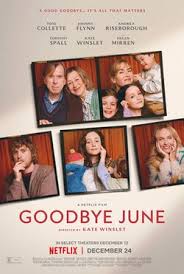
GOODBYE JUNE
UK, 2025, 114 minutes, Colour.
Helen Mirren, Timothy Spall, Kate Winslet, Andrea Riseborough, Johnny Flynn, Toni Collette, Fisayo Akinade, Stephen Merchant.
Directed by Kate Winslet.
A film with an appeal to a wide audience. It is a solid British drama. It has a very strong British cast. And, it is the first film directed by Kate Winslet, based on a screenplay by her son, Joe Anders (his father theatre and film director, Sam Mendes, and in his early 20s writing the film). Family.
Very often people don’t like to use the word death, burying the phrase, passing away, or the euphemism, passed. But here is a film about death and dying and no hesitations.
Over the decades audiences have been in admiration for Helen Mirren and the variety of roles that she has played. Helen Mirren turned 80 in 2025 and here she is playing a terminally ill mother family, collapsing at the opening of the film, rushed to hospital, decisions to stay in hospital for some kind of palliative care before her death. And many moments when we the audience share her physical pain.
The focus is on her three daughters, how they relate to their mother, how they relate to each other, their own families. And, with their mother so close to death, they are very conscious of their disputes but having the opportunity to display them, become more aware of, and, with the quiet intervention of their mother, facing up to the realities of their lives, in the past and the present.
The portrayals of the three sisters are very strong. Kate Winslet herself plays the oldest of the three, the reliable one, talented in her work, supporting others financially, children of her own that she feels she does not seen enough of, her husband away on business. By contrast, the second daughter, played by Andrea Riseborough (and glimpses of Stephen Merchant as a husband) is devoted to her children but, soon seen to be a controller, and heavy resentments towards her older sister.
But there is quite a contrast with the third sister, played by Toni Collette, caught up in New Age meditations and practices, living on the continent, with her classes, strong emotions, but afraid that time is passing her by.
The always reliable Timothy Spall plays June’s husband – an interesting portrait of the loving husband but who finds it hard to express emotions, taking refuge in sitting around and nodding off, after the canteen the pub, challenged by his daughters – and a wonderfully emotional sequence when he does a karaoke song, devoted to June.
And, then there are the grandchildren – it is Christmas time and they are preparing to take part in a Christmas pageant. They perform for their grandmother in hospital, more details of the Gospel story in the play than in many explicitly Christmas films. (And the entertaining line with grandfather playing the innkeeper, replying to Mary and Joseph that there is no room at the inn because “it’s Christmas and were very busy”.)
And back again to June, loving her family, not blind to their failures, finding ways to bring them even closer together (, moving sequences on truth-telling and re-discovering love) – and, a pleasing variation on the title when she leaves her letter to her unborn granddaughter, urging her to live her life to the full. And it is signed, Goodbye June.
- A film about death and dying? Illness? Palliative care and decisions? Family support?
- Using the language of death and dying, not just simply “passing”?
- The work of Kate Winslet, her son writing the screenplay, her direction, her performance and presence?
- The situation, the family, the mother’s illness, treatment, failing, the prospect of dying, soon? The impact on her husband, the past relationship, his coping and not coping? The response of her daughters, the contrasts, the emotion of her son, the grandchildren?
- June, her age, her marriage, for children, her love them? Her understanding them? The nature of her illness, the treatment, her collapse in the kitchen, getting her to the hospital, the surgery, the gathering of the family? Her response? Her knowing her condition?
- The doctors, the surgery, their explanations, Molly and her harsh responses, the doctor clicking his pen at her outburst? The decisions? The couple with the palliative care, June and her plan for her future? Molly’s angry outburst? Julia and her apologies?
- The decision for June to stay in hospital, Molly setting up the roster, not coinciding with Julia? The family and their keeping to the roster, the effect on them all? June, her pain, alleviation, sense of peace, patient with her children, her decision to try to reconcile them?
- Julia, the oldest, her marriage, her children, the Down Syndrome youngest? Her absent husband and his business, connections? The children and the Christmas play, dropping them at school, the arguments in the car? Her work, responsibilities – and later revelation of her paying for mortgages for her parents, for Molly…? Strong in herself, yet often angry? The interchanges with Molly?
- Molly, her appearance, her marriage, the children, the baby, bonding with her children, busy at home, to the hospital, her response to her mother, her harshness in listening to the doctors, to the palliative care team? Her roster? Anger with Julia? Her husband in the background, at home, with the children?
- Connor, living at home, waking, hearing his mother? His age, highly emotional, his response to his mother, to his father, staying at home and caring? Taking his mother to the hospital, his grief, emotions? Relationship with his sisters? His presence?
- Helen, New Age, in Germany, her sessions, her talk, her clientele, the exercises, the phone call, her coming to London, her mother’s comment about her not wearing yellow, the bond with her mother, with the others? The discovery of her pregnancy? Her partner, her later story about his relationships, Gustav and his being available for surrogacy? Helen. her age, emotions, apprehensive?
- Bern, the long marriage, his age, appearance, seemingly distracted, with his wife, at home, leaving the tap running, the flooding of the house? His relationship with his daughters? Seemingly self-preoccupied? Food, the pub, the beer, the football matches and his shouting? Fixing the television?
- Days passing, the roster the visits, the effect on June, health, her pain, the relief?
- The staff, the character of Angeli, his background, his name, his kindness to Helen, their bonding, his discussions with the children? In the interfaith chapel? Connor wandering into the Chapel, returning, with Angeli, the touch of the hand – and at the end of the final party, as a couple?
- June and her wanting to reconcile Julia and Molly, the plan with Angel, summoning them, the hurry, June’s device of getting them tell her right the letter to Helen’s child, straight talking to them? The scene together, the corridor, who first? Molly and her own idolising of Julia in the past, imitating her, Julia leaving when Molly was 13,feeling a sense of loss, betrayal? Envy of Julia and her accomplishments? Getting the Snickers, eating? Julia and a declaration about herself, having to take all the responsibilities? The bonding between the two, decision to cook the Christmas meal together?
- Connor and his exasperation with his father, his father going to the pub, telling his father off, in the pub, Bern choosing Georgia on my mind, substituting Junie, the emotional love for his wife, his son hearing it, their bonding? The house flood, Bern’s denial, different accommodation?
- The decision for the Christmas play, everybody turning up, the focus on Christmas, details of the Christmas play, the Gospel story, the performance, the humour, the joy?
- June, with Bern, her dying?
- The aftermath, the party, everybody together, joy, reconciliation, the toast to June?
- The finale, her letter to Helen’s child, expression of love, touches of immortality, the nice touch with the title, Goodbye June.
Clockwatchers
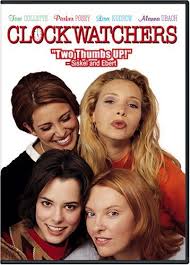
CLOCKWATCHERS
US, 1997, 96 minutes, Colour.
Toni Collette, Parker Posey, Lisa Kudrow, Alanna Ubach, Bob Balaban, Paul Dooley.
Directed by Jill Sprecher.
There is quite a bit of clockwatching during this film, the focus on for women who act as temporary secretaries in a credit company. They have their tasks, typing letters, making copies, getting cups of coffee for the male executives. But they have a lot of time, especially at the end of the day, watching the clock so that they can leave.
The central focus is on Toni Collette, having achieved a considerable reputation in Australia with films like Muriel’s Wedding and Lilian’s Story. This is her second American film – and she had made an with Gwyneth Paltrow. This began her American and International career, quite considerable for almost 30 years.
Parker Posey is the brash member of the group, domineering, cheeky, stealing things. Lisa could grow, starring in Friends at the time, has an image of herself that she could be greater. Alain Urbach has a boyfriend. Toni Collette is drawn into their company, following them, going to a fortuneteller who tells her that she took toes throughout life.
There are various scenes of the girls out on the town, meals together, gossip, shopping. Then there is the cookie temp who was given a full-time job, rather mousy – but revealed as stealing objects in the office, confronted by Toni Collette.
The male members of the company are busy about their work, not really noticing the temps, but grateful for any help. The film was written by director, Jill Sprecher and her sister Karen. They then went on to 13 Conversations about Love.
- The title, the reference to the four women, their temp work, secretaries, their desks, jobs, typing, making copies, getting coffee… For the men? The end of the day and then looking at the clocks in order to go. And then life after work?
- The American city, companies and offices, the streets, shops, diners? Home life and apartments? City transport? The musical score, the range of popular songs in the background?
- Iris and her story, her age, experience, at home with her father, his encouragement, a possible better job, his praise of her? The fortuneteller, her tiptoeing through life? Quiet, her desk, the work, sitting waiting for two hours, gradually settling in? The toilet, Margaret seeing her, talking with her, encouraging her, and Jane, her taking along, enjoying the company, imitating them, the fortuneteller, the meals together, gradually admiring them, enjoying their company, the influence on her own life?
- Margaret, brash, outgoing, stealing things, confronting the men, leaving the women, changing the tag on the dress…? Her lack of confidence? Stealing things, the pencils…? The final reaction, accusations, her interactions with the other members in the group? Her being fired?
- Paul, wanting to be glamorous, eyeing the men, meeting them in the bar, the machinery and her clocking it to be with the man mending it…? Confidential conversations with Iris? Let go?
- Jane, relationships, timid, at work, with the other women, with Iris?
- The new girl, timid, mousy, waiting, getting a full-time job, at a desk, looking at the others? Having taken Iris’s notebook, the confrontation? The apology, the wave, her hopes?
- The men, the bosses, the men looking for his mug, the man wanting the letter typed, ignoring Iris in the street, it’s signing the recommendation, affirming her?
- The meeting, the staff, the woman checking on the temps, the rules, no phone calls have personal nature…? The accusation about the stealing?
- Iris, at the end, changing, with her father, with the other women, the influence, the future?
Juror #2
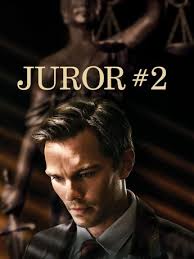
JUROR #2
US, 2024, 114 minutes, Colour.
Nicholas Hoult, Toni Collette, Chris Messina, Zoe Deutch, Kiefer Sutherland, J.K.Simmons, Cedric Yarborough, Amy Aquino, Gabriel Basso.
Directed by Clint Eastwood.
A Clint Eastwood film. The multi-Oscar-winning director made this film when he was turning 93. A strong acting career, a musician, and then a director as he turned 40, and the extraordinary variety of themes, principally westerns, police dramas, psychological dramas, American history, the music…
As with one of his key moral-themed films, Gran Torino, this film is rather small-scale, from the American suburbs. But, as with many, it is a film of reality and conscience.
Nicholas Hoult plays Justin, a reformed alcoholic, married to the teacher (Zoe Deutch) who helped him in recovery, expecting a baby. Then he is called to jury duty, wanting out because of the imminent pregnancy but, as with other jurors who protest, is compelled to serve.
The case concerns the death of a woman, on the highway at night, her body down the cliff face. The accused is her partner, a violent man, drug convictions, and all the evidence against him, an argument in the bar, his pursuing her, the dark night.
There is an interesting supporting cast. Toni Collette is the determined prosecutor, believing in the guilt, but also involved in campaigning for political election. The defence lawyer, sympathetic to the man accused, is played by Chris Messina. Kiefer Sutherland plays a friend who runs the AA meetings and offers advice. J.K.Simmons is a retired policeman who decides to investigate aspects of the case himself.
But, in this setting, there are complications for Justin, juror #2. He realises that he was in the bar that night, remembers some of the interchange, was tempted to drink but didn’t, drove home disturbed, hit a deer on the road, had not thought about this afterwards. As he listens, disturbed, beginning to question what had happened that night, pressured by the discussions of the jurors, sensitive to his wife and the imminent birth, interactions with the prosecutor, the members of the jury going as a group to the site of the death…
It is interesting to see that Clint Eastwood after so many films has decided to go for a smaller scale drama, a look at family life, interactions and a small town, the significance of the law and jury duty and decisions, the conscience of the prosecutor who had a fixed opinion on guilt but is challenged by the lawyer for the defence and an interview with the accused, challenged to do her own investigations.
Justin is also challenged in his conscience and makes decisions. So, a challenge to the audience as well, sympathies, justice, conscience, extenuating circumstances, and Clint Eastwood leaving what could be his final film with a conscience-challenge to his audience.
- The films of Clint Eastwood? Themes of justice, crime, police? Filmed in his 90s?
- The Georgia setting, homes, the courts, bars, the countryside, the highway, the scene of the death? The musical score?
- The title, the focus on Justin Kemp, his marriage, pregnant wife, the loss of earlier babies, the third trimester, his concern? The gradual revelation of his life, alcohol, the accident, rehabilitation and AA, the courts and social work, teaching, meeting his wife, the marriage? His reform, going to AA meetings, the encouragement of Larry Lasko? The chance encounter with the DEA?
- The case, the accused, in the court, his manner, the flashbacks, his reputation, drug dealing, tattoos, his girlfriend, drinking in the bar, the argument, following her outside, the altercation, her leaving in the rain, his driving away? The evidence against him? The patrons videoing the altercation, played in court? His reputation? Driving away, the identification by the old man?
- Justin, called to jury duty, his background of writing articles, not wanting to be away from his wife, the judge ordering him to stay, the other jurors and objections overruled? His sitting in the court, listening to the case, place in times, the beginnings of the flashbacks? The cumulative effect of the flashbacks, his reason for being in the bar, not drinking, upset, driving away, lack of attention, hitting what he thought was the deer, his looking around, driving away, no report? The issue of the repairs to the car and Faith checking out possible suspects, the visit to the house, Justin’s wife and her testimony?
- The skills of the prosecution, her determination, personality, interactions with the defence counsel, her ambitions, the interviews, politics and her role? Her manner in the court, assured, convinced of guilt? The contrast with the defence counsel, his manner, presentation, the arguments, cross examinations? The role of the judge?
- The effect on Justin, his conscience, his talking with the Larry? Larry giving the worst possible scenario? Later meeting with Larry, issues of conscience?
- The personalities of the jurors, the jury taking charge in managing the discussions, the angry man and the death of his brother, condemnation of the accused? The variety of personalities, age, the discussions, the medical student and her analysis of the wounds?
- The pressure on Justin, to protect himself, fairness to the accused being innocent? His raising questions after the almost unanimous decision? The range of discussions, angers, shifts of attitude, questions, the revival reliability of the old man and his identifying the accused? The weather, hit run? The interactions amongst themselves, the interactions with Justin?
- The surprise that the verdict did not coming quickly? Justin, going home, reassurances for his wife, the tensions, her asking the truth?
- The request to visit the site, the strictures, in the bus, the angry juror and his eye on Justin, analysing the situation, the pressure on Justin? The need for a verdict?
- The audience surprise at the verdict of guilty? Justin absent from the reading, being with his wife, the birth? The result for the prosecutor, defence, the prisoner himself, his declarations?
- Faith, the discussions with the defence, his pleading that the accused was not a murderer, the issue of the juror, former policeman, his contributions, going to the scene of the death, aware that Justin was there, his collecting all the documents about repairs? Including Justin’s? Justin contriving to drop the documents, the consequences, the former policeman dismissed? Justin to stay?
- Faith, her checking out the repairs, the interview with Justin’s wife, the aftermath of the decision, her discussions with Justin outside? The meeting with the accused and the defence present, her checking whether she believed him guilty or not?
- Her success, her role as DA? Her conscience, justice?
- The audience’s attitude toward Justin, saving himself, the guilty verdict, his attitude towards the accused?
- The final moment of the film, the knock on the door, faith present, the focus on Justin? His wife and the baby? The future?
Mickey 17
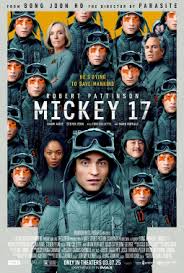
MICKEY 17
US, 2025, 137 minutes, Colour.
Robert Pattinson, Stephen Yeun, Mark Ruffalo, Tony Collette, Naomi Ackie, Patsy Ferran, Holliday Grainger, Daniel Henshell, Thomas Turgoose.
Directed by Bong Joon Ho.
There were high expectations for Mickey 17. Korean director, Bong Joon Ho, has had a prominent career since the 1990s, range of genre films including The Host, Mother, Snowpiercer and his Oscars, including best film, for Parasite. Here he is taken on an American story, and has treated it both seriously and satirically.
It is 2054, much of a muchness like the present in some ways, Mickey and his friend Tivo trying to raise money from a loan shark to start a business, failure, and the violent aggression of the loan shark. But, in this future, there is space exploration and the setting up of planets. There is also a great deal of scientific experimentation – including processes to create multiples of human beings, living, dying, and then being printed out again, identified with successive numbers. The morality of this process is being questioned.
Enter one of those evangelical church leaders, Kenneth Marshall, played with satiric zest and prominent teeth by Mark Ruffalo – aided and abetted by his smiling but domineering wife, played by Toni Collette. Marshall disapproves of the process but agrees that in some ways it could be useful, that the government should set up an expedition on a new planet, four a half years travel there, and set up a process for multiples, but only one at a time. And, with the succession of multiples, they are also described as “expendables”.
But we are also introduced to Mickey 17, Robert Pattinson enjoying his role. On the new planet, out scouting, he falls down a hole, is menaced by some strange creatures, wondering whether they are animals or aliens, not rescued by his colleague, but, saved, in fact by the creatures. Which gives him the opportunity to give a resume of his original life as Mickey Barnes, and the visual succession of all the numbers between one and 17. But, when he is presumed lost killed, Mickey 18 is printed out, Pattinson again, quite a different personality, tough, determined, rebellious…
And there is a range of characters on the planet, the scientists generally kowtowing to Marshall, young Dorothy being an exception and stepping in to help Mickey 17. Marshall has his sycophantic assistant, a yes-man, pandering to all Marshal’s exorcist whims, especially in organised religious television programs for the subservience staff on the planet. His wife is always there, but is experimenting with making sauces! In the meantime, there is an officer, Nasha (Naomie Acker) who is in a relationship with Mickey 17.
We can all this go? The capturing of one of the creatures and killing it, and holding a baby to ransom over a furnace. The two Mickeys confronting each other, Nasha and her coping with each of them, Tivo now involved in drug dealing and threats from the loan shark on earth.
There is a solution but, as with most of the film, not always predictable, always some surprises, some satire, some parody – especially with Kenneth Marshall and his final vanity in confronting the aliens.
The original book, by William Ashton, was published in 2022 and the film began production during the Biden era. But, released in the early days of the Trump era, many audiences will be making links! One reviewer noted that Bong Joon Ho was taking the Mickey out of the United States. Yes!
- Science fiction? Science fantasy? Political fantasy? Space exploration and development? Humanity issues? Moral issues? Philosophical issues?
- The career of the director, films in Korea, range, science fiction, Oscars for Parasite?
- The credibility of the plot, situation on Earth, 2054, ordinary life, Mickey and Vito and their plans, finance, the loan shark, the threats? But the political developments, scientific experimentation, production of multiple persons, moral issues, political? The intervention of Kenneth Marshall, support of his wife? His speech, the panel listening, agreement, setting up the centre on the planet? Moral issues, only one multiple?
- The visuals of the planet, wintry, the spring season, the centre, interiors, rooms, laboratories, meeting room, television programming? The musical score? Songs?
- The prologue, Mickey, the confrontation with the creatures, falling down, Vito and his taunts, no help? Setting up an atmosphere?
- Mickey, Robert Pattinson’s performance, as 17 and 18, his background on Earth, volunteering, is recounting the various stages of his life, further printing after deaths, the range of deaths, the range of personalities, situations, experimentation and testing? His relationship with Nash and her support? Mickey 17, in the snow, the story of his acceptance by the creatures, communication with them, the rescue? And discovering that Mickey 18 had been produced?
- Mickey 18, the different personality, strong minded, confrontational? Encountering 17, their interactions, the episode with Nash, the drugs, sexual encounters? The building up of tension? Especially towards Kenneth Marshall? The agent and her discovery of 17, the attraction, the confrontations with Nasha?
- Kenneth Marshall, the religious background, the church, his moral stances, vanity and position, relationship with his wife, her advice, domineering? His ambitions, the plan, the multiples, overcoming his moral scruples? His ambitions for success? His manner, his teeth, speech, presiding at meetings, his assistant as flattering him all the time, his interactions with the lab managers, their subservience to him? His wife, her manner, the cooking, the sources?
- The confrontation with the aliens, the taking of the baby, the shooting, one creature destroyed? The massing of the aliens, the leader? 17 and his ability to communicate? The work on the translation device? Dorothy, her work, personality, helping the Mickey’s?
- Marshall, his plan, discovering the two, the explosive device to destroy each of them? The flatterers, television, his going out, the speech before destroying them, his continued vanity? His wife waiting at the studio watching?
- The Mickey’s, the previous clashes, the fights, 17 to fall down into the furnace, saved? With Nasha? Her confrontation with Marshall? Strong-minded?
- The contact with the aliens, 17 and his communication, Marshall discovering this, the upset? The aliens and then manoeuvres, massing to conceal the leader, then dispersing, the confusion? The condition of the return of the baby threatened over the furnace? Nasha having to hold the baby’s rope in her mouth?
- The plan is to fire, Marshall unable to give his speech, the explosions, his death? The aliens, the return of the baby? Possibilities for peace?
- Six months later, Spring, the assembly, Mickey 18 sacrificing himself for the explosion, 17 and his presence, Nasha and her speech, the flashback and his memories during her speech, then his pressing of the detonator to destroy the multiples machine?
- The banning of multiples? The machine, Marshall’s wife, her reproducing her husband? She being a multiple?
- The tone of the film, comic and serious, satiric, some parodies, especially Marshall in the Trump era, but issues of science, humanity, ethics, philosophy?
