Displaying items by tag: David Kross
World Will Tremble, The
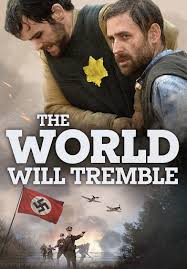
THE WORLD WILL TREMBLE
UK/US, 2025, 109 minutes, Colour.
Oliver Jackson-Cohen, Jeremy Neumark Jones, Charlie MacGechan, Michael Epp, David Kross, Michael Fox, Anton Lesser.
Directed by Lior Geller.
This film is set in 1942, Poland, the Nazi invasion, the camps and the beginnings of the mass executions, especially in the camp at Chemno. At that stage, not so much was known around the world about the concentration camps but, when the deaths were revealed, the world did tremble with horror, and a mixture of disgust and grief.
Here is a story that may have been forgotten amongst all the tellings of Holocaust stories. Able-bodied Jewish prisoners at Chemno are brutalised by the guards, and some are chosen for a new task, meeting the convoys of arrested Jews, unaware of the fate that awaits them, hoping to be working in a factory, communicating with family. But, welcomed by a fake spiel by the crassly authoritarian young camp Commandant, they are stripped, surrendering all their possessions, and then herded into trucks where they are gassed. The Jewish prisoners have to sort the clothes and possessions, carry the bodies, bury them.
A horror scenario.
But, this is also a story of heroism, two of the prisoners planning and achieving an escape, helped and shielded by fellow prisoners – dramatised in a long, measured sequence, filmed almost like a painting, tableau of the prisoners in a large hall-cell, discussing, planning, hoping.
With the escape, the film goes into vigorous action, no tableau here, rather long tracking shots, the men running through the forests, a motorbike along the highways, some providential experiences where there they are helped by a local woman with railway workers clothes to cover their prison garb, having to stop to help a German convoy, even the doctor tending the wound of one of the escapees. And then their quest to find a Jewish community, contact the rabbi, give a message to the Polish resistance to get to London and the BBC.
Which is what happened, and the first announcements of this kind of mass execution in the camps actually broadcast from London in 1942.
The Holocaust stories continue – and must also continue as we look back from the 21st century and a horror at the cruel ambitions of the Third Reich so much of which they ruthlessly achieved.
Lest we forget.
- Audience response to films about World War II, the Nazis, the Jews, concentration camps?
- The title, the story of the revelation about concentration camp deaths, Poland 1942, the prisoners, the escape, their story, the rabbi, the Underground, to the BBC, to broadcast in 1942?
- The situation in Poland, Jews in the ghettos, being rounded up? The camp at Chelmo, prisoners, digging the graves, Solomon and the beating, a broken shovel, the arrival of the convoys, the prisoners standing by, no contact, the Jews in the truck, the Commandant, his lying speech, the promise, their identifying the goods, writing letters, leaving their possessions, going into the house, the old man identifying Solomon and trying to talk, the men and their silence?
- The truck, the gas, the Jews inside, their deaths, the shootings? The keeping of the girl for the nights?
- The picture of the men, saved from death because they were strong, doing the work? The digging, attending the new arrivals, the baggage, the clothes, classification of the shoes? The aftermath, the girl, the violinist, the Commandant’s jokes, the dancing, the shooting, the bottles and glasses on their heads, the death of the prisoner shot in the neck? Their going to the hut?
- The plan for the escape, the knives, implements, pockets, the knife falling out of the pocket, the execution? Michael and his seeing his dead wife and his grief? Their doing their work? The death of the Jews, the taking of the bodies, lifting the bodies, putting them in the graves? The emotional effect on the men? The long sequence in the hut, painterly, and the shades, the tableau, the discussions, decisions, the escape?
- In the truck, the prisoners asking for cigarettes, shielding the cutting of the canvas, the two men escaping, the long tracking shots through the forest, the close-ups, pursued, shot at, Michael and his leg wound, Solomon tending it, going to the river, downstream? The house, into the shed, the woman coming, her giving them the railway workers clothes, their taking the bike? Stopping at the German breakdown, helping with the pushing of the truck, the doctor attending, their getting away?
- The village, the buildings, getting through the fence, seeming abandoned, the soldiers, going to the house, the information about the rabbi, hiding, finding his house, the rabbi in disbelief, the people in the house, listening, Solomon, the intensity of his story, the knock at the door, getting rid of the men, Solomon writing down the story?
- The information about getting the information out, the BBC, the visuals of the rabbi and the town and their execution? Solomon and his death? Michael, his survival, his story, in the interview from 1979?
- The overall impact of the drama, the delineation of the characters, the graphic presentation of their work, the arrival of the Jews, their treatment, the executions, the aftermath, the burial of the bodies? The presentation of the Nazis, the Commandant and his laughter, the death of the girl and his rebuke, the way of life and the attitudes of the Nazi guards?
- And the revelations at the end of the war, the concentration camps, the deaths, the Holocaust?
Confessions of Felix Krull. The/ Bekenntnisse des Hochstaplers Felix Krull
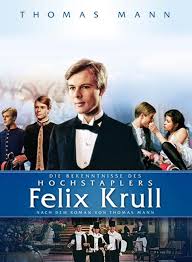
THE CONFESSIONS OF FELIX KRULL/ Bekenntnisse des Hochstaplers Felix Krull
Germany, 2021, 114 minutes, Colour.
Jannis Niewohner, David Kross, Liv Lisa Fries, Nicholas Ofczarek, Maria Furtwangler, Joachim Krol.
Directed by Detlev Buck.
This is another version of the novel by celebrated author, Thomas Mann. Several times filmed, especially in a version starring Horst Buchholz, the title here emphasises not just the name of Felix Krull but the indication that he is a conman.
The initial setting is Paris, 1900, scenes of the streets, scenes of the restaurants, apartments, a great deal of atmosphere. While the film’s framework is in the present, there are a number of flashbacks, especially to Felix and his childhood, the influence of his father, his ambitions, his relationship with the Zaza, his manipulating of his stepfather for a recommendation to go to work in a Paris restaurant, his presumptions on arrival, being put in his place, domination of the staff taking a percentage of earnings.
The film shows Felix, now named Armand at the hotel, at first somewhat naive, then adapting to the situation, and then learning to exploit it. And Zaza comes to Paris, more complications.
Jannis Niewohner is very effective as Felix. Popular actor, David Kross, plays a wealthy young man who becomes a target of manipulation by Felix and Zaza. Zaza is played by Liv Lisa Fries (contrasting rules as Freud’s daughter in Freud’s Last Session and strongly in the World War II film, From Hilde With Love.)
Ultimately, there are more situations to be faced. The wealthy young man will be disinherited if he marries Zaza. He and Felix were to change roles? And what would be Zaza’s actual decision even with her love for Felix?
Which means that this film is a lavish period piece, a portrait of a conman who is not entirely unsympathetic, the setting up of a moral dilemma and its consequences.
- Novel, Thomas Mann as author? The different versions over the decades? 21st-century version?
- The title, the emphasis on the confessions, the focus on Felix, the title indicating his role as a conman?
- Paris, the 1900 settings, the visuals, costumes and decor, the boulevards, the hotels, facades, lavish interiors, elevator, rooms, servants’ quarters? The resort sequences? Portugal, the tennis, the audience with the king? The musical score?
- The structure of the film, the focus on Felix, dressing, the coin for the young begging child, the hotel, his work, his status, the relationship with Zaza, the meeting with Louis, the framework of the conversation at the hotel, waiting for Zaza? The insertion of the range of flashbacks, Felix as a child, his father, lavish lifestyle, poor fInancial management, his wife, the godfather present, the creditors, his killing himself? His advice to his son? The episode at the meal, Felix as Hamlet, revenge, the parallel with his mother and godfather, his blackmailing his godfather, the money, the letter of recommendation to Paris, his leaving?
- His military service, the rehearsing with Zaza about his possible epilepsy, going to the interview, the man feigning epilepsy, Felix and his different approach, provider, incessant talk, overwhelming the interviewers, his being declared not fit?
- The conversation with Louis, the further flashbacks, the meeting with the Zaza, her background, available, the use of con tricks, the relationship between the two? Felix going to Paris, her later following him there, the relationship, the affair? Her wanting money? The attachment to Louis? Fostered by Felix? The night for Zaza to meet with Louis, Felix detaining him with the conversation?
- The flashbacks to Felix at the hotel, letter recommendation, his confidence, at the main desk, relegated to the servants’ quarters, the encounter with Stanko, money issues, the others in subservience, the threats of being fired, the collusion between Stanko and the other managers?
- Felix becoming Armand, the lift, the encounter with Madame Houpfle, style, arrogance, her husband and the production of toilets, humiliating Armand, carrying the shopping, closing the door, the sexual encounter, the delay, the jewellery, handing over the money, taking the jewellery to the cellar, the handling, Felix asserting himself, stealing the jewellery, the money for Stanko? The continued relationship? Style of the hotel?
- Felix/Armand and the other guests, the Scottish lord, the offer, to be his heir, his conscience, refusing the offer? Eleanor Twentyman, her chaperone, the attraction, attempted seduction, Felix and his conscience? The denunciation of Stanko and his dismissal?
- The relationship with Zaza, intensity? Her activity in the hotel, Stanko and his threats?
- Louis, rich, an effete manner, at the hotel, tone of superiority, the encounter with Zaza, infatuation, wanting to marry her, his father’s forbidding it, wanting her and his money? Felix engaging in conversation, the revelation of his character?
- The development of the proposal, Felix going in Louis’ stead, Louis and the money, going away with Zaza? The details? In the train, the encounter with his father? The financial arrangements, Felix becoming Louis? The tickets and the travel? Zaza and her hesitation, Louis realising her position, his love for both, her decision to go with Louis?
- Felix, the encounter with the professor, the professor and his science and metaphysics, the serious tone of the dialogue, Felix and the encounter with the professor on the train, his identity and genealogy, the visit to Lisbon, the tennis, the daughter’s attraction, the invitation from the King, Felix and his bravado about his appearance, the past meetings, the king persuaded?
- Felix, assuming persona, his skill as a conman, his experiences, his future?
