Displaying items by tag: Luke David Blumm
Avenue of the Giants
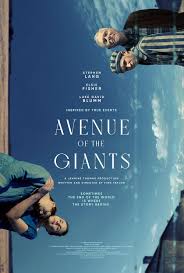
AVENUE OF THE GIANTS
US, 2023, 102 minutes, Colour.
Stephen Lang, Elsie Fisher, Luke David Blumm, Robin Weigert, Slavko Sobin, Stella Stocker, Oskae Hes.
Directed by Finn Taylor.
At the end of this very moving film, the camera moves along a path in the woods, flanked by giant trees. A fine image for what we have experienced.
This is an American story. But it is also a story of Czechoslovakia in the 1920s and 1930s. And it is a Holocaust story.
We are introduced to Herbert Heller, a genial elderly American gentleman, creator of a store that caters for children. He is unwell, the doctor not holding out great hopes for him. And Herbert Heller is played by veteran actor, Stephen Lang, a familiar face on screen even if people do not know his name. This is one of his best performances.
Herbert goes to a Recovery Centre, receiving advice from a counsellor, Ruth, played by Robin Weigert. All interviews, with permission, are either recorded or filmed. Ruth has an assistant but she also has a late teenager, Abby (Elsie Fisher), who is in recovery but also invited to conduct the interviews with Herbert, with the hope that each will reveal their story to the other. And, step-by-step, sometimes tentatively, sometimes apprehensively on the part of Abby, each tells their story.
The key story, of course, is that of Herbert, and the film goes into flashbacks to Herbert’s family, in Prague, the 1930s, ominous presence of the Germans, the father supremely optimistic, what we might call these days, denial. His patient wife is continually apprehensive. Herbert’s older brother, a teenager, is forever exasperated with the false enthusiasm is father. And Herbert, a young boy, full of enthusiasm, admiring his parents, listening to his brother, friends in the street, playing sport, the portrayal of a whole life which is, we know, about to be destroyed. A strong performance by the young Luke David Blumm.
Even though the focus is on Herbert in his old age, the sequences of Prague, the gradual oppression, the brutality, the sewing on of the star to garments, the arrests, and vivid sequences in Auschwitz itself, arrival, separations, Herbert persuading the authorities that he can work and going with his father and brother, life in the camp.
But, despite the sadness, after the war, Herbert and his mother find a new life in the United State. Perhaps the illness gnawing at Herbert in his old age is that he has never revealed this story to anyone.
Elsie, on the other hand, parents bickering, her father philanderer photographer, her close friend becoming a victim of her father, suicidal feelings. But, together, step-by-step, especially the benign outreach by Herbert, stories are told, and healing is not only possible but takes place.
A film that repays viewing.
- The title, the imagery at the end, the forest, the path, the trees?
- Audience response to Holocaust stories, concentration camp stories? The perspective of the 21st-century? A story from Czechoslovakia? An American story?
- The portrait of Herbert Heller, Stephen Lang’s performance, and pathos? At 74, going to the doctor, the diagnosis, the warnings, his illness? Pain? The background of his family? The shop, the contents, having built it up, his delight in the shop?
- The encounter with Ruth, the Recovery Centre, the discussions, his agreeing to be interviewed, filmed and recorded? The discussions with Ruth and the cameraman?
- The introduction to Abby, her presence at the centre, her age, background, parents and their tensions, relationship to each? In crisis, her agreeing to be with Herbert, the interview, the conversations, recording?
- The drama of the interactions, Herbert, drawn out of himself, willing to speak, telling his story, never having told it to anyone else? His interest in Abby, her reluctance to speak, his gradually drawn out of herself? The continued sessions, the recording, Ruth and her interventions?
- The flashbacks and Herbert’s story, his age, in Prague, the Jewish family, going to the social, suspicions and alienations? The father, his character, continued optimism, his behaviour? His wife, the tensions, her realisation of the truth? The older son, his age, exasperated with his father, political? Herbert, a boy, enjoying the sports, at home, listening to his father, love for his mother, the discussions with his brother? The meals? Going out, the circus and entertainment? Happy life, but the prospects of the war?
- The father and his continued optimism, the growing repressions, staying inside the buildings, the mother sewing on the stars and her special skills, the older son and his exasperation that they did not leave? The neighbours and Herbert young friend, waving to each other? The buildup to the troops arriving, the family having to leave, watching the family on the roof and their falling to their deaths?
- Going to the concentration camps, the father still hopeful, the separation between men and women, Herbert with the children, his going to plead that he was strong, able to stay with his father and brother?
- Life in the concentration camp, the work, Herbert and his personality, helping out, yet the despair, the electrified wire and the temptation to touch? Meetings with his mother across the fence? His father, the work, still optimistic? The older brother and his work?
- Getting ready for the final walk, the soldiers, Herbert, his running away, the coat, helped, the various difficulties, getting back to Prague, the streets, the pursuits in the tunnel, finding the kindly woman, her past help, his staying in the house until the end of the war?
- After the war, going to the officials, checking the documents? The irony that his mother survived, reunited, their going to America?
- Abby, her story, age, her mother and the piano, her father as a photographer, a loner, playing the piano, her friend, their bonding, the emotional connection, the photo, her father and the women, her friend and the photo, despair, deciding to kill themselves, the pills, the friend dying, Abby surviving? Going to the recovery centre? The interactions with Herbert, her reluctance to reveal her story, continuing the therapy, with Ruth? Her going to the woods, not turning up, the search, her mother finding the photos, the reconciliation with her mother?
- The humanity of the film, the portrait of Herbert, his experience, the number on his arm, getting rid of it, the scar? But keeping the secret from his family and finally revealing it? Abby and hope for her future?
