Displaying items by tag: Stephen Lang
Avatar: Fire and Ash

AVATAR: FIRE AND ASH
US, 2025, 197 minutes, Colour.
Sam Worthington, Zoe Saldana, Sigourney Weaver, Stephen Lang, Oona Chaplin, Kate Winslet, Cliff Curtis, Joel David Moore, CCH Pounder, Edie Falco, Brendan Cowell, Jemaine Clement, Giovanni Ribisi, David Thewless, Britain Dalton, Jack Champion.
Directed by James Cameron.
The third Avatar fantasy and science-fiction adventure from James Cameron. It is, in fact, 16 years since the first Avatar film was released with great success. Then a 13 year wait for Avatar: The Way of Water. Only three years wait this time. And, Cameron has noted that although sequels are in preparation, his making them will depend on how this film is received. There is no doubt of its popularity and success at the box office – but, along with critical comment and popular reactions, will this be enough?
In the meantime, here we are again in Pandora, out in the galaxies, beautiful floating islands, homes in the forests, mountains, cliffs, crags and oceans, huge creatures swooping in the air, exhilarating transport for humans, marvellous giant beasts of the sea with consciousness, communication – and the background of a creation mythology. Audiences who relished all this in the first films will appreciate it once again, especially since this is how this film begins, the fantasy, rather than focus on the Sky People, the humans who had journeyed here with their vast laboratories, scientific equipment, boats and weapons.
Many of the responses to Fire and Ash have stated that, in many ways, most ways?, is a replay of the previous films, the establishing of the families and tribes, the dangers from the humans, the relentless human expansion, clashes between the tribes, the buildup to the final battles. And, this is quite true. But, there are many audiences who are willing to surrender themselves to this kind of repeat experience.
Once again Sam Worthington and Zoe Saldana play the parents, the leaders of the Navi tribe, their children, especially Loach, still suffering the loss of his brother and feeling responsible for his death, his bonding with his brothers and sisters, and with the children from the local tribes. But there is a change in the family, the presence of the human, Spyder, teenager, needing a mask to breethe, but welcomed into the family except for the severity of the virulent hostility from the mother, loathing humans. In fact, Spyder is the son of the former soldier, Quaritch, who, like Jake, has been transformed.
The presence of Spyder, his welcome in the family, his father searching and wanting him back, provides much of the drama at the centre of this film, leading to the issue of whether Spyder be sacrificed for the safety of the tribes (echoes of the biblical story of Abraham and the sacrifice of Isaac).
But, this time there is another warrior tribe, led by one of the most savage female leaders, absolutely relentless. And she teaming up with Quaritch to wreak vengeance.
And the expected battles: the confrontation between Jake Sully and Quaritch. And, of course, at great length, intensity and spectacle, the Navi’s long and spectacular battle with the humans.
There is one complaint, true of the other films. Much of the dialogue is quite commonplace, often trite, and, with Spyder, the kind of quick American slang that would appear in the bubble a cartoon panel.
So, for the fans, more of the same but with some variations as a new characters like Spyder and barre. It runs for 3 ¼ hours but, with continuous action, it keeps up its pace. And the question raised: can there be still more created stories out there in Pandora?
- The third in the series? The popularity of the films? Box office records? The work of imagination and James Cameron?
- Recreation of the world of Pandora, the visuals of space, the beauty of the floating islands, the colonies for the various tribes, homes, cliffs and rocks, the sea, rivers? The contrast with the scientific base, the scientific equipment, elaborate, the controls? The space vehicles? The ships? The creatures, flying, the giant creatures in the sea? The range of special effects, especially for the confrontations, the battles, the rescues, the attacks, the deaths? In the background of the musical score?
- Presuppositions from the earlier films, the range of characters, Jake Sully, his human background, becoming part of the tribe, the romance, his wife, the children in the family life? His being hero, his wife and her prejudice against the humans? Quaritch, human, transformed, his son, his warrior behaviour, his death, revived? The general and her command, the Captain Scoresby on his boat, the scientists and their demands, the warriors, the humans and their scientific advances, the havoc on Earth, potential havoc for space? The development of these themes again?
- The previous emphasis on the science and the expedition from Earth? This film taking it for granted, opening with Pandora, its beauty, peace, the islands in space, the homes, the family? The audience invited to enter the world of fantasy rather than science and science fiction?
- The repeat of the situations, humans as Sky People and their attack on the Navi? The life of the Navi, the relationship with the other tribes? The buildup to the confrontation between the tribes, and the clash with the humans?
- Jake Sully, established character, his leadership? The death of his son, the blaming of the younger son? The younger son and his friends from the other tribes? Spyder and his being the son of Quaritch, received by the Navi, wearing a mask, the hostility of the mother?
- The revelation of the warlike tribe, the leader, visualised, fierce, merciless? Teaming with Quaritch? His associate?” Marriage and his love for his son, wanting with him? Spyder’s response? Spyder and the experience without the mask, the daughter, her special powers, her representing the God, his revival?
- The focus on the family relationships, the dangers, the threats, the role of the young son, relationship with his father, clashes, reconciliation, his role in the final battles?
- The mythical aspects, Kiri and origins, the visual manifestations, the flying creatures, the creatures and the sea, communicating with them, their communications, life? These beasts the target of the humans?
- The range of battles, their being visualised, in the air? The humans and their weapons and vehicles? The herding of the sea beasts?
- Focus on the humans, the general and her attitude, commands? The captain of the ship, his mission? Dr Garvan, sympathetic, his helping Jake Sully? The contrast with Selfridge and his wanting to get Spyder and study him?
- The buildup to the confrontations, Varang and her fierceness, her role in the battles, the final defeat?
- The issue with Spyder, Jake and his decisions, his wife, agreeing, changing her mind, seeing Spyder saving Jake’s life, Jake taking him out, echoes of the Abraham story and the sacrifice of Isaac, his inability to kill? Leading to the confrontation with Quaritch and his falling into the abyss?
- Peace among the tribes, Jake as leader, the defeat of the humans – abandon ship? The future, peace in Pandora? The role of the humans?
- And the success of sequels depending on the commercial success of this third in the franchise?
Avenue of the Giants
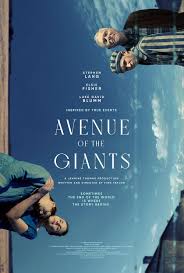
AVENUE OF THE GIANTS
US, 2023, 102 minutes, Colour.
Stephen Lang, Elsie Fisher, Luke David Blumm, Robin Weigert, Slavko Sobin, Stella Stocker, Oskae Hes.
Directed by Finn Taylor.
At the end of this very moving film, the camera moves along a path in the woods, flanked by giant trees. A fine image for what we have experienced.
This is an American story. But it is also a story of Czechoslovakia in the 1920s and 1930s. And it is a Holocaust story.
We are introduced to Herbert Heller, a genial elderly American gentleman, creator of a store that caters for children. He is unwell, the doctor not holding out great hopes for him. And Herbert Heller is played by veteran actor, Stephen Lang, a familiar face on screen even if people do not know his name. This is one of his best performances.
Herbert goes to a Recovery Centre, receiving advice from a counsellor, Ruth, played by Robin Weigert. All interviews, with permission, are either recorded or filmed. Ruth has an assistant but she also has a late teenager, Abby (Elsie Fisher), who is in recovery but also invited to conduct the interviews with Herbert, with the hope that each will reveal their story to the other. And, step-by-step, sometimes tentatively, sometimes apprehensively on the part of Abby, each tells their story.
The key story, of course, is that of Herbert, and the film goes into flashbacks to Herbert’s family, in Prague, the 1930s, ominous presence of the Germans, the father supremely optimistic, what we might call these days, denial. His patient wife is continually apprehensive. Herbert’s older brother, a teenager, is forever exasperated with the false enthusiasm is father. And Herbert, a young boy, full of enthusiasm, admiring his parents, listening to his brother, friends in the street, playing sport, the portrayal of a whole life which is, we know, about to be destroyed. A strong performance by the young Luke David Blumm.
Even though the focus is on Herbert in his old age, the sequences of Prague, the gradual oppression, the brutality, the sewing on of the star to garments, the arrests, and vivid sequences in Auschwitz itself, arrival, separations, Herbert persuading the authorities that he can work and going with his father and brother, life in the camp.
But, despite the sadness, after the war, Herbert and his mother find a new life in the United State. Perhaps the illness gnawing at Herbert in his old age is that he has never revealed this story to anyone.
Elsie, on the other hand, parents bickering, her father philanderer photographer, her close friend becoming a victim of her father, suicidal feelings. But, together, step-by-step, especially the benign outreach by Herbert, stories are told, and healing is not only possible but takes place.
A film that repays viewing.
- The title, the imagery at the end, the forest, the path, the trees?
- Audience response to Holocaust stories, concentration camp stories? The perspective of the 21st-century? A story from Czechoslovakia? An American story?
- The portrait of Herbert Heller, Stephen Lang’s performance, and pathos? At 74, going to the doctor, the diagnosis, the warnings, his illness? Pain? The background of his family? The shop, the contents, having built it up, his delight in the shop?
- The encounter with Ruth, the Recovery Centre, the discussions, his agreeing to be interviewed, filmed and recorded? The discussions with Ruth and the cameraman?
- The introduction to Abby, her presence at the centre, her age, background, parents and their tensions, relationship to each? In crisis, her agreeing to be with Herbert, the interview, the conversations, recording?
- The drama of the interactions, Herbert, drawn out of himself, willing to speak, telling his story, never having told it to anyone else? His interest in Abby, her reluctance to speak, his gradually drawn out of herself? The continued sessions, the recording, Ruth and her interventions?
- The flashbacks and Herbert’s story, his age, in Prague, the Jewish family, going to the social, suspicions and alienations? The father, his character, continued optimism, his behaviour? His wife, the tensions, her realisation of the truth? The older son, his age, exasperated with his father, political? Herbert, a boy, enjoying the sports, at home, listening to his father, love for his mother, the discussions with his brother? The meals? Going out, the circus and entertainment? Happy life, but the prospects of the war?
- The father and his continued optimism, the growing repressions, staying inside the buildings, the mother sewing on the stars and her special skills, the older son and his exasperation that they did not leave? The neighbours and Herbert young friend, waving to each other? The buildup to the troops arriving, the family having to leave, watching the family on the roof and their falling to their deaths?
- Going to the concentration camps, the father still hopeful, the separation between men and women, Herbert with the children, his going to plead that he was strong, able to stay with his father and brother?
- Life in the concentration camp, the work, Herbert and his personality, helping out, yet the despair, the electrified wire and the temptation to touch? Meetings with his mother across the fence? His father, the work, still optimistic? The older brother and his work?
- Getting ready for the final walk, the soldiers, Herbert, his running away, the coat, helped, the various difficulties, getting back to Prague, the streets, the pursuits in the tunnel, finding the kindly woman, her past help, his staying in the house until the end of the war?
- After the war, going to the officials, checking the documents? The irony that his mother survived, reunited, their going to America?
- Abby, her story, age, her mother and the piano, her father as a photographer, a loner, playing the piano, her friend, their bonding, the emotional connection, the photo, her father and the women, her friend and the photo, despair, deciding to kill themselves, the pills, the friend dying, Abby surviving? Going to the recovery centre? The interactions with Herbert, her reluctance to reveal her story, continuing the therapy, with Ruth? Her going to the woods, not turning up, the search, her mother finding the photos, the reconciliation with her mother?
- The humanity of the film, the portrait of Herbert, his experience, the number on his arm, getting rid of it, the scar? But keeping the secret from his family and finally revealing it? Abby and hope for her future?
Twice in a Lifetime

TWICE IN A LIFETIME
US, 1985, 111 minutes, Colour.
Gene Hackman, Ann Margret, Ellen Burstyn, Amy Madigan, Ally Sheedy, Stephen Lang, Brian Dennehy.
Directed by Bud Yorkin.
The cliche is that love is once-in-a-lifetime. The screenplay here raises the question whether it can be twice.
The screenplay is written by British, Colin Welland (soon to win an Oscar for Chariots of Fire). It is a British writer observing and researching in Washington State, in Seattle. The direction is by Bud Yorkin, best known for light entertainment is including The Thief Who Came to Dinner, Start the Revolution Without Me). Which means that the screenplay is both serious and sometimes with a lighter touch.
Gene Hackman is completely persuasive as Harry, steelworker, turning 50, celebrating, attracted by Ann Margret as Audrey at the bar, unsettled in his long marriage to Kate, Ellen Burstyn. There is the attraction, the mutual response, his decision to leave home, the drama of the discussions with Kate, the challenge of his older daughter, Sunny (Amy Madigan in an Oscar nominated performance), and the more sympathetic younger Helen, Ally Sheedy, about to be married.
This is a film of the 1980s – and attitudes towards marriage, separations, divorce became much “freer” in succeeding decades. However, here is a story which can resonate with middle-aged couples throwing some light on the crises.
- Title? Expectations? Treatment of the themes and issues, quality?
- Americana, universal message? Seattle and Washington State locations? The city, the suburbs, factories, bars?
- The themes, perennial? The British screenwriter and his perspectives?
- The realities of situations, midlife crisis, years of work, fulfilment, lack of fulfilment, marriage, love, taking spouses for granted, men and women, stereotypes, idealising of situations? Anger, coping, surviving? The next generation?
- The focus on Harry, Gene Hackman performance, turning 50? Seeing him at home, seeing him at work, his range of friends? The quality of his relationships, individuals? The party, the presence? Kate and his long relationship with her, sleeping, his going out, Kate staying home? The job, Nick? The party, Audrey, the kiss, the opportunity?
- Harry and his behaviour, going out, the car park, nervous, enjoying Audrey’s company, sharing? His stories, memories with Kate? Knowing the reality, the issue of being caught? Confrontation and response? Sunny and her reaction, Audrey and anxiety, Nick and the break? His talking with Kate, angers, with each member at home? Leaving, in the city, the neighbourhood, the apartment? With Audrey, buying the watch, becoming a new man, severing ties, ringing Helen and talking with her, the wedding and his enjoyment? The photo, not going to the party, alone?
- Ellen Burstyn as Kate, long-suffering, the long marriage, at home, supportive of Harry, bringing up the children, relationship with the children? Not noticing his crisis? His leaving, the repercussions, the discussions, angers? And the reaction of the children?
- Sunny, anger, older daughter, the challenge to her father? Her own life? The contrast with Helen, about to be married, Harry’s warming towards her? The preparations for the wedding? His attendance or not?
- Audrey, and Margaret’s glamour, even in the bar? Her work, personality, noticing Harry, the attraction, his response to her, the kiss, her consenting to the affair, the meetings, in the car, the effect on Harry, the effect on her? The future?
- The characters in the background, Nick, at work, his workmates, 50th birthday, the friendship? Helen and the preparations for her wedding, the fiance, the marriage?
- Familiar material? How well written and insightful? How well portrayed? Insight into midlife crisis, its effect on men, on women?
Muzzle
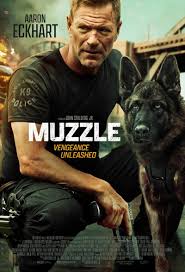
MUZZLE
US, 2023, 93 minutes, Colour.
Aaron Eckhart, Penelope Mitchell, Diego Tinoco, Stephen Lang, Paul Johansson, Nick Searcy.
Directed by John Stalberg Jr.
The title indicates restraining animals. Here, in the K-9 department of Los Angeles, there are police dogs, especially one in the opening sequences called Ace, then an attractive dog later in the film, Socks. However, the central character, Aaron Eckhart Jake Rosser, is a Marine suffering from PTSD, asked whether he struggles with anger and replying that it has long since won, needing to be restrained, especially his violent reactions at crime scenes, shooting, needing some kind of muzzling.
On the one hand, this is a police thriller, criminal gangs, drug dealing, violence on the streets, in warehouses… And glimpses the way through of rundown neighbourhoods of Los Angeles.
On the other hand, this is a character study of Jake Rosser, the impact of his past, his commitment to his police work, his angry outbursts, scenes of affable conversations with his dogs, tending them, grieving when Ace is killed in action, referring to him as a police officer rather than as a dog.
Stephen Lang appears as the trainer of the dogs for the police force, sympathetic, helping Jake to find a new dog. Penelope Mitchell appears as a sympathetic nurse, Jake attracted to her, but then her disappearance. There are several of his sequences, and, there are the various police officers throughout the film, the superiors, the partners, those despising Jake but one of them helping ultimately in the confrontation with the criminals.
In the past there was Tom Hanks in Turner and Hooch, James Belushi and K-9.
- The title? Police dogs? Owners and trainers?
- A police thriller, Los Angeles, familiar material in treatment, but with differences?
- The streets of Los Angeles, the poor neighbourhoods, drug dealers, gangs? Police precincts, offices? Crime scenes? Ambulances? The musical score?
- Jake Rosser and his story, the Marine background, post-traumatic distress, memories of his overseas service, the demands, his responsibilities, the American male and his tough image, in denial for need of treatment? The importance of his dog, the opening, driving his vehicle, talking to the dog, considering the dog as a police officer?
- In action, the crime scene, Jake and his gun, the shooting, the pursuit of the criminals, his dog, the tactics, Jake and his reactions, the shooting, his dog injured, demanding attention for a police officer, the ambulance treating the humans, his attacking the medic? The consequences, his status, the authorities, the discussions with him, the advice that he see a therapist?
- The scenes with the therapist, moods, advice, self-reflection?
- Going to the dog pound, the attraction to the new dog, the friendship of the manager, training, advice?
- The familiar story of the police, going on his own, the investigations, the interrogations, tracking down clues leads, fellow police officers and their reactions? The authorities?
- The information, the old man sitting and observing, reluctant information, leads, the help of the fellow police officer, the setup, the role of the dog, the dog and the previous connections, menacing?
- The final confrontations, Jake, the dog and his devotion, the criminals, the setup, achieving his girls? His future?
