Displaying items by tag: Edward Berger
Ballad of a Simple Player
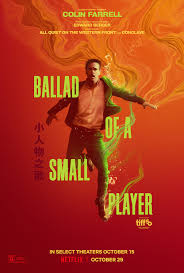
BALLAD OF A SMALL PLAYER
Germany/UK, 2025, 101 minutes, Colour.
Colin Farrell, Tilda Swinton, Fala Chen, Alex Jennings, Tony Lau.
Directed by Edward Berger.
The small player here is a gambler, an addict, a fraudster, conman, posing at times as an English Lord, upper British accent, affluent clothing style and yellow gloves, but, really, an ordinary Irishman. Whether this drama fits the description of the ballad is a significant question. There have been ballads about rogues in the past, about highwaymen, for instance, so here is a realistic/stylised telling the story of this life of the Lord who is just Riley.
The film has been written and directed by German Edward Berger. After a significant career in Germany, he achieved international success with his German Oscar-winning version of All Quiet on the Western Front. His next film was in Britain, his version of Robert Harris’s popular novel of the papacy, Conclave, also an award winner.
In comparison, this ballad is something of a small film.
The setting is Macau, described as the gambling capital of the world, with night light overview scenes that make it resemble an Oriental Las Vegas. While there are many scenes in the narrow streets with touches of poverty, some harsh apartments, and a visit to an island off Hong Kong with wooden houses on the water and wharfs, the overall emphasis is on the lavish, sometimes more than lavish, hotels and casinos, spaciously-appointed rooms, restaurants with expensive a la carte banquet meals, and the vast expanses of the gambling halls themselves. By the end of the film, the audience will feel that they have been immersed in this rather enclosed life of Macau.
And the Simple Player? He is played by Colin Farrell with a blend of quiet, intensity, guile, some moments of conscience, but…
We do hear his back story eventually, no integrity there, robbing a wealthy old woman and absconding to the gambling capitals and settling in Macau. He passes himself off as Lord Doyle, popular with the staffs until he is unable to pay his debts. We see him particularly unlucky at the baccarat table, trying to outdo a wealthy old lady. He doesn’t. Then an investigator arrives in the unexpectedly strange character, calling herself Betty, really Cynthia, another extraordinary variation in looks, hairstyle, manner of speaking, manner of walking, by Tilda Swinton. (And here a suggestion to wait until some sequences between them during the final credits.)
There is usually some sadness in the ballad. The sadness here focuses on a woman assisting at the tables, giving Riley credit, his following her and her helping him, inviting him to the island where she lives – and, perhaps ballad -like again, falling victim to his cunning and addiction.
Then back to the tables. Back to luxury, symbolised by some surprisingly gluttonous sequences by Riley, continually overreaching, an encounter with another British conman, Adrian (Alex Jennings), building up to 2 climaxes. The first is a $1 million bet at the baccarat table. The second is Riley wandering through the streets during a Chinese celebration and having to face up to reality, the reality which the Gospels long ago asked: what does it profit anyone to gain the world and lose their soul?
- The director, acclaim? The smaller scale film? International flavour?
- The Macau settings, the gambling capital, night sequences, day sequences, the overview of the city – Las Vegas -like? The hotels and interiors, the casinos and interiors, the streets? The ferries, to Hong Kong, the island and the sea, the houses on the water? The musical score, at times heavily orchestral, at times quiet?
- The title, the storytelling, the focus on the character, activities, fate, crises, decisions, a ballad? The inflated title of Lord Doyle? The reality of an Irishman called Riley?
- Issues of gambling, audience interest, sympathies, Macau, so much gambling, the vast casinos, the clientele, Asia, International? The baccarat tables? The gambling, the amounts of money, winnings, losing, debts, debts accumulating? Sympathy towards gambling and gamblers, addiction – or not?
- Colin Farrell, presence and performance, as Lord Doyle, British accent, manner, clothes, gloves, hotel, at the baccarat table, the old lady, the challenge, his losing? At the desk, the demand for payment, his excuses? The encouragement of the man at the door? The suggestion for the rainbow casino?
- The reality of Riley, the posing of Lord Doyle, the revelation of the stealing of the money from the old lady, her wealth, yet the vast amount, travelling, to Macau, his addiction, his behaviour in his room, extravagance, meals and drinking?
- The encounter with Cynthia Blythe, her name of Betty, her presence, Tilda Swinton’s presence and performance, hairdo, dress, shoes, idiosyncratic? Watching him, the selfir in the elevator? His pursuing her, the confrontation, the camera, the truth about her, her investigation, the company, her threats? His taking the camera, evading her? The deal, the money, the promise of the dance? His disappearance?
- The presence of Dao Ming? Charming, encouraging him, the money? His going to see her, following her, her apartment, the conversations, the later card about the island, his escaping to the island, her support of him, encouraging him to jump into the water, his waking on the wharf? Going to the house, the locked door, opening it, finding the money, putting it away, then stealing it all, returning to Macau? Carrying the bag’s?
- The sequences of Riley eating, gourmet, extravagant, likeness, being sick?
- The encounter with Adrian, the debt? Adrian and his personality, calm, the meal, the conversation, leaving Riley to pay?
- At the baccarat table, the old lady challenging him, his winning 7 nines in a row, everybody watching, his reputation? Paying off the debt at the hotel?
- The decision about the one-off game, risking all his money, Adrian and his disguise as a Prince, the tensions of the game, not winning immediately, Riley eventually winning?
- His talking with the old lady, wanting to find Dao Ming, the revelation of her suicide, lack of money, the background of her family in China? The impact on Riley, responsible for her death?
- In the celebration, the processions, Riley and his money, his decision to burn the money? Credible for his character? Credible for the theme of the film? And his future…?
Conclave
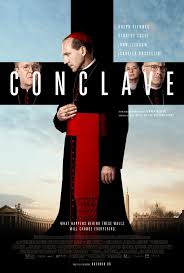
CONCLAVE
UK, 2024, 120 minutes, Colour.
Ralph Fiennes, Stanley Tucci, John Lithgow, Lucian Msamati, Jacek Koman, Brian F.O'Byrne, Isabella Rossellini, Valerio Silva.
Directed by Edward Berger.
Many audiences will be eager to see Conclave because they have read Robert Harris’ exciting novel, the story of the death of the Pope, the gathering the Cardinals, the details required by Vatican regulations, the need for security, the holding of the conclave and the election of a new Pope.
The Catholic audience, especially those with a familiarity with the workings of the Vatican, the nature of the hierarchy, the different perspectives, even of popes during the last half century, a lot to interest, to enjoy, and a provocation especially about stances for going back to consolidate past traditions or an openness to contemporary issues in the wider world and their repercussions for the church.
For non-Catholic audiences, they will enjoy the delineation of characters and their variety, the elaboration of issues, machinations, religious motivations, personal and ecclesiastical challenges. But, it would be by way of observation, the same way non-British audiences may be intrigued by a drama about the intricacies and politics, say, of Britain’s Brexit campaign.
For audiences critical/sceptical about the church, it may seem rather esoteric or politically and ecclesiastically pompous.
But, back to the Catholic perspective. The central character is Cardinal Thomas Lawrence, played in a wonderful performance by Ralph Fiennes, always intense, but, even when not speaking, the audience very conscious of what concerns him, what he is thinking, what is making demands on him. He has wanted to resign as Dean of the Cardinals but the late Pope has refused. Which means that he has to organise the conclave.
So, there we are in the Sistine Chapel, workers in to protect security, the organisation of desks for the Cardinals, the sisters brought in to cook and cater for the conclave, the arrival of the Cardinals, from many different cultures around the world, some pomp and circumstance, some religious earnestness.
To dramatise the different points of view, there is the open-minded Cardinal Bellini, Stanley Tucci, the hoped-for candidate from the “progressive/liberal” attendees. On the other hand, there is the almost crusading, very Italianate Cardinal Tedesco, Pietro Castillitto, with an Italy-first mentality, opposed to contemporary changes, and militantly hostile to refugees making their way to Europe. And there are some complications with an African Cardinal from Nigeria, raising issues of sexuality in the church today, and some realities of sexual abuse. And, on the worldly side, the money-political perspective, there is an American Cardinal played by John Lithgow.
There is an unexpectedly Mexican-born missionary in Congo and in Kabul, who arrives, claiming as having been made a cardinal “in pectore”. Isabella Rossellini plays a very forthright nun who has no hesitation in speaking directly to the Cardinals.
Robert Harris’ novels read very well, compelling, covering a wide range of issues from ancient Rome to 20th century fascist and communist states, to contemporary issues. Which means that he has an interesting story to tell, the filmmakers generally checking to give some kind of authenticity to the storytelling, and an ending which will raise many eyebrows and leave many audiences suddenly shocked and, perhaps, struggling to work out what they think, and some questions for the future church.
- The popularity of Robert Harris’s novel? A papacy story, 21st-century?
- The title, the death of the Pope, the rituals, the gathering the Cardinals, the conclave, the voting, behind-the-scenes? Audience knowledge of conclaves?
- The Catholic atmosphere, Vatican, the Curia, the Cardinals, International, political stances, religious stances, the enclosure, the discussions, the voting, the black smoke, the white smoke?
- The situation of the church, the dead pope, criticisms of his being progressive, his keeping tabs on the Cardinals, his hidden report, keeping Cardinal Lawrence as Dean, his dismissal of Cardinal Tremblay? Lawrence going in to break the seal, finding the document? The ceiling of the room, the removal of the body, the smashing of the ring?
- Fiennes as Cardinal Lawrence, the complete focus of the film on him? The performance, the intensity, communicating the interior questions and doubts? His background, wanting to resign, go to a monastery? His having to organise the conclave? His reliance on O’Malley, Logistics, searching information, interviewing personnel? Mexican priest from Afghanistan? Tremblay and his background? The importance of confidentiality?
- The background of this logistics, the Sistine Chapel, preparation, security, the accommodation, travel by bus, the rooms, the meals together, the sisters in the kitchen? Audiences appreciating such detail?
- The key Cardinals? The Nellie, friendship with Lawrence, progressive, his ideas, his declarations, ambitions or not? To disco, irritating, bombastic, conservative, scheming, his following, his outburst after the bomb blasts, his intolerance, racist perspectives on the African Cardinal? Tremblay, American, the Curia, his manoeuvres, financial benefits for followers, arranging the nun from Africa to discredit the African Cardinal? The Cardinal from Milan, the discussions, his concerns? The range of other Cardinals, International, friendships, groups, smoking…?
- The arrival of the man from Afghanistan, Mexican, his previous mission experience, created a Cardinal, “in pectore”, his arrival, dishevelled, the interview was Lawrence, the discussions about the authenticity, suspicions, acceptance, his background? Presence of the conclave? Lawrence leading the applause from the Cardinals?
- The assemblies, the voting, the rituals, the county the numbers, the variety over the days, the African Cardinal, the incident with the nun in the dining room, his walking out, Lawrence and the discussions with Sister Agnes, with the nun, confession, learning the truth, the confrontation with a Cardinal, his confession, 30 years earlier, a lapse, his hopes to be Pope, the votes for him, his having to withdraw, sitting alone?
- The confrontations with Tremblay, the information from the Monsignor who served the Pope, his drinking, last-minute talking to Laurence? Lawrence conferring with the Nellie? Confronting Tremblay, his immediate 40 reaction? Lawrence going into the patron, finding the document, the public exposure, the humiliation of Tremblay?
- Sister Agnes, her presence, the nuns, forthright, stern, protecting the nun from Africa, standing up to Laurence, sensing the person in the Pope’s room? Her speech, a woman’s voice, the women observing, the strong stand?
- The changes in fortune, the discussions, the Nellie and his challenge to Laurence, their friendship, his later asking for forgiveness?
- The Cardinal from Afghanistan, his visit to Laurence, continually voting for him? Lawrence then voting for himself?
- The tensions in the room, to disco and his behaviour and look? The African Cardinal? Tremblay humiliated?
- The bomb blast, terrorists, Tedesco’s outburst, the speech by the Mexican, his appeal for unity?
- The final vote, the election of the Mexican, his acceptance, the name of Innocent? O’Malley, the information about Switzerland, the Institute? Lawrence talking to the Mexican, the surprise of his situation, the transgender issue? His decision?
- The ending, the future of the church, Pope Innocent, and the revelation? Lawrence looking at the window, the nuns coming out of the building, the end of the film and audiences left to ponder?
