Displaying items by tag: Mark Hammill
Long Walk, The
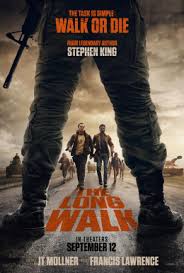
THE LONG WALK
US, 2025, 108 minutes, Colour.
Cooper Hoffman, David Jonsson, Garrett Wareing, Tut Nuyot, Charlie Plummer, Ben Wang, Mark Hamill, Judy Greer, Josh Hamilton.
Directed by Francis Lawrence.
Any long walk is very demanding. And, for the most part, the action in this film is a very long walk, demanding endurance, and demanding endurance from the audience responding and identifying with the characters. In fact, it is a long slog.
The film is an adaptation of Stephen King’s 1979 novel, published under his alternate name, Richard Bachman. And it is set in a kind of alternate United States, reminiscent of Alex Garland’s recent film, Civil War. The US is in decline, financial impoverishment, a strong military presence, evocative of some of the American experiences of 2025.
The film opens with a letter to Raymond Garrity (played by Cooper Hoffman, the son of Philip Seymour Hoffman). He has been chosen by lottery to participate in the long walk. And his mother, Judy Greer, is very upset. But Ray is determined, farewells his mother and joins the other lottery winners at the starting point.
And, then we discover that there are about 50 men, that they will continue to walk, in fact over 300 Miles, and if they go under 3 mph, stray onto the side, fall and don’t get up, they will, and the first death scene is horrifying, they will be shot by soldiers walking with them. There is to be only one survivor – and the reward will be the fulfilment of whatever the winner wishes. And, in charge of the walk, standing like General Patton in his tank, is the gruff, wearing sunglasses, major, rallying the men with macho patriotic urging but merciless when they fail. He is played by Mark Hamill.
This means that we get to know quite a number of the men on the walk, white, black, Native American, Asian descent… We learn their stories, their hopes, their determination, we experience their clashes, some mutual support, and some strong friendships. While Ray has his story and motivation, the strong character on the walk is Pete, a very empathetically by the British actor, David Jonsson.
They walk and walk, some collapsing, many shot, havoc played with their health, with their bodies, bodily functions, physical demands, psychological demands, clashes and crises, determination.
The film has been directed by Francis Lawrence who is best known for his direction of The Hunger Games films.
When films dramatize demands on human suffering, they can be described in the first words of Psalm 129/130, De Profundis, ‘out of the depths’. But, with its grim picture of this alternate universe, there seems to be No Exit, what some pessimistic commentators name, “Enter the Void”.
There is some kind of resolution to this walk, a winner, who expresses his wish – but the film ends and, suddenly, we are confronted by what we have seen, felt, and are left, disturbed, to question what it all could mean.
- The title and focus? The structure of the film, the lottery, assembly, the details of the walk, the military background, endurance, elimination, final survivor?
- The books of Stephen King? This earlier work, originally written when he was 19, published in 1979, Richard Bachman? King and his age, the experience of the Vietnam war, the 1960s and 1970s? The effect on those who served? An American consciousness?
- The situation of the US in this scenario, decline, morale, economic difficulties, leadership, the military? The idea of the walk, the lottery, its being televised, people along the route? The purpose?
- The opening, the letter to Ray, the words on the screen, Ray at home, his age, the later filling in of his background, his father, outspoken, arrested, the fascist atmosphere, his stances, principles and execution? His injunctions to his son? His mother, the bonding between them, her not wanting him to go, the pathos of the farewell, her coming during the walk, his response, giving up or not?
- The gradual revelation of Ray’s motive in going on the walk, the flashback and the visuals of the major, his father’s execution, his wanting vengeance on the Major? And the irony of the Major urging him along during the walk?
- The lottery, the 50 young men, the assembly, seemingly random choices, Ray and his arrival, the encounter with Pete, initial friendship and understanding, the bonding?
- The fact of the major in his Jeep, following, the guards along the way, the morale boosting? Then the rules, never under 3 mph, the time for bending down, not straying off the road? The military, supplying food and water, but also shooting their victims? This atmosphere and audience response?
- The signalling of the miles walked, the various days, ultimately over 300 miles? The stamina, the motivation, food and drink, bodily functions, the strain on the body, on the spirit? And the impact of the deaths on the role?
- The film’s focus on the smaller number of men while showing the bigger group always, and its diminishing?
- The focus on Ray, audience sympathy with him, his age, memories of his father, relationship with his mother? The gradual revelation of his vengeful motivation?
- Pete, his age, experience, family background, the contrast with Ray? African-American? Racial issues? The friendship with Ray, talking, sharing stories, walking together, over the miles, over the hours, the details of their friendship, bonding, revelations to each other? The two of them with the other members walking?
- The portrait of Barkovitch, his age, appearance, slight, his manner, challenging, bitterness, mockery, his victim, the victim falling, being shot? The repercussions for the others in the group, blaming him, the continued walk, his attitudes, not wanting to be blamed, revealing something his background, his attempts at some kind of justification, reconciliation? Ultimately his death?
- The Native American, his appearance, on the march, motivations, with the others, sense of rebellion, the military, surviving for so long, his ultimate reaction, his death and the Native American rituals?
- Stebbins, appearance, stamina, motivations, at a distance from the others, difficulties, eventual talking, his death?
- Harkness, slight, his notebook, wanting to write a book, the reaction of the others, and his death?
- Curley, young, bright, the first victim?
- Arthur Baker, racial background, cheerful attitude, continuing on the walk, the effect on him, death?
- Hank Olsen, small, Asian background, determined, cheeky, injury to his foot, persevering, ultimately dying?
- The days and nights, Ray and his shoes, walking barefoot? Supported by Pete? The major and his interventions?
- The move towards the end, the only two left, Ray and the discussions about his motivation, examining himself, his decision to die and leave the end to Pete?
- Pete, his success, the acclamation by the major, the crowds, to have anything he wanted, his altruistic motivation initially, his memories of Ray’s story, asking for the gun, getting it, shooting the major? Acting on behalf of Ray? And the film ending and the audience left with what would happen to Pete as he moved off?
Life of Chuck, The
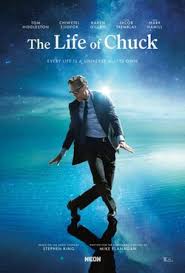
THE LIFE OF CHUCK
US, 2024, 111 minutes, Colour.
Tom Hiddleston, Jacob Tremblay, Benjamin Pajak, Chiwitel Ejiofor, Karen Gillan, Mia Sara, Carl Lumbley, Mark Hamill, David Dastmalchian, Q’Orianker Kilcher, Matthew Lillard, Taylor Franck.
Directed by Mike Flanagan.
Chuck is a very popular name, especially in the US, amiable, ordinary, your next door neighbour… So, we can expect that the life of Chuck would be nice, amiable. And, in many ways it is. But, in the eyes of America’s most prolific writer, Stephen King, always considered a master of horror stories, it could be anybody, or Anybody. Which means that Chuck is being set up as an Everyman Figure. Chuck, or a variation on him could be any of us, men or women.
Stephen King published this short story in 2020 – the initial year of the pandemic.
Writer-director, Mike Flanagan (who directed film versions of King’s Gerald’s Game, Doctor Sleep, and the fascinating Catholic-themed miniseries, Midnight Mass) has adapted the story in ways audiences who have not read the story, would be surprised. (For any audiences who intend to see Life of Chuck and knows nothing about it, best to stop here and read reviews after your own experience.)
In fact, the film tells its story in reverse, three acts. Act three starts ordinarily enough, at school, a sympathetic teacher played by Chiwitel Ejiofor. But, very soon we move into a kind of apocalyptic, end of the world scenario, news of disasters like California North lapsing into the sea, but highlighted in a suburban kind of way by the loss of Wi-Fi, interruptions to television programs, the electricity going out, sinkholes in the streets, cars abandoned, forlorn people walking home alone. All this is really alarming, but quietly communicated, especially by conversations of hapless people facing a diminishing future.
However, suddenly lit up in all the windows of houses and buildings, images of Chuck, messages of thanks for his 39 years. So, where is Stephen King going from here?
Act two steps back in time, and we meet Chuck, quiet-mannered, well dressed in his suit, an accountant at a conference, and played by Tom Hiddleston (whom many remember as Loki). In fact, this is a brief sequence in the narrative that makes an extraordinary impact: dancing in the street. A young drummer sets up her instruments in the town square, Chuck walks along, stops, looks, listens to the beat and one of the most joyous intense sequences on film follows. And Chuck is joined by a disappointed young woman whose boyfriend has suddenly cut her off. A growing crowd shares this increasing joy.
Many directors have used the theme of the Dance of Life – and this is a wonderful example.
The theme of the end of the world is put on the back burner as we go back to Chuck’s childhood, accidental death of his parents and unborn sister, cared for by his grandparents, a charmingly dancing Mia Sara, a wonderful portrait of a crabby old man, a monologue which will be valued by anybody devoted to mathematics, and played by Luke Skywalker, Mark Hamill, almost 50 years since Star Wars.
The young Chuck, a wonderful experience with the lively performance by Benjamin Pajak, grieves, listens to his grandfather, shares some mysterious ghostly experiences, but, it is revealed, at school is where he learned to dance – and a kind of prom night dance sequence which again is exhilarating.
So, who is Chuck? Could be any of us. And while he is a white American male, there is a wide range of multi--ethnic characters for multicultural experiences including the African-American drummer. And, what is Chuck’s life telling us – a quotation from Walt Whitman’s Song Of Myself he heard at school, “I contain multitudes”. So, for Every Man and Every Woman, there can be an extraordinary vitality of life. And, a realisation that life comes to an end, as the world will come to an end (in a realism aspect of this tale telling or in Chuck’s inner consciousness?).
Generally audiences have appreciated The Life of Chuck, a number of critics dismissing its sentiment and what they see as superficial observations. But, most will find the opening sequence arresting, arousing curiosity, and, as the film goes on, especially with the exuberance and dances of life, the possibilities for deeper life reflections.
- The title, expectations, Chuck as an ordinary name? Anybody? Leading to an Everyman character?
- The perspectives of Stephen King, his career, human nature, end of the world? The quote from Walt Whitman, I contain multitudes?
- The structure of the film, in reverse? The impact of the end of the world, humans facing the end of the world, the signs of thanks for Chuck? His death?
- The atmosphere of Act three, the introduction to Marty, his work at the school, students, the news of disasters, California, around the world, his talking with the parents, urging the children to school? Loss of Wi-Fi? Reading and writing? Marty at home, watching the television, communication with Felicia, their marriage, her work at the hospital, the doctor and the suicides, people deciding to go home to be with family? The long conversation with Gus and his aspirations? The conversation with Sam, reminiscing, his being revealed as working with Chuck and Albie? The many people walking home, alone, dropping their bags? The sinkhole, Marty in the car, cars parked? The contact with Felicia, wanting to be together, their love, the end of the world?
- The signs in the window, images of Chuck, messages of thanks, 39 years? The glimpse of him, his wife and son, his death?
- Act two, the explanation of Chuck, accountant, well-dressed, at the accountants’ meeting, walking along the street, Taylor, with her manager, the drums and her busking, looking at Chuck, his looking at her, the beat, the beginning of the dance, the extensive and varied choreography, the exhilaration for Chuck, the story of Janice, walking along the road, bitter, her boyfriend cutting off, invited to dance, her exuberant response, Taylor and her excitement, the crowds gathering, sharing the joy and rhythms, the money, it is one giving the gift to Janice and to Chuck, then not continuing, the dance of life?
- Act one, Chuck and his story, the accident on the ice, death of his parents, the unborn sister? Living with his grandparents? The grief? His grandmother, coming alive, the dancing, urging Chuck to dance? Albie, grief, the accountant, drinking, the locked room upstairs and his attack on Chuck? Apology? The long discourse about mathematics and its explaining everything, rationally and accurately? Urging Chuck ac to be an accountant?
- Chuck at school, short, some bullies, the encounter with Cal, the poetry teacher, the students not interested, the quotation from Walt Whitman, his song, I contain multitudes? Its meaning? The teacher’s response? The dance teacher, the lineup, her urging, the music, the range of songs and dances, illustrated (and the clip from Gene Kelly and Rita Hayworth in Cover Girl)? Chuck and his dancing skills, with Cal? Dressing up for the school evening, the teachers present, Marty and Felicia, Chuck and his reluctance, his sore leg, the teacher challenging him, going outside, his return, and the exhilaration of the dancing, the jealous boy? And the story of the scar on his hand, blaming the boy, actually jaggling it on the wire?
- Albie, going to the cupola, the ghosts and deaths, his heart attack? The funeral? The Jewish background?
- The older Chuck, discussions with Sam, his prospects, and going to the cupola, unlocking it, the contemplation? The end?
- Audience popularity, critics attacking the film, sentiment, superficial philosophising? Audiences caught up in the story, the personalities, reflections?
King of Kings, The/ 2025
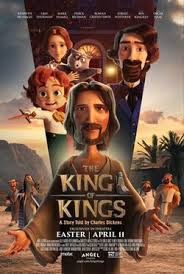
THE KING OF KINGS
South Korea/US, 2025, 100 minutes, Colour.
Voices of: Kenneth Branagh, Oscar Isaac, Uma Thurman, Pierce Brosnan, Mark Hamill, Forest Whitaker, Ben Kingsley, Jim Cummings, Roman Griffin Davis.
Directed by Seong-ho Jang.
Yes, the Gospel story. However, this film is an animation-dramatisation of a story by Charles Dickens, a story he wrote in the 1840s for his family, recited every Christmas by the author and read aloud in succeeding family generations, Dickens forbidding publication. However, in 1934, the family made it available over 60 years after the death of the author.
At the beginning of his story, Dickens wrote: My Dear Children, I am very anxious that you should know something about the History of Jesus Christ. For everybody ought to know about Him. No one ever lived who was so good, so kind, so gentle, and so sorry for all people who did wrong, or were in any way ill or miserable, as He was.
This film was made by a South Korean animator, Seong-go Jang, in Korean studios but uses the voices of some very talented English speakers, British and American.
Dickens told the story to his family and in this film he tells it to his younger son, Walter, quite a spirited boy, absorbed by stories of King Arthur, swords and dragons. And he disrupts his father’s presentation on stage of Scrooge and A Christmas Carol. s Dickens’ sympathetic wife urges him to tell the Gospel story, the young boy becoming more and more interested, initially wanting kings and dragons, but drawn into the story and following the person of Jesus. And, all the while, accompanied by his mischievous cat.
Which means that this is definitely a film for the younger audiences, but could be a pleasure for the whole family.
The animation style is vivid, the characters, the backgrounds, sometimes gently quiet with Jesus healing, with the apostles, at other times very vivid, especially Jesus walking on the water in the overwhelming storm. A great deal of the time is given to the Last Supper, the agony in the garden, Judas betrayal, uses trial and Caiaphas and Pilate, the crucifixion. Audiences who enjoy animation stories like this style and treatment.
But, a key element of the screenplay is having the young boy enter into all the action, observing close-up, being with Jesus, listening, watching, admiring, dismayed… And, at times, Dickens himself comes with his son into the action, close-up, and all the while with Kenneth Branagh’s narration as Dickens. The device of having Walter within the Gospel story is a great means for younger audiences also entering in, identifying, learning about Jesus and his story with a devout theme-highlighting commentary by Dickens.
St Ignatius Loyola founder of the Jesuits, would probably endorse this film. In his Spiritual Exercises, he urges those making retreats, or at any time with gospel contemplations, to enter into the scene, to be there, to experience the Gospels. And, a great challenge to those on retreat is to ask them where they are in the scene, at a distance observing, or very close to Jesus. This film dramatises what this closeness could be like.
The voice cast is very strong, not only Kenneth Branagh, but Uma Thurman as his wife, Mark Hamill is an extraordinarily rambunctious and King Herod pantomime-like , Ben Kingsley is a thundering villainous high priest, Caiaphas, Pierce Brosnan is a disdainful Pontius Pilate – and Oscar Isaac is Jesus.
In 2000, the animated film, The Miracle Maker, with Ralph Fiennes as the voice of Jesus, was very successful in portraying the Gospel stories. Now, The King of Kings is a very welcome addition.
- How successful as a Gospel film? This, the range of the Gospel episodes?
- Charles Dickens’ story, for his family, here for his son, the urging of his wife?
- The style of animation, from South Korea, the quality of the voice cast?
- The opening, A Christmas Carol, the story of Scrooge, Dickens in the theatre, interrupted by his son, Walter, King Arthur, dragons and sword, stubborn in reacting to his father, the cat, all the disruption, the pages scattered and torn? The audience watching, Walter and the cat? Dickens and his response?
- Dickens, his patient wife, urging Dickens to tell the story of the Gospels? Dickens own appreciation of the Gospel story, his admiration for Jesus, the tone of his narrative in telling the story?
- The visuals, journey to Bethlehem, the appearance of the angels, shepherds and magi, Herod and his overreaction, the indications of persecution of the innocent children, the flight into Egypt, Jesus growing up, the return to Galilee, the finding in the temple, Jesus emerging as an adult.
- The device of having Walter go into the action, with his cat, gradually understanding, becoming involved, emotions, observing and then becoming very close to Jesus?
- The familiar gospel sequences of Jesus’ public life, the elaborate temptations in the desert, the choosing of the apostles, Peter and the fishing, the healing of the crippled man, the casting out of the Demon, Jesus’ encounters, Mary and the request about Lazarus, the raising of Lazarus, the anointing of Jesus, the complaints of Judas, the entry into Jerusalem, building up the picture of Jesus? Especially the dramatisation of Jesus walking on the water, Peter and his walking, drowning, appeal to Jesus?
- The Last Supper, Agony in the Garden, Judas and his deal with kindness, the reaction of the scribes and Pharisees, planning to kill Jesus, this, the emphasis on healing the servant’s ear with Peter and the sword, the trial and Caiaphas thundering, rousing the crowd, the choice between Barabbas and Jesus, Pontius Pilate washing his hands, scourging, crowning with thorns, the way to Calvary, the crucifixion, the thieves and the good thief, Jesus’ death? The importance of the resurrection?
- Dickens entering into the scenes with his son? The effect of the story on Walter, sharing it with the other children?
- The telling of the Gospel stories with an appeal to the children’s audience and to families?
Wild Robot, The
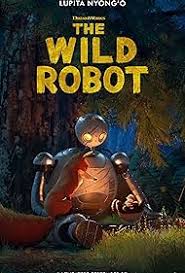
THE WILD ROBOT
US, 2024, 101 minutes, Colour.
Voices of: Lupita Nyong’o, Pedro Pascal, Kit Connor, Bill Nighy, Stephanie Hsu, Matt Berry, Ving Rhames, Mark Hamill, Catherine O'Hara.
Directed by Chris Sanders.
Fans of Peter Brown’s 2016 illustrated novel, The Wild Robot, will be delighted to see this film version. In fact, delight has been the response of audiences – and also of many critics.
We are definitely in the 21st-century with an animated family film focusing on a robot – although, Peter Brown in his detailed blog on the Internet about his writing his book over a period of eight years, has many interesting observations about origins of writing about robots as far back as the 1920s. But, to have a children’s film focusing on a robot, very much of our times. (And these years there are many films for adults with dramatic stories about androids and humans being served and protected by them as well as stories of betrayals.)
In trying to describe the perspectives of The Wild Robot, it could be said on the one hand that the picture of nature, animals in the forests, their personalities, is in the Disney tradition, especially of Bambi. And, on the other hand, the picture of robots, technology, artificial intelligence, is very much a contemporary perspective.
And, a robot in the wild, a robot whose name comes from her code initials, abbreviated to Roz, and the machine a female voice by Lupita Nyong’o. A shipwreck, Roz stranded, re-booted, the strong sense of mission (and her repeating her promotion instructions aloud). Needless to say, the wide range of animals, all enjoyably portrayed, do not respond well, fearful.
But, that is just the beginning. Two engaging characters emerge, a little Gosling bereft of family who gets the nickname Brightbird (Kit Connor) and an engaging fox, Fink (Pedro Pascal enjoying himself) whom nobody likes but who becomes a great favourite with the audience.
In fact, there is plenty of plot, Roz teaching the Gosling how to lie while looked down on by the rest of the geese; the bird migration led by the wise Longneck (Bill Nigh); some misunderstandings, some reconciliations, and Roz finally affirmed by the animals as she is able to help them in a very cold hibernation.
And, there is more with the robots, contact with the company, some ruthless executives, wanting to control Roz. While robots have no emotions, Roz learns more and more from her animal friends, standing up for herself and for them.
The film has been written and directed by Chris Sanders, best known for The Crudes series and, especially, charming action story, How to Train Your Dragon. Here he has been able to appeal to younger audiences with a great deal to interest and entertain an adult audience.
- Family-friendly animation, style, story, characters? Musical score?
- 21st-century, robots, artificial intelligence, techno developments? And memories of past animation, animals, the forests? The combination?
- The situation, the future, robots, the storm, the destruction, Roz stranded, programmed, promoting her services? The female voice? The encounter with the bear, the crushing of the geese, the survival of the Gosling, befriending it, training it, calling it Brightbill? The Fox, Fink, on the outer, yet bonding, helping with Brightbill? The possum, guides of how to mother they Gosling? But fear from the other geese?
- The range of animals in the forest, memories of Disney animals and Bambi? The fear of Roz? The importance of Brockville learning to fly, to swim, the training, eventual success?
- Brightbill, personality, growing, succeeding, information about Roz and the loss of his family? Hostility? The preparation for the migration, the role of Longneck? Brightbill and his agitation? The geese flying, the storm, taking refuge in the robot headquarters, the clashes and persecution, Brightbill not afraid, leading them to safety? Longneck sacrificing himself?
- The hibernation, the animals going into hibernation, Roz helping, their bonding with Roz? The squabbling, fights, traditions, Fink and his mediating? The episode with the bear?
- Roz, trying to reactivate, the links with the headquarters, the response at headquarters, the head, sending robots, locating Roz, the attack on the animals, the fight back, the fire?
- The geese returning, Brightbill, reconciliation with Roz?
- Roz, agreeing to leave, going back to the headquarters, working in the greenhouse, Brightbill and his visit, but her still having her emotional responses?
- The family friendly story about technology, operation by exploiters, but possibilities for harmony and peace?
