Displaying items by tag: Jacob Tremblay
Sovereign
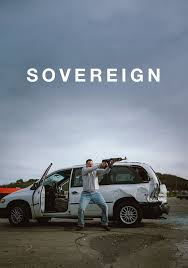
SOVEREIGN
US, 2025, 100 minutes, Colour.
Nick Offerman, Jacob Tremblay, Dennis Quaid, Megan Mullaly.
Directed by Christian Schwegel.
A sovereign is a ruling monarch. But, in more recent times, the word sovereign is associated with citizens, and especially with citizens who have no truck with monarchs or with government. They presume on their dignity as human beings and their human autonomy, seeing impositions from authority and the law as something to take a stand against, to fight against.
For Australian audiences, this has been very much an American phenomenon, traces in Australia. However, with events in Victoria in 2025, the stance of a sovereign citizen and his proclamations, some extreme religious convictions, the shooting of two police officers, and his disappearing into mountain country, but its headlines that ensured that everybody became aware of the claims of sovereign citizens.
This topical film opens with Dennis Quaid as a policeman sitting in a car, hearing of the deaths by shooting of two police officers. The scenario then goes into a long parallel story, eventually meeting up again with the officer sitting in his car.
The portrait of the sovereign citizen, Jeff Kane, is effectively portrayed by character actor, Nick Offerman. He is an educated man, knowledge of the law, interpretation of the law from the vantage point of the philosophy of the sovereign citizen, travelling around the American states, holding meetings, often in dingy locations, giving lectures, ordinary citizens with grudges against authority sitting in and feeling supported by him.
And, for this drama, the significant issue is that of his son, Joe, in his mid-to-late 20s, his mother dead, his living at home, home-schooled by his father, absorbing his father’s philosophy of life, and at this stage, invited by his father to travel with him, listening, helping him with the set up for the lectures, hero-worshipping his father and absorbing his philosophy and action. He is played by the Canadian actor, Jacob Tremblay, who made such an impact 10 years earlier in Room and has been seen in such films as Wonder, Toxic Avenger, Life of Chuck.
There are several incidents throughout the film to dramatise the stances taken by sovereign citizens, especially as regards the police, producing documents, roadside searches… But, in the case of the father and son, banks and the foreclosure taking their house. And Jerry Kane has all kinds of vocabulary, legal arguments, a different range of ideas and words to confront the authorities. And, a religious man, very much Christian fundamentalist, he has the higher power justification for his stances.
While this is a convincing portrait of an articulate sovereign citizen, it is also an alarming portrait of the son, the influence, the absorption of the philosophy, and, an enormous shock at the violent consequences of this kind of indoctrination.
Which brings us back to the police officer sitting in the car, his back story, his son, the impact of the violence – the screenplay finally leaving aside the sovereign citizens and concentrating on ordinary citizens in order to jolt audience emotions as well as the challenge to understand this seemingly lawless way of life that uses so much religious and individualistic stances to justify it.
Well-made, well-acted, completed before the US 2024 election – and, becoming even more relevant in 2025 with the MAGA Movement which is not explicitly referred to.
- The focus of the title? Sovereign citizens? The increasing stances in the United States, around the world, the role of the individual, the law, government, individuality? The film showing dire violent consequences of the confrontation between sovereign citizens and law and government?
- The middle American setting, homes and foreclosures, on the roads, the halls for the rallies, casinos, Walmart shops, the contrast between the world of the citizens, many poor and in need, and the world of the police enforcement? The musical score?
- The opening, Joe in his car, the news of deaths? The film offering the background, the return to Joe, veteran police, relationship with his wife, his son Adam and his wife, the birth of the child, supporting his son, Adam and the other police, punching the Kanes, the shooting and deaths? Joe returning to the scene with his wife, grief?
- The portrait of Jerry and Joe Kane, father and son, the dead mother, finances, the bank and the house and foreclosure? Jerry taking this to heart? Confrontations with bank authorities? The influence on Joe, homeschooled, his age, his interest in taking the exam for school, his father forbidding it?
- Jerry, his beliefs, the explanations, the role of the law, the role of government, individual rights, various scenes explaining his rights, to drive, documentation…? The scenes of the various rallies, the range of people attending, his speeches, the enthusiasm, the encounter with Leslie, her presence, going to the casino?
- Joe, a company’s father, hearing his father speeches, helping with the setup, absorbing the attitudes?
- On the Road, his father’s determination, explanations of his stances, the confrontation with the police, the roadside set up, the interrogation, Jerry and his rights? Joe, his reaction to the police, getting the gun, shooting the police? The fleeing?
- The consequences of the shooting, going to the shop, getting guns, clothes, the escape?
- The final confrontation with the police, sovereign stances, the shootout, deaths?
- The growing assertion of sovereign citizens around the world, motivations, philosophy, religion, self-righteous, growing ruthlessness? (And the influence from the United States, the various groups, Donald Trump and the MAGA movement?)
Toxic Avenger, The/ 2023
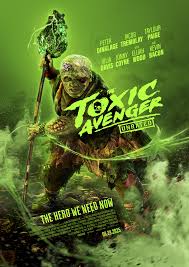
THE TOXIC AVENGER
US, 2023, 100 minutes, Colour.
Peter Dinklage, Jacob Tremblay, Taylour Paige, Kevin Bacon, Elijah Wood, Julia Davis, Louise Guerriorio, David Yow, Annette Badland, Macon Blair, Lloyd Kaufmann.
Directed by Macon Blair.
The Toxic Avenger was the title of a horror film of 1984, produced by the small-budget Troma Studios, specialising in horror films under the leadership of its director, Lloyd Kaufmann. Kaufmann made several sequels to the original. Almost 40 years later, he wanted to make a new version of The Toxic Avenger, thought himself too old to direct this version, has a small role in the hospital sequence, but handed on direction to writer-actor, Macon Blair (who also appears as Dennis).
This film had a larger budget, was produced by 2023 but failed to get a distributor. However, it was released in 2025, some enthusiasm for the distributors, but many negative comments from the bloggers.
This is a film which has its cake and eats it at the same time! It capitalises on the horror traditions, especially those of the small budget special effects – many exceedingly gory, of course, but an emphasis more on splatter and blood instead of grim dark horror. And it has something of a distinguished cast.
In the original, the toxic avenger was a nerdish young man. This time the central character is played by Peter Dinklage, working in a large factory, sinister in its experiments and Big Pharma, a cleaner, stepfather to a teenager, Jacob Tremblay.
On the one hand, the through line of the plot has an emphasis on family, relationships, the death of a mother, the son and his relationship to his stepfather, the boy at school, trying to dance but ridiculed, the father with a terminal diagnosis, the consequences of the stepfather’s transformation, and the role of the boy. This story pervades the film.
And there is also the through plot of the critique of corrupt corporations, Mafia and gangster connections, inept CEOs and their vanities, the sinister accomplices, the henchmen team of would-be rock stars who are commissioned to kill all opponents. Which means that the film is a critique of corrupt businesses, the consequences for public life and health.
The nerd of the original film is now a journalist but is killed off at the beginning, bequeathing his mission of exposure and condemnation to another journalist, played effectively and generally seriously by Taylour Paige. She is under threat and pursued throughout the whole film, eventually working with the Toxic Avenger and to save his son.
When the janitor invades a big dinner and confronts the CEO, played, with self-important nonchalance, by Kevin Bacon with Julia Davis as his loyal assistant, he asks for some money to cover his doctor’s bills after the terminal prognostic and the refusal of the company to pay his insurance. Pursued, he is involved in mishaps from the factory and overwhelmed by toxic sludge, emerging disfigured (and an actress performing the action of the janitor while Peter Dinklage speaks the lines). And he has a toxic atomic mop. A determined man with a mission.
The film is very much a horror-allegory about corruption in society and the need to rise against it. It certainly plays parody at times, overall satire – but, often in the spirit of spontaneous skit.
Clearly, from the title and the posters, only the horror aficionados at will be wanting to see this film – some satisfied, many dissatisfied. However, film buffs, seeing the list of the cast, may be curious to see how they handle this kind of horror satire.
Life of Chuck, The
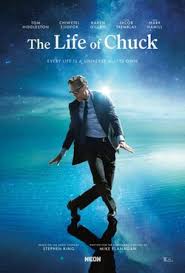
THE LIFE OF CHUCK
US, 2024, 111 minutes, Colour.
Tom Hiddleston, Jacob Tremblay, Benjamin Pajak, Chiwitel Ejiofor, Karen Gillan, Mia Sara, Carl Lumbley, Mark Hamill, David Dastmalchian, Q’Orianker Kilcher, Matthew Lillard, Taylor Franck.
Directed by Mike Flanagan.
Chuck is a very popular name, especially in the US, amiable, ordinary, your next door neighbour… So, we can expect that the life of Chuck would be nice, amiable. And, in many ways it is. But, in the eyes of America’s most prolific writer, Stephen King, always considered a master of horror stories, it could be anybody, or Anybody. Which means that Chuck is being set up as an Everyman Figure. Chuck, or a variation on him could be any of us, men or women.
Stephen King published this short story in 2020 – the initial year of the pandemic.
Writer-director, Mike Flanagan (who directed film versions of King’s Gerald’s Game, Doctor Sleep, and the fascinating Catholic-themed miniseries, Midnight Mass) has adapted the story in ways audiences who have not read the story, would be surprised. (For any audiences who intend to see Life of Chuck and knows nothing about it, best to stop here and read reviews after your own experience.)
In fact, the film tells its story in reverse, three acts. Act three starts ordinarily enough, at school, a sympathetic teacher played by Chiwitel Ejiofor. But, very soon we move into a kind of apocalyptic, end of the world scenario, news of disasters like California North lapsing into the sea, but highlighted in a suburban kind of way by the loss of Wi-Fi, interruptions to television programs, the electricity going out, sinkholes in the streets, cars abandoned, forlorn people walking home alone. All this is really alarming, but quietly communicated, especially by conversations of hapless people facing a diminishing future.
However, suddenly lit up in all the windows of houses and buildings, images of Chuck, messages of thanks for his 39 years. So, where is Stephen King going from here?
Act two steps back in time, and we meet Chuck, quiet-mannered, well dressed in his suit, an accountant at a conference, and played by Tom Hiddleston (whom many remember as Loki). In fact, this is a brief sequence in the narrative that makes an extraordinary impact: dancing in the street. A young drummer sets up her instruments in the town square, Chuck walks along, stops, looks, listens to the beat and one of the most joyous intense sequences on film follows. And Chuck is joined by a disappointed young woman whose boyfriend has suddenly cut her off. A growing crowd shares this increasing joy.
Many directors have used the theme of the Dance of Life – and this is a wonderful example.
The theme of the end of the world is put on the back burner as we go back to Chuck’s childhood, accidental death of his parents and unborn sister, cared for by his grandparents, a charmingly dancing Mia Sara, a wonderful portrait of a crabby old man, a monologue which will be valued by anybody devoted to mathematics, and played by Luke Skywalker, Mark Hamill, almost 50 years since Star Wars.
The young Chuck, a wonderful experience with the lively performance by Benjamin Pajak, grieves, listens to his grandfather, shares some mysterious ghostly experiences, but, it is revealed, at school is where he learned to dance – and a kind of prom night dance sequence which again is exhilarating.
So, who is Chuck? Could be any of us. And while he is a white American male, there is a wide range of multi--ethnic characters for multicultural experiences including the African-American drummer. And, what is Chuck’s life telling us – a quotation from Walt Whitman’s Song Of Myself he heard at school, “I contain multitudes”. So, for Every Man and Every Woman, there can be an extraordinary vitality of life. And, a realisation that life comes to an end, as the world will come to an end (in a realism aspect of this tale telling or in Chuck’s inner consciousness?).
Generally audiences have appreciated The Life of Chuck, a number of critics dismissing its sentiment and what they see as superficial observations. But, most will find the opening sequence arresting, arousing curiosity, and, as the film goes on, especially with the exuberance and dances of life, the possibilities for deeper life reflections.
- The title, expectations, Chuck as an ordinary name? Anybody? Leading to an Everyman character?
- The perspectives of Stephen King, his career, human nature, end of the world? The quote from Walt Whitman, I contain multitudes?
- The structure of the film, in reverse? The impact of the end of the world, humans facing the end of the world, the signs of thanks for Chuck? His death?
- The atmosphere of Act three, the introduction to Marty, his work at the school, students, the news of disasters, California, around the world, his talking with the parents, urging the children to school? Loss of Wi-Fi? Reading and writing? Marty at home, watching the television, communication with Felicia, their marriage, her work at the hospital, the doctor and the suicides, people deciding to go home to be with family? The long conversation with Gus and his aspirations? The conversation with Sam, reminiscing, his being revealed as working with Chuck and Albie? The many people walking home, alone, dropping their bags? The sinkhole, Marty in the car, cars parked? The contact with Felicia, wanting to be together, their love, the end of the world?
- The signs in the window, images of Chuck, messages of thanks, 39 years? The glimpse of him, his wife and son, his death?
- Act two, the explanation of Chuck, accountant, well-dressed, at the accountants’ meeting, walking along the street, Taylor, with her manager, the drums and her busking, looking at Chuck, his looking at her, the beat, the beginning of the dance, the extensive and varied choreography, the exhilaration for Chuck, the story of Janice, walking along the road, bitter, her boyfriend cutting off, invited to dance, her exuberant response, Taylor and her excitement, the crowds gathering, sharing the joy and rhythms, the money, it is one giving the gift to Janice and to Chuck, then not continuing, the dance of life?
- Act one, Chuck and his story, the accident on the ice, death of his parents, the unborn sister? Living with his grandparents? The grief? His grandmother, coming alive, the dancing, urging Chuck to dance? Albie, grief, the accountant, drinking, the locked room upstairs and his attack on Chuck? Apology? The long discourse about mathematics and its explaining everything, rationally and accurately? Urging Chuck ac to be an accountant?
- Chuck at school, short, some bullies, the encounter with Cal, the poetry teacher, the students not interested, the quotation from Walt Whitman, his song, I contain multitudes? Its meaning? The teacher’s response? The dance teacher, the lineup, her urging, the music, the range of songs and dances, illustrated (and the clip from Gene Kelly and Rita Hayworth in Cover Girl)? Chuck and his dancing skills, with Cal? Dressing up for the school evening, the teachers present, Marty and Felicia, Chuck and his reluctance, his sore leg, the teacher challenging him, going outside, his return, and the exhilaration of the dancing, the jealous boy? And the story of the scar on his hand, blaming the boy, actually jaggling it on the wire?
- Albie, going to the cupola, the ghosts and deaths, his heart attack? The funeral? The Jewish background?
- The older Chuck, discussions with Sam, his prospects, and going to the cupola, unlocking it, the contemplation? The end?
- Audience popularity, critics attacking the film, sentiment, superficial philosophising? Audiences caught up in the story, the personalities, reflections?
Cold Copy

COLD COPY
US, 2023, 91 minutes, Colour.
Bel Powley, Tracee Ellis Ross, Jacob Tremblay, Nesta Cooper, Ekaterina Baker, James Tupper.
Directed by Roxine Helberg.
There are indications of journalistic ruthlessness in this title. And, reminders of that archetypal story about a star, career, decline and fall at the hands of an ambitious next-generation, All about Eve.
British actress, bel Powley, plays Mia Scott, a young journalism student who has had no other ambition than journalistic success since the death of her mother when she was eight. She goes to classes, study is the lecturer, harshly demanding successful journalist, Diane Higa, played to the arrogant hilt by Tracee Ellis Ross. Mia rehearses for an interview, is treated harshly, is resentful, declares that she is only after the truth but is seen to be betraying her friends, chosen by Diane who seems to see something of herself and the young Mia, and is usually demanding on.
By chance, Mia encounters a teenager, played by Jacob Tremblay (Room, Wonder) who has a sad story, a busy father, a mother dead by suicide, himself an artist, erratic in his behaviour. He then becomes the focus of Mia’s video project.
Mia is in no way sympathetic, any moments of sympathy are always for her own ends. And I and sees something of herself in the past in Mia.
There are ultimate betrayal is, Diane taking over me is peace. Mia getting revenge on Diane and humiliating her in public – the film ending with Diane’s knowing look at what Mia has done and Mia looking complacently. But, the audience knows, that in some years a new Mia will do the same to her.
- The title? Journalism? Commitment? Old and relentless?
- The background of American journalism, education of journalists, television programming and meetings, printed video, radio?
- The story of Mia Scott, her age, in college, ambitions, classes, him, her roommate, pollution for presentations, interviews, her rehearsing, attitudes towards Diane eager, the friend asking to present material, and not presenting it, the interview, the tough stances, Diane even tougher, hard, harsh, humiliating? Her throwing her presentation away?
- Diane, age and experience, seeing her in action, on screen, with executives and staff, her lectures, the demands? Later the background of the wine gift, her ex-husband, signing the house away, personal life and attitudes?
- Mia, number 20 on the list, accepted, Kim and her excitement, her contact at the politician’s office, information? Mia later using this, the anonymous phone call, the contact being sacked, sabotaging Kim’s career? And her later vengeance on Diane, taping her, giving the material to Kim, its being broadcast, the consequences for Diane, Mia watching her being interviewed and attacked by journalists?
- Mia, the meetings with Diane, Diane seeing something of herself in Mia, demanding, continually questioning expressions, getting near to say what she meant, her project, the critiques, further demands, Mia finally editing, Diane taking her in as an assistant, menial with the coffee, it also present – and the disillusionment that Diane presented her investigation has her own? Mia is violent response?
- Kim setting me up with the man, their walk, his approach, is violent matching reaction, Igor and coming to her rescue, first impressions, his age, his house, luxury, the absent father was business, the dead mother, the discovery of her reputation as a writer, a suicide?
- Igor, as a character, the effect of the suicide, the demands of his father, going to school spasmodically, taking Mia to the factory, the flour, his art?
- Mia taking him on this project, the news story, his wanting the story about himself, not about his mother, the family and their not revealing anything about the mother to the media? Mia and the interviews, filming him, even filming him attacked by the bullies? At home with him, his father’s arrival in ousting her? Her taking the key, going to the apartment, finding his mother’s final letter to him, “perfect boy”?
- , Editing it, her commentary? As a piece for television? Her excitement at its being presented, Diane taking it has her own?
- Memories of story like All about Eve, the ruthless star, career, memories of the past, fostering the up-and-coming potential star, then being undermined and betrayed? And the audience realising, while Mia doesn’t, that this same betrayal what happened to her in years to come?
