Displaying items by tag: Oscar Isaac
Frankenstein/ 2025
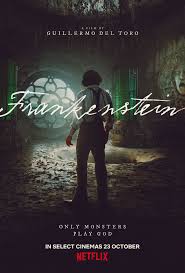
FRANKENSTEIN
US, 2025, 150 minutes, Colour.
Oscar Isaac, Jacob Elordi, Christophe Waltz, Mia Goth, Felix Kammerer, Charles Dance, David Bradley, Lars Mikkelson, Christian Convery, Burn Gorman, Ralph Ineson.
Directed by Gullermo del Toro.
Mexican director, Guillermo del Toro, has had a long fascination with imagination and fantasy, the celebrated Pan’s Labyrinth, and popular action with Blade, Hellboy, Pinocchio. So, what will he choose to do with Frankenstein?
This is very much an all stops out interpretation of Mary Shelley’s classic novel, its narrative, its characters, its explorations of themes of life and death, human arrogance, playing God, playing the devil. Since Boris Karloff played the creature in the 1930s, there have been very many Frankenstein films, and Hammer Studios thrillers, Kenneth Branagh’s 1994 spectacle…
Here is an epic treatment, the Gothic traditions, running for 2 ½ hours.
The familiar elements are all here, the opening in the Arctic with Frankenstein and the monster stranded, the rescue, Victor Frankenstein narrating his story wanting some kind of healing and forgiveness, the background of the Frankenstein family, demanding father, Victor and his scientific interest, experiments with reviving some kind of life, his laboratory, hunting the dead bodies, the creation of the creature, the lightning, the aftermath, the wandering creature and the confrontation with its maker. And all presented with heightened atmosphere.
In all the treatments, the question is how sympathetic Victor Frankenstein should be. Oscar Isaac here is not sympathetic at all – oppressed by his demanding father (Charles Dance), relying for help on his younger brother, William (Felix Kamerer all) and the link with Elizabeth (Mia Goth) and her tender affection for the Creature. There is an interesting new character, the wealthy man, Harlander, Elizabeth’s uncle, who wants to bankroll Frankenstein and his experiments with some sinister intentions, played with his usual relish by Christophe Waltz.
But, significant in this film is that the Creature, not called monster, though made up of many body parts, neatly put together, is, for the most part, the most sympathetic character. And Jacob Elordi plays him with a great deal of pathos, but with dignity, gradually coming to consciousness, words, ideas, out in the countryside learning compassion, to read, but also discover the truth about his origins and that he was doomed not to die.
This is a film which gives great attention to atmosphere, sets and decor, costumes, atmospheric score, enabling audiences to appreciate why the Frankenstein story has continued to be entertaining but much more, a questioning of human power, human arrogance, and the need for forgiveness.
- Lasting popularity of the story, Mary Shelley’s novel and treatment, issues of life, creativity, death, playing God, playing the devil? The many versions, from the 1930s, Hammer Studios, Kenneth Branagh, 1994, the cinema tradition?
- The lavish treatment, sets and decor, costumes, atmosphere? Atmospheric score? The Arctic sequences in the snow and ice, the University sequences, the laboratories, the castles, 19th-century society? The countryside sequences, bleak, wolves, winter?
- The opening in the Arctic, the presence of Frankenstein and the Creature, the ship, the expedition, the Capt, the crew, the confrontation with the Creature, saving Frankenstein, the threats from the Creature, Frankenstein telling his story, his confession, his fate?
- The introduction to the Creature, initial horror, strength, menace, threat to Frankenstein, the interaction with the sailors, violence, deaths?
- Frankenstein telling his story, his background, the sequences with his father, his father’s demands on the cruelty? Treatment of his wife? The birth of his brother? The two brothers grow growing up? The father, the doctor, unable to save his wife, his demands on Victor, testing him as regards medicine, science? His death?
- Victor, relationship with his brother, growing up, his brother’s life, Elizabeth, her relationship with William? Her visits? Her family background? Expectations? Harlander and Elizabeth as his niece?
- Victor, his experiments, his machines, theories, the skeletons, the body parts, his demonstration to the professors in Edinburgh, electric charge, movement and life? Then denouncing him?
- Harlander and his ambitions, personality, state of health, finance, collaboration with Victor, finding the Castle and location? William and his helping his brother build up the laboratory in the Castle?
- Victor, access to bodies, the executioner, the choices, the background of war, injuries, examining the bodies, transporting them to the Castle, the various limbs? Putting them together, sewing, a composite Creature rather than a monster?
- The pressure from Harlander, the confrontation with him, syphilis, wanting to be transferred into the creature, Victor not wanting him because of contamination for his brain, his falling to his death? Concealing his body?
- The storm, the lightning, the drama of his setting up the situation, the Creature, lightning, the movement, coming to life?
- The nature of the creature, tall, presentable, clothing and cloak, able to say only Victor, the humanity, the inhumanity?
- Victor’s reaction, amazed, fearful, presumptuous, the treatment of the Creature, imprisoning him? The effect on Victor’s consciousness, conscience? More than he expected? Not anticipating the consequences?
- The effect on the creature, lonely, exploring the Castle, the relationship with Victor? His ability to heal quickly?
- Elizabeth, her visit, the discovery of the Creature, the bonding, talking, his saying her name? Her response to Victor?
- Victor and his impatience with the creature, lack of development, explaining Harlander’s death to William, the decision to set fire to the Castle, the elaborate preparations, setting the fire, the creatures call, Victor’s change of heart, entering, the explosion, breaking his leg?
- The creature surviving, wandering the countryside, the wolves, the community, his hiding, surviving, the family and their life, hunting the walls, leaving the old blind man, the Creature, listening, understanding, sympathy for the old man, hearing the family’s needs, building, chopping the wood, all kinds of service? The happy life and friendship? The family thinking him the Spirit of the Forest? The old man to Jim to read, speak, think, reflect? Growing understanding? The walls, the return of the family, the Creature fleeing?
- The decision to find Victor, the return to the Castle, the notes, reading them, knowing that he would live for eternity, getting Victor’s address, travelling to Vienna, the buildup to the confrontation, Victor regretting creating him? The Creature wanting a companion? The celebration, society, lavish? Elizabeth, shielding the Creature from the shot, William dying, fearing his brother, the Creature helping Elizabeth that she dies?
- The situation in the Arctic, the response of the captain, encouraging Victor to tell his story, sympathy and understanding, the help of the doctors, the creature coming on board, the explanations, Victor’s repentance, the Creature for giving him? The response of the crew? The captain changing his ambition to reach the North Pole and to return home, the response of the crew?
- The Creature pushing the ship out of the ice, and looking towards the sun, reaching out and beginning his life without death?
King of Kings, The/ 2025
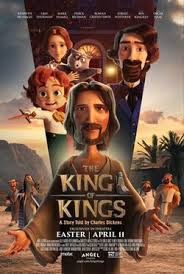
THE KING OF KINGS
South Korea/US, 2025, 100 minutes, Colour.
Voices of: Kenneth Branagh, Oscar Isaac, Uma Thurman, Pierce Brosnan, Mark Hamill, Forest Whitaker, Ben Kingsley, Jim Cummings, Roman Griffin Davis.
Directed by Seong-ho Jang.
Yes, the Gospel story. However, this film is an animation-dramatisation of a story by Charles Dickens, a story he wrote in the 1840s for his family, recited every Christmas by the author and read aloud in succeeding family generations, Dickens forbidding publication. However, in 1934, the family made it available over 60 years after the death of the author.
At the beginning of his story, Dickens wrote: My Dear Children, I am very anxious that you should know something about the History of Jesus Christ. For everybody ought to know about Him. No one ever lived who was so good, so kind, so gentle, and so sorry for all people who did wrong, or were in any way ill or miserable, as He was.
This film was made by a South Korean animator, Seong-go Jang, in Korean studios but uses the voices of some very talented English speakers, British and American.
Dickens told the story to his family and in this film he tells it to his younger son, Walter, quite a spirited boy, absorbed by stories of King Arthur, swords and dragons. And he disrupts his father’s presentation on stage of Scrooge and A Christmas Carol. s Dickens’ sympathetic wife urges him to tell the Gospel story, the young boy becoming more and more interested, initially wanting kings and dragons, but drawn into the story and following the person of Jesus. And, all the while, accompanied by his mischievous cat.
Which means that this is definitely a film for the younger audiences, but could be a pleasure for the whole family.
The animation style is vivid, the characters, the backgrounds, sometimes gently quiet with Jesus healing, with the apostles, at other times very vivid, especially Jesus walking on the water in the overwhelming storm. A great deal of the time is given to the Last Supper, the agony in the garden, Judas betrayal, uses trial and Caiaphas and Pilate, the crucifixion. Audiences who enjoy animation stories like this style and treatment.
But, a key element of the screenplay is having the young boy enter into all the action, observing close-up, being with Jesus, listening, watching, admiring, dismayed… And, at times, Dickens himself comes with his son into the action, close-up, and all the while with Kenneth Branagh’s narration as Dickens. The device of having Walter within the Gospel story is a great means for younger audiences also entering in, identifying, learning about Jesus and his story with a devout theme-highlighting commentary by Dickens.
St Ignatius Loyola founder of the Jesuits, would probably endorse this film. In his Spiritual Exercises, he urges those making retreats, or at any time with gospel contemplations, to enter into the scene, to be there, to experience the Gospels. And, a great challenge to those on retreat is to ask them where they are in the scene, at a distance observing, or very close to Jesus. This film dramatises what this closeness could be like.
The voice cast is very strong, not only Kenneth Branagh, but Uma Thurman as his wife, Mark Hamill is an extraordinarily rambunctious and King Herod pantomime-like , Ben Kingsley is a thundering villainous high priest, Caiaphas, Pierce Brosnan is a disdainful Pontius Pilate – and Oscar Isaac is Jesus.
In 2000, the animated film, The Miracle Maker, with Ralph Fiennes as the voice of Jesus, was very successful in portraying the Gospel stories. Now, The King of Kings is a very welcome addition.
- How successful as a Gospel film? This, the range of the Gospel episodes?
- Charles Dickens’ story, for his family, here for his son, the urging of his wife?
- The style of animation, from South Korea, the quality of the voice cast?
- The opening, A Christmas Carol, the story of Scrooge, Dickens in the theatre, interrupted by his son, Walter, King Arthur, dragons and sword, stubborn in reacting to his father, the cat, all the disruption, the pages scattered and torn? The audience watching, Walter and the cat? Dickens and his response?
- Dickens, his patient wife, urging Dickens to tell the story of the Gospels? Dickens own appreciation of the Gospel story, his admiration for Jesus, the tone of his narrative in telling the story?
- The visuals, journey to Bethlehem, the appearance of the angels, shepherds and magi, Herod and his overreaction, the indications of persecution of the innocent children, the flight into Egypt, Jesus growing up, the return to Galilee, the finding in the temple, Jesus emerging as an adult.
- The device of having Walter go into the action, with his cat, gradually understanding, becoming involved, emotions, observing and then becoming very close to Jesus?
- The familiar gospel sequences of Jesus’ public life, the elaborate temptations in the desert, the choosing of the apostles, Peter and the fishing, the healing of the crippled man, the casting out of the Demon, Jesus’ encounters, Mary and the request about Lazarus, the raising of Lazarus, the anointing of Jesus, the complaints of Judas, the entry into Jerusalem, building up the picture of Jesus? Especially the dramatisation of Jesus walking on the water, Peter and his walking, drowning, appeal to Jesus?
- The Last Supper, Agony in the Garden, Judas and his deal with kindness, the reaction of the scribes and Pharisees, planning to kill Jesus, this, the emphasis on healing the servant’s ear with Peter and the sword, the trial and Caiaphas thundering, rousing the crowd, the choice between Barabbas and Jesus, Pontius Pilate washing his hands, scourging, crowning with thorns, the way to Calvary, the crucifixion, the thieves and the good thief, Jesus’ death? The importance of the resurrection?
- Dickens entering into the scenes with his son? The effect of the story on Walter, sharing it with the other children?
- The telling of the Gospel stories with an appeal to the children’s audience and to families?
