Displaying items by tag: Kenneth Branagh
Devil Wears Prada 2, The
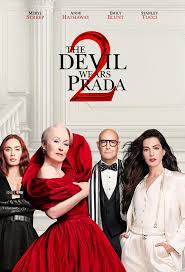
THE DEVIL WEARS PRADA 2
US, 2026, 190 minutes, Colour.
Meryl Streep, Anne Hathaway, Emily Blunt, Stanley Tucci, Kenneth Branagh, Justin Theroux, Lucy Liu, Tibor Feldman, B.J.Novak, Patrick Brammel.
Directed by David Frankel.
We all enjoyed the original film 20 years ago. What could happen in 20 years? What are they all like now? Has Meryl Streep’s Miranda mellowed in any way? And what about Andy and Emily, just beginning their careers in those days? Have they had success? And, the ever faithful Nigel. Is he still working for Runway?
As we launch into this enjoyable sequel, overcoming the two decade gap, the entity is mainly, yes. And it is still very much the same, Meryl Streep obviously enjoying this dominating and controlling personality, very much evident as she encounters Andy and Emily again, disdain, feigning not to know them and wonders have they ever met! But, the times are certainly changing. There are threats to Miranda’s dominance. (However, she now has a husband and, unseen in the film, twins – and the advantage of having Kenneth Branagh playing her husband.)
But, the success story is Anne Hathaway’s Andy, an award-winning journalist, and, during an award ceremony just before her acceptance speech, a text to tell her and her fellow-journalists that they are fired.
In fact, this is a strong theme of this sequel, the changes from 2006 to 2026 in terms of print media, magazines, online publication, social media, the struggle to find followers, the threats to traditional publications, challenges for the future. In this way, the film is rather pessimistic about journalism, outlook and future.
But, back to Alex, she is employed again by Runway, a feature writer, still put down by Miranda, encountering Emily once more, Emily Blunt, setting up some conflicts along with challenges to business models, corporation executives, and, with quite some flourishes towards the end at a fashion show in Italy, the management of the world of fashion.
There is also a scene in the Dominican Priory in Milan with Leonardo da Vinci’s Last Supper on the wall, as a location for a social event. (And a touch of inventiveness for the romance, Andy finding an Australian boyfriend, Patrick Brammel.)
Same writer, same director as before, and they bring the relish they had two decades ago to this sequel, not so surprising, of course, but old audiences welcoming the opportunity to see and engage with these characters again. And delighting a new audience.
- The popularity of the original film? 20 years? Continuity of the stars, age, 20 years later? Memories of the original characters?
- New York, the world fashion, publishing, business and corporations? International sequences, Milan, fashion, the catwalks, the visit to the Dominican priory and da Vinci’s Last Supper? The musical score?
- 20 years and changes in publications, social media, the role of journalists, reorganisations, sackings, online communications, articles, target audiences and success not? Attempts at revitalising journalism?
- The focus on Andy, with Miranda 20 years earlier, with Nigel, with Emily? As a success, a roving journalist, the initial awards ceremony, her win, the text of their all being sacked, her vigorous speech, Irv and his son and seeing it, the offer of the job, and the later revelation that Nigel urged him on? Her life, her good friends, sharing, the enthusiasm, going to Runway, the initial encounter with Miranda and Nigel, their not knowing, going to the meeting?
- Andy, after 20 years, success, relationships? The visit to the apartment, the encounter with Peter, Australian, friendly, her initial faux pas, meeting him again, dating conversations, his Australian direct personality? Her leaving for Milan, leaving him stranded?
- Miranda, over the years, her manner, remembering Andy and Emily, the touch of disdain, her success? The surprise to find she was married, her husband, pleasant, musician, past drinking, supportive? That she had twins and did not spend time with them? The dependence on Nigel, taking him for granted? The upset, the meeting with Irv and his son, the plan for her to be head of editing, the attitude towards Andy?
- Andy, hard work, writing the articles, the apology for the precarious situation about fashion and child workers? At the board meeting, raising it, Miranda off-hand? Relationship with the staff, with Miranda’s imperious assistant, with Charlie, with her new assistant, friendly?
- Irv, the celebration, birthday, everybody gathered, Miranda and hopes for the announcement, his collapse and death? His son taking over, casual, in his father’s shadow, his board meeting, advice, the 2020s and the different approach?
- Sasha, her success, wealth, seclusion, Miranda wanting an interview, Andy and her many attempts, final success, session pleasant, the interview, the article and success? And her past relationship with Benji? The later plan, her investment, coming to the rescue?
- Emily, after 20 years, her manner, failed marriage, children, her manner, her work, retail? Meeting Miranda again and disdain? Meeting Andy again? Her relationship with Benji, his character, manner, imposing, wealth, promises to Emily? The meeting with Benji, the deals, Emily and negotiating with Andy, not telling the t//ruth, the buying of Runway, her being editor, wanting to be on the cover…?
- Milan, the fashion show, the range of models, elaborate? The dinner, the visit to the Dominican priory, the Last Supper and Miranda’s comment about the leader? Her giving her speech, Andy advising Nigel to do it? Nigel, in the background, his fashion sense, friendship with Miranda, the difficulties, persevering over the years? Writing speeches – and his giving the speech and place of Miranda?
- Andy, her ideas, collaboration with Miranda, the phone calls, all day, the plan, the final revelation, Benji and the sale, the break with Emily, Sasha and the rescue?
- The happy ending, everybody nicer, happier? Miranda, her relationship with her husband, the discussions, his support? Her mellowing, changing – but at the end her manner and style? Andy, older and wiser, enterprising, her future?
King of Kings, The/ 2025
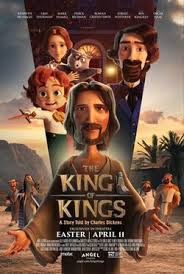
THE KING OF KINGS
South Korea/US, 2025, 100 minutes, Colour.
Voices of: Kenneth Branagh, Oscar Isaac, Uma Thurman, Pierce Brosnan, Mark Hamill, Forest Whitaker, Ben Kingsley, Jim Cummings, Roman Griffin Davis.
Directed by Seong-ho Jang.
Yes, the Gospel story. However, this film is an animation-dramatisation of a story by Charles Dickens, a story he wrote in the 1840s for his family, recited every Christmas by the author and read aloud in succeeding family generations, Dickens forbidding publication. However, in 1934, the family made it available over 60 years after the death of the author.
At the beginning of his story, Dickens wrote: My Dear Children, I am very anxious that you should know something about the History of Jesus Christ. For everybody ought to know about Him. No one ever lived who was so good, so kind, so gentle, and so sorry for all people who did wrong, or were in any way ill or miserable, as He was.
This film was made by a South Korean animator, Seong-go Jang, in Korean studios but uses the voices of some very talented English speakers, British and American.
Dickens told the story to his family and in this film he tells it to his younger son, Walter, quite a spirited boy, absorbed by stories of King Arthur, swords and dragons. And he disrupts his father’s presentation on stage of Scrooge and A Christmas Carol. s Dickens’ sympathetic wife urges him to tell the Gospel story, the young boy becoming more and more interested, initially wanting kings and dragons, but drawn into the story and following the person of Jesus. And, all the while, accompanied by his mischievous cat.
Which means that this is definitely a film for the younger audiences, but could be a pleasure for the whole family.
The animation style is vivid, the characters, the backgrounds, sometimes gently quiet with Jesus healing, with the apostles, at other times very vivid, especially Jesus walking on the water in the overwhelming storm. A great deal of the time is given to the Last Supper, the agony in the garden, Judas betrayal, uses trial and Caiaphas and Pilate, the crucifixion. Audiences who enjoy animation stories like this style and treatment.
But, a key element of the screenplay is having the young boy enter into all the action, observing close-up, being with Jesus, listening, watching, admiring, dismayed… And, at times, Dickens himself comes with his son into the action, close-up, and all the while with Kenneth Branagh’s narration as Dickens. The device of having Walter within the Gospel story is a great means for younger audiences also entering in, identifying, learning about Jesus and his story with a devout theme-highlighting commentary by Dickens.
St Ignatius Loyola founder of the Jesuits, would probably endorse this film. In his Spiritual Exercises, he urges those making retreats, or at any time with gospel contemplations, to enter into the scene, to be there, to experience the Gospels. And, a great challenge to those on retreat is to ask them where they are in the scene, at a distance observing, or very close to Jesus. This film dramatises what this closeness could be like.
The voice cast is very strong, not only Kenneth Branagh, but Uma Thurman as his wife, Mark Hamill is an extraordinarily rambunctious and King Herod pantomime-like , Ben Kingsley is a thundering villainous high priest, Caiaphas, Pierce Brosnan is a disdainful Pontius Pilate – and Oscar Isaac is Jesus.
In 2000, the animated film, The Miracle Maker, with Ralph Fiennes as the voice of Jesus, was very successful in portraying the Gospel stories. Now, The King of Kings is a very welcome addition.
- How successful as a Gospel film? This, the range of the Gospel episodes?
- Charles Dickens’ story, for his family, here for his son, the urging of his wife?
- The style of animation, from South Korea, the quality of the voice cast?
- The opening, A Christmas Carol, the story of Scrooge, Dickens in the theatre, interrupted by his son, Walter, King Arthur, dragons and sword, stubborn in reacting to his father, the cat, all the disruption, the pages scattered and torn? The audience watching, Walter and the cat? Dickens and his response?
- Dickens, his patient wife, urging Dickens to tell the story of the Gospels? Dickens own appreciation of the Gospel story, his admiration for Jesus, the tone of his narrative in telling the story?
- The visuals, journey to Bethlehem, the appearance of the angels, shepherds and magi, Herod and his overreaction, the indications of persecution of the innocent children, the flight into Egypt, Jesus growing up, the return to Galilee, the finding in the temple, Jesus emerging as an adult.
- The device of having Walter go into the action, with his cat, gradually understanding, becoming involved, emotions, observing and then becoming very close to Jesus?
- The familiar gospel sequences of Jesus’ public life, the elaborate temptations in the desert, the choosing of the apostles, Peter and the fishing, the healing of the crippled man, the casting out of the Demon, Jesus’ encounters, Mary and the request about Lazarus, the raising of Lazarus, the anointing of Jesus, the complaints of Judas, the entry into Jerusalem, building up the picture of Jesus? Especially the dramatisation of Jesus walking on the water, Peter and his walking, drowning, appeal to Jesus?
- The Last Supper, Agony in the Garden, Judas and his deal with kindness, the reaction of the scribes and Pharisees, planning to kill Jesus, this, the emphasis on healing the servant’s ear with Peter and the sword, the trial and Caiaphas thundering, rousing the crowd, the choice between Barabbas and Jesus, Pontius Pilate washing his hands, scourging, crowning with thorns, the way to Calvary, the crucifixion, the thieves and the good thief, Jesus’ death? The importance of the resurrection?
- Dickens entering into the scenes with his son? The effect of the story on Walter, sharing it with the other children?
- The telling of the Gospel stories with an appeal to the children’s audience and to families?
Haunting in Venice, A
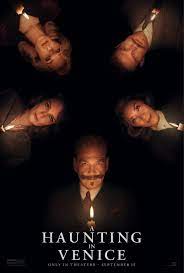
A HAUNTING IN VENICE
UK, 2023, 106 minutes, Colour.
Kenneth Branagh, Tina Fey, Michelle Yeoh, Kelly Reilly, Jamie Dornan, Jude Hill, Kyle Allen, Ricardo Scamarcio, Camille Cottin, Emma Laird, Ali Khan, Rowan Robinson.
Directed by Kenneth Branagh.
Everyone, well, almost everyone, enjoys an Agatha Christie story. And, enjoying a Poirot mystery, happy memories of Albert Finney, Peter Ustinov, played now for the third time by Kenneth Branagh.
Branagh, along with the screenwriter of his other Poirot films, Mike Green, have been wise to choose a rather little-known 1969 book by Agatha Christie, Hallowe’en Party. There are no comparisons with previous versions as they were with Branagh’s Orient Express and Death on the Nile, although there was the television version with David Suchet. However, the team have transferred the plot from England to Venice, 1947, Poirot in retirement, hounded by many Venetians to solve their cases, but he is reluctant.
Christie fans will remember Ariadne Oliver, Poirot’s novelist friend who, here, claims that by writing about him she promoted his career. And, in the often sardonic form of Tina Fey, there is some ironic dialogue. In fact, Ariadne Oliver is in Venice for a new book plot but also to urge Poirot into action again, taunting and challenging him, providing him with the situation, at Halloween, to participate in a seance, to raise the spirit of a young woman who has committed suicide, diving into a canal, daughter of a once famous opera singer.
So, lots of Venetian atmosphere, wonderful vistas of the city, gondolas on the canal, children gathering at an old Palazzo to celebrate Halloween. But, of course, Poirot is not only sceptical but has some speeches about having lost any belief in the soul and, therefore, in God. But, he is in for a few jolts!
Most of the action takes place overnight, the arrival of the medium, Michelle Yeoh, the welcomed by the singer, Kelly Reilly, the doctor suffering from World War II PTSD, Jamie Dornan, his ultra-precocious, Poe-reading son, Jude Hill (both of them so striking in Branagh’s autobiographical film, Belfast). And there are more suspects when there are more murders – the former fiance of the dead girl whom the mother loathes and who seems to be a fortune hunter, the medium’s two assistants, war refugees who kept seeing only half of Meet Me in Saint Louis in the refugee camps, but a desire to migrate to Missouri!, Olga, former nun, carer for the dead girl, and there is also the former policeman, now Poirot’s bodyguard, played by Ricardo Scarmacio.
So, some weird seance sequences – and exposes. Some ghostly appearances. Even an attempt on Poirot’s life. Then, the interrogations, the issue of time and clocks, truth and lies. Of course, there are several twists with the murderer unmasked. But, just when we assume that everything had been solved, there is quite another twist in the final minutes!
Not the greatest – but an easy Christie-Poirot mystery entertainment.
- The popularity of Poirot, Agatha Christie’s novels, the film versions, David Suchet and television versions, Kenneth Branagh as Poirot?
- The original story, later Agatha Christie, 1969? Hallowe’en Party? Transferring the plot to Venice from the UK?
- The city of Venice, the variety of vistas, St Mark’s, the canals, the bridges, panoramic views? The focus on the Palazzo, exteriors, interiors, old, decaying, atmosphere?
- Kenneth Branagh as Poirot, 1947, his career, retirement to Venice? The lineup of people for his services? Refusing the more? The visit of Ariadne Oliver, the past, her novels, promoting Poirot? Her wanting to write a new book, her story, the suicide of the girl, her family, the investigation, the seance? Tantalising Poirot and challenging him?
- Hallowe’en in Venice, costumes, masks, the children, the party, games, enjoyment?
- The situation, the Opera singer, her daughter, the daughter’s engagement, at home, her suicide, Olga and her care, grief? The alienated fiance, the break, his wanting to marry money?
- The setting up of the seance, Mrs Reynolds, her personality, claiming authenticity, her two assistants, her arrival, indicating sensing the presence of ghosts? The third floor, her trance, everybody around the table, Poirot observing and sceptical? The procedure, the typewriter, the letters, the trance, the voice? Poirot and the expose, the mechanism for the typewriter, shamed? And Mrs Reynolds later found dead, transfixed?
- Poirot, sceptical, observing, character assessment? The discussions about the supernatural, about logic? Extending to religious discussion, especially about the presence of God? Poirot against God? Ariadne Oliver and her comments?
- The behaviour in the house, the action overnight, midnight, clocks, timing, Poirot and his wariness, the apples in the water, his being pushed under water, saved?
- The range of suspects and the plausibility of their being the murderer of the daughter, the murderer?
- Mrs Reynolds’ assistants, post-war refugees, supporting her, the money, their wanting to get to Missouri, having seen half of Meet Me in Saint Louis…? Their interrogations, separate, together, contradictions?
- The fiance, his background, relationship with the dead girl, the animosity of her mother? In the kitchen, the interrogation?
- Olga, in the family, a former nun, motives for leaving the convent, her care, concern?
- The police officer, employed by Poirot’s bodyguard, his career, the revelation that he investigated the suicide case, the connection with Ariadne Oliver, Poirot confronting her, the revelation of the teaming together to set up the seance, to get material for her new book?
- The doctor, the experience in the war, nervy, treating the daughter, living in Venice, agitation, interrogation, his love for his son, his death?
- The son, his age, reading Poe, sophisticated, observing, statements, fears, care for his father?
- The mother, her Opera career, her daughter, devoting her life to her daughter, grief?
- The final confrontation, Poirot and his explanations, but the effect on his psychological experiences, seeing the young girl, seeing her photo, the torn photo between her and the fiance, the sense of her presence? His scepticism?
- The explanation, the timing, the mother and her possessiveness, cultivating the garden, the drugs, supplying them to her daughter, to keep her daughter to herself against the fiance, the effect on the daughter, Olga and her concern, unwittingly giving the daughter more poison, leading to the death? The doctor and his examination? The policeman and his investigation? The mother, the dead daughter, throwing her into the canal?
- The resolution, Ariadne Oliver disappointed about not having the story for her novel, the unsympathetic fiance, Olga, the money, enabling the two refugees to go to Missouri?
- The final twist, the issue of the phone call to the doctor, from within the house, the mother summoning him, his blackmailing, her hold over him, his killing himself?
- In the final revelation that he was the boy who did the blackmailing of the mother, to get money for his father, an interesting twist at the end of the twists for an Agatha Christie story?
