Displaying items by tag: Francis Lawrence
Long Walk, The
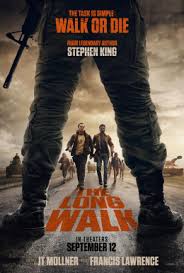
THE LONG WALK
US, 2025, 108 minutes, Colour.
Cooper Hoffman, David Jonsson, Garrett Wareing, Tut Nuyot, Charlie Plummer, Ben Wang, Mark Hamill, Judy Greer, Josh Hamilton.
Directed by Francis Lawrence.
Any long walk is very demanding. And, for the most part, the action in this film is a very long walk, demanding endurance, and demanding endurance from the audience responding and identifying with the characters. In fact, it is a long slog.
The film is an adaptation of Stephen King’s 1979 novel, published under his alternate name, Richard Bachman. And it is set in a kind of alternate United States, reminiscent of Alex Garland’s recent film, Civil War. The US is in decline, financial impoverishment, a strong military presence, evocative of some of the American experiences of 2025.
The film opens with a letter to Raymond Garrity (played by Cooper Hoffman, the son of Philip Seymour Hoffman). He has been chosen by lottery to participate in the long walk. And his mother, Judy Greer, is very upset. But Ray is determined, farewells his mother and joins the other lottery winners at the starting point.
And, then we discover that there are about 50 men, that they will continue to walk, in fact over 300 Miles, and if they go under 3 mph, stray onto the side, fall and don’t get up, they will, and the first death scene is horrifying, they will be shot by soldiers walking with them. There is to be only one survivor – and the reward will be the fulfilment of whatever the winner wishes. And, in charge of the walk, standing like General Patton in his tank, is the gruff, wearing sunglasses, major, rallying the men with macho patriotic urging but merciless when they fail. He is played by Mark Hamill.
This means that we get to know quite a number of the men on the walk, white, black, Native American, Asian descent… We learn their stories, their hopes, their determination, we experience their clashes, some mutual support, and some strong friendships. While Ray has his story and motivation, the strong character on the walk is Pete, a very empathetically by the British actor, David Jonsson.
They walk and walk, some collapsing, many shot, havoc played with their health, with their bodies, bodily functions, physical demands, psychological demands, clashes and crises, determination.
The film has been directed by Francis Lawrence who is best known for his direction of The Hunger Games films.
When films dramatize demands on human suffering, they can be described in the first words of Psalm 129/130, De Profundis, ‘out of the depths’. But, with its grim picture of this alternate universe, there seems to be No Exit, what some pessimistic commentators name, “Enter the Void”.
There is some kind of resolution to this walk, a winner, who expresses his wish – but the film ends and, suddenly, we are confronted by what we have seen, felt, and are left, disturbed, to question what it all could mean.
- The title and focus? The structure of the film, the lottery, assembly, the details of the walk, the military background, endurance, elimination, final survivor?
- The books of Stephen King? This earlier work, originally written when he was 19, published in 1979, Richard Bachman? King and his age, the experience of the Vietnam war, the 1960s and 1970s? The effect on those who served? An American consciousness?
- The situation of the US in this scenario, decline, morale, economic difficulties, leadership, the military? The idea of the walk, the lottery, its being televised, people along the route? The purpose?
- The opening, the letter to Ray, the words on the screen, Ray at home, his age, the later filling in of his background, his father, outspoken, arrested, the fascist atmosphere, his stances, principles and execution? His injunctions to his son? His mother, the bonding between them, her not wanting him to go, the pathos of the farewell, her coming during the walk, his response, giving up or not?
- The gradual revelation of Ray’s motive in going on the walk, the flashback and the visuals of the major, his father’s execution, his wanting vengeance on the Major? And the irony of the Major urging him along during the walk?
- The lottery, the 50 young men, the assembly, seemingly random choices, Ray and his arrival, the encounter with Pete, initial friendship and understanding, the bonding?
- The fact of the major in his Jeep, following, the guards along the way, the morale boosting? Then the rules, never under 3 mph, the time for bending down, not straying off the road? The military, supplying food and water, but also shooting their victims? This atmosphere and audience response?
- The signalling of the miles walked, the various days, ultimately over 300 miles? The stamina, the motivation, food and drink, bodily functions, the strain on the body, on the spirit? And the impact of the deaths on the role?
- The film’s focus on the smaller number of men while showing the bigger group always, and its diminishing?
- The focus on Ray, audience sympathy with him, his age, memories of his father, relationship with his mother? The gradual revelation of his vengeful motivation?
- Pete, his age, experience, family background, the contrast with Ray? African-American? Racial issues? The friendship with Ray, talking, sharing stories, walking together, over the miles, over the hours, the details of their friendship, bonding, revelations to each other? The two of them with the other members walking?
- The portrait of Barkovitch, his age, appearance, slight, his manner, challenging, bitterness, mockery, his victim, the victim falling, being shot? The repercussions for the others in the group, blaming him, the continued walk, his attitudes, not wanting to be blamed, revealing something his background, his attempts at some kind of justification, reconciliation? Ultimately his death?
- The Native American, his appearance, on the march, motivations, with the others, sense of rebellion, the military, surviving for so long, his ultimate reaction, his death and the Native American rituals?
- Stebbins, appearance, stamina, motivations, at a distance from the others, difficulties, eventual talking, his death?
- Harkness, slight, his notebook, wanting to write a book, the reaction of the others, and his death?
- Curley, young, bright, the first victim?
- Arthur Baker, racial background, cheerful attitude, continuing on the walk, the effect on him, death?
- Hank Olsen, small, Asian background, determined, cheeky, injury to his foot, persevering, ultimately dying?
- The days and nights, Ray and his shoes, walking barefoot? Supported by Pete? The major and his interventions?
- The move towards the end, the only two left, Ray and the discussions about his motivation, examining himself, his decision to die and leave the end to Pete?
- Pete, his success, the acclamation by the major, the crowds, to have anything he wanted, his altruistic motivation initially, his memories of Ray’s story, asking for the gun, getting it, shooting the major? Acting on behalf of Ray? And the film ending and the audience left with what would happen to Pete as he moved off?
Hunger Games, The: Ballad of Songbirds and Snakes
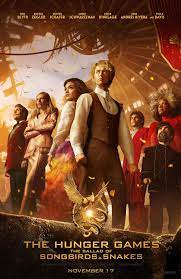
THE HUNGER GAMES: THE BALLAD OF SONGBIRDS AND SNAKES
US, 2023, 157 minutes, Colour.
Tom Blyth, Rachel Zegler, Viola Davis, Peter Dinklage, Jason Schwartzman, Fionulla Flanagan, Hunter Schaefer, Burn Gorman, Josh Andres Rivera.
Directed by Francis Lawrence.
Suzanne Collins reached out to the Young Adult audience with her Hunger Games novels, avidly and widely read. And, addicted ago, the Young Adult audience reached out to the film versions. So much so, that there were four Hunger Games films, showcases for Jennifer Lawrence (who, in fact, it already won an Oscar for The Silver Lining is Playbook) and her subsequent career. There was also Josh Hutcherson and wide adult cast including Donald Sutherland, Elizabeth banks, Stanley Tucci…
So the question arises, how did it take so long to bring this prequel story to the screen. But, here it is.
Ideally, the reviews to be read should be those of the target audience, appreciative Young Adults. They can tell us which characters are credible, which characters they could identify with, what of this presentation of the Games themselves, the power hungry authoritarian leaders, the young leads – and Coriolanus Snow and his early years, leading to the character we saw in the previous films, older and authoritarian.
But, this is a review by an Old Adult! Who admits to enjoying the film, making the comparisons with the earlier films, but very much interested in the character, young development and crises, of Coriolanus Snow. (And the satisfaction, at the very end, of hearing a brief comment with the voice of Donald Sutherland as the older Snow.)
The success of this film very much depends on the performance by British Tom Blyth of the young Coriolanus – and he acquits himself very well. At first, he is a product of this totalitarian regime, loyal, student, ready to be a mental, especially to the annual tributes from the Districts who have been chosen to participate in the gladiatorial, bloodthirsty, to the death, Hunger Games. Coriolanus is given a family background, and devoted grandmother (a good cameo by funeral of Flanagan) and sympathetic cousin (Hunter Schaefer).
As regards the hierarchy this time, there is by older Davis, more than sinister in appearance and voice, Dr Gall, the controller and manager of the Hunger Games. There is also the Dean, menacing in his way, but ultimately more sympathetic, played by Peter Dingle age. And, for the games themselves, there is the slick compere, enthusiasm-rouser, callous, Flee finger, played by Jason Schwartzman.
So, the first part of the film is the setting up of characters, the mentors in their uniforms, loyal to the state, the group of tributes manacled and harassed, but one of them, Lucy Gray, wearing a beautiful dress from her mother, singing, attracting the attention of Coriolanus as well as of the Games audiences, listening to her and making donations.
The second part of the film shows the Games themselves, once more cruel and bloodthirsty, but the audience not present as in the earlier films, rather a television audience, continually egged on. Grim tactics, motivations, Coriolanus intrigued by Lucy Gray, even breaking the rules to help her. And a challenge to Dr Gall to admit that Lucy Gray is the winner.
The third part of the film takes place in District 12, Coriolanus and his friends are Jane is relegated to being peacekeepers. And this will be the test for Coriolanus and his future, his relationship with Lucy Gray, his loyalties and ambitions, the testing of his friendships.
But, we know how he did turn out and his role in the future, this film enables us to understand the steps on his road to that position.
- The popularity of the novels? The film versions? This prequel, a decade after the previous films?
- The target audience, Young Adult? Older audiences?
- Audience knowledge of the previous stories, of The Hunger Games, of the rebellion and wars, of the Districts, of the tributes, the gladiatorial combat in the arena, treated as slaves, the training, the mentors, the public, television and the media, violence? The tyranny of the authorities? The bids for independence?
- The re-creation of the period, the city and its buildings, the streets and cars, the Square with the fountain and the high statue? The buildings and facades? The interiors? The gladiatorial arena, the tunnels underneath? The formal assemblies? Dr Gore and her laboratory and species? Television and the compere? The contrast with ordinary homes?
- The focus on Coriolanus, the audience knowing that he was going to become the authority of the future? He and Tigress when they were young, taking refuge? Growing up, his status, appearance, getting ready for the assembly, his cousin with the special shirt, is hoping for the prize, his grandmother and her pride, memories of the past, his dead father? His manner, self-assured?
- The assembly, Dr Gall, her appearance, her look, sounding sinister, in charge of the Games, her ambitions, control? Addressing the crowd? The dean, his appearance and dress, taunting Coriolanus? The issue of the prize? The new test? The assembly of the Mentors, their hopes? Rivalries? Coriolanus and his friendship with Sejanus, the family wealth?, Competitiveness?
- The arrival of the tributes, seeing them on the screens, the range, age, mail female, racial, desperate, assured? Their being attributed to the mentors? Coriolanus, seeing Lucy Gray, her associate?
- The first part of the film, setting the characters, setting the situation, the influence of Dr Gall, the command by the Dean? Lucy Gray, her mother’s dress, standing out, her singing? Coriolanus and his getting permission to meet her, their interactions? His travelling in the band, emptied out, his being rescued? His discussions with Dr Gall, plans?
- The issue of cheating, Coriolanus presenting his plan, being claimed by his rifle, Dr Gall the snakes, the manuscript with the snakes, taunting her to put her hand in, her being poisoned? Coriolanus and is later use of sent and the snakes and their response?
- Lucy Gray, her singing and the impact, the introduction by the compere, his appearance, style, magician, commentary, cheerful and callous, Lucy Gray and her singing and the donations?
- Coriolanus, getting permission to go in, with Sejanus to be rescued, the pursuit by the tributes, Coriolanus smashing the head of the pursuer? His comment, feeling of power?
- The episode of the games, gladiatorial, self-preservation, attack, Coriolanus giving Lucy Gray the powder, her spiking the bottle of water, smashing the others, one of the competence dying? The escapee, his being crucified, his axe death, being cut down? Lucy Gray is friend, his covering the bodies of the dead? Coriolanus and his advice for the escape, the two leaving, hiding, a companion suspicious, the rabies, the device of sending in water, pressing the button, the rabies victim frightened of water, his collapse and death? Lucy Gray being pursued in the tunnels? The forks? The powder? Her escape, the pursuit, the death of the others, a continuing to sing, the popularity, the appeal to Dr Gall, that she was the winner?
- Coriolanus, the attraction to Lucy Gray, his injuries and Dr Gall stitching, the handkerchief, with Lucy Grace sent, giving it to the snakes, they’re not attacking her? Dr Gall with the evidence?
- Coriolanus, the banishment, to be a peacemaker, stripped of everything? His grandmother and cousin? Going with Sejanus? Permission to go to District 12, the club, Lucy Gray and her singing, her antagonism towards the young man and the conflict when she became tribute, Sejanus and his wanting to help the rebels, seeing the hanging, the mayor’s daughter and her imprisonment, Sejanus contacting her? Coriolanus, suspicions, discussion with St Janice, recording him and sending the message to Dr Gall? Seeing the rebels, the guns, the shootout and deaths? Getting rid of the guns? Sejanus, his arrest, the other rebels, the hanging?
- The lyrical aspects, meeting Lucy Gray, going to the woods, to the Lake, the group on the swim? The possibility of their escaping to the north? The Commandant, his control of the District, pleased with Coriolanus, deciding to send him for further training?
- The attempt at escape, the heart, the discovery of the guns, Lucy Gray disappearing, Coriolanus and his desperation, the boat, the guns in the water, his return?
- His going back to the capital, the conversation with Dean, the Dean killing himself? With Dr Gall, her grooming him then to take charge?
- The final words with the voice of Donald Sutherland as Coriolanus snow from the future?
