Displaying items by tag: Judy Greer
Dead of Winter
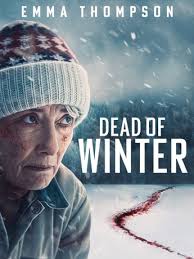
DEAD OF WINTER
Germany, 2025, 98 minutes, Colour.
Emma Thompson, Judy Greer, Marc Menchaca, Laurel Marsden, Gaia Wise, Cuan Hosty-Blaney, Paul Hamilton, Lloyd Hutchinson, Brian F. O'Byrne.
Directed by Brian Kirk.
The emphasis is definitely on winter. But, of course, there is an emphasis on dead.
The setting is Minnesota but the filming was actually done in Finland and Germany, with winter scenes of Finland, snow, iced over rivers and lakes, hills and forests, slippery roads, most of the action taking place over one day, we are immersed in the dead of winter.
Within that day, there are quite a number of flashbacks, cheery and romantic, summer on the lakes. Which means that there is some personalising of the grim story on that fateful day.
And this is very much Emma Thompson’s film, producing it, starring, and, sometimes we might notice in the expression of the actress portraying her in the flashbacks, resemblances, we are right because she is played by Emma Thompson’s daughter, Gaia Wise.
From the 90s, we remember Emma Thompson as archetypally English, Howard’s End, Remains of the Day, Sense and Sensibility (winning an Oscar for writing the screenplay). But, here she is what Americans might call a tough old gal, harsh accent (perhaps channelling something of Glenn Close’s performance as JD Vance’s grandmother in his autobiographical Hillbilly Elegy). And, in some ways, she is moving into what we might call Liam Neeson territory, action hero. But, for most of the films, she has to use her brains rather than brawn though there are quite some physical struggles at the end.
And, why is she here in the dead of winter? Driving slippery roads, getting lost, asking advice from a big tough codger, eventually finding the lake which she and her boyfriend, then husband, used to visit and fish decades ago. And, with some pathos towards the end, we discover that she has a mission to the lake in memory of her husband.
What began as an excursion, turns into something of a deadly thriller. The man who gave her advice is seen pursuing the a young woman with a gun. Barb, our tough adventurer, has a sense of righteousness and goes to investigate, leading her into a complex drama, the young girl abducted and imprisoned, the man under the thrall of his physically and mentally disturbed wife, played by Judy Greer. The screenplay keeps us wondering what exactly is wrong, what exactly the couple are up to, why the young woman has been abducted, and what is her fate.
Some complications when Barb is able to contact two hunters and they approach to investigate the situation, fatally.
So, tough action, an Emma Thompson film – some bloggers have objected to the flashbacks being too romantic and spoiling the thriller atmosphere. This reviewer actually welcomed them, humanising Barb and spelling out her motivation for being there, intervening as well as her skills in action.
- The title and expectations? Landscapes, the US North, Minnesota, filming in Finland and winter? Frozen lakes and rivers, slow, the roads, the woods? Dead of winter atmosphere? In the background ominous score?
- The emphasis on dead, indications of dramatic thriller? Variations on the theme?
- The fishing, revealed as Barbara at the end? Her driving, determination, her age looking her age, the snow, the British, the lake, the fork in the road, the heart, meeting the man, giving directions, her finding the lake, going out to fish, setting up the old shed, the office? Sitting fishing?
- Audience puzzle, who she is, why, the fishing? The effect of the insertions of the flashbacks, the young couple, together, on the lake, fishing, the ring, the bond, the marriage, together and happy, pregnant, the birth, the loss of the child? The flashbacks indicating memories, urging motivations for action?
- The man from hat, the young girl running, the shots, his taking her back to the house? Her initial response, going to the house, careful, finding the girl, trying to get in, writing the promise to stay in the window? Losing her glove? The later consequences, her searching, the wound in her arm, needing cover?
- The arrival of the wife, ill, her nose, the blood, her relationship with her husband? The mystery of her motivations, her frantic behaviour, the rifles and shooting? Personality? The girl, the abduction? Keeping her chained? The husband, lumbering, subservient to his wife? The treatment of the girl?
- The cars, driving, bar and her car stranded? The confrontation on the ice, the husband falling in, frozen, his wife rescuing him? In the car, the confrontation as Barbara, his wanting to go to hospital, her trusting him, his driving away, erratic, the meeting with his wife? Barbara later coming, the car, the hunters, discovering the husband did in the car?
- Barbara, her interventions, going to action, using her wits? The confrontation, her being chained? Her story about keeping going, to encourage the girl?
- Barbara, making communication, the hunters? Her encountering them, their caution, going with her, the house, the car, the wife emerging, shooting dead?
- The container, the tent and the ice, the revelation about the truth, the illicit organ transplantation, the wife, her illness, her intentions?
- The two women, on the ice, in the tent, the young woman on the table, her being marked by wife, the shooting, Barbara and her previously on the shoulder, something the stitches? In the tent, wounded, upsetting the table, the starting the fire, the two women on the ice, the physical confrontation? The young girl, getting free, burnt, watching?
- The rifle, the struggle, the ice, the wife falling through, holding on to Barbara’s and Paul, both women and the water, the flashbacks, the reason for Barbara being the lake, the discussion of the lawyer, the breakfast with her husband, his death? His will and the scattering the ashes in the Lake? Her going down through the ice, scattering the ashes?
- The plausibility of the plot, especially the illicit transplant? The husband and wife out in the backlogs? The abduction of the girl, the intentions? Barbara, her presence, her interventions?
Long Walk, The
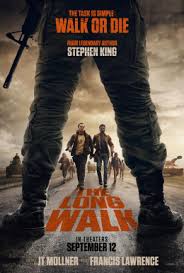
THE LONG WALK
US, 2025, 108 minutes, Colour.
Cooper Hoffman, David Jonsson, Garrett Wareing, Tut Nuyot, Charlie Plummer, Ben Wang, Mark Hamill, Judy Greer, Josh Hamilton.
Directed by Francis Lawrence.
Any long walk is very demanding. And, for the most part, the action in this film is a very long walk, demanding endurance, and demanding endurance from the audience responding and identifying with the characters. In fact, it is a long slog.
The film is an adaptation of Stephen King’s 1979 novel, published under his alternate name, Richard Bachman. And it is set in a kind of alternate United States, reminiscent of Alex Garland’s recent film, Civil War. The US is in decline, financial impoverishment, a strong military presence, evocative of some of the American experiences of 2025.
The film opens with a letter to Raymond Garrity (played by Cooper Hoffman, the son of Philip Seymour Hoffman). He has been chosen by lottery to participate in the long walk. And his mother, Judy Greer, is very upset. But Ray is determined, farewells his mother and joins the other lottery winners at the starting point.
And, then we discover that there are about 50 men, that they will continue to walk, in fact over 300 Miles, and if they go under 3 mph, stray onto the side, fall and don’t get up, they will, and the first death scene is horrifying, they will be shot by soldiers walking with them. There is to be only one survivor – and the reward will be the fulfilment of whatever the winner wishes. And, in charge of the walk, standing like General Patton in his tank, is the gruff, wearing sunglasses, major, rallying the men with macho patriotic urging but merciless when they fail. He is played by Mark Hamill.
This means that we get to know quite a number of the men on the walk, white, black, Native American, Asian descent… We learn their stories, their hopes, their determination, we experience their clashes, some mutual support, and some strong friendships. While Ray has his story and motivation, the strong character on the walk is Pete, a very empathetically by the British actor, David Jonsson.
They walk and walk, some collapsing, many shot, havoc played with their health, with their bodies, bodily functions, physical demands, psychological demands, clashes and crises, determination.
The film has been directed by Francis Lawrence who is best known for his direction of The Hunger Games films.
When films dramatize demands on human suffering, they can be described in the first words of Psalm 129/130, De Profundis, ‘out of the depths’. But, with its grim picture of this alternate universe, there seems to be No Exit, what some pessimistic commentators name, “Enter the Void”.
There is some kind of resolution to this walk, a winner, who expresses his wish – but the film ends and, suddenly, we are confronted by what we have seen, felt, and are left, disturbed, to question what it all could mean.
- The title and focus? The structure of the film, the lottery, assembly, the details of the walk, the military background, endurance, elimination, final survivor?
- The books of Stephen King? This earlier work, originally written when he was 19, published in 1979, Richard Bachman? King and his age, the experience of the Vietnam war, the 1960s and 1970s? The effect on those who served? An American consciousness?
- The situation of the US in this scenario, decline, morale, economic difficulties, leadership, the military? The idea of the walk, the lottery, its being televised, people along the route? The purpose?
- The opening, the letter to Ray, the words on the screen, Ray at home, his age, the later filling in of his background, his father, outspoken, arrested, the fascist atmosphere, his stances, principles and execution? His injunctions to his son? His mother, the bonding between them, her not wanting him to go, the pathos of the farewell, her coming during the walk, his response, giving up or not?
- The gradual revelation of Ray’s motive in going on the walk, the flashback and the visuals of the major, his father’s execution, his wanting vengeance on the Major? And the irony of the Major urging him along during the walk?
- The lottery, the 50 young men, the assembly, seemingly random choices, Ray and his arrival, the encounter with Pete, initial friendship and understanding, the bonding?
- The fact of the major in his Jeep, following, the guards along the way, the morale boosting? Then the rules, never under 3 mph, the time for bending down, not straying off the road? The military, supplying food and water, but also shooting their victims? This atmosphere and audience response?
- The signalling of the miles walked, the various days, ultimately over 300 miles? The stamina, the motivation, food and drink, bodily functions, the strain on the body, on the spirit? And the impact of the deaths on the role?
- The film’s focus on the smaller number of men while showing the bigger group always, and its diminishing?
- The focus on Ray, audience sympathy with him, his age, memories of his father, relationship with his mother? The gradual revelation of his vengeful motivation?
- Pete, his age, experience, family background, the contrast with Ray? African-American? Racial issues? The friendship with Ray, talking, sharing stories, walking together, over the miles, over the hours, the details of their friendship, bonding, revelations to each other? The two of them with the other members walking?
- The portrait of Barkovitch, his age, appearance, slight, his manner, challenging, bitterness, mockery, his victim, the victim falling, being shot? The repercussions for the others in the group, blaming him, the continued walk, his attitudes, not wanting to be blamed, revealing something his background, his attempts at some kind of justification, reconciliation? Ultimately his death?
- The Native American, his appearance, on the march, motivations, with the others, sense of rebellion, the military, surviving for so long, his ultimate reaction, his death and the Native American rituals?
- Stebbins, appearance, stamina, motivations, at a distance from the others, difficulties, eventual talking, his death?
- Harkness, slight, his notebook, wanting to write a book, the reaction of the others, and his death?
- Curley, young, bright, the first victim?
- Arthur Baker, racial background, cheerful attitude, continuing on the walk, the effect on him, death?
- Hank Olsen, small, Asian background, determined, cheeky, injury to his foot, persevering, ultimately dying?
- The days and nights, Ray and his shoes, walking barefoot? Supported by Pete? The major and his interventions?
- The move towards the end, the only two left, Ray and the discussions about his motivation, examining himself, his decision to die and leave the end to Pete?
- Pete, his success, the acclamation by the major, the crowds, to have anything he wanted, his altruistic motivation initially, his memories of Ray’s story, asking for the gun, getting it, shooting the major? Acting on behalf of Ray? And the film ending and the audience left with what would happen to Pete as he moved off?
Best Christmas Pageant Ever, The

THE BEST CHRISTMAS PAGEANT EVER
US, 2024, 99 minutes, Colour.
Judy Greer, Pete Holmes, Molly Bell Right, Kynlee Helman, Sebastian Billingsly-Rodriguez, Jenni Burke, Marianne Burnstein, Lauren Graham.
Directed by Dallas Jenkins.
Some ways another American Christmas film – but this is rather different and the film won a number of humanity awards.
A long tradition in a middle American town, the Christmas pageant, for many years, now an anniversary, but the woman who has directed the pageant for some years is sick. Mother of two, Grace, offers to direct the pageant, quite an amount of criticism from the ladies in the town, but she is supported by her husband. They have two children at school.
What makes this film different is the impoverished family who lives on the edge of the town, dominated by the oldest sister, Imogene, gruff, troublesome, disturbances at school, no one to discipline them. The point of the film is that they become involved in the pageant, wrong reasons at first, simply to get some food at the meeting to discuss the play. But, they become involved, go to the library to research the Nativity story, some emotional responses.
There is a moving sequence with the troublesome children, with Grace’s own children, and her going to see them in their home. It is uncertain whether they will turn up for the event, but they do, quite some involvement and the episode as a possible transformation of attitudes in the town.
A postscript reveals what happened to the siblings:
- Ollie Herdman in now a veterinarian who specializes in feline research.
- Claude Herdman is now a public school teacher.
- Leroy Herdman had a few stints in jail, but has been rehabilitated.
- Gladys Herdman is a flight attendant.
- Ralph Herdman is a pastor of the largest church in the Midwest.
- Imogene Herdman acted in a few movies before running the Christmas Pageant at Ralph's church. She is a mother of five.
- The title and expectations? The many popular American Christmas films?
- The history of Christmas pageants in American towns? History, traditions, organisers, the Nativity story, the characters? A celebration?
- The American town, everybody knowing one another, families, the addition of the Christmas pageant, the anniversary, the memories? The director and her being ill? The challenge?
- The background of the story, the Gospel story, Mary, Joseph, shepherds and kings, angels, the respect for the story, dramatising it? And the town politics as to directing, staging, casting?
- Grace and Bob, place in the town, Beth and Charlie, age, at school, friends, at home, the bonds?
- The situation with the Herdmans, rundown house, poverty, clothes, image and in charge, the rest running wild, at school, taunts, behaviour, grabbing everything? The reputation? The characters, boys, the youngest girl?
- The situation with the pageant, expectations for the anniversary, the illness of the director? The meetings, Grace and her volunteering? Bob and his support? Beth and her dislike of the Herdmans, Charlie and his role?
- The preparations, Grace feeling inadequate, yet determined to work, the pressures from the other mothers, the young girl who always was Mary? Beth and her role or not?
- The issue of the Herdmans, hearing about the meetings, the free food, there are all turning up? Their interest in the story, ignorant about it? Imogene and her leadership, control, tough, cheeky? Yet the interest in the story, going to the library to find out more? Imogene determined to be Mary? The others with Herod, the shepherds, the angels?
- The tension for Grace, the generosity, working with the children, even visiting the home of the Herdmans, explanations, help? Compassion?
- The people at the rehearsals and the comedy?
- The girl presuming that she should be Mary, the pressure from her mother, the other mothers, the catering, the responsibilities? The opinion of the woman who always directed?
- The night itself, the pressures, whether the Herdmans would turn up, their arriving, Imogene taking over Mary, the support of Beth, the performance, problem of finding the baby, the Angel and her behaviour…? An image in and her weeping?
- The success of the event, the importance for Grace, for Bob and his work behind the scenes, the Beth and Charlie?
- The story told from the perspective of the of the adult Beth?
