Displaying items by tag: Pierce Brosnan
Thursday Murder Club, The
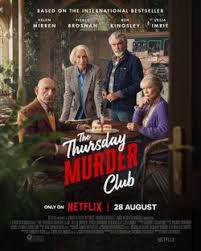
THE THURSDAY MURDER CLUB
UK, 2025, 118 minutes, Colour.
Helen Mirren, Pierce Brosnan, Ben Kingsley, Celia Imre, Naomi Acte, Daniel Mays, Jonathan Pryce, David Tennant, Henry Lloyd-Hughes, Tom Ellis, Geoff Bell, Paul Freeman, Richard E. Grant, Ruth Sheen.
Directed by Chris Columbus.
For several years now, this reviewer included, many readers have been exhilarated by the series of novels about The Thursday Murder Club. They have been written by television personality, Richard Osman, familiar from earlier seasons of the British television quiz program, Pointless, and from his own show, House of Games. In his writings, Osman is a great creator of characters, bringing them alive, especially with eccentricities, is able to develop intricate murder mysteries and their solutions, and has a witty way with words and topical references to politics, media, which can always bring a smile.
And he has created this group of foUr elderly residents of an aged care community in Kent who meet in the common room every Thursday morning to explore and try to solve cold cases. And, for the film version, American director, Chris Columbus (Home Alone, Mrs Doubtfire), brings his genial touch to a screenplay by Katy Brand and Suzanne Heathcote which has done a wonderful job of gathering all the key elements of the novel for a two-hour drama. (Within 24 hours of its appearance on Netflix, the IMDb registered a high number of bloggers, many delighted, some with various quibbles as expected, and then, for this reviewer, unexpectedly, bloggers who seemed unable to wait to share their misery of disappointment and judgements of failure in the adaptation – and one wonders why this judgemental haste. But, on with this review of enthusiasm…).
Helen Mirren has no trouble in being Elizabeth with her espionage background. Ben Kingsley perfectly embodies the gentlemanly psychotherapist. It was hard, while reading, to imagine Pierce Brosnan as old union activist, Ron, but he rises to the occasion, obviously enjoying himself in the role. In the novel, former nurse, now widow, Joyce, is often more than daffy. Celia Imre is wonderful in the role although, perhaps, she has been written a little less daffy than in the novels. But, it all works.
And, there is a wonderful supporting cast of British character actors, Jonathan Pryce standing out as Elizabeth’s husband, a good man with developing dementia. David Tennant enjoys himself as the main villain but Richard E. Grant is unexpected as a sinister florist towards the end of the film.
The film opens with an example of the Thursday Murder Club in action, a cold case in connection with a former member who is now lying in coma, her sad husband in attendance. And, while this might have served as an introduction to the club’s activities and remained as that, it actually becomes quite integral to the development of the plot and the finale.
But, there are two other deaths which have to be investigated, especially in connection with the possible sale of the aged care home by a ruthless developer.
And, then there are the two representatives of the local police, the alert at Donna (Noemi Ackie who played Whitney Houston in the film biography recently) and the rather overweight, sweets-eating, less on the ball Hudson, played engagingly by Daniel Mays. (And the laugh out loud scene in the novel where the club cram him on the couch to pressure him is happily incorporated into the film!).
So far Richard Osman has written five of these novels, and the film then provides faces and mannerisms of the stars for those who continue to read the novels, making them come alive most enjoyably.
- The popularity of Richard Osman’s books, characters and setting, murder mysteries and solutions, witty writing? The popular audience for this kind of storytelling? And the strong cast?
- The setting, the aged care home, rooms, meeting places? The outside sequences, atmosphere? Police stations? The village streets? The cemetery, the demonstrations in the street…? The musical score?
- The title, popularity of murder mysteries, the Agatha Christie tradition? The miss Marple tradition? The club, the members, the meetings, Elizabeth and her espionage background, Ron and his union background, Ebrahim and his psychotherapy, Joyce and her nursing background? Penn, police background, the cold case, her illness and coma, John caring for her? Elizabeth’s visits?
- The initial case, the woman stabbed and thrown out the window, the alleged intruder, the boyfriend, the investigation, the police believing the boyfriend, his disappearance? The photos, the meeting, moves towards solutions? Joyce responding to the photo, the blood, they’re asking her opinion? Her becoming a member of the club? The complication with the discovery of the Bones in the cemetery, the identification, confrontation with John, the murdering of the boyfriend, disposing of his bones? Admission of the truth, John killing Penn, suicide, Abraham and his eulogy at the cemetery?
- The situation with the home, bent, his character, divorce proceedings, his wife’s affair with Jason, ownership of the property, with Tony Curran? His plans for demolition, rebuilding flats, entertainment centre? Tony Curran and his Art board, the clash? Tony Curran, at home, the confrontation, his death, the investigation?
- Vent, his relationship with Bogdan, putting him as the boss, to dig in the cemetery during the protest, the discovery of the Bones, the meeting with Elizabeth, his Polish background, his mother, Elizabeth listening questions, her finding him at home, playing with Stephen, chess? The friendship? Stephen, his shrewdness, that Bogdan had killed Tony Curran? Elizabeth discovering the racquet about passports, hurrying back home, U of Stephen being poisoned, the police, the revelation of the truth, bogged down and is later friendship with Stephen?
- The discovery of the third owner, Elizabeth with the documents, Joyce and her relationship with her daughter, Joanna haughty, but examining the documents, giving the information about the ownership of the property? The mysterious identity, aunt Maud and the bouquet, the initials? The bouquet for Elizabeth, warning her off, her identifying the florist, the identity of the criminal, his savage reputation, disappearing? Elizabeth and the discovery of the passport racket, Tony Curran’s involvement, the truth about bogged down? Her deal with the criminal?
- The police station, Donna, her background in London, race, the meeting with the club, her lecture, the case, serving coffee to the male police, Elizabeth and her visit to the police, the information, the deal? Hudson, his manner, overweight, heating? Discussions with Elizabeth, the deals, wedging him on the couch, plying him with cake…? Donna and her position, driving, the interrogations, the collaboration with the club?
- The protest, vent and his visit to the elderly, the 10 minute consultation, Father Mackie and his protest, the crowds at the cemetery gate, man-to-man his arrogance, his collapse, his death? The post-mortem, poisoned?
- The role of each of the members in the investigation, Abraham and his analysis, his notes, calm presence? Ron, the union background, protests, two wives, relationship with Jason, Jason and his boxing in the past, doing jobs for vent, television, admired, his statue and the photo, the ice-skating? The affair? Ron and his posing as bewildered, then his suit and posing as his son’s lawyer…? Joyce, skill as a nurse, at home, the touch of the Daffy, cakes? And Elizabeth in control?
- Elizabeth, her relationship with Stephen, his going dementia, the tablets, playing chess, yet alert?
- The resolving of the mystery of vent’s death? Penn and John? The funeral?
- The finale, the audience enjoying the investigation, the quiet British style, the elderly, shrewdness, each playing their part?
Four Letters of Love
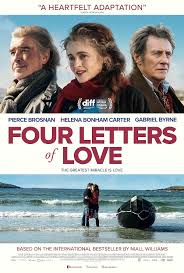
FOUR LETTERS OF LOVE
Ireland, 2024, 125 minutes, Colour.
Pierce Brosnan, Gabriel Byrne, Helena Bonham Carter, Fionn O'Shea, Donal Finn, Ann Skelly, Imelda May, Norma Sheehan, Pat Shortt,
Directed by Polly Steele.
There are some and written letters at the end of this Irish film but throughout, the four letters are literally L-O-V-E.
The screenplay is by the novelist, Niall Williams, from his 1997 novel which has been published in 20 countries. If the novel has had a following, this pleasing Irish tale could also build up a following.
The film is told from the point of view of the son of the central character, William, who, saying that he was inspired by God, suddenly got up from his desk job in his older age determined to go off to the Irish coast to paint. He is played very effectively by Pierce Brosnan, sympathetic, sometimes puzzling, obsessed with his quest for painting, strange treatment of his wife and difficulties in relating to his son, Nicholas (Fionn O’Shea).
In the meantime, the audience is introduced to a parallel story, a family on the West Coast, a poet-teacher, Muiris, a ruggedly convincing Gabriel Byrne, his busy wife, Margaret, Helena Bonham Carter, a cheerful son, Donal Finn, and an exuberant daughter still at school, Angela Skelly.
Each story has its intense drama and we know that they will eventually come together.
The film is Catholic in atmosphere, an amount of God language, a sad and sudden accident and impairment, the daughter sent to an ultra-strict convent school with grim-face severe nuns and happily running away, the local priest and ceremonies, and reflection on God, God’s seemingly harsh interventions, God’s will, but also miraculous interventions in our world.
While there are some scenes in Dublin, most of the action takes place in the Irish countryside and coast, ruggedly beautiful. The performances are fine, the screenplay bringing the two stories together dramatically – and with some pervading spirituality.
Throughout the significant performance is that of Fionn O’Shea as the son Nicholas, confiding his story, a creative young man, wanting to be a writer, not understanding his father, craving some kind of affection, wilfully going after him to the coast, and then encountering the poet’s family, being welcomed, finding a home, and, beset by an infatuation with the poet’s daughter, who, herself, has married a charming but feckless young man who had helped her when she was running away from the school.
There is the potential for tragedy as the girl’s mother, Margaret, does not approve of the love, does her best to curtail it, this very much involving the literal four written letters of love. But, as we hoped for, a move towards some resolution, reconciliations, greater understandings, and the triumph of pervading love.
- The international popularity of the novel? The novelist writing the screenplay?
- The Irish setting, late 20th century, Dublin, workplaces, homes, travel through the countryside, the West Coast, the cliffs and the beaches, the town, homes, school, churches? The boarding school with the sisters? The musical score, the Irish music, the contemporary songs?
- The two stories, their development, the characters, some interconnections, and the two stories coming together?
- The title, the actual letters at the end of the film, the emphasis on the four letters spelling the word, Love?
- The initial focus on William and his story, his age, his work, humdrum, a final store, change of heart, his seeing it as God-inspired, leaving, going home, his relationship with his wife, her dismay, the lack of relationship with his son? His leaving, packing, travelling to the West Coast, setting up, the painting? The accident, the water, the impact on the painting? It’s surviving, competition, a claim?
- William and his return, the drama with his wife, his son wanting some affection, his decision to follow his father? In the same bus as Isobel, going his way?
- The Core family, Murals and his teaching, poetry, blocks, creativity, Margaret, loyal, tense, concerned about her children, love for her husband? Shawn, his music, Isobel and her wireless, the sequence on the cliff, her daring standing on the edge, Sean and his music, his sudden collapse, the consequences for the family?
- Isabel, going off to school, travelling with her father, the severity of the nuns, her running away, the encounter with XXX, the time together, the enjoyment, her returning? His arrival, the full story about the funeral, her leaving, the sisters with a moment of compassion, her returning, her expulsion? Happy to be expelled? The consequences for her, with XXX, in love, the discussions with his mother, the decision to marry, the wedding? His inability to respond, the break?
- John, getting the painting, using it as a prize, Murals and his poem, winning, the painting in the house – that is only being revealed at the end, and as being symbolic of the whole story?
- Nicholas, being the narrator, the older Nicholas looking back, his comments on his father, his father’s life and work, his mother? His being taken in by the family, staying in the house? Becoming part of the household? Infatuation with Isabel?
- The religious dimensions of the film, William and his initial vision, the light on the paper, his drawing? The religious ceremonies, the Catholic background with the severe school? The parish, the ceremonies, funerals and weddings, the contribution of the priest? William and his reappearances, ghostly?
- Shawn, incapacitated, wheelchair-bound? His sudden cure, a divine intervention, standing up, recovering his voice, his mind, his music?
- Margaret and her not wanting Nicholas to marry Isabel? Isabel and the difficulties, her facing up to them, confronting her husband?
- Nicholas, writing the letters, poetic, giving them to Margaret Post, her going into the town, destroying the letters, her subterfuge is with Nicholas? Finding reading one, on the cliffs, her change of heart?
- The final happy ending, the four letters, the four letters of Love?
Unholy Trinity, The
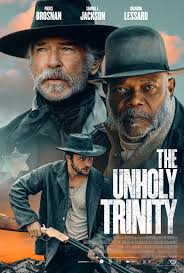
THE UNHOLY TRINITY
US, 2024, 93 minutes, Colour.
Pierce Brosnan, Samuel L.Jackson, Brandon Lessard, Gianni Capaldi, Q'orianka Kilcher, David Arquette, Veronica Ferres, Ethan Peck, Katrina Bowden, Tim Daly, Beau Knapp.
Directed by Richard Gray.
A risky religious-overtoned title. However, the Trinity here is a town in Montana, 1880. (And, when we come to think of it, Americans have a penchant for naming towns and cities Corpus Christi, Sacramento, Los Angeles, Santa Barbara… But, even though some of the action takes place in a church in Trinity, the issues are not religious!
However, the film opens with a hanging, a preacher (David Arquette). Watching the execution are the criminal’s son, (Brandon Lessard) who is urged by his father to get revenge on his enemy. Also watching the execution, and then a broad grin at the death, is Samuel L. Jackson, calling himself St Christopher.
In fact, this is quite watchable Western. The scenery is impressive, the plot, certainly not unfamiliar, carries us along with the character developments and the twists. And, it is a surprise to find Pierce Brosnan as the local sheriff, serious, good at his job, an accurate shooter.
When the young man arrives at Trinity, he seeks out the sheriff, finds him in a church, numbers he is making a mistake, and gradually has to learn about his father, a gold robbery at the time of the Civil War, much of the story explained by his then partner, although a slave, St Christopher. One of the difficulties of seeing Samuel L.Jackson as a villain is that we have liked him in so many films that we have to make an effort to accept his villainous behaviour, and it is, and to accept his exuberant overacting and smiling!
So, where is the gold? Possibly buried under one of the buildings in the town?
We are shown the usual life in the frontier town, the gunslingers and their anger, the saloon and its manager and the gamblers, the girls upstairs and prostitution, clashes with the Native Americans, killings, vengeance posses…
And, there are some human elements, the Sheriff’s sympathetic wife, Veronica Ferrie, standing in for the sheriff when needed, but also acting as a midwife to one of the pregnant town girls, and also looking after the young daughter of another of the prostitutes.
This film could have been made at any time over the past decades but here we are with a 2020s Western – and, it has been written by Lee Zachariah, Australian screenwriter, and directed by Richard Gray, Australian director. They both have certainly absorbed the traditions and conventions of the Western.
- The title, the touch of seeming-blasphemy? So many American cities with Christian titles, Corpus Christi, Sacramento, Los Angeles…? The American town in Montana? The Australian writer and the Australian director?
- 1880, the Western setting, the mountain scenery, the town itself, the saloon, the upstairs rooms, the church, the streets…? Audience expectations of this kind of town? The musical score?
- The opening, the prison, executions, the preacher and his sermon, Isaac Broadway, Henry witnessing, the father talking to his son, urging revenge? St Christopher, watching the execution and smiling? Revenge quest for the son, to track down the corrupt sheriff?
- Henry, his age, the influence of his father, his travels in the coach, arriving in Trinity? Vengeance, seeking out the sheriff, in the church, with the gun, Gabriel Dove, the news of the sheriff dead, the confrontation with Henry, disarming him, taking him to the saloon, organising the meal?
- The town, the story of Isaac Broadway, St Christopher intervening and helping Henry? Henry indebted to him? The revelation about the story, Isaac and St Christopher, the gold, the betrayal, St Christopher as a slave, Isaac hiding the gold, burying it in the town? The new sheriff, Saul Butler, the gold, the many buildings in the town, the confrontation with the Native Americans, the sheriff killing Running Club’s parents, her killing him? On the run? Gabriel Dave and his support of Running Club? The members of the town wanting vengeance on her?
- Gabriel Dove, from Ireland, sheriff, deputies, the unrest in the town especially towards Running Club, posses chasing her?
- The saloon, Sam behind the bar, the prostitutes upstairs, the pregnant woman, Julia and the customers, flirtatious, with Henry, taking her to the room, the jealous man, the gun, the confrontation with Henry, the shooting of Julia, the shooting of the attacker, his falling out the window?
- The men in the town wanting vengeance?
- Sarah, her relationship with Gabriel, looking after the little girl, daughter of Julia, the pregnant woman and her giving birth?
- St Christopher, Samuel L.Jackson and the back story, his smile, vengeance, charm, brutality, witnessing Isaac’s execution, helping Henry, wanting to find the gold, going to the house, his menacing Sarah, age of the church, digging for the gold, the confrontation and his death?
- The killings in the town, the sheriff away with Running Club, Sarah taking charge, the aftermath, St Christopher telling the posse where Running Clubs was, the pursuit, the shootout, the father and his son, the death of his son, grief inventions, the shootouts, the skill of the sheriff? Running Clubs and her shooting?
- The aftermath, Running Club safe, Sarah and the sheriff looking after the little girl, the future?
Great Lillian Hall, The
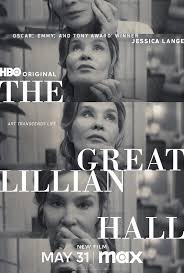
THE GREAT LILLIAN HALL
US, 2025, 110 minutes, Colour.
Jessica Lange, Kathy Bates, Lily Rabe, Jesse Williams, Pierce Brosnan, Michael Rose, Cindy Hogan, Keith Arthur Bolden.
Directed by Michael Christofer.
As we watch the central performance, we are probably thinking “The Great Jessica Lange”. For 40 years she has top lined in quite a range of strong films as well as television programs and has won two Oscars. She is perfect casting here.
The film has been directed by actor and writer, Michael Christoffer, Pulitzer and Tony award winner for his play, The Shadow Box. The screenplay is by Elisabeth Seldes Annacone, inspired by her actress aunt, Marian Seldes, who had the reputation, like Lillian, of never missing a performance.
This is a story of a Grande Dame, First Lady, of the Broadway theatre. In a collage during the opening credits, she is seen on stage in rehearsals for Chekhov’s The Cherry Orchard, intercut with many scenes of her daily life, using the same words, performances. Lillian Hall has been a significant name in Broadway lights for decades. But, a slip and a bump into a fellow-actor during rehearsal indicates some unease.
In fact, the great Lillian Hall is in the early stages of developing dementia. And, we realise, that with these slips, with some dramatic nightmares, with the frequent appearances of her deceased loving husband and her comfortable love for him and need for his presence, she is aware of the situation.
On the personal side, there is her long-time assistant, Edith (a feisty Kathy Bates) who discovers her medication and realises the truth. There is a visit from her daughter (Lily Rabe), reaching out to her mother, but her mother over the decades often emotionally remote from her daughter.
There is a visit to the doctor, clarity of diagnosis, medication, advice. But, as we expect, Lillian Hall is determined that the show must go on, that she will be in command of her memory, reciting her lines, accurate blocking of the performance on stage, communicating with her director. The central character of The Cherry Orchard often like Lillian Hall herself.
She does have some support from her sympathetic neighbour, Pierce Brosnan.
There are many scenes of rehearsal, of slips, of Lillian’s determination, of communication with her serious-minded director who places great hopes in her, hopes that are not shared by the dismal financial prospects for the producer should the show fail.
We may not have liked Lillian Hall very much if we encountered her in real life, nor she liking us. However, the film invites us to share in the dread of dementia, in the upsets that it causes, some hope when she does reach out to her daughter with a visit, and some plain speaking with Edith. But Edith does have one solution, for Lillian to be connected by microphone and Edith to be her prompter – and a sequence in the rehearsal indicating whether this could succeed or fail.
So, ultimately, the dramatic climax is the dress rehearsal, the cast ready, a substitute ready, the anxiety of the director, the impatience of the producer. And Lillian Hall, about to go to the theatre, experiencing another appearance of her husband, remembering his devotion to her, his directing her, his support.
And, even to the final moments, the audience continues to wonder if she will get to the theatre and, if so, could she actually maintain her presence of memory, could she make it through the performance, the eagerly anticipating audience arriving, including her daughter, or, the experience of her condition compelling her to face reality?
Of course, the ending, whether happy or sad, is well worth waiting for.
- Acclaim for Jessica Lange and her performance?
- The New York setting, the Broadway settings, the theatre, apartments, the New York streets, homes, restaurants? The musical score?
- The tradition of Broadway actresses, stars, first ladies? The image, the audiences, over many decades, the range of plays and performances, awards? The public lives, success? Their private lives, character, strengths and weaknesses, marriage, children, relationships, ups and downs? And the issue of ageing?
- The introduction to Lillian Hall, the opening sequences, in real life, encounters with people, the hotel doorman, friends and associates in the theatre, transferring some of those sequences in words to stage performance?
- The Chekov background, The Cherry Orchard, the central character, the screenplay drawing the parallels with Lillian Hall?
- The rehearsal sequences, the members of the cast, their characters, relating to Lillian Hall, the beginning of the difficulties, memory losses, staging and blocking? David, as director, his ambitions, dedicated to theatre, no family, working with Lillian, supporting her, understanding her, visiting her, and the visit to her daughter and family? The discussions with the producer, her hard-headedness, business issues, having the standby? The tensions behind the scenes?
- Lillian, Jessica Lange’s performance and presence, intensity, the thought behind her close-up sequences, inner intensity? Lillian, her age, reputation, her long career, directed by her husband, her devotion to him, his continued reappearance, her bond with him, wanting to be with him, the park, the park bench?
- Her forgetting her lines, her seeing her husband, the disturbances at night? Working with Edith, for 20 years, Edith and her personality, asked by Carson to look after Lillian, the sequences at home, arguments, telling Lillian off? Margaret’s visit, the quiche, the tension between mother and daughter?
- Margaret, her relationship with her mother, her marriage, her artist husband, her son? Visit to her mother, her mother turning up at the home, with David, the meal, the conversation, unable to tell her daughter the truth? The hospital sequence, the doctor telling Margaret the truth, her outburst against her mother, sense of alienation, her mother not disclosing her illness to her? Yet, the memories, her childhood, with the theatre, her parents, Lillian coming home, sitting on the bed, singing the song? And the older Lillian singing the song to her daughter? The finale, at the theatre, her mother acknowledging her daughter in the audience?
- The visit to the doctor, his talking the truth, the test, the memory, folding the paper and the hand trembling? The pills? The prospects, the symptoms, the decline, her having to expect dementia?
- Ty as her neighbour, the conversations, support and advice? His character, friendship, relationships?
- Edith, discovering the tablets, confronting Lillian, Edith frantic when Lillian visited Margaret? The plan, the earpiece for the prompting? The rehearsal? Lillian not turning up for the premiere, Edith frantic again, meeting her at the park bench, the argument, Lillian drawing on her energies, going to the theatre, the performance, Edith with the prompting, the audience, acclamation, the performance, wandering, yet the final achievement, the curtain call?
- The happy ending, Lillian and a final achievement, reconciliation with her daughter, with Edith, the success for the director and the producer?
- The film and the themes of dementia, in public figures, diagnosis, prognosis, acceptance and not, decisions how to behave, to relate? The need for letting go?
King of Kings, The/ 2025
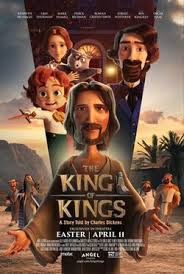
THE KING OF KINGS
South Korea/US, 2025, 100 minutes, Colour.
Voices of: Kenneth Branagh, Oscar Isaac, Uma Thurman, Pierce Brosnan, Mark Hamill, Forest Whitaker, Ben Kingsley, Jim Cummings, Roman Griffin Davis.
Directed by Seong-ho Jang.
Yes, the Gospel story. However, this film is an animation-dramatisation of a story by Charles Dickens, a story he wrote in the 1840s for his family, recited every Christmas by the author and read aloud in succeeding family generations, Dickens forbidding publication. However, in 1934, the family made it available over 60 years after the death of the author.
At the beginning of his story, Dickens wrote: My Dear Children, I am very anxious that you should know something about the History of Jesus Christ. For everybody ought to know about Him. No one ever lived who was so good, so kind, so gentle, and so sorry for all people who did wrong, or were in any way ill or miserable, as He was.
This film was made by a South Korean animator, Seong-go Jang, in Korean studios but uses the voices of some very talented English speakers, British and American.
Dickens told the story to his family and in this film he tells it to his younger son, Walter, quite a spirited boy, absorbed by stories of King Arthur, swords and dragons. And he disrupts his father’s presentation on stage of Scrooge and A Christmas Carol. s Dickens’ sympathetic wife urges him to tell the Gospel story, the young boy becoming more and more interested, initially wanting kings and dragons, but drawn into the story and following the person of Jesus. And, all the while, accompanied by his mischievous cat.
Which means that this is definitely a film for the younger audiences, but could be a pleasure for the whole family.
The animation style is vivid, the characters, the backgrounds, sometimes gently quiet with Jesus healing, with the apostles, at other times very vivid, especially Jesus walking on the water in the overwhelming storm. A great deal of the time is given to the Last Supper, the agony in the garden, Judas betrayal, uses trial and Caiaphas and Pilate, the crucifixion. Audiences who enjoy animation stories like this style and treatment.
But, a key element of the screenplay is having the young boy enter into all the action, observing close-up, being with Jesus, listening, watching, admiring, dismayed… And, at times, Dickens himself comes with his son into the action, close-up, and all the while with Kenneth Branagh’s narration as Dickens. The device of having Walter within the Gospel story is a great means for younger audiences also entering in, identifying, learning about Jesus and his story with a devout theme-highlighting commentary by Dickens.
St Ignatius Loyola founder of the Jesuits, would probably endorse this film. In his Spiritual Exercises, he urges those making retreats, or at any time with gospel contemplations, to enter into the scene, to be there, to experience the Gospels. And, a great challenge to those on retreat is to ask them where they are in the scene, at a distance observing, or very close to Jesus. This film dramatises what this closeness could be like.
The voice cast is very strong, not only Kenneth Branagh, but Uma Thurman as his wife, Mark Hamill is an extraordinarily rambunctious and King Herod pantomime-like , Ben Kingsley is a thundering villainous high priest, Caiaphas, Pierce Brosnan is a disdainful Pontius Pilate – and Oscar Isaac is Jesus.
In 2000, the animated film, The Miracle Maker, with Ralph Fiennes as the voice of Jesus, was very successful in portraying the Gospel stories. Now, The King of Kings is a very welcome addition.
- How successful as a Gospel film? This, the range of the Gospel episodes?
- Charles Dickens’ story, for his family, here for his son, the urging of his wife?
- The style of animation, from South Korea, the quality of the voice cast?
- The opening, A Christmas Carol, the story of Scrooge, Dickens in the theatre, interrupted by his son, Walter, King Arthur, dragons and sword, stubborn in reacting to his father, the cat, all the disruption, the pages scattered and torn? The audience watching, Walter and the cat? Dickens and his response?
- Dickens, his patient wife, urging Dickens to tell the story of the Gospels? Dickens own appreciation of the Gospel story, his admiration for Jesus, the tone of his narrative in telling the story?
- The visuals, journey to Bethlehem, the appearance of the angels, shepherds and magi, Herod and his overreaction, the indications of persecution of the innocent children, the flight into Egypt, Jesus growing up, the return to Galilee, the finding in the temple, Jesus emerging as an adult.
- The device of having Walter go into the action, with his cat, gradually understanding, becoming involved, emotions, observing and then becoming very close to Jesus?
- The familiar gospel sequences of Jesus’ public life, the elaborate temptations in the desert, the choosing of the apostles, Peter and the fishing, the healing of the crippled man, the casting out of the Demon, Jesus’ encounters, Mary and the request about Lazarus, the raising of Lazarus, the anointing of Jesus, the complaints of Judas, the entry into Jerusalem, building up the picture of Jesus? Especially the dramatisation of Jesus walking on the water, Peter and his walking, drowning, appeal to Jesus?
- The Last Supper, Agony in the Garden, Judas and his deal with kindness, the reaction of the scribes and Pharisees, planning to kill Jesus, this, the emphasis on healing the servant’s ear with Peter and the sword, the trial and Caiaphas thundering, rousing the crowd, the choice between Barabbas and Jesus, Pontius Pilate washing his hands, scourging, crowning with thorns, the way to Calvary, the crucifixion, the thieves and the good thief, Jesus’ death? The importance of the resurrection?
- Dickens entering into the scenes with his son? The effect of the story on Walter, sharing it with the other children?
- The telling of the Gospel stories with an appeal to the children’s audience and to families?
Last Rifleman, The
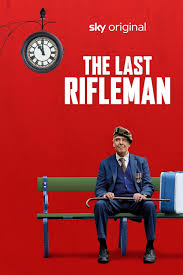
THE LAST RIFLEMAN
Ireland/UK, 2023, 95 minutes, Colour.
Perce Brosnan, Clemence Poesy, John Amos, Jurgen Prochnow, Ian McIlhinney, Samuel Bottomley.
Directed by Terry Loane.
This is a film which will entertain and inspire older audiences. It is an Irish-English production, focusing on an Irish character, a rifleman in World War II, and D-Day, some sequences of the fighting, the confrontation with the Germans, fear and heroism. While his friends have died, at the opening of the film, he is, as he states, 92 ¾. He is in an aged care home, with his wife of 68 years who has dementia, who dies.
Audiences who have seen Michael Caine and Glenda Jackson in the story based on the same characters and events, The Great Escaper, will note the similarities. But, of course, there are differences, English and Irish settings, various difficulties on travelling to the D-Day celebrations, the encounters along the way, the role of the media, the acclaim for both The Great Escaper and The Last Rifleman.
A great interest is the presence and performance by Pierce Brosnan, acting more than 20 years older than he is in real life, effective make up, a dignified personality, loyalty to his wife, loyalty to the memories of his friend, deciding to go to the D-Day celebrations for the first time returning.
The film is entertaining in the various steps for his travels, train, cab, bus, hitchhiking in the truck, the ferry to Normandy. And, encounters along the way, an earnest young man with a love of the music of Ennio Morricone and a pleasant anecdote and themes from The Mission, a fussy lady with her medications on a train, a very cheerful woman truck driver, a helpful cab driver, and a French woman (Clemence Poesy) and her two children who are able to smuggle him across the channel.
There is also an encounter with a German soldier, Jurgen Prochnow, and some mutual reflections, an encounter with an African-American soldier played by John Amos.
This is a quietly were reflective film about war and its consequences, on relationships, love and sadness, the dignity of older age and coming to terms with the past.
- Based on a memoir? (Comparisons with The Great Escaper?) Memories of D-Day, memories of war action, injuries and death? Living with the memories into old age? A story for the 21st-century audience?
- The Irish setting, the home for aged care, the rooms, dining room, offices? Travel in Ireland, cabs, buses, trains? The ferry to Cherbourg? The helicopter at the end? The French settings, the town, Normandy?
- Artie Crawford and his story? The flashbacks, the friendship with Charlie and Maggie, the photos, the beach? The scenes of action, confronting the Germans, the British and the Irish, the casualties? Artie and his fear, behind the tree? Charlie and his concern, helping Artie, going ahead, Charlie’s death?
- Artie, 92 ¾, in the home, waking, his room, going to Maggie, the 68 years of marriage, her dementia, feeding her the ice cream, her saying Charlie? His tenderness, the kiss, sitting in the room, the quietness of her death?
- Artie, the letters and photos, writing the letter to Charlie? Inviting Charlie to the 75th commemoration? The reality of Charlie’s death, Artie marrying Maggie?
- At the home, the discussions with Tom, the D-Day 75 years celebrations, Tom and reading the paper, phoning the journalist, the confrontations with the authorities at the home?
- Artie, the decision to go, packing, his health and medication, his age, sitting outside, the laundry van, escaping in the back of the van, £20 to the driver for directions, going to the station, the free travel for those aged, in the train, the lady with her medication, chatter, helping him? The delay in getting to the ferry? The assault by the young men? The help by the cab driver, the ride and the talk, the cabby’s tribute, no fee? In the bus, the young man, helping Artie to his seat with the case, the discussion, Morricone, the reminiscence that Artie met him in Verona with his wife, shook his hand, the playing of the theme from The Mission and Artie listening, the breakdown of the bus, Artie starting to walk, the young man with him, thumbing a lift, the French family refusing, the truck driver, the woman, the talk, Artie and his turn, diabetes, Coca-Cola and the sugar?
- The problems at the ferry, his outdated passport, the authorities? Juliette and her family, the family holiday, her health? Returning home, the van? Hiding in the van, on board, giving him the room, his turn, the nurse and the doctors, plan to get him out, the van driver, Juliette picking him up, the friendship with the children, discussions about the ice cream, the seeing him on television and the boy excited? The farewell and his thanks?
- The bus with the German soldiers, his attitude, some bitter memories, the conversation with the soldier, the reminiscences, gradual mellowing, singing A Long Way to Tipperary, the German and his young days, losing the war, discovering he was on the wrong side, the reconciliation, the German waving to the British troops and their waving back?
- Artie, the tourism office, going to the restaurant, encountering the American and his granddaughter, the conversations and reminiscences, the medals, the death of the American’s brother landing on D-Day, mutual respect?
- The journalist, given the story by Tom, flying to Paris, getting to Normandy, the tourist office, finding Artie, explaining the situation?
- The ceremonies, Artie having to face the truth that he was the last of the riflemen, going to the cemetery, Charlie’s grave, the memories, the media, the helicopter ride, Charlie and the acclamation?
- The sadness of the story, the nobility of the human spirit, age, dementia, the influence of the past, the possibilities of facing the past and facing the future, even in old age?
Out-Laws, The
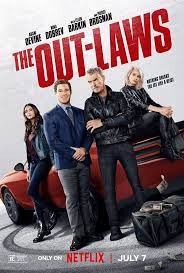
THE OUT-LAWS
US, 2023, 95 minutes, Colour.
Adam Devine, Pierce Brosnan, Ellen Barkin, Nina Dobrev, Michael Rooker, Poorna Jagannathan, Richard Kind, Julie Hagerty, Lauren Lapkus, Lil Rel Howery.
Directed by Tyler Spindel.
If Adam Sandler had been younger when this film was being made, he would have taken the central role. In fact, this comedy comes from his Happy Madison company and plays very much like one of his comedies.
Comedian Adam Devine takes Sandler’s place as Owen, pleasantly genial, bank manager, engaged to yoga instructor, Parker (Nina Dobrev.). He has very stuffy and suspicious parents, Richard Kind and Julie Hagerty. In fact, this film is noted for its star power, especially Pierce Brosnan and Ellen Barkin as the in-laws/out-laws, bank robbers. And Michael Rooker appears as the veteran FBI investigator.
So, there is some raucous comedy with the behaviour of the in-laws. And there are some serious tones with the in-laws/out-laws as the Ghost Bandits, bank robbers, teaming up with criminals, the effecting of a robbery, pursued by the FBI. Owen has his suspicions and confides them to his fiancee.
What happens is enjoyably complicated, giving information to the FBI and his being set up. However, criminals abducting his fiancee and demanding a ransom, his teaming up with the criminals for them to rob a bank mean twists. He hides in the vault, escapes, gets the money, returns to the vault. And the outlaws surrender.
Happy finale, the wedding, the in-laws able to come to the wedding – but Owen slipping a paperclip into their piece of cake for a further escape!
- The title, an amusing pun?
- From Adam Sandler’s company, tone, comic style, satire, broad comedy?
- The American town, homes, banks…? Musical score?
- The home situation, Owen and Parker, engaged, bank manager, yoga instructor, ordinary life? Owen as the young Adam Sandler style character?
- The preparation for the marriage, the prospect of the in-laws arriving, Parker happy, unhappy? Owen’s parents, their harsh attitudes, ignorance, criticisms of Parker? The dinner, Owen and the issues of storage, plans? Rehan and the criminal listening in?
- At work, the bank vault, the prank and freeing the victim, Owen’s help, knowledge?
- The arrival of the in-laws, calling themselves Lily and Billy, the star power of Pierce Brosnan and Ellen Barkin? Breezing in, no explanations, the day out with Owen, the tattooes, drinking, the skydiving?
- The bank robbery, Owen and the hangover, his noticing the clues, his growing suspicions about the Ghost Bandits?
- Oldham, the FBI agent, pursuing the Ghost Bandits, his intensity?
- Owen, his theories about his in-laws, confiding in Parker, her response?
- Rehan, the meetings with the in-laws, the deals?
- Owen, with Oldham, the truth, the set-ups?
- The criminals, the abduction of Parker, the demands?
- Owen, teaming with the in-laws, the discussions with Phoebe the bank manager, learning the details of the faults, the exits? His being locked in? The robbery, success, Owen escaping, yet getting the money, putting it back in the vault?
- The arrest, Oldham allowing the couple out for the wedding celebrations, the surrender – but Owen putting the paperclip in the cake?
