Displaying items by tag: Chiwitel Ejiofer
Backrooms
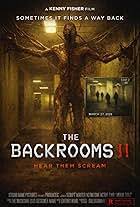
BACKROOMS
US, 2026, 110 minutes, Colour.
Chiwitel Ejiofor, Renata Reinsve, Mark Duplass, Finn Bennett, Lukita Maxwell, Robert Bobroczjyi..
Directed by Kane Parsons.
In 2026, movie box office commentators were amazed that two very small budget horror films, written and directed by young men in their 20s, excited the wide public imagination and broke box office records in the first month of their release. The first was Obsession, directed by Curry Barker. The second was Backrooms, written and directed by Kane Parsons, who in his teens, produced films for Youtube, found footage of action in strange rooms. He directed Backrooms when he was 20.
One advantage for this story is the strong leading roles played by veteran Chiwitel Ejiofor as the owner of a large furniture store and Swedish actress, Renate Reinsve as his therapist.
The film opens with some found footage, some strange characters but a strong emphasis on very large rooms which will become the feature of the central action of this film. Clarke, Ejiofor, doesn’t have many customers, has separated from his wife, has gone for counselling. But he engages a friend with a camera to film some commercials, himself as a pirate of olden days.
Sensing something behind the wall of his office, he actually passes through it into those backrooms, the audience exploring with the camera roving, strange rooms, some with odd contents, piles of furniture, staircases, basements, seemingly never-ending. But Clarke can emerge through the wall back into his office.
His idea then is to get the young man and his assistant to go through the walls, filming, exploring. And, eventually persuades the therapist to venture into the backrooms.
And, then it becomes more sinister, a giant pirate captain pursuing Clarke, the therapist more and more lost, more and more terrified – and some violent action.
The screenplay demands some attention at the end, information about a company, since disbanded, creating rooms and experimenting with the human psyche – and, the story of the therapist as a little girl, watching the demolishing of her house with sadness, which was to become the location for the furniture store and the backrooms.
How much of this action is happening in the mind of the therapist?
The film is billed as horror but it is more a film of continued uneasiness, a sense of menace, moments of violence, a tantalisingly curious story.
- Box office success of the film, the appeal to the younger audience? The origins on YouTube? The age of the director? A film of the 2020s?
- The YouTube background, clips, found footage? Elaborated in your screenplay? Drama, sense of menace, disorientation, touches of horror?
- The opening, bewilderment, the found footage, the backrooms? The later explanation of the company, experiments, creativity, failure, observing behaviour?
- Introduction to Clarke, his furniture store, the vast showroom, no customers, his staff, the filming of the commercial, the pirate captain, his style, Bob as photographer, Kat as assistant? Clerk falling off the chair, the collapse?
- Clark, to his therapist, Mary, her age, presence, style, questions, getting into dialogue with her as her being his wife, the truth, his drinking, work, blaming others for his failure, as an architect, the shop, leaving the house? His sense of disorientation?
- The episodes with going through the wall, puzzle, returning, the architecture of the rooms, vastness, the various contacts, the furniture file, the reverse Stop sign, stairs, basements, the various levels, the colour scheme, the whiteness of the walls? The effect on Clark, bewilderment, puzzle, his architects I?
- His calling in Bob and Kat, the camera, their apprehension, going through the wall, the exploration, lowering Bolt down into the passage, the room, listening the rope, pulling, being dragged down? The effect on Bob and Kat, disappearance?
- The further bewilderment, the range of rooms, the fastness? The appearance of the giant pirate, the confrontation, Clark and his death?
- The role of Mary, as a little girl, the house being pulled down, her regrets, the fingerprints in the clay? Her hoping this present? The trauma of the house? The effect on her mind?
- Mary, at the store, entering through the wall, the confrontations with Clark, the discussions, the tensions, psychological conflict, talking with him as therapist? In the room, the figure of the table, the woman standing, the man in the chair, Clark and his explanations, removing the woman’s school, playing placing it on Mary’s head? The discussions and interactions? The appearance of the giant pirate, killing clerk?
- Mary, her continuing through the backrooms, the effect, the pursuit of the pirate, her being tracked, his violence, the various rooms and the defence, her escapes, her attacking the pirate? The effect on her, all this happening in her mind?
- The rescue, Phil, the company, the explanations? The ultimate effect for Mary?
Eleanor the Great
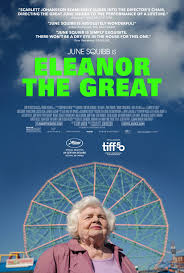
ELEANOR THE GREAT
US, 2025, 98 minutes, Colour.
June Squibb, Erin Kellyman, Chiwitel Ejiofor, Jessica Hecht, Rita Zohar, Will Price, Stephen Singer.
Directed by Scarlett Johansson.
The title of the film does not appear until the end – after we have come to know Eleonor very well. Had the title been at the beginning of the film it might have read: Eleonor the Abrasive. She is a bit of a tough case!
This is a star vehicle for veteran actress, June Squibb, turning 96 when the film was released – though her character is only 94! Recently, June Squibb was seen in an action comedy, Thelma. She is certainly a good advertisement for life in the 90s!
Eleonor is a widow, a convert to Judaism, now sharing an apartment in Florida with her longtime friend, Bessie, also a widow with family (a very moving performance from Rita Zohar). But Bessie is from Poland, lost her family during World War II, Auschwitz, moving to the United States. There are many very moving scenes where, just sitting at the table with Eleonor, Bessie recounts the sad experiences.
When Bessie dies, Elinore has to move back to New York, rather hard on her daughter, more cheery to her grandson. But, in Florida, we have seen some examples of how Eleonor can be more than forthright, sarcastic, rude. We know that she will be changed by the end of the film (or we hope so) but we are wondering how this will be achieved.
Her daughter arranges for Eleonor to go to the local Jewish centre and join a group, in fact a Holocaust survivor group, and, we dread it as she begins, but she tells Bessie’s story as if it is her own. And there are many consequences with Eleonor trapped in this new identity.
And, at the first meeting, there is Nina (a very pleasant Erin Kelleman), wanting to observe, write an article for her journalists’ course. And she is very moved because she has just lost her mother, an artist, in an accident, and her television personality father, Roger (Chiwitel Ejiofor) has become closed in on himself.
One of the directions the film goes in is that Eleonor, a convert, goes to synagogue every Saturday, observing young girls with the bar mitzvah, regretting that she never had one, going to the sympathetic rabbi – and his text for her is the story of Esau and Jacob, Jacob’s deceiving his father, Isaac.
Nina and Eleonor bond, Eleonor beginning to mellow, sharing emotional stories, Eleanor a good listener, shopping with Nina, buying a bright red suit for her bar mitzvah ceremony.
And, then it happens, but you will have to see the drama in the synagogue and how everything will be resolved.
Bessie’s conversations in storytelling with Eleonor are inserted throughout the film and, especially at the end, moved by her sincere sadness, we listen, tearfully, to Bessie’s memories and her grief.
A pleasing film, delight with June Squibb’s portrayal of Eleonor, the tangle of her telling Bessie’s story as her own, friendship with Nina and the reconciliation, Nina and her father, a mixture of laughter and tears.
This is a first feature film directed by well-known actress, Scarlet Johansson.
- An American story, the Jewish story, Holocaust story – in the 21st-century US?
- Florida, apartments, the beach, shops? New York, the Bronx, the apartments, the streets, Jewish centre, the synagogue, the University, television station? Atmosphere? The musical score and atmosphere, the popular songs, and I’m Still Here, Blue Skies?
- The title not appearing until the end, Illinois initially abrasive, the audience anticipating the change – and the joy and sadness of the change?
- Eleanor, midwest background, marrying Harry, family, relationship with her daughter, grandson? That it husband? The friendship with Bessie, Bessie’s background, Poland, the Holocaust, her telling her story, the sadness? The bond between the two, the room, getting up, breakfast, shopping, wanting the Kosher objects, and abrasive with Charlie the attendant? Abrasive with the friend at the checkout counter? Bessie, sad, in hospital, pretending that she was related to the founder of the Stern Hospital, Bessie dying, Eleanor sitting alone at the beach?
- Eleanor and the phone calls with her daughter, the flight, meeting them at the airport, grandson, the bond, clashes with her daughter? Going home, her comments, criticisms? Her daughter, divorced, working, the difficulties with her mother, no affirmation? The prospects for Eleanor, into care?
- In New York, going to the Jewish centre, the initial encounter, the music and singing group and her reaction, going to the Holocaust group, the introduction, Nina and her presence, observing? The question to her, her taking on Bessie’s identity, telling the story, the pathos, the response? Nina and wanting to write her essay, wanting to interview Eleamor? The emails, phone calls, arriving at the apartment?
- Roger Davis, his program, in denial, The Fabric of New York? The audience appreciating Nina as his daughter, the death of her mother, her father’s distance, not mentioning her mother, not really listening, absorbed in his work? Her feeling neglected? Her personality, alone, gay identity, talking with Eleanor, Eleanor understanding, the bond between them, Eleanor continuing her story? Nina writing the story, giving it to her father, her father’s affirmation of the story? Wanting to take it further, Nina and the students and the professor, Eleanor’s wariness, Roger and his wanting a television program? The setup and the synagogue?
- Eleanor, converted to Judaism for her husband, attentive, explaining synagogue to Nina, Nina not practising but being Jewish? Eleanor regretting not having a bar mitzvah, the young girls, the celebration after the ceremony, chattering, Eleanor wanting a bar mitzvah, talking to the rabbi?
- The preparation for the bar mitzvah, the story of Esau and Jacob, deceit for a good purpose and its relationship to Eleanor’s telling the story? The going together shopping to get the red outfits for the ceremony?
- Eleanor, telling the lies, her motivation, sharing Bessie’s story, the response, continuing? Going to the synagogue with her grandson, the roadblock, getting the taxi, her mother and grandson following, and the denunciationat the Synagogue, the members of the group disillusioned, Nina shocked? Eleanor trying to explain, the results?
- Nina and the conversation with her father, his expressing sympathy, on the television program, his telling the truth about Eleanor, her watching it in the aged care home, her daughter and grandson watching it, the members of the group? Roger and his explanations of Eleanor’s background, her long friendship with Bessie, wanting to tell her story and identifying with it? Nina at the studio?
- Nina, visiting Eleanor, the reconciliation, her mother and grandson coming?
- The flashbacks throughout the film, the character of Bessie, the pathos of her story, tearful, the device of having the flashbacks and the audience hearing Bessie’s version of the story, and the final, the two of them together, and coming to terms with the loss of Bessie, and more affable taunts people?
Old Guard 2, The
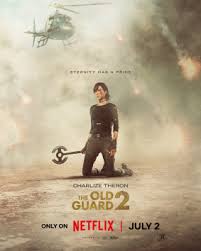
THE OLD GUARD 2
US, 2025, 107 minutes, Colour.
Charlize Theron, Kiki Layne, Matthias Schoenaerts, Marwan Kenzari, Luca Marinelli, Chiwitel Ejiofor, Veronica Ngo, Henry Golding, Uma Thurman.
Directed by Victoria Mahoney.
Audiences who enjoyed the original The Old Guard will be eager for this sequel. Those who come across the sequel first may well be puzzled about who the characters are and what is going on.
The original film explained the old guards, old godlike characters from mythologies of the past, coming alive, missions in the present, champions, clashes, action adventures.
This follow-up has much more of the same – much more, and fairly complicated plots, the return to the past and the origins of the immortals, some steps back into more recent centuries and the plights of some of these old guards, successes, failures, disappointments, retirement.
And, a visit to Korea to consult one of the old gurus and to discover what is really happening – and who is behind a lot of mysterious and complicated goings-on.
The film has a very strong cast, some from the original, and the presence of Uma Thurman as Discord, a malevolent power behind the goings-on.
And, there is a lot of costume drama from the past, some down and out misery in the present, some travel to a range of countries in the present, a mixture of drama and escapism.
The ending and resolved – expectations for the next film?
- Popularity of the original film? Welcoming this sequel? Its ending in mid-plot and the need for the third film?
- The characters from the original film, the situation of the immortals, the origins of their immortality, the range of cultures, legendary backgrounds, no religious backgrounds, working together, clashes? Flashbacks to sequences in history? The surviving, the possibility of dying? Andy and her losing her immortality? Nile and her capacity for injuring people and their losing their immortality? Quynh, partnership with Andy, the battle, Andy and her decisions, Quynh and her imprisonment, the opening of the film and her being drawn out of the sea?
- The range of locations, the Adriatic, Paris, Rome, Italian cities…? The touch of the exotic? And the quick ability to move from place to place! The musical score?
- The situation, the arms dealing, the mysterious identity, the initial action in Croatia, the CIA connection with Copley, his role in the previous film, now aligned?
- The action sequences, the fights, Andy and her martial arts skills? And the later fights with Quynh? The determination to find the mastermind?
- Audience surprise that the mastermind was Discord, the tradition of immortality, her power, vengeance, losing immortality? Her lurking in pursuing? With Quynh, winning her to her side? The buildup to destroy Andy?
- Booker, the past separation, alone, drinking, in Paris, Discord tracking him down, setting him up, his going back to Andy, the message, his change of heart, rehabilitated? Joining in the quest? His wariness of immortality, the fencing sequence, the three, wounded by Nile, willingly losing his immortality, his participation in the final confrontation, his death?
- The visit to Korea, the character of Thua, immortal, his vast library, his activities, Discord stealing the books for studying, Thua and his joining the group, participation in all the activities and fights?
- The buildup to the confrontation with Discord, her plans, the bomb, the plant, the timer?
- Quynh, the sequences with Andy, the explanations, her non-forgiving, siding with Discord, with the timer for the bomb, the meeting and their talk, the decision against Discord?
- The fights, the split second timing, the bomb, the various immortals involved? Andy regaining immortality because of Booker’s sacrifice? Nicky, her powers, not realising them?
- The sudden ending, unresolved, need for a third film?
Rob Peace
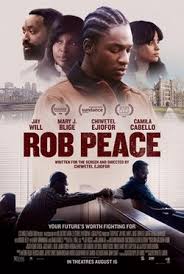
ROB PEACE
US, 2024, 120 minutes, Colour.
Jay Will, Mary J.Blige, Chiwitel Ejiofor, Camila Cabello, Curt Morlaye, Caleb Eberhardt, Michael Kelly, Mare Winningham, Juan Castano, Benjamin Papac.
Directed by Chiwitel Ejiofor.
An American story about a young man, African-American from the neighbourhoods in New Jersey, strong intelligence, wanting to do good for the world – but, ultimately, doing wrong things for many right reasons.
Rob Peace, 1980-2011, showed talent when he was a little boy, living with his mother and grandparents, separated from his father but relishing visits and outings with him. His father, very affirming of his son, full of encouragement. Then the beginnings of tragedy with his father accused of killing two young women, a long delayed trial giving cause for a later appeal and moments of freedom, his son growing up, loyal to his father but often concerned about his guilt or not.
Interestingly, this film shows some positive aspects of Catholic education in the US during the 1990s, especially at a college run by the Benedictines, St Benedict’s (and a very interesting Wikipedia entry about the history of the school), Rob’s mother wanting him to get the best education. He thrives in the atmosphere, excels in studies and being accepted into Yale.
Rob has the greatest ambitions, love of science, microbiology, hopes to work on cures for cancer. He has a sympathetic roommate, Jeff Hobbs (and Jeff Hobbs actually writing the well-received book about Rob Peace), a supportive girlfriend, the pride of his mother and of his imprisoned father.
But the wrong things for some right reasons – a desire to raise money to help an appeal for his father leads him to take equipment from the science laboratory and manufacture drugs in his father’s abandoned home, friends serving as dealers, making money to pay for lawyers. On the one hand, he runs the risk of being arrested. On the other, he is able to get a teaching job at St Benedict’s and thrives on working with the children in classes and lab work.
Later, wanting to improve the neighbourhood in which he grew up, he collaborates with real estate agents on an ambitious plan but is thwarted by the financial collapse of 2008-2009. And, again, the need for repayments.
Actor Jay Will offers a convincing performance as Rob, the qualities of character, the twists of motivation that led to his downfall.
The film was written and directed by British actor, Chiwitel Ejiofor (who also directed The Boy who Chased the Wind, well worth seeing for its African setting), who also plays the role of the father. Singer Mary J. Blige plays his mother. Michael Kelly is a sympathetic and encouraging priest at St Benedict’s.
An interesting story, good performances, and a cautionary moral tale.
- The plain title, the focus on Rob, his character, his life, his achievements, failures, short life and death?
- New Jersey, the 1980s and 90s, the neighbourhood, homes, drug dealing, violence? The contrast with St Benedict’s and its vision for its students? Yale, the world of academia, sharing apartments? The prison sequences, the courts? The drug processing and dealing? The transformation of the neighbourhoods, the financial crash? The musical score, the songs and style of the periods?
- The book by Jeff Hobbs, his being Rob’s roommate, sharing the experiences, a tribute to Rob?
- Rob as a little boy, called Shaun, living with his mother, single, hard-working, with his grandparents and their care, the visits from his father, going out with him, the bond with his father, his father’s affirmation? The homeliness of everybody listening to the match on the porch? Rob emerging as clever, good with maths and complexities, his father affirming him as brilliant?
- The character of his father, separated from his wife, the visitations, making money, the car breaking down, the range of friends, the drug dealing? The gun? The story of the two women being shot? His arrest, the continued question throughout the film of whether he was guilty or not, the identifying of the gun, the question of the police planting the gun? The delays for the trial, found guilty, in prison?
- Shaun, teenage, his mother wanted him to be called Rob, sending him to private school, St Benedict’s, the tradition of the school, the Benedict and teachers, the character of Father Leahy, the motto of the school, all brothers helping brothers, the various other qualities, Rob’s contribution? His enjoying his time at school, the encouragement of the teachers, his education, graduation, the application for Yale, his being accepted?
- His visits to his father, the loophole, supporting his father, the hearing, the judge sympathetic, his father freed, going home, the happy times together? The appeal, coming early, the issue of finance, the expenses for lawyers, Rob and his dilemma? Advice? The judge condemning his father, back to jail?
- Rob, going to jail to visit, sharing the apartment with Jeff? The meeting with Naya, the bond with her, love? His studies, achievement, science, maths, microbiology, healing for cancer…? The support of the professor, her recognising his talent, allowing him to the laboratories? The racial encounter with the student, the Professor siding with Rob? The further encouragement, her seeing that he had taken the equipment, the hearing, her recommendation for his graduation, but not being able to recommend him for further applications?
- His father, the cancer, Rob and his decisions, gathering his friends, the drug connections in the neighbourhood, taking the equipment, going to the empty house, setting up the lab, the drugs, the sales? Yale security and pursuit? Getting enough money for a lawyer and for the medication for his father?
- Rob’s mother, time passing, her pride, the issue of her husband, his guilt, indications of his past violence? The grandparents, ageing, illness and deaths?
- The effect on Rob, the motivations for his choices, risking the law, the security at Yale, the money, throwing it out the window? His graduation?
- His father’s death, the final visit to him, pleading for him to tell the truth, his father upset? The later meeting with the couple, their being afraid to speak, their information about the gun, the photo of the father with the gun, Rob burying it at the graveside?
- Rob, going to St Benedict’s, the support of Father Leahy, the discussions, encouragement? His classes and his enjoying teaching? Possibility for research and teaching?
- His relationship with Naya, her reaction to his decisions, speaking the truth to him, her going to Rio, the phone calls, the prospect of their meeting in California?
- Rob and his eagerness to change the world for the better, his motivation, the issue of his father’s house, with the real estate agents, with his friends, the money, the loans, the drugs and sales? The financial collapse of 2008-2009?
- Continuing with the drugs, getting enough money for his friends, the gift for his mother? The courier, being followed, giving the information, the gunmen, shooting Rob?
- Portrait of a man with the enormous potential, life situations, his decisions, life cut short?
Life of Chuck, The
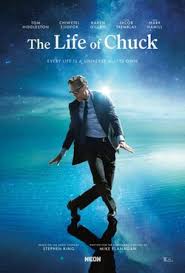
THE LIFE OF CHUCK
US, 2024, 111 minutes, Colour.
Tom Hiddleston, Jacob Tremblay, Benjamin Pajak, Chiwitel Ejiofor, Karen Gillan, Mia Sara, Carl Lumbley, Mark Hamill, David Dastmalchian, Q’Orianker Kilcher, Matthew Lillard, Taylor Franck.
Directed by Mike Flanagan.
Chuck is a very popular name, especially in the US, amiable, ordinary, your next door neighbour… So, we can expect that the life of Chuck would be nice, amiable. And, in many ways it is. But, in the eyes of America’s most prolific writer, Stephen King, always considered a master of horror stories, it could be anybody, or Anybody. Which means that Chuck is being set up as an Everyman Figure. Chuck, or a variation on him could be any of us, men or women.
Stephen King published this short story in 2020 – the initial year of the pandemic.
Writer-director, Mike Flanagan (who directed film versions of King’s Gerald’s Game, Doctor Sleep, and the fascinating Catholic-themed miniseries, Midnight Mass) has adapted the story in ways audiences who have not read the story, would be surprised. (For any audiences who intend to see Life of Chuck and knows nothing about it, best to stop here and read reviews after your own experience.)
In fact, the film tells its story in reverse, three acts. Act three starts ordinarily enough, at school, a sympathetic teacher played by Chiwitel Ejiofor. But, very soon we move into a kind of apocalyptic, end of the world scenario, news of disasters like California North lapsing into the sea, but highlighted in a suburban kind of way by the loss of Wi-Fi, interruptions to television programs, the electricity going out, sinkholes in the streets, cars abandoned, forlorn people walking home alone. All this is really alarming, but quietly communicated, especially by conversations of hapless people facing a diminishing future.
However, suddenly lit up in all the windows of houses and buildings, images of Chuck, messages of thanks for his 39 years. So, where is Stephen King going from here?
Act two steps back in time, and we meet Chuck, quiet-mannered, well dressed in his suit, an accountant at a conference, and played by Tom Hiddleston (whom many remember as Loki). In fact, this is a brief sequence in the narrative that makes an extraordinary impact: dancing in the street. A young drummer sets up her instruments in the town square, Chuck walks along, stops, looks, listens to the beat and one of the most joyous intense sequences on film follows. And Chuck is joined by a disappointed young woman whose boyfriend has suddenly cut her off. A growing crowd shares this increasing joy.
Many directors have used the theme of the Dance of Life – and this is a wonderful example.
The theme of the end of the world is put on the back burner as we go back to Chuck’s childhood, accidental death of his parents and unborn sister, cared for by his grandparents, a charmingly dancing Mia Sara, a wonderful portrait of a crabby old man, a monologue which will be valued by anybody devoted to mathematics, and played by Luke Skywalker, Mark Hamill, almost 50 years since Star Wars.
The young Chuck, a wonderful experience with the lively performance by Benjamin Pajak, grieves, listens to his grandfather, shares some mysterious ghostly experiences, but, it is revealed, at school is where he learned to dance – and a kind of prom night dance sequence which again is exhilarating.
So, who is Chuck? Could be any of us. And while he is a white American male, there is a wide range of multi--ethnic characters for multicultural experiences including the African-American drummer. And, what is Chuck’s life telling us – a quotation from Walt Whitman’s Song Of Myself he heard at school, “I contain multitudes”. So, for Every Man and Every Woman, there can be an extraordinary vitality of life. And, a realisation that life comes to an end, as the world will come to an end (in a realism aspect of this tale telling or in Chuck’s inner consciousness?).
Generally audiences have appreciated The Life of Chuck, a number of critics dismissing its sentiment and what they see as superficial observations. But, most will find the opening sequence arresting, arousing curiosity, and, as the film goes on, especially with the exuberance and dances of life, the possibilities for deeper life reflections.
- The title, expectations, Chuck as an ordinary name? Anybody? Leading to an Everyman character?
- The perspectives of Stephen King, his career, human nature, end of the world? The quote from Walt Whitman, I contain multitudes?
- The structure of the film, in reverse? The impact of the end of the world, humans facing the end of the world, the signs of thanks for Chuck? His death?
- The atmosphere of Act three, the introduction to Marty, his work at the school, students, the news of disasters, California, around the world, his talking with the parents, urging the children to school? Loss of Wi-Fi? Reading and writing? Marty at home, watching the television, communication with Felicia, their marriage, her work at the hospital, the doctor and the suicides, people deciding to go home to be with family? The long conversation with Gus and his aspirations? The conversation with Sam, reminiscing, his being revealed as working with Chuck and Albie? The many people walking home, alone, dropping their bags? The sinkhole, Marty in the car, cars parked? The contact with Felicia, wanting to be together, their love, the end of the world?
- The signs in the window, images of Chuck, messages of thanks, 39 years? The glimpse of him, his wife and son, his death?
- Act two, the explanation of Chuck, accountant, well-dressed, at the accountants’ meeting, walking along the street, Taylor, with her manager, the drums and her busking, looking at Chuck, his looking at her, the beat, the beginning of the dance, the extensive and varied choreography, the exhilaration for Chuck, the story of Janice, walking along the road, bitter, her boyfriend cutting off, invited to dance, her exuberant response, Taylor and her excitement, the crowds gathering, sharing the joy and rhythms, the money, it is one giving the gift to Janice and to Chuck, then not continuing, the dance of life?
- Act one, Chuck and his story, the accident on the ice, death of his parents, the unborn sister? Living with his grandparents? The grief? His grandmother, coming alive, the dancing, urging Chuck to dance? Albie, grief, the accountant, drinking, the locked room upstairs and his attack on Chuck? Apology? The long discourse about mathematics and its explaining everything, rationally and accurately? Urging Chuck ac to be an accountant?
- Chuck at school, short, some bullies, the encounter with Cal, the poetry teacher, the students not interested, the quotation from Walt Whitman, his song, I contain multitudes? Its meaning? The teacher’s response? The dance teacher, the lineup, her urging, the music, the range of songs and dances, illustrated (and the clip from Gene Kelly and Rita Hayworth in Cover Girl)? Chuck and his dancing skills, with Cal? Dressing up for the school evening, the teachers present, Marty and Felicia, Chuck and his reluctance, his sore leg, the teacher challenging him, going outside, his return, and the exhilaration of the dancing, the jealous boy? And the story of the scar on his hand, blaming the boy, actually jaggling it on the wire?
- Albie, going to the cupola, the ghosts and deaths, his heart attack? The funeral? The Jewish background?
- The older Chuck, discussions with Sam, his prospects, and going to the cupola, unlocking it, the contemplation? The end?
- Audience popularity, critics attacking the film, sentiment, superficial philosophising? Audiences caught up in the story, the personalities, reflections?
Bridget Jones: Mad About the Boy
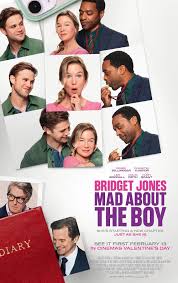
BRIDGET JONES: MAD ABOUT THE BOY
UK, 2025, 124 minutes, Colour.
Renée Zellweger, Chiwital Ejiofer, Leo Woodall, Hugh Grant, Colin Firth, Mila Jankowicz, Casper Knopf, Sally Phillips, Nico Parker, Sarah Solemani, Shirley Henderson, James Callis, Claire Skinner, Isla Fisher, Gemma Jones, Emma Thompson, Jim Broadbent, Neil Pearson, Celia Imre.
Directed by Michael Morris.
Bridget Jones came on the cinema scene almost a quarter of a century ago two very successful films. She was immediately popular, embodied in a British style by American actress Renée Zellweger. In 2016, she had a baby and another film. In 2024-2025, she is a widow, with two children at school, trying to manage, sad memories of her husband, played by Colin Firth and reappearing here in some pleasing ghostly presences. (Not too happy memories of previous films with real appearances of her parents, Jim Broadbent and Gemma Jones, and a number of old friends turning up, Sally Phillips, Shirley Henderson…).
Bridget Jones has been welcomed back by audiences – though, for many of us, her distinctive mannerisms, quirks of accent, tics of behaviour, can be often offputting or, at least, disconcerting.
So, what is the widow to do? Get some advice from her old friend-nemesis, Daniel, a welcome return by Hugh Grant, still the playboy attitude but soon to be threatened by age, illness, more than a touch of conscience, and a reconciliation with his absent Italian son.
She goes to Memorial dinners for her husband, gets loads of advice from her contemporaries, to be out and around, date, be on the market. She also gets her advice from her gynaecologist, Emma Thompson again, which is more grounded but not heeded until later.
What happens is that on Hampstead Heath, her children climb a tree, she tries to rescue them, and a handsome worker (Foxster, Leo Woodall) intervenes, she more than a touch smitten, he getting in contact, a whirlwind affair. Is this the answer to her longings? But is going back to work as a television producer, on a show for women and women’s issues, another answer?
By this stage, her fans will be hoping that she resolves life’s issues. But, in those who find her a bit offputting, not eliciting audience sympathy, would be tempted to give up on her.
But, lifechanges, her toyboy puts his foot in it about age; she is still thinking of her husband; her children react, especially her son who misses his father. And she listens more attentively to her doctor’s advice.
And, there in the background is the teacher at the children’s school, Mr Willaker (a charming Chiwitel Ejiofor, despite his propensity for discipline and continually blowing his whistle, loudly).
So, gradually, some sensible moralising, some more considered choices, some sensible interactions, and Bridget Jones will have a future.
- Popularity Bridget Jones, Renée Zellweger’s presence and performance? Mannered style? Over almost 25 years and four films?
- The London settings, home, school, television studios? House parties, large parties, the range of songs?
- Bridget’s situation, widow, the death of her husband, charity work and his death, Colin Firth, his presence in memories throughout the film? The two children, their ages, her bond with the children, at school? Her going out to the Memorial dinner for her husband, her awkwardness? With the of the mothers, the Society mother, getting her to join in the activities and her later doing this?
- Memories of her dying father, his urging her to go out? Memories of her mother? The visit to the doctor, practical, urging her out?
- At school, encountering Mr Waliker, his whistle, his manner, with the children, stern? Later talks with him, his teaching science, rational, his criticisms of Billy’s work?
- The outings, with the children, climbing the tree, Roxster and his presence, climbing and rescuing them, Mr Waliker observing?
- The relationship with Roxster, his age, his work, his manner, the effect on Bridget? Tentative, going out, her infatuation, the beginning of the relationship, a fling? The effect on her? On the children? Especially Billy? Memories of his father? The party, the dog, in the water, Roxster diving in, the wet shirt, the reaction of Bridget’s friends?
- The range of friends, from the past, new friends, meetings, chatting, urging her to enjoy herself and break out?
- Daniel, from the previous films, the Hugh Grant’s style, his babysitting and bond with the children, his own life, his illness, in the hospital, the talk with Bridget, the talk about his son? And the son arriving at the party, charming, Daniel more at peace?
- Roxster, time of the relationship, his backing out, not communicating, later return, his mention of time travel, indicating she be younger, her retort that he should come into the future with her? The break?
- The work of the television station, the program, the focus on women, the guests, the personalities, the producer, Bridget enjoying her work, talking about her relationship and finding herself on stage with the applause?
- Chloe as the nanny, her being recommended by friends, her role in the house, her ideas, efficient in every way, bonding with the children, the perfect nanny? Bridget finally accepting her?
- Bridget and her memories of her husband, going through the documents, the diary, writing the message to him, and with children and setting the balloons?
- Mr Waliker and his class with parents, her setting up a television program, the girl with the chart, Billy and his apprehension, the discussion about fruit fly, turning the discussion to the presence of the soul, and another life after death?
- The shift in emphasis from the atmosphere of the fling to more serious? With the children? The discussions with Mr Waliker, going on the walk with him, the rain, the discussions, issues of reason, imagination, magic? The effect on him, the change, still blowing the whistle, but in class? The importance of his talk with Billy? The cut, the return to the concert, Billy singing, I’ll do Anything, in memory of his father, to have a memory of his father, the enthusiastic response?
- The visit to the doctor, her practical advice, common sensed, Bridget listening to it, memories of her father, discussions with her mother?
- The change of atmosphere, the light and more permissive episodes with her friends and with Roxster? The change, the serious interactions with Mr Waliker?
- A year later, happiness, a new beginning, Mr Waliker the piano, the friends, her mother, her future in her 50s and beyond?
Venom: The Last Dance
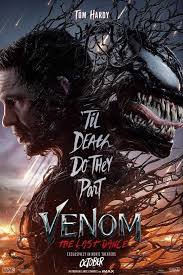
VENOM: THE LAST DANCE
US, 2024, 109 minutes, Colour.
Tom Hardy, Chiwitel Ejiofor, Juno Temple, Rhys Ifans, Stephen Graham, Clark Backo, Alana Ubach.
Directed by Kelly Marcel.
It seems that diehard Venom fans are quite pleased with this third film, the story of journalist Eddie Brock, Tom Hardy,, his being associated, Simbiotically is the word, with a parasite that lives inside him, Venom, transforming into a fearsome creature, helmet head and face, strong gnashing teeth, beyond pterodactyl wings… But, quite a conversational style voiced also by Tom Hardy, as an immigrant to the US, eager to see the Statue of Liberty and enjoy the American lifestyle, a gambling spree in Las Vegas!
However, this is an episode which may not use many converts. In many ways, the film is frequently quite grotesque, not only Venom and his dark visuals as it takes over Eddie, but a grim opening, way beyond the extremities of the universe, a sinister Xenolphage who exhorts even more fearsome and ugly creatures to destroy a codex (actually inside Eddie and Venom) and annihilate the world.
Tom Hardy, who contributed to the story with the writer of all three Venom films, Kelly Marcel, who now directs, tends to be fairly weary of it all while Venom is excited! And the film is very episodic, a kind of Roswell site about to be demolished, Chiwiltel Ejiofor is the military commander, Juno Temple an ambitious scientist, the exploits in the underground laboratories exploring parasites and Symbiotes. Eddie and Venom are in Mexico, board a plane (on the outside) for New York are involved in a sky high confrontation with monsters, falling to earth, and continually pursued by the military.
Then, cheerfully, there is a rather hippie family, led by Rhys Ifans, believing in aliens and eager to see them, giving Eddie a lift who befriends the family. But, Venom is eager for a Las Vegas experience, Sally playing the machines and losing.
But, everyone comes together at the site to be abandoned, all kinds of special effects, explosions, pursuits, mayhem… But, of course, the ending (for most if not all). A distraction came while watching the film, and a felt need for distractions for the reviewer, wondering what would God’s response be as God sat down to watch Venom, thinking about the wonders of creation and realising that it might be beyond divine powers to imagine such a grimly contorted scenario as this one!)
- Venom in the Marvel Universe? Preceding films? The continuity? This film is a climax?
- The theory of Symbiotes? Origins, appearance, creatures and monsters, helmet heads, teeth, tongues, wings, transformations? Linking with humans? Two personalities in one? With Eddie, his history, previous crises, the death of Patrick?
- The opening, the extremes of the universe, grim and dark, the Xenophage, bound, voice, the other creatures, the mission, the target, the Codex? The mission to Earth?
- Eddie, his personality, his link with Venom, Tom Hardy using both voices? In the bar, drunk, the drinks, the bartenders, the manifestations? The future, to leave Mexico, to go to New York, the Statue of Liberty?
- Introduction to Teddy Paine, the dream, with her twin brother, to be an astronaut, the storm, his death, her waking, call to work, her work with the Symbiotes, Sadie as her assistant? Her interactions with Strickland? The laboratory, below the Earth, elaborate? The work, the samples? Investigations? Reviving Patrick, the interrogations, his information?
- The situation with the plant, extensive, to be decommissioned, three days, the remnants?
- The targeting of Eddie, the mechanisms for surveillance, tracking him? The squads available to Strickland, the pursuit, the fight on the plane, the helicopter and the military, dropping into the water, confrontation with them, their deaths? The consequences for Strickland? His return to the plant?
- The encounter with the family, Martin, his background, preoccupation with aliens, gathering the family, travelling in the van, his wife’s support, the delight of the little boy, the questionings of the daughter? The encounter with Eddie, his friendliness, Eddie trying to keep Venom under control? The singing of the David Bowie song? The bonding, dropping Eddie in Las Vegas, giving him the $20?
- The Las Vegas episode, Venom wanting to gamble, the lack of money, hitting the poker machines, the people observing? Eddie looking drab, the encounter with the man in the suit, Eddie looking respectable? The encounter with the friend, up to the apartment, Venom enjoying the dance?
- Eddie, to the plant, with Teddy Paine, with Strickland, the encounter with Patrick and the explanations?
- Martin, the family, arriving at the site, under the fence, on the tower, able to observe everything, the collapsing tower? The final disillusionment with aliens!
- The buildup to the confrontation, the special effects, the creatures arriving, the commands of Xenophage, the staff, the destruction of the underground laboratory, on the surface, the Symbiotes escaping, making contact with Teddy Paine, the pursuit of Sadie?
- The buildup to the final drama, Strickland being wounded, on the platform, his code and eyes, setting the destruction in process? The explosion and destruction?
- The aftermath, Eddie, the hospital, separation from Venom? And the views of the Statue of Liberty?
- The final credits, possibility for future Venom stories?
