Displaying items by tag: Peter Malone's Movie Reviews
Good Night and Good Luck on Broadway
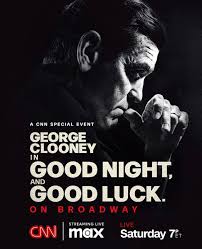
GOOD NIGHT, AND GOOD LUCK ON BROADWAY
US, 2025, 94 minutes, Colour.
George Clooney, Paul Gross, Clark Gregg, Ilana Glaser, Carter Hudson, Glenn Fleshler.
Directed by Micah Bickham, David Cromer.
The 2000 film version of George Clooney‘s and Grant Heslov’s screenplay was a film that invited its audience to think. It also invited its audience to think about the present in the light of the past, especially the mistakes of the past. When we do not learn the lessons of history, we are condemned to repeat them.
It was a strong drama with David Strathairn as journalist and television presenter, Edward R. Murrow, and Clooney himself as a producer, Fred friendly. And, contrary to transfer the time, it was filmed in black and white.
This version is filmed theatre. The Broadway stage is quite complex, quite a number of locations in the CBS building, studios, offices, the Grand Central railway station. And, with the lighting, there is quite some dynamism in the action of the play, moving from scene to scene. And, the film uses actual footage from the shows of the 1950s, especially with Senator Joe McCarthy and the finale with Judge Joseph Welch, 'Have you no decency, sir?'.
There is a framework of the popular songs of the period and they are interspersed throughout the action. Clooney himself is very strong, this time playing Edward R. Murrow, often speaking straight to camera, using Murrow’s rather more clipped accent and timing, almost equivalent of preaching to the television audience. (And there is laughter from the audience at a comment with the best people leaving the US by plane for France – which Clooney and his wife had done, leaving Trump’s America in 2025.)
The anti-Communist activities of Senator Joseph Mc Carthy of Wisconsin, his hounding of anyone suspected of having Communist links strengthened the atmosphere of fear created soon after the end of World War II and the beginning of the Cold War. The United States turned its back on its wartime ally, the Soviet Union, when the Iron Curtain came down. House Committee hearings on Un American activities were held in the late 1940s and early 1950s which led to the blacklisting of many alleged Communist party members or sympathisers in the public service, the armed forces and the entertainment industry. Playwright Lilian Hellman called this period in American politics 'Scoundrel Time'. Arthur Miller's play 'The Crucible' served as an allegory of these witch hunts.
There have been a number of films on this era including a portrait of Mc Carthy in Tail Gunner Joe with Peter Boyle, of Mc Carthy’s adviser, Roy Cohn in Citizen Cohn with James Woods. Cohn appears in the 1990s critique of the US, Angels in America. The Front and Guilty by Suspicion were films about Hollywood and these times. Journalist and television personality, there is a scantily critical performance by Jeremy strong has, in the film about, The Apprentice. Edward R. Murrow, was played by Daniel J. Travanti in Murrow. Murrow is now the subject of Goodnight, and Good Luck, which was his signing off phrase for his broadcasts.
This production confines itself to the challenge made by CBS television to Mc Carthy by Edward R. Murrow. Murrow had built up a reputation for solid and fearless journalism with broadcasts from London during the war. We see his research and legal team at work, the stances of Bill Paley, head of CBS in the face of political pressure and pressure from the sponsors, Alcoa. We see a television news anchor (Clark Gregg) hounded by the conservative press. We see two people on the team who conceal their marriage because CBS rules did not allow couples to work for the company. We see Murrow interviewing Liberace and the entertainer answering questions about his hopes for his marriage. We also see Murrow as a smoker. This reminds us that in the 1950s, honesty and concealment were major issues for celebrities in the public eye but smoking was not.
1. Filmed theatre ? Broadway production and style? History? Relevant to the 21st century?
2.The staging, rooms within the set, movement within the sets, close-ups? Fluid camera work, studios? The clips from television coverage of senate hearings? Authentic?
3.The range of songs, their being used as a chorus, the lyrics and comment?
4.Audience knowledge of the characters, the events? Of Murrow, Mc Carthy, CBS?
5. The feel for the times? CBS and its history? Celebrities on television? The end, the critique, the critique of TV entertainment as mindless? Analysis – and the reference to Ed Sullivan and Steve Allen being substituted for education programs? Audiences 70 years on? The song about television – 1953 style?
6.The 1953-54 setting, the heritage of the House Committee on Un American Activities? The Mc Carthyist era? Public service and entertainment industry fears? The experience of the black list? Lives and careers being affected? The need for integrity? Power and its use? The fanaticism of anticommunism at the period and fear? The reference to Julius Caesar – and destiny not in the stars but in ourselves? The finale with Judge Welsh and his comment on Mc Carthy’s lack of decency?
7..Television, the role of Edward R. Murrow? His celebrity status, his own integrity, the issues, his stance against Mc Carthy, the two colonels visiting and discussing the case? The interviews with William Paley? The attitude of CBS, the freedom to produce his programs? Alcoa and the sponsorship of the program, the possibility of the withdrawal of advertising revenue? The introduction of the Detroit case and the discussions about programs? The footage of the soldier being interviewed? His being dismissed because of his father’s alleged communist associations, his own views, his sister’s? The interrogations at the Mc Carthy hearings? The focus on Annie Moss, the fact that there were two Annie Mosses, the footage of her being interviewed by Mc Carthy? The senators and their listening to Mc Carthy, the stance of the Constitution and freedom of speech?
8.Murrow on-screen, his program, seeing him at his typewriter, composing his words? The images of Mc Carthy? His comment? Themes of dissent not meaning disloyalty? His comments on the need for evidence, facts being verified? The responsibility of the press? The conservative journalist O’ Brien and his attacks on Murrow, on the news anchor? Offering Mc Carthy the right of reply, the screening of the whole program, Mc Carthy and his vilifying Murrow, the false accusations and Murrow’s explanation? The New York Times journalist saying that Mc Carthy dived into a pool and found that Murrow had drained it? The contrast with his more intimate programs – the visit to Liberace’s house, the discussions with Liberace, especially about his intended marriage and the indication of other cover-ups at the time?
9.David Strathairn’s performance as Murrow, his presence, character, seeing him only as a reporter, not knowing particularly much about him as a person, his family? His discussions with Fred Friendly? With William Paley, with Mickelson? His staff, the affiliates? The group discussions, watching the program, the applause? The footage? His plans? His continued smoking, the whisky, with Paley and the confrontation? His friendship with Don, urging him not to read the journalist, not sensitive enough to the fact that he was suicidal? His short obituary for his friend? The continued smoking? The final meeting with Paley, Fred and himself being ousted – and the irony that Mc Carthy, though disgraced, was still in the senate?
10.Fred Friendly, as producer, participation in the discussions, the interview with the colonels, with Paley? The authorities? The bond with Murrow, remaining with him at the end?
11.Sig Mickelson as news editor, as the boss, his discussion with Murrow about the possible sackings and streamlining, his introducing him at the dinner?
12.The picture of the staff, their work, loyalties, suspicions about communist connections?
13.Joe and Shirley, their work, their being together, the fact that they were married, CBS policy not allowing this, the scenes at home, taking off the ring to go to work? The consultation about their leaving – or at least one of them?
14.The role of Mc Carthy, his influence in the United States? Ray Cohn? Roy Cohn as his adviser? The advice given to Mc Carthy about going too far, the senators, Judge Welsh? The investigation into Mc Carthy, his disgrace and condemnation? Lilian Hellman’s referring to this period in American history as scoundrel time?
Lady in the Morgue, The
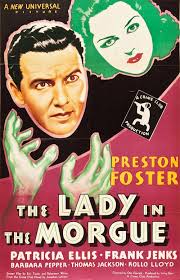
THE LADY IN THE MORGUE
US, 1938, 71 minutes, black-and-white.
Preston Foster, Frank Jenks, Patricia Ellis, Thomas E. Jackson, Bill Elliott, Roland Drew, Barbara Pepper, Joan Downing, Archie Robbins, Don Brodie.
Directed by Otis Garrett.
One of the features of going to the movies in the 1930s to the 1950s was the double program. The emphasis was on the main feature. Before the interval there were either short films as at MGM, Featurettes, or there were 60 to 70 minute long supporting feature films, especially from Colombia and Universal.
In retrospect we can see that they were the equivalent in later decades of episodes in the television series.
These three films featured Preston Foster as a private detective, not the norm at all, loud, drinking, always wanting to have a sleep, more live and eyeing the girls, but, not always particularly evident from the screenplay, always working out the solution ahead of everyone else. And, the screenplay gives him a whole lot of wisecracks. And, as with so many of the detectives, he has a sidekick, Don Williams, played by comedian Frank Jenks, sometimes shrewd, sometimes awkward, sometimes comic, and a propensity for ogling all the glamorous girls who turn up in numbers in these films.
These films are murder mysteries, the first having a dead body and many suspects, the second the discovery of a woman in the morgue, processes of identification and revelations true stories, the third with a young man hiring the two detectives because he is being thr’s eatened with notes signed by The Eye, his owing great deal of money to the casino operator, the abduction of his sister, the British Guardian, played by E.E.Clive, with his very English butler.
The film move along with quite some pace within the limited time, the puzzle of the mystery – but basically 1930s style supporting features. These three films were based on novels by Jonathan Latimer.
Last Warning, The
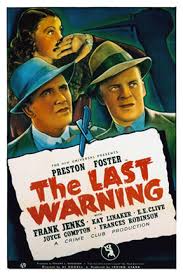
THE LAST WARNING
US, 1938, 63 minutes, Black-and-white.
Preston Foster, Frank Jenks, Kay Linaker, E.E.Clive, Joyce Compton, Frances Robinson, Raymond Parker, Robert Paige, Albert Decker, Roland Drew.
Directed by Albert Rogell.
One of the features of going to the movies in the 1930s to the 1950s was the double program. The emphasis was on the main feature. Before the interval there were either short films as at MGM, Featurettes, or there were 60 to 70 minute long supporting feature films, especially from Colombia and Universal.
In retrospect we can see that they were the equivalent in later decades of episodes in the television series.
These three films featured Preston Foster as a private detective, not the norm at all, loud, drinking, always wanting to have a sleep, more live and eyeing the girls, but, not always particularly evident from the screenplay, always working out the solution ahead of everyone else. And, the screenplay gives him a whole lot of wisecracks. And, as with so many of the detectives, he has a sidekick, Don Williams, played by comedian Frank Jenks, sometimes shrewd, sometimes awkward, sometimes comic, and a propensity for ogling all the glamorous girls who turn up in numbers in these films.
These films are murder mysteries, the first having a dead body and many suspects, the second the discovery of a woman in the morgue, processes of identification and revelations true stories, the third with a young man hiring the two detectives because he is being thr’s eatened with notes signed by The Eye, his owing great deal of money to the casino operator, the abduction of his sister, the British Guardian, played by E.E.Clive, with his very English butler.
The film move along with quite some pace within the limited time, the puzzle of the mystery – but basically 1930s style supporting features. These three films were based on novels by Jonathan Latimer.
Westland Case, The
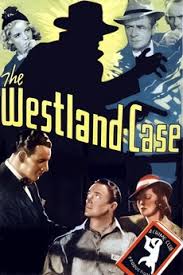
THE WESTLAND CASE
US, 1937, 62 minutes, Black-and-white.
Preston Foster, Frank Jenks, Harold Hughes, Barbara Pepper, Clarence Wilson, Theodore Von Eltz, George Meeker, Russell Hicks, Ward Bond.
Directed by Christy Cabanne.
One of the features of going to the movies in the 1930s to the 1950s was the double program. The emphasis was on the main feature. Before the interval there were either short films as at MGM, Featurettes, or there were 60 to 70 minute long supporting feature films, especially from Colombia and Universal.
In retrospect we can see that they were the equivalent in later decades of episodes in the television series.
These three films featured Preston Foster as a private detective, not the norm at all, loud, drinking, always wanting to have a sleep, more live and eyeing the girls, but, not always particularly evident from the screenplay, always working out the solution ahead of everyone else. And, the screenplay gives him a whole lot of wisecracks. And, as with so many of the detectives, he has a sidekick, Don Williams, played by comedian Frank Jenks, sometimes shrewd, sometimes awkward, sometimes comic, and a propensity for ogling all the glamorous girls who turn up in numbers in these films.
These films are murder mysteries, the first having a dead body and many suspects, the second the discovery of a woman in the morgue, processes of identification and revelations true stories, the third with a young man hiring the two detectives because he is being thr’s eatened with notes signed by The Eye, his owing great deal of money to the casino operator, the abduction of his sister, the British Guardian, played by E.E.Clive, with his very English butler.
The film move along with quite some pace within the limited time, the puzzle of the mystery – but basically 1930s style supporting features. These three films were based on novels by Jonathan Latimer.
Goodbye June
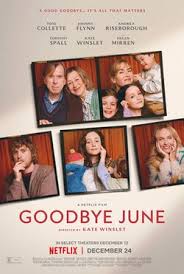
GOODBYE JUNE
UK, 2025, 114 minutes, Colour.
Helen Mirren, Timothy Spall, Kate Winslet, Andrea Riseborough, Johnny Flynn, Toni Collette, Fisayo Akinade, Stephen Merchant.
Directed by Kate Winslet.
A film with an appeal to a wide audience. It is a solid British drama. It has a very strong British cast. And, it is the first film directed by Kate Winslet, based on a screenplay by her son, Joe Anders (his father theatre and film director, Sam Mendes, and in his early 20s writing the film). Family.
Very often people don’t like to use the word death, burying the phrase, passing away, or the euphemism, passed. But here is a film about death and dying and no hesitations.
Over the decades audiences have been in admiration for Helen Mirren and the variety of roles that she has played. Helen Mirren turned 80 in 2025 and here she is playing a terminally ill mother family, collapsing at the opening of the film, rushed to hospital, decisions to stay in hospital for some kind of palliative care before her death. And many moments when we the audience share her physical pain.
The focus is on her three daughters, how they relate to their mother, how they relate to each other, their own families. And, with their mother so close to death, they are very conscious of their disputes but having the opportunity to display them, become more aware of, and, with the quiet intervention of their mother, facing up to the realities of their lives, in the past and the present.
The portrayals of the three sisters are very strong. Kate Winslet herself plays the oldest of the three, the reliable one, talented in her work, supporting others financially, children of her own that she feels she does not seen enough of, her husband away on business. By contrast, the second daughter, played by Andrea Riseborough (and glimpses of Stephen Merchant as a husband) is devoted to her children but, soon seen to be a controller, and heavy resentments towards her older sister.
But there is quite a contrast with the third sister, played by Toni Collette, caught up in New Age meditations and practices, living on the continent, with her classes, strong emotions, but afraid that time is passing her by.
The always reliable Timothy Spall plays June’s husband – an interesting portrait of the loving husband but who finds it hard to express emotions, taking refuge in sitting around and nodding off, after the canteen the pub, challenged by his daughters – and a wonderfully emotional sequence when he does a karaoke song, devoted to June.
And, then there are the grandchildren – it is Christmas time and they are preparing to take part in a Christmas pageant. They perform for their grandmother in hospital, more details of the Gospel story in the play than in many explicitly Christmas films. (And the entertaining line with grandfather playing the innkeeper, replying to Mary and Joseph that there is no room at the inn because “it’s Christmas and were very busy”.)
And back again to June, loving her family, not blind to their failures, finding ways to bring them even closer together (, moving sequences on truth-telling and re-discovering love) – and, a pleasing variation on the title when she leaves her letter to her unborn granddaughter, urging her to live her life to the full. And it is signed, Goodbye June.
- A film about death and dying? Illness? Palliative care and decisions? Family support?
- Using the language of death and dying, not just simply “passing”?
- The work of Kate Winslet, her son writing the screenplay, her direction, her performance and presence?
- The situation, the family, the mother’s illness, treatment, failing, the prospect of dying, soon? The impact on her husband, the past relationship, his coping and not coping? The response of her daughters, the contrasts, the emotion of her son, the grandchildren?
- June, her age, her marriage, for children, her love them? Her understanding them? The nature of her illness, the treatment, her collapse in the kitchen, getting her to the hospital, the surgery, the gathering of the family? Her response? Her knowing her condition?
- The doctors, the surgery, their explanations, Molly and her harsh responses, the doctor clicking his pen at her outburst? The decisions? The couple with the palliative care, June and her plan for her future? Molly’s angry outburst? Julia and her apologies?
- The decision for June to stay in hospital, Molly setting up the roster, not coinciding with Julia? The family and their keeping to the roster, the effect on them all? June, her pain, alleviation, sense of peace, patient with her children, her decision to try to reconcile them?
- Julia, the oldest, her marriage, her children, the Down Syndrome youngest? Her absent husband and his business, connections? The children and the Christmas play, dropping them at school, the arguments in the car? Her work, responsibilities – and later revelation of her paying for mortgages for her parents, for Molly…? Strong in herself, yet often angry? The interchanges with Molly?
- Molly, her appearance, her marriage, the children, the baby, bonding with her children, busy at home, to the hospital, her response to her mother, her harshness in listening to the doctors, to the palliative care team? Her roster? Anger with Julia? Her husband in the background, at home, with the children?
- Connor, living at home, waking, hearing his mother? His age, highly emotional, his response to his mother, to his father, staying at home and caring? Taking his mother to the hospital, his grief, emotions? Relationship with his sisters? His presence?
- Helen, New Age, in Germany, her sessions, her talk, her clientele, the exercises, the phone call, her coming to London, her mother’s comment about her not wearing yellow, the bond with her mother, with the others? The discovery of her pregnancy? Her partner, her later story about his relationships, Gustav and his being available for surrogacy? Helen. her age, emotions, apprehensive?
- Bern, the long marriage, his age, appearance, seemingly distracted, with his wife, at home, leaving the tap running, the flooding of the house? His relationship with his daughters? Seemingly self-preoccupied? Food, the pub, the beer, the football matches and his shouting? Fixing the television?
- Days passing, the roster the visits, the effect on June, health, her pain, the relief?
- The staff, the character of Angeli, his background, his name, his kindness to Helen, their bonding, his discussions with the children? In the interfaith chapel? Connor wandering into the Chapel, returning, with Angeli, the touch of the hand – and at the end of the final party, as a couple?
- June and her wanting to reconcile Julia and Molly, the plan with Angel, summoning them, the hurry, June’s device of getting them tell her right the letter to Helen’s child, straight talking to them? The scene together, the corridor, who first? Molly and her own idolising of Julia in the past, imitating her, Julia leaving when Molly was 13,feeling a sense of loss, betrayal? Envy of Julia and her accomplishments? Getting the Snickers, eating? Julia and a declaration about herself, having to take all the responsibilities? The bonding between the two, decision to cook the Christmas meal together?
- Connor and his exasperation with his father, his father going to the pub, telling his father off, in the pub, Bern choosing Georgia on my mind, substituting Junie, the emotional love for his wife, his son hearing it, their bonding? The house flood, Bern’s denial, different accommodation?
- The decision for the Christmas play, everybody turning up, the focus on Christmas, details of the Christmas play, the Gospel story, the performance, the humour, the joy?
- June, with Bern, her dying?
- The aftermath, the party, everybody together, joy, reconciliation, the toast to June?
- The finale, her letter to Helen’s child, expression of love, touches of immortality, the nice touch with the title, Goodbye June.
Hora de los Valientes, L/ A Time for Bravery
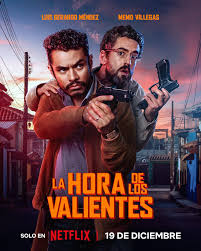
LA HORA DE LOS VALIENTES/ A TIME FOR BRAVERY
Luis Gerard Mendez, Memo Villegas, Christian Tappan. Veronica Bravo, Noe Hernandez.
Directed by Ariel Winograd.
Mexico, 2025, 107 minutes, Colour.
Oddball, odd couple action comedies are generally a matter of taste, depending on the writing and execution of farcical situations and, especially, how engaging the audience finds the two members of the odd couple, and how they work together/or not, the humour they provide for the audience.
This review is to declare that this reviewer very much enjoyed A Time for Bravery. It does not go in entirely predictable ways.
While the initial focus is on Diaz, the detective, liked by all his comrades, supported by his superior, but their all upset at his being upset at his wife leaving, unfaithful to him (though, he is able to admit that he had not been faithful entirely but, for him, that was a different matter).
An appeal is made that somebody accompany Diaz at his work, suggesting a therapist who has had an unfortunate accident and is on community service. He is Dr Silverstein, an emphasis on his Jewish background and perspectives, married, his wife puzzling about his activities. And he is played by Lewis Gerard Mendez, top Mexican comedian who has also appeared in a number of Hollywood films.
There are criminals, stealing uranium, gun violence, the revelation that the big Chief is the main criminal, Diaz and Dr Silverstein working together, the detective taken and tortured and interrogated – and, Dr Silverstein to the rescue, discovering his forcefulness, stranded on the ledge of a tall skyscraper… And so on (and some suspecting that he is a cover international agent in disguise).
Not meant to be an accurate documentary – but enjoyable farcical comedy.
- An odd couple comedy? An unlikely buddy comedy?
- The title, expectations, realism and spoof?
- The Mexican setting, the opening with the stealing of the uranium, the confrontation with the intelligence chief, the killings (and his eating)? The setting up of the investigation?
- The situation with the Commissioner, rather obtuse, his men, their pleading for Diaz to have a job, the comic touches in the presentation of the police force?
- Dr Silverstein, at home, his wife, tensions, his being busy, the accident, the woman under the car, and hurt, his being arrested, community service?
- The discussions about Diaz, the suggestion about a counsellor, Dr Silverstein, the Commissioner agreeing, his being invited to the office, his reluctance, Diaz’ arrival, the clash with his wife, his previous infidelities, not confessing, his beginning to weep, Dr Silverstein intervening, and the agreement that he go and accompanying Diaz? Counselling in the car, the dangerous driving?
- The investigation, the two men murdered and the disappearance, the interrogations, information, the connections? Chuck and his giving information? The man stealing the truck, the arrests, the interrogator and his official status, the response of Diaz and Dr Silverstein?
- The complications, on the serious level, arrests, interrogations, torture? Security surveillance and the attack on Silverstein and his house? Dr Silverstein and Diaz coming to the meal, his suggestion that Dr Silverstein’s wife was unfaithful? And the truth? His upset?
- The situation at home, his return, his wife being upset, the gun, the security man, his attack in the house, Dr Silverstein punching him out, to his surprise, his wife with the gun, tying him up in the bath, her shooting the gun? Putting the security man in the boot of the car?
- Diaz, interrogation, no information? The revelation that the archvillain was head of National intelligence? And eating again? The torture, Callis?
- The plan, the transport of uranium, to the works, setting up the situation?
- Dr Silverstein, using his wits, the car to get into the centre, asking for the toilet, the toilet paper, the cleaner and the information, the elevator, hiding, on the window ledge, the dangers, his fears, the birds, window, with the head of intelligence, inviting him in, overpowering him?
- The head, losing Dr Silverstein, overpowering him, the phone call to the security man in the boot of the car?
- The Commissioner, refusing to believe the evidence, ordering the arrest of Dr Silverstein, his getting way, the police following up, changing the building, confrontations, shootouts, the escape, the helicopter and the discussions about flying, going to the plate? The confrontations of the plant, the shootouts?
- The resolution of the situation, Diaz free, wondering whether Dr Silverstein is actually an agent or a spy, the offer from the agency and recruiting?
- Dr Silverstein in the comedy, the touch of a nerd, the touch of heroism, and a comic hero?
Nouvelle Vague
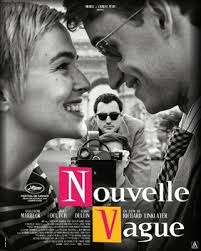
NOUVELLE VAGUE
France/US, 2025, 106 minutes, Black-and-white.
Guillaume Marbeck, Zoe Deutch, Aubry Dullin, Adrien Rouyard, Antoine Besson, Bruno Dreyfyrst, Benjamin Clery.
Directed by Richard Linklater.
1959. A quiet1950s was about to end. The revolutions of the 1960s were about to begin.
It was an outstanding period for French cinema. France already had at the first public cinema screenings, then a great tradition of directors, writers, performers. But, in the mid-50s, a group of young cineastes contributed to the magazine, Cahiers du Cinema. They knew film. They loved analysing film in all its aspects. They became noted critics. But, many of them had a great yen to get behind the camera, not only to write, but to direct. They were symbolic of the New Wave, the Nouvelle Vague.
In many ways, this is their initial story. The screenplay highlights three names, François Truffaut, Claude Chabrol and, the subject of this film, Jean-Luc Godard. Truffaut is seen having a great triumph at the Cannes Festival with The 400 Blows. Claude Chabrol was beginning a long career especially with crime thrillers. And, Godard was edgy, dissatisfied with not having directed, all kinds of ideas but lacking the means to put them into action.
This is the story of the key production in Paris in 1959 which was released under the title A Bout de Souffle, best known from its English title, Breathless.
American director, Richard Linklater, obviously has a passionate admiration for the French New Wave. Right throughout the film, well known and not so well-known cinema figures are named when they appear on screen, celebrated directors like Robert Bresson and Eric Rohmer, stars like Juliette Greco, cinematographer, Raoul Coutard. And, where possible he has employed lookalike actors for the central characters. He has chosen actors cannily resembling Truffaut, Chabrol and Godard, dark glasses and cigarettes. And, for the star of the film, Jean-Paul Belmondo, almost exact replica in Aubry Dullin. The other star of the film was the American, Jean Seberg, and Zoe Deutch certainly brings Seberg to life and a marvellous resemblance.
Godard is a driven creator, great faith in himself, easily able to disregard the pressures of the producer, the feelings of his stars, inventive in his camera style, wanting spontaneity, not writing screenplays in advance, capitalising on the moment. He is presented as something of an egotistic genius – and, Breathless and his subsequent career show that he was not entirely wrong! (Godard died in 2021, at the age of 91, 138 directing credits, certain writing credits – a career of six decades.)
This film also offers a marvellous opportunity to observe the process of filmmaking, the role of the writer and director, the choices by cinematographer and collaboration with the creative artists and his camera/cameras. We appreciate the location photography, stunt work, the many takes, the pressures on the cast, issues of make up, black-and-white photography, and the moods and whims of Godard as a decides to film, take a break, suddenly end filming for the day…
While the film shows a genial Belmondo and his collaboration with Godard, the portrait of Jean Seeberg is more complex, at the beginning her career, her success with St Joan and clashes with Otto Preminger, her coming to France, reacting to the situation, some immediate alienation from Godard’s ideas and processes, but sticking with it. (Recently Kristin Stewart starred as the actress in Seberg; however that portrait film begins after the completion of Breathless and tracks FBI interest in her life and career and political implications.)
Probably Nouvelle Vague has limited interests for the general public – but it is an opportunity for those who love cinema, for those aspiring to work in cinema, for those who remember the films from the era to have a film experience worth relishing.
- The title and expectations, audience knowledge of the Nouvelle Vague, French cinema, 1950s, Cahiers du Cinema, critical background, intellectual background, cinema technical background?
- Richard Linklater making this French film? The French screenwriters, his American perspective, admiration for the Nouvelle Vague?
- The decision for black-and-white photography, the parallels with the cinematography for Breathless? The audience sharing the experience of cinematography, 1959?
- The significant characters in this period, the directors, Truffaut, Chabrol, Godard? The choice of actors who physically resemble them? The range of other characters, their names coming up on screen to identify them? Directors, Robert Bresson at work, actors, producers, cinematographers, agents…? A sense of documentary realism along with this creative fiction?
- 1959, François Truffaut and the success of The 400 Blows at Cannes? His influence, friendship with Godard, Godard going to Cannes for the event? Chabrol and his thrillers? Eric Rohmer and other directors?
- The focus on Godard, his previous career, age, wanting to direct, his theories, his philosophies, wanting spontaneity, activity, with cameras, with the cinematographer, hand-held, concealed, moving in the streets, the cast? The producers – and his clashes?
- The choice of the topic, influence of Truffaut, Jean-Paul Belmondo, the actor physically resenting him, the choice of Jean Seberg and the actor resembling her?
- Jean Seberg, her career, St Joan, Preminger, husband, manager, come to Paris, the encounters with God guard, finding him difficult, the interactions, the style of filming, wanting spontaneity, no screenplay? Seberg, American, personality, film star, in Paris, with the press?
- The scenes of shooting the film, Godard erratic, time of, early closure, days off, his moods. discussing the ideas, Belmondo and his collaboration? The discussions with Raoul Coutard and his expertise as cinematographer, blending with Godard? Close-ups, dialogue, the kisses, the action in the street, the gangster sequences…?
- The effect on Godard, the touch of narcissism, perfectionism, spontaneity, ideas, relentless, clashes with the producer?
- Ultimately completing the film, Belmondo’s long run through the fields, prospects, the new style? The impact of the final sequence and the close-up?
- The final information, the careers of Truffaut and Chabrol, Belmondo and his success, Seberg and her career, the importance of Breathless and its influence on filmmaking, Godard himself and a 60 year career?
Opus
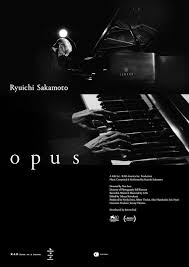
OPUS
US, 2025, 104 minutes, Colour.
Ayo Edebiri, John Malkovich, Juliette Lewis, Murray Bartlett, Melissa Chambers, Tony Hale, Stephanie Suganami, Amber Midthunder.
Directed by Mark Anthony Green.
Although it was chosen to screen and the Sundance Festival, Opus received fairly negative critical reviews and failed at the box office.
However, if you want something interesting that is not always predictable, with some themes inviting reflection, you could do worse than see Opus. (This review is in favour.)
At first we are taken into the contemporary media world, press and magazines stories, radio and television, the world of music and entertainment. And the central character is Ariel, played by a Ayo Edibiri, a lively and versatile young performer, award-winning for her role in the TV series, Bear, but also very in films, after the Hunt, Ella McCay. She is young, ambitious, wanting to do research, write stories. Her rather jovial insensitively ambitious boss is played by Murray Bartlett.
There is a lot of talk in the film about a singer and media star of the 1990s, Alfred Moretti, who has been absent from the limelight for 30 years. Suddenly, he sends an invitation for the launching of a new album, Ariel specifically included in the invitation.
And, then, transition to the deserts of Utah and a remote, rather lavish, mansion and site, the home of Moretti.
One of the great advantages of this film is the fact that John Malkovich plays Alfred Moretti, not what we might expect of a star of the 90s but he soon convinces us with his smooth talk, storytelling, charm, eccentricities, then his actually singing and his eccentric dance movements and visual and suggestive imagery. And, John Malkovich can do it (and he could even do variations on his persona in the 1999 Being John Malkovich).
But, the welcoming scene is overdone, lavish, and Ariel and ourselves noticing so many people on the property, dressed uniformly in blue, children and adults, education, workplaces – and then the word is mentioned, “cult”. If this sounds an intriguing mixture, it is.
All guests, including Juliette Lewis as a television host, are treated with great hospitality, exotic meals, their host singing with intriguing lyrics, their all being fitted out with new wardrobes. But, then the move towards some dramatic violence.
The sinister aspects of the cult soon emerge, and Ariel trying to escape, trapped, getting loose – and Moretti making a speech with all his followers standing with champagne flutes (and audiences who remember the mass suicide in Jonestown will be thinking of that). And they drink.
But, that is not exactly how the film ends – some more intriguing characterisation, the fate of Moretti, Ariel having success with a bestseller about her experiences, and the suggestion that the atmosphere of cults with charismatic leaders and power over their followers is still among us.
- The life and work of Alfred Moretti? His career, retirement, his commitment to the Level?
- The world of the media, print, radio, television, New York, offices? The journey through the Utah desert? The centre, the buildings, the grounds, interiors? Costumes and decor?
- The range of songs, the lyrics, dramatising the musical style and performance of Alfred Moretti? And the sinister aspects of the cult?
- The focus on Ariel, age 27, skill in writing, wanting to be a journalist, stories, interactions with Stan, his gentle demeanour, but wanting to do the writing with her notes, taking credit?
- The reputation of Alfred Moretti, his career in the 1990s, evocative, provocative, lyrics, visual imagery, movement and gestures? After 30 years? The prospect of a return?
- Invitation, Ariel, the discussions with her friend, anxious for a career? His urging her to create perspective? her being invited, joining the group, Stan, Clara and her past relationship media, Bianca, paparazza, Emily, The influences, Bill and the media, interviews, previous clashes with Moretti? The personalities, eager to be associated with Moretti? The plane, the welcome, the lavish treatment, the travel on the bus, the instructions, through the desert, the arrival? The fans outside, the touch of the fanatic?
- John Malkovich as Moretti, an idiosyncratic personality, the charm, sinister aspects, his speeches, jokes, his songs and performance, the welcome to the guests, renewing old acquaintances? His speech, the dinner, talking with Ariel, her questions? The emergence of the current atmosphere, the people of all ages, education, work, craft? Concierges and guards? Jorg and his story at the meal, telling her real? The others with their personal stories?
- The Level, Levellers, the philosophy behind the cult, religion, achievement, talent, democracy, the emergence of those who are talented, brands and intelligence? Moretti and his leadership, the episode with the oysters and the searching for the pearls?
- Ariel and her experience, the concierge on guard, the bubblegum sounds, listening to the song in the room, the screens and surveillance, everybody listening to the song? Ariel, going jogging, running through the compound, all the encounters? And the discussions with Moretti?
- Bill, the massage, his talk, his being killed, the body in the way, Ariel and her fear not noticing it?
- The day proceeding, Emily and her disappearance, the later appearance in the cushion, the diagnosis, her face, contortions, her death? The tour, Stand being shot with the arrow, the boys apology? Ariel and becoming more suspicious?
- The gathering, the performance of the song, eccentric, mannerisms, the lyrics? Moretti and his reaction, the press conference, asking the question, Ariel and her knowledge of Julius Caesar and her answers? The appearance of Emily? Clara and her wig, being pulled? Stan and his being stabbed? Ariel, disturbing Moretti, her escape?
- Ariel, trying to escape, wanting to leave, the sinister attacks on her, the little girl and her friendship, the puppet show, the rats and the critique of Billie holiday?
- Ariel, in the attic, the concierge coming through the window, her being captured, bound with Clara? The sympathetic member, cutting her bonds, information about her escape? The fire?
- Her running, the pursuit, climbing the fence, the fan outside (the previous scenes of the fans and their posters), Ariel taking his car?
- Two years later, the flashback to the police arriving, the members of the cult drinking the champagne, assumptions that it was like Jonestown, the revelation that they were going throughout the world, permeating all kinds of jobs for the Level to overcome? Moretti in jail?
- Ariel, the publication of the book, her success, visiting Moretti in jail, his admitting the murders, his manipulating her to write the book and publicise him?
- The TV interview, the interviewer wearing the Level pearls… And the future?
Revenge of Frankenstein, The
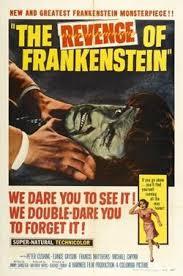
THE REVENGE OF FRANKENSTEIN
UK, 1958, 90 minutes, Colour.
Peter Cushing, Francis Matthews, Eunice Gayson, Michael Gwynn, Lionel Jeffries, Charles Lloyd Pack, George Woodbridge, Michael Ripper.
Directed by Terrence Fisher.
Mary Shelley must be amazed at the vast number of Frankenstein films. And they continue.
However, in the mid-1950s, Hammer Studios began a series of horror films based on classics, especially Frankenstein and Bram Stoker’s Dracula. The first was The Curse of Frankenstein, featuring Peter Cushing as the Baron. While there were some of the horror tropes, especially the end, the film was really made as drama, well cast, well acted, dramatising the elements of Mary Shelley’s perspective but, going beyond it, Frankenstein and the consequences of his actions.
Then, almost immediately, this sequel. And the same comment about drama and the horror tropes. Now, Frankenstein is about to be executed for his experiments, a scene at the gallows, struggle – and, his friends helping him, substituting the assistant priest in the coffin.
The bulk of the film has Frankenstein in the city, calling himself Dr Stein, treating all the fashionable inhabitants who flock to him, but also working in the poor ward. The local Council of doctors are not impressed – except for the young one, played by Francis Matthews, who knows who Dr Stein is and wants to learn from him, collaborating in a reworking of constructing the body of a new creature, wanting to transfer the brain of the crippled Karl who works in the laboratory.
So, the emphasis on drama, Peter Cushing full of dignity, clearly articulate, arrogant in his self-confidence, and the eager young assistant, details of the poor ward, the experiment, and, as expected, some dire consequences.
Six years later, there was a third Peter Cushing/Frankenstein film, Evil of Frankenstein.
- The second in the Hammer Studios trilogy of Frankenstein? The original curse of Frankenstein, the next film, Evil of Frankenstein? The continuation of the story beyond Mary Shelley?
- Hammer Studios, the 1950s, taking up the classic horror stories, emphasising the drama and the characters rather than the horror aspects? Keeping the horror aspects until the end?
- The situation, Frankenstein and his experiments, the arrest, condemnation to death, the opening and the gallows, Frankenstein being led to the gallows, the priest, Karl in attendance, the executioners? The focus on the gallows, the sounds of the commotion, Frankenstein’s escape?
- The cemetery, the two men, the salary, digging up graves, drinking, the lazy digger eating, opening the coffin, finding the priest? Frankenstein, the digger and his heart attack?
- Three years later, Dr Victor Stein in Carlsbruck, his practice, the waiting room full, the women, his work in the poor ward, the many men, his work, charity work?
- The town council of doctors, the meeting, denunciations of Dr Stein? The decision about the delegation, their arrival, being made to wait with the poor patients?
- Peter Cushing as Dr Frankenstein, presence, dignified manner, speaking clearly, dignity? Yet the ruthlessness of his experiments? Commitment to science? His treatment of the committee?
- Dr Kleve, age, earnest, his practice, education, devotion to science, his request of Frankenstein, and the interrogation, Frankenstain showing him the laboratories, the extent of his experiments, fire, the eyes moving, the hand reaching out, the brain? The revelation of the perfect body made up of parts? (And the parts coming from the men in the ward?)
- Karl, hunches, his brain, working with the doctor, the promise of a new body with his own brain?
- Margaret, her position in the town, wanting to work? Dr Stein’s reaction, ousting her? Her later visits? The worker, his confiding the truth in her? Her meeting Karl? Later encounter with Karl, trying to help, his reliance on her? At the musical recital, Karl coming, the crisis?
- The worker in the ward, his relationship with Dr Stein, helping, yet shrewd, having the key, informing Margaret?
- The experiment, taking Karl’s brain, into the new body? Karl’s body – and his discovering it, burning it? Karl, the new awareness, appearance, being bound, the treatment by the doctors? His dissatisfaction, the background of the chimpanzee and Otto and the exchange of brain?
- Dr Kleve and his helping Karl, Margaret, loosening the bonds, his getting away? The clear brain, the monstrous brain, his attack on the young girl? The police stopping the doctors, the interrogation?
- The doctors, going to the recital, the search for Karl, his going berserk?
- The reaction of the doctors, the condemnation of Dr Stein, exposing him and his response? His going into the ward, the condemnation, despising him, the attack, his death, Dr Kleve and the rescue?
- Dr Stein and his recovery, London, Dr Frank and a new life?
Autopsy of Jane Doe, The
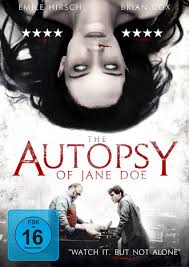
THE AUTOPSY OF JANE DOE
UK, 2016, 86 minutes, Colour.
Brian Cox, Emile Hirsch, Ophelia Lovibond, Michael McElhatton, Olwen Catherine Kelly.
Directed by Andre Ovredal.
A brief horror film, but very different. This is a British production, American setting, but filmed on location in England. And the director is Norwegian, Andre Ovredal, noted for Troll Hunter and the Dracula variation, Last Voyage of the Demeter.
In this film, the body of a beautiful but an unidentified woman is discovered and taken to the morgue for an autopsy. The autopsies are managed by a father and son who work closely together, played by Brian Cox (some years before Succession) and Emile Hirsch.
The action takes place overnight, and the action is confined within the house, but especially the laboratory for the autopsy. The screenplay begins as something of a murder mystery, a detective investigating, the commission for those doing the autopsy to provide information quickly.
Some of the autopsy procedure is quite graphic, the cutting, the intestines, close-ups… But, soon there are mysterious aspects to be found in the body of the young woman. And it is a stormy night. And the electricity goes out, requiring the generator. Strange noises throughout the house…
The film is well-written and well acted, some credibility that the situation could arise – but, then the mystery expanding, suggestions of witchcraft, mysterious presences, deaths.
The film had positive critical response – and a commendation for finding a new venue for horror (although one does think back to Burke and Hare and the Body Snatchers).
- British production, American settings, British location photography, Norwegian directors?
- Audience response, a different perspective for horror films?
- The location, the American town, the surroundings, the location for the discovery of the body? The exterior of the house? The interior, the morgue, autopsies, the dark corridors?
- The father and son working together, the background history, their working well together, mutual respect, talent? Tommy, the film illustrating his skills with autopsies, Austin, his skills? The details of the autopsy throughout the film, the close-ups of the corpse, beauty and touched, then the cutting, the opening, the focus on the body parts, the mysteries, the insect from the nose and the blood, the parchment and its signs, the missing tooth, the flower…?
- The film as a mystery, the local police, bringing the body, later returning, the assistant? And the mystery continuing?
- Austin, Emma, her visit, wanting to see the bodies, his being unwilling, his father urging her to have a look, the effect? The plan for the outing? Her later returning, the horror, her death? Austin and his grief?
- The process of the autopsy, writing on the board, the microscope an examination, the efficiency of the work, and in detail?
- The mystery, the consultation of books, identification of the flower, the thread, keeping the blood?
- The indication of witchcraft, the mystery? The oncoming storm, thunder and lightning, the radio broadcast? The outing of the lights? Austin and his searching the ceiling, the dead cat? And the rats in the background?
- Increasing mystery, the violence, the sense of presence in the building, Emma and her death, appearances, doors being locked?
- The increasing suspense, the effect on Tommy, being possessed, wanting to die, Austin and the death, Austin and his death?
- The aftermath, the police arrival, the carrying out of the bodies? That Jane Doe unharmed – and the process possibly starting again?
