Displaying items by tag: Zoe Deutch
Nouvelle Vague
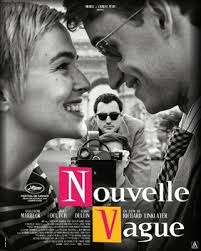
NOUVELLE VAGUE
France/US, 2025, 106 minutes, Black-and-white.
Guillaume Marbeck, Zoe Deutch, Aubry Dullin, Adrien Rouyard, Antoine Besson, Bruno Dreyfyrst, Benjamin Clery.
Directed by Richard Linklater.
1959. A quiet1950s was about to end. The revolutions of the 1960s were about to begin.
It was an outstanding period for French cinema. France already had at the first public cinema screenings, then a great tradition of directors, writers, performers. But, in the mid-50s, a group of young cineastes contributed to the magazine, Cahiers du Cinema. They knew film. They loved analysing film in all its aspects. They became noted critics. But, many of them had a great yen to get behind the camera, not only to write, but to direct. They were symbolic of the New Wave, the Nouvelle Vague.
In many ways, this is their initial story. The screenplay highlights three names, François Truffaut, Claude Chabrol and, the subject of this film, Jean-Luc Godard. Truffaut is seen having a great triumph at the Cannes Festival with The 400 Blows. Claude Chabrol was beginning a long career especially with crime thrillers. And, Godard was edgy, dissatisfied with not having directed, all kinds of ideas but lacking the means to put them into action.
This is the story of the key production in Paris in 1959 which was released under the title A Bout de Souffle, best known from its English title, Breathless.
American director, Richard Linklater, obviously has a passionate admiration for the French New Wave. Right throughout the film, well known and not so well-known cinema figures are named when they appear on screen, celebrated directors like Robert Bresson and Eric Rohmer, stars like Juliette Greco, cinematographer, Raoul Coutard. And, where possible he has employed lookalike actors for the central characters. He has chosen actors cannily resembling Truffaut, Chabrol and Godard, dark glasses and cigarettes. And, for the star of the film, Jean-Paul Belmondo, almost exact replica in Aubry Dullin. The other star of the film was the American, Jean Seberg, and Zoe Deutch certainly brings Seberg to life and a marvellous resemblance.
Godard is a driven creator, great faith in himself, easily able to disregard the pressures of the producer, the feelings of his stars, inventive in his camera style, wanting spontaneity, not writing screenplays in advance, capitalising on the moment. He is presented as something of an egotistic genius – and, Breathless and his subsequent career show that he was not entirely wrong! (Godard died in 2021, at the age of 91, 138 directing credits, certain writing credits – a career of six decades.)
This film also offers a marvellous opportunity to observe the process of filmmaking, the role of the writer and director, the choices by cinematographer and collaboration with the creative artists and his camera/cameras. We appreciate the location photography, stunt work, the many takes, the pressures on the cast, issues of make up, black-and-white photography, and the moods and whims of Godard as a decides to film, take a break, suddenly end filming for the day…
While the film shows a genial Belmondo and his collaboration with Godard, the portrait of Jean Seeberg is more complex, at the beginning her career, her success with St Joan and clashes with Otto Preminger, her coming to France, reacting to the situation, some immediate alienation from Godard’s ideas and processes, but sticking with it. (Recently Kristin Stewart starred as the actress in Seberg; however that portrait film begins after the completion of Breathless and tracks FBI interest in her life and career and political implications.)
Probably Nouvelle Vague has limited interests for the general public – but it is an opportunity for those who love cinema, for those aspiring to work in cinema, for those who remember the films from the era to have a film experience worth relishing.
- The title and expectations, audience knowledge of the Nouvelle Vague, French cinema, 1950s, Cahiers du Cinema, critical background, intellectual background, cinema technical background?
- Richard Linklater making this French film? The French screenwriters, his American perspective, admiration for the Nouvelle Vague?
- The decision for black-and-white photography, the parallels with the cinematography for Breathless? The audience sharing the experience of cinematography, 1959?
- The significant characters in this period, the directors, Truffaut, Chabrol, Godard? The choice of actors who physically resemble them? The range of other characters, their names coming up on screen to identify them? Directors, Robert Bresson at work, actors, producers, cinematographers, agents…? A sense of documentary realism along with this creative fiction?
- 1959, François Truffaut and the success of The 400 Blows at Cannes? His influence, friendship with Godard, Godard going to Cannes for the event? Chabrol and his thrillers? Eric Rohmer and other directors?
- The focus on Godard, his previous career, age, wanting to direct, his theories, his philosophies, wanting spontaneity, activity, with cameras, with the cinematographer, hand-held, concealed, moving in the streets, the cast? The producers – and his clashes?
- The choice of the topic, influence of Truffaut, Jean-Paul Belmondo, the actor physically resenting him, the choice of Jean Seberg and the actor resembling her?
- Jean Seberg, her career, St Joan, Preminger, husband, manager, come to Paris, the encounters with God guard, finding him difficult, the interactions, the style of filming, wanting spontaneity, no screenplay? Seberg, American, personality, film star, in Paris, with the press?
- The scenes of shooting the film, Godard erratic, time of, early closure, days off, his moods. discussing the ideas, Belmondo and his collaboration? The discussions with Raoul Coutard and his expertise as cinematographer, blending with Godard? Close-ups, dialogue, the kisses, the action in the street, the gangster sequences…?
- The effect on Godard, the touch of narcissism, perfectionism, spontaneity, ideas, relentless, clashes with the producer?
- Ultimately completing the film, Belmondo’s long run through the fields, prospects, the new style? The impact of the final sequence and the close-up?
- The final information, the careers of Truffaut and Chabrol, Belmondo and his success, Seberg and her career, the importance of Breathless and its influence on filmmaking, Godard himself and a 60 year career?
Juror #2
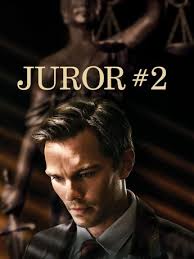
JUROR #2
US, 2024, 114 minutes, Colour.
Nicholas Hoult, Toni Collette, Chris Messina, Zoe Deutch, Kiefer Sutherland, J.K.Simmons, Cedric Yarborough, Amy Aquino, Gabriel Basso.
Directed by Clint Eastwood.
A Clint Eastwood film. The multi-Oscar-winning director made this film when he was turning 93. A strong acting career, a musician, and then a director as he turned 40, and the extraordinary variety of themes, principally westerns, police dramas, psychological dramas, American history, the music…
As with one of his key moral-themed films, Gran Torino, this film is rather small-scale, from the American suburbs. But, as with many, it is a film of reality and conscience.
Nicholas Hoult plays Justin, a reformed alcoholic, married to the teacher (Zoe Deutch) who helped him in recovery, expecting a baby. Then he is called to jury duty, wanting out because of the imminent pregnancy but, as with other jurors who protest, is compelled to serve.
The case concerns the death of a woman, on the highway at night, her body down the cliff face. The accused is her partner, a violent man, drug convictions, and all the evidence against him, an argument in the bar, his pursuing her, the dark night.
There is an interesting supporting cast. Toni Collette is the determined prosecutor, believing in the guilt, but also involved in campaigning for political election. The defence lawyer, sympathetic to the man accused, is played by Chris Messina. Kiefer Sutherland plays a friend who runs the AA meetings and offers advice. J.K.Simmons is a retired policeman who decides to investigate aspects of the case himself.
But, in this setting, there are complications for Justin, juror #2. He realises that he was in the bar that night, remembers some of the interchange, was tempted to drink but didn’t, drove home disturbed, hit a deer on the road, had not thought about this afterwards. As he listens, disturbed, beginning to question what had happened that night, pressured by the discussions of the jurors, sensitive to his wife and the imminent birth, interactions with the prosecutor, the members of the jury going as a group to the site of the death…
It is interesting to see that Clint Eastwood after so many films has decided to go for a smaller scale drama, a look at family life, interactions and a small town, the significance of the law and jury duty and decisions, the conscience of the prosecutor who had a fixed opinion on guilt but is challenged by the lawyer for the defence and an interview with the accused, challenged to do her own investigations.
Justin is also challenged in his conscience and makes decisions. So, a challenge to the audience as well, sympathies, justice, conscience, extenuating circumstances, and Clint Eastwood leaving what could be his final film with a conscience-challenge to his audience.
- The films of Clint Eastwood? Themes of justice, crime, police? Filmed in his 90s?
- The Georgia setting, homes, the courts, bars, the countryside, the highway, the scene of the death? The musical score?
- The title, the focus on Justin Kemp, his marriage, pregnant wife, the loss of earlier babies, the third trimester, his concern? The gradual revelation of his life, alcohol, the accident, rehabilitation and AA, the courts and social work, teaching, meeting his wife, the marriage? His reform, going to AA meetings, the encouragement of Larry Lasko? The chance encounter with the DEA?
- The case, the accused, in the court, his manner, the flashbacks, his reputation, drug dealing, tattoos, his girlfriend, drinking in the bar, the argument, following her outside, the altercation, her leaving in the rain, his driving away? The evidence against him? The patrons videoing the altercation, played in court? His reputation? Driving away, the identification by the old man?
- Justin, called to jury duty, his background of writing articles, not wanting to be away from his wife, the judge ordering him to stay, the other jurors and objections overruled? His sitting in the court, listening to the case, place in times, the beginnings of the flashbacks? The cumulative effect of the flashbacks, his reason for being in the bar, not drinking, upset, driving away, lack of attention, hitting what he thought was the deer, his looking around, driving away, no report? The issue of the repairs to the car and Faith checking out possible suspects, the visit to the house, Justin’s wife and her testimony?
- The skills of the prosecution, her determination, personality, interactions with the defence counsel, her ambitions, the interviews, politics and her role? Her manner in the court, assured, convinced of guilt? The contrast with the defence counsel, his manner, presentation, the arguments, cross examinations? The role of the judge?
- The effect on Justin, his conscience, his talking with the Larry? Larry giving the worst possible scenario? Later meeting with Larry, issues of conscience?
- The personalities of the jurors, the jury taking charge in managing the discussions, the angry man and the death of his brother, condemnation of the accused? The variety of personalities, age, the discussions, the medical student and her analysis of the wounds?
- The pressure on Justin, to protect himself, fairness to the accused being innocent? His raising questions after the almost unanimous decision? The range of discussions, angers, shifts of attitude, questions, the revival reliability of the old man and his identifying the accused? The weather, hit run? The interactions amongst themselves, the interactions with Justin?
- The surprise that the verdict did not coming quickly? Justin, going home, reassurances for his wife, the tensions, her asking the truth?
- The request to visit the site, the strictures, in the bus, the angry juror and his eye on Justin, analysing the situation, the pressure on Justin? The need for a verdict?
- The audience surprise at the verdict of guilty? Justin absent from the reading, being with his wife, the birth? The result for the prosecutor, defence, the prisoner himself, his declarations?
- Faith, the discussions with the defence, his pleading that the accused was not a murderer, the issue of the juror, former policeman, his contributions, going to the scene of the death, aware that Justin was there, his collecting all the documents about repairs? Including Justin’s? Justin contriving to drop the documents, the consequences, the former policeman dismissed? Justin to stay?
- Faith, her checking out the repairs, the interview with Justin’s wife, the aftermath of the decision, her discussions with Justin outside? The meeting with the accused and the defence present, her checking whether she believed him guilty or not?
- Her success, her role as DA? Her conscience, justice?
- The audience’s attitude toward Justin, saving himself, the guilty verdict, his attitude towards the accused?
- The final moment of the film, the knock on the door, faith present, the focus on Justin? His wife and the baby? The future?
