Displaying items by tag: George Clooney
Good Night and Good Luck on Broadway
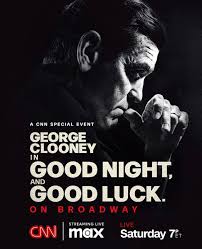
GOOD NIGHT, AND GOOD LUCK ON BROADWAY
US, 2025, 94 minutes, Colour.
George Clooney, Paul Gross, Clark Gregg, Ilana Glaser, Carter Hudson, Glenn Fleshler.
Directed by Micah Bickham, David Cromer.
The 2000 film version of George Clooney‘s and Grant Heslov’s screenplay was a film that invited its audience to think. It also invited its audience to think about the present in the light of the past, especially the mistakes of the past. When we do not learn the lessons of history, we are condemned to repeat them.
It was a strong drama with David Strathairn as journalist and television presenter, Edward R. Murrow, and Clooney himself as a producer, Fred friendly. And, contrary to transfer the time, it was filmed in black and white.
This version is filmed theatre. The Broadway stage is quite complex, quite a number of locations in the CBS building, studios, offices, the Grand Central railway station. And, with the lighting, there is quite some dynamism in the action of the play, moving from scene to scene. And, the film uses actual footage from the shows of the 1950s, especially with Senator Joe McCarthy and the finale with Judge Joseph Welch, 'Have you no decency, sir?'.
There is a framework of the popular songs of the period and they are interspersed throughout the action. Clooney himself is very strong, this time playing Edward R. Murrow, often speaking straight to camera, using Murrow’s rather more clipped accent and timing, almost equivalent of preaching to the television audience. (And there is laughter from the audience at a comment with the best people leaving the US by plane for France – which Clooney and his wife had done, leaving Trump’s America in 2025.)
The anti-Communist activities of Senator Joseph Mc Carthy of Wisconsin, his hounding of anyone suspected of having Communist links strengthened the atmosphere of fear created soon after the end of World War II and the beginning of the Cold War. The United States turned its back on its wartime ally, the Soviet Union, when the Iron Curtain came down. House Committee hearings on Un American activities were held in the late 1940s and early 1950s which led to the blacklisting of many alleged Communist party members or sympathisers in the public service, the armed forces and the entertainment industry. Playwright Lilian Hellman called this period in American politics 'Scoundrel Time'. Arthur Miller's play 'The Crucible' served as an allegory of these witch hunts.
There have been a number of films on this era including a portrait of Mc Carthy in Tail Gunner Joe with Peter Boyle, of Mc Carthy’s adviser, Roy Cohn in Citizen Cohn with James Woods. Cohn appears in the 1990s critique of the US, Angels in America. The Front and Guilty by Suspicion were films about Hollywood and these times. Journalist and television personality, there is a scantily critical performance by Jeremy strong has, in the film about, The Apprentice. Edward R. Murrow, was played by Daniel J. Travanti in Murrow. Murrow is now the subject of Goodnight, and Good Luck, which was his signing off phrase for his broadcasts.
This production confines itself to the challenge made by CBS television to Mc Carthy by Edward R. Murrow. Murrow had built up a reputation for solid and fearless journalism with broadcasts from London during the war. We see his research and legal team at work, the stances of Bill Paley, head of CBS in the face of political pressure and pressure from the sponsors, Alcoa. We see a television news anchor (Clark Gregg) hounded by the conservative press. We see two people on the team who conceal their marriage because CBS rules did not allow couples to work for the company. We see Murrow interviewing Liberace and the entertainer answering questions about his hopes for his marriage. We also see Murrow as a smoker. This reminds us that in the 1950s, honesty and concealment were major issues for celebrities in the public eye but smoking was not.
1. Filmed theatre ? Broadway production and style? History? Relevant to the 21st century?
2.The staging, rooms within the set, movement within the sets, close-ups? Fluid camera work, studios? The clips from television coverage of senate hearings? Authentic?
3.The range of songs, their being used as a chorus, the lyrics and comment?
4.Audience knowledge of the characters, the events? Of Murrow, Mc Carthy, CBS?
5. The feel for the times? CBS and its history? Celebrities on television? The end, the critique, the critique of TV entertainment as mindless? Analysis – and the reference to Ed Sullivan and Steve Allen being substituted for education programs? Audiences 70 years on? The song about television – 1953 style?
6.The 1953-54 setting, the heritage of the House Committee on Un American Activities? The Mc Carthyist era? Public service and entertainment industry fears? The experience of the black list? Lives and careers being affected? The need for integrity? Power and its use? The fanaticism of anticommunism at the period and fear? The reference to Julius Caesar – and destiny not in the stars but in ourselves? The finale with Judge Welsh and his comment on Mc Carthy’s lack of decency?
7..Television, the role of Edward R. Murrow? His celebrity status, his own integrity, the issues, his stance against Mc Carthy, the two colonels visiting and discussing the case? The interviews with William Paley? The attitude of CBS, the freedom to produce his programs? Alcoa and the sponsorship of the program, the possibility of the withdrawal of advertising revenue? The introduction of the Detroit case and the discussions about programs? The footage of the soldier being interviewed? His being dismissed because of his father’s alleged communist associations, his own views, his sister’s? The interrogations at the Mc Carthy hearings? The focus on Annie Moss, the fact that there were two Annie Mosses, the footage of her being interviewed by Mc Carthy? The senators and their listening to Mc Carthy, the stance of the Constitution and freedom of speech?
8.Murrow on-screen, his program, seeing him at his typewriter, composing his words? The images of Mc Carthy? His comment? Themes of dissent not meaning disloyalty? His comments on the need for evidence, facts being verified? The responsibility of the press? The conservative journalist O’ Brien and his attacks on Murrow, on the news anchor? Offering Mc Carthy the right of reply, the screening of the whole program, Mc Carthy and his vilifying Murrow, the false accusations and Murrow’s explanation? The New York Times journalist saying that Mc Carthy dived into a pool and found that Murrow had drained it? The contrast with his more intimate programs – the visit to Liberace’s house, the discussions with Liberace, especially about his intended marriage and the indication of other cover-ups at the time?
9.David Strathairn’s performance as Murrow, his presence, character, seeing him only as a reporter, not knowing particularly much about him as a person, his family? His discussions with Fred Friendly? With William Paley, with Mickelson? His staff, the affiliates? The group discussions, watching the program, the applause? The footage? His plans? His continued smoking, the whisky, with Paley and the confrontation? His friendship with Don, urging him not to read the journalist, not sensitive enough to the fact that he was suicidal? His short obituary for his friend? The continued smoking? The final meeting with Paley, Fred and himself being ousted – and the irony that Mc Carthy, though disgraced, was still in the senate?
10.Fred Friendly, as producer, participation in the discussions, the interview with the colonels, with Paley? The authorities? The bond with Murrow, remaining with him at the end?
11.Sig Mickelson as news editor, as the boss, his discussion with Murrow about the possible sackings and streamlining, his introducing him at the dinner?
12.The picture of the staff, their work, loyalties, suspicions about communist connections?
13.Joe and Shirley, their work, their being together, the fact that they were married, CBS policy not allowing this, the scenes at home, taking off the ring to go to work? The consultation about their leaving – or at least one of them?
14.The role of Mc Carthy, his influence in the United States? Ray Cohn? Roy Cohn as his adviser? The advice given to Mc Carthy about going too far, the senators, Judge Welsh? The investigation into Mc Carthy, his disgrace and condemnation? Lilian Hellman’s referring to this period in American history as scoundrel time?
Jay Kelly
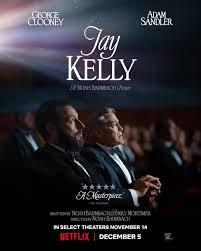
JAY KELLY
US, 2025, 132 minutes, Colour.
George Clooney, Adam Sandler, Billy Crudup, Laura Dern, Patrick Wilson, Riley Keogh, Jim Broadbent, Stacey Keach, Josh Hamilton, Isla Fisher, Louis Partridge, Eve Hewson, Emily Mortimer, Greta Gerwig.
Directed by Noah Baumbach.
A Behind the Scenes story. Or, better, a Behind the Facades story.
Late in this portrait of a very successful film star, someone comments that he is a very good film star – but, as we have seen, there is an implication: is he a good father? Is he a good person?
George Clooney himself is a significant film star. Which means that many audiences will be wondering how his portrayal of Jay Kelly is close to the reality of George Clooney himself. Because Clooney has proven himself quite a genial screen presence over the decades, they will be comfortable enough in looking at Clooney playing a very self-focused, self-satisfied star, inadequate father, quite an unpleasant person in so many ways. (Some bloggers who don’t take to Clooney have considered this film a vanity project – but, it was written and directed by Noah Baumbach, not by Clooney himself.)
One of the successful ways in communicating how Jay Kelly ticks and how his being challenged is in the portrayal of his agent, adviser, friend, continual refuge, Ron. Over the years Adam Sandler has had extraordinary success in very broad comedies. But, now and again, he takes on a serious role. And this is one of his best. He is a wheeler dealer as an agent, very successful. But, he does have a personal life, past regrets, now happy marriage and children. He has sacrificed so much of his life for Jay Kelly and we, and he, wonder how long this can go on.
The film opens with the final sequence of the making of a film, showing Kelly in action, expertly, and all the hustle and bustle of production. Then the news of the death of an old friend who gave him a start, played by Jim Broadbent, but soon indications of a self-focus rather than generosity of spirit. Then he encounters an old friend from acting school. They go for a drink – and a wonderful scene with Billy Crudup dramatising an emotional reading of the menu! But again, unpleasant revelations about Jay Kelly and his career.
Kelly has two daughters – the younger on a trip in France to Italy and Kelly deciding that he will follow his daughter on the train and go to a tribute to himself in Tuscany. At the end of the film, there is a perceptive sequence, an emotional conversation between himself and his older daughter, Riley Keogh.
This is a rather long film and there is all kinds of interesting detail for those caught up in Kelly’s life and career and this challenge to him. Suddenly Stacey Keach turns up as his curmudgeon father, no paternal feelings whatsoever. Patrick Wilson appears as a film star who employs Ron and is firing him… Plenty of episodes to keep the interest.
A highlight with Jay Kelly on the train and his communicating enjoyably with the passengers is a snatch and grab of her purse from an old lady by a German cyclist, his getting off the train and Jay Kelly in pursuit – and, of course, instantly on the Internet. There are the hosts of the festival in Tuscany and their Italian enthusiasm.
Noah Baumbach has worked many years in the film industry. And he is married to Greta Gerwig (who appears briefly as Ron’s wife), working with her in her very successful movie venture, Barbie. Which means that he has a great deal to draw on in taking us behind the scenes, behind the facades.
- The title, the entire focus on Jay Kelly, has film star, as actor, his real personality?
- The choice of George Clooney for the role, George Clooney’s reputation, impact as film star, an Oscar, critical applause, his public persona? Audience response to George Clooney, favourable, accepting in this role, some reflection of his own life and career?
- The film taking us behind the scenes, filmmaking and the opening sequence and his performing the death scene, with the dog, wanting more takes, the response of the director? The detail of the film on set, the various people present, cast, director, producer, writer, their interventions?
- The film taking us behind the facade of Jay Kelly? The public response, star, fans, people approaching him, on the train and his entertaining the passengers, the tribute in Tuscany, his visit, the hosts, the celebration?
- His dependence on Ron, Adam Sandler’s performance? Ron, the manager, the agent, promoter, his skills, being busy, his clientele, the time given to Jay Kelly? And the percentage fee? Friendship and support? How deep the friendship? On the part of each?
- Ron, the plan for the next film, the Lewis brothers, Ron and his hopes, Liz as longtime publicist, her assistant, interventions?
- The background of Peter, his death, Jay’s memories, Tim and the audition, Peter giving him the chance, promoting him, financial difficulties, asking his help, the meal together, Jay’s refusal, not seeing Peter? The impact of his death? Going to the funeral? His son’s speech?
- The meeting with Tim, not seeing each other for years, Tim and his work with children, meeting Jay, the cup of coffee, Jay deciding to go, their talk, the memories, the audition? Jay asking Tim to read the menu, the tour-de-force rendition of the menu by Tim, his talent? Tim declaring his hatred, the fight? Jay and his black eye? Tim and his injuries, hospital, the possibilities for suing?
- The visualising of the audition episode, the friendship, Jay reading for Tim, Tim’s poor audition, Jay asking to read, Peter’s agreement, his getting the part, his career?
- Jay and his marriages, his daughters, Jessica and her living in San Diego, distance from her father? Daisy, meeting with her, her boyfriend, going to Paris, the jazz festival, not wanting to spend time with her father?
- Jay, the aftermath of the interlude with Tim, consulting with Ron, Ron, his wife and family, playing tennis, the importance, the match, the phone call, Jay and his demands on Ron, Ron going?
- The issue of the tribute in Tuscany, the initial refusal, change of mind, Ron and the deals, his other client getting a tribute? Getting on the train, the difficulties, the hassles? Jay being recognised, the reactions, the range of passengers, the old lady being charmed, the two priests and their continual reappearing? The episode with the German cyclist, snatching the bag, jumping off the train, Jay’s pursuit, the hard run, the fight, Jay retrieving the bag? The passengers or following, a claim, and on social media?
- And the contrast with social media, Tim and his injuries, Jay and violence? Possibilities for suing? Ron, contacts, friends, interventions, settling the case?
- Liz, on the train, memories of the past with Ron, the separation, Liz and exasperation, getting off the train?
- Daisy on the train, the encounter with Jay, his tracking her through phones, her boyfriend and his reaction, making films? The other friends? Her not wanting to go to the tribute?
- Italy, the hosts, the Festival, the cheery driver and her response to Jay? Ben Alcock present, his career, his family present, the large family? His having a drink with Ron, talking about his career, firing Ron? The repercussions for Ron?
- Jay’s relationship with his father, neglect, inviting his father to the tribute, his arrival, taking over, his personality, jokes and talk, his turn, and his decision not to stay, Jay following him…?
- Jay, the dinner, the hosts? Ron and his phone calls to his wife? Sitting with Jay, the retrospective (and the use of George Clooney’s films)? The effect on Jay? Ron? The audience and applause?
- The effect of the awards, then, the family, his wife?
- Jake, running after the car, Ron and his leaving? Persuading him to come back?
- Jay, in the woods, the phone call to his daughter, the device of having her present, the conversation, truth being told, his absence in her life, the flashbacks to the two daughters playing, the glimpses of him watching his children? The reality of his career and neglect?
- Jay Kelly’s journey into self-knowledge, the glamour of his career and fame, the realities of his personality, family life and relationships, relationship with Ron? The future?
Wolfs
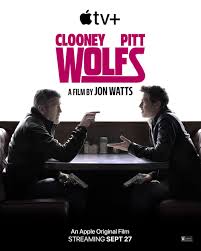
WOLFS
US, 2024, 98 minutes, Colour.
George Clooney, Brad Pitt, Amy Ryan, Austin Abrams.
Directed by Jon Watts.
Something of a surprise to find that a film with these two stars missed out on cinema release and sent straight to streaming. Not that it is a great film or anything like that, but it is the kind of film that audiences do enjoy.
Audiences who relished performances by George Clooney and by Brad Pitt over the decades, especially enjoying their work together in the Oceans 11, 12, 13 thrillers. They play off each other very well indeed – though, checking on ages, it is a bit of a surprise to find that the always boyish looking Brad Pitt is only two years younger than George Clooney.
The film opens with a compromising situation, a district attorney who is strong on moral standards (a glimpse of a poster of her claiming this during the film) has gone with a young man up to a hotel suite for a rendezvous, but, in his leaping excitedly on the bed, falls and hits his head. She has a phone number and calls it. No answer. Then a phone call back and the promise of one of those “cleaners” who come into work their magic to remove all traces in dire situations. He arrives. George Clooney.
And, then, who should arrive but another cleaner, Brad Pitt, employed by the management of the hotel. Then begins professional competition, a rivalry in techniques, claims of superiority – but they having to work together to remedy the situation. (And the audience themselves getting quite a few tips how to wrap a corpse and a carpet, hangers on one of those clothing trolleys, Tippett into the boot of the car!)
And since this all happens early in the film, where will it now go? Actually, the young man has a bag full of drugs which leads to all kinds of complications, tracking down the dealers, discovering at a wedding celebration Eastern European gangsters for whom each of them worked (and a comic situation at a wedding ceremony where they have to pretend to be at war with each other, guns drawn, in order to escape). It is that kind of scenario.
The other complication is the young man is not dead at all, and they have to use him to recover his pager from the bar where the wedding party is being held, to get him to go in with the drugs, the danger of his death from the dealers – or from Clooney himself.
As well that ends well, especially if the film is successful and there is a call for the Wolfs to be hired for another job.
- George Clooney, Brad Pitt? Audience anticipation? The screen personalities, working with each other, from each other?
- The New York settings, the hotels and hotel rooms, the streets, the marriage celebration lavish, seedy situations for drug dealers? The musical score, the range of songs – Smooth Operator?
- The initial situation, the woman in the room, the body on the floor, getting her bag, splashed with blood? The phone call, the return call, the interrogation? The cleaner turning up, his personality, unsmiling, efficient? The knock on the door, the second cleaner, his appearance, similarities, assured, the setting up of confrontation between the two?
- The theme throughout the film, the similarities, dissimilarities, competitive, suspicious, individualist, give-and-take, rivalries? The George Clooney-Brad Pitt interactions?
The situation in the hotel room, the woman as an Assistant District Attorney, the glimpse of her poster during the film advocating morality? Her shock, the story, the bar, the young man, in the room, his jumping on the bed, hitting his head, the assumption that he was dead? The two cleaners, the clothes, getting her to her daughter, covering the situation, sending her home?
- The reality of the surveillance camera – and the sequence of the credits, the playing of this footage? And who had it?
- The manager of the hotel, the control, advice? The rivalry, Margaret’s man and his techniques for turning the body, wrapping it, putting it in the stand? Out into the corridor, the elevator, making the surveillance cameras, the technique of getting it into the boot of the car?
- The discovery of the drugs, further complications? The irony that the young man was not dead, punched, quiet?
- The development of the situation with the young man, the drugs, taking into the mutual friend, her handling the situation, the irony that she knew both of them, their reactions?
- Speculation about the drugs and their origins? The various gangs?
- The young man, getting out of the car, the chase, the long chase sequence, the running, the driving, his derring-do, finally caught?
- The issue of the drugs, his explanation of his situation, studies, exams, his friend, the drugs, experimenting, going up to the room, the accident? The issue of the pager at the bar?
- Going to the wedding celebration, the young man going to the bar, the issue with the pager, his being evicted? The cleaners, caught up in the dance, the guns and their performance, the bluff, the fear that they would be killed because of their knowledge?
- The finale, going to the rendezvous, the various gangs, their car being shot up, the dead coming out of the building, their going in, finding the young man, the thought of killing him, not doing it, the other cleaner firing into the drugs, leaving a more credible situation?
- The two, taking the young man home, the talk with his father?
- The finale, the gunmen and their threats, the end?
Boys in the Boat, The
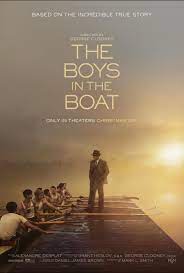
THE BOYS IN THE BOAT
US, 2023, 123 minutes, Colour.
Joel Edgerton, Callum Turner, Peter Guinness, Sam Strike, Hadley Robinson.
Directed by George Clooney.
An enjoyable film, based on actual characters and events, a sports film, a film of training, competitiveness, achievement, better aspects of the human spirit.
And, behind the camera is George Clooney, who has directed quite a number of successful films, who has star power, and who is involved very much in human rights issues.
This is 1936, Washington state, University of Seattle. But, the US is still suffering the consequences of the Depression, lack of job opportunities, makeshift townships, hunger, low self-esteem… In this context, we are introduced to a young man, Joe Rantz (British actor, Callum Turner), whose mother has died, whose father has abandoned him when he was 14, trying to manage to get casual work, living in a makeshift Depression town, but also trying to study at the University, engineering. A friend mentions to him that the coach of the University rowing team is looking for oarsmen. Joe feels there could be some financial advantage and goes to audition, to participate in the extraordinarily rigorous training and exercise, and eventually chosen as one of the team eight.
While there is some personal story for Joe, a sad encounter with his father, friendship with a fellow student, Joyce (Hadley Robinson), he becomes more and more committed to the training, his role in the eight, and the buildup to a competitive race.
The rowing coach is played by Joel Edgerton, now something of a senior citizen in his roles, stern, plainspoken, rarely smiling, a former rower, but skilled in techniques, in the demands on his men, evaluating their positions in the boat, the screenplay explaining for viewers the role of each man, but, especially the role of the Cox, his overview, his ability to engage the progress of competing boats, and, in this case, a cheeky interpretation of regulations and encouragement of the rowers.
A significant character is George, the boatbuilder, played by British Peter Guinness, who becomes a father-figure and guiding hand in Joe’s character development and sports skill.
We know that the Washington team is going to succeed locally, then in the American final, and be selected for the competition at the Berlin Olympics. There are complications when the rowing establishment tells Washington that there is not enough money to send the team to Berlin. What follows is a week of appeals and donations, and a glimpse of Joe’s father donating as Well Is listening to the radio race commentary, generous gesture from a rival that enables them to go to Berlin.
There is mention earlier of Jesse Owens. And, as the American team waits to march into the arena, there is a brief conversation with Jesse Owens who tells his white fellow-athletes, that he is trying to achieve for his people back home. And, perhaps we remember that Hitler was not impressed. And, there is a scene where Hitler comes to watch the rowing, a literal photo finish between three boats, and his leaving in a huff when the American victory is announced.
We might say that the film is formulaic as a sports film with final achievement. But, with George Clooney’s sensibility and the talent in front of and behind the camera, why not? And, it is definitely a feel-good film.
- True story? Audience awareness or not?
- The Olympics in Berlin, the atmosphere of the 1930s, Hitler, Nazism? The Olympic Games, the US not saluting? The presence of Jesse Owens?
- The sports film, using the formula, memories, the participants, the coach, the rowers? The choices, the strict and hard training, personal ups and downs, the achievement?
- 1936, Seattle, the University of Washington, the late for the rolling, the sequence at Poughkeepsie? Berlin, the Nazi buildings, flags, the stadium, the games? The musical score?
- The framework, the grandfather, watching his son, peeling the apple, memories, the grandson getting lost, helping? The heritage?
- The focus on Joe Rantz, his background story, his mother’s death, father leaving, age 14, the Depression, lack of jobs, the Depression village and its poverty, hunger and lining up for food, no money, the hole in his booted newspaper, his studying engineering, the lectures, friendship with Roger, the attraction to Joyce, his quality of life, motivation, to raise money, sense of rejection and quitting?
- The coach, not smiling, relationship with his wife, past roller, his abilities, auditioning the men, Joe asking about the payment? The strict coaching, plainspoken, the work with the other coaches, the other authorities, the possibility for going to Berlin, the hostile attitudes, the issue of raising money?
- The collage of training sequences, close-ups, hard, exercises, rowing? The coach advising there was no shame in not being selected, because of the effort? The selection, the nature of the teams, the different places and tasks, the dormitories, the better clothes for those chosen?
- Joe seeing his father, their talk, his anger, the father’s explanation, leaving? The father listening on the radio to the races, giving the donation and Joyce seeing him?
- The buildup to the race, the rivals, practices, the crowds, the train going past the rowers? Everybody watching? The effort, the strategy, winning?
- The joy and exhilaration, the teams, the coaches?
- Going to Poughkeepsie, the rivalry, the tactics, the Cox? Winning, going to Berlin, the issue of finance the appeal, the collection of money, the donations, the final gesture from the growing coach?
- Joyce, her friends, studying, the attraction to Joe, time together, the socials, in the dormitory, at the station, the brusque farewell, his return to kiss her?
- Berlin, the joy, the pomp, the games, the character of Dan, always silent, yet playing the piano? His illness, the treatment? In the preliminary? His effort, the Cox urging him on?
- The character of the Cox, cocky, cheeky, the trust of the coach, his skills, decisions, defying the coach, singing the song to encourage Dan?
- Hitler, his presence at the games, his walking out as the Americans won?
- A sports film, a film of achievement, American sports history?
