Displaying items by tag: Andrea Riseborough
Good Boy, The/ 2026
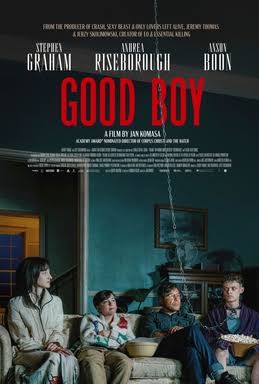
THE GOOD BOY
Poland/UK, 2025, 110 minutes, Colour.
Stephen Graham, Andrea Riseborough, Anson Boon, Kit Rakusen, Monika Frajczyk, Savannah Steyn.
Directed by Jan Komosa.
Quite an unexpected plot, disturbing and challenging, peace.
The film opens with an extended prologue showing Tommy, a young man out on the town any Yorkshire town, on the loose, no respect for anyone, allowed in crowded nightclub, music and dancing, drinking, drugs, sex, dominating his friends, violence on the streets, his eventual collapse.
Audiences will have strong opinions about young people acting like this and their seemingly reckless waste of life and time, the violent and criminal aspects, and wondering about the risks, punishment, jail time…
This is a Polish coproduction with screen Yorkshire, writing by a Polish and British team, the narrative and acting British, the technical aspects of the film, Polish.
Eventually Tommy wakes up, He finds himself in the basement of a country house, chained, bewildered and angry. Which is where the audience will start to ask questions about how to deal with this kind of young man. Actually, where he is, is the home of a couple and their young son. It quickly emerges that they have taken Tommy, not exactly to punish him but to make him aware of what he is, of what is done, the issue of rehabilitation. The audience is wondering about the motivations of the couple, the sometimes kindly, sometimes severe manner of the father, Chris (Stephen Graham) and his seemingly depressed wife (Andrea Riseborough) and the continued cheerfulness and good manners of the young son, John (Kit Rakusen). Is what the couple doing right, their motivation, a back story, issues of survival and punishment, making Tommy look at social media clips of his drunken sprees violence, his terrorising a young schoolboy?
And what will be the ultimate effect on Tommy, greater self-awareness, change in attitude, or continued bitterness and resentment? It does raise all the questions about how to treat young adult offenders, the role of prison, possibilities for rehabilitation.
And it will depend on how much the audience identifies with Tommy and how much with the husband and wife. And how the film clarifies or confuses their attitude towards methods of rehabilitation.
The film is very well acted, a complication when the couple employ a Macedonian housekeeper who is being pursued by exploitive people smugglers, and Anson Boon so effective as Tommy being seen in the various stages that he goes through, stuck in his old self, the possibilities for a better self.
- The title? The alternate title, Heel, the chain for a dog? the irony of the original title? For Tommy? To become a good boy? Jonathan as the good boy, “sunshine”?
- Polish/Yorkshire co-production? The writers, technical, Polish? British cast, locations? Universal themes?
- The prologue, Tommy, age 19, on the town, his friends, the club, music and noise, drugs, drinking, sex, violence, harassing the schoolboy flashback, his collapse in the street? His girlfriend, her not participating the drugs, her love for Tommy?
- The contrast with the country house, the grounds, interiors, Chris and Catherine, his past with the police, her grief and withdrawal, Jonathan, his age, sunshine, the good boy? The life? The background of the death of the son, his room, the memories of grief?
- The revelation of Tommy in the basement, chained, his condition, abducted? The personality of Chris, the fatherly touch, the do-gooding, talking with Tommy, the explanations, the reprimands, the morality and moralising, the videos, sequences on social media and their influence, the records of Tommy’s misbehaviour, his promoting it on social media? His reactions, Chris beating him? Conditions, the bed, food and drink?
- Kathryn, her personality, withdrawal, secluded life, the encounters with Tommy, supporting her husband, her becoming more alive?
- Jonathan, his age, with his parents, their affirmation, the encounters with Tommy, the cards, talking with him? Big Brother?
- The effect on Tommy, audience reaction to him, to the early behaviour, belief in punishment, belief in rehabilitation, Chris and his methods, the offer of the books, The Illustrated Man and the tattoos To Kill a Mockingbird…? His resentment, reactions, limitations of movement in the basement?
- The gradual change, Tommy more amenable, Chris and the conversations, letting him out of the basement, the fixing up of the roof and the ability for the chain, his greater movement, freedom in the house, meals, music, his ambiguous reactions?
- The change in the household, the freedom of movement, its effect on Tommy, the drive, the chloroform, the picnic in the countryside, returning him home? Tommy and his interactions with the family, more at home?
- Tom and his shrewdness, the numbers for the code, the implement for the chain? The quiet, his escape, the family reactions?
- Tommy, the return home, his mother, reception, going to the club, watching behaviour, his girlfriend and her succumbing to the drugs? His taking her, leaving, leaving his mother at home?
- The chloroform, taking his girlfriend, the car, burning the car, going up the drive, the family receiving him? His new family, the rehabilitation of his girlfriend? The future?
Goodbye June
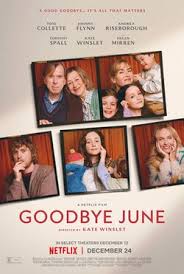
GOODBYE JUNE
UK, 2025, 114 minutes, Colour.
Helen Mirren, Timothy Spall, Kate Winslet, Andrea Riseborough, Johnny Flynn, Toni Collette, Fisayo Akinade, Stephen Merchant.
Directed by Kate Winslet.
A film with an appeal to a wide audience. It is a solid British drama. It has a very strong British cast. And, it is the first film directed by Kate Winslet, based on a screenplay by her son, Joe Anders (his father theatre and film director, Sam Mendes, and in his early 20s writing the film). Family.
Very often people don’t like to use the word death, burying the phrase, passing away, or the euphemism, passed. But here is a film about death and dying and no hesitations.
Over the decades audiences have been in admiration for Helen Mirren and the variety of roles that she has played. Helen Mirren turned 80 in 2025 and here she is playing a terminally ill mother family, collapsing at the opening of the film, rushed to hospital, decisions to stay in hospital for some kind of palliative care before her death. And many moments when we the audience share her physical pain.
The focus is on her three daughters, how they relate to their mother, how they relate to each other, their own families. And, with their mother so close to death, they are very conscious of their disputes but having the opportunity to display them, become more aware of, and, with the quiet intervention of their mother, facing up to the realities of their lives, in the past and the present.
The portrayals of the three sisters are very strong. Kate Winslet herself plays the oldest of the three, the reliable one, talented in her work, supporting others financially, children of her own that she feels she does not seen enough of, her husband away on business. By contrast, the second daughter, played by Andrea Riseborough (and glimpses of Stephen Merchant as a husband) is devoted to her children but, soon seen to be a controller, and heavy resentments towards her older sister.
But there is quite a contrast with the third sister, played by Toni Collette, caught up in New Age meditations and practices, living on the continent, with her classes, strong emotions, but afraid that time is passing her by.
The always reliable Timothy Spall plays June’s husband – an interesting portrait of the loving husband but who finds it hard to express emotions, taking refuge in sitting around and nodding off, after the canteen the pub, challenged by his daughters – and a wonderfully emotional sequence when he does a karaoke song, devoted to June.
And, then there are the grandchildren – it is Christmas time and they are preparing to take part in a Christmas pageant. They perform for their grandmother in hospital, more details of the Gospel story in the play than in many explicitly Christmas films. (And the entertaining line with grandfather playing the innkeeper, replying to Mary and Joseph that there is no room at the inn because “it’s Christmas and were very busy”.)
And back again to June, loving her family, not blind to their failures, finding ways to bring them even closer together (, moving sequences on truth-telling and re-discovering love) – and, a pleasing variation on the title when she leaves her letter to her unborn granddaughter, urging her to live her life to the full. And it is signed, Goodbye June.
- A film about death and dying? Illness? Palliative care and decisions? Family support?
- Using the language of death and dying, not just simply “passing”?
- The work of Kate Winslet, her son writing the screenplay, her direction, her performance and presence?
- The situation, the family, the mother’s illness, treatment, failing, the prospect of dying, soon? The impact on her husband, the past relationship, his coping and not coping? The response of her daughters, the contrasts, the emotion of her son, the grandchildren?
- June, her age, her marriage, for children, her love them? Her understanding them? The nature of her illness, the treatment, her collapse in the kitchen, getting her to the hospital, the surgery, the gathering of the family? Her response? Her knowing her condition?
- The doctors, the surgery, their explanations, Molly and her harsh responses, the doctor clicking his pen at her outburst? The decisions? The couple with the palliative care, June and her plan for her future? Molly’s angry outburst? Julia and her apologies?
- The decision for June to stay in hospital, Molly setting up the roster, not coinciding with Julia? The family and their keeping to the roster, the effect on them all? June, her pain, alleviation, sense of peace, patient with her children, her decision to try to reconcile them?
- Julia, the oldest, her marriage, her children, the Down Syndrome youngest? Her absent husband and his business, connections? The children and the Christmas play, dropping them at school, the arguments in the car? Her work, responsibilities – and later revelation of her paying for mortgages for her parents, for Molly…? Strong in herself, yet often angry? The interchanges with Molly?
- Molly, her appearance, her marriage, the children, the baby, bonding with her children, busy at home, to the hospital, her response to her mother, her harshness in listening to the doctors, to the palliative care team? Her roster? Anger with Julia? Her husband in the background, at home, with the children?
- Connor, living at home, waking, hearing his mother? His age, highly emotional, his response to his mother, to his father, staying at home and caring? Taking his mother to the hospital, his grief, emotions? Relationship with his sisters? His presence?
- Helen, New Age, in Germany, her sessions, her talk, her clientele, the exercises, the phone call, her coming to London, her mother’s comment about her not wearing yellow, the bond with her mother, with the others? The discovery of her pregnancy? Her partner, her later story about his relationships, Gustav and his being available for surrogacy? Helen. her age, emotions, apprehensive?
- Bern, the long marriage, his age, appearance, seemingly distracted, with his wife, at home, leaving the tap running, the flooding of the house? His relationship with his daughters? Seemingly self-preoccupied? Food, the pub, the beer, the football matches and his shouting? Fixing the television?
- Days passing, the roster the visits, the effect on June, health, her pain, the relief?
- The staff, the character of Angeli, his background, his name, his kindness to Helen, their bonding, his discussions with the children? In the interfaith chapel? Connor wandering into the Chapel, returning, with Angeli, the touch of the hand – and at the end of the final party, as a couple?
- June and her wanting to reconcile Julia and Molly, the plan with Angel, summoning them, the hurry, June’s device of getting them tell her right the letter to Helen’s child, straight talking to them? The scene together, the corridor, who first? Molly and her own idolising of Julia in the past, imitating her, Julia leaving when Molly was 13,feeling a sense of loss, betrayal? Envy of Julia and her accomplishments? Getting the Snickers, eating? Julia and a declaration about herself, having to take all the responsibilities? The bonding between the two, decision to cook the Christmas meal together?
- Connor and his exasperation with his father, his father going to the pub, telling his father off, in the pub, Bern choosing Georgia on my mind, substituting Junie, the emotional love for his wife, his son hearing it, their bonding? The house flood, Bern’s denial, different accommodation?
- The decision for the Christmas play, everybody turning up, the focus on Christmas, details of the Christmas play, the Gospel story, the performance, the humour, the joy?
- June, with Bern, her dying?
- The aftermath, the party, everybody together, joy, reconciliation, the toast to June?
- The finale, her letter to Helen’s child, expression of love, touches of immortality, the nice touch with the title, Goodbye June.
Dragonfly/ 2025
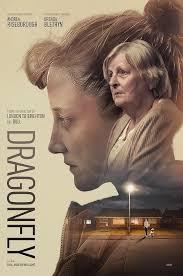
DRAGONFLY
UK, 2025, 98 minutes, Colour.
Andrea Riseborough, Brenda Blethyn, Jason Watkins.
Directed by Paul Andrew Williams.
The audience will have to work on the title, the film having a prologue with a quotation from James Thurber, concerning time, dragonflies and their short span of life, and angels living too long. We are put on the alert to identify dragonflies and angels – and both together.
This is very much a two hander, a drama which could work effectively in theatre. We are first introduced to all Elsie, thirteen years a widow, living alone in suburbia. And this is very much a film about suburbia, a town in Yorkshire, the suburban streets and houses, factories at the end of the street, the sound of the nearby railway tracks, traffic passing. Elsie has homecare – and a rather unsympathetic picture of the carers who often have six people that they have two care for each day, showers, tidying and cleaning, cooking… Sometimes cutting the time required, often not knowing the name of the person they are caring for. Elsie manages, walking stick, arthritis in her hand, watching television…
This is a wonderful performance by Brenda Blethyn, so many of us knowing her for being Vera over so many years. She will be 80 in 2016 – and gives all to her performance as an ordinary ageing woman.
Next door is Colleen, living alone, devoted to her large hybrid dog Sabre. We never learn a great deal about Colleen’s past except that she had a difficult childhood, in care, living on benefits. When Sabre destroys Elsie’s flower bed, Colleen intervenes, often calls into chat, of tea, offering to do the shopping, the friendship growing between the two women. Because we know Elsie, we are perhaps too wary and suspicious of Colleen’s motivations, especially when Elsie gives her her credit card to use. But the friendship continues, and a great deal of focus on Sabre.
Andrea Riseborough embodies Colleen, a striking performance.
The third character is Elsie’s son, John, Jason Watkins, living at a distance, phone calls, eventually coming to see her his mother, encountering Colleen and, especially, Sabre. He is very suspicious though seemingly courteous to Colleen.
There are some shocks to follow, more shocking because we have come to appreciate the bond between Elsie and Colleen – and the realisation that suspicions can be very destructive, showing what breaking friendships will when they could have been so beneficial and lasting.
- The title, the opening quote from James Thurber, short life of dragonflies, long life of angels?
- The Yorkshire setting, the ordinary suburban Street, the houses, adjacent, the factories nearby, the rail track? The town centre, shops, supermarket? The house and the interiors? The musical score?
- A film about living alone, age, homecare, neighbours? Women living alone? Friendships, interdependence? Family, responsibilities?
- Elsie, her age, widow for 13 years, the care package, the carers, showering, cooking, general help? Personalised or not? The range of carers, the busy days, 6 to look after, not necessarily knowing names, cutting time of service short? Elsie and her response to the carers? Her daily life, meals, television, arthritis in her hand, the walking stick? Phone calls from her son? The kiss to her husband’s photo at night?
- Colleen, next door, with the dog, Sabre? Alone, the screenplay not giving her much of a back story, later explanation of her father, her brother, her mother’s choice, in care? Living on benefits? At home in the house, with Sabre? Watching television, the beauty programs, her following the make up guidance?
- The meeting of the two, Colleen wanting to help, Sabre ruining the flowers, Colleen buying more and planting them? The growing conversations, Colleen coming into the house, offering to do the shopping, scenes of shopping, scenes at home, talking, cups of tea? The bond between the two? The effect on Elsie, friendship, chatting? Getting used to Sabre?
- Colleen and her criticism of the carer? Offering to do the work, no money? The motivations? Audience wariness? The shopping, the card, using the card and its failing? The shops, buying the walkie-talkie, setting it up, learning how to use it?
- The growing friendship between the two? Elsie and her conversations with her son?
- John, not visiting often, his family, arriving, wariness of the dog, suspicious of Colleen, talking to her, the cups of tea, the conversations with his mother?
- The police arriving, the struggle with Colleen, taking the dog, destroying it? Colleen coming home, sad? Denouncing John? Elsie, upset, talking with her son, his calling the police? Motivations?
- Colleen, erratic behaviour, without her dog, lonely? Disappearance? Suddenly appearing, looking bereft? Elsie and the phone call from her daughter-in-law?
- Colleen, the blood, resting on the table, stabbing herself? The news of John’s car being found, his body? Colleen and her death?
- The touches of the horror, but the horror of harshness, betrayals, ruining friendships?
- And the final scene of Elsie in the aged care village?
Funny Birds
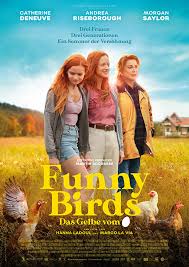
FUNNY BIRDS
France/Belgium, 2024, 97 minutes, Colour.
Catherine Deneuve, Andrea Riseborough, Morgan Saylor, Naima Hebrail Kidjo, John Robinson, Joseph Ollivennes, Ken Samuels, Maria McClurg.
Directed by Hanna Ladoul, Marco La Via.
Funny Birds is a funny title, funny with humour, but also funny peculiar. Does it refer to the chickens that Laura, Andrea Riseborough, has rescued after they are too old for the big chicken runs and fosters them, collecting the eggs and marketing them with her own brand? Or does it refer to Laura herself, her young daughter Charlie, who is at college and comes back to look after her mother and work with her, her mother becoming ill?
And, there is the question of the presence of Catherine Deneuve in this film. And she is a very welcome presence. We remember that Catherine Deneuve has been headlining films since 1964, the just over 60 years. And, on checking her age, she was 79 when she made this film. And it is not generally the kind of film that she appears in. This is a small film, quiet, a focus on women and empathy for them, and a role in which she can enjoy herself, a character who was at home in the 1960s but is still at home in the 2020s. In many ways she is quite a funny bird.
In fact, this is a French or Belgian coproduction, filmed in Europe, English language, but an American story, the chicken farm in New Jersey.
The plot is fairly straightforward, Laura and the chickens, her becoming ill, her daughter, Charlie, Morgan Saylor, coming home to stay with her, work with her, look after her. There are two sympathetic neighbours who help with the distribution of the eggs, the wife pregnant. The main complication, quite a complication in fact, is an epidemic of bird flu and how to handle the situation, conceal the hens from the local sheriff and his by-the-book offsider.
And, then, there is Solange, Catherine Deneuve, suddenly turning up quite unexpectedly to the audience and to Charlie and her mother, Solange abandoning Laura when she was very young and in the world with more than a touch of New Age explorations. But, Solange enters into the life of the farm, fascinating to see Catherine Deneuve out there with the chickens, working in the garden, gradually bonding with small detail with her daughter and granddaughter plus a whole lot of those New Age traditions, including medicinal cannabis.
One could say that there is no major reason for seeing Funny Brids but, should you come across it, and are interested in a sympathetic/ edmpathetic focus on the story on three generations of women, it is quite enjoyable.
- The title, the reference to the chickens, their background, cared for by the women? The women as funny birds?
- French-Belgian coproduction, an American story, some French background? The New Jersey setting, the farm, the countryside, the neighbours? But filmed in Europe? The musical score, the songs?
- The situation, Laura, her age, caring for the chickens, rescuing the old hens, caring for them, in the house, in the barn, outside, feeding them? The eggs, packing them, her brand? Making a living?
- The arrival of Charlie, relationship with her mother, the tensions, her mother ill, coming to care for her, work on the farm? Her studies, the allusion to her father, his interest in business, the business studies? Her age, her boyfriend and his visit? Her commitment to working with her mother?
- The film’s focus on the details of work on the farm, with the chickens, the eggs, packing, distribution, the garden, the vegetables? The details of life on the farm, the mother and daughter, home life, meals and cooking, the support?
- Laura and her illness, the visits to the doctor, losing her hair, Charlie and the discussions about the wig, cutting her hair, shaving her mother’s head, shaving her own? The growing bonds between the two?
- The arrival of Solange, the presence of Catherine Deneuve, age, background, travelling the world, the theories, sustaining, feminist…? Charlie’s puzzle, never having heard of her grandmother, her mother’s reaction, angers, trying to ignore Solange?
- Solange, her personality, no background explanations, allusions to her past, helping Laura, working with Charlie, hands on with the work, the change of attitude, the growing bonds between them, enjoying each other’s company, the meals, helping Laura?
- Joanna and Sebastin, neighbours, helping with the distribution of the eggs, Joanna pregnant?
- The issue of the bird flu, the decision to hide the birds, but not tell Laura? Newspaper headlines, concealing them from Laura? Sebastian, unwilling to help, and Joanna and her pregnancy, continuing to help, ultimately becoming too much?
- The arrival of the sheriff, Solange and her approach, his serious deputy? Solange, the dates, stopping him coming into the house?
- The birthday celebration, the cake, the dancing? The aftermath? Solange disappearing?
- The end of the epidemic, the chickens coming out again, join and the birth of the baby?
- The postcard from Solange, her sending the letter to the sheriff confessing to selling the chickens to get the money, saving Laura and Charlie from exposure? The postcard just with the destination – and the joke about getting a passport to go there?
- Laura, recovery, happiness in her life and work, Charlie and her studies, hope for the future?
Lee
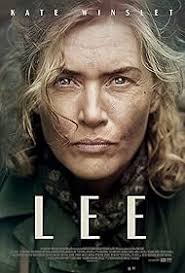
LEE
UK/US, 2024, 117 minutes, Colour.
Kate Winslet, Andy Samberg, Alexander Skarsgaard, Marion Cotillard, Andrea Riseborough, Noemi Merlant, Josh O'Connor, James Murray.
Directed by Ellen Kuras.
A film about a significant war corresponded, World War II. Lee was released at the time of the first anniversary of the Hamas attack on Israel, October 2023, world audiences seeing a year of invasion, bombings, destruction, Israel’s invasion revenge, the deaths of so many Palestinians followed by the bombings and invasion of Lebanon. Audiences worldwide depend on war correspondents and war photographers for these images and information. 2023-2024, more than 200 wounded and dying on the job.
Lee is Lee Miller, a one-time model, turned photographer, an American who spent a lot of time pre-World War II in France and travelling, developing her talents as a photographer, links with artists and French society. She is played by Kate Winslet, reminding us that for almost 30 years Kate Winslet has been a significant screen presence in film and television, multi-award-winning. As expected, this is a very strong and persuasive performance.
The film opens with some war action, Lee Miller, explosions, after the D-Day invasion. But, after showing her with her friends in France, the film moves to 1977, the older Lee Miller being interviewed by a young man, Josh O’Connor, about her war experiences, their examining a lot of the photo she took leading to flashbacks building up e herxperiences during the war years, and the device for returning to 1977 for some kind of break and, with some of the war experiences, some breathing space and relief for the audience.
Lee Miller went to London at the beginning of the war with artist Roland Penrose (Alexander Skarsgaatd). She offered her services for Vogue magazine, under the editorship of Audrey Withers (Andrea Riseborough). She was able to visit some camps, photograph service men and women, link up with David Scherman of Life Magazine (a surprisingly serious performance from comedian Andy Sandberg). The British would not employ her but, as an American, she worked with the American military, in action in San Malo, entering Paris when it was liberated, some harrowing sequences as she sought out her prewar friend and discovered their occupation experiences, also discovering the disappearance of so many thousands, especially Jews.
The most harrowing part of the film is when she and David travel from France through Western Europe to the German border, an experience of Hitler’s hideout (and the serious/comic episode with Hitler’s bath), and, most tellingly, the concentration camps, the trains with corpses, the prisoners in their pyjama-striped uniforms, Lee continually photographing, and especially the sadness, the pathos of the faces of the women and children who suffered.
There is an explanation of the interview sequences at the end, information about Lee Miller, the re-discovery of her photos in the 1970s, book, photo publication – and, as usual now in such films, many of the actual photos shown during the final credits along with the episodes from the film.
Important for memories of World War II. Important for the 21st-century, the number of wars, the war correspondent, their courage, sharing the up-close details of their experiences, dangers, deaths.
- Lee Miller? As a person, as a photographer, as a war photographer?
- The portrait by Kate Winslet, a long career, portraying variety of personalities? Awards? Embodying Lee Miller in the 1930s, in the 1940s and the war experience, the retrospective of 1977?
- Audience knowledge of Lee Miller, her work during the war, British Vogue not publishing her photos, American Vogue publishing them? After the war, the opinion in Britain that people should not be too disturbed? Her photos and memories in the attic? Her son finding them, writing the book, publication?
- The opening of the film, the war sequence in France, the dangers, the rescue? The sequence repeated later? Indication for the war correspondent?
- 1977, Lee being interviewed, audiences realising it was her son or not? The interaction between the two, the questions for Lee, his looking at the photos, the impact of the revelations for him? Her finally asking him questions, his growing up, her distance, that she was not a successful mother, memories of his father, the discovery of the photos, the impact on him? The final glimpse, looking out the window, turning, and her not being there? Information about her death?
- The 1977 sequences as a framework for the flashbacks? And as some relief for the audience immersed in the war experiences, the interview sequences as moments for a breather and relief?
- Lee, a model, her career, her French friends, in France, on the coast, the holidays together, Lee taking local photos, atmosphere of the 30s, freedom of expression, comfortable nudity? The discussions about Hitler, but not expecting his victory? The situation for France? For Britain? The company, Picasso and the artists? Atmosphere?
- Roland arriving, the initial interaction, painter, paint on his hands? Her analysis of his character? His analysis of hers? Up the steps from the beach? His invitation to come to London, the war, the blitz, the interview with Audrey at Vogue, the irritating presence of Cecil Beaton? Roland and his work, conscientious objector, camouflage? His moving away to location? Her signing up, photography, at the camp, the women’s quarters, the officer? Women being excluded? Her going into the briefing, disguise, the Colonel and his reaction? Eventually transferring her to France?
- Work at Vogue, the photos, the support of Audrey? The role of the magazine during the war? Lee and her contacts with Audrey during the war, the comfort of England compared with the war front, especially in liberated Paris, the discovery about the disappearing Jews, her friends, Solange disappearing, Lee finding her again and their talk? The emergence of Paul and his wife, Jews in hiding? The plane flying over and his poem been distributed? Emotional impact for Lee? Trying to communicate this to Audrey?
- The encounter with David, Life Magazine, his mirror shining the light on the women workers? Friendship, their bonding, in England, his access, her limitations, friendship with Roland, inviting him to stay at the house? His reminder that she was an American, the British refusing permissions, her getting American permissions? Their going to occupied France, the battle sequence and the dangers? The discovering the realities, the people in poverty, the young woman and her romance with a German, the hostilities of the locals, the later sequence of the women, the shaving of the heads?
- The various photos from France, the medical centres, the wounded, the doctors, the GI with his face masked in the photo?
- To liberated Paris, driving through, the exhilaration, the photos? Roland and his visit, wanting her to go back to London? His not appreciating what she had experienced?
- The bonding with David, the vehicle, driving through Western Europe, to the German border, Hitler’s house, their bribing their way in with cigarettes, the letter, the bath, the photo in the bath with Hitler’s picture? David and his wariness? His eventual weeping?
- The horror of the concentration camps, the arrival, the smell, the soldiers, the train, the carriage with dead decaying bodies, the bodies laid out, concentration camp clothes? The waiting with the cart with the bread? Lee following the woman, the group of women and children, the bread, the nervous little girl, photographed?
- London, the magazine, please photos not there, her angry confrontation of Audrey, her coming down, Audrey sending the photos to get Vogue America?
- 1977, Antony and his looking at the photos, the discussions with his mother, the impact of the war experience? The aftermath, his work with his father, the book, publication? His father’s death? The setting up of the foundation?
- The final credits, the actual photos, the information about Lee and her death, Roland, Antony?
- The film released in September/October 2024 at the time of the one-year anniversary of the Hamas atrocity in Israel, Israel’s response in Gaza?
