Displaying items by tag: Peter Malone's Movie Reviews
Put Your Hand on Your Soul and Walk
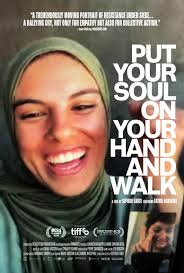
PUT YOUR SOUL ON YOUR HAND AND WALK
France/Occupied Palestine, 2025, 113 minutes, Colour.
Fatem Hassouna.
Directed by Sepideh Farsi.
This is a challenging film on many levels.
From April 2024 to April 2025, Iranian-born film director, Sepideh Farsi, conducted a series of phone calls with a 24-year-old woman from Gaza, a photographer, Fatem Hassouna, conversations about what was happening in Gaza and how Fatem and her family and friends were coping or not coping with Israel’s attack after the Hamas massacre of the Israelis and the hostages taken are all on October 7, 2023.
The basic challenge, as it was for the director, is the personal response to the events, the initial Hamas attack, and its horrific death toll, hostages and Israeli grief, Israel’s response, so deadly and unrelenting, bombardments, the restricting of food supplies, the number of deaths in Gaza, especially women and children, the on and off again peace negotiations. By the time of the commercial release of this film, there has been some ceasefire, return of hostages to Israel, return of prisoners to Gaza but continued tension and the war continuing.
And there is also the personal challenge, the telephone encounter with Fatem, an attractive young person, continually smiling, trying to keep cheerful despite the oppression and repression that she and her family and friends experience. She has never been out of Gaza and wishes she could, visit Rome and other wonderful cities of the world, or go to enjoy a theme Park. At one stage she would love some chicken, a piece of chocolate – and, on some occasions, infrequently she and the family share a better meal than usual. She introduces Sepideh Farsi to various friends and relatives. Fatem has a great deal of personal charm and enthusiasm for life despite the continued bombings, having to move, the deprivations…
As she smiles and laughs on the phone, it is reminiscent of Charlie Chaplin’s plaintive song at the end of Modern Times: Smile, though your heart is aching. Smile, even though it's breaking. When there are clouds in the sky you'll get by. If you smile through your fear and sorrow…
And, throughout the film, there are significant insertions from television reports, the continued focus on the results of the bombardment, collapsed buildings, skeletal buildings still standing, the rubble on the streets, the smoke from the bombardment fires, damage to hospitals…
The other challenge for the audience, making the film very difficult to sit through, is the fact that so much of the film is a focus on the image on the mobile phone, not the sharpest photographic quality. Connections and re-connections. Conversation sometimes difficult to pick up. While this is the reality of such conversations from Europe to Gaza, one wonders whether there might have been better ways, audience-friendly ways, of editing this material.
And, there are difficulties with the choice of questions that the interviewer asks, admittedly conversation that needed to be handled delicately, but sometimes the conversations are, as many conversations are, very ordinary given the serious and severe context.
This is a film of great sadness, even to the end – and, one of the most effective aspects of the film, a final very long walk through the streets of Gaza, subjective camera observing buildings and ruins, the range of people along the street, giving the audience time to reflect on their encounter with Fatem, the impact of the war on the ordinary people of Gaza, a record of what will, in time to come be considered some of the saddest times of human suffering.
Good Fortune
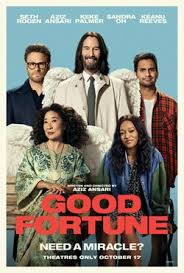
GOOD FORTUNE
US, 2025, 97 minutes, Colour.
Aziz Ansari, Seth Rogan, Keanu Reeves, Keke Palmer, Sandra Oh, Stephen McKinley Henderson.
Directed by Aziz Ansari.
In a disturbed 21st-century world, even in the divided United States, what really is Good Fortune? Here is a satirically-challenging response to the question.
In the aftermath of World War II, Hollywood asked this question for Americans in what is now the classic film, It’s a Wonderful Life. With the popularity of the film over the decades, it provided a Christmas message of hope, that despite all the difficulties, there would be some angel who could guide a troubled hero through all kinds of difficulties, financial, family, personal, and that there would be a very happy – wonderful – New Year.
Which means that Good Fortune is something of an attempt at It’s a Wonderful Life for the 2020s.
The film has been written, directed, starring role, by stand-up comedian, Aziz Ansari (multi-episodes of TVs Parks and Recreation). He plays Arj, Indian background, father with high expectations, but not managing practically with jobs, lining up for benefits, sleeping in his car, being moved on, the car impounded… It’s a Miserable Life.
But, just like the eager angels in Wim Wenders’ classic, Wings of Desire, with angels standing on buildings overlooking Berlin, ready to intervene, here we have the Los Angeles equivalent, each angel, hovering with holy intent, with various responsibilities, some ready to help lost souls but, our focus is on Gabriel, black coat, long black hair as if posing for a portrait of Jesus, comparatively small wings on his back, and it is Keanu Reeves. And Gabriel’s modest task is to save drivers who are texting – and the salutary collage of his saving these reckless textures, including Arj.
Gabriel takes pity on Arj and would like to save his lost soul but is warned off by Angel Martha, Sandra Oh. Gabriel hovers, watching, worrying. In the meantime, Arj has met an active union worker, Elena (Keke Palmer), but is too caught up in himself and his miserableness. But, then he has a delivery to an extravagant venture capitalist,Jeff, living in a luxury mansion, spending his day preoccupation with affluent trivia. His played by Seth Rogen.
So, poverty meets affluence and, with Gabriel’s messy intervention, what better than role reversal, Arj living the high life (and, in general without scruple, he does) and Jeff coming down to earth, trying to keep his job, discovering the realities of the day by day cost of living. And all complicated by Gabriel being rebuked and losing his angelic status and becoming human, lots of dishwashing jobs, discovering the taste of hamburgers and shakes, the exhilaration of dancing with the Latino community…
The three stars do enter their characters with quite some zest.
Well, it doesn’t take a prophet to foretell the ups and downs of what is going to happen, but, of course, the question is how is it going to happen? Will Arj recover his conscience? Will Jeff discover that there is such a thing as conscience? Will Elena and Arj be able to form a union in the workplace? Will Gabriel get back his wings?
For the time being, It can be a Wonderful, Good Fortune, Life.
- An It’s a Wonderful Life for the 21st-century? 21st-century open and frank style?
- The work of the writer-director, stand-up comedy, satire?
- The story of Arj, Indian background, his father, his successful cousin (and the later revelation of tax evasion), talking to his young cousin about the future? His jobs, hard work, lining up for support, upset, in the diner, sleeping in his car, being moved on, and prospects, the factory, the encounter with Elena, her union work, conversations with her?
- The fantasy of the angels, appearing with wings, images of Wim Wenders’ angels over Berlin, Gabriel, the Jesus’ appearance, his wings, watching? The collage of saving people while texting? His wanting more, to save the lost souls? The discussions with Martha, her control, wanting him? His interest in Arj, wanting to save him?
- Arj, the deliveries for Jeff, Jeff and his wealth, house, lifestyle, hampered, trivial preoccupations, the discussion with Arj, Arj and deliveries and answering him back, offering to employ him, successfully, giving the card, the dinner with Elena, on Jeff’s recommendation, use of the card, Jeff attacking him, dismissing him?
- Gabriel, his intervention, the discussions with Arj, the change with Jeff? Arj, adapting to the lifestyle, enjoying the luxuries? Jeff, going to work, hard? Gabriel, the reprimand from Martha? Gabriel made human, the work, washing up, Jeff and the food, hamburgers, chicken nuggets, tacos, milkshakes?
- The situation with the three, the interchanges? Jeff allowing Arj to have three days? Arj, enjoying his style, extravagant, taking over Jeff’s birthday party, the dancing, the guests? Elena, the proposal for going to Paris, her conscientiousness and refusal?
- Arj, involved in the accident, coma? Jeff’s reaction? Out of coma, pretending not to remember? The effect on Jeff? Jeff’s learning the hard life?
- The situation, Gabriel making friends with the Latinos, the club, Elena? The discussions?
- The conscience issues, Arj and having to face them, his father, prospects, ordinary life, with Elena? Jeff, the experience of hardship, back to normal? Gabriel, becoming an angel again, after all human experiences, even drinking, drugs…?
- The reversal, Arj conscientious, working with Elena, the previous vote, the second vote, the walk off, social justice? Jeff, and his meetings, the scornful executives, Jeff and his laying down the law?
- An allegory for the 21st-century?
Kiss of the Spiderwoman/ 2025
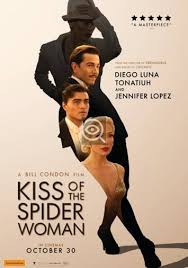
KISS OF THE SPIDERWOMAN
US, 2025, 129 minutes, Colour.
Jennifer Lopez, Tonatiuh, Diego Luna, Bruno Bischir?
Directed by Bill Condon.
The popular and award-winning film of 1985, meant popularity of the title, Kiss of the Spiderwoman. It was based on a 1976 novel by Manuel Puig, two prisoners during the rule of the Generals in Argentina. In the early 1990s, poses and lyricists, John Kander and Fred Ebb (Cabaret, Chicago, New York, New York) wrote the songs for a musical version, with the book by prolific, award-winning librettist, Terence McNally. It has taken over 30 years for a film version, directed by Bill Condon.
The setting here is 1983, Valentin a political prisoner involved in revolutionary activity, now shares a cell with the gay Luis Molina, accused of indecent behaviour (though placed in the cell to get information from Valentin and receive a parole to see his mother, the promise of the warden). The two seem to be incompatible, Valentin with a touch of homophobia, but Molina’s chatter, camp style, at first getting under the skin of Valentin but, gradually a friendship developing, sharing and support, some intimacy, the mellowing of Valentin, a greater humanising of Molina.
Originally, the two had conversations about movies. In the musical, the musical numbers provide the impetus for a change of consciousness in Valentin. The point is very quickly made that the movies are escapism, that musicals are escapism that take us well beyond the ordinary, especially Hollywood musicals with the bright saturated colours, sets and decor, lavish and stylish costumes, and the vitality of the choreography.
This is the theme of the role of escapism in life, its necessity, the effect on consequences, its healing power.
The musical sequences (Bill Condon did direct Dreamgirls) excitingly staged, especially the dancing. The narrative is basically a blend of romance and self-sacrifice, Aurora, an editor, her assistant devoted to her, a charming gentleman arriving, complex of emotion, but then a situation, Latin American style, a mysterious figure in the jungle, the Spiderwoman and her web, the tangling of the characters, an issue of self-sacrifice.
Diego Luna plays Valentin, serious, calm, tortured, food poisoned, tended carefully by Molina. Film, television and stage actor, Tonatiuh, may not have been noticed so much before this but, his performance as Molina is continually attention grabbing, creating a significant character. And, each of them has a role in the musical, a display for singing and dancing as well.
And the other surprise of the film is the performance by Jennifer Lopez as the editor as well as the Spiderwoman, singing, performance, and, especially her dancing, physical, rhythmic, full of energy (and the surprising reminder that she is in her mid-50s).
The response to the film has been very mixed. There is praise for the performances. Those who enjoy musical versions of what have been previously serious dramas may be satisfied as to how the themes of the drama have been enhanced by the film within the film. Those who valued the original novel and the 1980s film version may feel that it should have been left alone.
But, here it is, reminder of the oppression/repression in Argentina, the torture, the disappearances. And, it is a well-told tale of an unlikely friendship. And the question of the place of escapism and happiness in situations of suffering.
- Argentina 1983, the role of the generals, oppression, mass imprisonment, torture and executions? The end of 1983 and the end of the generals?
- The original novel and its popularity, the film version in 1985 and its effect, awards? Kander and Ebb in the 1990s, the Broadway musical? 30 years later a film version? The background of the film, Terrence McNally writing the book, Kander and Ebb and the score, Bill Condon and his musicals?
- The situation, the prison, exterior walls, the cells, the corridors, the office of the warden? Scenes outside in the streets, ordinary life, life under oppression?
- The framework of the prison story, the Valentin, his background, revolutionary, hard life in the past, the rally, the death of his sister, his motivations, his encounter with Marta, wealthy, in love with her, his revolutionary work, arrest? Age, appearance, the torture, the effect of prison, the reaction of the guards?
- Luis Molina, age, background, arrested for indecency, his gay style and camp, personality, wanting to be like Joan Crawford, the attraction of women and their style, acknowledging his orientation? The reaction of the guards? The interviews with the warden, spying on Valentin, to get information, the promise of parole, wanting to be with his mother, his mother supplying food?
- The interactions between the two men, Valentin’s reaction to Molina, as a person, as gay, his style, prejudices, the touches of homophobia? Conversations between the two, the importance of movies musicals, movies and escapism, escapism during prison experience, the telling of the stories, the effect on each of them, Molina and his exhilaration, Valentin and listening to the stories, the effect?
- The background of spying, the poisoning of food, Valentin sick, his stomach, faeces, Molina and his response, washing the clothes? Valentin and his growing appreciation? The time passing, the conversations, dependency, friendship, the emotional and physical effect on Molina, Valentin, the experiences of desperation, the experience of support, the move towards intimacy, friendship, sexual, the effect on each man? And the taunts of the guards?
- The musical version, Hollywood, the films of the 40s and 50s, full and saturated colour, the characters, costumes and decor, melodramatic plots, the singing, the choreography and the dancing? The plot themes, the world of fashion, editing, affluence, jealousy and rivalries? And the pathology of the Spiderwoman, visualised, her net, her effect on each of the characters, demanding a sacrifice?
- Jennifer Lopez as the actress, as the character within the film, as the Spiderwoman? Singing, her energy and the complexity of the dancing and performance? The two men and their contributions, singing and dancing?
- The basics of the plot, Aurora as the editor, her assistant, Mo as her lina moving into the action of the film, assistant, protective, in love, jealous? Valentin as Armando, his style, his presence, his girlfriend, the reality of the love, jealousies, betrayal, into the jungle, the confrontation with the Spiderwoman, and the self-sacrifice?
- The warden, the interrogations, information? The other authorities? The issue of the food, Molina making his demands, their shopping, the happy meal and Valentin enjoying the food?
- The signing of the parole, Molina packing up, the posters, the bags, the farewell to Valentin, emotional, Valentin watching him go?
- The aftermath, Molina, walking the streets, accommodation, going to the cinema, the blending of reality and fantasy?
- His decision, making the contacts, the meetings, his past lover, the clash, the connection with the revolutionaries, in the cinema, fleeing, the monster film playing behind the chase, the final confrontation, escape in the taxi, his fall, his being shot? Some kind of fulfilment in his life, self-sacrifice?
- In the final end of the role of the generals, the emptying of the prison, Valentin and his walking the city, and raising the red scarf from Melina?
Steve
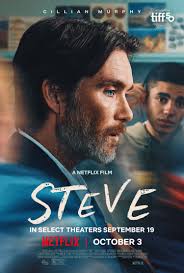
STEVE
UK/Ireland, 2025, 93 minutes, Colour.
Cillian Murphy, Tracy Ullman, Jay Lycurgo, Luke Ayers, Joshua Barry, Joshua J.Parker, Ruby Ashbourne Serkis.
Directed by Tim Mielants.
Irish actor, Cillian Murphy, has had a significant career, Irish films, the Dark Knight trilogy, to his Oscar-winning in Oppenheimer. Since then he has made two small films, very serious, well worth seeing, collaborating with Belgian director, Tim Mielants (who also directed several episodes of Peaky Blinders).
Small Things Like These was set in Ireland, the mid-1980s, focusing on local and church issues, especially the Magdalene centres for unmarried mothers. Steve, on the other hand, is set in England, 1996. The screenplay is by the novelist, Max Porter. His novel was titled Shy, a student in a special school, whereas this film is called Steve, the name of the teacher who manages the school.
The film is tough going, not only for the students who have special needs, various forms of mental illness, some heritage of drugtaking, prone to anger and brawls. And, watching it, the audience will find it tough going, a real challenge as to how to deal with broken teenagers, to have some faith that there is a future for them. We get to know them, the difficulties, tensions amongst themselves – and a special focus on one of them, Shy.
The action takes place over 24 hours on a very difficult day at the special school, set in the English countryside, a small group of 17 year olds, a hard-working and committed staff, led by Steve, another fine Cillian Murphy performance. His assistant, surprisingly, is played effectively by Tracy Ullman. There are some veterans in the school, especially the cook, but also a young teacher who is committed but is finding the pressures and the tension hard to cope with.
The time as the day passes is indicated on screen throughout the film, people arriving, the introduction to the students, their cantankerous behaviour, trying to coax them, deal with them, impose some kind of order and discipline. Their activities, classes (and some of them are quite intelligent given the opportunity), football matches…
But the complexity of the day includes a television crew coming in to make a special about the school, the staff, the values, interviews with both staff and students, asking them on camera to find three words to describe themselves, the boys to look back on what has happened in their lives over the previous five years. But, of course, the crew often get in the way, and we see the host of the program speaking to camera and explaining what is happening at the school.
There is a visit from the local MP (Roger Allam) which doesn’t go well. And there are also the financial issues, government grants, visits from those responsible, the threats to close the school.
In so many countries these days there are concerns about youth crime. What are the solutions, risen, penalties, bail, rehabilitation…? This film offers 93 challenging minutes on these themes.
- The title, the focus on Steve (but the novels title, Shy, one of the boys at the school)?
- 1996, UK, politics, and of Conservative rule, political issues, financial issues, educational issues?
- The action taking place over one day, time indications on screen, the pressure on all the characters, time passing, expectations, the routine of the school, classes, meals, football? And the television crew, filming and interviews? The arrival of the politician? The arrival of the board and the discussions?
- The location, the school, interiors, the grounds? Palatial look?
- The nature of the school, all the boys, aged 17, family backgrounds, violent tendencies, experience, angers, mental conditions? The role of the school, education, therapy, improvement?
- The impact of the boys, public opinion, condemning them? The contrast with the staff, knowing them, bearing with them, hoping for them?
- The device of having the television crew, the time limits, availability, the personalities of the crew, talking to camera, producer, technicians? The comments and observing the situations? Capturing sequences? And the importance of the interviews, in a limited number of minutes the staff explaining themselves, the boys, going back five years to reflect on what has happened to them? The putting together of the program? Will the viewing public?
- The introduction to the boys, their personalities, British, ethnic differences? The focus on Shy, personality, the rocks and his explorations, his angers, his mother, the message of breaking up contact, no longer able to deal with him? The consequences? Tyrone, the young teacher, approaches? The range of the others, their violence, interactions, taunting each other?
- Yet the football match, the rain, camaraderie and bravado?
- Steve, in charge, his personality, responsibility, seeing him during the day, managing the time, the visitors, the rest of the staff, supported by Amanda, encouraging the young teacher, with the cook, the other staff members? Interactions with the boys, breaking up fights? The television crew, his three minutes? With the parliamentarian, showing him round, ER, the boys and the reaction, the swearing insult? The arrival of the board, the prospects for school, the realities of closing down, funding? His anger? Addiction, drinking, Amanda and her support? The ending of the day, going home, the difference with family at home?
- Amanda, Deputy, businesslike, with the boys, with the TV crew, her interview, with the visitors, the closing of the school? Her trying to sports Steve, knowing the truth about him?
- The young teacher, one-month, her earnestness, with the boys, the difficulties, the approaches, the warm support from Steve?
- The meals, the cook, benign, interactions? The food?
- The drama of the fights, in the dormitory area, the rooms? Provoking, angers, taunts? And the spectacular fight in the dining room, into the kitchen, confusion and mess?
- The politician, grim, accent, being shown round, the speech, the insult, his being humiliated? (And the film parodying this kind of politician?)
- The members of the board, young, representatives, financial issues, political issues, the handling of the discussion? The closing of the school, the reasons? And Steve’s anger?
- 93 minutes, getting to know the range of characters very well, appreciating a difficult situation in terms of education and mental health?
Mr Burton
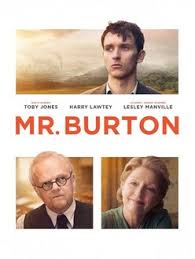
MR BURTON
UK, 2025, 124 minutes, Colour.
Toby Jones, Harry Lawtey, Lesley Manville, Mali O'Donnell, Amy Ffio Edwards, Aneurin Barnard, Steffan Rhodri.
Directed by Marc Evans.
Richard Burton was one of the most admired stage and screen actors of the 20th century. But the title of this biography has two meanings which his fans will know. The actor was, in fact, Richard Jenkins, a from mining family near Port Talbot in Wales. It did not seem likely when he was young that he would become so famous, so admired, and marrying Elizabeth Taylor twice.
The principal Mr Burton of this film is his teacher, Philip Burton, who recognised the young man’s talents, fostered them, encouraged his ambitions, legally adopted him. And, here he is played by the versatile actor Toby Jones who has portrayed a number of historical characters including Alfred Hitchcock and Truman Capote.
And this is something of a breakthrough performance by young actor, Harry Lawtey. He has to portray young Richard Jenkins as a late teenager at school, a mixture of a character who was a bit of a lad (and more than a bit of a lad as he grew older) but also a man with a resonant voice, someone who was able to take advice and transform his vocal tones, language and pacing (while incorporating still something of a Welsh lilt), overcome a difficult family background (his father finally agreeing with Philip Burton about the adoption and getting £50 compensation even though he had little time or attention for his son), valuing the support of his sister, helped with jobs by his brother-in-law who did not understand him.
So the film creates the atmosphere of Wales in the early years of World War II, opening when Jenkins was 17, a mixture of one of the boys yet special in terms of studies, responding to the affirmation of Philip Burton, a dedicated teacher, something of a loner, who saw the potential, took great trouble to train him with his breathing and enunciation, hours and hours spent out in the hills with dedicated practice. Philip Burton so believed in his protégé that he risked comments from the locals, insinuations as well as declarations of suspicions about his gay interest in Jenkins.
There are some very good set pieces throughout this film, very vivid with Jenkins’ drinking father, meetings with his son, the pub, showing himself that he could be a boisterous entertainer for his drinking friends, and the minimum reluctance in selling off his son for adoption. And, by contrast, there are the scenes of his sister and brother-in-law, hard times with the mines, with the economy, with the war. And, many scenes at school.
One of the entertainment benefits of the film is the presence of Lesley Manville as Philip Burton’s housekeeper, friend and confidante.
By the end of the film, with all his gratitude to Philip Burton, we begin to see more vividly what was to come, the intensity of Burton’s personality, ambitions, recklessness, which was manifest in his later tempestuous relationships, especially with Elizabeth Taylor.
But, we see that Burton was accepted to Oxford, something a lot of his fellow Welshman, including his father, could not understand. We see him accepted at Stratford-upon-Avon, hopes, fears, drinking, moody, preparing for his debut as Henry V.
Which is where the film ends but, there have been so many films in his career, reports of his wonderful stage performances, the details of his sometimes scandalous life, so that we know where this portrait of the beginning of his life and career will lead to.
- Audience knowledge of Richard Burton, his background, his career, Elizabeth Taylor, marriages, their work together, drinking, his death?
- The film about his origins, Richard Jenkins of Port Talbot, his father and mining, his family? Hard life and background? His education, the encounter with Philip Burton, working with Philip Burton and the opening up of his acting career?
- The setting of 1942, World War II, Wales, the re-creation of the town, the mines, the streets, shops, school, pubs, church…? The musical score and the atmosphere of Wales?
- Richard Jenkins at 17, his life so far, his talents and abilities, the difficulties with his father, living with his sister and brother-in-law in the family? His visits to his father, the pub, boisterous, his father’s attitude towards his son and acting? The later sequence in the visit with Philip, the discussions about the adoption, the revelation about the father and his attitudes, £50?
- Philip Burton as the main Mr Burton, his background, personal life, loner, suggestions of homosexual orientation? Quiet life at home, his friendship with his housekeeper, the routines of life, meals, conversations?
- Philip Burton as a teacher, his pupils, his own love of theatre, poetry, and the Welsh atmosphere of poetry? The classes, his interest in Richard, in class, poetry and drama, Richard’s voice, the sequences of training, pronunciation, out in the hills, declaiming, the transformation in Richard’s voice?
- The innuendo around the town, the range of people, the gossip, the pubs? The decision about adoption, Richard’s attitude, Philip’s visit to Mr Jenkins? Allaying some kind of suspicions? Richard’s own attitude towards the situation, at the time, afterwards?
- The possibilities for Richard and a career, the issue of Oxford, the seeming impossibility of someone from the town going to Oxford, his father’s comments about Oxford?
- Richard, branching out, going to Oxford, wilful, some alienation from Phillip, going to Stratford-upon-Avon, the rehearsals for Henry V, his nervousness, drinking, unreliable, timing? Philip’s visit, the encouragement, tutoring?
- The performance, the nerves, success, responses, and the beginning of his career? Indications of future success, stage and film performance, voice? Yet scandals, drinking, untimely death?
Roses, The
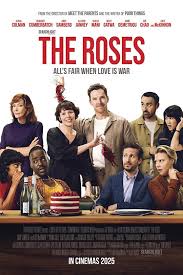
THE ROSES
UK/US, 2025, 105 minutes, Colour.
Olivia Colman, Benedict Cumberbatch, Kate MacKinnon, Andy Samberg, Ncuti Gatwa, Sunita Mani, Zoe Chao, Jamie Demetriou, Halla Finley, Wells Rappaport, Will Smith, Alison Janney.
Directed by Jay Roach.
Once upon a time, well 1989 anyway, the popular stars of such adventures as Romancing the Stone, Jewel of the Nile, Michael Douglas and Kathleen Turner, surprised everyone in the adaptation of Warren Adler is somewhat caustic novel, The War of the Roses. Not the 16th century between York and Lancaster, but a 20th century couple moving from love to enmity. Black comedy with some stinging challenge about marriage and relationships.
And now, 30 something years later, a new version, scripted by Australian Tony McNamara (who began in Australian television but has written screenplays including The Favourite, Poor Things and the series The Great). And it has an American director who has a very interesting career in both comedy and historical drama, ranging from the Austin Powers comedies and the Meeet the Parents comedies to the 2000 US election controversy in Florida, The Recount, and Sarah Palin and the 2008 election, Game Change, biography of black listed screenwriter Trumbo and Fox News scandals, Bombshell.
Added to this, the talent and versatility of stars Olivia Coleman and Benedict Cumberbatch, one-time Doctor Who, Ncuti Gatwa, and popular American comedians ateacKinnon and Andy Samberg.
In fact, while the opening of the film has the meeting between Theo and Ivy in London, he an idealistic architect, she a talent for cooking and a career as a chef, they soon move to California where the rest of the story takes place. In fact, the film was made completely in England, studios and the southern.
10 years pass, happy marriage, twin children, comfortable life – what could go wrong? Answer, practically everything!
Which means that most of the film is black comedy, a great deal of farce, lots and lots of bickering, insults, sometimes no holds barred, even at dinners with guests. A lot will depend on audience sympathies. Theo experiences an absolute architectural disaster which banishes him from his hopeful career, and makes him an at-home father. Ivy experiences great success, critics applause, an expanding empire of restaurants. Which means that underlying all this many themes of male and female roles at home, at work, rivalries, resentments, the effect on children…
And, while the dialogue is often black, bleak, highly ironic, often offensive, our laughter will depend on our sensitivities about these issues and where our sympathies lie.
While there are American comedians in supporting roles, they are something of a distraction, generally unnecessary and not so convincing in their interactions with Theo and Ivy.
But, brilliantly acted, Benedict Cumberbatch always interesting, Olivia Colman indicating that she can take on any role, The Roses is a mixture of amusing, offending, confronting…
- The title and expectations? A reinterpretation of the 1989 The War of the Roses?
- Comedy, satire, farcical situations, sharp dialogue, parody?
- Setting the scene, London, Theo and his architectural ambitions, Ivy and her cooking ambitions, their meeting, marriage?
- 10 years later, in the United States, Theo and his career as an architect, Ivy subduing her cooking talent, the twin children, Ivy at home, spoiling the children? Theo strict?
- The disaster, the storm, the destruction of Theo’s building? The contrast with Ivy’s success, the customers taking refuge, progress, the personalities of her staff, the food critic and his response? The consequences, Theo and his failures, unable to practice? Ivy, progress, increasing number of restaurants?
- The clash between the two, Theo depressed, jealousy of Ivy, Ivy and her success, enjoying it, dominant? The situation with Theo as the stay-at-home parent, his style and strictness with the children? Ivy feeling shut out? And the children, their scholarships, to Miami? Husband and wife at home, clashes? Attempt reconciliation, the visit to New York?
- The friends, Barry and Amy, Barry the lawyer, Amy and her flirtatious manner? The friends, the meals and discussions?
- The marriage counselling and the sardonic response? Ivy, her decision, the finance for the dream home?
- The years, the lavish detail of the home, the success of the home? Entertaining, Barry and Amy, the situation becoming more brittle, the dialogue at the meal table, scoring off each other? The prospects for divorce, Ivy and her sharp divorce lawyer versus Barry?
- The divorce conditions, Theo wanting only the house, Ivy refusing to give it to him? Her restaurants closed for health reasons? The tactics, the spite, the barbs, the farcical interactions? The signing of the papers, the full signature…?
- The exasperation, and finally each admitting that they do love each other, after the fight around the house, the destruction of the Julia Child stove?
- The ending, the reconciliation, the danger, explosive – and the screen turning to white?
- The use of farce and parody for satiric reasons? The film opting for farce and explicit insult and tactics rather than subtlety?
Him
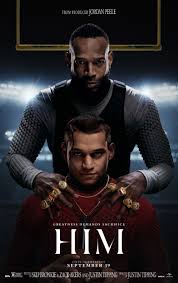
HIM
US, 2025, 96 minutes, Colour.
Marlon Wayans, Tyriq Withers, Julia Fox, Tim Heidecker, Jim Jefferies, Maurice Greene, J. Don Benjamin, Austin Pulliam, Richard Lippert.
Directed by Justin Tipping.
In many ways, Him was very difficult film to watch, often a very unpleasant experience. And, with the setting of American football, it seemed somewhat alien. And, yet, despite this, themes and several images remained in the memory for some time after.
With the football theme, it is very much a film for an American audience who appreciates the sport, its demands, the champions, the GOATs (Greatest of All Time - best in field of their sport), the physical tactics, the psychological demands.
And, with the name of Jordan Peele on the producers’ credits, an indication that there might be some horror themes here, remembering Get Away, Us… And there are. Somebody described this film as “sports supernatural”. 2025 saw quite a number of sports-focused films, The Smashing Machine, Christy, Marty Supreme. So, the effect of sports on the central character, the demands and challenges is a contemporary theme.
The central character is Cam, urged on by his football - devoted father urging him to admire the champions, to grow up to be a footballer. And he does, in the form of Tyriq Withers. His idol a GOAT, Isaiah (an unusual role for Marlon Wayans), offers him the chance of going to a summer camp to build up his skills and reputation.
Literally crossing the desert, with weird characters both welcoming and warning, he arrives at the camp, seven days program, severe demands on his physique and his psyche. But it is weird is still with those supernatural elements, and strange experiences of football and players, the staff at the summer camp, drinking and injections of blood, hallucinations, a wisecracking Australian medico (Jim Jefferies), targets of brutal sports manoeuvres… And, some religious references, perhaps Cam as something of a Jesus figure, and the glimpse of a Last Supper tableau. As mentioned, disturbing for Cam but also increasingly disturbing for the audience, continually unsettling.
And, as might be expected, some issues of authenticity, integrity, morality – dramatised in the executives who make decisions and contracts, Isaiah’s rather bizarre wife, warning, seductive, most odd. Finally, of course, Cam and final challenges and moral decisions, success or integrity.
And, quite a lot of recurring disturbing images even while writing this review.
- The title, the masculine emphasis, reference to Isaiah, reference to Cam? Men in general, football players, promoters, power…? The appeal for the male audience? Female audience?
- The American football setting, the appeal for American audiences? International audiences not familiar with the football code? The meaning of GOAT, the Greatest of All Time?
- A film about power and influence? The influence of football, games and play, football idols? The influence of parents and exhortations? The influence of society and expectations? Ambitions, possibilities of potential, influence of prestige, money? Good and bad motivations?
- Cam, as a boy, the African-American background, the influence of his father, home life, friends, football, the matches, Isaiah as a role model? The, no glory motif?
- The name of the football club, the Saviours?
- Isaiah white, as player, on field, reputation, influence?
- 14 years later, cam and his potential, for selection? The background to teams, training, selection? Cam and the influence of his agent? Cam and the clash with his cousin, the discussions with his agent about Isaiah, the successor, the camp? The dangers because of his injury?, His girlfriend? And the exhortation about “real men”?
- The attack, the touch of the supernatural, the mysterious stranger, the GOAT appearance, Cam and his injuries, his head, the effect on the brain, the stitches on his head?
- The personality of Isaiah White, Marlon Wayans in the role, achievement on the field, injury, retiring, looking for a successor?
- Cam, going to the camp, remoteness, the visuals of the desert, the strange characters on the way? Indicating the atmosphere? Marjorie and the fans, her later intrusion and attack, Isaiah killing her?
- The training camp, Isaiah White and his command, the doctor, Australian accent, the wisecracks, the injections, Isaiah’s The c Blind?omments and advice for Cam? The multi martial arts trainer, size, and dominance? The other members of the group, the player and his being the target, the football and his face, continually smashed? The creating of atmosphere? The demands of the head-butting on Cam’s head and brain?
- The structure of the rest of the film, each day of the week, a particular focus on the training?
- Cam, his personality, the effect of the attack, his physical strength, yet its being put to the test, beyond the test, failing, Isaiah and his rebukes, the trainer and his dominance, the continual injections by the doctor? The exercise, the demands, running and exhaustion, the bath, the effect on Cam’s body, his psyche? Strange characters, real or in his imagination? And the surprise of the tableau from da Vinci’s Last Supper?
- The cumulative effect of the days, the variety of activities, exhaustion, decision to keep going, subservience, intimidation? (And the cumulative effect of the audience sharing this experience, long, demanding, continual, and intimidation of the audience?)
- The buildup to the climax, the effect on Cam, the demands, the meetings with the board, their interrogation, cam and his response to them, the violence, the apt evil, the agent, disconcerting?
- Cam and his ultimate assertion, the effect on Isaiah, the doctor, atmosphere of mayhem?
- The atmosphere of men? Male dominance? Elements of misogyny? The women, the glamour, the male gaze, sexuality? The presence of Isaiah’s partner, her appearance, glamour, lips, her talking, her own business, with Isaiah, the discussions with Cam? Part of his hallucinations? The seduction, Cam waking, Isaiah and the gun, the urge for Cam to be remorseless?
- Elsie and the secret party, to meet the owners, bizarre, the blood, the helmet, the confrontation with Isaiah, bashing him, his death? The decapitated head of the doctor? Realism and imagination?
- The finale, Elsie, the members of the board, the masks, an assembly, Cam and the contract? The news that his father had arranged for the contract? The revelation of the Kabbalah and its continuance with the blood of each IN goat? His refusal? His attack on the policy and the members? The despairing of Tom, it Tom falling onto the pentagram and his destruction?
- The melee of the endings, Cam and his refusal, Isaiah surviving and watching cam play football, signing the contract on not?
Dragonfly/ 2025
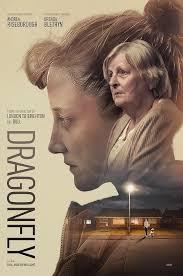
DRAGONFLY
UK, 2025, 98 minutes, Colour.
Andrea Riseborough, Brenda Blethyn, Jason Watkins.
Directed by Paul Andrew Williams.
The audience will have to work on the title, the film having a prologue with a quotation from James Thurber, concerning time, dragonflies and their short span of life, and angels living too long. We are put on the alert to identify dragonflies and angels – and both together.
This is very much a two hander, a drama which could work effectively in theatre. We are first introduced to all Elsie, thirteen years a widow, living alone in suburbia. And this is very much a film about suburbia, a town in Yorkshire, the suburban streets and houses, factories at the end of the street, the sound of the nearby railway tracks, traffic passing. Elsie has homecare – and a rather unsympathetic picture of the carers who often have six people that they have two care for each day, showers, tidying and cleaning, cooking… Sometimes cutting the time required, often not knowing the name of the person they are caring for. Elsie manages, walking stick, arthritis in her hand, watching television…
This is a wonderful performance by Brenda Blethyn, so many of us knowing her for being Vera over so many years. She will be 80 in 2016 – and gives all to her performance as an ordinary ageing woman.
Next door is Colleen, living alone, devoted to her large hybrid dog Sabre. We never learn a great deal about Colleen’s past except that she had a difficult childhood, in care, living on benefits. When Sabre destroys Elsie’s flower bed, Colleen intervenes, often calls into chat, of tea, offering to do the shopping, the friendship growing between the two women. Because we know Elsie, we are perhaps too wary and suspicious of Colleen’s motivations, especially when Elsie gives her her credit card to use. But the friendship continues, and a great deal of focus on Sabre.
Andrea Riseborough embodies Colleen, a striking performance.
The third character is Elsie’s son, John, Jason Watkins, living at a distance, phone calls, eventually coming to see her his mother, encountering Colleen and, especially, Sabre. He is very suspicious though seemingly courteous to Colleen.
There are some shocks to follow, more shocking because we have come to appreciate the bond between Elsie and Colleen – and the realisation that suspicions can be very destructive, showing what breaking friendships will when they could have been so beneficial and lasting.
- The title, the opening quote from James Thurber, short life of dragonflies, long life of angels?
- The Yorkshire setting, the ordinary suburban Street, the houses, adjacent, the factories nearby, the rail track? The town centre, shops, supermarket? The house and the interiors? The musical score?
- A film about living alone, age, homecare, neighbours? Women living alone? Friendships, interdependence? Family, responsibilities?
- Elsie, her age, widow for 13 years, the care package, the carers, showering, cooking, general help? Personalised or not? The range of carers, the busy days, 6 to look after, not necessarily knowing names, cutting time of service short? Elsie and her response to the carers? Her daily life, meals, television, arthritis in her hand, the walking stick? Phone calls from her son? The kiss to her husband’s photo at night?
- Colleen, next door, with the dog, Sabre? Alone, the screenplay not giving her much of a back story, later explanation of her father, her brother, her mother’s choice, in care? Living on benefits? At home in the house, with Sabre? Watching television, the beauty programs, her following the make up guidance?
- The meeting of the two, Colleen wanting to help, Sabre ruining the flowers, Colleen buying more and planting them? The growing conversations, Colleen coming into the house, offering to do the shopping, scenes of shopping, scenes at home, talking, cups of tea? The bond between the two? The effect on Elsie, friendship, chatting? Getting used to Sabre?
- Colleen and her criticism of the carer? Offering to do the work, no money? The motivations? Audience wariness? The shopping, the card, using the card and its failing? The shops, buying the walkie-talkie, setting it up, learning how to use it?
- The growing friendship between the two? Elsie and her conversations with her son?
- John, not visiting often, his family, arriving, wariness of the dog, suspicious of Colleen, talking to her, the cups of tea, the conversations with his mother?
- The police arriving, the struggle with Colleen, taking the dog, destroying it? Colleen coming home, sad? Denouncing John? Elsie, upset, talking with her son, his calling the police? Motivations?
- Colleen, erratic behaviour, without her dog, lonely? Disappearance? Suddenly appearing, looking bereft? Elsie and the phone call from her daughter-in-law?
- Colleen, the blood, resting on the table, stabbing herself? The news of John’s car being found, his body? Colleen and her death?
- The touches of the horror, but the horror of harshness, betrayals, ruining friendships?
- And the final scene of Elsie in the aged care village?
Thing with Feathers, The
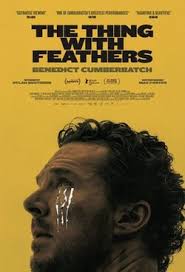
THE THING WITH FEATHERS
UK, 2025, 98 minutes, Colour.
Benedict Cumberbatch, Henry Boxall, Richard Boxall, Sam Spruell, David Thewliss, Eric Lampaert, Leo Bill.
Directed by Dylan Southern.
American Emily Dickinson wrote a poem, Hope is the Thing with Feathers. In 2014, novelist, Max Porter, published Grief is the Thing with Feathers – a story which embodies a great deal of grief and despair, not a focus on hope.
This film is a strange experience, some audiences caught up and feeling overwhelmed, other audiences watching, surprised, detached, puzzled.
On the one hand, the film has its realistic aspects. It is a story of a father, referred to here only as Dad, and his two sons, referred to here only as Boys, the sudden death of wife and mother, funeral, the subsequent grief. The family does have some support with Dad’s brother, well wishers.
But this film is very much on the other hand and darkly, stark black and white like the sketches in the graphic novel that Dad is writing and drawing, surrealistic. We are taken into Dad’s imagination, with the grief embodied in the physical and psychological presence of a giant Crow, sinister, cackling-croaking voice that taunts and criticises, sinister and destructive aspects of grief within the father grieving with harsh and alienating consequences for the children.
Over the decades, Benedict Cumberbatch has proven himself a superb actor. Here he draws on all his resources to create the madly grieving dad, some clear and quiet moments, but soon overwhelmed by manic outbursts, extraordinary intensity.
The film has four chapters, initially focusing on Dad and his life, work, relationship with his boys, trying to have things normal, but increasingly overwhelmed by the presence of the Crow. Then there is a chapter from the Boys’ perspective, puzzling over what is happening with their Dad while they try to live their ordinary lives at school, playing at home, coping with Dad’s moods, going away for a time. Then there is a section for the Crow, black and bleak, harshly croaking voice, taunts and criticisms. But, the final section is the Demon, the sinister and potentially deadly presence in this scenario of grief, touches of madness and despair.
This film is quite an unexpected experience, darkly intriguing, perhaps too alarming at times, certainly puzzling, and we have to admire the overwhelming intensity of Benedict Cumberbatch’s performance.
- The title, Emily Dickinson’s poem focusing on hope, Max Porter’s novella focusing on grief as the thing with feathers?
- The realism of the story, the family, The mother’s collapse and death, the funeral, overwhelming grief? Trying to carry on as normal, the household, the boys, breakfast…? Ready for school, picking them up? Moments of sadness, play in the house, outings?
- The surrealism of the story, the focus on Dad (no personal names)? His memories of his wife, their recurring throughout the film, the moments of blood and memories? His work, graphic novels? The focus on the Crow in his drawings? Stark black and white?
- Dad’s experience, growing desperation, moments of madness and anger, with the boys, with his brother, friends, editor? The film going into his inner psyche?
- Benedict Cumberbatch’s performance, the intensity, the credibility, the original ordinariness, family and children, overpowering grief, disrupting moods, erratic, violent, self-indulgent? The continued building up of the intensity?
- The aspect of the real world, the meeting with his brother, conversations, offers of help? Friends, acquaintances, offerings of sympathy? The editor, the workplace? Medical help, psychological help, doctors?
- The structure of the film, the focus on Dad, the boys, Crow – and finally the unleashing of the Demon?
- The Crow, Dad’s creative imagination with the graphic novel, the personification of the Crow, size, voice, accent? The Crow the embodiment of grief and its erratic manifestations? The Crow and Dad’s imagination? The destructive aspects, the taunts, the ridicule, the criticisms of the children? Dire presence of the Crow, overtaking, overwhelming? The Crow’s own section of the narrative? The power of the Crow to be ultimately destructive?
- The final section, the reality of the Demon, and Dad, with the boys, sending them away, potentially destructive, Dad and the friends and supporters? The continued work on the graphic novel, the sketches, blacker and bleaker?
- The crisis breaking, the presence of the Crow, disappearance, the demonic?
- Time passing, the completion of the graphic novel, the effect on Dad, reunited with the boys?
- The film as an immersion in the blackness and destructiveness of grief?
I Swear
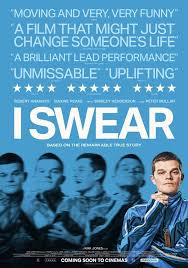
I SWEAR
UK, 2025, 120 minutes, Colour.
Robert Aramayo, Maxine Peake, Peter Mullan, Shirley Henderson, Scott Ellis Watson, Francesco Piacentini-Smith.
Directed by Kirk Jones.
We may think we know what Tourette’s Syndrome is and how it manifests itself – especially the outbursts of bad language. But, there is so much more to the to the physical, emotional and psychological condition that needs so much more understanding from the general public.
I Swear, with its direct title, offers a fine opportunity to be absorbed in the film drama, with comic touches, to appreciate those living with Tourette’s and its effect on their lives.
This is the story of Scotsman, John Davidson. There had been a television documentary on him in 1989 and some news follow-ups. But, for most audiences, this film will be something of a revelation. It starts in a rather cheeky manner with John’s longtime friend and mother-figure, Dottie, urging him to come into the hall, 2019, where Queen Elizabeth is about to present him with a Royal honour. He goes in, reluctantly, a sudden tic and a sudden four letter outburst. And then we go back to appreciate his situation, his life.
The year is 1983. John, a wonderful performance from Scott Ellis Watson, is at school, at home with his proud father, his sisters, his ever-concerned mother. He is a young footballer and great expectations, from scouts, from his father. Then, suddenly the tics, the jerking motions, head, arms, and the blurting out of profanities, blunt and coarse subconscious statements, unintended, alarming the family, school authorities, the police… And bewilderment for the young John.
Moving to 1996, adult John, Robert Aramayo convincing in such a demanding role, is beset with the tics, uncontrollable, and even more rough and disturbing verbal outbursts. His mother, played well by Shirley Henderson, still cannot understand. And he is living at home with her. But he meets an old friend, is welcomed into the friend’s family, especially with by his mother, Dottie, a very engaging Maxine Peake, who invites John to live with the family, breaking with his mother, but finding comfort in a family life, Dottie encouraging him that he need not apologise for what he cannot help.
Scots actor, Peter Mullan, has been a longtime screen presence, often a villain, but here a most engaging caretaker of a centre who befriends John, auditioning him, despite the tics and outbursts, and employing him as an assistant at the centre.
The actual John Davidson is the executive producer of this film which means that his collaboration with the writer-director, Kirk Jones, means that what follows is accurate. The challenge to John to communicate to the public about Tourette’s, to engage with others experiencing the syndrome (and a wonderful scene where he meets a young woman with the syndrome with tics having to be seen to be believed and an extraordinary conversation full of blunt outbursts). There is a sequence where he gathered a large number of those with the Syndrome, along with their parents, giving one of those encouraging speeches for appreciation and understanding.
Then back to 2019 and Her Majesty. A public British acknowledgement of his contribution to enabling the public to understand Tourette’s syndrome.
But, the film does not end there. A wonderful postscript. Researchers at Nottingham University in 2023 moving from medical assistance to neurologic solutions, the wearing of devices which may have an effect on the nervous system, controlling the syndrome. And a note that it has had 59% success – and one hopes that this is where progress will develop.
This is a film straightforwardly told, a strong message film, well worth seeing a second time.
- The blunt title? Introduction to Tourette’s Syndrome? Not just theoretical but with real life people and the syndrome?
- The prologue, 2019, John dressed up, outside, the Queen, Dottie persuading him to come in, the instant swearing? Setting the tone? And audiences going through the journey to return to the sequence and the honour from the Queen?
- A Scottish story, Galashiel, the atmosphere of the town, families and homes, school and football? Pubs? The 1980s? The Davidson family, parents, the relationship, John the only son, the daughters? John and his age, school, friends, football, his father’s expectations, the scouts, prospects? A pleasant and genial personality?
- The emerging of the syndrome, the sudden tics, head movements, jerking, arms? And the verbal outbursts, inappropriate, subconscious themes, almost the opposite of expectations? The effect on John, the football, his mother worried, spitting, sitting him away from the table? His father’s disappointment, exasperation, disappearance? His mother having to look after him? Issues at school, social?
- Into the 1990s, John and his age, still living at home, the manifestations of the tics, the inappropriate remarks? In trouble, relationship with the police, his future? His weary mother and her exasperation? Not understanding?
- Dottie, the terminal diagnosis? John meeting Murray, their friendship, acceptance? The invitation to live in the house, the difficulty for his mother, John and his decision? Welcomed into the house, Dottie and her husband, Murray? Dottie’s background as a nurse, her interest, the personal touch, accepting all his tics and outbursts, telling him he did not have to apologise, the humour and pathos of the home sequences? Murray and his friendship, his father and the acceptance, celebrations, meals…?
- Dottie wanting John to get a job, her approach to Tommy, his work at the centre, needing an assistant, meeting with John, the awkwardness of arriving at the centre, other personnel? The discussions with Tommy, the outbursts, his reactions? The genial Scotsman? Giving Tommy the job, his working at it, effective, enjoying it, the bond between them? Trust? And some amused tolerance on the part of Tommy?
- The episode at the bar, John enjoying it, his manner, the outburst, the man taking offence, the fight, the police, hospital?
- The future for John, at the centre, accepted, the work? Tommy and his collapse, the pathos of his death? His house, the arrangement, John to live in his house, the discussions with the authorities about continuing his work, foreboding disappointment, his being accepted?
- The transition, the bond with Dottie and her family, the mistaken diagnosis? Her continued support?
- Urging John to share his experiences, the making of contacts, advertising, the episode with the Tourette’s Syndrome girl in the car, her anxious parents, the conversation with all the tics and outbursts? The happy parents? The gathering of all the people with Tourette’s, in the hall, John and his speech, the reactions, the parents?
- John, becoming a campaigner, finding himself, his ability with people, writing, interviews? The change in his life? The continued difficulty of the relationship with his mother, her not quite understanding, his visits, the meeting with Dottie? Some gradual acceptance?
- 2019, his achievements, their being recognised, the decoration from the Queen, the applause?
- 2023, the time of the making and preparation of the film, the news from Nottingham, his going to the interview, the change from medication to neurology, the mechanism, his wearing the device, the tranquil walking through the library, something he had never done, the peace and satisfaction of not experiencing the tics?
- 59% success with this neurological treatment? In the film opening with an acknowledgement of the UK understanding Tourette’s via John, his achievement, and hopes for the future?
