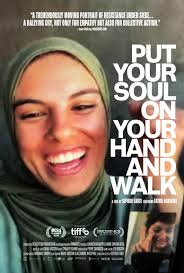
PUT YOUR SOUL ON YOUR HAND AND WALK
France/Occupied Palestine, 2025, 113 minutes, Colour.
Fatem Hassouna.
Directed by Sepideh Farsi.
This is a challenging film on many levels.
From April 2024 to April 2025, Iranian-born film director, Sepideh Farsi, conducted a series of phone calls with a 24-year-old woman from Gaza, a photographer, Fatem Hassouna, conversations about what was happening in Gaza and how Fatem and her family and friends were coping or not coping with Israel’s attack after the Hamas massacre of the Israelis and the hostages taken are all on October 7, 2023.
The basic challenge, as it was for the director, is the personal response to the events, the initial Hamas attack, and its horrific death toll, hostages and Israeli grief, Israel’s response, so deadly and unrelenting, bombardments, the restricting of food supplies, the number of deaths in Gaza, especially women and children, the on and off again peace negotiations. By the time of the commercial release of this film, there has been some ceasefire, return of hostages to Israel, return of prisoners to Gaza but continued tension and the war continuing.
And there is also the personal challenge, the telephone encounter with Fatem, an attractive young person, continually smiling, trying to keep cheerful despite the oppression and repression that she and her family and friends experience. She has never been out of Gaza and wishes she could, visit Rome and other wonderful cities of the world, or go to enjoy a theme Park. At one stage she would love some chicken, a piece of chocolate – and, on some occasions, infrequently she and the family share a better meal than usual. She introduces Sepideh Farsi to various friends and relatives. Fatem has a great deal of personal charm and enthusiasm for life despite the continued bombings, having to move, the deprivations…
As she smiles and laughs on the phone, it is reminiscent of Charlie Chaplin’s plaintive song at the end of Modern Times: Smile, though your heart is aching. Smile, even though it's breaking. When there are clouds in the sky you'll get by. If you smile through your fear and sorrow…
And, throughout the film, there are significant insertions from television reports, the continued focus on the results of the bombardment, collapsed buildings, skeletal buildings still standing, the rubble on the streets, the smoke from the bombardment fires, damage to hospitals…
The other challenge for the audience, making the film very difficult to sit through, is the fact that so much of the film is a focus on the image on the mobile phone, not the sharpest photographic quality. Connections and re-connections. Conversation sometimes difficult to pick up. While this is the reality of such conversations from Europe to Gaza, one wonders whether there might have been better ways, audience-friendly ways, of editing this material.
And, there are difficulties with the choice of questions that the interviewer asks, admittedly conversation that needed to be handled delicately, but sometimes the conversations are, as many conversations are, very ordinary given the serious and severe context.
This is a film of great sadness, even to the end – and, one of the most effective aspects of the film, a final very long walk through the streets of Gaza, subjective camera observing buildings and ruins, the range of people along the street, giving the audience time to reflect on their encounter with Fatem, the impact of the war on the ordinary people of Gaza, a record of what will, in time to come be considered some of the saddest times of human suffering.
