Displaying items by tag: Richard Burton
Last Days of Dolwyn, The
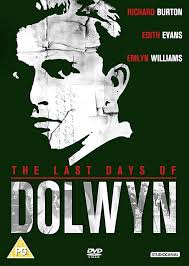
THE LAST DAYS OF DOLWYN
UK, 1949, 95 minutes, Black and white.
Edith Evans, Richard Burton, Anthony James, Emlyn Williams, Hugh Griffith.
Directed by Emlyn Williams.
Interesting film from 1949 for many reasons. It was typical of British filmmaking after World War II, some austerity in production, black-and-white photography, return to social themes from 50 years earlier in the 1890s, consequences of the Industrial Revolution, Welsh villages.
There is also the personal theme of the man ejected from the village, returning to wreak his revenge.
The film was written and directed by playwright-actor, Emlyn Williams, Night Must Fall, The Corn is Green. And he plays a central role in this film.
But, in retrospect, the film is very interesting as the first film from one of Wales’s most famous actors, Richard Burton. Within five years he was in Hollywood appearing in such blockbusters as, the Robe. And, of course, a famous and notorious life and career.
It also was the emergence of Edith Evans as a significant screen actress, famous on stage, moving into film, celebrated for her lady Bracknell in The Importance Being Earnest and an Oscar nomination in the 1960s for The Whisperers.
- Basic British filmmaking of the late 1940s, script, direction, cast, settings and local Welsh photography? Remembering the 1890s? Local issues, Welsh communities in villages? Industrial Revolution and consequences?
- The black-and-white photography, authentic feel, the village, the mountains, the dam? The Chapel, interiors? The Welsh singing, choirs?
- Mr Davis, snob, from England, his back story, a child, accusations of thieving, his being ousted? Wanting revenge? The minister giving him a lift, the initial clash about preaching? Coming to the village, outside the Chapel, listening to the homily? The people coming out, his accommodation, talking with the singer? Wanting to be driven a carriage to Lady Dolwyn’s house?
- The initial atmosphere of Welsh life in the 19th century, community, enclosed, not travelling, the Chapel, the whole community, listening to the sermon, Welsh language, life in the town, Lady Dolwyn and her daughter, going to the Chapel? Mary, the back of the Chapel, tidying, the death of her child 20 years earlier, adopting the boys? Running the shop?
- The emerging of the issue, the need for water in Lancashire, the exploitation of the Welsh water, Davis and his route through the valley, his revenge, his speeches, the offer of money, the discussions amongst the people, whether to sign or not, the money, the moved to Liverpool, work in the mills? Signing?
- Gareth, returning from Liverpool, his explanation of the trams, people unfriendly…? His brother wanting to go to Liverpool? The bonds between the adopted sons and their mother? Gareth, attracted to the aristocratic daughter, in the woods, the glove, failure to speak, the later attractions, at the social, dancing, the bonding? The other brother working at the family mansion?
- The Minister, his warnings, unmasking Davis?
- Mary, unwilling to go, discussions with her sons? Her visit to Lady Dolwyn?
- Davis, Mary and the document for her house, not wanting to sell? Davis going to the dam, to flood the valley? His return, the confrontation with Mary, Gareth and the fight, the fire, on fire, Mary wanting the doctor? His death?
- The community waiting in the hills, apprehensions?
- Mary, the discussions with Gareth, the dead body, her decision, conceal the body, her going to the dam, and her causing the flood?
- Her returning to the people on the hill – and the openness to the future?
Mr Burton
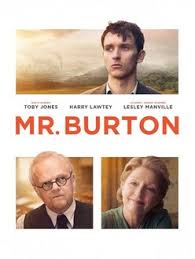
MR BURTON
UK, 2025, 124 minutes, Colour.
Toby Jones, Harry Lawtey, Lesley Manville, Mali O'Donnell, Amy Ffio Edwards, Aneurin Barnard, Steffan Rhodri.
Directed by Marc Evans.
Richard Burton was one of the most admired stage and screen actors of the 20th century. But the title of this biography has two meanings which his fans will know. The actor was, in fact, Richard Jenkins, a from mining family near Port Talbot in Wales. It did not seem likely when he was young that he would become so famous, so admired, and marrying Elizabeth Taylor twice.
The principal Mr Burton of this film is his teacher, Philip Burton, who recognised the young man’s talents, fostered them, encouraged his ambitions, legally adopted him. And, here he is played by the versatile actor Toby Jones who has portrayed a number of historical characters including Alfred Hitchcock and Truman Capote.
And this is something of a breakthrough performance by young actor, Harry Lawtey. He has to portray young Richard Jenkins as a late teenager at school, a mixture of a character who was a bit of a lad (and more than a bit of a lad as he grew older) but also a man with a resonant voice, someone who was able to take advice and transform his vocal tones, language and pacing (while incorporating still something of a Welsh lilt), overcome a difficult family background (his father finally agreeing with Philip Burton about the adoption and getting £50 compensation even though he had little time or attention for his son), valuing the support of his sister, helped with jobs by his brother-in-law who did not understand him.
So the film creates the atmosphere of Wales in the early years of World War II, opening when Jenkins was 17, a mixture of one of the boys yet special in terms of studies, responding to the affirmation of Philip Burton, a dedicated teacher, something of a loner, who saw the potential, took great trouble to train him with his breathing and enunciation, hours and hours spent out in the hills with dedicated practice. Philip Burton so believed in his protégé that he risked comments from the locals, insinuations as well as declarations of suspicions about his gay interest in Jenkins.
There are some very good set pieces throughout this film, very vivid with Jenkins’ drinking father, meetings with his son, the pub, showing himself that he could be a boisterous entertainer for his drinking friends, and the minimum reluctance in selling off his son for adoption. And, by contrast, there are the scenes of his sister and brother-in-law, hard times with the mines, with the economy, with the war. And, many scenes at school.
One of the entertainment benefits of the film is the presence of Lesley Manville as Philip Burton’s housekeeper, friend and confidante.
By the end of the film, with all his gratitude to Philip Burton, we begin to see more vividly what was to come, the intensity of Burton’s personality, ambitions, recklessness, which was manifest in his later tempestuous relationships, especially with Elizabeth Taylor.
But, we see that Burton was accepted to Oxford, something a lot of his fellow Welshman, including his father, could not understand. We see him accepted at Stratford-upon-Avon, hopes, fears, drinking, moody, preparing for his debut as Henry V.
Which is where the film ends but, there have been so many films in his career, reports of his wonderful stage performances, the details of his sometimes scandalous life, so that we know where this portrait of the beginning of his life and career will lead to.
- Audience knowledge of Richard Burton, his background, his career, Elizabeth Taylor, marriages, their work together, drinking, his death?
- The film about his origins, Richard Jenkins of Port Talbot, his father and mining, his family? Hard life and background? His education, the encounter with Philip Burton, working with Philip Burton and the opening up of his acting career?
- The setting of 1942, World War II, Wales, the re-creation of the town, the mines, the streets, shops, school, pubs, church…? The musical score and the atmosphere of Wales?
- Richard Jenkins at 17, his life so far, his talents and abilities, the difficulties with his father, living with his sister and brother-in-law in the family? His visits to his father, the pub, boisterous, his father’s attitude towards his son and acting? The later sequence in the visit with Philip, the discussions about the adoption, the revelation about the father and his attitudes, £50?
- Philip Burton as the main Mr Burton, his background, personal life, loner, suggestions of homosexual orientation? Quiet life at home, his friendship with his housekeeper, the routines of life, meals, conversations?
- Philip Burton as a teacher, his pupils, his own love of theatre, poetry, and the Welsh atmosphere of poetry? The classes, his interest in Richard, in class, poetry and drama, Richard’s voice, the sequences of training, pronunciation, out in the hills, declaiming, the transformation in Richard’s voice?
- The innuendo around the town, the range of people, the gossip, the pubs? The decision about adoption, Richard’s attitude, Philip’s visit to Mr Jenkins? Allaying some kind of suspicions? Richard’s own attitude towards the situation, at the time, afterwards?
- The possibilities for Richard and a career, the issue of Oxford, the seeming impossibility of someone from the town going to Oxford, his father’s comments about Oxford?
- Richard, branching out, going to Oxford, wilful, some alienation from Phillip, going to Stratford-upon-Avon, the rehearsals for Henry V, his nervousness, drinking, unreliable, timing? Philip’s visit, the encouragement, tutoring?
- The performance, the nerves, success, responses, and the beginning of his career? Indications of future success, stage and film performance, voice? Yet scandals, drinking, untimely death?
Ellizabeth Taylor: the Lost Tapes

ELIZABETH TAYLOR, THE LOST TAPES
US, 2024, 100 minutes, Colour.
Directed by Nanette Burstein.
It is something of an understatement to say that Elizabeth Taylor was a significant world figure in her day. She spanned the decades, born in 1932, moving to the US at the breakout of World War II, beginning her film career in 1943 with Lassie, come home, consolidating it, Riding in the British races, National Velvet, a very strong career into the 1970s. He died in 2011.
The lost tapes of the title refer to interviews with Richard Meryman, 40 hours which took place in 1964, then placed in an attic and only discovered by the interviewer’s wife in 2019 and made available. Documentary director, Nanette Burstein, has organised a great variety of segments from the tapes to make Elizabeth Taylor’s narrative about her life and career up to this period, material and 1966, culminating in her appearance in Who’s Afraid of Virginia Woolf and her winning her second Oscar for that performance.
While the voice-over is significant, the director has been able to obtain a great range of visual footage of the actress, of her life in public, aspects of her life in private, interviews, social photos, and, clips from a great number of her films. This is always something which makes a favourable audience want even more.
There is great emphasis on how beautiful Elizabeth Taylor was as a little girl, as a teenager, as a young adult, but voicing dislike of her schooling at MGM studio – moving into adult roles, even as Robert Taylor is wife in The Conspirators, when she was 18. And, there is a lot of footage and her own observations about her first marriage to hotel heir, Nicky Hilton, the initial happiness, his character, her moving towards a divorce. Then, for the curious, there is her marriage to Michael Wilding, the British actor some decades her senior, some years of happiness, dependence on him, continuing her career but dissatisfied with the roles that MGM was giving her. And she had two sons. The tapes offer observations about Michael Wilding, the strains on their marriage, and her divorce when she was still in her mid-20s.
For those interested in her comments about her further marriages, needless to say, there is quite a great deal, especially about Mike Todd, enjoying his so-called lack of education, oddball style and humour, his achievements, and happiness with Elizabeth Taylor, the birth of their daughter, the tragedy of his accidental death in a plane crash.
For audiences wondering about Eddie Fisher (and not favourable to him), her comments about him as a friend of Mike Todd, Debbie Reynolds being her bridesmaid, the talking with Eddie Fisher, Mike Todd’s friend,, his infatuation with her, the rapidity of marrying Elizabeth Taylor only hours after the divorce from Debbie Reynolds – Elizabeth Taylor indicating the Debbie Reynolds that made to something of a show of her shock. Finally, Elizabeth Taylor says she was not in love with Fisher but he was a good friend, especially talking about Mike Todd.
There is Elizabeth Taylor’s illness, highlighting some of her roles, especially the support of George Stevens in both A Place in the Sun and Giant, many sequences, background, James Dean, and her friendship with gay actors, Rock Hudson, Montgomery Clift, a lifelong bond with Roddy McDowell who makes commentary throughout this film. There are scenes from Suddenly, Last Summer as well as her complete dislike of Butterfield 8 – and the scene of her accepting her Oscar for this performance.
Cleopatra. Richard Burton.
In fact, there is quite a lot of background about the making of Cleopatra, initially with Ruben Mamoulian and, then Joseph Mankewiecz, scenes with Rex Harrison, then the arrival of Richard Burton, her illness, delays with production, starting again with so many consequences in recasting, many scenes from the film itself, especially her entry into Rome with the cast of thousands.
Of course, audiences will be wanting to see the relationship with Richard Burton, here Elizabeth Taylor’s commentary on meeting him as a badly hangover drink, the bonding between them, the breakup of his marriage, many scenes of them together, in other films, socially, with their children bonding with Burton, and her saying that the marriage would last for 50 years.
And, then being hounded by the paparazzi, condemned, even with a glimpse of John XXIII in the Vatican, but some of the winning over public opinion.
Those interested in Richard Burton, he appears in many sequences, interviews, and helps audiences to understand his personality and his decisions about alcohol, about marriage, his career.
The filmmakers have added further material, some of Elizabeth Taylor’s performances in the 1970s, her drug and alcohol addiction and rehab, but, especially her emergence at the time of AIDS, support of Rock Hudson, her speeches, speeches to Congress, her work and foundations.
Which does provide something of a triumph for the actress so often in the limelight, who makes some wry comments about her being a star celebrity commodity, contrasting with her desire to be an actress. The range of her marriages, the six years with the Senator included, the marriage with the bodybuilder not included. But, she moves from a world of glamour and publicity to a reputation of social concern.
