Displaying items by tag: Peter Malone
Watchmen, The, Chapter II
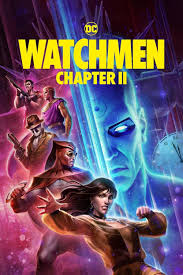
WATCHMEN, CHAPTER II
US, 2024, 90 minutes, Colour.
Voices of: Troy Baker, Adrienne Barbeau, Michael Cerveris, Jeffrey Combs, Max Koch, Geoff Pierson, Matthew Rhys, Katee Sackhoff, Dwight Shultz, Titus Welliver.
Directed by Vinton Heuck, Brandon Vietti.
These are two animated films from the graphic novel, Watchmen, by Dave Gibbons and Alan Moore (1986-1987). Into chapters, they cover the plotlines and characters from the live action version of 2008, directed by Zack Snyder.
There are two main approaches to reviewing a film version of a graphic novel, especially one that has developed a cult following for almost a quarter of a century, as has Watchmen. Firstly, there will be the reviews by the fans, those who know the original so well that they have visualised the films themselves and will be eager to see how accurate the film version is or how well the makers have interpreted the content and characters as well as finding visual parallels to the book. Then there will be the reviews by those who may not be familiar at all with the original but who have an appreciation of films and have built up an experience of film versions of graphic novels. The first kind of review can be found on the Internet Movie Data Base and, prolifically, on the blogs and interactive sites. The second kind of review will come from the critics in the public media, in print, on air, on screen or in cyberspace. This review will be of the latter kind.
Whether it does justice to the original material, created by Dave Gibbons and Alan Moore (1986-7)… It almost goes without saying (so that is why it is being said here) that this is not a film for the wider audience who might be puzzled by its style, by the conventions of the graphic novel, by the intricacy of the plot. Obviously, some audiences will find the visual violence too much for them. Despite the hype and marketing, this is a specialist film.
The opening certainly gets the attention. One of the superheroes. The Comedian is attacked in his apartment by a human or humanoid with superhuman strength and is killed. The voiceover commentary, which recurs at key times, comes from the diary of another, very bizarre, member of the group which began in the 1940s as The Minutemen, and, after saving lives and other heroics (some of which were of a dubious moral and political nature) have retired. This is Dr Rorschach whose bandage-like mask has continually moving and altering blots. Dr Rorschach begins investigating the murder and other attempts on the Watchmen.
Then a fascinating visual trek through mid-20th century American history, from the end of the war, through Vietnam, Cuban crisis, JFK and his assassination and the election of Richard Nixon. It is now 1985 as we move into a parallel world where Nixon has been elected for a third term and is involved in a nuclear standoff with Russia (Henry Kissinger prominent as his adviser). Once we make the switch to the other world with this alteration of history and the murder of The Comedian, we are ready to move with whatever happens, believable or not, in the drama that unfolds.
While there is a thread concerning the five minutes to midnight on the Doomsday Clock (moving to four minutes to twelve), the film is episodic insofar as it focuses in turn on the Watchmen group and gives us the back stories of their heroism (or not) which suggests that victory in Vietnam, Watergate, All the President's Men and other events may have had more sinister implications. Ultimately, this leads to a nuclear confrontation and an insanely intelligent mastermind who feels that the only way to peace is by the sacrifice of millions lives in a nuclear holocaust.
In entering into an alternate world, the audience definitely has to suspend disbelief.
In the back stories, The Comedian does not come out very well though he has an opportunity to see the malice of his ways. Most interesting is the story of Dr Manhattan, a mutant creature with foreknowledge of his own life, not others, who was the victim of an accident in a reactor in 1959. This sends us back to a nice era with some nice people, especially Jon Osterman, who becomes Dr Manhattan, a well-known public figure who becomes the scapegoat of the villain. He loves Laurie Jupiter, once Silk Spectre II, his assistant but is impeded by his work and his sense of doom. (Her mother, Silk Spectre I is now a retired alcoholic, somewhat cynical, veteran of the old days. Laurie also relies on Dan, formerly Nite Owl who has retired but has inherited enough money to continue his engineering of super-vehicles (in a Bruce Wayne kind of way). Dan and Laurie really would like to go into action again and do so, rescuing people from a burning building and getting Dr Rorschach out of prison after he is framed for murder. The prison scenes have most of the violence.
The other member of the group, who has gone public and is feted by the media, is Adrian Veidt, once Ozymandias, wealthy and the owner of many companies.
The following questions refer to the live-action film but can be used for the animation films for comparing and contrasting treatments.
1.The reputation of the graphic novel, its authors, as a landmark in this genre in the 1980s? Graphic novels for adults? Issues? Conventions – and the breaking of conventions?
2.The film and expectations of fans, fidelity to characters, mood, issues, heroic/not? The creation of an alternate world? The visuals for this world?
3.The importance of the visuals in the film: the realistic atmosphere, the darkness for the graphic novel action, the special effects, the flair? Costumes and décor? The creation of the alternate world? Locations in New York City, Washington, the creation of new vehicles and action? Mars? The world of Doctor Manhattan and his appearance? The masks and reality for the Watchmen? The musical score?
4.The title, the introduction to the Minute Men? The 1940s, fighting crime, the era of the creation of comic strip characters, their photos and press conferences? Heroism? Their being used by the governments, for right and wrong, Doctor Manhattan and the victory in Vietnam? The speculation and vision for the assassination of John F. Kennedy? Their personal behaviour, violence, rape by The Comedian, decline? Their Ageing? Anonymity? Their being officially outlawed? The question of who watches the Watchmen?
5.The prologue, the introduction to The Comedian, his age, watching TV, his apartment, the intrusion and the attack, the humanoid who attacked him and killed him? Thrown to his death? The police, their trying to reconstruct the scene and what happened?
6.Doctor Rorschach and his diary, the voice-over, throughout the film, the nature of his investigation?
7.The credits, the overview of US history since World War Two? The focus on Kennedy and the Kennedy era, Castro and the Soviet Union, the war in Vietnam, the election of Richard Nixon, the alternate world of 1985 with Nixon still in power? Echoes of the 1980s and east and west and nuclear fears, on the brink of war? The confrontation? The illustration of the Doomsday Clock, the television debates about the future of the world?
8.The structure of the film: The Comedian’s death and the investigation, Doctor Rorschach and his investigation and diary? The interviews with the various Watchmen? The build-up of suspicions, scientists, deaths? Daniel and Laurie? The role of Doctor Manhattan and his behaviour, framed and arrested? Doctor Rorschach in jail, the rescue? The world situation, Adrian Veidt and his power? The interspersing of back-stories for the Watchmen throughout this narrative?
9.Doctor Rorschach, the nature of his mask and the changing blots? His investigation, his questions? In himself, his being framed for the murder, his visiting the scientists? In prison, the procedures, the treatment? Seeing his face? The brutality in prison, the riot, the confrontation with the dwarf? His being rescued?
10.Doctor Manhattan, his scientific work, Laurie as his assistant, his shifting in space and time? The puzzle about him and his activity, going to the television interview, the barrage of accusations about his being responsible for his friends getting cancer, their coming into the studio? His reaction, his going to Mars for reflection?
11.His back-story, the late 1950s, the visuals of that era, everything nice, Jon and his girlfriend, on the pier, his work, his going back for his watch, being trapped in the laboratory, the transformation effect? His powers, the visualising of his defending the American forces and destroying the Viet Cong in Vietnam? Used by the government? Research?
12.The women amongst the Watchmen? The lesbian relationship? Silk Spectre and her public performances, with The Comedian, the brutality of the rape? Getting old, drinking? Her relationship with her daughter, their clashes? The truth for Laurie about who her father was, the bond with her mother?
13.The Comedian, his initial success, growing old, brutality and the rape, his final repentance, going to the scientist and confessing?
14.The scientists, their research, their retirement, their apartments, the visit by The Comedian, Doctor Rorschach, their deaths?
15.Daniel as Nite Owl? His going to listen to stories from the original Nite Owl? His not having a need for money, his laboratories, his building the vehicles, the friendship with Laurie, with Doctor Manhattan? His ordinary life, going out to meals, restaurants? Relating to Laurie? Their feeling the need for action, the decision to act, his vehicle? Rescuing the people from the building on fire? The decision to rescue Doctor Rorschach, rescuing him?
16.Adrian, not anonymous, his press conferences, his charm, allegedly the most intelligent man? The Veidt organisations? His Watchman name of Ozymandias? His schemes, his use of his power, his nuclear power, setting up all the Watchmen, responsible for their deaths? His setting off the nuclear destruction? A small sacrifice, according to his calculations, for world peace? The Watchmen confronting him? The decision to cover up what he had done for the sake of world peace?
17.The background of President Nixon, his actual history, his being re-elected, the nuclear fears of the mid-80s, the advice from Henry Kissinger, the various meetings and his military advisers, the information about the confrontation with the Soviet Union, his contact with the premier, the nuclear explosions?
18.The finale, the cover-up? The Watchmen and their strengths and weaknesses? The moral ambiguity of this world?
Watchmen, The, Chapter I
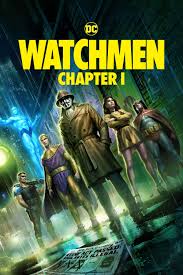
WATCHMEN, CHAPTER I
US, 2023, 83 minutes, Colour.
Voices of: Troy Baker, Adrienne Barbeau, Michael Cerveris, Jeffrey Combs, Max Koch, Geoff Pierson, Matthew Rhys, Katee Sackhoff, Dwight Shultz, Titus Welliver.
Directed by Brandon Vietti.
These are two animated films from the graphic novel, Watchmen, by Dave Gibbons and Alan Moore (1986-1987). Into chapters, they cover the plotlines and characters from the live action version of 2008, directed by Zack Snyder.
There are two main approaches to reviewing a film version of a graphic novel, especially one that has developed a cult following for almost a quarter of a century, as has Watchmen. Firstly, there will be the reviews by the fans, those who know the original so well that they have visualised the films themselves and will be eager to see how accurate the film version is or how well the makers have interpreted the content and characters as well as finding visual parallels to the book. Then there will be the reviews by those who may not be familiar at all with the original but who have an appreciation of films and have built up an experience of film versions of graphic novels. The first kind of review can be found on the Internet Movie Data Base and, prolifically, on the blogs and interactive sites. The second kind of review will come from the critics in the public media, in print, on air, on screen or in cyberspace. This review will be of the latter kind.
Whether it does justice to the original material, created by Dave Gibbons and Alan Moore (1986-7)… It almost goes without saying (so that is why it is being said here) that this is not a film for the wider audience who might be puzzled by its style, by the conventions of the graphic novel, by the intricacy of the plot. Obviously, some audiences will find the visual violence too much for them. Despite the hype and marketing, this is a specialist film.
The opening certainly gets the attention. One of the superheroes. The Comedian is attacked in his apartment by a human or humanoid with superhuman strength and is killed. The voiceover commentary, which recurs at key times, comes from the diary of another, very bizarre, member of the group which began in the 1940s as The Minutemen, and, after saving lives and other heroics (some of which were of a dubious moral and political nature) have retired. This is Dr Rorschach whose bandage-like mask has continually moving and altering blots. Dr Rorschach begins investigating the murder and other attempts on the Watchmen.
Then a fascinating visual trek through mid-20th century American history, from the end of the war, through Vietnam, Cuban crisis, JFK and his assassination and the election of Richard Nixon. It is now 1985 as we move into a parallel world where Nixon has been elected for a third term and is involved in a nuclear standoff with Russia (Henry Kissinger prominent as his adviser). Once we make the switch to the other world with this alteration of history and the murder of The Comedian, we are ready to move with whatever happens, believable or not, in the drama that unfolds.
While there is a thread concerning the five minutes to midnight on the Doomsday Clock (moving to four minutes to twelve), the film is episodic insofar as it focuses in turn on the Watchmen group and gives us the back stories of their heroism (or not) which suggests that victory in Vietnam, Watergate, All the President's Men and other events may have had more sinister implications. Ultimately, this leads to a nuclear confrontation and an insanely intelligent mastermind who feels that the only way to peace is by the sacrifice of millions lives in a nuclear holocaust.
In entering into an alternate world, the audience definitely has to suspend disbelief.
In the back stories, The Comedian does not come out very well though he has an opportunity to see the malice of his ways. Most interesting is the story of Dr Manhattan, a mutant creature with foreknowledge of his own life, not others, who was the victim of an accident in a reactor in 1959. This sends us back to a nice era with some nice people, especially Jon Osterman, who becomes Dr Manhattan, a well-known public figure who becomes the scapegoat of the villain. He loves Laurie Jupiter, once Silk Spectre II, his assistant but is impeded by his work and his sense of doom. (Her mother, Silk Spectre I is now a retired alcoholic, somewhat cynical, veteran of the old days. Laurie also relies on Dan, formerly Nite Owl who has retired but has inherited enough money to continue his engineering of super-vehicles (in a Bruce Wayne kind of way). Dan and Laurie really would like to go into action again and do so, rescuing people from a burning building and getting Dr Rorschach out of prison after he is framed for murder. The prison scenes have most of the violence.
The other member of the group, who has gone public and is feted by the media, is Adrian Veidt, once Ozymandias, wealthy and the owner of many companies.
The following questions refer to the live-action film but can be used for the animation films for comparing and contrasting treatments.
1.The reputation of the graphic novel, its authors, as a landmark in this genre in the 1980s? Graphic novels for adults? Issues? Conventions – and the breaking of conventions?
2.The film and expectations of fans, fidelity to characters, mood, issues, heroic/not? The creation of an alternate world? The visuals for this world?
3.The importance of the visuals in the film: the realistic atmosphere, the darkness for the graphic novel action, the special effects, the flair? Costumes and décor? The creation of the alternate world? Locations in New York City, Washington, the creation of new vehicles and action? Mars? The world of Doctor Manhattan and his appearance? The masks and reality for the Watchmen? The musical score?
4.The title, the introduction to the Minute Men? The 1940s, fighting crime, the era of the creation of comic strip characters, their photos and press conferences? Heroism? Their being used by the governments, for right and wrong, Doctor Manhattan and the victory in Vietnam? The speculation and vision for the assassination of John F. Kennedy? Their personal behaviour, violence, rape by The Comedian, decline? Their Ageing? Anonymity? Their being officially outlawed? The question of who watches the Watchmen?
5.The prologue, the introduction to The Comedian, his age, watching TV, his apartment, the intrusion and the attack, the humanoid who attacked him and killed him? Thrown to his death? The police, their trying to reconstruct the scene and what happened?
6.Doctor Rorschach and his diary, the voice-over, throughout the film, the nature of his investigation?
7.The credits, the overview of US history since World War Two? The focus on Kennedy and the Kennedy era, Castro and the Soviet Union, the war in Vietnam, the election of Richard Nixon, the alternate world of 1985 with Nixon still in power? Echoes of the 1980s and east and west and nuclear fears, on the brink of war? The confrontation? The illustration of the Doomsday Clock, the television debates about the future of the world?
8.The structure of the film: The Comedian’s death and the investigation, Doctor Rorschach and his investigation and diary? The interviews with the various Watchmen? The build-up of suspicions, scientists, deaths? Daniel and Laurie? The role of Doctor Manhattan and his behaviour, framed and arrested? Doctor Rorschach in jail, the rescue? The world situation, Adrian Veidt and his power? The interspersing of back-stories for the Watchmen throughout this narrative?
9.Doctor Rorschach, the nature of his mask and the changing blots? His investigation, his questions? In himself, his being framed for the murder, his visiting the scientists? In prison, the procedures, the treatment? Seeing his face? The brutality in prison, the riot, the confrontation with the dwarf? His being rescued?
10.Doctor Manhattan, his scientific work, Laurie as his assistant, his shifting in space and time? The puzzle about him and his activity, going to the television interview, the barrage of accusations about his being responsible for his friends getting cancer, their coming into the studio? His reaction, his going to Mars for reflection?
11.His back-story, the late 1950s, the visuals of that era, everything nice, Jon and his girlfriend, on the pier, his work, his going back for his watch, being trapped in the laboratory, the transformation effect? His powers, the visualising of his defending the American forces and destroying the Viet Cong in Vietnam? Used by the government? Research?
12.The women amongst the Watchmen? The lesbian relationship? Silk Spectre and her public performances, with The Comedian, the brutality of the rape? Getting old, drinking? Her relationship with her daughter, their clashes? The truth for Laurie about who her father was, the bond with her mother?
13.The Comedian, his initial success, growing old, brutality and the rape, his final repentance, going to the scientist and confessing?
14.The scientists, their research, their retirement, their apartments, the visit by The Comedian, Doctor Rorschach, their deaths?
15.Daniel as Nite Owl? His going to listen to stories from the original Nite Owl? His not having a need for money, his laboratories, his building the vehicles, the friendship with Laurie, with Doctor Manhattan? His ordinary life, going out to meals, restaurants? Relating to Laurie? Their feeling the need for action, the decision to act, his vehicle? Rescuing the people from the building on fire? The decision to rescue Doctor Rorschach, rescuing him?
16.Adrian, not anonymous, his press conferences, his charm, allegedly the most intelligent man? The Veidt organisations? His Watchman name of Ozymandias? His schemes, his use of his power, his nuclear power, setting up all the Watchmen, responsible for their deaths? His setting off the nuclear destruction? A small sacrifice, according to his calculations, for world peace? The Watchmen confronting him? The decision to cover up what he had done for the sake of world peace?
17.The background of President Nixon, his actual history, his being re-elected, the nuclear fears of the mid-80s, the advice from Henry Kissinger, the various meetings and his military advisers, the information about the confrontation with the Soviet Union, his contact with the premier, the nuclear explosions?
18.The finale, the cover-up? The Watchmen and their strengths and weaknesses? The moral ambiguity of this world?
Humint
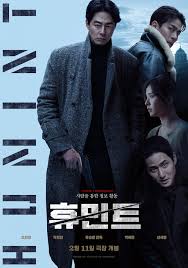
HUMINT
Korea, 2026, 109 minutes, Colour.
Zo In-sung, Park Jeong-min. Park Hae-joon. Shin Sae-Kyeong.
Directed by Ryoo Seung-wan.
Humint is the abbreviation for human intelligence, sources of information from human beings rather than technology.
This is an interesting and quite effective Korean thriller, but the audience having to pay attention all the time to appreciate the characters, motivations, interactions, covering up.
The film opens introducing the agent from South Korea, trying to rescue a trafficked woman, the authorities wanting her to supply human intelligence. She dies. The agent then moves to Vladivostok, investigating contacts for uncovering the trafficking in the border area between China, Russia, the Koreas.
The next introduction to is to the agent from North Korea, searching for a young woman from his past, finding her at a restaurant, in contact with the South Korean agent, supplying information. At the same time, there is a seedy North Korean Consul in the city, corrupt, involved in the trafficking, thinking that the North Korean agent was there to do a report on him.
There are sequences of trafficking on the border. There are interrogations of these involved. Ultimately, there are violent confrontations, the traps and talk to the women, their liberation, and shootouts.
An interesting visit to this part of the world through the activity of the agents, the trafficking and the dangers.
- For the Korean audience, for international audience, the focus on South Korea, North Korea, eastern Russia?
- The settings, Vladivostok, the Russian border, China, Korea? The landscapes, the city, apartments, hotels and clubs? The musical score?
- The South Korean agent, his work, trying to save the trapped traffic woman, the interviews, the communication, her talking, the authorities, harsh stances, wanting the information, the dangers, the rescue, her death? The impact on So?
- Vladivostok, his mission, searching, the human trafficking, the film visualising the young women, rounded up, the guide, looking for freedom, trapped, the tracking? The guide, the later interrogation?
- Park and beyond, North Korean agent, personality, his mission, searching for the young woman, their past, her leaving, getting the job in the restaurant, the contact with So, self-protection, giving information, the reaction to Park arriving?
- The North Korean Consul, his place in the city, his contacts and henchman, deals, finance, the trafficking, smug attitude, at the restaurant? His discussions with Park, thinking that Park was there to make a report on him?
- The role of the young woman, her being taken, captured, held, with the other women?
- The two agents, suspicions, interactions, the young woman, each understanding the other better, the buildup to the climax, working together, the shootouts, the Consul?
- The liberation of the women, the young woman and her action, the gun, the two men, shelter, wounds?
- The future? But a thriller highlighting trafficking in this area of the world, the political tensions with Russia and China, the two Koreas?
Wolfram
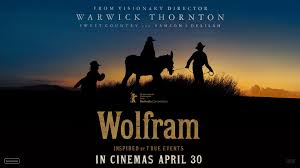
WOLFRAM
Australia, 2026, 100 minutes, Colour.
Deborah Mailman, Pedrea Jackson, Thomas M.Wright, Errol Shand, Matt Nable, Anni Finsterer, John Gibson, Natasha Gorey Furber, Eloise Hart, John Howard Ferdinand Hoang. Aidan Du Chiem.
Directed by Warwick Thornton.
Over the years, writer-director, Warwick Thornton, has become one of Australia’s most important indigenous filmmakers. For almost 20 years, his dramas have highlighted these themes, especially in central Australia, award-winning films like Samson and Delilah, Sweet Country, The New Boy, and, now, Wolfram.
Sweet Country were set in the 1920s, confrontations between white landowners and black uprisings, the police… Wolfram is set in the 1930s, prospectors, white Australians and a number of Chinese, in Central Australia, prospecting for Wolfram/tungsten. They have leases, have charge of aboriginal children, who are able to go down into the mine shafts, small, working in the narrow dark, sending up samples. They are quite young,have lost connection with their parents, now at the mercy of these white men, harsh, drinkers. The re-creation of these mining settlements, out in the harsh desert, is disturbing.
But the drama has several chapters, introducing a range of characters then gradually bringing them together for final confrontations, and some reconciliations.
In many ways and visual styles as well as in the action, Wolfram is in the vein of American westerns. There is the local town, the pub version of the American saloon, the women at the bar, the men customers. And in ride two characters, sinister in look and manner, one, who is ruthlessly violent, played by Errol Shand, and his young associate, naïvely absorbing the racism and enjoying the violence, Joe Bird. They want information about a contact who has a lease, Kennedy, played by Thomas M. Wright. Kennedy is retired now, has a young indigenous man working for him, Philomac, played by Pedrea Jackson, showing the taken-for-granted contempt for the aborigines and the demands made on them.
In the meantime, there is another story element, the aboriginal mother with her baby, played by Australia’s leading indigenous actress, Deborah Mailman. She is travelling with a Chinese miner, but cutting her hair, leaving the tufts and beads on trees, hoping that her children will find them and follow her. She is quiet, sad, another victim of racism in the 1930s. (On the other hand, the Chinese characters, out searching for Wolfram, are sympathetic – and, the audience appreciating their martial skills when they tangle with the white villains of the drama.)
For Warwick Thornton, this is dramatising the harsh past, acknowledging the truth for aboriginal people, holding up an often unwanted mirror to the behaviour of brutal and racist Australians. And, sadly in the time of the Uluru Statement from the Heart, films like this are still a needed challenge.
- Title, the metal, mining, prospectors, labour, white owners, and Chinese working?
- The films of Warwick Thornton, indigenous themes over two decades, Australian indigenous history? Racist? Critique of the remnants of convict culture? Christian and religious references?
- The various strands of the plot, the signalled chapters of the film, the range of characters, connections, coming together?
- The opening, the hammer and the chisels of the rock, mining for Wolfram? The young children, the audience assuming through the film that they were boys, the hard work, the treatment, Billy, his hold over them, his drinking, harshness, the later collapse and his death? The flashbacks and his relationship with Pansy? The children taken from their mother? The back story?
- Pansy, with the baby, grieving, sitting contemplating, patting her hair, the beads, leaving the signs on the trees and branches for her children, her partner, his racial background, travelling the sulky, over the countryside, searching, not going to Queensland? The recurring images of Pansy?
- Kennedy, his lease, his home, the shed, living alone, except for Philomac, servant, Kennedy and his demands, Philomac and his age, no explanation of his background, his work, the treatment? Subservient? Yet intelligent young man?
- Casey Martin and Frank, Casey Martin and his appearance, sinister, rough, riding into town, the pub, the woman at the bar, her dress, attitude, payments, chitchat, the young girl persisting? The men in the pub, attitude towards the visitors? Going to the store, supplies, the owner, his aboriginal wife and their reaction? The issue of the lease, his giving information about Kennedy?
- The couple riding through the countryside, coming to the mining area, the various workers, the tense, the diggings, explosions, the explosions underground? The encounter with Billy? With the children? Riding, finding Kennedy, his paranoia, the reunion, the humiliating Philomac, staying in the shed?
- The children, their hard work, going down into the mines, the gelignite the explosions, Billy, his collapse? The child with the donkey, riding through the countryside, the picture of the child wandering? Finally meeting at Kennedys? The child finding the charred remains of the old aborigine, his having worked for Kennedy, Martin and Frank killing him?
- The presence of the indigenous tribes, suddenly appearing, the Elder, the young girls, the water, the women washing, the young girl watching, Martin and his brutality, the killing? The aborigines meeting with Philomac, not helping, walking away? The ultimate confrontation with Martin, the violence, the women, his being killed?
- Martin and Frank going into the town with Kennedy, searching for Philomac and the children, their ability to hide in the caves, observing the brutality with the aboriginal women? The steering of Kennedy, his collapse, injuries?
- In town, in the bar, the woman at the counter, the discussions with the owner, treating Kennedy, breaking the binding?
- Philomac and the children, encounter and the Chinese, the friendly reception, the meals, sleeping, intending to leave, the work, the discovery that the children were girls, the toilet scene, the laughing, going down into the shaft, the rope, the girl falling down, Philomac falling, the young Chinese falling down? The rescue, the injuries?
- The intention to move, to Queensland, going into the town, the Chinese and his encounter with Frank, the fight, martial arts, the strangling? Martin discovering this, his leaving town with vengeance, his own death?
- Pansy, the travel, seeing the sulky coming through the fields, the happy reunion, including with Philomac?
- The 1930s, Australian history, the treatment of the indigenous people, the brutal white people, exploiting, humiliating, yet their racist attitudes, low intelligence, and brutality? Warwick Thornton’s films and their challenge to the interpretation of post-1788 Australia?
Guilty as Hell
GUILTY AS HELL
UK, 1932, 79 minutes, Black-and-white.
Edmund Lowe, Victor McLaglen, Richard Arlen, Adrienne Ames, Henry Stephenson, Ralph Ince, Elizabeth Patterson.
Directed by Earl C.Kenton.
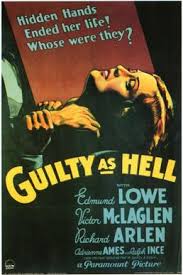 The film opens with a murder, the murderer clearly seen, setting up a framing situation, covering all his tracks, including timing, witnesses, and the turning on of the radio. For film buffs, having seen British actor, very dignified, Henry Stephenson in so many films, it is quite a shock to see him as the murderer, a respectable surgeon, vengeance on his wife who is having an affair.
We are also introduced to the main detective, played in his usual bluff, humorous style by Victor McLaglen, three years later to win an Oscar for The Informer. And, he is matched by the cheeky, lackadaisical journalist, played by Edmund Lowe. While there is a serious investigation, even leading up to a potential execution, there is a lot of banter and repartee between these two characters, especially where women are concerned as well as professional jealousies and comparisons.
The accused man is played by popular heartthrob of the time, Richard Arlen. There are other popular supporting actors of the time, especially Elizabeth Patterson as the neighbour.
The accused man discovers the lover’s body, leaves his fingerprints on the door, a piece of evidence from his watch in the woman’s hand. Investigations lead to a nightclub, the witness of the manager of the club and his wife, the involvement of the accused man’s sister who tries to cover for him but, the audience has seen that, by accident, the journalist had given a taxi to her and her brother was not with her.
Trial, sentence, imprisonment, the night of execution, the evidence against the accused, the journalist, for the sake of the sister, trying to find evidence, phone calls to the governor, the disappearance of the owner of the club, his being shot and wounded by the detective, his wife calling in the doctor who then kills the witness saying that his wound was too severe.
Ultimately, the unmasking, the habit of the surgeon to chew gum, his doing so in the detective’s office – but it was poisoned. Suicide. Mystery solved. Execution stopped. The journalist’s discovery that the sister was actually engaged. So, jovial banter again and rivalry between the journalist and the detective. (Lowe and McLaglen had appeared in similar buddy vein in the 1926 What Price Glory!.)
Addition
ADDITION
Australia, 2024, 91 minutes, Colour.
Teresa Palmer, Joe Dempsie, Eamon Farrow, Sarah Peirse, Adrienne Pickering, Lou Baxter, Sara Newman.
Directed by Marcelle Lunam.
A cinema adaptation of a very popular novel by Australian writer, Tony Jordan, published in 2008.
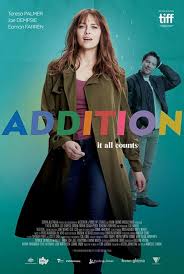
This is a film about mental health, the focus on a young woman and her continued anxiety, manifesting itself in the condition, arithmomania, an obsessive-compulsive need to count. The audience is introduced to her condition by meeting Grace, Teresa Palmer in an ingratiating and challenging performance, suddenly taking a banana from a customer at the supermarket. She has nine and wants to make an even ten. The customer, Seamus (Joe Dempsie from Game of Thrones) has seen what she has done and challenges her. He later encounters her again and a friendship begins.
The audience is invited to spend a great deal of time with Grace, seeing her tutoring students at school with maths, especially her niece, visits with her sympathetic mother, her demanding lawyer sister, becoming more aware of Grace’s long time problems and the family trying to deal with them.
Then, the audience discovers that she has a long time imaginary friend, in fact, the scientist and entrepreneur, Nicholas Tesla (played by Eamon Farren) his presence in the house, the range of their conversations, the discussions of her problems, happy Times, dancing together, a friend and confidante.
One of the features of the film is that the county is visualised, actual numbers and lists of numbers appearing on screen, some indication of what it is like for Agrees to have this experience of counting and the need for reassurance. She counts tables in restaurants looking for free tables, she counts eyelashes and friends, she counts pieces of cake into numbered portions.
Seamus adapts himself to her counting in their relationship, finding it hard, and the subject sometimes of graces self-justifying taunts. But, on the other hand, she does visit a very sympathetic therapist, who is direct, and Molly Connolly, suggests a program, accepts that categories will turn it will not, but provides a listening sensitivity.
The film runs for 90 minutes, and, perhaps, audiences would have liked some more sequences and time to appreciate what has happened, what is happening in graces day by day life, the nature of the opposition, its effect on her, and the possibilities of future coping with it.
One is tempted to say that the title of the novel and film about mathematics is a plus!
- A drama about mental health?
- City setting, Melbourne, and pursuit of the city, homes, flats, school, supermarkets, therapy sessions…? The musical score?
- Grace and her condition, arithmomania, an obsessive-compulsive need to count? The opening at the supermarket, the tent and a knife or neatness, the visualising of the numbers on the screen, her range of counting, eyelids, pieces of cake…? Her anxieties, security and numbers and counting? Affecting her whole life? Her past, family situation, tragedies and feelings, the character of her mother and her kindness and support, Jill, practical, lawyer, hard, exasperated with Grace? Her niece, talent with numbers, coaching her, the competition and practice?
- Grace as a mathematician, training, coaching the students, the sessions with them? With her niece? Possibilities for her career as mathematician, the scene of application for further studies?
- The encounter with Seamus at the supermarket, his conversation about seeing what she did, the arguments about ownership of the banana? The next encounter, the attraction? Grace and her personal life, the response to Seamus, caution, entering the relationship, his response to her?
- Part of her mental condition was admiration for Tesla, the story of his life and success, his later financial and mental collapse, his death? His appearing to her, a companion for so many years, the domestic scenes, the conversations, his encouragement, the dancing together, her explaining this to the therapist? Her finally having to let him go?
- The development of the relationship with Seamus, together, sexual, emotional? The effect on him? The effect on her, the combat compatibility of the relationship with her condition?
- The test, but forgetting, Seamus taking her, her apologies, her knees, the drinking, the escapade with her friends, her mother upset, the reaction to Grace?
- Grace, the difficulties with Seamus, her being demanding, self-centred, alienating him? His absence? The lookalike and the girl at the supermarket and graces reaction?
- The scenes with the therapist, coming and going, the patients and the therapist, sympathetic, clear, medication, the body issues, exercise? The effect, stopping the medication? The return to the therapist?
- Encountering Seamus, his background, England, artist, age, the effect of Greece?
- Audience identification with Grace, as a person, her condition, yet siding with the therapist, sympathy but challenge?
Running Man. The/ 2025
THE RUNNING MAN
US, 2025, 134 minutes, Colour.
Glenn Powell, James Brolin, Colman Domingo, William H.Macy, Michael Cera, Emilia Jones, Lee Pace, James Frecheville, Sean Hayes.
Directed by Edgar Wright.
Stephen King, under his other name, Richard Bachmann, published the novel, The Running Man, in 1982. The film version was released in 1987, starring Arnold Schwarzenegger. This reviewer checked his review from 1987 and was surprised to find have the key elements from that period, political, media, violence, was so strong then. And, they are definitely to the fore in this version, almost 4 decades later.
It is hard to remember whether the television networks promoted such life-and-death hunts in those days – although, in 1988, the Truman Show was released, a more benign but nonetheless overarching intervention by television directors to control human stories. The other aspect of the novel and of the 1987 version was to refer to the hunts in terms of the Coliseum, gladiatorial combats, an avid audience relishing the possibilities for government sanctioned public deaths.
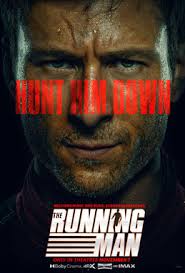
The bloodlust of audiences, rather sharpened by the variations on reality TV of the 21st-century, is again to the fore. This time the target is Ben Richards, Glenn Powell reminding us that he is an attractive screen presence (emerging three years ago in Top Gun: Maverick, fighting tornadoes in Twisters, Romantic comedy in Anyone but You, and a charming Hit Man). Then his angry, fired for insubordination, desperate for finance for his sick daughter, auditioning to go into the Running Man Show, pursued by official and masked Hunters, getting bonuses for everyday of survival, million dollar reward if he survives 30 days.
A lot of action adventure, needless to say, risks, threats, narrow escapes, high-powered dangerous situations… And his eluding them all. Josh Brolin is severe as the network executive, controlling, dominant, until you are then further. And there is Colman Domingo as the television host, staring up the audience, showing clips of Ben and his survival as well as the pursuits.
Ben gets various amounts of help along the way, most eccentrically from a bizarre character played by Michael Sarah, pumping up the risks, magnifying the dangers.
At 2 ¼ hours, the film is very long, repetitive the pursuits and escapes, culminating in a perilous flight with a television soap Opera star as hostage.
On the one hand, action packed for the fans. On the other hand, a huge critique of this kind of gladiatorial reality show and its effect on its audience.
- The title, the reality of Ben Richards being pursued, the television show, the network managers and controllers, the compere is, the Hunters, and the participation of the public, hounding the runner, helping him?
- The perspective of Stephen King, his insights into this kind of world as early as the early 1980s, the film version of 1987, the development of this kind of media world and violence over the next four decades?
- Action spectacular, the details of the chases, tensions, pressure, crowd watching in reality, in the studio, on the television screens, supporters, informers, the effect on Ben Richards?
- Ben and his situation, his bosses, being fired, insubordination, anger, asking for money, his wife, his sick daughter? His motivation? The money and aid for the family? Going to the auditions, the range of tests, his helping the competitor falling? The team, the uniform, the other two members, the confident young man and his quickly being disposed of, the woman, at Las Vegas, defying the authorities, escaping, trapped and her death?
- Dan Killian, manager of the network, his personality, seen on screen, his proposal to Ben, the money situation, his continued interventions, lucrative office, the bonuses? His ultimate intentions? The interventions, the Hunters, filming, the drones, the final plane ride and his control? The finale, the confrontation with the TV host, his defeat?
- The TV host, the reality and the parody of the style of the host, taking sides, watching the sequences, staring up the audience, the progress of the hunt, the days passing? His ultimate stands, the confrontation with Dan Killian?
- The various helpers along the way, the young man and his family, taking Ben into their home, his equipment, his pod cast, the information, driving the car? Morley, the past connections, the documentation, the authorities coming in killing him? Elton, eccentricity, his mother, the help, the challenges to the Hunters, the chases, the traps, tunnels? The vehicles on the escape, the crashes and pursuits?
- Ben and the hotel, changing his identity, the cards, hair, moustache, disguises a priest? On the building, the pursuit, the sign, hanging, falling and crashing? The ultimate explosion?
- The public, tracking him down, giving information, cheering him on?
- The television show, the Americanos, Emilia, in the car, her believing the propaganda, then persuading her of the truth, the pursuit, the roadblocks, Ben being shrewd with Dan Killian’s intentions, his being led through, the plane, the pilots as Hunters, the unmasking of the previous competitor, the fights, the plane, potential crash? Emilia, helping, outside the plane, the parachute?
- Ben, the images of his wife and child, the flashbacks, motivating him? Ultimate success?
- A commercial and money world, Killian and his wanting Ben to have his own program, to be the TV Hunter?
- The film offering a commentary on the contemporary world of power, the wielding of power, the media, the role of the individual, motivations, money, integrity?
Good Fortune
GOOD FORTUNE
US, 2025, 97 minutes, Colour.
Aziz Ansari, Seth Rogan, Keanu Reeves, Keke Palmer, Sandra Oh, Stephen McKinley Henderson.
Directed by Aziz Ansari.
In a disturbed 21st-century world, even in the divided United States, what really is Good Fortune? Here is a satirically-challenging response to the question.
In the aftermath of World War II, Hollywood asked this question for Americans in what is now the classic film, It’s a Wonderful Life. With the popularity of the film over the decades, it provided a Christmas message of hope, that despite all the difficulties, there would be some angel who could guide a troubled hero through all kinds of difficulties, financial, family, personal, and that there would be a very happy – wonderful – New Year.
Which means that Good Fortune is something of an attempt at It’s a Wonderful Life for the 2020s.
The film has been written, directed, starring role, by stand-up comedian, Aziz Ansari (multi-episodes of TVs Parks and Recreation). He plays Arj, Indian background, father with high expectations, but not managing practically with jobs, lining up for benefits, sleeping in his car, being moved on, the car impounded… It’s a Miserable Life.
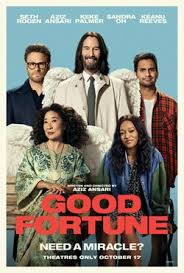
But, just like the eager angels in Wim Wenders’ classic, Wings of Desire, with angels standing on buildings overlooking Berlin, ready to intervene, here we have the Los Angeles equivalent, each angel, hovering with holy intent, with various responsibilities, some ready to help lost souls but, our focus is on Gabriel, black coat, long black hair as if posing for a portrait of Jesus, comparatively small wings on his back, and it is Keanu Reeves. And Gabriel’s modest task is to save drivers who are texting – and the salutary collage of his saving these reckless textures, including Arj.
Gabriel takes pity on Arj and would like to save his lost soul but is warned off by Angel Martha, Sandra Oh. Gabriel hovers, watching, worrying. In the meantime, Arj has met an active union worker, Elena (Keke Palmer), but is too caught up in himself and his miserableness. But, then he has a delivery to an extravagant venture capitalist,Jeff, living in a luxury mansion, spending his day preoccupation with affluent trivia. His played by Seth Rogen.
So, poverty meets affluence and, with Gabriel’s messy intervention, what better than role reversal, Arj living the high life (and, in general without scruple, he does) and Jeff coming down to earth, trying to keep his job, discovering the realities of the day by day cost of living. And all complicated by Gabriel being rebuked and losing his angelic status and becoming human, lots of dishwashing jobs, discovering the taste of hamburgers and shakes, the exhilaration of dancing with the Latino community…
The three stars do enter their characters with quite some zest.
Well, it doesn’t take a prophet to foretell the ups and downs of what is going to happen, but, of course, the question is how is it going to happen? Will Arj recover his conscience? Will Jeff discover that there is such a thing as conscience? Will Elena and Arj be able to form a union in the workplace? Will Gabriel get back his wings?
For the time being, It can be a Wonderful, Good Fortune, Life.
- An It’s a Wonderful Life for the 21st-century? 21st-century open and frank style?
- The work of the writer-director, stand-up comedy, satire?
- The story of Arj, Indian background, his father, his successful cousin (and the later revelation of tax evasion), talking to his young cousin about the future? His jobs, hard work, lining up for support, upset, in the diner, sleeping in his car, being moved on, and prospects, the factory, the encounter with Elena, her union work, conversations with her?
- The fantasy of the angels, appearing with wings, images of Wim Wenders’ angels over Berlin, Gabriel, the Jesus’ appearance, his wings, watching? The collage of saving people while texting? His wanting more, to save the lost souls? The discussions with Martha, her control, wanting him? His interest in Arj, wanting to save him?
- Arj, the deliveries for Jeff, Jeff and his wealth, house, lifestyle, hampered, trivial preoccupations, the discussion with Arj, Arj and deliveries and answering him back, offering to employ him, successfully, giving the card, the dinner with Elena, on Jeff’s recommendation, use of the card, Jeff attacking him, dismissing him?
- Gabriel, his intervention, the discussions with Arj, the change with Jeff? Arj, adapting to the lifestyle, enjoying the luxuries? Jeff, going to work, hard? Gabriel, the reprimand from Martha? Gabriel made human, the work, washing up, Jeff and the food, hamburgers, chicken nuggets, tacos, milkshakes?
- The situation with the three, the interchanges? Jeff allowing Arj to have three days? Arj, enjoying his style, extravagant, taking over Jeff’s birthday party, the dancing, the guests? Elena, the proposal for going to Paris, her conscientiousness and refusal?
- Arj, involved in the accident, coma? Jeff’s reaction? Out of coma, pretending not to remember? The effect on Jeff? Jeff’s learning the hard life?
- The situation, Gabriel making friends with the Latinos, the club, Elena? The discussions?
- The conscience issues, Arj and having to face them, his father, prospects, ordinary life, with Elena? Jeff, the experience of hardship, back to normal? Gabriel, becoming an angel again, after all human experiences, even drinking, drugs…?
- The reversal, Arj conscientious, working with Elena, the previous vote, the second vote, the walk off, social justice? Jeff, and his meetings, the scornful executives, Jeff and his laying down the law?
- An allegory for the 21st-century?
Fight or Flight
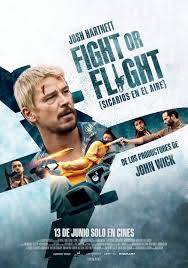
FIGHT OR FLIGHT
US/UK, 2024, 102 minutes, Colour.
Josh Hartnett, Charithra Chandran, Katee Sakhoff, Julian Kostov.
Directed by James Madigan.
One might say that there is no need for a review of Fight or Flight because it is too silly for words!
It opens with a beautiful blue sky, long shot of an ascending aircraft, the Blue Danube Waltz (we are beyond 2001 and space odysseys) – and, a visual upset with mayhem like human snakes on a plane, passengers fighting each other, and, suddenly, one swept through an opening in the body of the plane.
And then we go back several days, details of an espionage plot, a high-tech firm and its security officers, especially the commanding Katherine Brunt (Katee Sakhoff) in control of an enormous surveillance system, demanding of her underlings, discovering the threat to the company by mysterious character, The Ghost. She decides to activate a disgraced agent, Lucas (Josh Hartnett), drinking himself into oblivion in Bangkok. There’s nothing like mobile phones and camera surveillance to get things moving in matters of minutes, psychological persuasion of Lucas, her former boyfriend, complicit in his disgrace, getting him a passport, persuading him to get to the airport, to get on a flight to San Francisco and to discover and control The Ghost.
Gerard Butler has already done airline action on The Plane, so here is a chance for Josh Hartnett to be an action hero and to do some droll deadpan comedy. And he does.
Referring to snakes on a plane, this flight is full of human snakes, bounty hunters alerted to both Lucas and The Ghost. Lucas tries some attempts to identify The Ghost which leads to the beginning of the massively increasing body count. And, The Ghost is not at all whom we might have expected or suspected – and quite a discussion an explanation of why she (oops) is the target of the company.
With acknowledgement to the directors, The Daniels, once the action starts, all the international fierce bounty hunters, and the Ghosts female protectors, and Lucas, an alcoholic and accidentally drugged and high, the only description can be in the confined caverns of the plane, everything, everywhere, all at once!
There is a certain fascination in accepting that the filmmakers are deliberately enjoying themselves in going further over the top than might have been expected. But, it is still very absurd. And, there is a kind of epilogue which might have put everything in order but, suddenly, the film stops. Fans will be already planning to book their tickets for the sequel – others might feel that they have had enough!
Calm with Horses
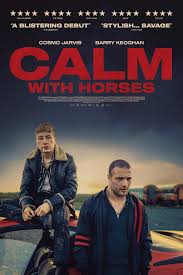
CALM WITH HORSES/THE SHADOW OF VIOLENCE
Ireland, 2019, 100 minutes, Colour.
Cosmo Jarvis, Barry Keoghan, Niamh Algar, David Wilmot, Ned Dennehy.
Directed by Nick Rowland.
Calm with Horses does not immediately indicate the narrative and tone of this strong psychological drama. However, the meaning emerges, especially in regard of the central character, nicknamed Arm, and his relationship with his autistic son, Jack.
This is an Irish film, with Irish intensity, filmed in a country town yet with some magnificent mountain scenery in the background. The introduction is to Arm, a strong performance by Cosmo Jarvis (Shogun, Warfare, and the Australian film, Inside), former boxer, now an enforcer for the local drug dealing family, and hesitating in brutal retribution, especially seen with an old man who has raped a young woman from the family. Arm’s link with the family is through his associate, Dympna (another interesting role for Barry Keoghan). Then the elders of the family, who can exercise charm at birthday parties but who are ruthless in wreaking vengeance on enemies.
Audiences are not used to seeing this kind of drug dealing family and enforcing in an Irish country context.
However, the film is a character study of Arm, revealing his limitations, his dependence on the goodwill and orders of the older dealers, some estrangement from his sympathetic wife, Ursula, and some encounters with his son. As the story progresses and more demands are made of Arm and his inability to actually kill, the film moves between his better awareness of his son, encounters and discussions with his wife, the boy having tantrums, Arm sometimes bewildered, but loving the boy.
Ultimately, there is a confrontation between Arm and the older dealers and their ruthlessness, pressure on him, physically wounded, some final confrontations, and some moral decisions on the part of Arm, whether a life of violence or some humanity with his son.
- The title, the focus on Jack, autistic, his outbursts, calm with horses, relationship with his mother, with his father?
- The Irish setting, the small town, homes, gatherings, farms and countryside, mountains and backroads? Atmosphere? The musical score?
- The introduction to Arm? In the car, his monologue, violence, background as a boxer, the Devers family, violent and enforcer? Character, relationship with Ursula, the separation, his visits, conversations, her reactions? His relationship with Jack, presence, absences, playing with him, frightening him? Ursula and her plans, to move? Jack and his disabilities?
- Arm and the commission against the rapist, the flashbacks to the party, the girls, the drinking, the young girl in her room, the rapist entering? Arm and his confrontation, the man admitting his guilt, the bashing? The later meetings, the discussion about killing him? Arm with the stone, unable to kill? The aftermath, the family putting pressure on Arm, the confrontation, the naked body hanging? The consequences?
- Dympna, his role in the family, enforcing, the relationship with Arm, urging him against Ursula? The friendship, the communications, company together, driving? Dympna putting on the pressure, with the gun?
- The family, the drug dealing, the enforcers? The characters of the brothers, Hector, family, jovial, yet sinister? At the party and cheerful? At home, his wife, the confrontation with Arm, the attack on Hector, injuring him, the issue of the money and the jewels? The wife, cups of tea, talk, persuasion, the return of the jewels?
- Paudie, his age, sinister, brutal, the pressure on Arm? The hanging body?
- The growing pressure on Arm, his being used, not always intelligent, the pressure from Dympna, the encounters with Paudie and Hector, the buildup to the final violence? His wounds, the blood?
- Going to see Jack, the background of outings with Jack, to the fair, leaving him alone, Ursula and her reprimands, discussions with him – and a possible future?
