Displaying items by tag: Rebecca Ferguson
Peaky Blinders: The Immortal Man
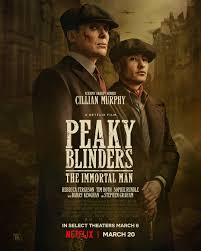
PEAKY BLINDERS: THE IMMORTAL MAN
UK, 2026, 112 minutes, Colour.
Cillian Murphy, Rebecca Ferguson, Barry Keoghan, Stephen Graham, Sophie Rundle, Tim Roth, Ned Dennehy, Pakxy Lee, Jay Lycurgo, Ian.Peck,
Directed by Tom Harper.
The connection with the long-running television series:
AI generated summary from user reviews on the Internet movie database: Reviewers say 'Peaky Blinders' is celebrated for its compelling narrative, intricate characters, and standout performances, especially Cillian Murphy as Tommy Shelby. The series is lauded for its historical accuracy, striking visuals, and unique soundtrack. Central themes include power, loyalty, and betrayal, with a focus on war and class conflict. The Shelby family's interactions and complex storylines captivate audiences, though some critics observe a dip in quality in later seasons. Its aesthetic and immersive atmosphere make it a genre standout.
The television series had a long run and there is often a call for a feature film to gather the themes and characters together. Peaky Blinders ran for over 10 years with 36 episodes, and highlighting the talent of Cillian Murphy (winning a Best Actor Oscar for playing Robert Oppenheimer).
The film takes place some years after the events in the series which moved from World War I into the 1920s and 30s. Now, it is World War II, highlighting an episode where the Third Reich forged an enormous amount of British notes to smuggle into Britain, disrupt the economy, different strategy for obtaining victory. This is visualised for us – and the traitorous go-between is played by Tim Roth.
In the meantime, Tommy Shelby has retired, living quietly, writing his book, The Immortal Man. But, his son, Duke (Barry Keoghan, featured in many films at this period, talented with quite different roles) has a difficult relationship with his father. There are also complications about Shelby and his relationships, his wife, her sister, memories, and the Gypsy community.
And, this community is tough, violence, in the streets, in the pubs…
Eventually, the arrival of the forged money at Liverpool, the British contacts, setting up some contract with the Peaky Blinders and Duke, Stephen Graham appearing in a supporting role, Shelby himself finally having to intervene.
For those familiar with the series, obviously interesting. And, with a sequel series in planning, obviously an introduction.
For those not familiar with the series, a glimpse of gangs, gangsters, violence on the streets, British style.
- The popularity of the series, over 10 years, 36 episodes, Birmingham, Gypsies, crime…?
- A feature film, the impact for those unfamiliar with the series, those who know the series? A satisfactory ending, the death of Tom Shelby?
- World War II, the opening in Germany, the concentration camp, the elaborate forging of the currency, packing, shipping it, the plan to infiltrate the currency, economic collapse, the winning of the war?
- Beckett, sympathetic to the Nazis, in Germany, arranging the transport, the interview with Duke, the sympathiser and his loose lips, Becket shooting him? Duke agreeing?
- The presence of Tom Shelby, his past reputation, World War I and action, the trenches and his memories, his relationship with his brother, the visit to the cemetery, seeing his daughter’s red scarf, his grief about his brother, the revelation of his killing him and his motivations? In the rural house, wandering around, letting go of control, writing his book, Johnny as his helper?
- Duke, son of Tom, the bonding and lack of bonding? His character, brutal, leadership, the issue of the arms and his gang appearing, rounding them up, taking them? Confrontations between the authorities and the Peaky Blinders? Duke and his personal life, leadership, at the pub?
- Tom, his wife, his children? Mysterious presence of Kaulo, sister of Zelda, Tom and his memories, appearances? The presence at the dinner, her role in the city, patriotism, leadership, her son – and her murder? The ceremonies of her burial?
- The old members of the gang, their presence, loyalty to Tom, ageing?
- The pub, the women, the drinking, the gangs? The pub ring the war, the soldiers, Tom and his arrival, control, the confrontation with the soldier, defiance, the hand grenade? Tom and his reassertion of authority?
- Seeing Tom, the relationship with Duke, their meetings, discussions, the count money, Duke and his loyalties?
- Tom, reasserting himself, the various attacks, riding the horse? The Gypsy background? His dreams and imaginings? The discussions with Duke?
- The meetings with their cake, confrontations, shooting fights? Escapes?
- The final plan, and his hold over Duke, to do the shootings, the phone, going Duke and his change of heart?
- The setting up for the arrival of the money, the taking it, the squad, the role of Stagg, his personality, loyalties? On the harbour, the boats, the crash, Tom coming through the tunnel, his dilapidated state, the accident and crash, his getting free, arriving late, the setting of the time of midnight, Becket with Duke, the clock, Tom eventually arriving?
- The final confrontation, the shootout, the death of Becket, his shooting Tom, Duke present?
- The ending of the Peaky Blinders’ tale, the death of Tom, the role of Duke? The finding of the manuscript, giving it to Duke? The final caravan, the fire?
Magic Faraway Tree, The
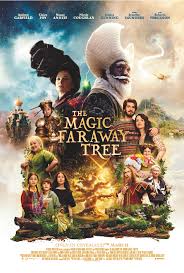
THE MAGIC FARAWAY TREE
UK, 2026, 105 minutes, Colour.
Andrew Garfield, Claire Foy, Delilah Bennett-Cardy, Billie Gadsdon, Nonzo Anozie, Rebecca Ferguson, Jennifer Saunders, Nicola Coughlin, Jessica Gunning, Michael Palin, Mark Heap, Dustin Demri-Burns, Simon Russell Beale, Lenny Henry, Tim Plester, Phoenix LaRouche.
Directed by Ben Gregor.
Enid Blyton, along with Lewis Carroll and Beatrix Potter, is a significant name in speaking about British children’s and family literature. And some of them have been transformed into films and ballets. This film is based on three Enid Blyton stories of the Magic Tree.
Here is a fantasy about children, about families, about imagination. In fact, the Thompson family, Tim and Polly (Andrew Garfield and Claire Foy) have three children. Falling on very hard times, they have to move to the country, where Tim grew up. They find an old barn, no electricity, let alone Wi-Fi! Two of the children are not very pleased, finding the isolation away from friends and technology, hard to bear. They are Beth and Joe. However, Fran, not given to talking much, has a sense of the magic, discovers the Magic Tree, encounters the fairy, Silkie, the giant Moonface, the man who cannot remember his name, and Mrs Washalot. She has a dial to spin, able to pick one of a range of worlds to visit. Fran does, returns home, a challenge to the family, a test for her brother and sister.
While watching, one wonders who the target audience for this film is. A way of understanding is to look at the response of the three children which might correspond to responses of children watching the film. Fran, young girl, is delighted with her discoveries. Joe, even younger, avid games player, does not understand this magic world at all – but, accompanying Fran, he becomes open to its delights. The trouble is with Beth, assertive teenager, described by her upset father as a “spoiled brat”. She isolates herself in the room upstairs, observes with disdain upper window, pines for her phone, her friends, dismissing Fran’s discoveries as nonsense. (And, maybe, some of her fellow teenagers watching the film may have the same reaction!)
But, in our heart of hearts, we know that she will undergo a conversion experience, highly reluctant, condescendingly agreeing – rather nasty with Silky, at one stage wishing her parents tomato and sauce business venture to fail, and then carried away with the experience and definitely on side.
Which means then that there are all kinds of imaginative delights, a world where sweets and lollies are unlimited, a world of knowing a lot, a world of spells – and, of course, a villain, Madame Slap (Rebecca Ferguson), her classroom and, detention, and some rude joke defiance! But, there are the themes of the family unity, the family song, working together, and, happy ending (even convincing Polly’s haughtily severe Germanic mother, played by Jennifer Saunders!).
- Traditional British storytelling for the children’s readership? Families? The film tradition?
- Enid Blyton, her stories, audiences, the trilogy of the Magic faraway Tree? Cinema adaptation? Narrative, characters, imaginative worlds, family themes? Fantasy and imagination?
- The locations, filmed in Malta, forest, the town, the dilapidated barn, the Magic Tree, the variety of worlds, creativity and imagination, costumes and decor, eccentric characters, make, voices? The greenhouse, dilapidated, re-created? The village and the launch? The musical score?
- The family, the financial situation, Tim and Polly, his Italian background, spaghetti and sauces, tomatoes, speaking Italian? Polly, her Germanic mother and demands, her mother disappointed in her? Jobs, finance, having to move, packing up, driving, the lone station, walking, discovering the barn? Tim and Polly and their optimism, creativity? Beth and Joe, spoilt children, demands, losses friends, Wi-Fi issues, computer games…? Fran, more sympathetic, the purse, Silkie and her presence, the sense of the fairies?
- The picture of family life, adapting, Polly and her abilities, planning and design, achievements? Tim, optimism, a steady hand, the tractor, the buildings, the greenhouse? The transformation? The happy parents?
- Beth, sulking, in her room, her complaints, her age? Joe, wanting electricity, not knowing how to play outside? The contrast with Fran, going out, discovering the magic, Silkie, Moonface, Mrs Washalot, the man who could not remember his name? Sharing, delight, discovering the world, going up the ladder, the range of sweets and delights, the supervisor against greed? Happy collecting, the marshmallows, Fran and being tempted, the rescue? Her going home, beginning to talk, with her parents?
- Polly’s mother, her assistant, in town, Jennifer Saunders’ comedy, demanding, and Beth writing the letter, posting it, the arrival by helicopter, demands, disappointment with her daughter, coming back for the launch of the source, naming Beth and her letter? The pressure on Beth?
- The situation, the tomatoes, the source, the family eating, Fran and Joe in competition, but the difficult situation?
- Beth, her agreeing to accompany Fran, the scepticism, the tree, repeating the magic words, opening up, her initial encounters, the washing water falling on her, the shrinking jacket, the familiar characters, Silkie and her enthusiasm, interactions with Beth, friends, sisters, antagonism? Agreeing to go up the ladder?
- The dial, the many possible worlds, the World of Knowing A Lot, the British character actors in the combined presence? Arguments? The way to the World of Spells, going to the hardhearted world, the wishes, Silkie becoming a fairy, Fran and the deep voice, Joe and the head from the computer games, unable to eat pizza? Beth and her wish that the project would fail? Silkie willing to sacrifice her wish so that the others could go back to being themselves?
- The plane, flying to the Castle, the background of Madame Slap, her Castle, the confrontation, the plane, going to sleep, Joe and his piloting the plane, the others on the trip, the confrontation with Madame, the classroom, her severity, and sitting back, detention people being cheeky, going to detention, then the various farts, escape, playing, waking up, her cries and waking the plane, her roar and giving it impetus?
- The discovery of the greenhouse and the failure of the crop, maggots? Tim and Polly trying to cancel the launch?
- At home, the launch, the people gathering, happy atmosphere, enthusiasm, Tim and Polly, going to the greenhouse, opening the door, the ripe tomatoes, the children, even Polly’s mother amazed, the selling of product, the bright future?
- Beth, contacting her friends, their arrival, collecting their phones, dancing and enjoying the launch? Everybody dancing, wishes fulfilled?
Mercy

MERCY
US, 2026, 100 minutes, Colour.
Chris Pratt, Rebecca Ferguson, Kali Reis, Annabel Wallis, Chris Sullivan, Kylie Rogers, Jeff Pierre, Rafi Gavron..
Directed by Timur Bekmambetov.
A surprising film. And some grim surprises about the future.
It is 2029. And, throughout the film, it is clearly signed that it is the second week of August of that year. Which means that we are in the near future, the vision of society here, of AI and its use and influence, may be only around the corner.
We are in Los Angeles, crime rising. The authorities have instituted what is called the Mercy Court, a way of dealing rapidly with the accused, the judge an artificial intelligence creation, here played perfectly by Rebecca Ferguson, with all the AI information at fingertips or the utterance of a single word.
Which raises the first question for the audience about how the authorities have so much information about individuals, groups, social media entries expertly stored and so quickly available, issues of ethics, issues of privacy which pervade the whole film.
In fact, the main part of the film is court case at Mercy, a detective, with alcoholism problems, Chris Raven, played effectively by Chris Pratt, accused of murdering his wife. But, he has no memory of the event. The clock is running. His trial will last 90 minutes and he has to prove his innocence, the judge programmed only to assess facts and evidence rather than work on any feelings or hunches, despite the accused’s arguments. This process takes place in a vast Mercy building, the judge on screen, the detective bound in a chair.
The visible countdown and a statistic visualised of the probability of the accused’s guilt always in view, there is a time tension throughout the film. As it emerges, it is a murder mystery with quite some complexity. There is detection work to be done. There are witnesses to be questioned. And they are all made available instantly, on screen, their lives, episodes, social media clips, the judge’s interrogation, and Chris Raven intervening.
What emerges is quite a complex plot, and conspiracy to murder with unforeseen implications. And, while the main action takes place in the rarefied atmosphere of the Mercy Court, there is a huge chase sequence, a truck with chemicals, police and the pursuit through the city, the killer with a hostage…
The screenplay has been devised to keep audience attention with the trial, the mystery, the complexities in the solution, some twists and surprises.
But, all the while, the film is challenging audiences about how much they agree with the philosophy of the Mercy Court, the availability so much private material at the beck and call of authorities, justice and ethical issues, and the role of the individual in this kind of society which, as the visuals continue remind us, is set in August 2029.
- The title, the court, mercy and justice?
- The 2029 setting, the second week of August? Science fiction, futuristic science-fiction, the very near future?
- The background of social media, artificial intelligence, storage of information, instead of easy access, information, visuals, episodes, data exploration? The future, the realities, the ethics, use and abuse?
- The American city, Urban, the streets, industry, homes, police, police action? The musical score?
- The court, and innovation for justice, dramatics and AI, her being programmed, justice and truth, evidence, not taking into account circumstances, emotions…?
- The basic situation, Chris Raven, his career as police and Detective expert, partnership with Jack? The first case for Mercy, the criminal and his condemnation? The visual file on him? Raven accused of killing his wife, the evidence, is being brought to justice, to Mercy, 90 minutes trial before judgement and possible execution?
- Chris Raven, and his work, his drinking, of drinking, secretly, concealing the drink, his relationship with his wife, with his daughter? With his friend, Rob Nelson? The circumstances of his wife’s death, his being drunk, arrested? The situation in the Mercy building, vast, in the chair, the screen with Judge Maddox? The range of technology at disposal, the ability of something it, momentary delays, the range, files, visuals? The preceding of the case?
- Patrick is a suspect, work as a chef, his being interrogated, arrested, the pursuit, his testimony about Raven’s wife, neglected, his alibi, there assessment of his guilt or innocence?
- His wife, her work, the connections, the gradual revealing of the situation, the chemicals, access, money? Rob Nelson is boss, his testimony? Charles Holt, his work, his testimony?
- The party, Nelson driving people to the party, people going home, analyse? Everybody turning up for work?
- The pace of the trial, the focus on the clock, Judge Maddox and her listening, allowing information, summoning it?
- The further complexities, Raven’s daughter, alienation, the discussions, the door ajar, somebody hiding in the house?
- The unfolding of the plot, the chemical, smuggled, payments, presumptions about drugs, information about explosives, the testimony Charles Holt? The discoveries about Rob Nelson, his lying, the photo, the two hearts, the revelation of his brother, the orphanage, the condemned killer by Mercy, the buildup to the motivation of revenge?
- The unfolding of the plot, the wife, her knowledge, the threats, the meetings, her being killed? Nelson, the truck, taking Raven’s daughter?
- The visuals of the pursuit of the truck, the crashes, having an action sequence in a confined scenario?
- The resolution, the pursuit, the truck, crashes, the danger to his daughter, Nelson and the explanation, the motivations, the visuals of the initial arrest, the consequences?
- The device of Raven and the visual percentages of guilt, going down, but keeping connected to get information, the appeal to Judge Maddox, the issue of the facts, evidence, the human element, hunches?
- The resolution of the case, Raven free, the visuals of Jack, the gradual revelation of her involvement, wanting a successful outcome, her manipulation, the arrest, the gun, her arrest?
- The film as a police action thriller, detection, court case, mystery, science fiction and anticipating and fearing the future, AI?
House of Dynamite, A
A HOUSE OF DYNAMITE
US, 2025, 119 minutes, Colour.
Idris Elba, Rebecca Ferguson, Gabriel Basso, Jared Harris, Tracy Letts, Anthony Ramos, Moses Ingram, Jonah Hauer-King, Greta Lee, Jason Clarke.
Directed by Kathryn Bigelow.
Highly explosive.
And, it is beyond highly explosive when there is a threat of nuclear destruction. And this is what A House of Dynamite dramatises, immersing the audience in the crisis, and asking the audience to decide what they would do, what decision they would make, in this world-grave situation.
Over the decades there have been quite a number of films about the nuclear threat. Several notable films emerged after the Russian-US confrontation in October 1962, the missiles of October. And the issue is dramatised in the many films and miniseries about JF Kennedy, especially 13 Days. In 1963-1964, there were Failsafe, Seven Days in May and the frighteningly satiric Dr Strangelove or; How I Learned to Stop Worrying and to Love The Bomb. There were a number of films in the early 80s in the same vein, Testament, The Day After.
But, here we are in the mid-2020s, Russian invasion of Ukraine, tensions with China, conflicts on the India-Pakistan border, Israel, Gaza and the Middle East, the bombing of Tehran…
This is an intense film, directed by Kathryn Bigelow who won an Oscar for her immersion in war, The Hurt Locker, then went on to the search for Osama bin Laden, Zero Dark Thirty. She brings the same tension to this film, giving a hypothetical scenario, the launching of a nuclear missile by an unknown attacker, threatening an American city, attempts to neutralise it, failures, a small window of time to ward off the attack, to make international contacts, diplomacy, the issue finally coming down to the decision of the American President.
The way that the drama heightens audience attention and anxiety is to introduce us to the wide range of officials in war departments, the White House, command posts in Alaska, crisis management groups in American cities, press briefings in Washington. Very quickly, the audience is introduced to, gets to know, sees in action, a wide range of experts, the pressure on them, intel coming in, changes in information, personal pressures, the demand for quick thinking, prudence, risk-taking, issues of responsibility and consequences.
In contact with Russian authorities, there is the powerful opinion of General Brody, Tracy Letts, strong hawkish stances. Important is the opinion of the Deputy National Security adviser played by Gabriel Basso, caught outside the White House, difficulties with connections, crowds, security getting into buildings, all the time having to make changing assessments as information comes in. His opinion is that the options for the president are national surrender or national suicide.
Just as the countdown is approaching, the screenplay goes back in time, the second part of the film focusing on the President, Idris Elba, enabling the audience to realise, even more fully, the responsibility of the President and his decision, personal cost, repercussions. And, memories of the version of Tom Clancy’s A Clear and Present Danger, the integrity and intelligence needed for the President with his finger on the nuclear button.
At each stage of nuclear fears over the decades, and the films dramatising the crises, audiences have been forced to focus very much on the strengths and weaknesses of incumbent presidents, Kennedy, Johnson, Reagan, George W. Bush – and, in 2025, Donald Trump.
A demanding film, an uncomfortable screen experience, and the film challenging each of us in the audience as to what decision, surrender or suicide, that we would make.
- Consciousness of the arms race, nuclear weapons proliferation, the danger of a nuclear attack? In the 21st-century?
- The dramatising of the possibility of such an attack? How plausible given 21st-century technology, surveillance, speed of reaction and information, possibilities for halting the attack?
- The screenplay, establishing the scenario of the attack, the situation in Alaska, the Armed Forces, their intelligence, their position near Russia? The recognition, communication? The officer in charge, his reaction, going outside into the snow? Contacting Washington? The role played during the attack?
- The screenplay and the narrative in Washington DC, the ordinariness of the day, Olivia Walker, at home, with her husband, depositions in Washington, going to headquarters? Her position, security issues, authorities, fellow workers? The significance of this room, security, the range of personnel, the backgrounds, personalities, interactions?
- The information about the attack, not identifying the source, the range of speculation? The film’s detailing the activities of each person, the responsibilities, their judgements, their personal reactions and the interplay for decisions?
- The connection with the various military personnel, shown in their situations, the Secretary for Defence, his location, personality, abilities, the connection with his daughter and contact with her, protecting her? On the move, his contact with the Deputy National Security Adviser? The adviser outside, the crowds, making his way to the office, phone calls, decisions, advice, security, entering the building? His being finally required to make an observation, Suicide or Surrender?
- The links with General Brady, his personality, staff, experience, at a distance, but surveillance connection? His hawkish attitudes? Listening for advice, following it, his assessment, the risk of defeat and humiliation?
- The failure to stop the missile? The visualising this on the screens? The repercussions for all concerned, disappointment, dismay, continuing planning? The uncertainty of the origins?
- The connection with the Russians, the disavowing the attack, the delays, the consultations, decisions and advice?
- The transition to the President, the screenplay going over the same time period, the activities of the President, his young Security Adviser in the car with him, the pressures on him, the social activities, everything genial, the crowds, the message, the president having to escape, the car, the advice?
- The personality of the president, his integrity, intelligence, capacity for decision-making, the range of the dilemmas presented to him, the personal repercussions for his wife and family, the nation, the advice of suicidal surrender?
- The screenplay not giving the final decision? Throwing it to the audience to empathise and identify with the situation, the decisions to be made, for the audience to make their decision and appreciate the basis for their decision?
Despite the Falling Snow
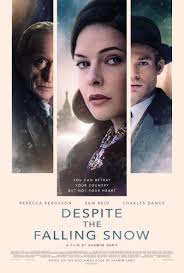
DESPITE THE FALLING SNOW
Canada/UK, 2017, 93 minutes, Colour.
Rebecca Ferguson, Sam Reid, Charles Dance, Oliver Jackson-Cohen, Anthony Head, Antje Traue.
Directed by Shamim Sarif.
Despite the Falling Snow is a film about the Soviet Union, the collapse of the Soviet Union, transitions, espionage. The director, Shamim Sarif, adapted the screenplay from her own novel.
The film has two time eras, the late 1950s in Russia, the early 1960s in the United States. This establishes the main characters, especially the Russian, played by Australian Sam Reid (Interview with a Vampire, The Newsreaders). Then there is Russia in the early 1990s, after the collapse of the Soviet Union, as will the sequences at this time in the United States. The Russian displayed this time by Charles Dance.
There are complexities in relationships, seeming betrayals, efforts to make atonement. The leading character in the later period is played by Rebecca Ferguson (Mission Impossible, Dune).
The film was made in Serbia standing in from Moscow. At the time of this film’s release, even the 1990s was becoming part of Soviet and American history.
- The title? Moscow and snow? Moscow and espionage? Moscow and romance?
- The work of the director, novel, screenplay, production, direction?
- A cold war story? The USSR in the Christian era? The US in the Kennedy era? The transition to 1992, election year for Bill Clinton, the collapse of the Soviet Union, Boris Yeltsin?
- The filming in Serbia, the Moscow sequences, the winter, the streets, the river, the Kremlin, official offices, apartments, schools? The contrast with the US, receptions in the 1960s, apartments in the 1990s? The musical score?
- The introduction, the US reception, 1961, meeting between Soviet officials and Americans? Sasha and his presence, nervy, accompanied, meeting the US contact, his making a run for it, pursued, the car, the photo of his life, the contact had been lost?
- 1959, Sasha, is political career, his parents, friendship with Misha, his boss, severe protocols in secrecy? The meeting with Katia? The attraction? His being used, her getting the documents, her falling in love, mission and his influence, the preparation for the wedding, her hesitancy, her commitment, life together? The romance with Katia? Meal with his parents? His going to the US, the on, security? His boss, the revelation of espionage? Katie telling him the truth, the effect on him, wanting to save her, going to America?
- The film has cut his story, her background, the flashbacks to the brutality against her family, work at school, connections with Misha, the contacts, the documents, passing them on? The relationship with Misha? The relationship with Sasha, using him, his attraction, her attraction, the decision for the wedding, life with Sasha, the revelation of the truth, the dangers?
- Misha, his political affiliations, espionage, photographing documents, passing them to County, his friendship with Sasha? The complications, the discovery?
- 1992, the older Sasha, his war with the documentation, the loss of cut here? With his niece, her artwork? Going to Moscow? His being unwilling to go?
- Laura, artwork, going to Moscow, the Moscow connection, the artwork of cut here, the exhibition? The impact of the art of cardio on visitors, on the audience? Is trying to make connection with Misha?, Personality, reserved? Pretending to make the contact? Lauren, lesbian, her approach to mania? Millions resistance? Telling the truth, the conflict between the two?
- The visit to measure, old age, invented, staying in Moscow? His hostility, drinking? His going to the exhibition, getting the suitcase? Seeing the artwork? Meeting with Sasha? The clash, leaving the suitcase?
- Sasha, going to Moscow, the exhibition, the encounter with Misha, the suitcase, the letter and his reading it?
- The audience seeing the flashback, Misha and the torture, the soldiers, his meeting with Katia, the confrontation, her running, her being shot?
- An espionage story? The Cold War? 30 years later and consequences? But, principally, a romance story?
Dune, Part 2
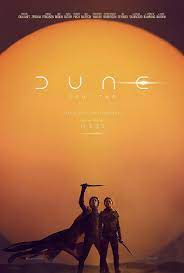
DUNE, PART 2
US, 2024, 166 minutes, Colour.
Timothee Chalamet, Zendaya, Rebecca Ferguson, Javier Bardem, Josh Brolin, Austin Butler, Florence Pugh, Dave Bautista, Christopher Walken, Lea Seydoux, Stellan Skarsgaard, Charlotte Rampling, Roger Yuan.
Directed by Denis Villeneuve.
Denis Villeneuve’s 2021 version of Dune made quite an impact. The Dune novels by Frank Herbert had been popular for decades. David Lynch had made a version in 1984 which was not favourably received (except by this reviewer!). So, in a sense, Villeneuve’s version was a vindication of the power of the novel, its characters, its imagination, its mythical vision of the future.
Now, here is Dune Part 2 – and, in its immediate release, it seems to have pleased almost everyone, quite a number of bloggers relying on the word “masterpiece”. Whether that be the case are not, the film is certainly visually impressive as was the original. And, this review is based on an IMAX screening, which is thoroughly recommended. The landscapes, the endless mounds of dunes, the craggy mountains, the canyons provide a vastly impressive setting. And, the musical score, the brass instruments and their resounding make the cinema seats reverberate.
And, with this kind of tale-telling, kingdoms, battles, futuristic weapons and armaments, vast buildings and interiors, including an enormous gladiator arena filmed in black and white, hundreds of thousands of spectators, there are what we might call state-of-the-art… Effects.
For those familiar with the novels and the films, there is no need to wonder about the House of Atreides, the fate of the ruler, his young son, Paul, his mother, Jessica, the conflict with the Emperor, the hostility towards the Harkonnens. Those not so familiar may have a lot of moments, especially in the battle sequences, as to who is who and why it is all happening at this moment.
As before, Timothee Chalamet is Paul, Rebecca Ferguson his mother, Zendaya is Chani.
In the first part of this this film, we focus on Paul and his mother, the bond with Chani from the previous episode, the hiding from enemies in the desert (who have enormous sky vehicles and have the power of levitation up the sides of mountains), then some combat with hostile locals. However, the local leader, Stilgar, Javier Bardem, welcomes the foreigners, and, with echoes of biblical/Islamic traditions, a reliance on prophecies and fulfilment, a hope for a Messiah. Stilgar puts Paul to the test.
Then we go back to the spice industry, the villain, Beast Rabban, Dave Bautista, his ruthlessness, but also his defeat, his return to his master, Baron Harkonnen, Stellan Skarsgaard, who is grooming his nephew, Austin Butler, whom he describes as psychotic, who combats three remnants of the House of Atreides.
There is further drama concerning Paul’s mother, her later discovery of who her father was and what that means in terms of Atreides versus Harkonnens, and her becoming the new Reverend Mother.
New characters in this film include Christopher Walken as the Emperor and Florence Pugh as his Princess daughter, who has been trained by the sinister Reverend Mother, Charlotte Rampling.
Which means that it all has to come to a head, the power of the Emperor, his plans, Paul as the new saviour, Battle confrontation mano a mano between Paul and the psychotic nephew.
While there is some resolution, the way is now open for a climax in Dune Part 3
- The long popularity of Frank Herbert books? 1984 version? The impact of Part 1?
- The continuation of the story, life on the planet, Arrakis, the house of Atreides and its destruction, the Harkonnens, the Emperor and his family, the setting in the 10,000s?
- The landscapes, the dunes in the desert, the mountains, canyons, the cities, the interiors, the vast buildings, the gladiatorial arena? The colour photography? Black-and-white photography for the Harkonnen world?
- Action sequences, the range of special effects, in the desert, the worms and movement, the winds, the aerial machines, the Army sequences and battles, the hand to hand final combat?
- The musical score, the instruments, the booming and reverberating sounds?
- The situation, the destruction of the House of Atreides, Paul surviving with his mother, the previous bond with Chani, hiding and the attacks in the desert, aerial surveillance, the ability of the soldiers to ascend and climb the mountain sides?
- Paul and his mother and Chani, brought to her people, the issue of the combat, the defeat of their warrior, the response of the crowds, the men, the sceptical women? The funeral?
- Stilgar, his status in the community, the Biblical/Islamic traditions of written words and prophecy, the hope of a saviour? The men and their beliefs, their prayer? The women critical including Chani? Stilgar and his personality, leadership, influence on the others, belief in Paul? Fulfilment of prophecy? The range of tests, the crossing of the dunes, Chani and her advice and help, the big test, going out into the dunes, the soundings, the worms emerging, giant, Paul and his abilities, the hooks, and riding the worms? Acclaim?
- The solemn place of the Reverend Mothers, Jessica, her bond with her son, chosen to be a Reverend Mother, the rituals, the old Mother and succession, the transfer of knowledge, the abstract colour visuals for these sequences? Her tattooed face? Her role with the women, knowledge and advice? Her wanting to go south, to return home, with Paul? His refusal? Seeing her off with the entourage?
- The episode with Beast Rabban, the initial caption about the power and the power with the spice? The spice industry, cause of conflict? The farming of the spice, collecting it, financial issues? The Beast and his autocratic behaviour, slitting the throats of his advisers? Falling foul of the Emperor, the aerial sequences, his defeat, having to kiss the feet of Fayd-Rautha?
- The tradition of the Harkonnens, the Baron, in the bath, his size, bloated? His relationship with the Emperor? Helping the Emperor to defeat the House of Atreides? His plans for his nephew? The description of the nephew as psychotic? Everybody with shaved heads? Preparations for the gladiatorial combat, the black-and-white photography, the visuals of the arena, the special effects for hundreds of thousands of spectators, the three final warriors from the House of Atriedes, the confrontation with Fayd-Rautha, the fights, his arrogance, the blood, the knives, the final foe giving him a fight? Arrogant Victor?
- The return of Gurney, the story in the past, smuggling? The friendship with Paul, their bonding? Chani and her suspicions? Gurney and his participation in the insurrection, present at the end?
- The scenes with the Emperor, his rule, under threat, his assertion? The scenes with his daughter, his hopes for her? The Reverend Mother, her manner, influence in the past, training the daughter, ambitious, controlling, her strategies, her ruthlessness?
- The buildup to the confrontation with the forces of the Emperor, Paul, the Fundamentalists from the south, the attack, the air vehicles and their destruction, on the ground, the firepower, the skills of the fighters and their disguise, rising from the sands? The visuals of the vast confrontations?
- The victory, the confrontation with the Emperor, Paul and his assertions, the killing of the Baron, revenge? The Emperor, defiant? Fayd-Rautha as his champion? Paul and his conditions, speaking of marrying the Emperor’s daughter, peace, Chani and her reaction?
- The Mano a Mano fight, strategies, techniques? Paul being wounded? Turning the tables on his opponent, his death? The Emperor, having to kneel before Paul?
- Stilgar, everybody rejoicing, Paul as the saviour? His mother and her response? The defeat of the Reverend Mother and the Emperor’s entourage?
- The ending, the openness to the reassertion of Paul Atreides and his leadership?
