Displaying items by tag: Claire Foy
H is for Hawk
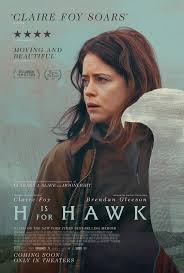
H IS FOR HAWKE
UK, 2026, 109 minutes, Colour.
Clare Foy, Brendan Gleeson, Lindsay Duncan, Denise Gough, Josh Dylan, Sam Spruell.
Directed by Philippa Lowthorpe.
This film is a biography, based on a memoir by scientist and academic, Helen McDonald. The main action takes place in 2007.
While H is for Hawke, it also is for Helen and it is also a letter for Hunter. In the beginning of the film, Helen is on her way to Cambridge University and contacts her photojournalist father to say that she had seen two hawks in-flight. This will become important for her because, as she goes to lunch with a friend, she receives a phone call to say that her father has died. Her father is played by Brendan Gleeson and he will appear in many of the flashbacks in Helen’s memories.
Helen is played by Clare Foy, well-known for her appearance in the series, The Queen. Helen is a very serious young woman, interest in science, interested in her students, walking them to a pub and explaining the history of the area. But, we realise that she is emotionally devastated by the death of her father, becoming more and more depressed. She has been offered a prestigious position in Berlin, she delays, taking refuge in purchasing a goshawk, a hunting hawk, living quietly at home with it, spending hours patiently training it, eventually achieving some success but finding a powerfully strong bond with her hawk, Mabel.
For audiences who enjoy nature, many scenes of the countryside, many scenes with the birds, the hawk, flying, predatory, hunting – which draws some criticism when she leads a seminar, the audience testing her about life and death cycles, animal cruelty, nature red in tooth and claw…
What brings greater humanity to audience appreciation of Helen are the many scenes of flashbacks with her father, genial, usually with coat and tie no matter what commission, photographing bridges over the Thames, sharing an exhilaration with his daughter. Her mother, Lindsay Duncan, is sympathetic and there is her brother, the organising of the father’s funeral and, ultimately, her eulogy.
Given the events shown here in 2007, Helen being very much depressed, very much the recluse, it is surprising to find that she did have the energy and peace of mind to actually write a memoir and to serve, some decades later, as a producer of this film.
- The title, H also for Hunter, and H for Helen? A memoir?
- 2007, Cambridge, the university colleges, chapels, the academic world, the accommodation? The musical score?
- The portrait of Helen McDonald, 2007, science, academic achievement, fellowship, prospects to go to Berlin, the group and taking them to the pub, the historical lecture on the way? Phone call to her father, her looking at the Hawks and describing them to him? Her friendship with Christina, going out for the meal, the phone call, her father’s death?
- The personality of Helen, introverted, love signs, love of nature, devotion to her father? Love for her mother? Relationship with her brother and her niece – especially to the visit to see Mabel?
- The impact of her father’s death, sadness, a strong bond with her father, the memories, the flashbacks, as a little girl, later looking through the photo archive with him, the expeditions with him, the origin of the Thames? The effect of the memories on her, British, stiff upper lip, internalising the grief, not manifesting it to others?
- The personality of her father, large, boisterous, wearing the tire, the camera, jumping out of the car as an accident scene, taking risks, laughing, encouraging his daughter, in his wife visiting Cambridge, looking at the books and smelling them, a larger-than-life character?
- The personality of her mother, loving, devoted, concerned? Her brother, his family?
- The later diagnosis of depression, Helen and dealing with depression, seclusion, clothes, leaving the house untidy, forgetting appointments, interaction with the faculty, her prospects in Berlin?
- Her friend with the Hawks, visiting him, arranging the buying of the Hawke, the argument with the man, her choice? The sequences of training the Hawke, naming her Mabel, in the house, on Helen’s wrist, food, calling her, Christina’s visit, the destruction, Mabel and her flight, success? How her taking to her friend, the various stages of her flying, hunting, killing the rabbit, returning? The sense of achievement, and companionship for Helen?
- Going to the functions, with Mabel, the polite conversations? Christina reminding her of the seminar, her speech, formal, the interjection, the criticism of hunting, persistence and criticism, Helen’s reaction, replies, nature, hunting, survival, death for everyone?
- The preparation for the funeral, the meeting with the undertakers, laughing and the themed coffins? Her agreement to do the eulogy?
- Steve, a good friend, the house, finding Helen on the floor with Mabel, reviving her, cleaning up, encouraging her?
- Helen, getting help, talking, understanding her situation?
- The eulogy, the slides, her affirmation of her father, tears, the response of the family and congregation?
- The aftermath, admitted depression, living with her grief, the experience with Mabel? Letting her go for six months, Helen’s future – and the fact that she wrote a memoir and was a producer on the film?
Magic Faraway Tree, The
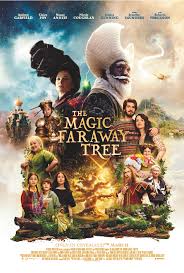
THE MAGIC FARAWAY TREE
UK, 2026, 105 minutes, Colour.
Andrew Garfield, Claire Foy, Delilah Bennett-Cardy, Billie Gadsdon, Nonzo Anozie, Rebecca Ferguson, Jennifer Saunders, Nicola Coughlin, Jessica Gunning, Michael Palin, Mark Heap, Dustin Demri-Burns, Simon Russell Beale, Lenny Henry, Tim Plester, Phoenix LaRouche.
Directed by Ben Gregor.
Enid Blyton, along with Lewis Carroll and Beatrix Potter, is a significant name in speaking about British children’s and family literature. And some of them have been transformed into films and ballets. This film is based on three Enid Blyton stories of the Magic Tree.
Here is a fantasy about children, about families, about imagination. In fact, the Thompson family, Tim and Polly (Andrew Garfield and Claire Foy) have three children. Falling on very hard times, they have to move to the country, where Tim grew up. They find an old barn, no electricity, let alone Wi-Fi! Two of the children are not very pleased, finding the isolation away from friends and technology, hard to bear. They are Beth and Joe. However, Fran, not given to talking much, has a sense of the magic, discovers the Magic Tree, encounters the fairy, Silkie, the giant Moonface, the man who cannot remember his name, and Mrs Washalot. She has a dial to spin, able to pick one of a range of worlds to visit. Fran does, returns home, a challenge to the family, a test for her brother and sister.
While watching, one wonders who the target audience for this film is. A way of understanding is to look at the response of the three children which might correspond to responses of children watching the film. Fran, young girl, is delighted with her discoveries. Joe, even younger, avid games player, does not understand this magic world at all – but, accompanying Fran, he becomes open to its delights. The trouble is with Beth, assertive teenager, described by her upset father as a “spoiled brat”. She isolates herself in the room upstairs, observes with disdain upper window, pines for her phone, her friends, dismissing Fran’s discoveries as nonsense. (And, maybe, some of her fellow teenagers watching the film may have the same reaction!)
But, in our heart of hearts, we know that she will undergo a conversion experience, highly reluctant, condescendingly agreeing – rather nasty with Silky, at one stage wishing her parents tomato and sauce business venture to fail, and then carried away with the experience and definitely on side.
Which means then that there are all kinds of imaginative delights, a world where sweets and lollies are unlimited, a world of knowing a lot, a world of spells – and, of course, a villain, Madame Slap (Rebecca Ferguson), her classroom and, detention, and some rude joke defiance! But, there are the themes of the family unity, the family song, working together, and, happy ending (even convincing Polly’s haughtily severe Germanic mother, played by Jennifer Saunders!).
- Traditional British storytelling for the children’s readership? Families? The film tradition?
- Enid Blyton, her stories, audiences, the trilogy of the Magic faraway Tree? Cinema adaptation? Narrative, characters, imaginative worlds, family themes? Fantasy and imagination?
- The locations, filmed in Malta, forest, the town, the dilapidated barn, the Magic Tree, the variety of worlds, creativity and imagination, costumes and decor, eccentric characters, make, voices? The greenhouse, dilapidated, re-created? The village and the launch? The musical score?
- The family, the financial situation, Tim and Polly, his Italian background, spaghetti and sauces, tomatoes, speaking Italian? Polly, her Germanic mother and demands, her mother disappointed in her? Jobs, finance, having to move, packing up, driving, the lone station, walking, discovering the barn? Tim and Polly and their optimism, creativity? Beth and Joe, spoilt children, demands, losses friends, Wi-Fi issues, computer games…? Fran, more sympathetic, the purse, Silkie and her presence, the sense of the fairies?
- The picture of family life, adapting, Polly and her abilities, planning and design, achievements? Tim, optimism, a steady hand, the tractor, the buildings, the greenhouse? The transformation? The happy parents?
- Beth, sulking, in her room, her complaints, her age? Joe, wanting electricity, not knowing how to play outside? The contrast with Fran, going out, discovering the magic, Silkie, Moonface, Mrs Washalot, the man who could not remember his name? Sharing, delight, discovering the world, going up the ladder, the range of sweets and delights, the supervisor against greed? Happy collecting, the marshmallows, Fran and being tempted, the rescue? Her going home, beginning to talk, with her parents?
- Polly’s mother, her assistant, in town, Jennifer Saunders’ comedy, demanding, and Beth writing the letter, posting it, the arrival by helicopter, demands, disappointment with her daughter, coming back for the launch of the source, naming Beth and her letter? The pressure on Beth?
- The situation, the tomatoes, the source, the family eating, Fran and Joe in competition, but the difficult situation?
- Beth, her agreeing to accompany Fran, the scepticism, the tree, repeating the magic words, opening up, her initial encounters, the washing water falling on her, the shrinking jacket, the familiar characters, Silkie and her enthusiasm, interactions with Beth, friends, sisters, antagonism? Agreeing to go up the ladder?
- The dial, the many possible worlds, the World of Knowing A Lot, the British character actors in the combined presence? Arguments? The way to the World of Spells, going to the hardhearted world, the wishes, Silkie becoming a fairy, Fran and the deep voice, Joe and the head from the computer games, unable to eat pizza? Beth and her wish that the project would fail? Silkie willing to sacrifice her wish so that the others could go back to being themselves?
- The plane, flying to the Castle, the background of Madame Slap, her Castle, the confrontation, the plane, going to sleep, Joe and his piloting the plane, the others on the trip, the confrontation with Madame, the classroom, her severity, and sitting back, detention people being cheeky, going to detention, then the various farts, escape, playing, waking up, her cries and waking the plane, her roar and giving it impetus?
- The discovery of the greenhouse and the failure of the crop, maggots? Tim and Polly trying to cancel the launch?
- At home, the launch, the people gathering, happy atmosphere, enthusiasm, Tim and Polly, going to the greenhouse, opening the door, the ripe tomatoes, the children, even Polly’s mother amazed, the selling of product, the bright future?
- Beth, contacting her friends, their arrival, collecting their phones, dancing and enjoying the launch? Everybody dancing, wishes fulfilled?
All of Us Strangers

ALL OF US STRANGERS
UK, 2023, 105 minutes, Colour.
Andrew Scott, Paul Mescal, Jamie Bell, Claire Foy.
Directed by Andrew Haigh.
With strangers in the title, and referring to everyone, strangers to one another, strangers in our relationships, this is a very melancholy title.
The screenplay, based on a novel by Japanese author, Taichi Yamada, was written by Andrew Haigh who has had a successful career writing and directing screenplays which probe same-sex relationships, Weekend, Looking. He also wrote and directed the insightful film about an aged married couple, 45 Years.
Irish actor, Andrew Scott, has had a substantial career since he was very young, Moriarty to Benedict Cumberbatch as detective in the series, Sherlock, C in the James Bond film, Spectre, and as a comic priest in Phoebe Waller’s comedy series, Fleabag. This is one of his best and most moving performances.
He plays Adam, in his 40s, alone, lonely, a gay man who has had not had an emotional relationship. He is a screenwriter, probing his own history in his writing. Scott makes Adam someone whom we respond to with care, concern about his loneliness, occupying a room in a huge new high-rise apartment block in London, but the other flats still empty. He encounters Harry, Paul Mescal (Normal People, Aftersun, Foe, Gladiator 2) at his door, Harry drinking, suggestive, but Adam closing the door on him.
But we know that Harry will persevere, something will develop between the two.
While watching the film, the key word that emerges in our consciousness is “empathy”. Adam is such a pleasing and sympathetic character who invites our empathetic attitude towards him, for him as a person, for him as a lonely man, for him as a man with a homosexual orientation. And the theme that the film explores is what is “being in love” for Adam.
This is a question is posed to him by his mother. And the appearance of Adam’s father and mother takes us into a different realm in the storytelling. They have been dead for 30 years, sadly killed in a car crash when Adam was 12. But, as he looks at the box of photos from the past, he has an overwhelming desire to visit the house again, takes the train, walks the street, encounters his parents, goes into the house, sits down and talks with them. They are played very effectively (and we remember Billy Elliot and The Crown) by Jamie Bell and Claire Foy.
So happy is Adam in his parents and rediscovering them, that he goes back, encountering his mother alone, she innocently asking about his girlfriend, he telling her about his orientation, her being rather bewildered, not knowing how to talk with her son. In his next visit, he encounters his father has been told by his wife about Adam and mentions that she needs to rearrange a few things in her mind. What follows is a powerful discussion about Adam and his experiences as a young boy, bullied at school, his father realising the orientation and the question between them of why his father never spoke to him about the issues and why he never spoke to his father.
These revisits to his parents have a disturbing effect on Adam, waking disturbed, Harry there as support for him. The line between fantasy and reality is disappearing.
These ghostly themes continue with some farewells, and a very sad ending.
In these years of discussion about same-sex relationships, talk about blessings of same-sex unions, this is an empathetic film for a wide audience.
- The title? Melancholy? Relationships?
- The London setting, the block of flats, high, empty, the interiors, the corridors, the lifts? The musical score?
- Adam’s story? The performance by Andrew Scott, empathy? His age, screenwriting, exploring his past, living alone, lack of relationships? Hearing the alarm, going outside, looking up, seeing Harry? Harry and his visit, the talk, Adam shutting the door? Harry’s later return, his story, father, alienated, his mother? Adam inviting him in, the talk, the touch of tension, Harry relaxed, the drink, discussion about the difference between gay and queer, the physical attraction, the sexual encounter, the aftermath?
- Adam and his writing, seeing the photos of the past, the audience learning that his parents had died in a car crash, black ice, father instantly, mother later, losing an eye? The house, his desire to visit the house?
- Adam and his physical condition, health? The screenplay showing him to visit the house, the encounter with his parents, the return visits, his waking up? The line between reality and dream? Sometimes overlapping? At home and sleeping and waking, Harry reassuring him? Waking up on the train, but this being part of dreams? Seeing Harry in the underground, following him, alone on the train?
- And these scenarios as possibility for his screenwriting, exploring and understanding his past?
- Going home, comfortable, his parents at the age they died, their welcoming him, the characteristics, father being jovial, mother loving her son and being fussy? His happiness in meeting them again? The decision to return, the visit with his mother, her asking about girlfriends, getting him something to eat, his revealing his orientation to her, her not understanding, her being uncomfortable? The visit to his father, his father reassuring him that his mother had told him, that she just had to rearrange some things in her mind, Adam telling his father the things were different, his telling about equality, marriage, less prejudice, but sometimes this rising as it did in the past? His father and his understanding, memories of Adam at school, Adam talking about the bullying, calling him girl, the boys and girls both critical? His father saying he was aware of this? Adam asking why he didn’t come into to talk with him? His father asking why Adam didn’t tell his father?
- The final visit, the outing with his parents, the restaurant and the waitress, the family meal? But his parents not eating, a more ghostly presence, telling him that had to leave, and wanting them to stay, even to visit them once a year? The question about whether the death was instant, his mother not seeing well, but Adam reassuring them they died quickly? And then disappearing?
- Adam returning home, going to Harry’s apartment, finding Harry dead? Harry outside, knowing that his body was in the other room? Adam reassuring him, settling him down, urging him to go to see his mother?
- Reality and fantasy, ghostly presences?
- And Adam, his illness, live in dying, his memories in coming to terms with his life, in love with Harry (and his mother asking him this explicitly,?
- An empathetic film for gay audiences? An empathetic and invitational film for wide audiences?
