Displaying items by tag: Tim Roth
Peaky Blinders: The Immortal Man
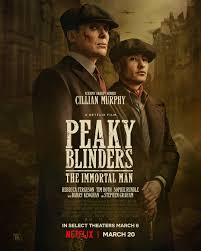
PEAKY BLINDERS: THE IMMORTAL MAN
UK, 2026, 112 minutes, Colour.
Cillian Murphy, Rebecca Ferguson, Barry Keoghan, Stephen Graham, Sophie Rundle, Tim Roth, Ned Dennehy, Pakxy Lee, Jay Lycurgo, Ian.Peck,
Directed by Tom Harper.
The connection with the long-running television series:
AI generated summary from user reviews on the Internet movie database: Reviewers say 'Peaky Blinders' is celebrated for its compelling narrative, intricate characters, and standout performances, especially Cillian Murphy as Tommy Shelby. The series is lauded for its historical accuracy, striking visuals, and unique soundtrack. Central themes include power, loyalty, and betrayal, with a focus on war and class conflict. The Shelby family's interactions and complex storylines captivate audiences, though some critics observe a dip in quality in later seasons. Its aesthetic and immersive atmosphere make it a genre standout.
The television series had a long run and there is often a call for a feature film to gather the themes and characters together. Peaky Blinders ran for over 10 years with 36 episodes, and highlighting the talent of Cillian Murphy (winning a Best Actor Oscar for playing Robert Oppenheimer).
The film takes place some years after the events in the series which moved from World War I into the 1920s and 30s. Now, it is World War II, highlighting an episode where the Third Reich forged an enormous amount of British notes to smuggle into Britain, disrupt the economy, different strategy for obtaining victory. This is visualised for us – and the traitorous go-between is played by Tim Roth.
In the meantime, Tommy Shelby has retired, living quietly, writing his book, The Immortal Man. But, his son, Duke (Barry Keoghan, featured in many films at this period, talented with quite different roles) has a difficult relationship with his father. There are also complications about Shelby and his relationships, his wife, her sister, memories, and the Gypsy community.
And, this community is tough, violence, in the streets, in the pubs…
Eventually, the arrival of the forged money at Liverpool, the British contacts, setting up some contract with the Peaky Blinders and Duke, Stephen Graham appearing in a supporting role, Shelby himself finally having to intervene.
For those familiar with the series, obviously interesting. And, with a sequel series in planning, obviously an introduction.
For those not familiar with the series, a glimpse of gangs, gangsters, violence on the streets, British style.
- The popularity of the series, over 10 years, 36 episodes, Birmingham, Gypsies, crime…?
- A feature film, the impact for those unfamiliar with the series, those who know the series? A satisfactory ending, the death of Tom Shelby?
- World War II, the opening in Germany, the concentration camp, the elaborate forging of the currency, packing, shipping it, the plan to infiltrate the currency, economic collapse, the winning of the war?
- Beckett, sympathetic to the Nazis, in Germany, arranging the transport, the interview with Duke, the sympathiser and his loose lips, Becket shooting him? Duke agreeing?
- The presence of Tom Shelby, his past reputation, World War I and action, the trenches and his memories, his relationship with his brother, the visit to the cemetery, seeing his daughter’s red scarf, his grief about his brother, the revelation of his killing him and his motivations? In the rural house, wandering around, letting go of control, writing his book, Johnny as his helper?
- Duke, son of Tom, the bonding and lack of bonding? His character, brutal, leadership, the issue of the arms and his gang appearing, rounding them up, taking them? Confrontations between the authorities and the Peaky Blinders? Duke and his personal life, leadership, at the pub?
- Tom, his wife, his children? Mysterious presence of Kaulo, sister of Zelda, Tom and his memories, appearances? The presence at the dinner, her role in the city, patriotism, leadership, her son – and her murder? The ceremonies of her burial?
- The old members of the gang, their presence, loyalty to Tom, ageing?
- The pub, the women, the drinking, the gangs? The pub ring the war, the soldiers, Tom and his arrival, control, the confrontation with the soldier, defiance, the hand grenade? Tom and his reassertion of authority?
- Seeing Tom, the relationship with Duke, their meetings, discussions, the count money, Duke and his loyalties?
- Tom, reasserting himself, the various attacks, riding the horse? The Gypsy background? His dreams and imaginings? The discussions with Duke?
- The meetings with their cake, confrontations, shooting fights? Escapes?
- The final plan, and his hold over Duke, to do the shootings, the phone, going Duke and his change of heart?
- The setting up for the arrival of the money, the taking it, the squad, the role of Stagg, his personality, loyalties? On the harbour, the boats, the crash, Tom coming through the tunnel, his dilapidated state, the accident and crash, his getting free, arriving late, the setting of the time of midnight, Becket with Duke, the clock, Tom eventually arriving?
- The final confrontation, the shootout, the death of Becket, his shooting Tom, Duke present?
- The ending of the Peaky Blinders’ tale, the death of Tom, the role of Duke? The finding of the manuscript, giving it to Duke? The final caravan, the fire?
Poison/ 2024
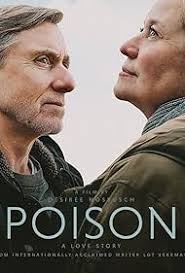
POISON
Luxembourg, 2024, 86 minutes, Colour.
Tim Roth, Trine Dyrholm.
Directed by Desiree Nosbusch.
This is a production from Luxembourg, director from Luxembourg, the filming there, the audience appreciating some of the beauty of the city, the water and bridges, the forests, the mountains.
This is a film of dialogue and so it is not surprising to find that it is originally a play for the theatre, adapted by the playwright, Lot Vekemens, who is from Holland. The film has a female sensibility from the director and the writer.
Poison is a very strong title. However the reference is not to physical poison but to poison of the emotions of the mind, suddenly caused by an unexpected accident, the death of a child, and the ability and inability of each parent to deal with the grief, and to work with each other in the tragic situation, the husband leaving, finding another wife, another child, the mother staying.
The scenario has news of alterations being made in the cemetery and so the couple coming together, she trying to avoid her ex-husband but, finally, their engaging in strong conversations, a range of moods, guilt issues, blame issues, acknowledgement of the issues. And, for the film opening out, less stage-bound,, there are several locations for continuing the conversations, in the cemetery office, outside in the cemetery grounds, a long conversation in a church, with rain and conversation in the front seat of the car, and, eventually, a long walk up a mountain road, some powerful sequences, especially a long single take sequence the camera focusing on the couple and their interchanges as they walk up the mountain.
Ultimately, there is some kind of reconciliation, the husband positing the possibilities for hope or piece and the wife saying, ‘both’.
The two actors do more than justice to the dialogue, a different performance from Tim Roth, who has had a career of more than 40 years in Britain and in the United States. The wife is played by Danish actress Trine Dyrholm, winner of many prestigious awards appearing in many classic films including Margritte, Queen of the North, the Commune, Queen of Hearts.
- The poison of the title, dire circumstances, grief, the consequences, guilt and blame? The need for eliminating the poison, especially after it festers for years?
- The film based on a play, the focus on dialogue, a two hander and interactions, the limited locations, character and verbal drama?
- Writer and the director, Luxembourg background, filming there?
- The impact of the location photography, the roads and highways, the coast, the mountains, town and views, the cemetery, the church and interiors, walking the mountain parts? The musical score?
- The gradual revelation of the relationship between Lucas and Edith, the marriage, tensions, the death of their child, different ways of coping, grieving, Lucas and his leaving, a further relationship and child, Edith staying, making a life for herself, her work, but alone?
- The introduction to each character, Lucas, leaving home, his driving, at the sea, the coffee, taking time to reflect, going to the cemetery? The contrast with Edith, busy at home, her garden, the bicycle, riding through the town, arriving at the cemetery, in the office, initially trying to avoid Lucas?
- The dialogue creating the tension between the two, the audience not quite sure of the reasons? Edith, inattention, avoiding Lucas, the revelation of 10 years’ separation, yet her memories of the past, wary of interaction with him? The importance for Lucas of meeting Edith again, for some kind of resolution?
- The revelation of character through the dialogues, hostilities, explanations, detailed memories, accusations, defences, the changing of moods, Edith and her explanation of her life over the decades, Lucas and his marriage, child, the story about his joining the choir and its effect? Her laughing, their laughing?
- Something of a rapport between them, bridging the 10 years, Edith’s demands on Lucas’s memory, his memory of details, driving away, thinking he should turn back, but couldn’t? And remembering the dead child every day? As did Edith?
- The locations, the discussions in the confined office, going outside, the long conversations in the church and the religious atmosphere and background, the rain, in the car, going to the final walk? The locations affecting the mood of the conversation?
- The satisfaction for each in the meeting, talking, some mutual understanding, moments of forgiveness, and embrace, the returning to their lives?
- The final aerial overview of the city, Edith and her bike, the water on the bridge, the forests? And leaving the audience to contemplate their response to each of the characters, to the sad situation, irrevocability, failures, grief, hopes? And the issue of whether one could have peace or hope, and Edith replying, both?
