Displaying items by tag: Barry Keoghan
Peaky Blinders: The Immortal Man
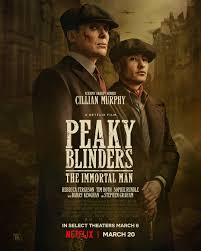
PEAKY BLINDERS: THE IMMORTAL MAN
UK, 2026, 112 minutes, Colour.
Cillian Murphy, Rebecca Ferguson, Barry Keoghan, Stephen Graham, Sophie Rundle, Tim Roth, Ned Dennehy, Pakxy Lee, Jay Lycurgo, Ian.Peck,
Directed by Tom Harper.
The connection with the long-running television series:
AI generated summary from user reviews on the Internet movie database: Reviewers say 'Peaky Blinders' is celebrated for its compelling narrative, intricate characters, and standout performances, especially Cillian Murphy as Tommy Shelby. The series is lauded for its historical accuracy, striking visuals, and unique soundtrack. Central themes include power, loyalty, and betrayal, with a focus on war and class conflict. The Shelby family's interactions and complex storylines captivate audiences, though some critics observe a dip in quality in later seasons. Its aesthetic and immersive atmosphere make it a genre standout.
The television series had a long run and there is often a call for a feature film to gather the themes and characters together. Peaky Blinders ran for over 10 years with 36 episodes, and highlighting the talent of Cillian Murphy (winning a Best Actor Oscar for playing Robert Oppenheimer).
The film takes place some years after the events in the series which moved from World War I into the 1920s and 30s. Now, it is World War II, highlighting an episode where the Third Reich forged an enormous amount of British notes to smuggle into Britain, disrupt the economy, different strategy for obtaining victory. This is visualised for us – and the traitorous go-between is played by Tim Roth.
In the meantime, Tommy Shelby has retired, living quietly, writing his book, The Immortal Man. But, his son, Duke (Barry Keoghan, featured in many films at this period, talented with quite different roles) has a difficult relationship with his father. There are also complications about Shelby and his relationships, his wife, her sister, memories, and the Gypsy community.
And, this community is tough, violence, in the streets, in the pubs…
Eventually, the arrival of the forged money at Liverpool, the British contacts, setting up some contract with the Peaky Blinders and Duke, Stephen Graham appearing in a supporting role, Shelby himself finally having to intervene.
For those familiar with the series, obviously interesting. And, with a sequel series in planning, obviously an introduction.
For those not familiar with the series, a glimpse of gangs, gangsters, violence on the streets, British style.
- The popularity of the series, over 10 years, 36 episodes, Birmingham, Gypsies, crime…?
- A feature film, the impact for those unfamiliar with the series, those who know the series? A satisfactory ending, the death of Tom Shelby?
- World War II, the opening in Germany, the concentration camp, the elaborate forging of the currency, packing, shipping it, the plan to infiltrate the currency, economic collapse, the winning of the war?
- Beckett, sympathetic to the Nazis, in Germany, arranging the transport, the interview with Duke, the sympathiser and his loose lips, Becket shooting him? Duke agreeing?
- The presence of Tom Shelby, his past reputation, World War I and action, the trenches and his memories, his relationship with his brother, the visit to the cemetery, seeing his daughter’s red scarf, his grief about his brother, the revelation of his killing him and his motivations? In the rural house, wandering around, letting go of control, writing his book, Johnny as his helper?
- Duke, son of Tom, the bonding and lack of bonding? His character, brutal, leadership, the issue of the arms and his gang appearing, rounding them up, taking them? Confrontations between the authorities and the Peaky Blinders? Duke and his personal life, leadership, at the pub?
- Tom, his wife, his children? Mysterious presence of Kaulo, sister of Zelda, Tom and his memories, appearances? The presence at the dinner, her role in the city, patriotism, leadership, her son – and her murder? The ceremonies of her burial?
- The old members of the gang, their presence, loyalty to Tom, ageing?
- The pub, the women, the drinking, the gangs? The pub ring the war, the soldiers, Tom and his arrival, control, the confrontation with the soldier, defiance, the hand grenade? Tom and his reassertion of authority?
- Seeing Tom, the relationship with Duke, their meetings, discussions, the count money, Duke and his loyalties?
- Tom, reasserting himself, the various attacks, riding the horse? The Gypsy background? His dreams and imaginings? The discussions with Duke?
- The meetings with their cake, confrontations, shooting fights? Escapes?
- The final plan, and his hold over Duke, to do the shootings, the phone, going Duke and his change of heart?
- The setting up for the arrival of the money, the taking it, the squad, the role of Stagg, his personality, loyalties? On the harbour, the boats, the crash, Tom coming through the tunnel, his dilapidated state, the accident and crash, his getting free, arriving late, the setting of the time of midnight, Becket with Duke, the clock, Tom eventually arriving?
- The final confrontation, the shootout, the death of Becket, his shooting Tom, Duke present?
- The ending of the Peaky Blinders’ tale, the death of Tom, the role of Duke? The finding of the manuscript, giving it to Duke? The final caravan, the fire?
Crime 101
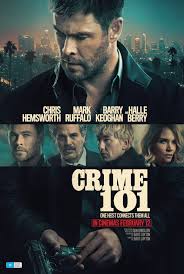
CRIME 101
US, 2026, 139 minutes, Colour.
Chris Hemsworth, Mark Ruffalo, Halle Berry, Barry Keoghan, Corey Hawkins, Monica Barbaro, Nick Nolte, Devon Bostick, Jennifer Jason Leigh, Taie Donovan.
Directed by Bart Layton.
The 101 of the title is actually the highway through Los Angeles. However, Crime 101 sounds like the title of the basic university course. And, those interested in high-class and well-planned heists are provided with what might be called plentiful tutorial material for their hoped-for careers. But ministers will sit back and enjoy it all.
Writer-director, Bart Layton, has adapted a novel by Daniel Winslow and has intended to make a big budget, strong cast, highly colourful Los Angeles drama. Which he does. Immediately we are introduced to Mike, Chris Hemsworth at his charming best, a gentleman thief, meticulous planning, no hurting anyone, but getting away with jewels. We get a glimpse of his patron, sounding more gravellyy-voice than ever, Nick Nolte.
Then we are introduced to the other key characters, Sharon, Halle Berry, 11 years with a high-class insurance firm, discussing with millionaires policies and planning for a society wedding; Mark Ruffalo as Lou, a veteran LA detective, dishevilled, expert profiling criminals but tending to be looked down on by the smarter professionals. Then, an entirely different character, Orman, Barry Keoghan (in so many films these years), a petty, very petty thug with some-confident violent attitudes, who has to follow Mike and report back on his plans – although he too sets up a rather messy bank robbery to build up his credibility.
There is something not quite right in the lives of each of the main characters and, gradually, they are brought together, Sharon and Lou through self-help and yoga classes, Mike and Sharon because he investigates her being passed over, humiliated at her company.
This is all moving towards a buildup for the heist in the luxury Beverly Wilshire hotel, the millionaire and his fiancee, a safe full of cash, jewelry, a security expert coming from Europe – and some substitutions, to catch a thief, an intrusion from the violence Orman.
Bart Layton achieves what he set out to do, nothing more, nothing less – a Los Angeles crime action adventure, heists, investigations, car chases, identity switches, and entertainment.
- The title, like a college course title, but along freeway 101?
- All film traditions of crime set in Los Angeles? The classic traditions? 21st-century version?
- The Los Angeles settings, the opening credits, upside down, angles, the city, the highways, the lights, buildings…? Atmosphere? The streets and the poor sections? The contrast with the Beverly Wilshire, luxury hotels, insurance offices, police precincts, jewelry shops, yoga classes…, The musical score?
- The background of the voice-over, self-improvement, the background from Mike, Sharon listening, the yoga classes, Lou present and learning, so it is and motivation for the characters?
- The morning, the characters getting up, Mike, person, dress, driving, the car and the man in the boot, the shop, the owner, the jewels, the couriers, the fakes, the real jewels of the ankle, the gun, the pursuit, the confrontation, the robbery, the career shooting and a drop of blood in the car for later detection? Letting the man out of the boot? Mike and his robberies, never injuring anyone? Chris Hemsworth, screen presence, the building of a character and personality? The mystery?
- Lou, status in the police force, old-style, theories, the network of authorities, looking down on him, work with his partner, his partner to bring with him, wanting to work with him? At the site of the various crimes? Lou and his theory, the 101? The man, eliminating various criteria and the remnant of crimes along the 101? Lou profiling the criminal? Lou, at home, his wife, intrusion, the later meeting, the anchor, his walking out, the apartment by the ocean? Going to yoga, the encounter with Charlotte?
- Sharon, insurance, see her in action, with Munro and mistaking his wife or girlfriend, the wealth, the discussions about the insurance, the forthcoming wedding? Her age, early years, the promise of promotion, following her off, the men on the staff, the new associate, Fabio, taking Sharon’s job, the achievement and praise, Sharon later telling her the truth in front of the executive? Sharon listening to the tapes, the yoga? Living alone, sleep and its limitations? Upset?
- Money, his age, and Nick Nolte character, raspy voice, the interview with Mike, controlling him? Mike and his rebellion? Wanting to keep his methods, get money, retire? Money and his son summoning All men, knowing Allman’s father, a different kind of criminal, tough, age, look, motorbike, following Mike, Mike observing him, removing the tracer on the car? Observing, Mike’s contact with the IT man, information about peoples access? All finally attacking him, brutally? The scene of the robbery in Santa Barbara, tough, the baby, the locked door, his anger, the victims, the robbery and his escape?
- Mike, the car crash, discussions with Meyer, the date, the discussions, with high class, the mystery of his background? His reticence? The affair, continued seeing each other?
- The information about Sharon, encountering her and was discussion about cars, at the Gallery, his arranging the meeting, his discussions with her, knowing all about her, her resentments, the standing for firm and integrity? The scenes of the office, passed over again, her contacting Mike, the explanation of the situation, the methods, the wedding, the insurance, the protection from Europe?
- The conscience, going to Lou, giving him the information, Lou and the setup outside the jewelry shop, the boy, the shooting, the cover up, his being sacked? The reaction?
- With, the plan, Mike and his taking the place of the security guard, the flight from Europe, the transition, Mike waiting, Lou taking the place of the guard, the conversation about Steve McQueen, bulletin chases, The Thomas Crown Affair and a gentleman thief?
- All in, getting the job at the hotel, getting the number of the room, preparing to ?
- The situation in the room, Mike, the emptying of the safe, the jewels, the gun? Lou pulling the gun, the confrontation, all in, the three games, the woman in fear, the shooting, the wording Munro, the death of Allman? The deals, Lou and his letting Mike go, his previous tracking down Mike’s family, the discussions with his mother?
- The aftermath, Mike and the car, leaving, sending the photo, Maher and the photo of the family? Lou giving the the jeweller diamonds to show? At the yoga?
- The gentleman thief, some integrity, writing background, the crime thriller, detection, the resolution?
Bring Them Down
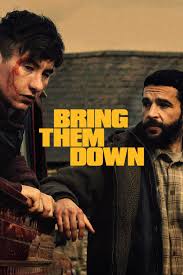
BRING THEM DOWN
Ireland/UK, 2024, 106 minutes, Colour.
Christopher Abbott, Barry Keoghan, Colm Meany, Nora-Jane Noone, Paul Ready, Aaron Heffernan, Susan Lynch.
Directed by Christopher Andrews.
Feuds often grim and violent. Family feuds fester. And, especially on the evidence of Bring Them Down, Irish feuds can be merciless – but also elements of forgiveness.
And, with feuds, there are always two points of view, at least. And this is what happens during this film, audiences needing to pay attention to see the transitions from one perspective of the savage events to another.
In fact, the opening scene is set 20 years earlier, Michael, a sheep farmer (an intense performance by American Christopher Abbott Irish accent and all) wildly driving his car, his girlfriend, Caroline, a passenger in the back, but his mother in the front, telling him that she is about to leave his father, more speed, a crash, Caroline’s face cut, his mother dead. A grim prologue for what will follow.
In the present day, Michael is still living with his old cantankerous father, Ray (a familiar role for actor Colm Meany). Michael is unmarried, looks after the sheep, Caroline having married his neighbour, Gary, and they have a son, Jack. But, times are difficult, finance hard. Gary is prepared to let his sheep go and develop some of his land building homes.
Jack is played by Barry Keoghen now coming into greater prominence with films like Banshees of Innisherin and Saltburn.
At the centre of the feud is the disappearance of the two rams owned by Michael. They are reported to be dead. Then they appear at the market. Jack is involved, clashes between Michael and Gary.
Which brings us to the title. Is it that each side of the feud wants to bring the other down? Certainly. But, with the huge centring on the rams, then on the sheep flock, Jack and his cousin brutally cutting the legs off of Michael’s shee, Michael bringing the sheep down from the hills and having to destroy them in their suffering.
This is where the screenplay challenges the audience, telling the story from Michael’s perspective and judgements, then recounting the same events from Jack’s point of view. And, Ray, influencing Michael to be more vengeful.
There has been a long hardness in the Irish experience over the centuries, Irish oppressed, religious persecutions, famines, migrations, tough attitudes for survival. And this is a buildup in a final confrontation between Michael and Jack. But, we realise that under the hardness, there is some humanity, some tenderness. And the film ends with both, some more hope rather than anger.
- The title, with reference to the sheep, sheep farmers?
- Locations and atmosphere, the mountains, hills, the sheep in the countryside, homes and interiors, sheds? The musical score and atmosphere?
- The prologue, the drive, Michael driving, not seen, Caroline in the back anxious, his mother, in the front, watching him, the plea to slow down, her leaving her husband, increasing the speed, the crash, Caroline and her face slashed, his mother dead?
- 20 years later, Michael, with the sheep, taciturn, looking after his father, the difficult relationship, his father not knowing his wife had left, cranky, needing care? Michael and the sheep? The relationship with Caroline, her marrying Gary, Jack as her son?
- The phone call, the rams dead, Michael going to the market, seeing the rams, the confrontation with Gary and Jack, the bystanders and support? The vehicles chase on the way back, Gary and Jack crashing, Michael giving Jack the lift?
- The story of bringing the sheep down? The two versions? Michael’s version, Jack’s version? Michael, searching for the sheep, the legs cut, his carrying the ramps? Upset, with his father? The vengeance, Gary and his buildings, going to the site, struggle with the builder, his ear shot, killing the builder, removing his head, his father’s request for a head, in the bag? His later realisation that he had the wrong head?
- Jack’s solution, with his cousin Aaron, the plan, the destroying of the sheep, the legs? Jack and his reaction, the confrontation with Aaron, not wanting to see him again? The blood, his mother, returning home, with his father?
- Michael, with his father, his father’s collapse, Caroline and helping? Her tending Michael’s ear?
- Jack, the realisation, running away, Michael pursuing him up the mountain, the Bluecoat decoy, gestating Michael, the fight, Michael stabbing Jack, carrying him down, giving to his mother, Caroline with the rifle?
- The end, Michael wounded, going back to the house – and audience speculation about the future?
mubi release, January 2026
Calm with Horses
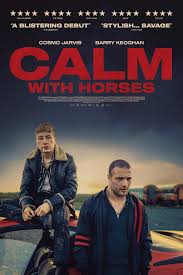
CALM WITH HORSES/THE SHADOW OF VIOLENCE
Ireland, 2019, 100 minutes, Colour.
Cosmo Jarvis, Barry Keoghan, Niamh Algar, David Wilmot, Ned Dennehy.
Directed by Nick Rowland.
Calm with Horses does not immediately indicate the narrative and tone of this strong psychological drama. However, the meaning emerges, especially in regard of the central character, nicknamed Arm, and his relationship with his autistic son, Jack.
This is an Irish film, with Irish intensity, filmed in a country town yet with some magnificent mountain scenery in the background. The introduction is to Arm, a strong performance by Cosmo Jarvis (Shogun, Warfare, and the Australian film, Inside), former boxer, now an enforcer for the local drug dealing family, and hesitating in brutal retribution, especially seen with an old man who has raped a young woman from the family. Arm’s link with the family is through his associate, Dympna (another interesting role for Barry Keoghan). Then the elders of the family, who can exercise charm at birthday parties but who are ruthless in wreaking vengeance on enemies.
Audiences are not used to seeing this kind of drug dealing family and enforcing in an Irish country context.
However, the film is a character study of Arm, revealing his limitations, his dependence on the goodwill and orders of the older dealers, some estrangement from his sympathetic wife, Ursula, and some encounters with his son. As the story progresses and more demands are made of Arm and his inability to actually kill, the film moves between his better awareness of his son, encounters and discussions with his wife, the boy having tantrums, Arm sometimes bewildered, but loving the boy.
Ultimately, there is a confrontation between Arm and the older dealers and their ruthlessness, pressure on him, physically wounded, some final confrontations, and some moral decisions on the part of Arm, whether a life of violence or some humanity with his son.
- The title, the focus on Jack, autistic, his outbursts, calm with horses, relationship with his mother, with his father?
- The Irish setting, the small town, homes, gatherings, farms and countryside, mountains and backroads? Atmosphere? The musical score?
- The introduction to Arm? In the car, his monologue, violence, background as a boxer, the Devers family, violent and enforcer? Character, relationship with Ursula, the separation, his visits, conversations, her reactions? His relationship with Jack, presence, absences, playing with him, frightening him? Ursula and her plans, to move? Jack and his disabilities?
- Arm and the commission against the rapist, the flashbacks to the party, the girls, the drinking, the young girl in her room, the rapist entering? Arm and his confrontation, the man admitting his guilt, the bashing? The later meetings, the discussion about killing him? Arm with the stone, unable to kill? The aftermath, the family putting pressure on Arm, the confrontation, the naked body hanging? The consequences?
- Dympna, his role in the family, enforcing, the relationship with Arm, urging him against Ursula? The friendship, the communications, company together, driving? Dympna putting on the pressure, with the gun?
- The family, the drug dealing, the enforcers? The characters of the brothers, Hector, family, jovial, yet sinister? At the party and cheerful? At home, his wife, the confrontation with Arm, the attack on Hector, injuring him, the issue of the money and the jewels? The wife, cups of tea, talk, persuasion, the return of the jewels?
- Paudie, his age, sinister, brutal, the pressure on Arm? The hanging body?
- The growing pressure on Arm, his being used, not always intelligent, the pressure from Dympna, the encounters with Paudie and Hector, the buildup to the final violence? His wounds, the blood?
- Going to see Jack, the background of outings with Jack, to the fair, leaving him alone, Ursula and her reprimands, discussions with him – and a possible future?
Hurry Up Tomorrow
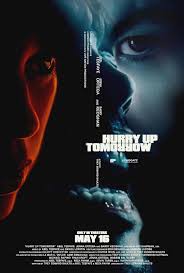
HURRY UP TOMORROW
US, 2025, 105 minutes, Colour.
Abel Tesfaye, Jenna Ortega, Barry Keoghan, Riley Keogh, Ash T, Paul L.Davis.
Directed byTrey Edward Shults,
The many fans of the very successful recording artist, The Weekend, actual name, Abel Tesfaye, have enthused on social media how much they like this film, quite a number giving it 10 out of 10.
For the many audiences who are not familiar with The Weekend, his career, his songs, his singing style, there is a curiosity value, but probably also some bewilderment.
The Weekend plays a variation on his own character, a successful singer on tour, many of his songs throughout the film, many with autobiographical touches. He is something of a sad, even morose, character in his manner and demeanour, manifesting this more and more as the film goes on, more depressed, lugubrious in his reactions, often moody, with violent touches.
A number of commentators have labelled this film as a vanity project, cowritten and produced by the singer himself, aligning the narrative with songs from his most recent album, definitely with a focus on himself. In fact, at the opening, he is gazing into the mirror, gazing at himself, preening, doing weightlifting near a mirror, then dressing for his going on stage, a long corridor processing towards the stage, the dramatic moment, his entry, the absolute acclaim.
But, he is conscious of losing his voice, tantrums, walking off, then a very powerful scene, in fact, with Irish actor, Barry Keoghan, playing his manager, drawing on a repertoire of persuasion to coax and force the singer to go back on stage.
In the meantime, there is what seems an unrelated episode, a young woman, Jenna Ortega (called Anima in the credits, a nod to the psychology of Carl Jung and the feminine aspect of a male?) angrily destroying a house and setting it alight and driving away. Then she is at the concert, rapt in the singer, his seeing her, her coming to him in his dressing room, then to the hotel, the night together, she something of a stalker, explaining her interpretation of his songs, and his mixed reaction.
How can this develop? Realistically? Symbolically? The stalker tying the singer up, overpowering him, the confrontation with the manager, fight, death… And how real is this?, Symbolic? Best explained by those enthusiastic fans who give the film 10 out of 10.
Bird/ 2024
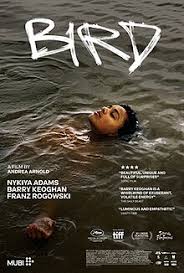
BIRD
UK, 2024, 119 minutes, Colour.
Nykiya Adams, Franz Rogowski, Barry Keoghan, Jason Buda, Jasmine Jobson, Frankie Box, James Nelson-Joyce.
Directed by Andrea Arnold.
A British slice of life. This time in south-east England, Kent, the area where director, Andrea Arnold, grew up. In fact, Andrea Arnold’s first film is, in the 2000 is, work British slices of life. However, she also directed a version of Emily Brunty’s Weathering Heights and also went to the United States American and to direct episodes of television series, like Big Little Lies.
However, here she is at home again. This part of Kent is not an area for easy living, especially for the young teens, trying to make their way, and dealing with parents who are only 14 years older than they are. They have to be tough, have to manage, had to learn by their own mistakes but especially what they see in their parents.
This is the story of Bailey, 12 years old, West Indian ancestry, local English ancestry, a bravura and strong performance from Niliya Adams, we first see her with her phone, photographing birds, this would and grace of birds, and we are alerted that this will be a theme, both realistic and symbolic, as the film progresses. Then she is picked up by her father, and together, on the scooter, they speed and swoop through the town, landing at home where her father, Bug, Barry Keegan in another quite different performance, and announces that he will be getting married to his girlfriend at the weekend. Bailey is not impressed.
Also at home is her half brother, Hunter, Jason Buda, 14, involved with a local gang who terrorise locals with their camera, photographing stuff that they can blackmail their victims with. And Hunter wants to
run away to Scotland with his 14-year-old girlfriend, Moon. One of the symbolic bird sequences has Bailey trying to deliver Hunter’s letter to Moon the bird swoops, snatches the letter in its beak and delivers it. Touches of “magic realism” throughout the film.
But we discover that the Burden of the title is actually Laura, played by François rib Gorski, encountering Bailey, strange clothes, but on a quest to find his birth mother.
Which turns the narrative into a search, a quest, Bailey taking on Bird, a joyful excursion to the seaside with the half brother and sisters who live with her birth mother, discovering Birds father and some explanation if not joy.
There is some happiness in this family’s life, Bogeyman Bailey bringing Hunter home from his forlorn search for Moon, the wedding celebration is an exuberant dancing, and a visit from Bird, the audience seeing him from Bailey’s viewpoint, covered in feathers, protecting bird, a flyaway bird.
Bailey is only 12. And all her life is before her. We might wonder how Andrea Arnold saw Bailey’s future.
- The title? The character, Bird? Bailey and her photographing birds? The range of birds, real and symbolic throughout the film? The real/symbolic bird and carrying Hunters message?
- The Kent setting, the town, houses, narrow streets, the coast, the surrounding countryside? The travel to the sea, the water, the sand, the day of the Sea? The musical score, the wide range of songs, their insertion into the action, the lyrics?
- The slice of social realism? Families living in Kent, their backgrounds, early relationships, pregnancies and births, homes, work, scams? The Dir is interested in these characters, their backgrounds, sympathy?
- The central focus on Bailey, her age, strength of character, her hair and later getting it cut, riding on the scooter, riding with Bug, Bug as her father, living with him, with Hunter? Her mother, the other relationship, her children? The influence of these situations on Bailey and her approach to life?
- Bug, father at 14, his partner and her new partner and family, Bailey and Hunter living with him, his role as a father? His fiancee, the announcement, the planning for the wedding? The scooter ride, the total and the phosphorescence, planning to sell it to finance the wedding? At home, his dancing, gyrations? The buildup to the wedding? His care for Bailey, her presence, her absences?
- The appearance of Bird, sudden, his manner, look, closing? The meetings with Bailey, her wariness, bonding with him, his stories, searching his mother, appearing and reappearing? Travelling with Bailey, the day at the beach? With the other children, meeting her mother, getting information, the travel to the house, the man unwilling to speak, coming down to them, the explanation of Birds background? Finding some answers, his disappointment? His appearance of the wedding, the touches of magic realism, Bailey seeing him as a bird with feathers, protective? The final meeting, the departure, realistic, and the feathers?
- Hunter, his gang, the videos, trapping victims, hoodlums? His relationship with Moon, wanting to run away, getting Bailey to deliver the message, Bailey at the door, the vigilant bird, taking in delivering the message? Hunter leaving home, telling Bailey, going to the railway station, her telling Bug, the going to the station, bringing him home?
- Bailey visiting her mother, taking the children to the beach, the joy of the family? Her mother’s boyfriend, his violence, outbursts, confrontation with Bailey?
- The background of characters, their life and style, issues of relationships, commitments, values, survival?
Saltburn

SALTBURN
UK, 2023, 127 minutes, Colour.
Barry Keoghan, Jacob Elordie, Archie Madekwe, Rosamund Pike, Richard E.Grant, Carey Mulligan, Alison Oliver, Paul Rhys.
Directed by Emerald Fennell.
While Saltburn is the name of a sumptuous English country estate, its sound echoes something like a chafing irritant. Not entirely irrelevant to the themes.
Writer-director, Emerald Fennell, won a writing Oscar for her initial feature, Promising Young Woman. This was quite disturbing experience – and Emerald Fennell’s audience is now offered even more disturbing experiences.
This is the story of Oliver Cook, played with sometimes deceptive intensity by Barry Keoghan (Irish, having made an impact with Killing of a Sacred Deer, Banshees of Innisfail). He narrates, quietly taking us into his confidence, pondering his emotions and motives. He is from Preston, average family, though he has some stories about his parents and failures, scholarship to Oxford, looked down on by elite students, but in a kindly gesture, befriending the aristocratic Felix Catton (Jacob Elordie who was a very tall Elvis in Priscilla). He is spurned by Felix’s financially dependent cousin, Kylie (Archie Madekwe Gran Turismo).
In fact, Saltburn has a a very strong cast, especially at home with Rosamund Pike at her superior best as the mother and a dithering Richard E.Grant as the father. Alison Oliver is the precocious daughter and Paul Rhys the most supercilious Butler ever on screen! And there is an arresting cameo, Pamela the unwanted but tolerated guest at Saltburn, from the promising Young woman herself, Carey Mulligan.
Felix invites Oliver to Saltburn for the summer – a benign gesture, but very precarious as Oliver makes his tentative way in relating to the family.
So many commentators have made the link between Oliver to Tom Ripley, remembering Anthony Minghella’s classic The Talented Mr Ripley. And, with the country estate, there are references to Brideshead revisited. And, it is probably fair to say that this is Evelyn Waugh 21st-century style, something of Brideshead Re-revisited, where society has made a descent into the vapid without any trace of the transcendent.
However, a useful comparison might be Pier Paolo Pasolini’s highly controversial 1968 drama, Teorema, an initially sweet Terence Stamp invited to live with the family, his manipulation of each of the characters for their destruction. (And, at this time, there were two British variations on this theme, Michael York in Something for Everyone and Peter McHenery in Joe Orton’s Entertaining Mr Sloane.)
A popular saying, sometimes cliche, is that all is fair in love and war. Oliver confides to us his feelings and his love, and his sometimes provocative sexual behaviour, but, as his stay for the summer goes on, it would seem that for him all is fair in the undermining war he has set out on.
So, certainly a provocative film, certainly an uncomfortable film to watch, sometimes funny, always serious, a satiric attack on traditional British aristocracy, more than a touch of the mordant.
Barry Keoghan certainly gives a strong and memorable performance, and, in retrospect, especially with the final unmasking and literal exposure, a very subtle performance. This will probably be talked about for a long time – and it will certainly be very interesting to see the next steps in his career.
- The title, the estate, the echoes of the sound with salt and burning, as relevant to all of this behaviour and the families experience?
- The title, the lettering, the gates, the mansion, sumptuous interiors, the exteriors, the grounds? The musical score?
- Echoes of Brideshead Revisited, Evelyn Waugh for the 2020s? But a complacent aristocracy, self-focused, in decline, nothing transcendent?
- Echoes of Patricia Highsmith, Tom Ripley, the opportunist, insinuating himself, relating to the characters, destroying them? Sociopathic? The films of the 60s like Teorema?
- The focus on Oliver Cook, Barry Keoghan’s performance, confiding to the audience, hopes, loves, emotional puzzles? His commentary on his behaviour? His age, his story of his parents, negative images, and the comic melodrama of Felix discovering the truth, the ordinary parents and their hopes? His scholarship, the importance of being at Oxford? The chatty friend, his belly tolerating this, abandoning him for Felix’s invitation? Revelation of his opportunism?
- The incident with the bike, helping Felix, Felix’s gratitude, invite him into the circle? (And the final revelation that he can had contrived the flat tyre and created the situation for insinuating himself?) The other friends, conversation, drinking, the situation with paying for the drinks (and the later revelation that he did have enough money but capitalised on Felix’s generosity)? However, Farleigh seeing right through him?
- The invitation to the summer, the journey, arriving early, Duncan as the butler, fastidious, snobbish, his observing Oliver throughout the visit? The impression of the home? Felix and the introduction to his parents, his sister, and finally being present, depending on the family for his finances, his back story about his mother, America?
- The summer holidays, relaxing, the swimming, discussions, socials, parties? Oliver and his birthday party on the lavish presentation?
- Oliver insinuating himself, the mother, social snob, but vapid ideas, the treatment of Pamela, her behaviour at the table, her back story, the hence to get rid of her, and the story of her suicide? The father, seemingly dithering, preoccupied with his interests? But their both accepting Oliver?
- Venetia, eating disorders, her age, her self-assertion, smoking, sexuality, the encounter with Oliver and its being observed, Farleigh and his angry reaction, Venetia and her continued flirting, the eating, a dependence on Oliver?
- The visit to his parents, Felix insisting, the revelation of the truth, their being very ordinary, his lies, the consequences for Oliver?
- The ambiguity of the birthday party, in the context of his lies, the birthday cake? Costumes, masks, being unmasked? And the satisfaction of the parents in hosting the party and its success?
- The image of the labyrinth, the meeting with Felix, the challenge – and Felix’s death, the blood, and eventually seen in the final flashbacks? The encounter with Venetia, the bath, the blood, her death?
- The funerals, whether Oliver should stay or not, the initial welcome, the father suggesting that he should go, Oliver refusing? Ousted?
- Sometime later, the seemingly chance encounter with the mother, the cakes, the discussion, her invitation? The story of her husband, his death?
- The mother, her illness, Oliver contriving it, removing the connections, her death?
- His success in ingratiating himself with everyone, the consequences, dependence, his inheritance?
- The dramatic impact of his stripping, after seeing him lying on the grave of Felix, the sexual overtones, and then his dancing, completely unmasked and exposed, throughout the house which was now his?
