Displaying items by tag: Peter Malones Movie Reviews
Naked as We Came

NAKED AS WE CAME
US, 2013, 89 minutes, Colour.
Ben Weaver, Karmine Alers, S.Lou McWilliams, Ryan Vigilant, Sturgess Adams, John Challice.
Directed by Richard LeMay.
References to the book of Job, we are born, and also we die.
The film focuses on the death of a matriarch and her estranged children. The children return, their mother very ill, the resentments towards her harsh treatment, a revelation about her early life and an affair with the politician and a forced marriage to her husband. However, she still intervenes in her children’s lives as they come to be with her.
There is also a major subplot, a relationship between the matriarch’s groundskeeper and her son, an acknowledgement of sexual orientation.
This is an independent film, a focus on family, distances, reconciliation, as well as on sexual relationships.
- The title, the reference to the book of Job, naked at birth, death?
- A film of family relationships, tensions, illness and death?
- The opening in New York, apartments, the drive to the country? The country estate, vast, the house, interiors, the grounds, the greenhouses, atmosphere? The musical score?
- The framing of the story, the opening, the narration, the senator, the son, the secrecy? And the finale, Ted, his novel, Elliot and his place in the family? The future?
- The family situation, the absent father, making money, philandering, the laundromat business, his death? Lily, alienated from her children, not seeing them for 18 months, her living on the estate, her lifestyle, cancer, Ted living in the house, caring for her? His phoning Laura and Elliott?
- The action confined to the house, the four characters, over a couple of days? Mention of Jeff and his final arrival and reconciliation with the Laura? The photo of Eric, stories about him?
- Lily, her age, personality, wealthy, manner of dress, her reliance on Ted, six months, cooking, the grounds, the medication? Her reliance on him, sending his novel to Elliott for his birthday? Lily conversing her harshness and ignoring of her children in the past, Elliot and his swimming lessons to get him out of the house, not affirming Laura and her singing…? Wanting some kind of reconciliation, her apologies, her talking to each of the children, their reactions, some mellowing, Laura singing, the pinecones with the various messages, urging Laura to sing, for Elliot to try? Her manner, her wit, the pot smoking, imminent death?
- Ben, his background, the news of the relationship with Eric, open, the photo? His novel? The revelation of his knowledge of the family, the story, looking after Lily, the approach to Elliott, the night together, the aftermath, the criticisms of suspicions of him by the two?
- Laura, her age, bitter memories of her childhood, the estrangement from her mother, her husband leaving her, her harshness, controlling, intervening about her mother, help, wanting her to come to New York? Elliot’s attack and saying she wanted everything her way? The impact of the time with the family, the attacks on Ben, mellowing, criticisms of Elliot’s not growing up, the singing and its effect, the pot smoking, the talking? Elliot ringing Jeff and his coming, reconciliation?
- Elliott, his age, not interested in the business, the estrangement from his mother, swimming lesson memories, wary of Ted, the night with him, the aftermath, speaking straight and abruptly, Ted backing off? talking? Interactions with Laura? Everybody condemning him for not growing up? This vehicle, weaving, talking with Ted?
- Elliott and Ted, not the pebbles but the pinecones, the possibility of a future together? Or not? Ted and his relationship with Eric?
- The two finding their mother dead, her wishes for cremation and scattering the ashes?
- A film about death, dying, dysfunctional families, possibilities for remedying, for reconciliation? Hope?
Green, The
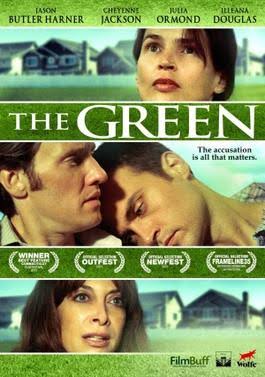
THE GREEN
US, 2011, 91 minutes, Colour.
Jason Butler Harner, Cheyenne Jackson, Chris Bert, Illeana Douglas, Karen Young, Julia Ormond, Bill Sage, Mark Blum
Directed by Steven Williford.
The Green is a strong drama about homophobia, issues of sexual abuse, legal issues, emotional issues, and public rush to judgement of guilty until proven innocent.
The central character is a teacher of long standing, retired from New York to Connecticut for a quiet life with his partner who runs a local restaurant. The teacher is sympathetic, intervenes when a student is bullied by other students, puts a hand of assurance on him and is then accused of harassment, the student upset, running away, the teacher then caught up in the case, complicated by his not revealing a story of a past relationship to his present partner.
Ileana Douglas portrays a sympathetic teacher struggling with health issues. Julia Ormond is the teacher’s lawyer, with tough moves for the procedure.
With revelations about sexual abuse in schools over several decades, the subject is relevant, issues of sexual orientation, abuse and exploitation, as well as false accusations and loss of reputation.
- The green, the greenery outside New York, a haven for peace? Yet the irony that it did not lead to peace?
- The Connecticut setting, the town, homes, home repairs, neighbours, the school, classes, corridors, theatre performances, the principal’s office? Atmosphere?
- The basic situation, Michael, teacher, aspiring novelist, stuck, moving from New York, the 15 years relationship with Dan, his work in the school, the support of the principal, the other teachers, Trish and Brenda? His years as a teacher? His concern about Jason, preoccupied, intervening, Jason and his surly reactions?
- Jason, bullied at school, the gay slur, his talent, the withdrawal of the scholarship, the principal, his moodiness at school, the bullying from the other boys, his mother and her alcoholism, reformed, Leo, as a father figure?
- Dan, sympathetic partner, life together with Michael, the many years, his managing the eatery, the customers, his waiter and forthrightness?
- The critical situation, Jason being bullied, the public event, Michael intervening, the physical touch, the reaction, his mother and her concern and doubts, Leo aggressive?
- The discussions with the principal, the police, the arrest? Ransacking the house, taking computers, the protest? Karen later returning his files?
- Michael, his reactions, hurt, angry, his outbursts, the discussions with Trish, the details of sequences of their friendship, her being a confidante, her own cancer issues, her husband and his being a lawyer, the relationship with the principal and his wife and her social standing? The clashes with Trish, her exasperation, his insensitivity?
- The story of the past, the sting, Michael’s later description to Karen, emotional memories, the arrest, the plea, social work? The fact that he had not told Dan who was in Paris? The tense consequence, Dan being hurt, moments of doubt, the clash, moving out?
- The police, interrogations of Trish and Brenda, the scenes in the common room, their friendship, the effect of the questions?
- The lawyer, out of his competence, the contact with Karen, her relationship with her partner, the children, the sympathetic listener, shrewd, supportive? The various strategies, her suggestions? The revelation of the secret of the past?
- Michael, depressed, people gossiping, the woman at the neighbouring window (and the touch of humour and lightness with the truth about her character and her sick husband)? The builder, his sympathy, his wife not wanting the company to be associated with Michael? The storm, the rain, Michael fear of heights, climbing, the covering, falling?
- Jason, his disappearance, working in the theatre, approaching Michael’s house, running away, the pursuit, at his home?
- The buildup to the confrontation of the truth, his mother and concern, Leo, the revelation about his molesting Jason and the effect on his being late for school, not doing well in studies?
- The gossips in the town, the waiter and his speaking out?
- Assumptions and, prejudice, homophobia?
- The theme of adult sexual abuse of and grooming of the young? The theme of innocence of the teacher and the consequences of accusations?
Truth/ 2006
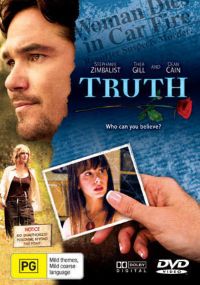
TRUTH
US, 2006, 87 minutes, Colour.
Stephanie Zimbalist, Thea Gill, Dean Cain, Spencer Rochford, Gary Chalk, Stephen Lobo, Michelle Harrison, Peter Hamlin, Dan Payne, Jovanna Bourke.
Directed by Timothy Bond.
The meaning of truth is spoken by each of the characters throughout the film. Truth is both objective and subjective.
This is a film made for television, a star vehicle for veteran Stephanie Zimbalist.
It is set in the world of journalism, authentic, gossip, and departments of journalism at colleges.
It is also a murder mystery, the search for the murderer, the assistance of the former professor, following the leads, clues, interviews – and a final twist and revelation of who actually is the murderer, the audience probably not expecting this.
- The title, as spoken of by each of the characters?
- Social concerns, environment, beliefs, fraud, cover-ups?
- A brief film, made for television, television audiences?
- Amelia, the opening, the interview with Carl, her interviews, information, the case, the car, the explosion, the death? The funeral, her husband’s grief, her daughter, Laura and the long friendship? Meredith present?
- Laura, gossip journalist, television, Inside Buzz, her age, character, not in a relationship, her assistant, getting the information, preparing the television program, Hollywood scandals? Her friendship with Amelia?
- Going to see Meredith, the tension in the past, inspiring them with ideals in journalism, her expose of the family, losing her job, teaching journalism in a small school? Resentments? Idealism?
- The process of the two women investigating Amelia’s case, getting documentation, Amelia and the shorthand that Laura could read, the situation, the building plan, Peter Bergson and his TV ads, the role of the sheriffs?
- The two women visiting the areas, the interviews, the neighbours, the widow of the dead deputy and her reluctance, the fan woman wanting to be on television (and their using her for the unmasking at the end)? The interview with the land dealer, his being a past Deputy, Christie working for Meredith, studying, idealism, joining in, going to the zoning meeting, getting the documentation and information?
- The dangers, cars in pursuit, the threats, the abduction of Christy?
- Laura, the interview with Peter Bergson, his suspicions?
- The detective, following Laura, initial clashes, eventual sharing of information, the attraction, working together?
- Meredith, her wanting financial compensation, the discussions with Bergson? So many people defrauded, the complicity?
- The final setup, the rescue of Christie, the hitman and his surrendering, the arrest of the land dealer, revelation of his motivations, everything filmed, Meredith arrested?
- A film for television audiences – and the romantic and happy ending after the revelation of fraud, violence and complicities.
Go to Blazes
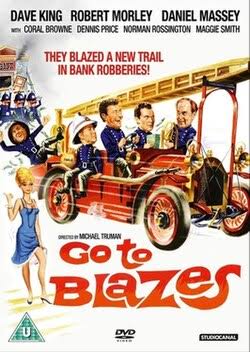
GO TO BLAZES
UK, 1962, 80 minutes, Colour.
Dave King, Robert Morley, Daniel Massey, Dennis Price, Coral Brown, Norman Rossington, Maggie Smith, Myles Malleson, Wilfred Lawson, David Lodge, Finlay Currie, James Hayter, Derek Nimmo, Hugh Lloyd, Arthur Lowe, John Le Mesurier.
Directed by Michael Truman.
Pleasantly light farcical comedy from the early 60s, very much of British comedy in the 1950s – and indicating the trend to greater farce, innuendo, with the style introduced by the Carry on series.
This is the story of a smash and grab trio, smashing the window of a jewellery store and grabbing, the getaway car – but, unfortunately, caught by the police at a roadblock. Jail time. Then the realisation that the best getaway that everybody stops for is a fire engine! So, jail, it again and examining fire engines (with an enthusiastic Miles Malleson), they find an old wreck, steal a good fire engine, inserting the wreck and setting the place ablaze.
Most of the film is about the attempt to smash and grab, the elegant Daniel Massey being prevented a number of times, the other two, Dave King and Norman Rossington, going round and round with their fire engine, caught by a rather idiotic Derek Nimmo because of the flood in his shop, their realising they need to do some training and finding a disgraced fire chief, Dennis Price, who will train them.
In the meantime, Daniel Massey has made a fool of himself fleeing and entering into a fashion show at a highbrow shop, managed by Coral Browne, and with a French consultant, Maggie Smith very early role (and, at one stage, the French accent dropping to a blimey English accent when surprised). And, the realisation that the fashion store is next to a bank. They consult an expert on fire insurance, setting fires, all kinds of skills – and, very enjoyably, played by Robert Morley in full bombast.
It almost works. But, in the escape, they are recognised by the two ladies and the initial policeman pursuing goes in chase, the firemen kindly stopping to help some little girls with their treehouse doll rescue, trees then on fire, the police – and, disaster because they had filled their water hose with all the bank notes from the robbery!
On their way back to jail, that pass the Queen and the Duke of Edinburgh and realise that this is a car that everybody stops for!
There are a lot of popular names from British films in the cast – but, for most of them, their appearances last only a minute or two!
Champagne Charlie
CHAMPAGNE CHARLIE
A, 1944, 75 minutes, Black-and-white.
Tommy Trinder, Stanley Holloway, Betty Warren, Jean Kent, Robert Wyndham, Guy Middleton, Austin Trevor.
Directed by Cavalcanti/Albert Cavalcanti.
Tommy Trinder was a popular entertainer, singer, especially on stage, radio and some films. Here he stars as a musical singer of the 1860s, George Leybourne, composer of a number of popular songs of the time, especially Champagne Charlie and The Daring Young Man on the Flying Trapeze.
This film appeared in 1944, during World War II, appealing to public spirit, the popular songs of the 19th century, the music halls – some morale boosting during the war. It was directed by the Brazilian born director, Albert Cavalcantiy, who moved to Europe, to England, working on documentaries and then a number of feature films including Dead of Night.
Featuring alongside Tommy Trinder is veteran singer Stanley Holloway (20 years before he immortalised Alfred Dolittle in My Fair Lady).
Trinder plays a miner coming to London with his brother who wants to become a fighter but whose lungs have prevented this because of his work in the mines. His brother, however, is a success as a singer, catching the eye of the manager of the theatre, Bessie, played by Betty Warren, who has an attractive young daughter, dancer, played by Jean Kent. She is being courted by a young upper-class gentleman.
The singer is persuaded to change his name to George Leybourne, success, Trinder bringing alive the songs (some of which written by screenwriters for the film, a range of songs emphasising different kinds of alcohol). He comes to the attention of a rival singer, well-established, played by Stanley Holloway. There is rivalry between them, especially in the range of songs on alcohol, each trying to better the other in performance and popular response. Ultimately, one challenges the other to a duel, neither prepared for it, doing some training with pistols, and a farcical encounter.
At the time, it would seem that the musicals were under threat from the theatres, complaints about drawing audiences away from theatre. The father of the young gentleman courting Bessie’s daughter is in charge of the commission – and, it is revealed that he was courting Bessie back in the past, his father intervening against lower class wedding, his now repeating it for his son. There are hearings about musicals with the two singers and Bessie giving evidence. Ultimately, the Lord comes to visit the theatre music hlal and is welcomed by everyone – and, happy ending all round.
George Leybourne’s song, Champagne Charlie was so popular that he was nicknamed with it.
A film from England’s past, the war years – but, for those interested in old-fashioned rollicking stories and, especially, the musical songs and the invitation to join in, a pleasing entertainment.
You, Always

YOU, ALWAYS
Australia, 2025, 93 minutes, Colour.
Adrian Grennier, Jessica De Gouw, Desmond Chiam, Aria Burton, Yasmin Kassim.
Directed by Christine Luby.
A romantic title. And, this is one of the many romances made by the Stephen Jaggi company, based in Queensland, Queensland locations, especially the Queensland coast and islands.
Something of a formula in many of the films, starting in the United States, the central female character, an occasion to move to Australia, misunderstandings, falling in love… But, in this case, the American character is male, already in Australia, no American sequences.
Adrian Grennier, having a working holiday in Australia, plays an American Australian, Ethan, who served in the American forces but who spent teenage years and high School in Australia and has now returned, inheriting a house left to him by his father. He works in marine rescue. His associate in marine rescue is a local doctor, played by Jessica De Gouw. Both are divorced, have known each other since teenage years, supported each other in divorces, he rather opting out of life, she with great hopes, and a special bond between her daughter and her longtime friend.
The title indicates how the film will end. But, of course, it is what happens in between. Jen is prone to read romantic novels (the samples from the screenplay written in very basic prose, not the greatest literature). And, then she encounters the author himself, up from Sydney looking for a local colour for his next novel. His played by Desmond Chiam, with some charm, Jen has various encounters with him, falling in love, romantic interludes including snorkelling in the Barrier Reef, some jealousies arising! Ethan rescues a young woman and she invites him out to a meal – leading to some highly embarrassing moments and misinterpretations of relationships.
It all works out more or less as expected, the plans for the move to Sydney and a new life, the author rather taking control of the marriage preparations (and then disappearing from the film completely). There are some cheerful minor characters, by and large comfortable life in North Queensland and, of course, the beaches, the mountains, the perfect setting for this kind of romance.
Love in Bloom

LOVE IN BLOOM
Australia, 2022, 83 minutes, Colour.
Susie Abromeit, Candice Hill, Julian Haig, Jason Wilder, Melina Vidler, Artin John, Monette Lee, Chanika Desilva, Stephen Tandy, Lin Yip.
Directed by Rogue Rubin.
Love and flowers, recipe for romantic comedies.
This film is from Stephen Jaggi, prolific producer of romance films, his company based in Queensland, and production, filming and postproduction in Queensland.
He was quite prolific in this kind of romantic comedy/drama in the first half of the 2020s. And this film could serve as a blueprint for the formula of many of them: open in the United States with a character in trouble, professional ambitions, difficulties with boyfriend, find an opportunity for her to go to Australia, be charmed by the surroundings, the friendly people, but misunderstandings with the man who turns out to be the handsome hero, working together, falling in love…
And this is what happens here. The young woman, floral expert, good business prospects in the US, boyfriend doctor who is caught up in his own ambitions. Her sister is in Australia, about to be married, but on a program with her fiance and their being stranded. Off to Australia, misunderstandings with the local vet, finding that he is her potential brother-in-law’s best friend, finding accommodation with the cosiest elderly couple seen on film, Mr and Mrs Poppy, their wonderful estate, the gardens, the range of flowers…
The heroine and the vet have to work together with all the planning for the wedding, she discovering inspiration with the local flowers, he gradually falling in love, encouraged by the cosy elderly couple, the arrival of the about to be a married couple, the wedding, the possibilities for the young woman to have success with an offer back in the United States, but, love not only blooms, it flourishes…
Les Musiciens/ The Musicians

LES MUSICIENS/ THE MUSICIANS
France, 2025, 102 minutes, Colour.
Valerie Donzelli, Frederic Pierrot, Mathieu Spinosi, Emma Ravier, Daniel Garlitsky, Marie Vialle, Nicolas Bridet, Valentin Pradier, Gregory Montel.
Directed by Gregory Magne.
“If music be the food of love, play on…”. Shakespeare’s ideal, but he did not write of a number of clashing musicians, egos, all the preparation, rehearsals, for presuming creating a pleasing food of love.
From its title, clearly a film for music lovers. And, especially for those who appreciate the qualities, sounds, emotions of a string quartet. There will be quite a lot all music, but the film takes us behind the scenes, the instruments, the musicians, composer, the entrepreneur producing a concert, the technicians…
The situation is that of French businessman with a passion for music has been tracking down a set of instruments made by the famous Antonio Stratton diary. Avoiding has emerged, the daughter of the businessman checking its authenticity, defying her brother and the company board in buying the instrument at auction. Instruments now available, two violins, Viola and shallow, she sets about recruiting for world-renowned musicians.
The plan is to have a concert televised, worldwide with multinational contracts, in a church with perfect acoustics that her father admired, and then planning a peace composed by the French composer, also admired. And, there is a week for assembling the musicians, setting up the church, rehearsals.
The musicians are, to say the least, very temperamental at times. There is the vein violinist, referencing himself always in conversation, talented, moody, difficult for the others to put up with despite his surface charm. By contrast, there is the young woman who plays the Viola, an innate talent, never having gone to a music school (which irks the others) and, young, is also an influence on social media, many followers, and even more self-pity is, wanting the vein violinist to participate and his consequent tantrums (though finally looking at some and brothers self-satisfied with what he sees). The other two musicians have been a couple in the past, she very talented with the cello, he, blind, taking an opportunity in the past to leave his partner and go to Vienna for greater success.
All the ingredients for clash, recriminations, memories of the past, taking stances, but eventually forming some kind of harmony – especially with the arrival of the composer, initially reluctant to come, but fascinated, sometimes delighted, offering advice, even mediating in the disputes.
Because this is a movie, the audience expects that the concert will be a success but, on the evidence throughout the film, this is not a foregone conclusion.
So, a drama of the tensions between music makers – but a film for music lovers.
- The Title, “.a string quartet?
- The French settings, board meeting, the mansion in the country, the grounds, the interiors? The church and its interior and acoustics? The countryside, cars travelling?
- The musical score, the range of classics? Stringed instruments? The special composition for performance?
- The background, the wealthy and obsessive father, his intentions in having the Stradivarius instruments, his patronage of Charlie Beaumont as a composer, his relationship with the singer and her death? His favouring Astrid? Giving the business to Arthur? His wanting to bring everything together in a concert, televised, worldwide audience?
- The expert, his examining the violin, approval? His being called in with the breaking of the violin, repairing it successfully?
- The ambition, six days building up to the day of the performance?
- Astrid, at the board meeting, making the plea for the Stradivarius, Arthur and his reaction, the board and the consent? The drama of the auction, the bidding, her success? The price?
- The gathering of the musicians, meeting, interacting, getting their consent? The two violins, the viola, the cello? Their expertise?
- The egos, the clash of personalities, George, vain, self-centred, his skills, interactions, Appoline, her followers, social media, the selfies, his anger, walking out, the composer bringing him back? The clash with Appoline and the breaking of the violin? Vanity about his appearance in the 70s? The walk in the woods, his falling, the injury, performing with his leg up? Audience sympathy or not?
- Appoline, age, not going to music school, influencer, her followers, the selfies, in the bikini, a 21st-century character, her musical skills in performance? Taunting George, the self-pity, the clash with him, the breaking of the violin, his special choice, sulking in her room, eventually emerging, feeling a victim to the professionalism of the of the three?
- Lise, the cello, her career, performances, skills, thinking George narcissistic and commenting, the relationship with Peter, their past working together, the relationship, her sense of betrayal at his leaving?
- Peter, his skills, personality, the relationship with Lise, memories of the past? And the fact that he was blind, people caring for him, guiding him?
- Astrid, the effect of the week on her, impatience, with her brother, finance, the contracts internationally, dealing with the egos, travelling to meet the composer, his refusal, his arriving? Trying to manage, facilitate? Seemingly impossible? The church, the acoustics? The final success?
- Arthur, business, the possibility of selling the four instruments and reclaiming the money? With his sister, clashes, agreement?
- Louis, helping, in the background, carrying the violin when it broke?
- Charlie Beaumont, his reputation, favoured by Astrid’s father, rather solitary, composing, Astrid’s visit, the refusal, changing his mind, the drive, hating the piece, 30 years previously, encountering the performance, commenting, criticism, suggestions, interacting with each of them? Driving to bring George back? His response to their working together, the popular song, transforming them all? The issue of the acoustics, the church, moving the stage?
- The technicians, setting the church, the priest and his presence, the issue of finance, the percentage for charity? The lights, the stage, the sound issues, the demand to move the stage? But their enjoying the final performance?
- The blend of the serious and comic? For music lovers? Especially those who love strings and quartets?
Being Bo Widerberg
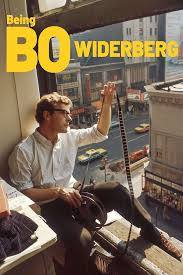
BEING BO WIDERBERG
Sweden, 2025, 105 minutes, Colour.
Directed by Jon Asp, Matias Nohrborg.
An interesting documentary on Swedish film director, Bo Widerberg, outstanding film directing career in the 1960s, his chequered career during the succeeding decades. He died in 1997.
There were two ways of being Bo Winterberg. There was his personal life. There was his professional life. This film gives strong emphasis to both aspects of his being.
Born in 1930, growing up in Malmo (which was significant for him in his early films), he was encouraged by his mother, intending to be a writer, spent time in Paris, producing a book and short stories. He then became interested in film, writing and commentary, eventually moving into directing.
The great advantages of this documentary is the amount of clips included from his significant films. With commentary about them from a variety of talking heads, especially Tommy Berrgren, the star of most of his significant films of the 1960s, with observations by significant European directors like Roy Andersson, Oliver Assayas, Lars von Trier, Mia Hansen-Love, as well as a number of the actors who appeared in his films, there is a great deal to appreciate.
Almost immediately, he was recognised internationally, especially at the Cannes film Festival. His goal the romantic and star, Pia Degermark, won the best actress award at Cannes 1967. His social history, Adalen 30, won the Grand Prize, his social history, Joe Hill, won the special jury prize, 1971. And he was nominated three times for an Academy award, Ravens Gate, 1964, Adalen 30, 1969, All Things Fair, 1997 – the latter winning an award at the Berlin Film Festival.
But, Bo Widerberg was a difficult man and experienced times of depression. While he was praised in the 1960s as a great Swedish director like Ingmar Bergman, the film reveals his way of being as a person and personality. There are his relationship with women, former wives and partners, difficult relationships with his children (who are interviewed for this film as well as ex-wives and partners). Which means then that we hear very personal comments about Widerberg. And, he was difficult with his cast, with technicians, his demands. But, there are happy sequences of him, especially in Cannes. A combination of his personality and work as a director is his attempt to make a film in Hollywood, his demands, falling out with the producers, having to complete the film, Joe Hill, in Sweden.
So, while audiences and critics and festivals admired his work, this film reminds us that many artists, many who have the touch of genius, could be erratic in their behaviour, sometimes disturbed personalities.
Bottoms Up
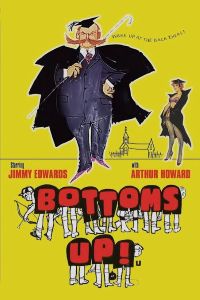
BOTTOMS UP
UK, 1960, 90 minutes, Black-and-white.
Jimmy Edwards, Arthur Howard, Martita Hunt, Sidney Tafler, Raymond Huntley, Reginald Beckwith, Melvyn Hayes, John Mitchell, Richard Briers.
Directed by Mario Zampi.
Bottoms up, especially for receiving a caning in old-style British schools!
Jimmy Edwards was a popular comedian on radio and television in the 1950s. He brings his schoolmaster character from those media to the big screen. Whether it appeals to later generations is a moot point.
And, looking back over the decades and attitudes towards discipline in schools, physical punishment, delivered by staff and other students, this comedy seems particularly old-fashioned. A past that is receding into long distance.
And, a critical look back at plot developments show a subplot concerning a Prince from a colonial country, blackface disguise, not accepted in later generations. And, the most mischievous of the boys is played by the son of a bishop.
The film could be seen as a male version of the popular St Trinians’ girls schools comedies, lots of misbehaving children, lots of frustrated staff, all kinds of slapstick comedy, all kinds of misadventures and plots, turning into a school battlefield and military strategies, humorous dialogue, lots play on words (those masters of English language in radio programs, Frank Muir and Dennis Norden, receive credits for the screenplay). And, some touches of innuendo – after all, this was the era when the Carry on series began.
Jimmy Edwards is huge, bluff, imposing, but also the victim of all kinds of pranks. The fall guy, so to speak, is his hapless assistant, so often the victim of pranks as well as their masters’ bullying, is played by Arthur Howard (brother of Leslie Howard). There is comedy with snobbery, especially with Martita Hunt (so memorable as Miss Havisham in Great Expectations) and the perennially rather snooty government official played by Raymond Huntley. Richard Briers, early in his career, is in the cast.
The film was directed by Italian born Mario Zampi who made a number of comedies in England, notably Laughter in Paradise with Alistair Sim and Too Many Crooks with Terry Thomas (and Carry on stars, Sid James and Bernard Bresslaw).
A curiosity item, broad British comedy in the 1950s and 1960s.
