Displaying items by tag: Peter Malones Movie Reviews
Tenor: My Name is Pati
TEN OR: MY NAME IS PATI
New Zealand, 2026, 103 minutes, Colour.
Pene Pati, Amitai Pati.
Directed by Rebecca Tansley.
The film opens with a very big man, singlet and shorts, working in a garden. Soon we see him and hear him, still very big, on stage, enthralling his audience with his clear and beautiful tenor voice. He is Pene Pati, Samoan, but moving with his family while still a boy, the oldest child, to Auckland and settling their, growing up there.
We are drawn into his story with more of his beautiful singing and then go back to family life in Samoa. Pene Pati will be well known to opera lovers but for those who are not familiar with opera, his story is something of a revelation, an enthusiastic young boy, strong-minded father and mother, getting their family to entertain with music the residents of an aged care home in Auckland, attending church, singing in the choir, playing football, chosen with a number of other young rugby players to become part of the chorus for a local production HMS Pinafore. He was also invited to help with a production of La Boheme, his first awareness of the impact of the emotion and joy of singing opera.
While the film traces Pene’s life and the gradual introduction to music, playing the piano, singing, teaming with his younger brother Amitai who also becomes an international opera tenor, joining with another friend, their cousin Moses, a baritone, to form a very entertaining singing and comic trio, Sole Mio, attracting the attention of producers, the world before him always his Samoan tradition of loyalty to family and always being open to helping others. (And throughout the film, commentary, serious and playful, from his parents and his sisters.)
Pene has had an extraordinary opera career, singing in Germany, San Francisco, at the New York Met… always good friends with his brother, brotherhood rather than rivalry, Amitai also part of the title of this film, also from the Pati family, and shown singing a range of opera pieces.
Pene is a very cheerful man, often commenting on his size, participating in this film, shown watching some of the footage, fascinated, laughing, amazed at what he has lived through. And, for opera lovers and beyond, there is a long sequence of his recording with one of the most vigorous conductors you might find, and orchestra, the familiar Nessun Dorma (and comparisons made with Pavarotti).
The many talking heads, quite international, provide helpful comments and insights about the two brothers and their singing.
Opera lovers, music lovers, will relish the experience of sharing the lives and careers of the Pati brothers – and audiences in general will enjoy this story from Samoa, to New Zealand, to the world. (The Wikipedia item on Pene is well worth looking at, a great deal of detail about his career, the many awards, the range of performances.)
- For opera lovers, for the general audience? A story of some of, migration to New Zealand, the life of Pacific Islanders in New Zealand, music, talent, the career of the two brothers?
- Audience knowledge of the Pati brothers? Their careers, reputations?
- The introduction to Pene, large man, in the garden, singing, the audience wanting to know more about him, Samoa to world opera?
- Life in Samoa, the beauty of the island, crowded home, church, the Sunday all in white and the celebration, adults, children, song, movement? The talking heads and explanations?
- The family, personalities and mother and father, loving their family, strict and disciplined, the decision to move to Auckland, acceptance of Pacific Islanders, criticisms, their hard work in jobs, roundups and deportations?
- The family, work, education, the comments of the parents throughout, the two sisters? The boys, school, opportunities for the piano, the singing, rugby, the players for the chorus for HMS Pinafore, the effect on Pene? Introduction to a world of music?
- The two brothers and the friendship with Moses, the baritone, personalities, singing together, forming the group, the songs and their range, popular, the cloning, the trio, Sole Mio, the performances, to raise money, the entrepreneurs, promotion, the many concerts, the response of the audiences?
- Pene studying in Cardiff, the possibilities for his friends, his staying with the group, finding the money, scholarships for the group, his friends and brother, his wife – and the sequences with her, the difficulties of travel and separation?
- The range of talking heads, producers, entrepreneurs, conductors, giving the background of Pene’s career and opportunities?
- Pene and his success, accepted in the music schools, given leading roles, Rigoletto, La Traviata, his performance in Romeo and Juliet, covid and his having to step in at a moment’s notice and his success? Holding the high notes? The selection of pieces for this film, the recording of Nessun Dorma?
- Amitai, member of the Pati family, his background, genial personality, interviews, relationship with his brother, opportunities, performances, Berlin and the trouble with his voice, the announcement that he might have difficult notes, his success?
- The finale, San Francisco, the family arriving, Pene and his joy, their presence, his performance?
Saccharine
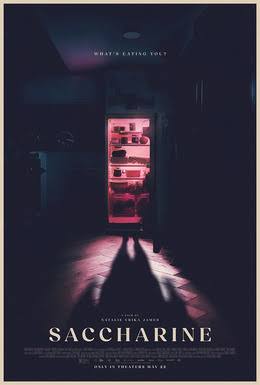
SACCHARINE
Australia, 2026, 113 minutes, Colour.
Midori Francis, Danielle Macdonald, Madeleine Madden, Showko Showfukutei, Robert Taylor.
Directed by Natalie Erika James.
Saccharine is an adjective used to describe something that is overly or sickishly sweet. It typically refers to flavors, but it is most often used to criticize things like a person's demeanor, a voice, or a story as being excessively sentimental, cloying, or insincere. (Google definition)
all
The first 30 minutes of this drama which combines realistic themes with horror hallucinations and ghostly presences… treats its theme of eating problems and consequences in grim but realistic style. Hana is a young medical student, involved with a friendly group of fellow students in autopsy training. But, at home, she keeps on gorging, preoccupied, but attracted by Alanya who runs a 12 week exercise weight reduction course. And then joins up and there are many scenes of her dedication to the exercise and receiving affirmation. And then she meets a friend from school, overweight in the past, but recommending a course of tablets which reduces weight abnormally quickly.
So, on the level of realism, the film is a serious look at body image problems for women, weight and loss, the role of exercise, the role of medication, especially suspicious tablets, the repercussions on the psyche of the overweight woman, the pressure of her caring and fussy slim Asian mother, the background of her obese Australian father.
But the film does not stay on the realistic level. It uses elements of horror, especially body horror (remembering the impact of the recent The Substance), the presence of the obese dead woman who has donated her body for study purposes, but more and more mysteriously present to Hana, trying to persuade her best friend to see this presence, nightmares with the obese body descending on her…
And a lot of emotional consequences, the ghost pressing her to eat more and more, the strange tablets and their contents, rapid weight loss, interactions with the manager of the course, sexual attraction, psychological distortions, some of the sequences not for the cinema fainthearted.
This is very much a female-oriented film, the writer-director and producers and many of the technical staff female. And while the title is saccharine and its overtones of sickly sweet (as is so much of the food that Hana devours), it is the theme of devouring that pervades all of Hana’s life – and a grimly graphic devouring conclusion to the film.
- The meaning and application of the title? Sickly sweet? The surface personality of Hana? Food, confectionery, being sickly sweet?
- An Australian film, the success of small-budget Australian horror films in the 2020s? Sense of menace, a visual horror?
- Themes of body-horror, films of the 2020s?
- The Australian setting, a universal setting, universal themes?
- Preoccupation with health, body image, weight and weight loss, hunger and devouring food, physical implications, mental implications?
- The opening realism for Hana, her body, weight, self-consciousness, eating? Her ethnic heritage, her thin Asian mother, continually fussing and cleaning, the contrast with her obese father, the audience not seeing him till later?
- Hana, living alone, medical student, the range of students, her friends, the laboratory, the autopsies, close-ups of the process?
- Josie has her friend, Josie’s attitude, conversations, advice, concern?
- The encounter with Alanya, attractive, persuasive, the 12 weeks course, Alanaya and her body image, Hana agreeing, the exercise regime, measuring her weight on the chart, the exertion, losing some weight? The attraction to Alanya?
- The encounter with a friend from school, not immediately recognising her, the photo of her past, weight, the new image, discussion about the pills, giving her the pills, taunting, the decision to take one, the range of pills, a drastic loss of weight, charting it, and the contrast with her eating even more, greed, at the shops, taking home the food, the confectionery? Her mother’s arrival and criticisms? The mother leaving?
- Taking the the autopsy, crashing and making them pools of ash by herself?
- The sense of another presence, the transition from the film’s realism to horror tropes? Seeing the reflection of the obese ghost in the back of spoons? Mirrors?
- The obese woman, donation of her body for research, vast size, the close-ups of her corpse, the autopsy? Hana going to see the sister, the encouragement, good comments about the dead woman?
- Trying to get Josie to have a sense of the ghostly presence, failing? The nightmare, the vast corpse descending on her?
- Hana upset, losing weight, but the mystery of how? The visit to her father, antagonism? Nightmares? The sense of the ghostly presence? Devouring more and more food?
- The confrontation with Alanya, the reconciliation, the sexual encounter and the consequences?
- Josie helping, the scenes of the autopsy, the meals together, Hana at home, more and more food?
- The graphic conclusion, the confrontation with Alanya, Hana devouring her?
Enola Holmes 3

ENOLA HOLMES 3
UK, 2026, 105 minutes, Colour.
Millie Bobby Brown, Henry Cavill, Helena Bonham Carter, Billy Partridge, Himesh Patel, Sharon Duncan-Brewster, Hattie Morahan, Susan Wikoma, Joe Azzopardi.
Directed by Philip Barantini.
Enola Homes is the sister of Sherlock and Mycroft, the creation of Nancy Springer in a series of popular novels. This is the third of the books to be filmed. It presupposes most of the central characters and the cast return for this version. Millie Bobby Brown is lively and older. Henry Cavill returns as a sombre Sherlock. And, there is the creation of their mother character, a rebel, explosives, demonstrations, somewhat alienated from her family, Helena Bonham Carter enjoying the role.
The marriage is to take place in Malta, most of the action there, Malta and British occupation (and with some sequences railing against British colonialism) and some complications with the military and justice.
Enola (alone spelt backwards) the talks to camera and explains that the good film starts with a wedding – but, she hesitates, his pursued by Dr Watson with the news that Sherlock has been kidnapped. She is committed to finding her brother, using his methods to deduce what has happened to him.
She is in love with the Duke of Tewkesbury, played again by Louis Partridge. Then his mother is also abducted and there is intense deliberation to discover what has happened to Sherlock.
At the beginning, the audience has been introduced to a plot focusing on Tewkesbury, and Moriarty, now a female villain played by Sharon Duncan Brewster, pursues Sherlock and takes him.
Sherlock does leave a clue on the mirror, the name of the Afghan town,Khost. So, questions about Afghanistan, the role of Tewkesbury’s father, Afghan soldiers, payment, doubledealing, cover-ups…
Which all leads to various adventures, and Enola going into action, exposes, confrontation with Moriarty – and happy ending and the possibility for a fourth episode.
- The popularity of the series? Sherlock Holmes sister? Comparisons with Sherlock? Her skill as a detective?
- The British settings, the action taking place in Malta, the vistas of Malta, landscapes, the cities? The musical score?
- Enola, her age, from the previous films, relationship with Sherlock, comparisons, her relationship with her mother, eccentricities? Seeing her at work as a detective, using Sherlock’s methods? Her commentary throughout the film, looking to camera?
- The opening, a wedding, Tewksbury at the altar, the congregation, no bride, her decision-making, getting into the carriage, pursued, Dr Watson, the news of Sherlock’s abduction? Her becoming involved, leaving Tewksbury at the altar?
- The character of Sherlock, his reputation, his letters, logical, not emotional, the interactions with Enola, with Dr Watson, Watson reminiscing about the relationship, the Team, his diaries? Knowing in advance, the past with Moriarty, at the dinner in Malta, seeing the soldiers, pursuing him, disappearance?
- The prologue, England, Moriarty in jail, being freed, the name Tewksbury, her mission, the implication of the British officers in Malta?
- Enola, her pursuit of the soldier, his being killed, the local police, the interrogation, the British officials intervening, her freedom? Her pursuit of the woman, the warning, the woman killed? Her looking for clues after Tewksbury’s mother was kidnapped, finding the medals? Using Sherlock’s methods, reflections?
- The local revolutionary, following Enola, the confrontations and fight, his motivations, against the colonialism of the British, and seeing the colonialism in action?
- Tewksbury, the past stories, relationship with Enola, the scenes of proposal, her acceptance, the bond between them, the swimming sequence? His mother’s abduction? Working with Enola? Dr Watson and his collaboration?
- The arrival of Eudoria, her personality, and dominance, with her daughter, the wedding, her reputation explosions, collaborating with the investigation, going to the headquarters, wanting the documents, the attack on the soldier, the search, finding information about Afghanistan, the gold, the stealing? Sherlock and his clues, writing the name Khost?
- Moriarty, the past with Sherlock, vengeance, her plan, the commission from the British, her setting up all the clues, luring Enola along the way, her vengeance and killing her agents the abduction of Tewksbury’s mother, the scenes in the cell, the water, interrogation, pouring out the water?
- Tewksbury, the explanation of the cave, Enola working out where the gold was, finding it?
- The buildup to the final confrontation, her putting the gun on Moriarty, Moriarty and the explosives, the local soldiers, then Moriarty’s squad, the shootout?
- The release of the mother, the expose of the officials, the gold the betrayal, the hiding, the discovery, the exposure of the British? Tewksbury and his disappointment with his father?
- Enola, whether she should become lady Tewksbury or not, the class issues, the jokes about class, Enola and the discussions with Tewksbury, his giving up his title?
- An enjoyable Holmes adventure, Sherlock, Enola, Moriarty? And the future?
Good Boy, The/ 2026
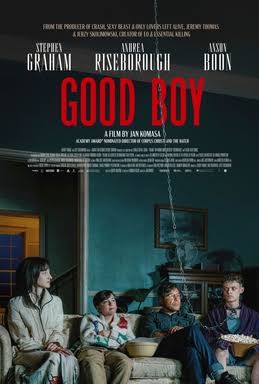
THE GOOD BOY
Poland/UK, 2025, 110 minutes, Colour.
Stephen Graham, Andrea Riseborough, Anson Boon, Kit Rakusen, Monika Frajczyk, Savannah Steyn.
Directed by Jan Komosa.
Quite an unexpected plot, disturbing and challenging, peace.
The film opens with an extended prologue showing Tommy, a young man out on the town any Yorkshire town, on the loose, no respect for anyone, allowed in crowded nightclub, music and dancing, drinking, drugs, sex, dominating his friends, violence on the streets, his eventual collapse.
Audiences will have strong opinions about young people acting like this and their seemingly reckless waste of life and time, the violent and criminal aspects, and wondering about the risks, punishment, jail time…
This is a Polish coproduction with screen Yorkshire, writing by a Polish and British team, the narrative and acting British, the technical aspects of the film, Polish.
Eventually Tommy wakes up, He finds himself in the basement of a country house, chained, bewildered and angry. Which is where the audience will start to ask questions about how to deal with this kind of young man. Actually, where he is, is the home of a couple and their young son. It quickly emerges that they have taken Tommy, not exactly to punish him but to make him aware of what he is, of what is done, the issue of rehabilitation. The audience is wondering about the motivations of the couple, the sometimes kindly, sometimes severe manner of the father, Chris (Stephen Graham) and his seemingly depressed wife (Andrea Riseborough) and the continued cheerfulness and good manners of the young son, John (Kit Rakusen). Is what the couple doing right, their motivation, a back story, issues of survival and punishment, making Tommy look at social media clips of his drunken sprees violence, his terrorising a young schoolboy?
And what will be the ultimate effect on Tommy, greater self-awareness, change in attitude, or continued bitterness and resentment? It does raise all the questions about how to treat young adult offenders, the role of prison, possibilities for rehabilitation.
And it will depend on how much the audience identifies with Tommy and how much with the husband and wife. And how the film clarifies or confuses their attitude towards methods of rehabilitation.
The film is very well acted, a complication when the couple employ a Macedonian housekeeper who is being pursued by exploitive people smugglers, and Anson Boon so effective as Tommy being seen in the various stages that he goes through, stuck in his old self, the possibilities for a better self.
- The title? The alternate title, Heel, the chain for a dog? the irony of the original title? For Tommy? To become a good boy? Jonathan as the good boy, “sunshine”?
- Polish/Yorkshire co-production? The writers, technical, Polish? British cast, locations? Universal themes?
- The prologue, Tommy, age 19, on the town, his friends, the club, music and noise, drugs, drinking, sex, violence, harassing the schoolboy flashback, his collapse in the street? His girlfriend, her not participating the drugs, her love for Tommy?
- The contrast with the country house, the grounds, interiors, Chris and Catherine, his past with the police, her grief and withdrawal, Jonathan, his age, sunshine, the good boy? The life? The background of the death of the son, his room, the memories of grief?
- The revelation of Tommy in the basement, chained, his condition, abducted? The personality of Chris, the fatherly touch, the do-gooding, talking with Tommy, the explanations, the reprimands, the morality and moralising, the videos, sequences on social media and their influence, the records of Tommy’s misbehaviour, his promoting it on social media? His reactions, Chris beating him? Conditions, the bed, food and drink?
- Kathryn, her personality, withdrawal, secluded life, the encounters with Tommy, supporting her husband, her becoming more alive?
- Jonathan, his age, with his parents, their affirmation, the encounters with Tommy, the cards, talking with him? Big Brother?
- The effect on Tommy, audience reaction to him, to the early behaviour, belief in punishment, belief in rehabilitation, Chris and his methods, the offer of the books, The Illustrated Man and the tattoos To Kill a Mockingbird…? His resentment, reactions, limitations of movement in the basement?
- The gradual change, Tommy more amenable, Chris and the conversations, letting him out of the basement, the fixing up of the roof and the ability for the chain, his greater movement, freedom in the house, meals, music, his ambiguous reactions?
- The change in the household, the freedom of movement, its effect on Tommy, the drive, the chloroform, the picnic in the countryside, returning him home? Tommy and his interactions with the family, more at home?
- Tom and his shrewdness, the numbers for the code, the implement for the chain? The quiet, his escape, the family reactions?
- Tommy, the return home, his mother, reception, going to the club, watching behaviour, his girlfriend and her succumbing to the drugs? His taking her, leaving, leaving his mother at home?
- The chloroform, taking his girlfriend, the car, burning the car, going up the drive, the family receiving him? His new family, the rehabilitation of his girlfriend? The future?
Colors of Evil: Black
COLORS OF EVIL: BLACK
Poland, 2026, 110 minutes, Colour.
Jakub Gierszal, Marianna Zydek, Andrzej Chyra, Adam Bobik, Piotr Zurawski.
Directed by Adrian Panek.
Colors of Evil: Red was the first in a series of crime thrillers, police investigations. It introduced the prosecutor, Blisko, who solved but was something innocent a thorn in the side of the authorities. And, this will happen at the end of this film.
The prosecutor is in the Polish countryside, little to do, but investigating the case of a missing boy, two years earlier, whose very busy mother claiming that he is with cousins in Belgium, but this being proven untrue. The audience has seen the little boy on the road getting into a car and driven away, then a mysterious figure sawing his head off in the forest and burying him with a ritual, the severed head between the legs – echoes of local vampire mythology.
An author comes back to her hometown for research after being away for 20 years, bringing her young son who is abducted during a fair. This leads to the uncovering of sexual abuse of young boys and girls 20 years earlier, three middle-aged men who are investigated, earlier victims, one the son of the church organist.
A local businessman becomes a suspect but it emerges, not a spoiler, that it is his dead father who was the abuser, taking photographs of his victims. There is consultation with the local priest who says there was no abuse in his parish even though there was in other areas of Poland. He helps the prosecutor identify the children in the photos.
There are some twists in the plot, the revelations and a final confrontation with the man who had abducted the young boy – and the recovery of the author’s missing son.
A very well-made Polish thriller – and hoping for the third film in the series.
- The second in the series, Prosecutor Blisko, crime, police investigations, complex characters?
- Setting, town, police headquarters, homes, the forests countryside, the church? Musical score?
- The background of Prosecutor Blisko, previous case, criticisms, transfer, demoted? Family background, ex-wife, young daughter, her coming to visit, enjoying her company, giving more attention to his case? His wife taking her home?
- Settling in, the lack of cases, the police superiors, the young assistant? Background of the disappearance of the young boy, the audience seeing him walking, getting into the car with a stranger, buried in the forest, his head removed? Blisko and his friend with all the details of the past cases? The dossier on this case missing?
- Meeting Julia, her son, returning for research or her book, her reputation, 20 years away from the town, the death of her young sister, alienation from her mother, her mother the mayor? At the fair, her mother speaking, her son disappearing? Anguish, the search, everybody out searching the forests? No sign? Her upset, going to her mother’s house, the confrontation between the two?
- Investigating the boy disappeared, his mother, the many children, information that he was with cousins in Belgium, the mother and response to the police? Further investigations, no cousins?
- Julia, memories, her sister, molested, suicide? The young boys, the organist and 40 years, digging the graves? The three men as victims, Patryck, his approach to Julia, her rejection, his affair with her mother? Arek, son of the organist, his disabilities, helping his father, his disfigurement, the children turning on him at school? Michal, son of the police chief, his mother and the restaurant? His reaction to the story of Julia’s son’s birth and later suspicions?
- The photos, the role of the priest, his comments about sex abuse in Poland, in parishes, not in his, his memory, identifying the children in the photos? The interrogation of each of the men, their stories, not identifying the young woman?
- The role of the police, the police chief not knowing about his son, the son confiding in his mother, opening the restaurant? The later revelations about covering for the offender?
- The references to the meat company, the CEO, interrogation, search, his father’s photos?
- The flashbacks to the little boy, reading the book about the myths of the vampires, his mother, the businessman, encouraging him to read? The influence on the boy, his growing up, his abducting Julia’s son? (And initial suspicions on Michal and his cellar?)
- The climax, going into the woods, the son hooded, the shooting of the offender?
- The aftermath, Julia and her relief, her mother, the truth about the police chiefs and the documents, covering for the businessman, his philanthropy, financing the church, financing Arek and his surgery, the the philanthropy – yet his being the abuser?
- The impact on Blisko, his going to see Julia…?
Alfie Darling
ALFIE DARLING
Kay, 1975, 102 days, Colour.
Alan Price, Jill Townsend, Paul Copley, Joan Collins, Annie Ross.
Directed by Ken Hughes.
Michael Caine made a big impression in 1966 in his role as Alfie. (Remade in 2004 starring Jude law.) This sequel in the middle of the 1970s style was not successful. It was written by Bill Naughton, writer of the original story (and Spring and Port Wine, The Family Way). Adaptation for the screen is by the director, Ken Hughes (Chitty Chitty Bang Bang, Cromwell).
Alfie is a truck driver, working with his partner, played by Paul Copley. A lot of the film shows trucks driving round France and the UK, and a lot of car driving as well. He is the self-confident young man, with a girl in every port. That seems to be is only aim in life.
He encounters a woman who takes his fancy, who drives faster than he, turns out to be a magazine executive. He continues to pursue her, beginning a relationship with her, eventually proposing and her being taken aback, his pride being hurt. She gives some thought to the matter and eventually agrees – and the film opts out with an unsatisfactory ending, her dying in crash.
While the film presents the picture of the promiscuous young man, his cavalier attitude towards women with a touch of the misogynists, seeing them as some kind of an immediately conquered, there is also a lot of dialogue, especially on the part of the women, criticising his attitudes, suggesting that sex does not equal love… It is interesting to note these parts of the dialogue in terms of feminism and women’s movements at the time.
Musician-composer, Alan Price (O Lucky Man) offers a straightforward performance, not particularly nuanced in terms of the challenges made by the women in his life. He has a relationship with an older married woman played by Joan Collins.
There was a series in the UK in the 1970s, Confessions of… This film follows something of the pattern for a Confessions of a Truck Driver.
Reptile, The
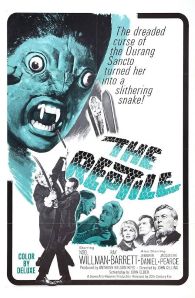
THE REPTILE
UK, 1966, 90 minutes, Colour.
Noel Willman, Jennifer Daniel, Ray Barrett, Jacqueline Pearce, Michael Ripper, John Laurie, Marne Maitland, Charles Lloyd Pack, George Woodbridge.
Directed by John Gilling.
A film from Hammer studios in the middle of the 1960s, after establishing a reputation with the horror films of Dracula and Frankenstein. They became more elaborate in the 1960s, more violence, sexuality – and an increase both ingredients in the late 1960s into the 1970s.
In comparison, this film is very mild, some violence, but an atmosphere of menace and mystery, some attacks, a sinister, vast reptile, victims, a mysterious doctor of theology who has been exploring mythologies in Borneo, his sinister Malay servant. By contrast, there is a former Grenadier Guard retiring with his wife to the country home of his brother who has been killed by the mysterious reptile.
Australian Ray Barrett plays the central character, moving back to Australia and films in the 1980s. Noel Willman creates an atmosphere as the mysterious doctor. Martin Maitland is suitably sinister as the Malay servant. And Michael Ripper, who has a record of appearing in more horror and hammer films than any other actor, has a more sympathetic role as the innkeeper.
Memories of Hammer films.
- Hammer film of the mid-1960s? Horror? Menace?
- The setting, the British countryside, ordinary homes, the mansions, laboratories and basements, the local pub, the cemetery? Atmosphere? The musical score?
- The title, the mythologies, from Malaya and Borneo, serpents, individuals, murderous power, control?
- The opening, Charles Spalding, pursued, killed? Dr Franklin and his presence? The Malay present? The puncture in the neck, the skin?
- The village, the men in the pub, Tom and is running the pub, his navy background, wary, friendly to Harry and to Valerie? His suspicions, coming to the assistance of the couple?
- In the cemetery, of the burial, the Vicar and his business like praying and departing? The later visit to the cemetery, digging up mad Peter’s body, digging up Charles Spalding? Harry and Tom working together?
- Harry and Valerie, war service, inheriting, the solicitor, the train to the village, no one to make them, Harry going to the pub, the men all walking out? Tom offering the drink? Going to the house, settling in?
- The encounter with Dr Franklin, Dr of theology, his background, travels, his daughter, his problems with her, refusing to help Mad Peter, the invitation to the meal, punishment of his daughter, the Malaise serving, the discussions?
- The daughter, suddenly arriving, her charming presence, the flowers, her sudden departure, the menace of The Malay? Her father in control? The revelation of what happened, her being possessed, becoming the reptile? The need for her to be released?
- Harry, the puncture, his escape? Tom helping? Recuperation? Valerie going to the house, looking for the daughter? The encounter with Dr Franklin, locked in the room, the basement of the Serpent, the revelations?
- Harry and Tom to the rescue, the confrontation between Dr Franks in the Malay, the Malay and his death? Tom and Harry, breaking into the house, Dr Franklin’s death?
- The resolution of the mystery, hope for the future?
Thieves Highway/ 2025
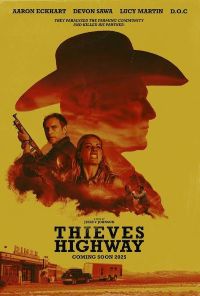
THIEVES’ HIGHWAY
US, 2025, 83 minutes, Colour.
Aaron Eckhart, Devon Sawa, Lochlyn Munro.
Directed by Jesse V. Johnson.
Contemporary Western about cattle rustling. The director, Jesse V. Johnson, has made a number of action films, especially with Scott Adkins. His film prior to this one also starred Aaron Eckhart, Chief of Station.
Aaron Eckhart plays a tough lawman, taking stock of the local situation, the complaints about cattle disappearing, a lot of detail about farmers and their predicaments and a certain helplessness in stopping the rustling. He is assisted by a local officer, a family man, played by Lochlyn Munro, who is killed by the rustlers. The brains behind the enterprise, the villain, is played by Devon Sawa.
The focus is on the cattle, the method used to steal, to disguise, to pass off the cattle on the trucks as legitimate, making for the Mexican border.
There are quite a number of rustlers involved, young and old, in fear of the boss, in dangerous predicaments and wounded, confronted by the authorities.
Aaron Eckhart’s character is stern, within the law, but very much a vigilante attitude towards the criminals, culminating in quite a number of confrontations, violent deaths, and the challenge of the chief criminal and the lawman seemingly in the situation of defeat.
For fans of small dramas, Western settings, aspects of the old Western in a film of 2025.
In Youth We Trust
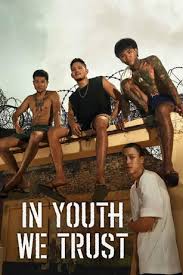
IN YOUTH WE TRUST
Thailand, 2024, 132 minutes, Colour.
Pae Arak Amornsupssiri, Nat Kiotcharit, Todsapol Maisuk.
Directed by Putthipong Naktong.
In medicines have been very popular over many decades, many of the American 30s films focusing on risks, rivalries in prisons, possibilities for rehabilitation, death penalty, chaplains…
Here is a 21st-century version of these films about prisons, especially young offenders (some likening it to the British film, Alan Clarke’s). Life in prison is brutal, the initial loners, put upon, the gangs, leadership, rivalries, violence – and so many of the staff singing indifferent to the fate of the prisoners.
This film focuses on the young man, hope for an education, his mother selling drugs, arrested and imprisoned, his eventually snapping and killing someone, finding himself in prison. And the expected pattern of treatment by the guards, gangs, bashings, all take place.
In fact, there is quite a variety of prisoners, gang leaders, brutal leaders, a young gay prisoner who relies on the central character for some kind of protection, the film showing prisoners who seem to no sense of morality or remorse, others who have potential but it will not be fulfilled in prisons.
The drama, there are several flashbacks to the central characters line, some black and white, building up to his breaking and his imprisonment.
Not a film great hope for prison regimes, prisoners rights, the continuing of the system.
- The title, youth in Thailand, from disparate neighbourhoods, drugs, violence and crime, prison? Gangs in prisons? Rehabilitation or not?
- The setting in the town, family life, the mother selling drugs, her son’s reaction, at school, the other children, his mother’s reputation, the young girl friendly and supporting him? The drama of this kind of life and its influence on the son?
- Growing up, the boy a young man, not wanting money from his mother, resentment about her reputation, the taunts, the mockery, his killing the man who taunted him?
- His age, arrest, imprisonment? The violent treatment? Travelling to the prison with the gay prisoner? The arrival, brutal treatment, the inhumanity of the warden?
- The number of prisoners, the poor conditions, the two spaces in the number in each, sleeping conditions, washing conditions, meals? The yard and exercise?
- The two groups, the leaders, their characters and personalities, influence, the vast majority followers, accepting any attitudes and behaviour from their leaders?
- Puek, the violent treatment, assaulted and kicked? The treatment of the gay prisoner, the sexual violence, exploitation, his character, fears, the flashbacks and his memories of earlier treatment? Puek, sympathetic, unable to help? The gangs setting up the gay prisoner to be violent against Puek?
- The leadership of the unsympathetic gang, Alice attitudes, violence, sexual exploitation?
- The leadership of the sympathetic gang, the leader and his back story after his father’s visit to the prison, his friend and henchman? Taking on Puek as a friend?
- The politics of the prison, the guards, treatment of the prisoners, reinforced in the violent way of life?
- The final violence to the gay prisoner?
- Puek, his taking a stand, with the leaders of the sympathetic gang?
- The buildup to the final confrontation, the two sides massing against each other in the yard, the fight, the violence? Puek and his injuries, the fight with the leaders and their deaths? The death of the sympathetic leader?
- The visits to the prison, the girl grown-up, coming to visit, the news of his mother’s death, her not wanting to visit anymore, his outreach to her and love?
- The final scenes with the warden, more sympathetic than before? The question of whether this way of life would continue in the prisons? Puek moved to a better prison?
- The film as an indictment of this kind of treatment of Thailand’s young men, brutality, the need for rehabilitation?
Freaky Tales
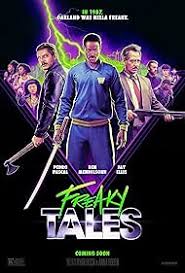
FREAKY TALES
US, 2024, 107 minutes, Colour.
Pedro Pascal, Jay Ellis, Ben Mendelssohn, Normani, Dominique Thorne, Jack Champion, Angus Cloud, Keir Gilchrist, Too #hort, Tom Hanks.
Directed by Anna Boden, Ryan Fleck.
Writing-directing team Anna Boden and Ryan Fleck has produced a number of interesting films like Half Nelson, Sugar in the 2000s and then great commercial success in 2019 with Captain Marvel. Worked extensively on television.
There are four freaky tales in this film and have been described as Tarantino-esque which indicates the topics, themes, treatment. The setting is 1987 and Ryan Fleck has gone on his memories of the period, Oakland California, the Grand Lake cinema, the background of rap musicians, video stores, racist conflicts…
American audiences will better appreciate this film than international audiences because of the detail, the focus in on particular rap artists, Sleepy Floyd, Too #hort, actors playing them and then their playing themselves… There are some top actors in the film, Pedro Pascal in the longest and most serious of the four, Ben Mendelssohn as a policeman. And, something of a spoiler, an appearance by Tom Hanks in the video store.
For audiences wanting something different about American life, especially the atmosphere of the 1980s, Freaky Tales is intriguing, sometimes disturbing, always interesting.
- The title and expectations? A warning?
- 1987, Oakland, California, Evergreen Catholic Theatre, the clubs, the streets, speeches battlegrounds? Diners, clubs and rap? The criminal world, the police world, corruption? The world of the basketball league, players? The director, Ryan Fleck, growing up in this world, drawing on his memories?
- The musical background, the clubs of the young people playing, breakdancing?
- The four stories, the interconnections, an overall portrait of Oakland?
- The first story, Lucid and his girlfriend, at the cinema, the movie references throughout, especially of the video store and Hank and his discussions with Clint? The young people, the club, the mixed races, the appearance of the Nazi group, the attack, the brutality? The meeting at the club, the votes hiring the police, or defending? The vote for defence? The elaborate weapons, the arrival, the attack, the comic book images of the fight and splatter? Victory? The antiracist stances?
- The background of the greenlight, the special power, the manifestations in the eyes, in the weapons, in the attack? And throughout the film? And suggestions of inner power and the ability to overcome – especially for sleepy Floyd?
- The second story, the two girls, in the bar, the arrival of the policeman, his manner, interrogation, the ice cream, bubblegum, his credits? The women and their resistance and hostility? The other customers? In the bus, their discussions, in the club, the host, inviting on stage, the misogynist lab, the response, the response of the crowds?
- The different the third story, Clint, with his pregnant wife, the phone call, the news of the murders, going back 24 hours, his life waiting car, his going to the video shop, Tom Hanks’s Hank, the discussion, going behind the scenes, the cards, the confrontation, the debt issues, Clint and his last stand, breaking the man’s finger, coming out, taking Sid and Nancy for his wife? The confrontation with the young man, his glint, the flashbacks, Clint killing his father, the guns, the shooting, while going to hospital, the arrest of the man? The encounter with the go-between, the further demands, the news of the baby survival, the police chief, taking Clint, holding him and the baby?
- The fourth story, an actual event reimagined, the police chief and the Nazis and his son, getting the information about the players, what was in their homes, the planning of the robberies while they were playing, the crowds arriving, the characters from the previous stories? The game, sleepy Floyd and his achievement? His mother, girlfriend, the attacks on the houses, the details of the robberies? Lucid his giving the information to sleepy Floyd?
- Floyd, Green light, his inner meditation, donning the costume, the weapons, the Tarantinoesque massacres? The confrontation with the police chief, with Clinton the baby, the explosion?
- The henchmen arriving at the house, finding sleepy Floyd, the final deaths?
- Clint, the baby and leaving?
- The postscript, sleepy Floyd and his system, inner strength, Superman, the gathering of all the people, the photo?
- Weird freaky stories and the weird freaky styles of storytelling?
