Displaying items by tag: Christian Convery
Frankenstein/ 2025
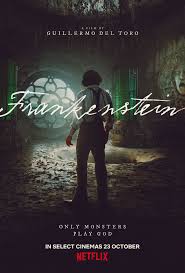
FRANKENSTEIN
US, 2025, 150 minutes, Colour.
Oscar Isaac, Jacob Elordi, Christophe Waltz, Mia Goth, Felix Kammerer, Charles Dance, David Bradley, Lars Mikkelson, Christian Convery, Burn Gorman, Ralph Ineson.
Directed by Gullermo del Toro.
Mexican director, Guillermo del Toro, has had a long fascination with imagination and fantasy, the celebrated Pan’s Labyrinth, and popular action with Blade, Hellboy, Pinocchio. So, what will he choose to do with Frankenstein?
This is very much an all stops out interpretation of Mary Shelley’s classic novel, its narrative, its characters, its explorations of themes of life and death, human arrogance, playing God, playing the devil. Since Boris Karloff played the creature in the 1930s, there have been very many Frankenstein films, and Hammer Studios thrillers, Kenneth Branagh’s 1994 spectacle…
Here is an epic treatment, the Gothic traditions, running for 2 ½ hours.
The familiar elements are all here, the opening in the Arctic with Frankenstein and the monster stranded, the rescue, Victor Frankenstein narrating his story wanting some kind of healing and forgiveness, the background of the Frankenstein family, demanding father, Victor and his scientific interest, experiments with reviving some kind of life, his laboratory, hunting the dead bodies, the creation of the creature, the lightning, the aftermath, the wandering creature and the confrontation with its maker. And all presented with heightened atmosphere.
In all the treatments, the question is how sympathetic Victor Frankenstein should be. Oscar Isaac here is not sympathetic at all – oppressed by his demanding father (Charles Dance), relying for help on his younger brother, William (Felix Kamerer all) and the link with Elizabeth (Mia Goth) and her tender affection for the Creature. There is an interesting new character, the wealthy man, Harlander, Elizabeth’s uncle, who wants to bankroll Frankenstein and his experiments with some sinister intentions, played with his usual relish by Christophe Waltz.
But, significant in this film is that the Creature, not called monster, though made up of many body parts, neatly put together, is, for the most part, the most sympathetic character. And Jacob Elordi plays him with a great deal of pathos, but with dignity, gradually coming to consciousness, words, ideas, out in the countryside learning compassion, to read, but also discover the truth about his origins and that he was doomed not to die.
This is a film which gives great attention to atmosphere, sets and decor, costumes, atmospheric score, enabling audiences to appreciate why the Frankenstein story has continued to be entertaining but much more, a questioning of human power, human arrogance, and the need for forgiveness.
- Lasting popularity of the story, Mary Shelley’s novel and treatment, issues of life, creativity, death, playing God, playing the devil? The many versions, from the 1930s, Hammer Studios, Kenneth Branagh, 1994, the cinema tradition?
- The lavish treatment, sets and decor, costumes, atmosphere? Atmospheric score? The Arctic sequences in the snow and ice, the University sequences, the laboratories, the castles, 19th-century society? The countryside sequences, bleak, wolves, winter?
- The opening in the Arctic, the presence of Frankenstein and the Creature, the ship, the expedition, the Capt, the crew, the confrontation with the Creature, saving Frankenstein, the threats from the Creature, Frankenstein telling his story, his confession, his fate?
- The introduction to the Creature, initial horror, strength, menace, threat to Frankenstein, the interaction with the sailors, violence, deaths?
- Frankenstein telling his story, his background, the sequences with his father, his father’s demands on the cruelty? Treatment of his wife? The birth of his brother? The two brothers grow growing up? The father, the doctor, unable to save his wife, his demands on Victor, testing him as regards medicine, science? His death?
- Victor, relationship with his brother, growing up, his brother’s life, Elizabeth, her relationship with William? Her visits? Her family background? Expectations? Harlander and Elizabeth as his niece?
- Victor, his experiments, his machines, theories, the skeletons, the body parts, his demonstration to the professors in Edinburgh, electric charge, movement and life? Then denouncing him?
- Harlander and his ambitions, personality, state of health, finance, collaboration with Victor, finding the Castle and location? William and his helping his brother build up the laboratory in the Castle?
- Victor, access to bodies, the executioner, the choices, the background of war, injuries, examining the bodies, transporting them to the Castle, the various limbs? Putting them together, sewing, a composite Creature rather than a monster?
- The pressure from Harlander, the confrontation with him, syphilis, wanting to be transferred into the creature, Victor not wanting him because of contamination for his brain, his falling to his death? Concealing his body?
- The storm, the lightning, the drama of his setting up the situation, the Creature, lightning, the movement, coming to life?
- The nature of the creature, tall, presentable, clothing and cloak, able to say only Victor, the humanity, the inhumanity?
- Victor’s reaction, amazed, fearful, presumptuous, the treatment of the Creature, imprisoning him? The effect on Victor’s consciousness, conscience? More than he expected? Not anticipating the consequences?
- The effect on the creature, lonely, exploring the Castle, the relationship with Victor? His ability to heal quickly?
- Elizabeth, her visit, the discovery of the Creature, the bonding, talking, his saying her name? Her response to Victor?
- Victor and his impatience with the creature, lack of development, explaining Harlander’s death to William, the decision to set fire to the Castle, the elaborate preparations, setting the fire, the creatures call, Victor’s change of heart, entering, the explosion, breaking his leg?
- The creature surviving, wandering the countryside, the wolves, the community, his hiding, surviving, the family and their life, hunting the walls, leaving the old blind man, the Creature, listening, understanding, sympathy for the old man, hearing the family’s needs, building, chopping the wood, all kinds of service? The happy life and friendship? The family thinking him the Spirit of the Forest? The old man to Jim to read, speak, think, reflect? Growing understanding? The walls, the return of the family, the Creature fleeing?
- The decision to find Victor, the return to the Castle, the notes, reading them, knowing that he would live for eternity, getting Victor’s address, travelling to Vienna, the buildup to the confrontation, Victor regretting creating him? The Creature wanting a companion? The celebration, society, lavish? Elizabeth, shielding the Creature from the shot, William dying, fearing his brother, the Creature helping Elizabeth that she dies?
- The situation in the Arctic, the response of the captain, encouraging Victor to tell his story, sympathy and understanding, the help of the doctors, the creature coming on board, the explanations, Victor’s repentance, the Creature for giving him? The response of the crew? The captain changing his ambition to reach the North Pole and to return home, the response of the crew?
- The Creature pushing the ship out of the ice, and looking towards the sun, reaching out and beginning his life without death?
Monkey, The
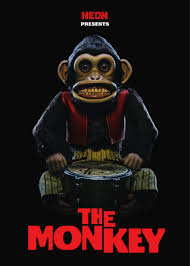
THE MONKEY
US, 2025, 98 minutes, Colour.
Theo James, Tatiana Muslany, Christian Convery, Colin O'Brien, Elijah Wood, Rohan Campbell, Sarah Levy, Osgood Perkins, Adam Scott.
Directed by Osgood Perkins.
From a short story by Stephen King. Strong credential in itself. And the film has been written and directed by Osgood Perkins who achieved strong response to his 2024 horror-thriller, Longlegs.
The name of Stephen King, of course, is for many a recommendation in itself. He has been writing novels and short stories for just over 50 years, with more than 50 adaptations of novels and short stories for the big screen and for television – the film starting in 1976 with the shocks in Carrie. He is a household name. So, especially for Stephen King completists, The Monkey goes on the list of films to be seen.
While the Stephen King’s stories have an underlying base of realism, especially in his treatment of family relationships, there is also the move to an atmosphere beyond realism, in the world of the physical, in the world of the psychic, in the realms of: what if…?
This is definitely the case with The Monkey. On one hand, it is the story of twin brothers, one dominating the other, an absent father, a mother trying to raise her children, the decision to search through the absent father’s possessions and the finding of a toy, a monkey with huge eyes which stare, in extreme close-up and threatening, from the screen at the audience, the touch of mesmerising, then the turning of the key and the monkey beginning to twirl the drumsticks and then beat on the drum – with dire, in fact, a lot beyond dire, murderous consequences.
It means then that this is very much Stephen King material, ordinary audiences can appreciate the story of the two brothers and their eventual antagonism and confrontation. But, this is also Stephen King horror territory, and there are quite a number of deaths, targets of the murderous monkey. And, visually and thematically, they are grisly and gory, some audiences might find them too much.
It should be noted that the writer-director, Osgood Perkins (son of Anthony Perkins and memories of Psycho), has noted that the deaths are macabre, black-humour, and the reminder that nobody in reality could die in the style of the deaths portrayed here, that nobody could complain that in watching the film it reminded them in any way of their relatives’ or friends’ death. (And, there is an extraordinary last 10 seconds of the film, surprise and some shocking deaths.)
British actor, Theo James, takes on the role of the adult twins and quite effectively makes them very different. In fact, a lot of the drama and confrontation depends on this effectiveness. And for those who note names in casts, Adam Scott appears only in the prologue to the film, which sets the tone as he tries to sell the monkey to a dealer with shock results. And, Elijah Wood, has only a few, quite telling minutes, as a self-important family and marriage guru.
It seems that Stephen King has approved of this version of his story and so it will take his place in all the analyses of his films. In the meantime, his fans will want to see it.
- The title? Stephen King story? The reputation Osgood Perkins and horror films?
- The plausibility of the plot? Realism? Imagination? Beyond the natural? Psychology drama, family relationships? Terror/horror/gore?
- The opening, Petey at the shop, the toy monkey, the shopkeeper, the discussions, the death of the shopkeeper? Setting the tone?
- The story of the twins, Bill and Hal, the difficulties of birth, Bill dominant, growing up together, Bill strong, teasing, bullying, Hal, glasses, taking it? The absent father? Their mother, coping? Domestic scenes, school, meals? The boys in their rooms? Rivalries? The effectiveness of Theo James in differentiating the twins in adult of life?
- Searching their father’s goods, finding the monkey? The visuals of the monkey, small, but large on-screen, the penetrating eyes, the arms, the drums, the movement, the drumsticks? The key?
- The sinister aspects of the monkey, depending on who has the power, the key? The babysitter, agreeable, going to the meal, the decapitation? Funeral service, the inept priest? Mother dancing with the children? Hal, his reaction against Bill? With the monkey, the mockery at school, Hal covered in slime, wanting the key, the death of his mother? The funeral? The aftermath, going to their aunt and uncle? The behaviour, the monkey, its presence, the deaths?
- Bill, on his own, bad behaviour, his appearance, his set up, the Thrasher, searching for the monkey, finding it, in Bill’s possession? The Thrasher, his character, searching for the monkey, finding it, wanting it? The phone call to Hal?
- Hal, the years passing, the marriage, the unexpected birth of Petey, the meeting with Ted, his books, his lording it over Hal, the prospect of the divorce? His wanting time with Petey?
- The plan, the news of the deaths, the garden sale of the monkey? Petey questioning Hal about the family tree, Hal’s lies? The contact with Bill, the contact with the Thrasher, their going to the house?
- Bill, his intentions, the monkey, vengeance against Hal for killing their mother?
- The madness of the monkey, the range of deaths, deaths in the neighbourhoods? The wide range of people dying, heads on fire, diving into a flaming pool, running with the pram…?
- Hal, Thrasher and Petey in the car, the beehive, the shot, Thrasher consuming the bees?
- Petey in the house, the confrontation with Bill, the challenge to turn the key, his turning it, Hal coming into the house, confrontation between the two? Bill’s death?
- The final seconds of the film, the previous glimpse of the cheering group, the bus passing, the truck, the deaths, the final impact of the film?
- Hal, Petey, the monkey, travelling together – into the future and the indications the future from the prologue?
