Displaying items by tag: Jacob Elordi
Wuthering Heights/ 2026
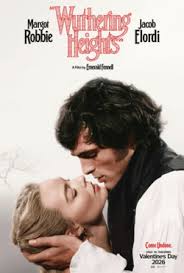
WUTHERING HEIGHTS
UK, 2026, 136 minutes, Colour.
Margot Robbie, Jacob Elordi, Hong Chau, Alison Oliver, Shazad Latif. Charlotte Mellington, Owen Cooper, Vy Nguyen.
Directed by Emerald Fennell.
While it is an obvious thing to say, every reader of Emily Bronte’s 1847 novel brings their own the imagination to her evocative words. And, imaginations are subjective, creating location images, creating the look and sound characters, heightening the action the more we become involved as we read.
The Internet Movie Database indicates that there have been 15 versions of Wuthering Heights since 1920. Here is a 21st-century interpretation/imagining/imaging with soundtrack/popular and character casting. And, when the writer-director is Emerald Fennell (with her provocative films, Promising Young Woman and Saltburn), her imagining may be very different from many in the audience, especially those who have read the book, but, especially, those who cherish the book.
Initial reviews and comments have been very forthright from those who cherish the novel. Many thumbs down as they can manage. But, for those who have not read the novel, there are possibilities of interpretation, interest and fascination.
And, certainly to be noted with this interpretation, key characters and elements of the novel have been rearranged, omitted, while retaining core characters and plot elements of Emily Bronte’s his imagination.
The Yorkshire moors are craggy and mightily forbidding. The Earnshaw home is squalid and dilapidated. The Linton household is opulent. Costumes are lavish. The soundtrack is a blend of classical, old-style ballads, modern sounds and rhythms. The narrative and storytelling is highly emotional, melodramatic.
Interest is in the casting. Margot Robbie is as we might expect as the passionate, conflicted, Catherine. In the first half, Jacob Elordi’s Heathcliff resembles his creature from the recent Frankenstein, intensely savage but humane, intensely passionate and sadistic in the second half.
In fact, our acceptance of Catherine and Heathcliff (after a very Dickensian hanging sequence, crowds cheering as the opening to the film) is made possible by the very effective youngsters, Charlotte Mellington and after his award-winning performance in Adolescence, Owen Cooper.
Martin Clunes stands out with his performance of Cathy’s father, memorable. The character of Nellie is brought to the forefront, her relationship with Catherine, disappointment, betrayal, sinister intervention, played by Hong Chau. There is a great challenge for Alison Oliver as Isabella, initially sheltered and simple (and some audiences laughing at her), then becoming Heathcliff’s victim, co-dependence – is also seem to be the case between Heathcliff and Cathy.
Which means then that Emerald Fennell’s vision of Wuthering Heights Heights, a 21st-century sensibility of passion and the erotic, has elements of Dickens, 19th century romanticism, the popularity of Gothic melodrama, destiny and doom. (Edgar Linton’s description of the situation is that it is, in Emily Brontë’s sensibility, the word “untoward” and the word to describe Heathcliff several times is “fiend”. And we might wonder what Emily Brontë’s reaction would be were she to watch this version.)
This Wuthering Heights highlights, whether it be the 19th century or the 21st-century, love, passion, hatred, betrayal, destruction.
______________________
When the 2011 version of Wuthering Heights was released, starring Kaya Scodelario and James Howson, adapted by Andrea Arnold, same issues were raised as for the 26 version. The following comments are relevant to 2026.
Wuthering Heights is Emily Bronte’s 19th century literary classic. There have been a number of versions, especially the romantic doom and gloom of William Wyler’s 1939 version with Laurence Olivier and Merle Oberon. In a cinematic sense, Olivier with his theatrical delivery became the visual equivalent of the Bronte prose and Merle Oberon’s classic beauty was that of Catherine Earnshaw. The Internet Movie Database lists 15 version since 1920. Luis Bunuel made a version in Spanish (Abismos de Passion). Keith Michel and Claire Bloom in 1962 and Ian Mc Shane was Heathcliff on television in 1967. Anna Calder Marshall teamed with Timothy Dalton (also a smouldering theatrical presence) in 1970. In the 1990s, Ralph Fiennes was Heathcliff to Juliet Binoche’s Catherine. Tom Hardy, who has proven himself a strong and versatile actor, was Heathcliff in a British television in 2009 with Charlotte Riley.
Audiences expecting a continuation of that kind of classic cinema should not venture into this much more experimental interpretation unless they want to see something quite different and to be challenged.
Andrea Arnold made her mark with awards for her contemporary domestic dramas, Red Road and Fish Tank. Now she takes her visual style back into the 19th century and the Yorkshire moors and dales.
A gathering in the dark. Dim hallway. A face. Sky vista. A half-framed picture of two riders. Quivering camera.
This is the technique that Andrea Arnold brings to this 129 minute version of Wuthering Heights. It is both intimate and sometimes off kilter. It is dark. It is grubby. It is episodic. Characters are sometimes glimpsed, then contemplated in close-up. The first part of the film, centred on the dingy Earnshaw farm, has little relief. The second part of the film with much more attention given to the Linton mansion is much more sunny (at times), even with blue skies, the interiors, with some red walls, far more colourful than we had become accustomed to.
The director and her director of photography are attempting an interpretation of the novel via the visual style rather than literary style, although the screenplay offers much of Emily Bronte’s words. It is a disruptive style, at times upsetting, at times puzzling with its idiosyncratic handheld camera work that avoids finesse or neatness. And there are several jolts as characters use expletives that Emily Bronte may not have even known.
This is the context for unsettling characters. Hindley Earnshaw is a brute. His foreman, Joseph, has moments of cruelty. The rest of the family are there, often in the dark, not particularly delineated. Except for Cathy, in her teens, a wild, impetuous young woman. Into this household comes a black slave, bought in charity in Liverpool, to be brought into this Yorkshire life and to become a Christian, Heathcliff. Already this is a jolt for purists, but one of the most interesting features of the film. At first, Cathy spits at him. But, soon, they are kindred spirits, escaping to the top of the heights, riding over the moors. Heathcliff becomes the centre of the film. His plight holds the interest and the emotions.
When Cathy goes to the Linton home and finds herself at home in this different environment, Heathcliff leaves. He disappears for some years.
When he returns, there is different casting for both Heathcliff and Cathy. The continuity between Solomon Glave as the young Heathcliff (offbeat and memorable) and James Howson as the older and more sophisticated Heathcliff is well sustained. This means that Heathcliff’s made passion and revenge and his cruel marriage to Isabella more credible. However, the younger Cathy (Shannon Bear) is what can be called a buxom country lass, full of verve, even of song, impetuous, contradictory, at home at the Earnshaw farm rather than at the Linton’s. However, the older Cathy (Kaya Scodelario) is glamorous and svelte (despite her attempts at a rough accent). Many audiences will find it hard to accept this transformation. Which undermines the drama and Cathy’s responses to Heathcliff.
Edgar Linton is what was once called ‘a wet and a weed). Isabella is hard done by. Nelly Dean must have been there earlier but emerges more significantly when Heathcliff returns. It is Lee Shaw as Hindley who is the most consistent character.
Doubtless there will be more versions of Wuthering Heights. This is the more puzzling and challenging one.
- The impact of this version of Wuthering Heights? The traditional films? The novel? Romantic, stark, dingy? Writer-director Emerald Fennell’s films, tone, direct, sensuality and sexuality?
- Emily Bronte and her writing skills, the characters of Wuthering Heights, its atmosphere? Status and language? Descriptions? Emotions and passion? The range of film and television versions? Her experience in her age?
- Emerald Fennell, the lavish style of her film, and the poverty and squalor of the Earnshaws, the experience of Heathcliff, adopted, servant, place in the family, family, growing up with Cathy?
- The tone of the opening, Dickensian, the gallows, the rabble-rouser, the crowd, the silence, then the shouts, the glee, the nun and her severity? A comment on 19th century society?
- The streamlining of Emily Brontë’s plot, changes in detail of background, characters? Something of the core of the original novel?
- The recreation of the Earnshaw home, dark and squalid, large, the barns, Mr Earnshaw and his age, drinking, gambling, attitude towards his daughter, a mixture of love, treating her with contempt, introducing Heathcliff into the home, favouring him, disciplining him, the effect on Heathcliff?
- Cathy and Heathcliff as children, out on the moors, together, Cathy and her superiority, Heathcliff as servant? The building up of the relationship between them? Company, declarations?
- The years passing, their growing up? Heathcliff, adult, wild, the hair, going about his work, refusing to learn to read? Cathy, the attractive young woman, yet wild? Her whims? Treatment of Heathcliff? His response?
- The arrival of the Lintons, the mansion, Cathy seeing it from the hill, going to visit, looking over the wall, Edgar with Isabella, recounting the plot of Romeo and Juliet, her spectacles? Edgar as a member of the gentry, manners, dress? Isabella, her age, awkward, isolated? Discovering Cathy, bringing her in, her staying, her experience of the opulence of the house, the friendship of Isabella, the treatment by Edgar?
- Mr Earnshaw, his reactions, taunts, his deterioration, health, bad teeth, drinking?
- The role of Nellie, the choice of an ethnic actress, but not for Heathcliff and the novel’s heritage for him? Childhood companion of Cathy, always present, and with Heathcliff? Her infatuation with Cathy? The years passing, her place in the house, her attitude towards Heathcliff? Jealousy?
- Cathy, the emphasis on sexuality, her appearance, clothes, sexual experience, out in the crags? The proposal, her decisions, the discussions with Nellie, Nellie knowing Heathcliff was listening, leading Cathy on, her declaration of humiliation – and Heathcliff missing the fact that she said she loved him?
- Heathcliff, his disappearance, riding off, Cathy upset? Nellie satisfied? The prospects for Cathy, the marriage with Edgar, her pregnancy?
- The years passing, Isabella, her fondness for Cathy, the doll’s house, clothes, the relationship with Edgar, the lavish house, the decorations, clothes? Cathy neglecting her father, going to see him, his state, his death, the funeral?
- Heathcliff’s return, as a gentleman, yet not being able to read? The intensity of the relationship with Cathy, the collage of the sequences of their lovemaking, the intensity, deceptions? Cathy and her pregnancy, not telling Heathcliff?
- Heathcliff, his revenge on Cathy, Isabella, taking her, subduing her, humiliating her, sadomasochistic? Isabella and her consent, the codependency? The comparison with Cathy and Heathcliff and their codependency?
- Heathcliff buying the house, living there, the taunt to Cathy? Isabella in the house, the writing of the letters, trying to provoke Cathy, Nellie receiving them and destroying them?
- Cathy’s discovery about Nellie, banishing her? But the situation, the death of the child, the blood? Cathy and her deterioration? Her death?
Heathcliff, the impact of Cathy’s death, Isabella, the Lintons, Edgar Linton and his disillusionment with Cathy? The fatal future?
Frankenstein/ 2025
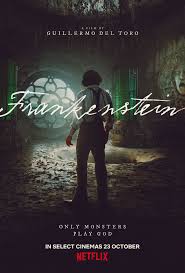
FRANKENSTEIN
US, 2025, 150 minutes, Colour.
Oscar Isaac, Jacob Elordi, Christophe Waltz, Mia Goth, Felix Kammerer, Charles Dance, David Bradley, Lars Mikkelson, Christian Convery, Burn Gorman, Ralph Ineson.
Directed by Gullermo del Toro.
Mexican director, Guillermo del Toro, has had a long fascination with imagination and fantasy, the celebrated Pan’s Labyrinth, and popular action with Blade, Hellboy, Pinocchio. So, what will he choose to do with Frankenstein?
This is very much an all stops out interpretation of Mary Shelley’s classic novel, its narrative, its characters, its explorations of themes of life and death, human arrogance, playing God, playing the devil. Since Boris Karloff played the creature in the 1930s, there have been very many Frankenstein films, and Hammer Studios thrillers, Kenneth Branagh’s 1994 spectacle…
Here is an epic treatment, the Gothic traditions, running for 2 ½ hours.
The familiar elements are all here, the opening in the Arctic with Frankenstein and the monster stranded, the rescue, Victor Frankenstein narrating his story wanting some kind of healing and forgiveness, the background of the Frankenstein family, demanding father, Victor and his scientific interest, experiments with reviving some kind of life, his laboratory, hunting the dead bodies, the creation of the creature, the lightning, the aftermath, the wandering creature and the confrontation with its maker. And all presented with heightened atmosphere.
In all the treatments, the question is how sympathetic Victor Frankenstein should be. Oscar Isaac here is not sympathetic at all – oppressed by his demanding father (Charles Dance), relying for help on his younger brother, William (Felix Kamerer all) and the link with Elizabeth (Mia Goth) and her tender affection for the Creature. There is an interesting new character, the wealthy man, Harlander, Elizabeth’s uncle, who wants to bankroll Frankenstein and his experiments with some sinister intentions, played with his usual relish by Christophe Waltz.
But, significant in this film is that the Creature, not called monster, though made up of many body parts, neatly put together, is, for the most part, the most sympathetic character. And Jacob Elordi plays him with a great deal of pathos, but with dignity, gradually coming to consciousness, words, ideas, out in the countryside learning compassion, to read, but also discover the truth about his origins and that he was doomed not to die.
This is a film which gives great attention to atmosphere, sets and decor, costumes, atmospheric score, enabling audiences to appreciate why the Frankenstein story has continued to be entertaining but much more, a questioning of human power, human arrogance, and the need for forgiveness.
- Lasting popularity of the story, Mary Shelley’s novel and treatment, issues of life, creativity, death, playing God, playing the devil? The many versions, from the 1930s, Hammer Studios, Kenneth Branagh, 1994, the cinema tradition?
- The lavish treatment, sets and decor, costumes, atmosphere? Atmospheric score? The Arctic sequences in the snow and ice, the University sequences, the laboratories, the castles, 19th-century society? The countryside sequences, bleak, wolves, winter?
- The opening in the Arctic, the presence of Frankenstein and the Creature, the ship, the expedition, the Capt, the crew, the confrontation with the Creature, saving Frankenstein, the threats from the Creature, Frankenstein telling his story, his confession, his fate?
- The introduction to the Creature, initial horror, strength, menace, threat to Frankenstein, the interaction with the sailors, violence, deaths?
- Frankenstein telling his story, his background, the sequences with his father, his father’s demands on the cruelty? Treatment of his wife? The birth of his brother? The two brothers grow growing up? The father, the doctor, unable to save his wife, his demands on Victor, testing him as regards medicine, science? His death?
- Victor, relationship with his brother, growing up, his brother’s life, Elizabeth, her relationship with William? Her visits? Her family background? Expectations? Harlander and Elizabeth as his niece?
- Victor, his experiments, his machines, theories, the skeletons, the body parts, his demonstration to the professors in Edinburgh, electric charge, movement and life? Then denouncing him?
- Harlander and his ambitions, personality, state of health, finance, collaboration with Victor, finding the Castle and location? William and his helping his brother build up the laboratory in the Castle?
- Victor, access to bodies, the executioner, the choices, the background of war, injuries, examining the bodies, transporting them to the Castle, the various limbs? Putting them together, sewing, a composite Creature rather than a monster?
- The pressure from Harlander, the confrontation with him, syphilis, wanting to be transferred into the creature, Victor not wanting him because of contamination for his brain, his falling to his death? Concealing his body?
- The storm, the lightning, the drama of his setting up the situation, the Creature, lightning, the movement, coming to life?
- The nature of the creature, tall, presentable, clothing and cloak, able to say only Victor, the humanity, the inhumanity?
- Victor’s reaction, amazed, fearful, presumptuous, the treatment of the Creature, imprisoning him? The effect on Victor’s consciousness, conscience? More than he expected? Not anticipating the consequences?
- The effect on the creature, lonely, exploring the Castle, the relationship with Victor? His ability to heal quickly?
- Elizabeth, her visit, the discovery of the Creature, the bonding, talking, his saying her name? Her response to Victor?
- Victor and his impatience with the creature, lack of development, explaining Harlander’s death to William, the decision to set fire to the Castle, the elaborate preparations, setting the fire, the creatures call, Victor’s change of heart, entering, the explosion, breaking his leg?
- The creature surviving, wandering the countryside, the wolves, the community, his hiding, surviving, the family and their life, hunting the walls, leaving the old blind man, the Creature, listening, understanding, sympathy for the old man, hearing the family’s needs, building, chopping the wood, all kinds of service? The happy life and friendship? The family thinking him the Spirit of the Forest? The old man to Jim to read, speak, think, reflect? Growing understanding? The walls, the return of the family, the Creature fleeing?
- The decision to find Victor, the return to the Castle, the notes, reading them, knowing that he would live for eternity, getting Victor’s address, travelling to Vienna, the buildup to the confrontation, Victor regretting creating him? The Creature wanting a companion? The celebration, society, lavish? Elizabeth, shielding the Creature from the shot, William dying, fearing his brother, the Creature helping Elizabeth that she dies?
- The situation in the Arctic, the response of the captain, encouraging Victor to tell his story, sympathy and understanding, the help of the doctors, the creature coming on board, the explanations, Victor’s repentance, the Creature for giving him? The response of the crew? The captain changing his ambition to reach the North Pole and to return home, the response of the crew?
- The Creature pushing the ship out of the ice, and looking towards the sun, reaching out and beginning his life without death?
Oh, Canada
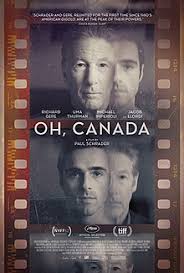
OH CANADA
US, 2024, 91 minutes, Colour.
Richard Gere, Jacob Elordi, Uma Thurman, Victoria Hill, Michael Imperioli, Caroline Dhavarnas, Penelope Mitchell.
Directed by Paul Schrader.
A Paul Schrader film, written and directed by him, based on the novel, Forgone, by American novelist, Russell Banks, with whom Schrader had collaborated in the film version of Banks’ novel, Affliction, 1998. Schrader notes that he had three bouts of Covid and hospitalisation, saying that he became more conscious of mortality, was interested in Forgone and collaborated with Banks who preferred the title Oh Canada – and then Banks himself dying while the film was in production. Prior to Oh Canada, Schrader was focusing on older men reviewing their lives, First Reform, Card Counter, Master Gardener.
Watching Oh Canada is both an interesting and intriguing experience.
The film opens with an ominous comment that a son has not seen his father for 30 years. Then the setting up of cameras by a documentary filmmaking trio in the house of a famous documentary filmmaker, Leonard Fyfe, now in his 80s, dying of cancer, an opportunity for him to tell his story for the television audience. The crew have been Leo’s former students, as has been his wife, Emma, living with him for 30 years and concerned for his health and the strain of doing the interview. The other character during the filming is Leo’s full-time nurse.
It is usually pointed out that Paul Schrader came from a strict Calvinist background and has been concerned with religious themes in many of his films. This is not just a documentary about the life and career of Leo, but his opportunity to face the truth and lies of his life, seduction and exploitation, but also skills as a filmmaker and lecturer.
And Leo is played impressively by Richard Gere in his mid-70s, old, almost bald, stubbled chin, experiencing the pain of cancer, determined to go through with the interview, despite the effort and strain, by to tell the truth, uncovering lies, and all the time dedicating this to his wife who, he says, has never known him fully.
The intriguing part of the experience is the range of flashbacks, not always in chronological order, moments of memories by Leo, puzzle pieces for the audience to put together. And, some of them are in bright colour, others in black and white, often stark. So the memories are invested with moods, colourful and severe. Most of them go back to 1968, Leo aged 26, his hometown and family, the calling in the priest for a family discussion about his future, his marriage, a son, pregnant wife, prospects, the Vietnam war, the draft, and his decision to avoid the draft – Oh Canada.
The young Leo is played by Jacob Elordi, making an effective contrast with Richard Gere, though Schrader also using the device of having the older, but healthier, Gere take Elordi’s place in many of the sequences of the past. His wife, Emma, is played by Uma Thurman (and, indicating confusion of memories, she also plays the wife of his artist friend in 1968.)
There is discussion about photography and filmmaking in black and white flashbacks to the 1990s and his academic career and his eager students.
With the filmmaking, Leo has the opportunity for some kind of assessment of his life, acknowledging the good and the bad, the hurt to others, deceit and lies, an opportunity for truth in the deathbed confession.
- The title, the national anthem of Canada, the perspective of Canada in 1968, draftees avoiding Vietnam? Life in Canada?
- The settings, Montréal and the house, interiors, the filming? Massachusetts towns, in the 60s? Richmond Virginia? Vermont? The Canadian border? The atmospheric score?
- The work of Paul Schrader, his later interest in older men and coping with life? The adaptation of Russell Banks novel? as writ Schrader er and director?
- The situation, Leonard Fyfe, the opening comment by his son not meeting his father for 30 years? The documentary filmmakers, setting up, Leo and his health, cancer, weak, agreeing to the film? His having taught Emma, Malcolm, Victoria 30 years earlier? His agreeing to do the interview, his impatience? A deathbed confession?
- The structure of the film, the interview in 2023, the many flashbacks to 1968, the flashbacks to the classes in the 90s? The range of flashback memories? The style of the film, muted colour for the interview, bright colour for some of the flashbacks, the many black and white flashbacks?
- Richard Gere, his career, in his mid-70s, portraying a dying man, but also the flashbacks the 1990s and teaching, and the insertion of the older Leo instead of the younger Leo in flashbacks? Jacob Elordi as the younger Leo?
- Leo reviewing his life, facts, lies, confessions, confusions? The effect on him, wanting to keep going, wanting Emma to be present, for her to know the man she married, his tiredness, the nurse, going to the toilet? Coming back, his insistence? Finally stopping, his attitude towards the filmmakers? In his room, with Emma and the nurse, Sloane putting the camera in the room, the filmmakers watching his dying scene?
- Leo, his family, his home town? His wandering, the relationship with Amy, her pregnancy, loving her not, the encounter with Amanda, sexual relationship? Meeting Alicia, the marriage, her son, her pregnancy, Leo and his writing, the prospect for teaching, going to Vermont, the pressure from his father-in-law and his brother, to work for the firm? The break, his going away, not seeing his son for 30 years, the loss of contact with Alicia?
- The various pieces of his story, 1968, the draft, his lining up, costume, questions about being gay, his answers, awaiting his documents? Going to Vermont, hiring the car, the scene in the shop, the clothes, stealing the money and the clothes? Visiting Stanley, the conversations, Stanley and draft dodgers, his art, relationships, Gloria (and being played by Uma Thurman), the sexual encounter, his leaving?
- The visit to his hometown, the diner, memories of his family? the family discussion, all in the priest, his declaration going to Cuba – is not getting there, the story of his crossing America like Jack Kerouac, the calling of the priest for advice?
- Going to the border, the signpost, his choice, standing in the field, the sign, his crossing the border to his future?
- The documentary makers, past students, the scenes of their eagerly listening to him, his invention of the camera and looking at the interviewer on camera, his comments on Susan Sontag and photography, the meetings, the tutorials? His relationship with Emma and Victoria?
- Marrying Emma, the 30 years, her devotion to him, her concern in his illness, during the interview?
- Leo and his career, the film about testing weapons, the glimpses of his further films, about exploitation of the Arctic, about the sex offending Bishop? His reputation? His being introduced, bringing Emma on stage?
- The encounter with his son, the son driving to the screening, talking to his father, Leo turning his back and disowning him? The son and his conversation with Emma? The news about what happened to Alicia?
- The final death scene, Emma and the nurse, breathing his last, having made his confession?
He Went That Way
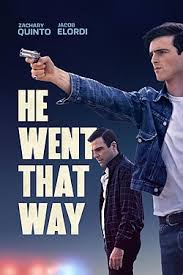
HE WENT THAT WAY
US, 2023, 95 minutes, Colour.
Zachary Quinton, Jacob Elordi, Patrick J.Adams.
Directed by Jeffrey Darling.
The film is about an actual serial killer in the US in the 1960s (in fact, the killer was also involved in murders with his brother but not in the film).
This is a strange film that has not appealed to a wide audience but there are some admirers. For the most part, this is a road film, the serial killer, here called Bobby, and played by Australian actor Jacob Elordi (Priscilla, Saltburn) hitching a ride with a very buttoned up entertainment entrepreneur, Jim, played by Zachary Quinton (Star Trek) who is transporting a monkey who performs, called Spanky, to meet his wife and explore further contracts.
The audience has seen Bobby initially in a car talking, only to discover that he is talking to the corpse of a man he has killed.
Which means that the film offers an exploration of each man’s character and the strange interactions, Bobby psychopathic with some of the charm of the sociopath, inventing stories about himself, tantalised by the presence of Spanky, the monkey, influencing Jim. Jim is very proper, well-dressed, good mannered, agreeable to Bobby, sometimes surprised, protective of Spanky, and some have suggested that he may be an example of the Stockholm Syndrome with Bobby’s influence.
There are various encounters along the way, a violent confrontation with Jim’s brother-in-law, Native Americans, an Amish couple, two young girls being reckless away from their families, a night at a motel. And, there is the encounter with Jim’s wife and some bad moments for him.
While the actors give their best and Spanky (animatronics as well as prosthetics for an actor), the audience may well feel uncomfortable throughout. Perhaps the intention. (And the sad note the Australian cinematographer, Jeff Darling, died in a surfing accident just after the completion of photography, his first film as director.)
During the final credits there is into material with the Jim character who had written a memoir of these events – much more lively in the credits sequences than during the film.
- Based on a (mostly) true story? The end credits, the central character, Spanky and the dance?
- US, the 1960s, 1964, the JFK era, change, the place of outsiders?
- Road movie, the Southern States?
- The title, the references – which he?
- The introduction to Bobby, driving, talking, the dead man in the car, the consequences of that action, his motivations, the flashbacks? His character, appearance, thumbing the lift? The drama of the interactions with Jim? Stories of his past, the Army? Weapons? Stories true and false? Childhood background? Emotional?
- The contrast with Jim, his age, experience, uptight, proper, the homoerotic suggestions? The contact with his wife, the visit, contract about Spanky? The tension in the relationship and her brother and the death?
- Spanky, the performing monkey, synthetics, animatronics, the actor? Travelling, performing, touches of the human? The contracts? The reputation?
- The visit to the brother-in-law, a debt, his attitude, conflict, the threats, Bobby and violence?
- The encounters along the way, ordinary situations, different characters, Native American, the Amish, two girls, a risky night with them at the motel? Behaviour in danger?
- Bobby, the fascination Spanky, resistance, human explaining how to deal with Spanky, the control?
- Bobby, the story going to Chicago for his girlfriend, the culmination, the revelations, the psychological and violent confrontations? This story as a memoir?
Sweet East, The
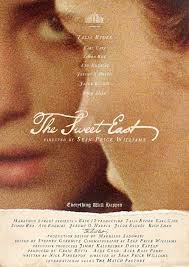
THE SWEET EAST
US, 2023, 104 minutes, Colour.
Talia Ryder, Earl Cave, Simon Rex, Ayo Edebiri, Jeremy O.Harris, Jacob Elordi, Rish Shah.
Directed by Sean Price Williams.
The title. East refers to the US states from New York north to Vermont. Sweet? Not really – rather, ironically.
This film has been advertised as a picaresque journey. Checking again on the meaning of “picaresque”, the adjective is quite accurate: suggesting, or being a type of fiction dealing with the episodic adventures of a usually roguish, but appealing, protagonist of a low social class.
And who’s picaresque journey? It is Lillian, a high school student from South Carolina, arriving in Washington DC with a group of school friends on tour – something of an exuberant lot, cameras at the ready.
And the audience for this film? Not a mainstream audience because Sweet East is sending up mainstream films. It is small budget. It is independent movie-making. The director, Sean Price Spencer, has been cinematographer for some admired independent films like Uncut Gems. And the writer, huge emphasis on words, vocabulary, articulation, popular rhetoric, is a long time film critic, Nick Pinkerton. Which means that Sweet East is a film for themselves and their friends and admirers. And for those who want something a little different.
We are introduced to Lillian, singing, looking at herself in the mirror, joining up with her friends at the beginning of the picaresque. What is on this picaresque menu? And how seriously should we take it all? Lots of the bizarre, sometimes absurd, funny, depending on your sense of humour.
First there is a sendup of deranged customer with a gun in the pizza parlour, hiding in the toilet. Then her rescue by some rather preppie protesters, banners and causes, going to the wrong venue for their protest. Lillian gets away, finds herself in a more serious protest, right-wingers, and being rescued by professorial neo-Nazi. She calls herself Annabel which is a cue for his enthusiasm about Edgar Allan Poe. She can be sexually provocative. He is ideological, conversation as a lecture. But, she exploits him, accommodation, food, clothes, trip to New York – and stealing his bag full of money.
At this stage, we are wondering where Lillian/Annabel is going when she is sighted, scouted by two African-American filmmakers, so with the gift of the more-than-gab, chatter about moviemaking, references to Merchant Ivory films, infatuated with this young girl, photographing her, rehearsing her, making her the star of the period film, co-starring with the British self-infatuated actor, Jacob Elordi. But, there is a nice cameraman who is protective of her.
Then a huge change of mood, perhaps indulgence by the filmmakers, gangsters looking for Annabel for the money, and an enormous mishmash of violence which could be the envy of horror filmmakers with a love of gore! Deaths all round. But, a rescue by the nice cameraman, and his remote community with Muslim prayer practices.
Where can it all end? Well, of course, Annabel becoming Lillian again, going home to family, the actual ordinary life, experiencing the mayhem. Is this the kind of scenario which influenced Alex Garland to make Civil War?
Priscilla

PRISCILLA
US, 2023, 113 minutes, Colour.
Cailee Spaeny, Jacob Elordi, Ari Cohen, Dagmara Dominczyk, Tim Post, Lynne Griffin.
Directed by Sofia Coppola.
Soon after the release and popularity of Baz Luhrmann’s spectacular and glittery portrait of Elvis Presley, Elvis, comes this rather subdued portrait of his wife, Priscilla.
It is based on her memoir, Elvis and Me, published in 1987, the basis for so many films about Elvis Presley. The memoir, has now been adapted for the screen by writer-director, Sofia Coppola. In looking at Sofia Coppola’s career, we see that she has been continually interested in teenage girls and younger women: The Virgin Suicides, Lost in Translation, Marie Antoinette, The Bling Ring…
This is a rather subdued film in its tone, making quite a contrast between the personality of Priscilla and her celebrated husband. Cailee Spaeny won the Best Actress award in Venice for this performance. She has to be the somewhat timid schoolgirl, aged 14, away from the US, in Germany with her military parents, invited to meet Elvis, somewhat bewildered, then fascinated, and growing fascination. She has to deal with her parents’ reactions. But, then she has a visit to Graceland, and the family accept Elvis’s invitation for her to live at Graceland and go to school in Memphis. So, Priscilla from age 14 to 18.
Jacob Elalordi, much taller than Elvis in real life, shows us Elvis in his early 20s to age 30, cheerful, comfortable with the young Priscilla, respecting her in terms of sexual relationship, the marriage, the birth of their daughter. The Presley estate did not give permission for any of Elvis’s songs to be used so the soundtrack is not of him but of popular hits of the time finishing with I Will Always Love You (as Priscilla drives away from her marriage).
There are references to Elvis’s singing career, to the films, gossip about a relationship with Ann Margret. But, this is Priscilla’s film.
For a great deal of the film, Priscilla is left alone at Graceland, Elvis doing the bidding of Colonel Parker (who does not appear but there are many telephone calls and demands), lonely, glad to see Elvis, but the victim of his presumptions about male superiority and domination, even a touch of physical violence with apology, but, finally, his serious reading of the Bible and her negative reaction.
Early in the film, there is the introduction of Elvis and his pill taking, sharing this with Priscilla, indication of tragedy to come.
Many have appreciated the opportunity to see something of Priscilla Presley – but, for many audiences, it is rather low-key, not an energetic portrait.
- Audience interest in Priscilla Presley? Elvis?
- Based on an autobiography by Priscilla Presley, from the 1980s, her executive producing this film?
- The focus on Priscilla, her background, in Germany, her age, the encounters with Elvis, the growing relationship, is respecting her, the visits to Graceland, her going to live in Graceland, her parents response, Elvis taking responsibility, enrolled in school, graduation (and cheating), the wedding, her pregnancy, her staying at home, Elvis absent, his domination when at home, his friends, the staff at Graceland in support, her isolation, need to be herself, Elvis and the Bible, her decision and leaving?
- Audience response to Priscilla, aged 14, shy, in Germany, the military background, her isolation, education, the military officer and his invitation to meet Elvis, her continuing shyness, Elvis’s response, her responses? Audience sympathy for her at her age and inexperience? Audience response to her growing attachment to Elvis, her life at Graceland, the benefits and happiness, the hardships, the isolation, the magazines, the gossip, the issue about Ann-Margret, audience sympathy to her when Elvis was dominating, brutal? Audience sympathy with her decision to leave?
- The screenplay and its focusing on pills, Elvis and his pill popping, sharing with Priscilla, the growing dependence?
- The film as a portrait of Elvis, age, military, Germany, already his reputation, singing, style, public reaction, popularity, censorious religious responses, his films? His relationship with his father? Memories of his mother? Love for his grandmother? His response to a 14-year-old girl, over the years, having heard to Graceland, coming to live there, his concern about education, the humorous sequence of the nuns being photographed with him? His work, absences, the films, magazines and publicity, speculations, Las Vegas, and Margaret? His response to Priscilla about Ann Margret? Colonel Parker, not seen, the phone calls, his domination? Elvis’s presuppositions about male domination, his love for his mother, love for his grandmother? The continual presence of his entourage? His reading the Bible, insistence for Priscilla? Response to his shock at Priscilla leaving?
- A portrait of Priscilla Presley, living for so many decades after Elvis’s death, her daughter (and her daughter’s death just before the release of the film and listed Marie’s criticism of the bad treatment of her father here)?
