Displaying items by tag: Josh O'Connor
Disclosure Day
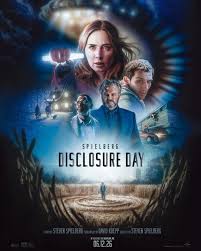
DISCLOSURE DAY
US, 2026, 145 minutes, Colour.
Emily Blunt, Josh O'Connor, Colin Firth, Eve Hewson, Colman Domingo, Wyatt Russell, Elizabeth Marvel.
Directed by Stephen Spielberg.
The title, Disclosure Day, has the touch of the apocalyptic about it. And, when the focus is on alien visitors to earth, will it be a genial close encounter or will it be a continuation of the war of the worlds. Even, a variation on ET? So, a reminder that for almost 50 years, Steven Spielberg has been fascinated with the alien encounters. (And, a lot of the promotion of the film raises the issue of whether Spielberg actually believes in aliens and their visits.)
Most audiences will enjoy this film, especially the Spielberg fans over the decades, not only his encounters movies but also his action shows and the heritage of Indiana Jones. And, the screenplay here dwells a lot on mental communication which may remind audiences of Minority Report.
And, we remember the visiting alien theories, Roswell 1947, conspiracy theories… Enough ingredients here to foster all of this and the question as to whether the world is able to accept the aliens.
The two central characters, a science mathematical cyber-whizz played by Josh O’Connor and weather television personality in Kansas City played by Emily Blunt, seem to have special powers, and, her being pursued by governmental but sinister powers, led by Colin Firth, forgetting all his charming roles of the past and his proving an intense sinister presence. On the other hand, Colman Domingo, more genial, is leading forces to save those pursued and belief that there should be a disclosure day to the world.
The two leads give very strong performances, often bewildered by what has happened to them, the intensity of Colin Firth’s ability to bilocate and interrogate and threaten, continually on the move and, Spielberg reminds us that he can direct action sequences as well as anyone else. There are plenty of chases, especially cars, but there is a sequence at a railway crossing, the passing train, a car pushed into the path of the train a leap on to carriage rungs… a highlight of the film.
So, while there is a great deal of action, there is also a great deal to think about, whether we the audience believe that there are aliens, that they have visited earth, whatever their intentions, or whether this is all imagined and that there is no evidence. (There are some Catholic themes in the film, especially with a sympathetic nun, who when Genesis 1 is quoted points out that God created us to be masters on earth – no reference to space are other planets!)
The film goes for 2 ½ hours so plenty of entertainment, strong characters, strong interactions, intensity and suspense, action, and, testing our response when Disclosure Day eventually happens.
- Steven Spielberg, close encounters, ET, War of the Worlds, telepathy and Minority Report? Almost 50 years? Conspiracies about aliens, government cover-ups, Spielberg’s own beliefs? Audience belief in aliens, encounters, government deception? The impact if the world knew about aliens? The importance of Disclosure Day?
- The plausibility of the situation, the state of the world, the brink of World War III? The government and the Department, Wardex, Daniel, the extraterrestrial device and its power, the files and films, his intentions, expose, contact with Hugo? Daniel and his background, science and maths, cyber skills, time in jail, release, no escape and Scanlon’s over him? His escape?
- Daniel, personality, past experience with the aliens, his skills, on the run, contact with Hugo, Noah pursuing him, Noah and his squads?
- The character of Jane, her time in the convent, flashbacks with the nuns, and about the monsignor and their lives, her leaving, her faith, relationship with Daniel, pressing him, for him to reveal what was happening? Her returning to the convent, the nun, protective, the discussions, Catholic rituals, the book of Genesis, humans as lord of the earth, emphasis on earth rather than planets in space? Scanlon, his hold over Jane, entering into her personality, her erratic behaviour with Daniel? Her going back to the convent?
- Margaret, television personality, the weather, relationship with Jackson? Ambitions, at the studio, the personnel, uses, director, hosts, make up…? Situation at home, her uncertainties, the effect of the past experience and her blocking it out? At home, Jackson’s reactions, late, speeding in the car, held up by the police, her knowledge of the policeman’s life, at the station, the hurry, the strange sounds in her delivery?
- Noah Scanlon, age and experience, government, the cover up, the personalities of his staff? Tracking Daniel and wanting him back, the files? Tracking Margaret? His skills, undergoing the treatment, able to bilocate, present to Jane, the interviews with her, appearing and disappearing, the threats? His presence to Daniel? Margaret and the effect on him, the reappearance of his wife?
- Margaret, personality, travelling with Jackson, evading him, her travels, a sense of where she should go? Jackson not believing her? The encounter with Daniel, the house, the car, the crash into the house, their fleeing, pursued, the train episode, on the rails, the leap onto the carriage?
- Margaret and Daniel, Noah and his tracking them down, Margaret and her abilities to know people from the inside, using it, the rescue by Hugo and the whistleblower team, going back to Kansas City, the television station, a preparation for Disclosure Day?
- Hugo and his relationship with Scanlon, the past, Hugo wanting disclosure, Scanlon wanting cover, fear of mass hysteria with the disclosure? And the work of engineering with the aliens, the films of the aliens, bodies, skeletons – showing them to Jane and her reaction? The audience sharing this? Issues of the device, its power, Casper holding it in the reaction, its being covered, the three devices?
- Daniel and Margaret, going back into their past, Margaret and her experiences, as a child, the red birds, the influence, the transformation by the aliens, absorbing their powers?
- The buildup to the confrontation, the buses, the trucks, the personnel, chases, pursuits, diversions? Shutting down power? The device restoring power?
- The studio, the fights, the defeat of Scanlon’s troops, their withdrawal, Scanlon remaining to be present for the disclosure?
- Disclosure Day, the host on the radio, the explanations, the visuals, Daniel uploading all the films? The huge bank of screens, the communication with various networks, the buildup to the whole world tapping into the information, every language, nation, the TV executives and their decisions?
- Scandal watching, Hugo vindicated, Daniel and Margaret – and the final revelation of the alien, the appearance, head and make-up, kindly, communication – and the possibility of harmony between humans and the aliens?
Mastermind, The
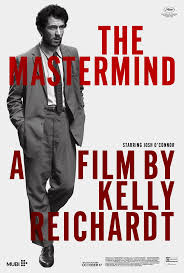
THE MASTERMIND
US, 2025, 110 minutes, Colour.
Josh O'Connor, Sterling Thompson, Alana Haim, Jasper Thompson, Bill Camp, Hope Davis, John Magaro, Gabby Hoffman, Amanda Plummer..
Directed by Kelly Reichardt.
Many films specialists, noting the information, written and directed by Kelly Reichardt, is sufficient for them to want to see this film. (Over 30 years, Kelly Reichardt has directed only 10 feature films and a number of short films but has built up a reputation with a range of American stories, often with a focus on women, but also offering food for reflection on American history and society.
And this continues with this film, a museum robbery, specifically inspired by the 1972 robbery of the Worcester Art Museum in Massachusetts, in which two Gauguins, a Picasso, and a Rembrandt were stolen. Her interest, however, is not so much in the robbery but on the character, the mastermind of the title (though, looking at his career, the title is quite ironic), his behaviour in the aftermath of the robbery and exposure. Some commentators refer to the film as an “anti-heist” film.
The setting is 1970, upheaval in the United States at the end of the 60s, social unrest, but, especially, the background of the war in Vietnam.
The central character is played by Josh O’Connor, busy with releases in 2025, The History of Sound as well as Wake Up Dead Man. He is a family man, a carpenter, unemployed, in need of money, planning the stealing of artwork from the local gallery, hiring three petty criminals, not vetting them in any mastermind kind of way, their exposing him, his trying to rationalise, his wife leaving him with the family, his wanting money from his mother, his father a judge critical about the lack of ambition of the thieves.
The mastermind is abducted by the criminals, gets away, but with public knowledge about his crime, he begins an odyssey, getting lifts, trying to survive, lack of money, going to a friend from the past but moved on by the friend’s wife, his continuing on the road and an uncertain ending as he steals a woman’s purse, tries to escape through the Vietnam war protest and is elected arrested.
Many audiences, Kelly Reichardt fans, welcomed the film. For many others, even some who admire Kelly Reichardt, have found the film difficult to sit through, the pace, the unsympathetic central character… (Which was the experience of this reviewer.)
- The title, for James Mooney, accurate, ironic?
- The 1970s setting, social upheaval in the US, financial difficulties, the background of the Vietnam war? Re-creation of the period? The musical score?
- The initial plot, Mooney, the stealing of the car, the backing out of the driver, his choice of the two colleagues, the plan to steal the art, at the gallery, removing the paintings? His associates, Gibson and his rations, pulling the gun, later robbing the bank? Guy asking for more money?
- Mooney at home, his wife, family, relationship with Tommy? His mother and giving him money? His father, judge? His comments about the lack of initiative by the thieves?
- Mooney, having to cope with situations, sending his wife and family away, keeping his son, taking with him? The confrontation with Guy? The setup, the criminals, the abduction? The consequences?
- Mooney, getting away, on the road, money, surviving, his situation becoming public? The alienation of his wife, the phone calls?
- Going to stay with his friend, Fred and his wife, their life together, memories of the past, Fred and his wariness, the wife, her making the connection with the professor to act as a fence for the paintings, his being sent away?
- His plans, on the road, stealing the woman’s purse, trying to escape through the Vietnam war protesters, his being arrested? And then?
History of Sound, The
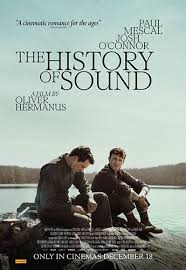
THE HISTORY OF SOUND
US, 2025, 128 minutes, Colour.
Paul Mescal, Josh O'Connor, Chris Cooper, Leo Cocovinis, Raphael Sbarge, Molly Price, Tom Nellis, Emma Canning.
Directed by Oliver Hermanus.
This film opens with the camera gliding down a beautiful river, a voice-over describing love for music, explaining how different notes are visualised as colours. The voice is that of Lionel, a young boy absorbed by sound and music, listening to his Kentucky farmer father playing the fiddle and singing local ballads. The title seems to indicate that this will be a documentary – and, by the end, the audience has documented the collecting and recording on wax cylinders of so many of the traditional ballads. However, The History of Sound is an intense personal drama.
In 1916, Lionel Gaines a scholarship in music to travel to Boston. In a pub, he encounters a young man singing a ballad at the piano, David, who then invites Lionel to sing. Lionel is played by Paul Mescal, frequently on screen in recent times from Gladiator II to playing Shakespeare in Hamnet. David is played by Josh O’Connor, also frequently on screen, the Mastermind, Wake Up Dead Man. They are both at their best, quite intense. Their common interest in songs, their friendship, turns into a love, which will have both fulfilment and devastation for each of them.
This is quite a long film, a great number of lingering sequences, the cameras staying on faces, the countryside, long periods for the background musical score. (And, surprisingly, the author, Ben Shattuck, has adapted his own short story for the screenplay.)
Action in World War I intervenes, David going to war, Lionel staying behind. But, on David’s return, the two go on their travels to Maine, visiting villages, visiting families, camping out, encountering all kinds of people who have treasured the ballads from the past, and their being encouraged to record their songs. And, so, as in different countries, as here in Maine, the heritage and history of music and song is captured and preserved.
The latter part of the film focuses on Lionel rather than David. Lionel travels, is part of a choir in Rome, decides to move to Oxford, begins a relationship with a wealthy young woman, breaks it as he returns to Kentucky at the death of his mother. He will later go to England and visit the Lake District.
And then, plot development that we have not anticipated, its emotional effect on Lionel which seems to be destructive.
And, The History of Sound might have ended there – but there is an epilogue, featuring Chris Cooper, indicating that whatever the tragedies there are in life, there are possibilities for overcoming them, for making good, for achievement, for purpose in life and contributing to the betterment of the world.
- The title and expectations? Sound, recordings, the colour of sound?
- The period, 1910-1980, Kentucky and its landscapes, the farm, the Homestead? Boston, music school? The travel through the countryside of Maine? Oxford? Rome? The Lake districts? The range of scenery and beauty?
- The music, the background score, the range of songs, balance, all throughout the film? The impact of the songs?
- Lionel, the voice-over, his explanations of sound and colour, particular notes and colours, the scenery of the river during his explanations? His age, at home, his father and the fiddle, songs, his mother? The Kentucky background?
- His scholarship, to Boston, 1916, hearing David sing, discussion, the people in the pub, the quiet, final scene, David accompanying, the impact? The love of music? The attraction, going home, the sexual attraction and experience? David in listing, going to the war, Lionel remaining in Boston?
- The end of the war, David and his experiences, silence about them? His story of his uncle, the travels to England, collecting the songs, the house in Newport? The invitation to Lionel to go on the travels?
- The two, the rugged countryside, camping out, the range of people, the recording equipment, the wax, the explanations, the children holding their throats and experiencing the vibrations of sound? The range of the tour and the experiences? And the bond between the two, love and sexuality?
- The return, David and his disappearance? While and his return home, his mother? The family, the grandfather?
- Lionel, of music, possibilities, memories of David, and Italy, the choir in Rome, his success? The encounter with the young man, the invitation to Venice, his decision to move on? Going to Oxford, success? The encounter with Clarissa, the attraction, sexual, going to visit her parents, the mansion, the relationship? Lionel wandering the house, the paintings and the explanation, the wealth, the piano, lying on the floor, memories of David?
- The news of his mother’s illness, the confrontation with Clarissa, her reaction, his leaving, the return home, his cleaning the house, the death of his mother? Working, the encounter with a couple, the friendship from school days, there sitting?
- His decision to go to Boston, looking for David, looking for the cylinders, the encounter with the teacher, the news of David to death longs since? The reason for no reply to his letters? The story of David’s marriage? Seeking out the wife, the encounter with her husband, mother and baby, and not sending any letter to him, returning the letters? Her explanations, David in Newport, knowing him from the girl, the marriage, his moods, the British marriage, his killing himself?
- The impact on Lionel, the decision to travel to Lake districts, getting lost, meeting a couple, the music?
- The end of the story – then the epilogue, 1980, Lionel in his 70s, his life, success, his book, the radio interview, his explanations of himself? His life, achievement, love of music? The arrival of the box, the container, the cylinders after so many decades, 60 years? Listening to music, listening to the words of David? The final meaning to his life?
Wake Up Dead Man. A Knives Out Mystery
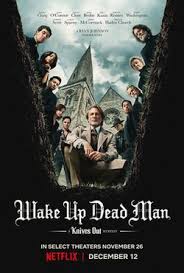
WAKE UP DEAD MAN
US, 2025, 144 minutes, Colour.
Daniel Craig, Josh O'Connor, Glenn Close, Josh Brolin, Mila Kunis, Jeremy Renner, Kerry Washington, Andrew Scott, Cailee Spaeny, Daryl MacCormack, Thomas Hayden Church, Jeffrey Wright, Annie Hamilton, James Faulkner, Bridget Everett.
Directed by Rian Johnson.
In 2019, movie audiences worldwide enjoyed a very entertaining murder mystery, Knives Out, a very starry cast, an offbeat private detective, genteel and from the South, Benoit Blanc, played by Daniel Craig. Three years later, writer-director, Rian Johnson, was successful again with The Glass Onion. And audiences wondered, now three years later again, whether this film, Wake Up Dead Man, could be a successful.
It is.
And, once again Daniel Craig’s charmingly eccentric Blanc, a star cast for character actors, a murder in an equivalently locked room, plenty of suspects, gradual revelations, twists (although many audiences probably pick the murderer but will be surprised at all the motivations and turns in the plot). There are references to Agatha Christie and Roger Ackroyd. And, Benoit Blanc uses the John Dickson Carr thriller, The Hollow Room, as a template for his theories.
No difficulties in recommending Wake Up Dead Man to murder mystery audiences – plenty to entertain, almost 2 ½ hours worth.
But, the surprise is the Catholicism pervading the whole story and treatment. Which meant checking whether writer-director, Rian Johnson is Catholic. In fact he grew up in a close evangelical community.
The filmmaker made Dead Man in large part to excavate his deeply religious youth, a core part of his identity that gradually faded in adulthood. “I slowly realized I was writing this through the lens of me, now,” Johnson says. “I had to step back into me, 30 years ago, and tap back into the things that inspired and drove me as a Christian”. David Canfield, 21 Nov. 2025. Hollywood Reporter.
The events take place in the fictional parish in New York state, Our Lady of Perpetual Fortitude, ruled over by an eccentric parish priest, Msgr Wicks, Josh Brolin rather savage, something of a cult leader in his hold over a group of parishioners, helping them, but exercising power, an angry man (and there is an interesting background to his place in the church), taking a stance against any inroads against him and the church, siege mentality. The common-sensed local Bishop, Jeffrey Wright, appoints an earnest young priest, Father Jud, to bring some balance to the parish. Father Jud is played by Josh O’Connor, one of his best performances, a former boxer with responsibility for death, changing his life, very much focus on Jesus of the Gospels, pastorally earnest. (Perhaps Rian Johnson had seen Mark Wahlberg as Father Stu!) An eventual clashing with the parish priest and his loyal parishioners.
The film introduces quite a range of characters, all potential suspects, the devoted manager of the parish, Glenn Close; the local doctor, Jeremy Renner; the local lawyer, Kerry Washington; an oddball novelist, Andrew Scott; a wheelchair-confined cellist, Cailee Spaeny; the caretaker, Thomas Hayden Church; a young would-be politician, Daryl McCormack (who has a marvellous short scene where he explains how he has campaigned in an enormous litany of every cause, every controversy, every movement in contemporary politics, especially in the USA).
And the murder takes place on Good Friday, and some rather fanatical beliefs and manoeuvrings in rising from the dead.
One of the features prominent in the film is that of confession, several between Msgr Wicks and Father Jud, some revelations of conscience, personality, some twists of conscience. And, Benoit Blanc, who declares himself absolutely rationalist, has to admire Father Jud, wants to save him from all the suspicions, sees that his Gospel compassion has something to commend it and arranges that the final revelation should take place in the church, everybody present, and that the murderer admits guilt in the framework of confession.
Many audiences will just observe this Catholic framework – but, the characters, the situations, the sins, repentance, the contrast between authoritarianism and pastoral enthusiasm make a difference for a Catholic audience.
- Audience enjoyment murder mysteries? Literary tradition from Agatha Christie, John Dickson Carr…? The film tradition? This third Benoit Blanc mystery?
- Audience enjoyment of Daniel Craig as Benoit Blanc, from the south, manner, speaking, clothes, style? The previous films, his status as detective, clues, interrogations, explanations, the dramatic confrontations, the accused, the suspects, the murderer?
- Father Jud and his story, writing up the accounts, his voice-over, his own story, young, boxer, killing his opponent, later saying he hated him, his sense of guilt, his discovery of Jesus, motivations, priesthood, the interview with the Bishop, his being reprimanded by the panel, his manner, vocabulary, talk about his faith and pastoral perspective? The Bishop sympathy, the new appointment?
- The warning about Msgr Wicks, Jud arriving, the encounter, at Wicks’ and his appearance, manner, way of speaking? His long status of the church? The back story, his father, widower, becoming a priest, establishing the church, his daughter and her ways, pregnancy, unknown father, the ministry of her father, his death at the altar, the inheritance, her wanting it, the destruction of the church and her anger, the encounter with Martha as a little girl, her death? The father and the mausoleum? Msgr Wicks, ordained, the church, the small congregation?
- Msgr Wicks, conservative, angry, feeling the church was under siege, his hold over the community, words of help, yet humiliating them, making them dependent? His thundery sermons? The encounter with Jud, the boxing, the sparring and the demonstration of asserting oneself? The issue of confessions, his talk about himself, especially the sexual dimensions of his life, and the later information about his prostate surgery and his assertions? Forcing Jud to confess to him? Jud and the uncomfortable experiences? The prayer penances? Time passing?
- The information about Martha, as a little girl, with the elderly priest and her devotion, the fight with his daughter and her death? The doing all the work in the parish, older, prim and proper, accounts, the organ playing, her devotion to Msgr Wicks? Her reaction to Jud? To the other parishioners? The homilies and her looking in admiration to the monsignor?
- Dr Nat, the doctor, devoted to his wife, her suddenly leaving him, his drinking, wanting her back? Vera, the lawyer, keeping the parish accounts? Cyrus, her looking after him, his growing up, his political ambitions, the sequence of his describing all the issues and causes that he had tried out? His use of the media, filming everything? Simone, her age, playing the cello, her incapacities, retiring, giving her money to the Parish? Lee, author, the lurid titles, his retirement, his house has a fortress with a defensive mode? Supportive of monsignor?
- The image of the Catholic Church, the progressive and pastoral perspectives as embodied by Jud, contemporary involvement in the Gospel and Jesus message for those in need? The contrast with the isolating, the defensive, the exercise of power, and the moral double standards?
- Monsignor and his meetings, the revelation of the meeting where he denounced everyone, their loyalties to him, the humiliations?
- The presence of Samson, gardener, alcoholic, monsignor rehabilitating him, Martha and her devotion? The television, his watching the matches? The interrogations by Blanc?
- Jud, his prayer meeting, their attendance, the reactions, the monsignor coming in, punching Jud? The atmosphere for Holy Week?
- Good Friday, the ceremony, all present, the homily, the singing of the chant with the cross, monsignor exiting, his collapse, Jud going in, dead, stabbed, the blood? The closed room?
- The police, the information, Jud under suspicion, his behaviour? The personality of the investigator, her tough stances, interrogations, suspicions of Jud?
- The calling in of Benoit Blanc, entering the church, the discussions with Jud, his not being a believer, the vocalising of attitudes of agnostics and atheists, criticism of belief? Yet his polite listening to Jud and the others, and his later moments of acknowledgement of faith and belief, his finally organising the final confession? His methods, the reliance on The Hollow Room, John Dickson Carr, going to the various possibilities?
- The developments of the case, the issue of the excavator for the mausoleum, the autopsy, Jud being present, having to leave the room, monsignor being buried in the mausoleum? Martha, her fussing, with the police, with Benoit Blanc, her belief in the resurrection, her continued prayer?
- The resurrection episode, Samson in the coffin, emerging investments, the range of cameras in the church and the mausoleum, motions filming, Jud arriving and slipping in the mud? His seeing the light, discovering Samson, his death? The police and further suspicions? Martha and her acknowledging that monsignor had risen from the dead and gone to heaven?
- The revelation that Cyrus was Msgr’s son, the unknown mother, Vera and her disgust and relationship with Cyrus, his bonding with monsignor, taking his name, being the heir, wanting to discover his grandfather’s inheritance? The keepsake, the apple, the lawyer, the search of documents? Benoit Blanc and Jud and their search?
- The further investigations, going to the doctor’s house, the discovery of monsignor’s body, the doctor dead, the further mystery?
- Jud, his sense of guilt, wanting to confess? Benoit Blanc’s reaction, assembling everybody in the church, the explanations, but his wanting to show compassion like Jud to those in need of compassion? Arranging the confession sequence?
- Martha, the confession, her explanations, the various clues, the background of the old priest, her devotion to him as a little girl, her contempt for his daughter, the truth about the old man’s death, swallowing the jewel, its being buried with him, Martha keeping the secret? Her shock at hearing the truth, turning against monsignor, side issue of the phone call to find out who booked the machine, Jud and his long discussions with Louise, pastoral compassion? That Martha had booked the machine, to get to the body of the old man, to retrieve the jewel? The solution to the mystery, the camera and the experts explanation about time lapse, Jud and his concealing the drink and monsignor’s reputation, but his collapse with the drugs, Martha selling the emblem on to the chasuble (and the background of the visit to the bar and the implement, Jud and his despair, throwing the implement through the window, their being two? The doctor doing the stabbing? Not able to find the alcohol container behind the door? Her plot with the doctor, to resurrect monsignor through Samson, the doctor and his greed, killing Samson, his explanation to Martha, going back to the house, the issue of the poisoned drink, Martha distracting the doctor, switching the cups, his death, her throwing him down the steps? Her retrieving the jewel? Her drinking the poison, her death?
- The aftermath, Vera leaving town, Cy and his further political ambitions, Lee and his book on publication and signing autographs, Simone playing the cello again?
- Jud, the discussions with the bishop, the support from the Bishop, going back to the church, the audience thinking he was using the money from the jewel – the renovations of the church, the restored crucifix – and the final revelation of the jewel buried in the crucifix?
- Satisfying murder mystery, death in the locked room, clues, investigation, solution?
Challengers

CHALLENGERS
US, 2023, 131 minutes, Colour.
Zendaya, Mike Faist, Josh O'Connor.
Directed by Luca Guadagnino.
Anyone for tennis? The title comes from a tournament in New Rochelle, the Challengers. And we are introduced to an intense match between two men, clearly rivals.
Quickly the narrative goes back two weeks, the explanations of the characters, then the film goes back 13 years, with many time shifts, sometimes flashbacks within flashbacks, for the audience something like watching a match, continually switching from looking at one end to the other. Sometimes this requires quite an effort. And, some of the photography and editing of the actual tennis play, swift and sharp, sometimes in slow motion, especially at the end, is not always effective for movie concentration.
While the focus is on tennis, at the centre is a triangle relationship. Because the film opens in 2019, we see the three protagonists in some kind of conflict, two men facing off each other in the finals of the tournament, the woman, Tasha, who has been at the centre of their lives for many years, sitting in the stands, watching intently. When the narrative goes back in time, we are very aware that matters have not turned out so well over the period of 13 years, heightening the drama of our watching the characters, their meeting, two men in love with the same woman, her choices, changes, tennis rivalries…
This is very much a film for younger audiences, that is, audiences in their 20s, especially. We see the characters at 18, follow their progress till the end of the film when they are in their early 30s.
One of the difficulties is that the three characters are not all that interesting in themselves. Nor are they particularly likeable, it is somewhat difficult to have a care for them in their conflicts. In fact, the performances are very effective, showing the complexities and ambiguities of the characters. Zendaya is the young woman at the centre, tennis champion, strong-minded, very determined. It is different with the two men. Josh O’Connor plays Patrick, easy-going in many ways, not as good as tennis as he might hope, wanting to be liked, more than a touch self-absorbed, and developing into something of a cad. The other man is Art, Mike Faist, more talented at tennis, friends with Patrick since they were boys. They have been successful in doubles, but both are smitten when they see Tasha and make a bid for her attentions.
The musical score is often techno beat, intense beats, sometimes obscuring the dialogue.
The film is rather long, we spend quite a time with each of the men, with Tasha, and the ups and downs of the relationships, and, depending on how interesting we find the characters, this will determine whether audiences would really enjoy Challengers or not.
- The title? The tennis theme? The triangle relationship theme? Interactions?
- The work of the director, his Italian background, themes, relationships, sexuality?
- The American settings, New Rochelle, Atlanta…? The tennis courts, clubs, audiences, apartments and hotels, cities streets, tennis atmosphere? The musical score, the techno score and its insistence?
- Opening in 2019, moving to 2 weeks earlier, moving 13 years earlier, the trio in the past and their encounters, relationship, through the years, back to the present and the final set? The audience looking at the change of times like tennis viewers, and is moving from one side to the other?
- The dramatic impact of showing the present, the competitiveness, determination, back to the past, the trio when young, tennis abilities, the men winning the doubles, Tasha and her skills, aged 18, amateurs, discussion of turning professional? The effect on the later sequences by knowing what the crisis was at the beginning and end of the film?
- Patrick and Art, friendship from boyhood, discussions about the relationship and friendship, sexual behaviour at 12, the bonding, playing together? The gradual revelation of Patrick and his personal intensity, self-absorbed? The contrast with Art, his abilities, quieter personality?
- The introduction to Tasha, age, tennis skills, determination, the final scream when winning, the media? The party, the two men approaching, conversation, her interest, the invitation, in the room, her turning up, the discussions, tantalising each of them, manipulating them to kiss each other? Her leaving?
- Their careers over the years? Art and greater success? Patrick less success? Their drifting apart? Tasha and her skills? Winning, the significance of her fall and accident, emotions, treatment, Art supporting her, her recovery, determination to go on? A very determined personality? Playing the two men?
- Patrick and his career, some victories, the years passing, down and out, Is Arriving in New Rochelle, his charm on the hotel manager and failing, sleeping in his car, trying to get the prize money? The matches in the tournament, the final and the three sets against Art?
- Art and his story, his relationship with Tasha, relationship with Patrick, Art and his support, success, marriage, their daughter, his mother caring for the daughter? The confrontation with Patrick?
- The three sets intercut throughout the film? Tightening the drama? One all, the final question
- the focus on the games, the tennis player, sequences, point of view of each character, the audience, the umpire, decisions about in and out, the school, the past tournaments, practice sequences, the place of the camera, editing and action?
- Patrick and his contacting Tasha, the phone number, his asking her to coach him, her violent reaction, keeping the note, returning to the hotel, the challenge as to whether she loved Art or not, going out, the encounter with Patrick, sexual, anger with him, getting out of the car, returning, Art with their daughter?
- Tasha asking Patrick to lose the set, his reactions, agreement, visual techniques for the final games, slow motion, pausing, Tasha and her intensity, final set points, each looking at the other, their decisions, the final play, long, and the ending with Patrick leaping the net and embracing Art? The future for each of them?
Chimera, La
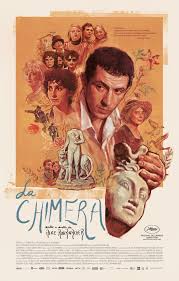
LA CHIMERA
Italy, 2023, 130 minutes, Colour.
Josh O’Connor, Carol Duarte, Isabella Rossellini, Alba Rohrwacher, Lou Roy-Lecollinet
Directed by Alice Rohrwacher.
Response to La Chimera may very much depend on mood and frame of mind as we choose to watch it.
The film has had some glowing reviews and Festival awards, with words like “poetic”, “magical”, being used to praise it. So, for the poetic frame of mind, no worries. But for audiences who might subscribe to a more prosaic, realistic frame of mind, perhaps not.
We are in Italy, a remote part of Tuscany, industrial, docks, poorer, dilapidated abandoned railway station, makeshift huts on mountainsides. There is a town, the streets, the cafe, but hard times.
The film was written by Alice Rohrwacher, a director with a strong reputation (Happy as Lazzaro). The star is the British actor, Josh O’Connor (Prince Charles in The Crown, Challengers), and a cast of Italian actors with an enjoyable cameo by Isabella Rossellini as a retired singer, demanding matriarch.
In the plot, while the setting is remote, the source of income is much more remote. It is treasure from buried in Etruscan tombs, with the locals digging them up, fixing and mending, and negotiating with an unseen dealer who markets them to wealthy international collectors.
So what is an Englishman doing in this setting? He is an archaeologist with a gift for divining the buried relics (using a forked branch). But he has lost his love, longing for her, dreams of her, and is returning to the town after serving a prison sentence.
He is taciturn, sombre, going to visit the singer but trying to avoid his ragtag band of past collaborators. But he does go back to divining, is attracted to the singer’s maid – and loosens up a little, but generally, a morose hangdog look.
.
There is background drama with the town’s characters, some comic touches (action speeded up at one stage in the character giving her opinion straight to camera). The critics have praised the evocative cinematography, the poetic aspects. And then there is a cameo from veteran actress Alba Rohrwacher (the director’s older sister) in an unexpected character.
There is some excitement towards the end with a significant discovery of a shrine in statue of goddess – and criminal shenanigans and small wheeler- deals.
An unexpected and offbeat drama.
- The title? The visual images and cards?
- The Italian setting, Tuscany, the remote town, the docks, the streets, the cafe, the abandoned railway station, ramshackle homes, makeshift huts on the mountains? The contrast with the city, the buildings, business dealings, the yacht on the lake, the option? The musical score, the range of songs and their lyrics illustrating the themes?
- Critical acclaim, poetic and magical? Festivals and awards? For the poetic imagination? Not for the realist imagination?
- The introduction to Arthur, in the train, with the young women, his comments, flirting, the salesman and his attack, comment on his smell? The white suit? The dream, his lost love? The mystery of an Englishman in Italy? The mysterious, poetic, dream sequences throughout the film, and the reprise of this same journey and characters later in the film?
- His arrival in the town, his friends meeting him, his not wanting to join them, is going to Flora’s house, the discussions with her, the lost love and the memories, the symbolism of her face, the son following them, the red thread on the ground and the later snapping of the thread after he sees it in the cave?
- His going to his makeshift huts, trying to settle back, meeting up with the friends, their work, personalities, the preparation for the Festival, the masks, the town and rejoicing?
- Arthur, his background, archaeology, his knowledge, the forked branch, trees upturned, the maid seeing them, pulling them out, the signals for the buried relics? upset? But his returning to the divining, finding the tombs, the contents, in the town, the group mending and fixing, the contact with Spartaco, Arthur indebted to Spartaco, going into the city and the office, the financial deals, not seeing Spartaco, meeting with her niece?
- The character of Italia, her background, her two children, the daughter older, the sleeping boy, concealing them? Wanting to sing? Serving as a maid to Flora? Flora and her household, the various women, their arguments? The visit to the railway station, her leg, the wheelchair? The railway station abandoned?
- Arthur, the attraction to Italia, going out with her, the Festival, the dancing, on the shore, the the sand above the hidden tombs, the discovery of the grave, her threatening the police,?
- Arthur and the discovery, in the tunnel, the shrine, the statue, the gifts? To get them out, breaking off the head? The seeming police? Spartaco’s henchmen disguised as police? Their getting the statue, packing it, transferring it to the yacht?
- Italia, the children, setting up a centre for them in the abandoned station, redecorating it? Her collaborators?
- The information about the yacht, Spartaco and her niece and explanations, the scenes of the auction, the wealthy clientele, Spartaco as a woman, her dress and style? The group coming to the auction, the intrusion, trying to bargain with Arthur, his mood, exasperation, throwing the head into the sea, the scene of drowning at the bottom of the sea?
- The consequences for the group? The consequences for Arthur? The presence of the police throughout but their not being able to convict?
- Arthur, his wanderings, finding the new cave, exploring, the thread and memories of his love?
