Displaying items by tag: Chris Cooper
History of Sound, The
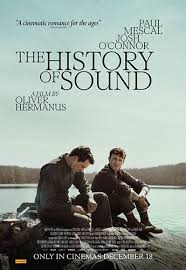
THE HISTORY OF SOUND
US, 2025, 128 minutes, Colour.
Paul Mescal, Josh O'Connor, Chris Cooper, Leo Cocovinis, Raphael Sbarge, Molly Price, Tom Nellis, Emma Canning.
Directed by Oliver Hermanus.
This film opens with the camera gliding down a beautiful river, a voice-over describing love for music, explaining how different notes are visualised as colours. The voice is that of Lionel, a young boy absorbed by sound and music, listening to his Kentucky farmer father playing the fiddle and singing local ballads. The title seems to indicate that this will be a documentary – and, by the end, the audience has documented the collecting and recording on wax cylinders of so many of the traditional ballads. However, The History of Sound is an intense personal drama.
In 1916, Lionel Gaines a scholarship in music to travel to Boston. In a pub, he encounters a young man singing a ballad at the piano, David, who then invites Lionel to sing. Lionel is played by Paul Mescal, frequently on screen in recent times from Gladiator II to playing Shakespeare in Hamnet. David is played by Josh O’Connor, also frequently on screen, the Mastermind, Wake Up Dead Man. They are both at their best, quite intense. Their common interest in songs, their friendship, turns into a love, which will have both fulfilment and devastation for each of them.
This is quite a long film, a great number of lingering sequences, the cameras staying on faces, the countryside, long periods for the background musical score. (And, surprisingly, the author, Ben Shattuck, has adapted his own short story for the screenplay.)
Action in World War I intervenes, David going to war, Lionel staying behind. But, on David’s return, the two go on their travels to Maine, visiting villages, visiting families, camping out, encountering all kinds of people who have treasured the ballads from the past, and their being encouraged to record their songs. And, so, as in different countries, as here in Maine, the heritage and history of music and song is captured and preserved.
The latter part of the film focuses on Lionel rather than David. Lionel travels, is part of a choir in Rome, decides to move to Oxford, begins a relationship with a wealthy young woman, breaks it as he returns to Kentucky at the death of his mother. He will later go to England and visit the Lake District.
And then, plot development that we have not anticipated, its emotional effect on Lionel which seems to be destructive.
And, The History of Sound might have ended there – but there is an epilogue, featuring Chris Cooper, indicating that whatever the tragedies there are in life, there are possibilities for overcoming them, for making good, for achievement, for purpose in life and contributing to the betterment of the world.
- The title and expectations? Sound, recordings, the colour of sound?
- The period, 1910-1980, Kentucky and its landscapes, the farm, the Homestead? Boston, music school? The travel through the countryside of Maine? Oxford? Rome? The Lake districts? The range of scenery and beauty?
- The music, the background score, the range of songs, balance, all throughout the film? The impact of the songs?
- Lionel, the voice-over, his explanations of sound and colour, particular notes and colours, the scenery of the river during his explanations? His age, at home, his father and the fiddle, songs, his mother? The Kentucky background?
- His scholarship, to Boston, 1916, hearing David sing, discussion, the people in the pub, the quiet, final scene, David accompanying, the impact? The love of music? The attraction, going home, the sexual attraction and experience? David in listing, going to the war, Lionel remaining in Boston?
- The end of the war, David and his experiences, silence about them? His story of his uncle, the travels to England, collecting the songs, the house in Newport? The invitation to Lionel to go on the travels?
- The two, the rugged countryside, camping out, the range of people, the recording equipment, the wax, the explanations, the children holding their throats and experiencing the vibrations of sound? The range of the tour and the experiences? And the bond between the two, love and sexuality?
- The return, David and his disappearance? While and his return home, his mother? The family, the grandfather?
- Lionel, of music, possibilities, memories of David, and Italy, the choir in Rome, his success? The encounter with the young man, the invitation to Venice, his decision to move on? Going to Oxford, success? The encounter with Clarissa, the attraction, sexual, going to visit her parents, the mansion, the relationship? Lionel wandering the house, the paintings and the explanation, the wealth, the piano, lying on the floor, memories of David?
- The news of his mother’s illness, the confrontation with Clarissa, her reaction, his leaving, the return home, his cleaning the house, the death of his mother? Working, the encounter with a couple, the friendship from school days, there sitting?
- His decision to go to Boston, looking for David, looking for the cylinders, the encounter with the teacher, the news of David to death longs since? The reason for no reply to his letters? The story of David’s marriage? Seeking out the wife, the encounter with her husband, mother and baby, and not sending any letter to him, returning the letters? Her explanations, David in Newport, knowing him from the girl, the marriage, his moods, the British marriage, his killing himself?
- The impact on Lionel, the decision to travel to Lake districts, getting lost, meeting a couple, the music?
- The end of the story – then the epilogue, 1980, Lionel in his 70s, his life, success, his book, the radio interview, his explanations of himself? His life, achievement, love of music? The arrival of the box, the container, the cylinders after so many decades, 60 years? Listening to music, listening to the words of David? The final meaning to his life?
