Displaying items by tag: Kerry Washington
Wake Up Dead Man. A Knives Out Mystery
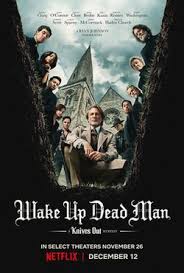
WAKE UP DEAD MAN
US, 2025, 144 minutes, Colour.
Daniel Craig, Josh O'Connor, Glenn Close, Josh Brolin, Mila Kunis, Jeremy Renner, Kerry Washington, Andrew Scott, Cailee Spaeny, Daryl MacCormack, Thomas Hayden Church, Jeffrey Wright, Annie Hamilton, James Faulkner, Bridget Everett.
Directed by Rian Johnson.
In 2019, movie audiences worldwide enjoyed a very entertaining murder mystery, Knives Out, a very starry cast, an offbeat private detective, genteel and from the South, Benoit Blanc, played by Daniel Craig. Three years later, writer-director, Rian Johnson, was successful again with The Glass Onion. And audiences wondered, now three years later again, whether this film, Wake Up Dead Man, could be a successful.
It is.
And, once again Daniel Craig’s charmingly eccentric Blanc, a star cast for character actors, a murder in an equivalently locked room, plenty of suspects, gradual revelations, twists (although many audiences probably pick the murderer but will be surprised at all the motivations and turns in the plot). There are references to Agatha Christie and Roger Ackroyd. And, Benoit Blanc uses the John Dickson Carr thriller, The Hollow Room, as a template for his theories.
No difficulties in recommending Wake Up Dead Man to murder mystery audiences – plenty to entertain, almost 2 ½ hours worth.
But, the surprise is the Catholicism pervading the whole story and treatment. Which meant checking whether writer-director, Rian Johnson is Catholic. In fact he grew up in a close evangelical community.
The filmmaker made Dead Man in large part to excavate his deeply religious youth, a core part of his identity that gradually faded in adulthood. “I slowly realized I was writing this through the lens of me, now,” Johnson says. “I had to step back into me, 30 years ago, and tap back into the things that inspired and drove me as a Christian”. David Canfield, 21 Nov. 2025. Hollywood Reporter.
The events take place in the fictional parish in New York state, Our Lady of Perpetual Fortitude, ruled over by an eccentric parish priest, Msgr Wicks, Josh Brolin rather savage, something of a cult leader in his hold over a group of parishioners, helping them, but exercising power, an angry man (and there is an interesting background to his place in the church), taking a stance against any inroads against him and the church, siege mentality. The common-sensed local Bishop, Jeffrey Wright, appoints an earnest young priest, Father Jud, to bring some balance to the parish. Father Jud is played by Josh O’Connor, one of his best performances, a former boxer with responsibility for death, changing his life, very much focus on Jesus of the Gospels, pastorally earnest. (Perhaps Rian Johnson had seen Mark Wahlberg as Father Stu!) An eventual clashing with the parish priest and his loyal parishioners.
The film introduces quite a range of characters, all potential suspects, the devoted manager of the parish, Glenn Close; the local doctor, Jeremy Renner; the local lawyer, Kerry Washington; an oddball novelist, Andrew Scott; a wheelchair-confined cellist, Cailee Spaeny; the caretaker, Thomas Hayden Church; a young would-be politician, Daryl McCormack (who has a marvellous short scene where he explains how he has campaigned in an enormous litany of every cause, every controversy, every movement in contemporary politics, especially in the USA).
And the murder takes place on Good Friday, and some rather fanatical beliefs and manoeuvrings in rising from the dead.
One of the features prominent in the film is that of confession, several between Msgr Wicks and Father Jud, some revelations of conscience, personality, some twists of conscience. And, Benoit Blanc, who declares himself absolutely rationalist, has to admire Father Jud, wants to save him from all the suspicions, sees that his Gospel compassion has something to commend it and arranges that the final revelation should take place in the church, everybody present, and that the murderer admits guilt in the framework of confession.
Many audiences will just observe this Catholic framework – but, the characters, the situations, the sins, repentance, the contrast between authoritarianism and pastoral enthusiasm make a difference for a Catholic audience.
- Audience enjoyment murder mysteries? Literary tradition from Agatha Christie, John Dickson Carr…? The film tradition? This third Benoit Blanc mystery?
- Audience enjoyment of Daniel Craig as Benoit Blanc, from the south, manner, speaking, clothes, style? The previous films, his status as detective, clues, interrogations, explanations, the dramatic confrontations, the accused, the suspects, the murderer?
- Father Jud and his story, writing up the accounts, his voice-over, his own story, young, boxer, killing his opponent, later saying he hated him, his sense of guilt, his discovery of Jesus, motivations, priesthood, the interview with the Bishop, his being reprimanded by the panel, his manner, vocabulary, talk about his faith and pastoral perspective? The Bishop sympathy, the new appointment?
- The warning about Msgr Wicks, Jud arriving, the encounter, at Wicks’ and his appearance, manner, way of speaking? His long status of the church? The back story, his father, widower, becoming a priest, establishing the church, his daughter and her ways, pregnancy, unknown father, the ministry of her father, his death at the altar, the inheritance, her wanting it, the destruction of the church and her anger, the encounter with Martha as a little girl, her death? The father and the mausoleum? Msgr Wicks, ordained, the church, the small congregation?
- Msgr Wicks, conservative, angry, feeling the church was under siege, his hold over the community, words of help, yet humiliating them, making them dependent? His thundery sermons? The encounter with Jud, the boxing, the sparring and the demonstration of asserting oneself? The issue of confessions, his talk about himself, especially the sexual dimensions of his life, and the later information about his prostate surgery and his assertions? Forcing Jud to confess to him? Jud and the uncomfortable experiences? The prayer penances? Time passing?
- The information about Martha, as a little girl, with the elderly priest and her devotion, the fight with his daughter and her death? The doing all the work in the parish, older, prim and proper, accounts, the organ playing, her devotion to Msgr Wicks? Her reaction to Jud? To the other parishioners? The homilies and her looking in admiration to the monsignor?
- Dr Nat, the doctor, devoted to his wife, her suddenly leaving him, his drinking, wanting her back? Vera, the lawyer, keeping the parish accounts? Cyrus, her looking after him, his growing up, his political ambitions, the sequence of his describing all the issues and causes that he had tried out? His use of the media, filming everything? Simone, her age, playing the cello, her incapacities, retiring, giving her money to the Parish? Lee, author, the lurid titles, his retirement, his house has a fortress with a defensive mode? Supportive of monsignor?
- The image of the Catholic Church, the progressive and pastoral perspectives as embodied by Jud, contemporary involvement in the Gospel and Jesus message for those in need? The contrast with the isolating, the defensive, the exercise of power, and the moral double standards?
- Monsignor and his meetings, the revelation of the meeting where he denounced everyone, their loyalties to him, the humiliations?
- The presence of Samson, gardener, alcoholic, monsignor rehabilitating him, Martha and her devotion? The television, his watching the matches? The interrogations by Blanc?
- Jud, his prayer meeting, their attendance, the reactions, the monsignor coming in, punching Jud? The atmosphere for Holy Week?
- Good Friday, the ceremony, all present, the homily, the singing of the chant with the cross, monsignor exiting, his collapse, Jud going in, dead, stabbed, the blood? The closed room?
- The police, the information, Jud under suspicion, his behaviour? The personality of the investigator, her tough stances, interrogations, suspicions of Jud?
- The calling in of Benoit Blanc, entering the church, the discussions with Jud, his not being a believer, the vocalising of attitudes of agnostics and atheists, criticism of belief? Yet his polite listening to Jud and the others, and his later moments of acknowledgement of faith and belief, his finally organising the final confession? His methods, the reliance on The Hollow Room, John Dickson Carr, going to the various possibilities?
- The developments of the case, the issue of the excavator for the mausoleum, the autopsy, Jud being present, having to leave the room, monsignor being buried in the mausoleum? Martha, her fussing, with the police, with Benoit Blanc, her belief in the resurrection, her continued prayer?
- The resurrection episode, Samson in the coffin, emerging investments, the range of cameras in the church and the mausoleum, motions filming, Jud arriving and slipping in the mud? His seeing the light, discovering Samson, his death? The police and further suspicions? Martha and her acknowledging that monsignor had risen from the dead and gone to heaven?
- The revelation that Cyrus was Msgr’s son, the unknown mother, Vera and her disgust and relationship with Cyrus, his bonding with monsignor, taking his name, being the heir, wanting to discover his grandfather’s inheritance? The keepsake, the apple, the lawyer, the search of documents? Benoit Blanc and Jud and their search?
- The further investigations, going to the doctor’s house, the discovery of monsignor’s body, the doctor dead, the further mystery?
- Jud, his sense of guilt, wanting to confess? Benoit Blanc’s reaction, assembling everybody in the church, the explanations, but his wanting to show compassion like Jud to those in need of compassion? Arranging the confession sequence?
- Martha, the confession, her explanations, the various clues, the background of the old priest, her devotion to him as a little girl, her contempt for his daughter, the truth about the old man’s death, swallowing the jewel, its being buried with him, Martha keeping the secret? Her shock at hearing the truth, turning against monsignor, side issue of the phone call to find out who booked the machine, Jud and his long discussions with Louise, pastoral compassion? That Martha had booked the machine, to get to the body of the old man, to retrieve the jewel? The solution to the mystery, the camera and the experts explanation about time lapse, Jud and his concealing the drink and monsignor’s reputation, but his collapse with the drugs, Martha selling the emblem on to the chasuble (and the background of the visit to the bar and the implement, Jud and his despair, throwing the implement through the window, their being two? The doctor doing the stabbing? Not able to find the alcohol container behind the door? Her plot with the doctor, to resurrect monsignor through Samson, the doctor and his greed, killing Samson, his explanation to Martha, going back to the house, the issue of the poisoned drink, Martha distracting the doctor, switching the cups, his death, her throwing him down the steps? Her retrieving the jewel? Her drinking the poison, her death?
- The aftermath, Vera leaving town, Cy and his further political ambitions, Lee and his book on publication and signing autographs, Simone playing the cello again?
- Jud, the discussions with the bishop, the support from the Bishop, going back to the church, the audience thinking he was using the money from the jewel – the renovations of the church, the restored crucifix – and the final revelation of the jewel buried in the crucifix?
- Satisfying murder mystery, death in the locked room, clues, investigation, solution?
Six Triple Eight, The
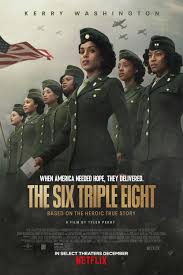
THE SIX TRIPLE EIGHT
US, 2024, 127 minutes, Colour.
Kerry Washington, Ebony Obsidian, Dean Norris, Shanice Shantay, Gregg Sulkin, Jay Reeves, Sam Waterston, Susan Sarandon, Oprah Winfrey.
Directed by Tyler Perry.
Inevitably many people who see this film will remember the 2016 drama of African-American women who were employed as part of the World War II effort, Hidden Figures.
This is a film written and directed by Tyler Perry, a significant influence in making American movies with African-American themes, with his own studios in Atlanta, Georgia, writing, directing, often appearing. While most of his films have had family and domestic themes, his now taken on the portrait of this significant group of women, their volunteering for war service, their treatment by the American military, their experience of racist discrimination and insult, their being given a mission, offered little support, even hindered, but a fine achievement in distributing in 90 days towards the end of the war, a huge amount of mail to and from those soldiers on war fronts.
While the film is based on actual characters and events, especially the leader of the women, Major Charity Adams, played with strong conviction by Kerry Washington, personal stories are introduced which gives a humane perspective to the military enterprise.
Initially, the film focuses on December 1943, young pilot crashing, his letter being taken by a passing soldier who has come from the trenches and placed it in the mail bag. Then, back to 1942, Philadelphia, the young man, Jewish, and his love for an African-American girl, Lena, her demanding mother and grandmother, who work in catering for events, the lyrical happiness between the two and his going off to war. With no news from him, Lena, Ebony Obsidian, volunteers for the war effort.
Some of the scenes parallel sequences in films about recruits arriving, the conditions, the severe officers, the physical demands on training, the variety of personalities, clashes and working together. Lena is the youngest and there is a focus on a group of women throughout the film, making the story more personalised.
The story is historically situated when the mother of a soldier has not heard from her son for three years, stands vigil at the Whitecap house, asked to see Eleanor Roosevelt, explaining the situation to her, to her husband the President, and Mary MacLeod Bethune, an American advocate for women in the war. (As a bonus, they are played by Susan Sarandon, Sam Waterston and Oprah Wnfrey.)
The key to the story is the women being assigned to go to Europe to work on the distribution of the huge amount of undistributed letters. Some of the heads of the military, especially General Halt, Dean Norris, are particularly demanding, obnoxious, blatantly racist, for example, horrified at black women reading the letters of white men. Obstacles are placed, the mail is kept at an old English school, conditions difficult, the women renovating their headquarters, working out logistics, not succeeding immediately, finding clues, Lena, especially, contributing while eventually getting that lost letter from the opening of the film and finding the young man’s grave.
The women’s achievement is not well acknowledged but they are acclaimed by a group at the railway station. However, the work was minimally recognised until decades later. In fact, there are many photos of the women at the end of the film, newsreel footage, and the actual Lena, aged 100, interviewed and reminiscing about the experience. And the military camp where they trained has had its name changed to include a tribute to Major Adams.
Many audiences were very much moved by watching the film. Those with military background raise quite a number of objections about the stage of battles, funerals, uniforms and many details which prevented them from being moved overall by the impact of this tribute.
- Based on actual characters and events? The final tributes, comments, photos and newsreel footage?
- The US, the atmosphere of World War II, those in service, those at home, communications, lack of information? The piling of the letters in England? The need for distribution? Morale for the soldiers?
- The work of Tyler Perry, producing, writing, directing? African-American stories, African-American issues? Issues of racism? American society?
- The prologue, 1943, December, the action sequences, the trenches, the soldiers going over, killed, bombings, the plane crash, the young soldier, the encounter with the plane, seeing the letter with the blood, taking it and putting it in the mail? The dead pilot?
- 1942, the focus on Lena, her age, at school, with her severe mother, with her grandmother, the home scenes? Friendly with Abram? His visit to the house, her riding in the back of the car, the exhilaration, his love for her, her shyness? Catering for the party, the bigoted girlfriend, standing in the way, insulting, the two going outside, the song, You made me love you…? The farewell? The impact on Lena, no news, thinking that Abram was dead, her family, the future, studies, her decision to join the army?
- The introduction of the African-American women and their war service? The range of those joining up, the film’s focus on the particular group, their characters, backgrounds, interactions, Jonnie May and her brashness, the more refined and religious young women? Lena in this group? The big number of women joining?
- The buses, arriving, the introduction of Major Charity Adams, in charge, her personality, the responsibility, her self-assurance, yet the continued attacks on her and her confidence, racism, prejudice against women? The development of her character throughout the film, the loyal assistant, the stern drills for the women, the training, her comments on Lena, the later speaking privately with her, affirmation, and her praise for her insight for the distribution of the male through the symbols on the envelopes? The mission, her meeting with the authorities, their contempt for her, lack of letters and orders, on the plane, in the UK, the derogatory remarks about the women, seem on the ship, the conditions, seasick, they’re coming off the ship, marching in order and taking the salute?
- The importance of the mission, lack of faith in the women, the character of General Halt, his personality, rigorous Army, racist, assertion of the white males, humiliating major Adams, the various confrontations, the final confrontation, Major Adams and her defiance? The possibilities of court-martial? The death of the women in the accident, the funeral, no military support, the chaplain, the severity of his sermon, the attack on Major Adams, her going to the office, finding his mail, spying on her, dismissing him?
- The logistics of sorting the letters, the vast number, the conditions, King Edward’s School, the cold, the accommodation, the women transforming it, making it habitable, even the beauty parlour, the cold, the vermin, the effect on the mail? Setting up, sorting, the slow sorting, the condition of the mail?
- The various ideas, names and categories, locations, maps and indications, Lena and her noticing the symbols, the map, greater flow of the letters? Of the continual hindrance by the bureaucracy, the army prejudice, the officers and their words and treatment of the women?
- Lena, her letter, going to the cemetery, reading the letter? His message? The attentions of Hugh, his background, service, intending to marry, the friendship with Lena, the dance, the song, her grief? The funeral, accompanying her to the cemetery, accompanying her back to the barracks?
- The women going on strike, Major Adams and her reaction, their applauding her?
- The background of the woman and not receiving any mail, standing outside the White House, Eleanor Roosevelt, bringing her in, the discussions, the visit of Mary McLeon Bethune, the pioneer for African-American women? President Roosevelt himself?
- General Hall, the death of Roosevelt, comments on Truman, his ridiculing of the women and their work?
- The ultimate success, the methods, within 90 days, the distribution of so much mail, the scenes of the men receiving it in the war areas, the families, the woman who stood outside the White House?
- The women at the station, the acclamation by the crowd?
- The final information, the lack of acknowledgement of the work, the women? Lena aged 100, the interview, her comments, the photos of the other women? And the renaming of the Fort – and the honouring of Major Adams?
