Displaying items by tag: Gaby Hoffmann
Mastermind, The
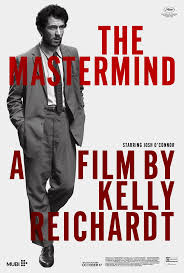
THE MASTERMIND
US, 2025, 110 minutes, Colour.
Josh O'Connor, Sterling Thompson, Alana Haim, Jasper Thompson, Bill Camp, Hope Davis, John Magaro, Gabby Hoffman, Amanda Plummer..
Directed by Kelly Reichardt.
Many films specialists, noting the information, written and directed by Kelly Reichardt, is sufficient for them to want to see this film. (Over 30 years, Kelly Reichardt has directed only 10 feature films and a number of short films but has built up a reputation with a range of American stories, often with a focus on women, but also offering food for reflection on American history and society.
And this continues with this film, a museum robbery, specifically inspired by the 1972 robbery of the Worcester Art Museum in Massachusetts, in which two Gauguins, a Picasso, and a Rembrandt were stolen. Her interest, however, is not so much in the robbery but on the character, the mastermind of the title (though, looking at his career, the title is quite ironic), his behaviour in the aftermath of the robbery and exposure. Some commentators refer to the film as an “anti-heist” film.
The setting is 1970, upheaval in the United States at the end of the 60s, social unrest, but, especially, the background of the war in Vietnam.
The central character is played by Josh O’Connor, busy with releases in 2025, The History of Sound as well as Wake Up Dead Man. He is a family man, a carpenter, unemployed, in need of money, planning the stealing of artwork from the local gallery, hiring three petty criminals, not vetting them in any mastermind kind of way, their exposing him, his trying to rationalise, his wife leaving him with the family, his wanting money from his mother, his father a judge critical about the lack of ambition of the thieves.
The mastermind is abducted by the criminals, gets away, but with public knowledge about his crime, he begins an odyssey, getting lifts, trying to survive, lack of money, going to a friend from the past but moved on by the friend’s wife, his continuing on the road and an uncertain ending as he steals a woman’s purse, tries to escape through the Vietnam war protest and is elected arrested.
Many audiences, Kelly Reichardt fans, welcomed the film. For many others, even some who admire Kelly Reichardt, have found the film difficult to sit through, the pace, the unsympathetic central character… (Which was the experience of this reviewer.)
- The title, for James Mooney, accurate, ironic?
- The 1970s setting, social upheaval in the US, financial difficulties, the background of the Vietnam war? Re-creation of the period? The musical score?
- The initial plot, Mooney, the stealing of the car, the backing out of the driver, his choice of the two colleagues, the plan to steal the art, at the gallery, removing the paintings? His associates, Gibson and his rations, pulling the gun, later robbing the bank? Guy asking for more money?
- Mooney at home, his wife, family, relationship with Tommy? His mother and giving him money? His father, judge? His comments about the lack of initiative by the thieves?
- Mooney, having to cope with situations, sending his wife and family away, keeping his son, taking with him? The confrontation with Guy? The setup, the criminals, the abduction? The consequences?
- Mooney, getting away, on the road, money, surviving, his situation becoming public? The alienation of his wife, the phone calls?
- Going to stay with his friend, Fred and his wife, their life together, memories of the past, Fred and his wariness, the wife, her making the connection with the professor to act as a fence for the paintings, his being sent away?
- His plans, on the road, stealing the woman’s purse, trying to escape through the Vietnam war protesters, his being arrested? And then?
Springsteen: Deliver Me from Nowhere
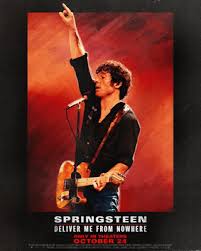
SPRINGSTEEN: DELIVER ME FROM NOWHERE
US, 2025, 120 minutes, Colour.
Jeremy Alan White, Jeremy Strong, Stephen Graham, Odessa Young, Gaby Hoffman, David Krumholz, Paul Walter Hauser, Harrison Sloan Gilbertson, Grace Gummer, Mark Maron, Matthew Anthony Pellicano Jr.
Directed by Scott Cooper.
Bruce Springsteen is a significant figure in American and world music, 20th century, 21st-century. This is a portrait of Springsteen in 1981-1982 rather than a biography, rather than an exuberant immersion in his music. That is the tone of the title, Deliver Me from Nowhere. And, in one sequence where a car salesman says to Springsteen, “I know who you are”, Springsteen replies “at least that’s one of us”.
Some background on Springsteen himself for those unfamiliar or less familiar with his life and career, courtesy of Wikipedia:
Springsteen has released 21 studio albums spanning six decades; most of his albums feature the E Street Band, his backing band since 1972. Springsteen is a pioneer of heartland rock, combining commercially successful rock with poetic, socially conscious lyrics that reflect working class American life.
And there is some Catholic background:
Springsteen attended the St. Rose of Lima Catholic School in Freehold, where he was at odds with the nuns and rebelled against the strictures imposed upon him, though some of his later music reflected a Catholic ethos and included Irish Catholic hymns with a rock music twist. In 2012, Springsteen said that it was his Catholic upbringing rather than his political ideology that most influenced his music. He said his faith gave him a "very active spiritual life" but joked that this "made it very difficult sexually" and added "once a Catholic, always a Catholic… I don't participate in my religion but I know somewhere... deep inside... I'm still on the team.”
This is very serious portrait and becomes more serious as it continues. There are black and white flashbacks to Springsteen’s childhood, a protective mother, a seriously alcoholic father, sometimes violent, demanding his son to be a man. Gaby Hoffman plays the mother and British actor, Stephen Graham (significant this year for his contribution to the series, Adolescence) is his father. But, Springsteen has the opportunity for some reconciliation with his father.
In 1981-1982, Springsteen worked in his bedroom, moved by watching the film, Badlands (1978) with Martin Sheen. It led to his reflections and a series of songs, just acoustic guitar, with very serious themes, Nebraska. And, at the same time, he composed what became something of an anthem, Born in the USA. (He is shown watching, several times, Robert Mitchum in the 1955 The Night of the Hunter, taken by his father to see it, the scenes of menace on the little boy.)
Springsteen is played effectively by Jeremy Alan White, award winner for his television series The Bear. Some have remarked that he does not look like Springsteen but, in his performance, he is able to communicate much of what drives the loner as well as the hyper-vigorous concert performances.
Supported strongly by his manager, Jon Landau, another fine performance from Jeremy Strong (Succession and frightening as Roy Cohn in The Apprentice), and by sympathetic waitress, Faye, Odessa Young, all kinds of opportunities offered to him by record companies and fans, Springsteen is often a recluse, feeling haunted many times, and an eventual acknowledgement of depression.
Which means that this film is a piece of Americana, on 20th century popular culture, an opportunity to appreciate Springsteen’s imagination and creativity, some insights into his perceptions of the US, the performance of some songs and songs in process, the American response (despite recent public condemnations of Springsteen by President Trump) rather than a concert musical.
- The title, the focus on Springsteen as a loner, depression? The experience of his loan composition of the album, Nebraska?
- Audience response to Springsteen, six decades of music, performance, public figure? Reputation, honest, medal from President Biden, criticism from President Trump?
- The film not as a concert experience although songs and performance included? The film is a portrait, flashbacks to childhood, 1981-1982, tours, composition, Nebraska, Born in the USA? Collaboration with Jon Landau? Record companies and agents, the recordings and the complications?
- Bruce Springsteen as a singer, performer, poet, creator, lyricist? And the performance by Jeremy Alan White?
- A picture of Bruce Springsteen, the New Jersey background, home life, his protective mother, going to the bar to ask his father to come home, the violence towards his mother, a to spy with his father, his father hitting him, the drinking, taking him to see The Night of the Hunter, Bruce with the baseball bat? The placing of these memories throughout the film?
- The opening concert, the energy, the performance, the exhaustion, the fans and interviews? His relationship with Jon Landau, over the years, friendship? Landau serious, knowing Springsteen’s genius, listening, advising, at home with his wife and testing ideas? Connections with the record companies, promotion, especially concerning Nebraska and the response of A whole Teller? The issue of Nebraska, the recording, the orchestra, Springsteen’s dissatisfaction, perfectionism? The mental health issues and Jon Landau’s support?
- The creation of Nebraska, watching Martin Sheen in Badlands, researching the story, the issues, resentment against society, the murders, the motivations and reactions? Is visualised? Impact, the suggestion of stories, the suggestion of songs? And the significance of the many sequences with the composing of the songs, their being played? Different from his other songs?
- At home, alone on the guitar, friendship with Mike, bringing the equipment, listening, the cassette, the limitations, the echo, Springsteen wanting this exact replication, the extent of the technicians in reproducing the sand? Then the album to be issued without name, press, promotion, tour? The scepticism of the industry?
- The episode with born in the USA, film, Paul Schrader? The composition, possessed in the performance? The promoters wanting it out there? It is being held until after Nebraska?
- Springsteen and his personal life, loner, awkward relationships, meeting the friend from school, Faye, the conversation, her being a fan, going to house, meeting her daughter, the outings, the play, his ability at being a father figure for the daughter? The merry-go-round is and all kinds of entertainment? The sexual relationship with Faye? Then his absence, not answering the phone, the conversations with Faye, leading up to her confronting him, and his leaving, her accusing him of always running away from himself?
- The issue of knowing himself or not, the quote from Flannery O’Connor about going back to the past which was not there? The car salesman and Springsteen’s response? The eventual admission of depression, going out to California, the encounter with his father, age, drink, losing his job, his mother’s concern, taking his father to hospital?
- Going to therapy, his weeping? 10 months, some recovery?
- The concert, performance, John and his support, his mother present, his father, going to see his father, the invitation to sit on his lap, the reconciliation?
- The final information, the success of Nebraska, Born in the USA, his later career – and the film over 40 years later?
