Displaying items by tag: Daryl McCormack
Wake Up Dead Man. A Knives Out Mystery
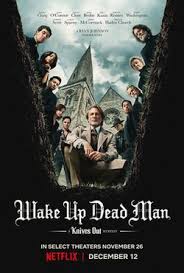
WAKE UP DEAD MAN
US, 2025, 144 minutes, Colour.
Daniel Craig, Josh O'Connor, Glenn Close, Josh Brolin, Mila Kunis, Jeremy Renner, Kerry Washington, Andrew Scott, Cailee Spaeny, Daryl MacCormack, Thomas Hayden Church, Jeffrey Wright, Annie Hamilton, James Faulkner, Bridget Everett.
Directed by Rian Johnson.
In 2019, movie audiences worldwide enjoyed a very entertaining murder mystery, Knives Out, a very starry cast, an offbeat private detective, genteel and from the South, Benoit Blanc, played by Daniel Craig. Three years later, writer-director, Rian Johnson, was successful again with The Glass Onion. And audiences wondered, now three years later again, whether this film, Wake Up Dead Man, could be a successful.
It is.
And, once again Daniel Craig’s charmingly eccentric Blanc, a star cast for character actors, a murder in an equivalently locked room, plenty of suspects, gradual revelations, twists (although many audiences probably pick the murderer but will be surprised at all the motivations and turns in the plot). There are references to Agatha Christie and Roger Ackroyd. And, Benoit Blanc uses the John Dickson Carr thriller, The Hollow Room, as a template for his theories.
No difficulties in recommending Wake Up Dead Man to murder mystery audiences – plenty to entertain, almost 2 ½ hours worth.
But, the surprise is the Catholicism pervading the whole story and treatment. Which meant checking whether writer-director, Rian Johnson is Catholic. In fact he grew up in a close evangelical community.
The filmmaker made Dead Man in large part to excavate his deeply religious youth, a core part of his identity that gradually faded in adulthood. “I slowly realized I was writing this through the lens of me, now,” Johnson says. “I had to step back into me, 30 years ago, and tap back into the things that inspired and drove me as a Christian”. David Canfield, 21 Nov. 2025. Hollywood Reporter.
The events take place in the fictional parish in New York state, Our Lady of Perpetual Fortitude, ruled over by an eccentric parish priest, Msgr Wicks, Josh Brolin rather savage, something of a cult leader in his hold over a group of parishioners, helping them, but exercising power, an angry man (and there is an interesting background to his place in the church), taking a stance against any inroads against him and the church, siege mentality. The common-sensed local Bishop, Jeffrey Wright, appoints an earnest young priest, Father Jud, to bring some balance to the parish. Father Jud is played by Josh O’Connor, one of his best performances, a former boxer with responsibility for death, changing his life, very much focus on Jesus of the Gospels, pastorally earnest. (Perhaps Rian Johnson had seen Mark Wahlberg as Father Stu!) An eventual clashing with the parish priest and his loyal parishioners.
The film introduces quite a range of characters, all potential suspects, the devoted manager of the parish, Glenn Close; the local doctor, Jeremy Renner; the local lawyer, Kerry Washington; an oddball novelist, Andrew Scott; a wheelchair-confined cellist, Cailee Spaeny; the caretaker, Thomas Hayden Church; a young would-be politician, Daryl McCormack (who has a marvellous short scene where he explains how he has campaigned in an enormous litany of every cause, every controversy, every movement in contemporary politics, especially in the USA).
And the murder takes place on Good Friday, and some rather fanatical beliefs and manoeuvrings in rising from the dead.
One of the features prominent in the film is that of confession, several between Msgr Wicks and Father Jud, some revelations of conscience, personality, some twists of conscience. And, Benoit Blanc, who declares himself absolutely rationalist, has to admire Father Jud, wants to save him from all the suspicions, sees that his Gospel compassion has something to commend it and arranges that the final revelation should take place in the church, everybody present, and that the murderer admits guilt in the framework of confession.
Many audiences will just observe this Catholic framework – but, the characters, the situations, the sins, repentance, the contrast between authoritarianism and pastoral enthusiasm make a difference for a Catholic audience.
- Audience enjoyment murder mysteries? Literary tradition from Agatha Christie, John Dickson Carr…? The film tradition? This third Benoit Blanc mystery?
- Audience enjoyment of Daniel Craig as Benoit Blanc, from the south, manner, speaking, clothes, style? The previous films, his status as detective, clues, interrogations, explanations, the dramatic confrontations, the accused, the suspects, the murderer?
- Father Jud and his story, writing up the accounts, his voice-over, his own story, young, boxer, killing his opponent, later saying he hated him, his sense of guilt, his discovery of Jesus, motivations, priesthood, the interview with the Bishop, his being reprimanded by the panel, his manner, vocabulary, talk about his faith and pastoral perspective? The Bishop sympathy, the new appointment?
- The warning about Msgr Wicks, Jud arriving, the encounter, at Wicks’ and his appearance, manner, way of speaking? His long status of the church? The back story, his father, widower, becoming a priest, establishing the church, his daughter and her ways, pregnancy, unknown father, the ministry of her father, his death at the altar, the inheritance, her wanting it, the destruction of the church and her anger, the encounter with Martha as a little girl, her death? The father and the mausoleum? Msgr Wicks, ordained, the church, the small congregation?
- Msgr Wicks, conservative, angry, feeling the church was under siege, his hold over the community, words of help, yet humiliating them, making them dependent? His thundery sermons? The encounter with Jud, the boxing, the sparring and the demonstration of asserting oneself? The issue of confessions, his talk about himself, especially the sexual dimensions of his life, and the later information about his prostate surgery and his assertions? Forcing Jud to confess to him? Jud and the uncomfortable experiences? The prayer penances? Time passing?
- The information about Martha, as a little girl, with the elderly priest and her devotion, the fight with his daughter and her death? The doing all the work in the parish, older, prim and proper, accounts, the organ playing, her devotion to Msgr Wicks? Her reaction to Jud? To the other parishioners? The homilies and her looking in admiration to the monsignor?
- Dr Nat, the doctor, devoted to his wife, her suddenly leaving him, his drinking, wanting her back? Vera, the lawyer, keeping the parish accounts? Cyrus, her looking after him, his growing up, his political ambitions, the sequence of his describing all the issues and causes that he had tried out? His use of the media, filming everything? Simone, her age, playing the cello, her incapacities, retiring, giving her money to the Parish? Lee, author, the lurid titles, his retirement, his house has a fortress with a defensive mode? Supportive of monsignor?
- The image of the Catholic Church, the progressive and pastoral perspectives as embodied by Jud, contemporary involvement in the Gospel and Jesus message for those in need? The contrast with the isolating, the defensive, the exercise of power, and the moral double standards?
- Monsignor and his meetings, the revelation of the meeting where he denounced everyone, their loyalties to him, the humiliations?
- The presence of Samson, gardener, alcoholic, monsignor rehabilitating him, Martha and her devotion? The television, his watching the matches? The interrogations by Blanc?
- Jud, his prayer meeting, their attendance, the reactions, the monsignor coming in, punching Jud? The atmosphere for Holy Week?
- Good Friday, the ceremony, all present, the homily, the singing of the chant with the cross, monsignor exiting, his collapse, Jud going in, dead, stabbed, the blood? The closed room?
- The police, the information, Jud under suspicion, his behaviour? The personality of the investigator, her tough stances, interrogations, suspicions of Jud?
- The calling in of Benoit Blanc, entering the church, the discussions with Jud, his not being a believer, the vocalising of attitudes of agnostics and atheists, criticism of belief? Yet his polite listening to Jud and the others, and his later moments of acknowledgement of faith and belief, his finally organising the final confession? His methods, the reliance on The Hollow Room, John Dickson Carr, going to the various possibilities?
- The developments of the case, the issue of the excavator for the mausoleum, the autopsy, Jud being present, having to leave the room, monsignor being buried in the mausoleum? Martha, her fussing, with the police, with Benoit Blanc, her belief in the resurrection, her continued prayer?
- The resurrection episode, Samson in the coffin, emerging investments, the range of cameras in the church and the mausoleum, motions filming, Jud arriving and slipping in the mud? His seeing the light, discovering Samson, his death? The police and further suspicions? Martha and her acknowledging that monsignor had risen from the dead and gone to heaven?
- The revelation that Cyrus was Msgr’s son, the unknown mother, Vera and her disgust and relationship with Cyrus, his bonding with monsignor, taking his name, being the heir, wanting to discover his grandfather’s inheritance? The keepsake, the apple, the lawyer, the search of documents? Benoit Blanc and Jud and their search?
- The further investigations, going to the doctor’s house, the discovery of monsignor’s body, the doctor dead, the further mystery?
- Jud, his sense of guilt, wanting to confess? Benoit Blanc’s reaction, assembling everybody in the church, the explanations, but his wanting to show compassion like Jud to those in need of compassion? Arranging the confession sequence?
- Martha, the confession, her explanations, the various clues, the background of the old priest, her devotion to him as a little girl, her contempt for his daughter, the truth about the old man’s death, swallowing the jewel, its being buried with him, Martha keeping the secret? Her shock at hearing the truth, turning against monsignor, side issue of the phone call to find out who booked the machine, Jud and his long discussions with Louise, pastoral compassion? That Martha had booked the machine, to get to the body of the old man, to retrieve the jewel? The solution to the mystery, the camera and the experts explanation about time lapse, Jud and his concealing the drink and monsignor’s reputation, but his collapse with the drugs, Martha selling the emblem on to the chasuble (and the background of the visit to the bar and the implement, Jud and his despair, throwing the implement through the window, their being two? The doctor doing the stabbing? Not able to find the alcohol container behind the door? Her plot with the doctor, to resurrect monsignor through Samson, the doctor and his greed, killing Samson, his explanation to Martha, going back to the house, the issue of the poisoned drink, Martha distracting the doctor, switching the cups, his death, her throwing him down the steps? Her retrieving the jewel? Her drinking the poison, her death?
- The aftermath, Vera leaving town, Cy and his further political ambitions, Lee and his book on publication and signing autographs, Simone playing the cello again?
- Jud, the discussions with the bishop, the support from the Bishop, going back to the church, the audience thinking he was using the money from the jewel – the renovations of the church, the restored crucifix – and the final revelation of the jewel buried in the crucifix?
- Satisfying murder mystery, death in the locked room, clues, investigation, solution?
Twisters
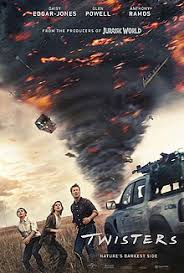
TWISTERS
US, 2024, 117 minutes, Colour.
Daisy Edgar-Jones, Glen Powell, Anthony Ramos, Brandon Perea, Maura Tierney, Harry Haddon-Paton, Sasha Lane, Darrell McCormack, David: Corenswet.
Directed by Isaac Lee Chung.
By a happy twist of fate, Twisters is an entertaining crowd-pleaser. Anyone who buys a ticket, keen to see tornadoes in action as well as the human efforts to chase and combat them, will find a multitude of twisters here. The special effects of the tornadoes themselves, the visuals of their destructive force, the ruins and aftermath, are quite spectacular. And the editing keeps the action running at a very brisk pace, often edge-of-the-seat adrenaline pumping.
1996, the original Twister was a holiday entertainment, much the expected theme, two experts, despite divorce proceedings, working together to chase the tornadoes. The director of that film, Jan de Bont, had not heard that there was to be this kind of sequel, making a comment that a sequel could only succeed if the tornadoes were bigger. The filmmakers this time have absolutely taken notice of that observation, not only are they bigger, there are many more of them.
But, the screenplay here places quite a lot of emphasis on the science – whether the audience understands the details of it or not. In fact, the film opens with a young enthusiast, Kate, Daisy Edgar-Jones, leading a team that hopes to release chemicals into the eye of the twister to dissipate its force. There are some scientific explanations. But, the experiment is a tragic failure, the deaths of several of the participants.
Then we go five years later. One of Kate’s former colleagues, Javi (Anthony Ramos) enlists her help with his experiments, placing tracking machines around the tornado in order to get a three-dimensional reading. Again, scientific explanations. By contrast, there is Tyler (a grinning Glen Powell more gung ho at first and he was in Top Gun Maverick), a so-called tornado wrangler, with his own team of scientists (who, In All clothes, do not look like it), and filming his exploits, taking tornado tourists out to witness the phenomena, and a British journalist joining. in
Obviously, there is going to be rivalry. And there is. However, there are some jaw-dropping sequences of the tornadoes and their force, extraordinary destruction and ruin with the challenge to Kate and Tyler and Javi as to whether they pursue their research or go to help people in distress. (And in the background there are themes of corporate exploitation of those whose homes of livelihoods have been destroyed.)
In fact, Kate retires from the chasing and goes home, her mother urging her to do more research, Tyler tracking her down and collaborating – after they go to rodeo, also a tornado victim. Already magazine articles are being headed “whirlwind romance”! At first it is a battle of the sexes, but very strong on equality between men and women, and then scientific collaboration. Actually, there are some sequences during the final credits when audiences are stampeding for the exits, which actually show further plot developments.
Twisters sets out to be an action-disaster holiday entertainment. It succeeds well.
- The reality of tornadoes, twisters in the United States, the Southern States? The weather phenomena? The impact on towns and populations, on the countryside?
- The 1996 film and its popularity? Continued films on twisters? This sequel, many more tornadoes, much more devastation, much more scientific speculation, tornado wrangling, tornado tourism, experiments to understand tornadoes, physics and chemistry?
- The film in the disaster movie tradition? Action, adventure, characters, crises?
- The opening, Kate and her team, the scientific background, their personalities and interactions, the dangers of the tornado, the attempt to release the chemicals, winds, vehicles overturned, characters blown away? Kate and her relationship with Jeb, the driver, saving her under the bridge, his being blown away?
- Five years later, Kate New York, her work, observation of storms? Javi and his visit, his story, the Army, experiments, technology to observe twisters, three dimensions? His sympathy, his participation in the early experiment and surviving? Asking Kate to come for a week?
- Kate, meeting Javi’s team, professional, academic backgrounds, Scott and his hostility to her, his criticisms of her? The connection with developers and the later consequences? The chasing of the tornadoes, Kate and her expertise, the encounter with Tyler, rivalries, her missing out and Javi’s response?
- Tyler, tornado wrangler, big grin, cowboy, his team, vehicles, theyir not looking scientific, their passengers for tourism, the risks of the dares, the British journalist, observation, anxious (bounced around, later sick, his seatbelt)? The audience later realising that they were scientific and skilled despite appearances?
- The tornado sequences, the dangers, the twisting, the air, the wind, blasting vehicles, the placing of the machines for the three-dimensional picture?
- Kate, her background in the state, Tyler underestimating her, the later going to the rodeo? The awareness of the towns in danger, the decisions to go to help, the visuals of the twister attacking the towns, the people, the aftermath? The businessman and his exploiting the survivors, allegedly with financial help? Kate and a sense of disillusionment with Javi and his team?
- The destruction of the rodeo, the audience enjoying it, Tyler and his saying he used to ride the bulls, the wind, trying to rescue people, the movie theatre, survival, Tyler holding onto his associate? Kate going out, the experiment with the chemicals? Their rescuing her?
- Kate, distance from her mother, going home, settling in, her equipment, the model village, her looking at her notes? Tyler tracking her down, interest, explanations? Her mother inviting Tyler to stay? Their working together, working out the chemicals, rain precipitation, lessening the impact of the twister?
- The final opportunity, the tornadoes, going out, the battering, explosions, the dangers?
- The final success, the release of the chemicals, lessening the impact of the twister?
- Kate to get back to New York, Tyler the airport and his truck and its ability to dig into the ground and stay, the credits sequences and the photos, the clips, the development of the plot, working together, success, romance…?
Lesson, The
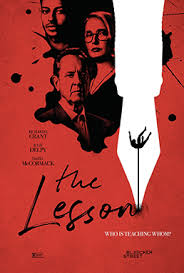
THE LESSON
UK, 2023, 104 minutes, Colour.
Richard E.Grant, Julie Delpy, Daryl McCormack, Stephen McMillan, Crispin Letts.
Directed by Alice Troughton.
There are certainly lessons in this drama but they are not the core. Rather, the characters involved are those who have to learn lessons – and do.
This is a British film, but set in the world of literature, creative writing, the screenplay divided into chapters. There is a prologue where a young man, Liam, Daryl McCormack (Good Luck to You, Leo Grande) is being interviewed about his writing – and, this will be reprised in the epilogue, the tentatively having become the self-confidently.
Liam is talented, gets the opportunity to go to a large country estate owned by the celebrated writer, Sinclair (Richard E.Grant), successful, seen being interviewed, ultrasensitive, walking out, certainly a man of moods. At home is his French wife, Helene (Julie Delpy). She is supportive of her husband, and businesslike. But they have hired Liam as a tutor for their teenage son, Bertie (Stephen McMillan), somewhat erratic in his studies but being pressurised by his father for forthcoming exams and qualifications.
For a while, the audience will be with Liam, intrigued by the family situation, memories of a talented dead son who committed suicide in the mansion pool, Sinclair writing into the early hours of the morning, the seeming detachment of Helene, and a butler who is the essence of formality.
But, we become more and more antagonistic towards Sinclair, his whims, self-importance, ambiguous relationship with his wife, as well as mixed responses to Bertie and his studies, his writing, the ups and downs of his interactions with Liam.
Then, there is a surprise when Sinclair seems to be very friendly with Liam, even inviting him to read his latest manuscript. Liam invited to show his own manuscript to Sinclair. The results are rather disastrous and lead to quite some dramatic complications, Liam expressing positive criticism of the final part of the novel, Sinclair, upset, denouncing Liam as having no talent.
What follows is quite intriguing, the revelation of some truths, a liaison between Liam and Helene, and the raising of the issues about the dead son.
Very British in tone, interesting plot developments, and a lot of ironies in the lessons that the characters have to learn.
- The title? The tutor and his coaching? The novelist and his teaching everyone lessons? And the experience of the tutor and its being a lesson for him?
- A British film, British atmosphere, affluent family, the country mansion, interiors, subsidiary buildings, the grounds, the pool? The world of literature, author interviews, television interviews? The literary atmosphere? The musical score, the classics?
- The prologue and the division into chapters, epilogue? The cumulative effect?
- The interview with Liam, his novel, the interviewer asking the origins, the cut and the flashbacks, the epilogue and the final question and Liam’s response?
- Sinclair, his being interviewed, his manner, humorous, condescending, superior, the influence of events in his work, upset, walking out? Replay of some of the scenes? And the theme that authors steal from great works?
- Liam, his background, accent, qualifications, studies, agency, the tutor? Going to the Sinclair family? The encounter with Helene, contracts, nondisclosure and the later use of the contracts? The encounter with Bertie, his age, studies, talent, parents expectations, preparation for interviews and exams? Liam arriving, Ellis, the reception, the perfect butler, Liam and his accommodation outside the main building? Ellis, no familiarity?
- The sessions with Bertie, outside, initial hostilities, the discussions, literature, the to-ing and fro-ing, Bertie gradually mellowing, the influence of his father, Liam and daring him to go into the pool?
- Sinclair, returning home, working throughout the night, the windows, Liam observing, observing Sinclair and Liam working through the night, asleep? Observing the sexual encounter between Sinclair and Helene? The meals, formalities, the playing of the classics? Liam being excluded from some meals? Ellis and his preparing the coffee?
- Liam the quotations, his memory, word associations, remembering further texts? In this important for the drama with Sinclair’s novel?
- Felix, the dead son, prior to the family, the story of his suicide, drowning? His literary abilities? Silence about him?
- Sinclair, his computer, Liam and his fixing the computer, Sinclair’s reliance on him, the conversations, the new novel, Sinclair giving Liam the manuscript to read, Liam and his own writings, Bertie taking his text, Liam asking Sinclair to read it? Liam’s return, his comments about the novel, the two thirds excellent, the failings of the final third? Sinclair’s angry response? Ridiculing Liam as having no talent?
- Sinclair’s absence, Liam talking with Helene, his approach, the sexual encounter, the consequences?
- Liam, his anger with Sinclair, supporting Bertie, Bertie’s absence in London? His deleting the manuscript from the computer? Taking the text? The discovery that Felix had written the first two parts? His father appropriating them? His anger about his own manuscript, tearing it up, throwing it in the pool?
- Sinclair’s return, the disappearance of the manuscript, Helene’s reaction, Liam and his searching the computer? Sinclair driving away, the search? Return, Liam and the truth, the confrontation between the men, Liam outspoken, the struggle, falling into the lake, Sinclair turning his head and drowning himself?
- Helene and the consequences, protecting everyone, Ellis and his retrieving the body, subservient to Helene, the scenario, the deaths, the police, Liam to leave, his packing, at the gate, the police arriving?
- The epilogue, his having written a novel, the interviewer, looking into the gallery and Bertie present and encouraging him?
