Displaying items by tag: Daniel Craig
Wake Up Dead Man. A Knives Out Mystery
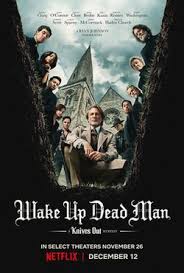
WAKE UP DEAD MAN
US, 2025, 144 minutes, Colour.
Daniel Craig, Josh O'Connor, Glenn Close, Josh Brolin, Mila Kunis, Jeremy Renner, Kerry Washington, Andrew Scott, Cailee Spaeny, Daryl MacCormack, Thomas Hayden Church, Jeffrey Wright, Annie Hamilton, James Faulkner, Bridget Everett.
Directed by Rian Johnson.
In 2019, movie audiences worldwide enjoyed a very entertaining murder mystery, Knives Out, a very starry cast, an offbeat private detective, genteel and from the South, Benoit Blanc, played by Daniel Craig. Three years later, writer-director, Rian Johnson, was successful again with The Glass Onion. And audiences wondered, now three years later again, whether this film, Wake Up Dead Man, could be a successful.
It is.
And, once again Daniel Craig’s charmingly eccentric Blanc, a star cast for character actors, a murder in an equivalently locked room, plenty of suspects, gradual revelations, twists (although many audiences probably pick the murderer but will be surprised at all the motivations and turns in the plot). There are references to Agatha Christie and Roger Ackroyd. And, Benoit Blanc uses the John Dickson Carr thriller, The Hollow Room, as a template for his theories.
No difficulties in recommending Wake Up Dead Man to murder mystery audiences – plenty to entertain, almost 2 ½ hours worth.
But, the surprise is the Catholicism pervading the whole story and treatment. Which meant checking whether writer-director, Rian Johnson is Catholic. In fact he grew up in a close evangelical community.
The filmmaker made Dead Man in large part to excavate his deeply religious youth, a core part of his identity that gradually faded in adulthood. “I slowly realized I was writing this through the lens of me, now,” Johnson says. “I had to step back into me, 30 years ago, and tap back into the things that inspired and drove me as a Christian”. David Canfield, 21 Nov. 2025. Hollywood Reporter.
The events take place in the fictional parish in New York state, Our Lady of Perpetual Fortitude, ruled over by an eccentric parish priest, Msgr Wicks, Josh Brolin rather savage, something of a cult leader in his hold over a group of parishioners, helping them, but exercising power, an angry man (and there is an interesting background to his place in the church), taking a stance against any inroads against him and the church, siege mentality. The common-sensed local Bishop, Jeffrey Wright, appoints an earnest young priest, Father Jud, to bring some balance to the parish. Father Jud is played by Josh O’Connor, one of his best performances, a former boxer with responsibility for death, changing his life, very much focus on Jesus of the Gospels, pastorally earnest. (Perhaps Rian Johnson had seen Mark Wahlberg as Father Stu!) An eventual clashing with the parish priest and his loyal parishioners.
The film introduces quite a range of characters, all potential suspects, the devoted manager of the parish, Glenn Close; the local doctor, Jeremy Renner; the local lawyer, Kerry Washington; an oddball novelist, Andrew Scott; a wheelchair-confined cellist, Cailee Spaeny; the caretaker, Thomas Hayden Church; a young would-be politician, Daryl McCormack (who has a marvellous short scene where he explains how he has campaigned in an enormous litany of every cause, every controversy, every movement in contemporary politics, especially in the USA).
And the murder takes place on Good Friday, and some rather fanatical beliefs and manoeuvrings in rising from the dead.
One of the features prominent in the film is that of confession, several between Msgr Wicks and Father Jud, some revelations of conscience, personality, some twists of conscience. And, Benoit Blanc, who declares himself absolutely rationalist, has to admire Father Jud, wants to save him from all the suspicions, sees that his Gospel compassion has something to commend it and arranges that the final revelation should take place in the church, everybody present, and that the murderer admits guilt in the framework of confession.
Many audiences will just observe this Catholic framework – but, the characters, the situations, the sins, repentance, the contrast between authoritarianism and pastoral enthusiasm make a difference for a Catholic audience.
- Audience enjoyment murder mysteries? Literary tradition from Agatha Christie, John Dickson Carr…? The film tradition? This third Benoit Blanc mystery?
- Audience enjoyment of Daniel Craig as Benoit Blanc, from the south, manner, speaking, clothes, style? The previous films, his status as detective, clues, interrogations, explanations, the dramatic confrontations, the accused, the suspects, the murderer?
- Father Jud and his story, writing up the accounts, his voice-over, his own story, young, boxer, killing his opponent, later saying he hated him, his sense of guilt, his discovery of Jesus, motivations, priesthood, the interview with the Bishop, his being reprimanded by the panel, his manner, vocabulary, talk about his faith and pastoral perspective? The Bishop sympathy, the new appointment?
- The warning about Msgr Wicks, Jud arriving, the encounter, at Wicks’ and his appearance, manner, way of speaking? His long status of the church? The back story, his father, widower, becoming a priest, establishing the church, his daughter and her ways, pregnancy, unknown father, the ministry of her father, his death at the altar, the inheritance, her wanting it, the destruction of the church and her anger, the encounter with Martha as a little girl, her death? The father and the mausoleum? Msgr Wicks, ordained, the church, the small congregation?
- Msgr Wicks, conservative, angry, feeling the church was under siege, his hold over the community, words of help, yet humiliating them, making them dependent? His thundery sermons? The encounter with Jud, the boxing, the sparring and the demonstration of asserting oneself? The issue of confessions, his talk about himself, especially the sexual dimensions of his life, and the later information about his prostate surgery and his assertions? Forcing Jud to confess to him? Jud and the uncomfortable experiences? The prayer penances? Time passing?
- The information about Martha, as a little girl, with the elderly priest and her devotion, the fight with his daughter and her death? The doing all the work in the parish, older, prim and proper, accounts, the organ playing, her devotion to Msgr Wicks? Her reaction to Jud? To the other parishioners? The homilies and her looking in admiration to the monsignor?
- Dr Nat, the doctor, devoted to his wife, her suddenly leaving him, his drinking, wanting her back? Vera, the lawyer, keeping the parish accounts? Cyrus, her looking after him, his growing up, his political ambitions, the sequence of his describing all the issues and causes that he had tried out? His use of the media, filming everything? Simone, her age, playing the cello, her incapacities, retiring, giving her money to the Parish? Lee, author, the lurid titles, his retirement, his house has a fortress with a defensive mode? Supportive of monsignor?
- The image of the Catholic Church, the progressive and pastoral perspectives as embodied by Jud, contemporary involvement in the Gospel and Jesus message for those in need? The contrast with the isolating, the defensive, the exercise of power, and the moral double standards?
- Monsignor and his meetings, the revelation of the meeting where he denounced everyone, their loyalties to him, the humiliations?
- The presence of Samson, gardener, alcoholic, monsignor rehabilitating him, Martha and her devotion? The television, his watching the matches? The interrogations by Blanc?
- Jud, his prayer meeting, their attendance, the reactions, the monsignor coming in, punching Jud? The atmosphere for Holy Week?
- Good Friday, the ceremony, all present, the homily, the singing of the chant with the cross, monsignor exiting, his collapse, Jud going in, dead, stabbed, the blood? The closed room?
- The police, the information, Jud under suspicion, his behaviour? The personality of the investigator, her tough stances, interrogations, suspicions of Jud?
- The calling in of Benoit Blanc, entering the church, the discussions with Jud, his not being a believer, the vocalising of attitudes of agnostics and atheists, criticism of belief? Yet his polite listening to Jud and the others, and his later moments of acknowledgement of faith and belief, his finally organising the final confession? His methods, the reliance on The Hollow Room, John Dickson Carr, going to the various possibilities?
- The developments of the case, the issue of the excavator for the mausoleum, the autopsy, Jud being present, having to leave the room, monsignor being buried in the mausoleum? Martha, her fussing, with the police, with Benoit Blanc, her belief in the resurrection, her continued prayer?
- The resurrection episode, Samson in the coffin, emerging investments, the range of cameras in the church and the mausoleum, motions filming, Jud arriving and slipping in the mud? His seeing the light, discovering Samson, his death? The police and further suspicions? Martha and her acknowledging that monsignor had risen from the dead and gone to heaven?
- The revelation that Cyrus was Msgr’s son, the unknown mother, Vera and her disgust and relationship with Cyrus, his bonding with monsignor, taking his name, being the heir, wanting to discover his grandfather’s inheritance? The keepsake, the apple, the lawyer, the search of documents? Benoit Blanc and Jud and their search?
- The further investigations, going to the doctor’s house, the discovery of monsignor’s body, the doctor dead, the further mystery?
- Jud, his sense of guilt, wanting to confess? Benoit Blanc’s reaction, assembling everybody in the church, the explanations, but his wanting to show compassion like Jud to those in need of compassion? Arranging the confession sequence?
- Martha, the confession, her explanations, the various clues, the background of the old priest, her devotion to him as a little girl, her contempt for his daughter, the truth about the old man’s death, swallowing the jewel, its being buried with him, Martha keeping the secret? Her shock at hearing the truth, turning against monsignor, side issue of the phone call to find out who booked the machine, Jud and his long discussions with Louise, pastoral compassion? That Martha had booked the machine, to get to the body of the old man, to retrieve the jewel? The solution to the mystery, the camera and the experts explanation about time lapse, Jud and his concealing the drink and monsignor’s reputation, but his collapse with the drugs, Martha selling the emblem on to the chasuble (and the background of the visit to the bar and the implement, Jud and his despair, throwing the implement through the window, their being two? The doctor doing the stabbing? Not able to find the alcohol container behind the door? Her plot with the doctor, to resurrect monsignor through Samson, the doctor and his greed, killing Samson, his explanation to Martha, going back to the house, the issue of the poisoned drink, Martha distracting the doctor, switching the cups, his death, her throwing him down the steps? Her retrieving the jewel? Her drinking the poison, her death?
- The aftermath, Vera leaving town, Cy and his further political ambitions, Lee and his book on publication and signing autographs, Simone playing the cello again?
- Jud, the discussions with the bishop, the support from the Bishop, going back to the church, the audience thinking he was using the money from the jewel – the renovations of the church, the restored crucifix – and the final revelation of the jewel buried in the crucifix?
- Satisfying murder mystery, death in the locked room, clues, investigation, solution?
Queer
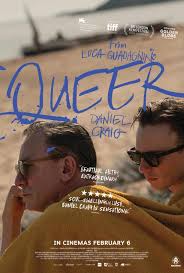
QUEER
US, 2024, 137 minutes, Colour.
Daniel Craig, Drew Starkey, Jason Schwartzman, Lesley Manville.
Directed by Luca Guadagnino.
There will be many reasons why audiences would be interested in seeing Queer. It has a star, award-nominated performance by Daniel Craig, post-James Bond. The film is directed by Luca Guadagnino, Italian director, who became internationally famous with Call Me by Your Name and 2024’s tennis drama, Challengers. And the central character is the alter ego of American novelist, William S Burroughs.
There is also the meaning of the title, which is the title of a short novel written by Burroughs during his time in the early 1950s in Mexico but not published until the 1980s, his exploration of the meaning of “queer” and his observations as a writer as well as his own personal involvements.
Audiences will appreciate and understand the film better if they have some previous knowledge of Burroughs himself. This film presupposes that audiences are aware of him, of his personality, of his career. A look at the Wikipedia entry on Burroughs offers more information than we can absorb, an interesting reminder that Burroughs had a long life, wrote many stories and articles novels, a number of novels, was friendly with Alan Ginsberg and Jack Kerouac from early years, influential in the literature of the Beat Generation, also interested in visual art and making appearances in the number of films including Drugstore Cowboy, as well as David Cronenberg making a film of his controversial novel, The Naked Lunch.
With this background, we can understand Burroughs and his time in Mexico, seeing his typewriter with a page in it but not seeing him doing very much writing, his drinking in bars, incessantly smoking, the conversations with gay friends, then creating an encounter with a young American, Eugene Allerton, Gene, played by Drew Starkey. Allerton, like Burroughs, is a complex character, seeking, searching, testing relationships.
While the first part of the film is the exploration of the queer theme, the second part moves on to something quite different, something noted in the Wikipedia about Burroughs, his interest in magic, as well as in a South American plant which he thinks has the power to increase human telepathy. So Burroughs and Gene travel to the jungle, advised that there is a British doctor who has explored and experimented. She is played by Lesley Manville, almost unrecognisable, who leads them, tantalises them, in their experimentations with this plant.
Suddenly there is an epilogue, two years later, Burroughs himself cleaned up, on his way back to the United States – but, many who are familiar with Burroughs’ life will remember that there was an episode with his wife, drinks, drugs, playing a game with a gun, to shoot an apple placed on her head, her death. And this is re-enacted at the end of the film with Gene and the apple.
Burroughs’ writing was stylised, exploratory – and Guadagnino’s film strives to illustrate this.
- Audience knowledge of William S. Burroughs, his writing, novels, articles and essays, visual art, his appearance in media, film, television? His life and style, literary influence on US writing the 20th century? His name, Lee?
- The title, the novel from the 1950s, not published in the 1980s? Seen in connection with his other writings? Seen as an explorer from his memoir in Mexico in the 1950s? His exploration of queer? But also the interest in magic, drugs, telepathy?
- The structure of the film, the chapters, the epilogue? Glimpses of Burroughs and his life in the 1950s? Daniel Craig’s performance? The musical score, the songs, the lyrics?
- The Mexican setting, the town, drab, the 1950s, bars, hotels? The streets, the atmosphere?
- The initial response to Lee, from those who know about him, from those who know him at only from this film? Age, personality, the writer, the typewriter, the drinking, drugs, his gay friends and conversations, discussions about what it was to be queer?
- Eugene Allerton, seeing him with the woman, the games, Lee and his eyes on him? Gaining attention, the attraction, the episodes, Gene and his personality, studies background, presence in Mexico, hopes and ambitions, tantalising Lee, eventually getting together, at the hotel, the sexual encounter, the consequences? His on and off connections with Lee?
- The transition to the second part of the film, Lee and his interest in drugs, his research, telepathy, inquiries, information about the plants, about the doctor in the jungle, his decision to go, Gene going with him?
- The scenes in the jungle, remote, difficult, finding the hut, Dr Cotter, her background, appearance, her partner, friendly, tantalising, the discussion about the drugs, looking at the root itself, the decision for the experiment, the effect on Lee and Gene, the trance experiences, her solicitations, , the satisfaction? The farewell from the jungle?
- The sudden epilogue, two years later, Lee and his seeming to be in control, the discussions with his friend, his friend and his personality, the stories, always being robbed by his partners?
- The reminiscence of the story about the William Tell episode, the gun, the vessel on the head, the shooting, the reality of the shooting of Burroughs’ wife, here dramatised with Gene?
- William Burroughs at this stage of his life in the 50s, many decades to come, the court and the episode with the death of his wife, his relationships, his influence on the Beat generation and literature? His creative style, finally recognised?
