Displaying items by tag: John Magaro
Mastermind, The
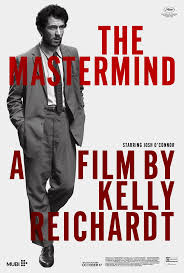
THE MASTERMIND
US, 2025, 110 minutes, Colour.
Josh O'Connor, Sterling Thompson, Alana Haim, Jasper Thompson, Bill Camp, Hope Davis, John Magaro, Gabby Hoffman, Amanda Plummer..
Directed by Kelly Reichardt.
Many films specialists, noting the information, written and directed by Kelly Reichardt, is sufficient for them to want to see this film. (Over 30 years, Kelly Reichardt has directed only 10 feature films and a number of short films but has built up a reputation with a range of American stories, often with a focus on women, but also offering food for reflection on American history and society.
And this continues with this film, a museum robbery, specifically inspired by the 1972 robbery of the Worcester Art Museum in Massachusetts, in which two Gauguins, a Picasso, and a Rembrandt were stolen. Her interest, however, is not so much in the robbery but on the character, the mastermind of the title (though, looking at his career, the title is quite ironic), his behaviour in the aftermath of the robbery and exposure. Some commentators refer to the film as an “anti-heist” film.
The setting is 1970, upheaval in the United States at the end of the 60s, social unrest, but, especially, the background of the war in Vietnam.
The central character is played by Josh O’Connor, busy with releases in 2025, The History of Sound as well as Wake Up Dead Man. He is a family man, a carpenter, unemployed, in need of money, planning the stealing of artwork from the local gallery, hiring three petty criminals, not vetting them in any mastermind kind of way, their exposing him, his trying to rationalise, his wife leaving him with the family, his wanting money from his mother, his father a judge critical about the lack of ambition of the thieves.
The mastermind is abducted by the criminals, gets away, but with public knowledge about his crime, he begins an odyssey, getting lifts, trying to survive, lack of money, going to a friend from the past but moved on by the friend’s wife, his continuing on the road and an uncertain ending as he steals a woman’s purse, tries to escape through the Vietnam war protest and is elected arrested.
Many audiences, Kelly Reichardt fans, welcomed the film. For many others, even some who admire Kelly Reichardt, have found the film difficult to sit through, the pace, the unsympathetic central character… (Which was the experience of this reviewer.)
- The title, for James Mooney, accurate, ironic?
- The 1970s setting, social upheaval in the US, financial difficulties, the background of the Vietnam war? Re-creation of the period? The musical score?
- The initial plot, Mooney, the stealing of the car, the backing out of the driver, his choice of the two colleagues, the plan to steal the art, at the gallery, removing the paintings? His associates, Gibson and his rations, pulling the gun, later robbing the bank? Guy asking for more money?
- Mooney at home, his wife, family, relationship with Tommy? His mother and giving him money? His father, judge? His comments about the lack of initiative by the thieves?
- Mooney, having to cope with situations, sending his wife and family away, keeping his son, taking with him? The confrontation with Guy? The setup, the criminals, the abduction? The consequences?
- Mooney, getting away, on the road, money, surviving, his situation becoming public? The alienation of his wife, the phone calls?
- Going to stay with his friend, Fred and his wife, their life together, memories of the past, Fred and his wariness, the wife, her making the connection with the professor to act as a fence for the paintings, his being sent away?
- His plans, on the road, stealing the woman’s purse, trying to escape through the Vietnam war protesters, his being arrested? And then?
September 5
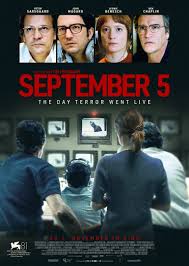
SEPTEMBER 5
Germany/US, 2024, 95 minutes, Colour.
Peter Sarsgaard, John Magaro, Ben Chaplin, Leonie Benesch, Zinedine Soualem, Georgina Rich, Corey Johnson, Marcus Rutherford, Benjamin Walker.
Directed by Tim Fehlbaum.
September 5,1972 was a significant date for terrorism in the 20th century, the Munich Olympic Games, the attack on the Israeli team in the Olympic village, the terrorists, the transition to the airport, the deaths.
The theme was taken up by the American telemovie already in 1976, 21 Hours at Munich with William Holden as the German police chief. Documentary maker, Kevin MacDonald, won the Oscar, 1999, for One Day in September, interviews with many participants, including the last terrorist survivor, Jamal Al Gashey. Steven Spielberg directed a dramatic recreation of the covert operation to eliminate all involved, Munich, 2005.
This film has a different focus, the television media challenged by the events happening in real life and actual time. It is noted that this was the first International satellite linking televising a world event, more people watching the Games than the moon landing three years earlier.
While the drama does focus on the Israeli team, the attack, the terrorists, the tensions, the audience is taken into the ABC production area, the personnel involved, various responsibilities, directing, camera choices, the need for translation from the German for the Americans. Veteran journalist Peter Jennings, his young days, was inside the Olympic village. And the connection was with television host, Jim McKay – and the film using a great deal of footage of his actual commentary.
Focus is on the technical aspects, the cameras, the close proximity to the village, getting cameras into the village, confrontations by the German police not used to this kind of terrorist situation, incoming information, sometimes accurate, ultimately, at first from the airport, not accurate at all, and the responsibility of the executives of what was to go to air or not. And, the initial dilemma, should commercial television be screening live-action killings.
Television reporting footage has developed substantially in the succeeding half-century. But, this is an opportunity to go back, to learn about the past, television possibilities and developments, and, in the light of 21st-century terrorism, especially in Israel, events in the Gaza Strip, Lebanon, to be continually alert.
- The date, 1972, the Munich Olympic Games, the terrorist attack, the disaster, the role of the media, world communication?
- The focus on ABC television, the studio, the technology, the cameras, the editing, the challenge, the first international networking, the studio opposite the Olympic village, the building with the Israeli athletes? The pace of the production work?
- Audience familiarity with the situation, the terrorists, the attack on the Israeli team, the initial deaths, the masked terrorists, the transfer to the airport, the initial hopes, the deaths of everyone?
- The technical effectiveness of this film, the personnel in the studio, the work, times and demands, decisions, positions of cameras, editing and focus, sending the camera personnel out, the police cordons, getting through? Peter Jennings and his position, inside the village, connecting with him? The use of the material from Jim McKay from the time? The connections, his commentary, sense of urgency?
- The importance of Marianne Gebhardt, language, translation, the German experience, memories of the war, the Berlin Olympics, the action, translating, going out and making contacts, reporting in, giving information?
- The key central figures in the studio, Arledge in charge, his presence, decisions, intervening, responsibilities, moral issues, issues for the public and the audience? Geoff, (and the actual Geoff being a producer on this film), experience, having to take responsibilities, the timing, the discussions with Marvin? The issue of filming terrorists killing people on live television? The responsibility to the Israelis, to the public? , His French background, criticisms? The African-American reporter, posing as an athlete, moving in and out with the film? The American national athlete, the interview with his father? Including the interview with the athlete? The pressure on Geoff, succeeding in the programming, his decisions, clash with Marvin, the information that the athletes were safe, then the contrasting news?
- The film not focusing so directly on the athletes, those killed, the terrorists? The glimpses? The situations being described, in the village, the shootings, the uncertainties, to the airport, seemingly safe, and the truth?
- The significance of this film in the 21st-century, 50 years after the events? The extraordinary developments in technology and communication? Subsequent history of the state of Israel, the Palestinians, 50 years of clash, occupation of Gaza, the West Bank?
- The audience with this film and the wide variety of cultural, political, ideological perspectives?
