Displaying items by tag: Luca Guadagnino
After the Hunt
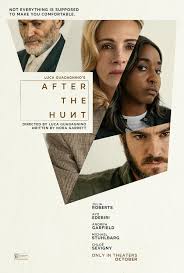
AFTER THE HUNT
US/Italy, 2025, 138 minutes, Colour.
Julia Roberts, Ayo Edebiri, Andrew Garfield, Michael Stuhlbarg, Chloe Sevigny.
Directed by Luca Guadagnino.
We can puzzle about the title. And the nature of the hunt. And the aftermath.
There are several senses and themes, honesty, integrity, issues of sexual assault in the aftermath of the #Me Too movement. And, for the aftermath, there is a very long, still scene, silent, at the end of the film, giving the audience time to think, perhaps to adjust judgements. And, there is an aftermath postscript, five years later.
To appreciate After the Hunt, it is important to ask who the target audience for the film actually is. It is certainly not the general audience looking for entertainment. Most would be bored, sometimes baffled, especially with the discussions and vocabulary – even when spoken by such a star as the popular Julia Roberts. After all, this is a drama set at the Ivy League university range of Yale. In the background is professional eagerness to achieve tenure and the academic and personal perils of losing it. There are tutorials that sound recondite and abstruse, theses on theories in the abstract.
And the cast of characters is strongly in this vein, difficult to like, let alone identify with even in a crisis of accusations of sexual assault which, if not true this time, probably true at another time, a focus on the presumptuous male. Then the victim, young, from a highly privileged generation, very self-conscious, drawing conclusions from the fact that she is black, queer, her parents huge donors to Yale, the staff feeling obliged to promote her, issues of genuine study and accusations of plagiarism. She is played by Ayo Edebiri (from television’s The Bear). The accused is a lecturer, also seeking tenure, played by Andrew Garfield.
In fact, at the centre is Alma, Julia Roberts’ character, a tough surface, brittle manner, intellectual, complex emotions in the present situation, confidante of the accuser, but also going back into her past memories and crises. Her husband is a psychoanalyst, played by Michael Stuhlbarg, provides an anchor for the audience, loving support of his wife but also critical and prone to act out this criticism, like playing booming music to upset her as she wakes each morning, or interrupting her during a serious conversation.
So, the faculty and discussions, board meetings, the student counsellor (Chloe Sevigny) and issues of confidentiality. Luca Guadagnino has directed challenging issues in films for 20 years, best known for Call Me by Your Name and Challengers. There is definitely emotional complexity (especially the revelation of hidden secrets and guilt) but couched in cerebral interchanges and arguments.
When the film was screened at the Venice film Festival, there were 50% love responses, 50% haste responses… And there is like and dislike 50% each way for this reviewer.
- The title? The actual hunt? The aftermath?
- The Yale setting, the reputation of Yale, the Ivy League, wealthy students, wealthy donors, board and management, the philosophy faculty? University sequences, home sequences, street and restaurants…? The range of the musical score? Pounding, quiet, background?
- Target audience, not the popular audience, the philosophy faculty, the philosophical discussions and issues, language and vocabulary, the tutorials and the discussions? Abstract?
- The introduction to the main cast, the University, the tutorials, Alma and the students, the discussions, their personalities? Maggie and her presence? The party, Alma and Frederic getting ready, their guests, Hank, Maggie? The immediate impressions of each, Alma, her age, Julia Roberts, more brittle personality, emotions and control? The issue of tenure? Hank, personality, lecturing, the issue of tenure? Maggie, her age, black, queer, her parents and donations, her thesis, praise, the underlying issue of plagiarism? Frederick, the host, his relationship with his wife, psychoanalysis, contribution to the discussions?
- The aftermath, Hank and drinking, escorting Maggie? Maggie approaching Alma, the accusation? Maggie’s reaction? Her relationship to Hank, memories of the past, his reputation with women? Her reaction to Maggie, the issue of plagiarism? The effect on Alma? Her relationship with Frederick, his support, the loud music in the morning, the issue of inviting Maggie to dinner? Her delay, Frederick and his reaction, Alma and Maggie talking, the loud music, his coming in and out?
- The authorities, the faculty, the discussions, with Alma, the Counsellor doctor, her presence, discussions with Alma, confidentiality? The like and dislike between them? Ultimate decisions? Hank, the issue of tenure, his being fired after the accusations? Alma and the tenuous situation?
- Alma, the discussions with Frederick, the revelation about her past, the seduction, her cooperation, age 15, the man, her devotion, the break, her accusation, his suicide? The consequences for her, immediate, over the decades?
- The encounter with Hank, his plea, the attraction, the kiss, her rejection?
- Maggie, her background, her family, the thesis, the plagiarism, sense of privilege, the issue being queer, her partner and explanations, being black? Her determination, the accusations, the case?
- Alma and the later tutorial, the students, the abuse, her responses, the silent student?
- Audience identifying or not with the characters, the issues? Judgement on Hank, judgement on Maggie? Alma and Frederic, the discussion – and the very long take, allowing the audience time to consider?
- Five years later, Maggie, still at the University, the meeting with Maggie, the discussions, Maggie and her career, her attitudes towards Alma, letting retribution go, not quite reconciliation? Alma and Frederic together? The future?
Queer
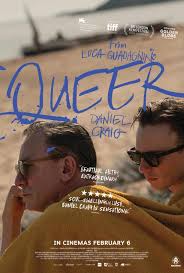
QUEER
US, 2024, 137 minutes, Colour.
Daniel Craig, Drew Starkey, Jason Schwartzman, Lesley Manville.
Directed by Luca Guadagnino.
There will be many reasons why audiences would be interested in seeing Queer. It has a star, award-nominated performance by Daniel Craig, post-James Bond. The film is directed by Luca Guadagnino, Italian director, who became internationally famous with Call Me by Your Name and 2024’s tennis drama, Challengers. And the central character is the alter ego of American novelist, William S Burroughs.
There is also the meaning of the title, which is the title of a short novel written by Burroughs during his time in the early 1950s in Mexico but not published until the 1980s, his exploration of the meaning of “queer” and his observations as a writer as well as his own personal involvements.
Audiences will appreciate and understand the film better if they have some previous knowledge of Burroughs himself. This film presupposes that audiences are aware of him, of his personality, of his career. A look at the Wikipedia entry on Burroughs offers more information than we can absorb, an interesting reminder that Burroughs had a long life, wrote many stories and articles novels, a number of novels, was friendly with Alan Ginsberg and Jack Kerouac from early years, influential in the literature of the Beat Generation, also interested in visual art and making appearances in the number of films including Drugstore Cowboy, as well as David Cronenberg making a film of his controversial novel, The Naked Lunch.
With this background, we can understand Burroughs and his time in Mexico, seeing his typewriter with a page in it but not seeing him doing very much writing, his drinking in bars, incessantly smoking, the conversations with gay friends, then creating an encounter with a young American, Eugene Allerton, Gene, played by Drew Starkey. Allerton, like Burroughs, is a complex character, seeking, searching, testing relationships.
While the first part of the film is the exploration of the queer theme, the second part moves on to something quite different, something noted in the Wikipedia about Burroughs, his interest in magic, as well as in a South American plant which he thinks has the power to increase human telepathy. So Burroughs and Gene travel to the jungle, advised that there is a British doctor who has explored and experimented. She is played by Lesley Manville, almost unrecognisable, who leads them, tantalises them, in their experimentations with this plant.
Suddenly there is an epilogue, two years later, Burroughs himself cleaned up, on his way back to the United States – but, many who are familiar with Burroughs’ life will remember that there was an episode with his wife, drinks, drugs, playing a game with a gun, to shoot an apple placed on her head, her death. And this is re-enacted at the end of the film with Gene and the apple.
Burroughs’ writing was stylised, exploratory – and Guadagnino’s film strives to illustrate this.
- Audience knowledge of William S. Burroughs, his writing, novels, articles and essays, visual art, his appearance in media, film, television? His life and style, literary influence on US writing the 20th century? His name, Lee?
- The title, the novel from the 1950s, not published in the 1980s? Seen in connection with his other writings? Seen as an explorer from his memoir in Mexico in the 1950s? His exploration of queer? But also the interest in magic, drugs, telepathy?
- The structure of the film, the chapters, the epilogue? Glimpses of Burroughs and his life in the 1950s? Daniel Craig’s performance? The musical score, the songs, the lyrics?
- The Mexican setting, the town, drab, the 1950s, bars, hotels? The streets, the atmosphere?
- The initial response to Lee, from those who know about him, from those who know him at only from this film? Age, personality, the writer, the typewriter, the drinking, drugs, his gay friends and conversations, discussions about what it was to be queer?
- Eugene Allerton, seeing him with the woman, the games, Lee and his eyes on him? Gaining attention, the attraction, the episodes, Gene and his personality, studies background, presence in Mexico, hopes and ambitions, tantalising Lee, eventually getting together, at the hotel, the sexual encounter, the consequences? His on and off connections with Lee?
- The transition to the second part of the film, Lee and his interest in drugs, his research, telepathy, inquiries, information about the plants, about the doctor in the jungle, his decision to go, Gene going with him?
- The scenes in the jungle, remote, difficult, finding the hut, Dr Cotter, her background, appearance, her partner, friendly, tantalising, the discussion about the drugs, looking at the root itself, the decision for the experiment, the effect on Lee and Gene, the trance experiences, her solicitations, , the satisfaction? The farewell from the jungle?
- The sudden epilogue, two years later, Lee and his seeming to be in control, the discussions with his friend, his friend and his personality, the stories, always being robbed by his partners?
- The reminiscence of the story about the William Tell episode, the gun, the vessel on the head, the shooting, the reality of the shooting of Burroughs’ wife, here dramatised with Gene?
- William Burroughs at this stage of his life in the 50s, many decades to come, the court and the episode with the death of his wife, his relationships, his influence on the Beat generation and literature? His creative style, finally recognised?
Challengers
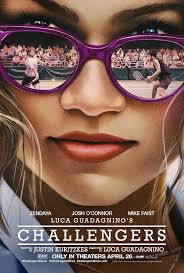
CHALLENGERS
US, 2023, 131 minutes, Colour.
Zendaya, Mike Faist, Josh O'Connor.
Directed by Luca Guadagnino.
Anyone for tennis? The title comes from a tournament in New Rochelle, the Challengers. And we are introduced to an intense match between two men, clearly rivals.
Quickly the narrative goes back two weeks, the explanations of the characters, then the film goes back 13 years, with many time shifts, sometimes flashbacks within flashbacks, for the audience something like watching a match, continually switching from looking at one end to the other. Sometimes this requires quite an effort. And, some of the photography and editing of the actual tennis play, swift and sharp, sometimes in slow motion, especially at the end, is not always effective for movie concentration.
While the focus is on tennis, at the centre is a triangle relationship. Because the film opens in 2019, we see the three protagonists in some kind of conflict, two men facing off each other in the finals of the tournament, the woman, Tasha, who has been at the centre of their lives for many years, sitting in the stands, watching intently. When the narrative goes back in time, we are very aware that matters have not turned out so well over the period of 13 years, heightening the drama of our watching the characters, their meeting, two men in love with the same woman, her choices, changes, tennis rivalries…
This is very much a film for younger audiences, that is, audiences in their 20s, especially. We see the characters at 18, follow their progress till the end of the film when they are in their early 30s.
One of the difficulties is that the three characters are not all that interesting in themselves. Nor are they particularly likeable, it is somewhat difficult to have a care for them in their conflicts. In fact, the performances are very effective, showing the complexities and ambiguities of the characters. Zendaya is the young woman at the centre, tennis champion, strong-minded, very determined. It is different with the two men. Josh O’Connor plays Patrick, easy-going in many ways, not as good as tennis as he might hope, wanting to be liked, more than a touch self-absorbed, and developing into something of a cad. The other man is Art, Mike Faist, more talented at tennis, friends with Patrick since they were boys. They have been successful in doubles, but both are smitten when they see Tasha and make a bid for her attentions.
The musical score is often techno beat, intense beats, sometimes obscuring the dialogue.
The film is rather long, we spend quite a time with each of the men, with Tasha, and the ups and downs of the relationships, and, depending on how interesting we find the characters, this will determine whether audiences would really enjoy Challengers or not.
- The title? The tennis theme? The triangle relationship theme? Interactions?
- The work of the director, his Italian background, themes, relationships, sexuality?
- The American settings, New Rochelle, Atlanta…? The tennis courts, clubs, audiences, apartments and hotels, cities streets, tennis atmosphere? The musical score, the techno score and its insistence?
- Opening in 2019, moving to 2 weeks earlier, moving 13 years earlier, the trio in the past and their encounters, relationship, through the years, back to the present and the final set? The audience looking at the change of times like tennis viewers, and is moving from one side to the other?
- The dramatic impact of showing the present, the competitiveness, determination, back to the past, the trio when young, tennis abilities, the men winning the doubles, Tasha and her skills, aged 18, amateurs, discussion of turning professional? The effect on the later sequences by knowing what the crisis was at the beginning and end of the film?
- Patrick and Art, friendship from boyhood, discussions about the relationship and friendship, sexual behaviour at 12, the bonding, playing together? The gradual revelation of Patrick and his personal intensity, self-absorbed? The contrast with Art, his abilities, quieter personality?
- The introduction to Tasha, age, tennis skills, determination, the final scream when winning, the media? The party, the two men approaching, conversation, her interest, the invitation, in the room, her turning up, the discussions, tantalising each of them, manipulating them to kiss each other? Her leaving?
- Their careers over the years? Art and greater success? Patrick less success? Their drifting apart? Tasha and her skills? Winning, the significance of her fall and accident, emotions, treatment, Art supporting her, her recovery, determination to go on? A very determined personality? Playing the two men?
- Patrick and his career, some victories, the years passing, down and out, Is Arriving in New Rochelle, his charm on the hotel manager and failing, sleeping in his car, trying to get the prize money? The matches in the tournament, the final and the three sets against Art?
- Art and his story, his relationship with Tasha, relationship with Patrick, Art and his support, success, marriage, their daughter, his mother caring for the daughter? The confrontation with Patrick?
- The three sets intercut throughout the film? Tightening the drama? One all, the final question
- the focus on the games, the tennis player, sequences, point of view of each character, the audience, the umpire, decisions about in and out, the school, the past tournaments, practice sequences, the place of the camera, editing and action?
- Patrick and his contacting Tasha, the phone number, his asking her to coach him, her violent reaction, keeping the note, returning to the hotel, the challenge as to whether she loved Art or not, going out, the encounter with Patrick, sexual, anger with him, getting out of the car, returning, Art with their daughter?
- Tasha asking Patrick to lose the set, his reactions, agreement, visual techniques for the final games, slow motion, pausing, Tasha and her intensity, final set points, each looking at the other, their decisions, the final play, long, and the ending with Patrick leaping the net and embracing Art? The future for each of them?
