Displaying items by tag: Danielle Macdonald
Saccharine
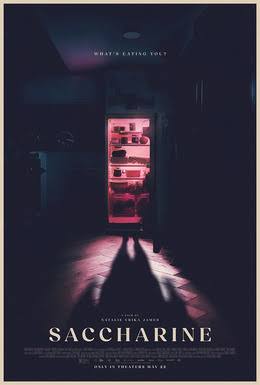
SACCHARINE
Australia, 2026, 113 minutes, Colour.
Midori Francis, Danielle Macdonald, Madeleine Madden, Showko Showfukutei, Robert Taylor.
Directed by Natalie Erika James.
Saccharine is an adjective used to describe something that is overly or sickishly sweet. It typically refers to flavors, but it is most often used to criticize things like a person's demeanor, a voice, or a story as being excessively sentimental, cloying, or insincere. (Google definition)
all
The first 30 minutes of this drama which combines realistic themes with horror hallucinations and ghostly presences… treats its theme of eating problems and consequences in grim but realistic style. Hana is a young medical student, involved with a friendly group of fellow students in autopsy training. But, at home, she keeps on gorging, preoccupied, but attracted by Alanya who runs a 12 week exercise weight reduction course. And then joins up and there are many scenes of her dedication to the exercise and receiving affirmation. And then she meets a friend from school, overweight in the past, but recommending a course of tablets which reduces weight abnormally quickly.
So, on the level of realism, the film is a serious look at body image problems for women, weight and loss, the role of exercise, the role of medication, especially suspicious tablets, the repercussions on the psyche of the overweight woman, the pressure of her caring and fussy slim Asian mother, the background of her obese Australian father.
But the film does not stay on the realistic level. It uses elements of horror, especially body horror (remembering the impact of the recent The Substance), the presence of the obese dead woman who has donated her body for study purposes, but more and more mysteriously present to Hana, trying to persuade her best friend to see this presence, nightmares with the obese body descending on her…
And a lot of emotional consequences, the ghost pressing her to eat more and more, the strange tablets and their contents, rapid weight loss, interactions with the manager of the course, sexual attraction, psychological distortions, some of the sequences not for the cinema fainthearted.
This is very much a female-oriented film, the writer-director and producers and many of the technical staff female. And while the title is saccharine and its overtones of sickly sweet (as is so much of the food that Hana devours), it is the theme of devouring that pervades all of Hana’s life – and a grimly graphic devouring conclusion to the film.
- The meaning and application of the title? Sickly sweet? The surface personality of Hana? Food, confectionery, being sickly sweet?
- An Australian film, the success of small-budget Australian horror films in the 2020s? Sense of menace, a visual horror?
- Themes of body-horror, films of the 2020s?
- The Australian setting, a universal setting, universal themes?
- Preoccupation with health, body image, weight and weight loss, hunger and devouring food, physical implications, mental implications?
- The opening realism for Hana, her body, weight, self-consciousness, eating? Her ethnic heritage, her thin Asian mother, continually fussing and cleaning, the contrast with her obese father, the audience not seeing him till later?
- Hana, living alone, medical student, the range of students, her friends, the laboratory, the autopsies, close-ups of the process?
- Josie has her friend, Josie’s attitude, conversations, advice, concern?
- The encounter with Alanya, attractive, persuasive, the 12 weeks course, Alanaya and her body image, Hana agreeing, the exercise regime, measuring her weight on the chart, the exertion, losing some weight? The attraction to Alanya?
- The encounter with a friend from school, not immediately recognising her, the photo of her past, weight, the new image, discussion about the pills, giving her the pills, taunting, the decision to take one, the range of pills, a drastic loss of weight, charting it, and the contrast with her eating even more, greed, at the shops, taking home the food, the confectionery? Her mother’s arrival and criticisms? The mother leaving?
- Taking the the autopsy, crashing and making them pools of ash by herself?
- The sense of another presence, the transition from the film’s realism to horror tropes? Seeing the reflection of the obese ghost in the back of spoons? Mirrors?
- The obese woman, donation of her body for research, vast size, the close-ups of her corpse, the autopsy? Hana going to see the sister, the encouragement, good comments about the dead woman?
- Trying to get Josie to have a sense of the ghostly presence, failing? The nightmare, the vast corpse descending on her?
- Hana upset, losing weight, but the mystery of how? The visit to her father, antagonism? Nightmares? The sense of the ghostly presence? Devouring more and more food?
- The confrontation with Alanya, the reconciliation, the sexual encounter and the consequences?
- Josie helping, the scenes of the autopsy, the meals together, Hana at home, more and more food?
- The graphic conclusion, the confrontation with Alanya, Hana devouring her?
If I Had Legs, I Would Kick You
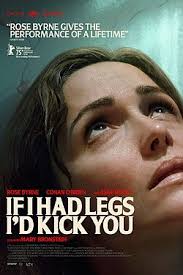
IF I HAD LEGS, I'D KICK YOU
US, 2025, 113 minutes, Colour.
Rose Byrne, Delaney Quinn, Mary Bronstein, Conan O'Brien, Christian Slater, A$AP Rocky, Danielle Macdonald, Ivy Wolk, Mark Stolzenberg, Daniel Zolghadri.
Directed by Mary Bronstein.
This disturbing and challenging drama was released at the same time as Die My Love with Jennifer Lawrence. Die My Love dramatised a mother descending into deep depression after the birth of her baby, a film which the female audience could identify with, a film that made demands on the male audience for appreciation and understanding.
This is true of If I Had Legs – only much more so. It is quite emotionally demanding of its audience, often a hard watch but a film which dramatises so much of the pain that a woman, a mother and wife, sometimes has to suffer. And, once again, there would be enormous empathy for a female audience watching this film. And, once again, a challenge to a male audience for appreciation and understanding, to elicit some empathy.
Rose Byrne has had a long career in Australian and international films for over 30 years. Critics are referring to her performance here as Linda, mother of a young daughter needing medical care, her husband away with contact only by phone, herself a therapist but also undergoing her own therapy and not coping at all well, at times not coping at all, as the performance of a lifetime.
For so much of the drama the words frantic and desperate best describe what is happening for Linda, required to give constant attention and presence to her child, seeing her clients for therapy (and another disturbing subplot with a young mother not coping at all and disappearing) and Linda having sessions with her own therapist (played by television’s, Conan O’Brien), proving to be an antagonistic and uncooperative client.
Then, sudden disaster in the apartment, her daughter (not seen throughout the film until the end, but always a presence, always a voice) finding her room filling with water and the discovery of the roof caving in flooding the apartment, the camera returning to the gaping hole in the roof throughout the film. Added pressures, her husband away, the landlord uncooperative, delays in repairs, mother and daughter having to stay in a hotel, sad memories of an early abortion.
Linda’s behaviour becomes more and more erratic, sometimes keeping composure in working with her clients, but even that beginning to disintegrate. She is also required to join a women’s group to help to cope with their daughter’s illness, but Linda is defiant, rude, bluntly outspoken towards the leader as well as some of the distraught mothers in the group. (The leader of this group is played by the writer-director, Mary Bronstein, her screenplay drawing on some of her own experiences.)
While there are some sympathetic characters, especially a neighbour played by rap singer A$ap Rocky, who becomes entangled in Linda’s moods, we see Linda becoming the victim of so many others’ moodiness, her therapist, her clients, the pedantic woman at the store… little miseries to add to the overall misery of Linda’s experience, her love for her daughter, the continued demands and weariness of constant care.
A review of this film should offer an alert that is not just a movie to go to for some entertainment. Rather, it is significant in offering its audience a harrowing experience, some empathy for a suffering woman who is not always sympathetic.
- The title, tone? Expectations? The work of the writer-director, her experiences?
- An American story and setting, universal characters, themes and issues?
- The American city, homes and apartments, hospitals, conference rooms, therapists’ rooms, shops, and the final open space and the beach and the sea? The musical score?
- Audience response to Linda? Rose Byrne’s performance? Age, marriage, her husband in service, away, her daughter, her age (not seen, heard, seen at the end), her illness, the constant care and presence? How sympathetic a person, mother?
- Linda, the effect of the demands of her daughter’s illness, taking her to school, the demands of the parking attendant and his aggression and her aggressive response, asking others to take her daughter into school? The conversations with the doctor, her presence expected at the discussion sessions with the mothers, her putting off the appointments? Discussions about her daughter’s illness, the treatment, the possibilities of terminating the treatment?
- The water in the apartment, her daughter’s reaction, the flood in the apartment, the crashing down of the roof? Further exasperation? Mother and daughter having to live in a hotel, the neighbours, Linda going to the store, wanting the alcohol, the assistant and his strictness, Jamie and his sympathetic response, trying to talk to her, her walking away, her surly attitudes towards him, his later help, going to the house, falling through the hole in the roof, injuring himself? Linda and her attitudes?
- Linda and her therapist, her tantrums and silence, his reactions, the relationship, sympathy, hostility, losing patience, her memories and telling of an early abortion? Then discovering Linda as a therapist, with Caroline, the baby, depression, the absent husband, ringing during the night, coming to the apartment, dependence, disappointment, her disappearance, Linda and the police, the questioning, Caroline’s husband on the phone and his attitude? Caroline reappearing, Linda’s handling of the situation, failing, Caroline running away towards the sea?
- Linda, her clients, Stephen, dreams and emotions, the young woman waiting?
- The building, the phone calls, the landlord, reasons for delay, no repairs? Staying in the hotel, Jamie and his mother?
- The building up of exasperation, the phone calls to her husband, his response, her cutting him off?
- Linda going to the meeting, surly towards the leader, harsh towards the mother with her story, trying to be blunt and honest? Saying there was no hope, walking out? Going to her daughter, the information about the tube, removing it, the hole healing up?
- Chris, eventually arriving, his uniform, the repairs in the apartment, his exasperation, her response?
- Linda, running away, to the beach, into the successive waves, washed up on the beach?
- Seeing her daughter, her husband’s return, her depression, what future?
